Prophecies, Witches, and Spells
Not since Carlo Levi’s CHRIST STOPPED AT EBOLI has there appeared a book as eloquent and effective about life in the poverty-cursed mountain villages of Italy as Ann Cornelisen s TORREGRECA: A WORLD IN SOUTHERN ITALY,to be published in October by the Atlantic Monthly Press. Here we present one segment. Miss Cornelisen, a 1948 Vassar graduate, went to Italy in the mid-1950s to study archaeology, and subsequently set up some 300 nursery schools there for the British Save-the-Children Fund. She lived for three years in the town she calls Torregreca.
EVERY village in Southern Italy has a mago, a stregone, a witch, often a woman, proficient in the art of casting and uncasting spells, of healing mysterious diseases and driving away evil spirits. It has always been a respectable, lucrative profession, but it does not attract the young of today. The idea has been embarrassed underground. Medicine has improved. Spells have softened into superstitions, and the evil eye has become a generic explanation for anything not understood. “Our mothers, our grandmothers believed in that sort of thing. We don’t.” Strange, then, that everyone in the province of Matera, doctors, lawyers, peasants, waiters, and bus drivers, refers to one town as Quel Paese (“That Town”) rather than whisper its name. He who dares, even if he touches iron as he says it, must forever avoid the town, for he has invited the curse of the evil eye. There is no antidote. Calamity awaits him in Quel Paese.
I looked forward to seeing a town of such power, to feeling it, since such malevolence must create physical vibrations, but I had to wait almost a year. Barricaded by mountains, itself perched on a high rock spine, it was not a place on the way to any other. You went there on purpose or not at all. When I did, I was not disappointed. Quel Paese gave me a day I will never forget, not because what happened there was important, but because it had never happened to me before — or since. All my luggage was stolen.
Once in Torregreca I met a surveyor, a charming bearded Venetian who was jubilant at the idea of talking to “a sensible person,” as he called me. This was supposed to be his country, yet it seemed darkest Africa to him. If he “gazed on” a mother nursing her child, the family went into paroxysms of counterspells. “Dammit, I don’t want to ‘gaze on’ them, but they will haul out their breasts in cinemas and office waiting rooms and bus stations. What am I to do?” Shaving his beard might have helped. It is a well-known fact that if a stranger’s hair falls on the breast, it clogs the tit. Still, as a stranger, his envy was a threat to the milk. In passing he could snatch it up and take it with him. What irritated the Venetian surveyor most was Quel Paese. “Rot, nothing but rot, and my boss expects me to believe it. He’s ordered me not to mention the name in his hearing. Eh!” he threw his hands up in the air. “What do you do with these people? They’re back in the Dark Ages.” A Northerner’s sense of humor is as quick as his irritation. Soon he was telling stories in a bad mock Southern accent and planning another meeting when next he came to Torregreca. I never saw him again, but he sent me a postcard from Matera. “I take it all back. Had to go to Quel Paese alone — no driver would take me. A mule threw me. I landed on an iron stake that pierced my chest. They say I’ll be all right — three weeks in hospital followed by six months sick leave. Guess where I’m going! VENICE. Best wishes . . .”
Enchantments, affascinazione, sudden passion, strange physical symptoms, infertility, falling hair, cross-eyed babies — everything can be blamed on a spell that has been cast or a potion slipped into food. Casting spells may be the specialty of one witch, breaking them the art of another. The problem lies in choosing the right one.
The human being is surrounded by danger. The glance of a stranger, a neighbor’s jealousy, a spiteful thought, the moon’s beams, or the dark of a shadow — they are all threats. An adult protects himself as best he can, but a child must be defended. For centuries the campaign has been a delaying action. Mothers teach their daughters how to distract spirits. Their wiles are concealed by the yards and yards of swaddling that truss a baby from the time he is born until he is a year old, sometimes older. This living mummy can be taken anywhere, like a package, dumped in any field, left on any shelf, and he is always protected by the charms slipped between the layers of his bindings. T he twice-daily unswaddling and reswaddling is a ritual that takes skill. The baby is placed in a nest of old, soft rags. His arms are forced to his sides, his legs held straight out; then with a quick swirl of the wide band he is immobilized. Another quick wrap and the charm sack can be placed roughly where the mother thinks the genitals might be. The sack is not so important as its contents. There will be a length of hairy string, a few grains of wheat (any number so long as it is odd), perhaps a rough cross, an image of Sant’ Antonio, San Rocco, or the Madonna. If the evil spirit can be tricked into counting the strands of string, or the wheat kernels, he will forget his wicked errand. Each saint has his own sphere, of course, and his very presence might put the spirit to flight. The sack in place, more swaddling is wrapped around, and then a pair of scissors, open to cut the evil spirit before it can reach the sack, is slipped between the folds. Now the bundle is ready for the final neatening up. The outside layers must be very even and close together, so that the baby’s head seems to slick out of a cocoon of striated linen. He is slipped into a cotton envelope with coarse lace that tickles his chin, and he is ready for any eventuality.
Only certain people can make charms, ones that are truly effective against curses. Chichella’s grandmother, her mother, and later Chichella herself were considered masters of the art. No one has ever been willing to explain why one person has the right personality and another does not,
but there is some undefined relationship between the person and the spirits. It may be the courage to defy their powers or it may be a subtle affinity created by invisible wavelengths, but whatever the unknown attraction is, it cannot be acquired. One is born a charm-maker, or one is not.
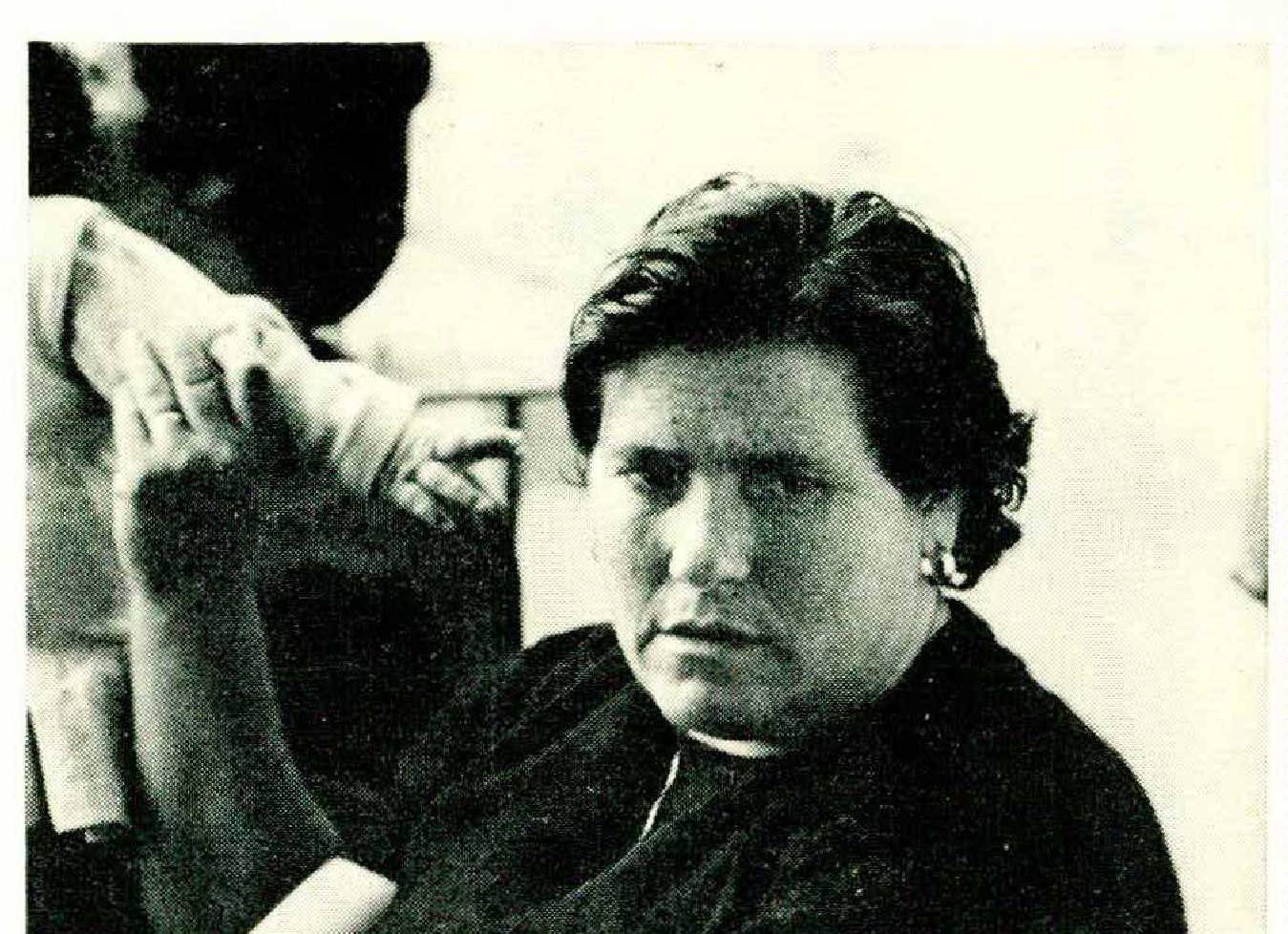
It was one subject Chichella never wanted to discuss with me. Another was the strange power she developed during menstrual periods, when other women avoided planting or making bread for fear they would “sour” whatever they touched. Apparently she reversed the cycle, excelling in those things she normally did well. The women knew it and came begging her to do them a favor, something they particularly wanted to turn out well, when she had her next period. I think she did most of them, and they were favors in the sense that she was never paid for them. But she did not want to talk about it. Naturally, I did. She usually had her own way. She could not remember, she would say, or, No one believed in that sort of thing. It was rare that I could lure her into any comments on magic, curses, or her own minor powers; but I remember one winter morning reading a book called Sud e Magia, by Ernesto de Martino while I waited for the fog to lift.
“Chichella,” I called, “Did you ever hear anything like this?”
c’era quatto voiarille:
’a cap’e rànule ,a scazzavane.
Fucitinne ranele da la vocca:
La chiave de la Chiesia non si tocca.
there were four little steers
who squashed the head of a frog.
Flee little frogs of the mouth [i.e. cankers]: The key of the church cannot be touched.
“What’s the matter? Your liver off?” was her answer.
“No, why?”
“You’re always funny when you read too much.”
That seemed the end of the subject. I turned back to my book. Chichella does not like to be ignored, and she had more to say. She planted herself right in front of me with her hands on her hips.
“Your professor” — her scorn covered the whole profession — “says it’s like that, so it must be. But the words are wrong . . . and he doesn’t understand about church keys.” She closed her eyes, frowned, and then started singsonging the real Tarnese words in a high nasal voice which had none of her normal huskiness. It was a trance voice; I could feel her trying to reach a particular spirit. She chanted on through different verses — as best I could understand, against infant diseases, cradle cap, hernia, and rough, thorny skin. She stopped as suddenly as she had started, opened her eyes, and looked at me in surprise, I thought.
“Don’t stop.”
“Nobody believes in that sort of thing anymore.”
“Didn’t you take Luigi to a witch when he was little?” I asked.
“That was different. The doctors didn’t know what to do, and I was desperate. Besides, the witches have all died off now. They were old.”
“Here— take a look at this picture.” I showed her my book with its picture of the witch of Quel Paese.
“Looks like Ucculich right here in Torregreca. She’s old now, doesn’t do much, but I did hear her daughter will help — sometimes — as a favor.” She blushed at giving herself away. The rest of the morning she was too busy to talk, and left with a short “Buon giorno” to me.
THE fog went on for a week. We draped our faces with scarves, like Arab women, to keep it from searing our lungs, but it stung our eyes and prickled our cheeks. Once or twice a day there might be a tear in the gray cotton revealing a sunlit patch way far below in the never-never land of the valley we thought no longer existed. A blink and it was gone; the mirage of a mind laid siege to by fog. The cobbles were slick, stone walls shimmered. Clothes clung, then mildewed on our backs. Finally late one afternoon a gale blew up to sweep the skies clear again and release us from prison. People streamed out of their houses, and the babble of life began again. We wanted air and reassurance. For myself, I walked through my own land of makebelieve, across from town and around the end of the butte to the mountains. As I walked, I wondered about spells, for I could find no other explanation for my enchantment with the deep red of saturated tiles studded here and there with diamond beads of moisture, or with those houses I knew to be mean and squalid, but which were, for me, a gleaming copper fall of light, shadow, and geometric pattern of mysterious beauty. Valleys stretched hazy and blue as far as the eye could see, with here and there a trailing veil of mist that had hidden from the wind. Stumps of grapevines, cruel and black in their deadness, tangled with their own shadows to cast a grotesque net over hillsides. In the wheat fields twilled with furrows the earth was gray, almost fertile looking, but no silken green sprouts had dared to announce a future. On beyond, the mountains — purple, red, blue, violent in their cleanliness — were more than ever the insurmountable wall between us and the rest of the world. Never had they been more beautiful or more threatening in their challenge. Still, men had built that proud sentinel tower I saw glowering red in the sunset; maybe they could fight on to some kind of victory. I hurried back to my fire.
Late that night I was awakened by pounding at my door. It was Chichella, hysterical.
“Luigi’s dying. He’s dying right in front of my eyes, and I can’t do anything about it. It’s a spell. He’s always been under a spell — no one’s ever been able to break it.” She babbled on while I dressed. Down in her storeroom, in bed with the other two children, was a very feverish little boy shivering and crying, unable to swallow, unable to breathe.
“It’s a curse — nothing to do — it’s a curse.”
“Have you called the doctor?”
“What doctor? I need the witch, the right one who understands the curse. I’ve never found the right one.” She howled on. A linen towel wrapped swami-fashion hid Luigi’s head and much of his face. When I pulled it aside to feel his cheek, Chichella turned lioness, clawing me away from the bed.
“Don’t touch that!” she screamed. “Don’t — touch — that!”
“All right, Chichella. Calm down and stay here. I’ll get the doctor, but you could bathe his forehead and his face. He’d be more comfortable — and for God’s sake stop babbling about a curse.”
“He won’t come, you know he won’t. Besides ...” She thought better of it, and I left before she could tell me again about the witch.
I cursed the cold, the spells, and the fancy language of anthropologists — negativism. That was not just negativism; it was stark terror. I would get the doctor out. He would come for violent fever or diphtheria. That last word was enough. He pulled his clothes on over his pajamas, and in less than ten minutes we were back at Chichella’s. It was a strep throat, and someday, soon, there will be a new saint, Sant’ Antibiotica, famous for protecting children and exorcising curses.
It was gentle, rabbit-faced Dr. Neri I had dragged out of bed, the medico condotto who cared for the official poor list. Afterward, as I drove him home,
I asked what he thought of spells that seemed more powerful than any god or medicine. He answered slowly, without contempt or medical bluster, offering me an idea after he had peeled off its rind of prejudices as he might the skin of an orange.
“We all try to explain our misfortunes, you know. Theirs are so violent, so sudden. To us a landslide, the collapse of a roof, or a disease — TB, ulcers — don’t burst into existence like lightning. We see the symptoms, causes if you prefer. Life has a certain reasonable order to us, but to the peasants it’s a series of somersaults. Each jolt is so unexpected it could only be caused by malevolent spirits and their curses — and they outrank God, or the disaster could not have happened. Take Luigi. His throat’s been brewing for days, but the crisis tonight was the first anyone knew of it. A curse is the most logical answer for Chichella, a curse or God’s vengeance. You seek comfort in God; their lives are spent trying to stay on the good side of all the gods.” He paused as though working out a problem. “As doctors we could do a lot to change their faith in curses and spirits, but I wonder if we will. They’re too convenient—they cover up all the things we don’t understand. If your patient believes in the evil eye, you feel safer. Maybe I don’t make myself clear. All of us in the South, not just doctors, but all the educated class, have encouraged ignorance in the peasants for our own protection. Times have changed, so have the peasants. They’re not afraid of us, and they’re less afraid of spirits every day. One wonders where it will end.” He shook himself. “At this rate I’ll be seeing ghosts pretty soon. Must be the night air. Won’t you come in for a cognac?”
I thanked him and drove home.
I HEARD no more from Chichella about “we don’t believe in spells now. Our grandmothers did.” It was a bad winter for her. There was no work. On what I gave her she was trying to live, feed and clothe her children, and pay her husband’s debt. Once, for a week, we kept a record of everything the children ate. Originally I had wanted to do it for a month, but as Chichella said, it was a waste of time because they always ate the same things. The breakdown is without specific quantities except for bread. Each child ate one pound of bread a day. One was three, one six, and the eldest was seven years old. Chichella herself ate a kilo, two and one fifth pounds, of bread a day.
| Breakfast | Lunch | Dinner |
|---|---|---|
| Bread, persimmons | Spaghetti, oil, cheese,bread | Bread, persimmons |
| Bread, persimmons | Spaghetti, tomato sauce,bread | Bread, persimmons |
| Bread, sausage | Spaghetti, oil, bread | Bread, dried figs |
| Bread | Macaroni, beans, bread | Bread, persimmons |
| Bread | Spaghetti, oil, bread | “Pizza” (flat bread with garlic on top) |
| Bread, persimmons | Greens, beans, bread | Dried codfish, potatoes, bread |
| Bread, codfish | Macaroni,dried peas,bread | Bread, dried figs |
On that kind of diet it was not surprising that the children in Torregreca were often small, pothellied, and listless. Teachers prided themselves on how well they kept order in their classrooms without realizing they had not overcome a problem; they had simply failed to recognize one. It is not natural for nursery children to sit like lumps for eight straight hours. If they do, something is wrong.
On the diet their parents can afford, the children are lethargic. As adults, their strength will not last for long periods of heavy work. Their pace must be slow if it is to be constant. Young or old, they have little resistance to infectious diseases, especially those of the respiratory system.
Chichella did the best she could on her budget. She seldom bought greens (spinach, chicory, broccoli, lettuce, and the like) because they were not filling enough. The fruits and vegetables she did buy were “surplus,” too poor in quality to haul to the market or too abundant to bring a decent price. Vendors shoveled “surplus” off the backs of trucks; the more you took, the less you paid per kilo. The year had a pattern for Chichella and her children. One month they lived on peppers; another on figs. But it was always bread that was the filler, sometimes smeared with a blob of leftover beans, sometimes with a dried tomato or fig; more often than not it was softened with water and a drop of oil. Even Luigi, who was bottomless, got tired of it.
“Mama,” he asked one evening, “does everybody cat plain bread for supper?”
“Just leave it if you don’t want it” had been her answer. He did. Because they were always hungry, Chichella protected the precious extras she might have by carrying them with her in a patchwork shopping bag. At times she left it in my custody; three dried sausages, an egg, and maybe a packet of margarine I had told her to take when I left on a trip. If the bag was unguarded for a minute, the goodies disappeared. Still her expenses were twice her income, and I was not surprised when she jumped at the chance of adding even sixteen cents a day to her income by cleaning San Potito, the parish church.
She had to finish before the first morning Mass at six, so she got up at four. One morning, as she stumbled through the dark she heard what sounded like a baby’s cry. She stood still; again the cry, but further away, to her left. She followed it; again and again came the cry. She went on, stopping to listen every few steps until she realized she was nearing the cemetery gates. Then she panicked and ran to the church, where she bolted herself in until the priest came. She knew and so did everyone else that she had heard the souls of the dead crying out in protest. At dawn they had to return to the exile of the grave. Morning after morning she heard the same cry, a wail that was fainter and fainter unless she followed it along the road toward the cemetery. Morning after morning it terrified her. Old hags brought special amulets. Still the souls cried. She wore one of her own sackcharms against the evil eye. The souls howled and wailed. Finally she could bear it no longer. She gave up the job, and the priest could find no one willing to take her place. One hundred lire a day is not enough for braving an encounter with the souls of the dead who resent their graves.
ONE morning in the Piazza I met Don Matteo, gay as always and plumper, judging from the way his cassock pulled under the arms.
“Ah, just the person I wanted to meet. Come along with me, Donna Anna, we’ll have coffee, it’s my only vice now that Luca’s put me on a diet.” He chuckled, pleased at having one vice no one could deny him. “I don’t see nearly enough of you — and what are these strange goings-on up your way? Have you been courting the devil?” He waited to continue until we were settled at a table and the men had retreated to a respectful gaping distance. “Now tell me, what have you been up to with the spirits? They say even you have heard them.”
I told him of Chichella’s dawn meetings with the souls of the dead and my regret at her giving up her job at San Potito. He nodded kindly as he listened, and seemed so sympathetic that I asked if he believed the spirits cried as they returned to their graves.
“Ma nò, you mustn’t take that sort of thing seriously. They’re always talking about spirits here. Old wives’ tales, like ghost stories; their imaginations get to work, and pretty soon they believe they’ve heard spirits crying.” He hesitated a minute, raising his eyebrows even higher. “But I do believe in the Monached. You know what they are? The spirits of unbaptized babies damned to wander the earth. They end up living with people; they have to. Now don’t laugh, I’m not teasing, they do! There’s one in every old house in Torregreca. Ours is special, has a personality like no other. Of course he prowls at night. Likes jam and throws pots and pans around and lately he’s taken a dislike to my new breviary — keeps pulling pages out. He’s misplaced my father’s old fascist medals. You can laugh if you like. Father may be absentminded, but not about his decorations. The Monached did it. If you’d rented an old house, you might have had trouble. They don’t like change, and sometimes new tenants don’t suit them. I suppose they’ll disappear with all this new housing. They won’t move, you know — absolutely won’t. I’m quite serious!”
He was getting cross with me, so I asked about witches and curses. His face turned to a mask, his eyebrows straightened out, and I saw for the first time what a sad face he had. I thought he was going to dismiss the subject entirely. Instead he said, “Fear makes them believe. Doctors don’t have the right cures. No one can explain the things that happen; finally, rather than believe in a true God who has His reasons, they believe in curses and witches. Enlightened priests — and there are some — have fought it. Others let it go, incorporate the pagan in Catholic ritual. As for witches, they’re like plumbers here — everyone is a halfway witch. Old Ida, our faithful messenger boy, for instance. When her spirits are just right, she’s one of the more powerful. She’s a bit temperamental. If she doesn’t like her customer, she pretends she can’t do anything, but if there’s a spell to be broken, she’s the girl who can do it. I’ve noticed she likes you, so anytime . . .” He smiled, but talking about the superstitions of his parishioners had depressed him. He signaled for our check, and then leaned over and said very quietly, “Look at the men’s faces! They can’t imagine what we’ve been talking about. I’d better help them or — or their imaginations, you know. You must always be careful.” In a louder voice, a public voice: “Have a nice trip, Donna Anna, and come back soon. There’s still much to be done in Torregreca.” Now what would they think? I was not going anywhere.
IN LUCANIA if there is a sense of religion in magic, there is also a sense of magic in religion, and to complete the braid of common belief, a silken strand of the pagan. Serpents are draped over statues of saints; the Madonna is called on to exorcise evil spirits; grain sprouts, grown in the dark, are placed in Christ’s coffin on Good Friday. A bride and groom’s relatives, who prepare the marriage bed, hide amulets in the mattress against evil spirits and sprinkle salt on the springs, but the culmination of their work is the formal blessing. Later a plowshare, in these parts an ambiguous symbol of fertility, is hidden under the bed with a sickle — once more the blade to cut the evil spirits before they can do harm. The serious business of the wedding taken care of, everyone settles in to have a high old time, except, perhaps, the bride and groom. Until very recently they were sent off to bed while the relatives danced and drank in the next room — and, of course, banged on the door for progress reports. Even now couples are barricaded in together for seven straight days in what is referred to as “The Bride’s Week.” Fortunately, relatives may come to call; the first visit is always that of the two mothers, who bring coffce and remake the bed — a courteous way of snooping for proof of the bride’s lost virginity. All they ask is a spotted linen towel to display — and who can tell human blood from the blood of a chicken, that noble fowl who has already supplied meat for the feast. Small wonder that those who can afford it are married in Pompeii and spend a few days away from their village!
Sanctuaries in dank caves or in the crypts of churches still hold a mystical attraction for the afflicted. Being Stygian and churchly, they unite, as it were, all the powers under one roof. Often they are so hung with arms, legs, heads, and other bits of the human apparatus that they might be the parts depot of a waxworks. Each votive offering has been brought by a pilgrim to thank the saint for driving the evil spirits out of a specific part of the body. Often the vows are made for children suffering the dread lassitude that signals infantile curses. The real malady — dysentery, worms, or just plain malnutrition — is so persistent the mother knows her child has been put under an evil spell. “Free my little Angelo of these evil spirits, and he will wear your cassock and rope for a year as a reminder of your protection.” So, for a year, if he is cured, little Angelo dribbles and spills on the same habit, sleeps in it, and trails it through the dusty muck of the village streets. Sometimes the saint does not do his work well. He is discarded for another saint and another sanctuary. The power of curses is infinite, the power of saints limited and capricious.
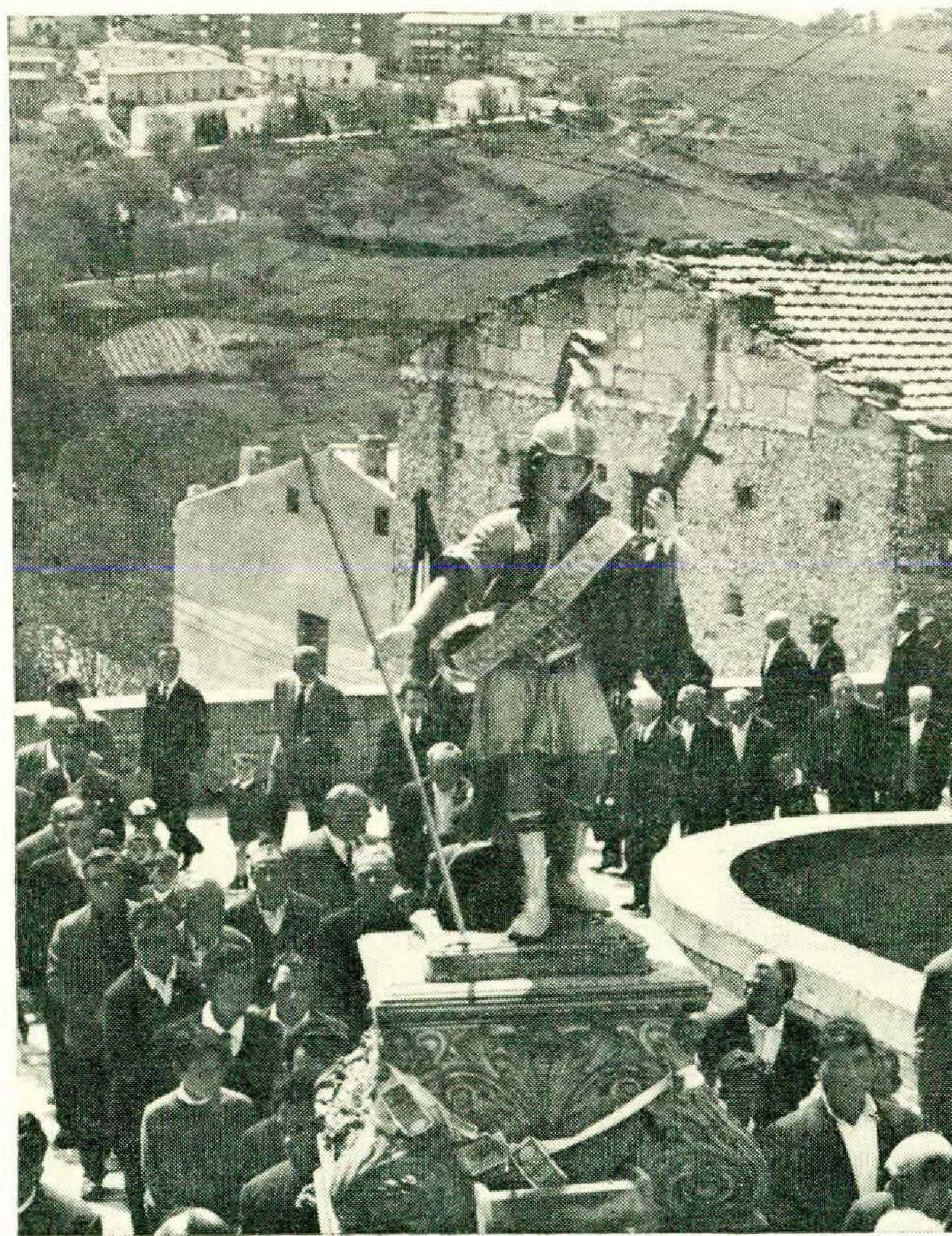
Superstitious and devout as they are, Southerners have a casual approach to their saints. In May, for instance, for the festival of San Pancrazio, avenger of false witness and false oaths, the Torresi simply ignore religious facts and rearrange things to suit themselves. Of San Pancrazio’s life only the end is known. In 304 A.D., during the Christian persecutions ordered by the Emperor Diocletian, he was stoned to death. He was fourteen years old.
That is the official version, but for the Torresi he was the ever faithful lover of Santa Filomena, the mystery lady of the Catholic Church. There is no agreement about her; there are a number of stories. One tells of a Santa Filomena found perfectly preserved in a green dress in San Severino Marche. Another tells of remains found in 1802 under a garbled inscription in the Catacombs of Priscilla. At first they were identified as those of a martyr named Filomena; subsequent analysis proved they were of some later lady hurriedly buried in the same grave. The whole affair turned into an ecclesiastical porcupine; anyone who tried to get to the meat of the situation was punctured by the dissenters’ quills. From their resting place under the altar of a village church near Naples, the “wrong” bones were already producing miracles and apparitions, and the parish priest had written an inspired life of Santa Filomena. Today it is considered a masterpiece of religious fiction, but it did much to confuse the issue at the time. The Church, in its wisdom, has decided there is nothing certain about the life of Santa Filomena. She may have been a Christian martyr who lived in the second or the sixth century. The Torresi are not so cautious. As they tell it, she was the beautiful daughter of a rich merchant of Bari. San Pancrazio saw her, fell passionately in love with her, and asked her father for her hand in marriage. The father agreed. Santa Filomena did not. She knew her destiny was sainthood and her most precious purity must be defended at any cost. When, on her wedding day, she still could not dissuade her lover, she walked into the sea and drowned. San Pancrazio was inconsolable. Through seventeen centuries he has followed in her wake, and though he may be no closer to his beloved now, he has become a special favorite with all women, particularly the unmarried.
Prince Charming all’Italiana had found his way into the religious calendar and had brought such joy that anomalies of whatever character were to be forgotten. This was to be a gloriously irrational feminine festa. I was startled when the celebration began the night before, with bonfires lighted in all the streets and alleys. People sat around them, gossiping and feeding the fires with twigs. At the sound of a footstep they called “Who goes there?” The answer “Friend!” brought greetings and the offer of a glass of wine. A few feet farther on another fire, another group, another call “Who goes there?” On into the night they sat, watching by their fires until they judged all evil had been put to flight. This was the spring exorcism of the spirits that had coagulated in Torregreca during the winter. (This was as I first saw it in 1960. By 1967 some Torresi had found a more respectable interpretation. San Pancrazio was a vineyard keeper, a very careful one, and the sight of neatly trimmed vines gives him pleasure. So the fires are of vine cuttings, and if there are enough to appease him, San Pancrazio will protect the vineyards from storms. Perhaps this version is slightly less pagan, but it certainly is not the traditional one.)
Next morning Santa Filomena led the procession, borne aloft, reclining like a china Elizabeth Barrett Browning on a gold baroque chaise longue with satin pillows and angels that hobbled at the ends of long springs. She was languid and either very frail or very haughty. Her herald was an old shepherd who tootled away on his bagpipes; her followers, the women of the town, who were more dejected than elated by their lover’s pursuit. They groaned an anthem whose words were lost in a babble of conflicting versions. Way at the back came San Pancrazio, a medieval beatnik scrubbed up and dressed for the occasion in tin armor and a satin miniskirt. With each lurch his puttees rattled and his helmet swiveled around on his wig. His bearers were doing their best, but they had to follow the excited directions of a priest carrying a wax hand mounted on a golden column. When he raised the hand high in the air, they stopped and wobbled. Two waves and they staggered off. The pace was so slow there at the back that the men who followed San Pancrazio had time for a glass of wine at the several shops along the route. Soon their faces were flushed and their steps uncertain.
Snaking through the alleys of the Rabata and the Saraceno, Santa Filomena was usually one street higher than San Pancrazio. As I glimpsed them through the funnel of a cross-stairway they seemed to pass each other going in opposite directions. Where it would end was hard to tell. For a while, as we backtracked, I thought we might gyrate until the processioners had been dropped off, one by one, at their own doorsteps. Instead we drew up in front of the prisonlike elementary school. The statues were arranged side by side. No one spoke. The silence was tense, expectant. The men took off their hats in a half-embarrassed salute. The women, stiff, their eyes forward, held their candles absolutely vertical. Nothing happened. The priest brandished his wax hand again. Still nothing happened. He went red in the face and wigwagged emphatically. Pop, pop, pop, pop, pop, pause. Then again, all around us the not very loud pop, pop, pop, pop, pop of firecrackers — lots of them. And another pause. Bang! Bang! Long, long pause — BOOM !
The windows of the school rattled, and there was a big sigh from the crowd. The festa was over.