The Conductorial Scramble
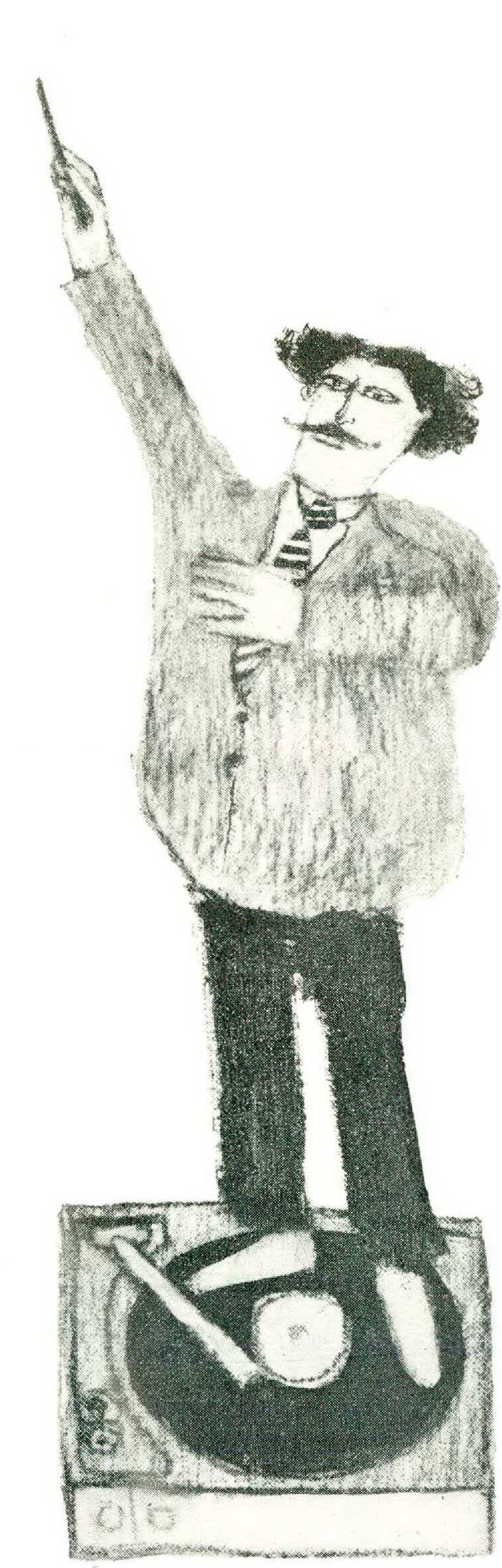
Judging by their recent outpouring of records, today’s young conductors are well aware there soon will be a number of vacant podiums in the land. The Boston Symphony is looking, the New York Philharmonic is looking, the Chicago Symphony is looking, though its search may not take as long as the others. One of these days Philadelphia may be in the market too, and Cleveland eventually will follow. According to baseball legend, one of John McGraw’s second basemen, named Larry Doyle, once enthused: “It’s great to be young and a Giant!” Considering the current job opportunities, a musician could be excused for observing that nowadays it’s great to be young and a conductor.
No one, of course, is hired as a conductor on the basis of his recordings; it’s a little too much to expect the trustees of the Boston Symphony or the New York Philharmonic to sit up nights comparing, say, Zubin Mehta’s way with Tchaikovsky’s Fourth with Lorin Maazel’s. As instructive as such a procedure might be, it would deal with only one aspect of the conductor’s qualifications, his musicianship. And while no symphony trustee in his right mind would ignore a conductor’s musicianship, it remains a fact of modern musical life that this is no longer the sole, or even the principal, qualification by which a prospective new musical director can be judged.
What seems to be happening is that the very nature of the conductor’s job is changing. How else explain the sudden unrest among directors of the top-ranking orchestras in this country, and in Europe as well? Neither Leonard Bernstein nor Erich Leinsdorf, who have announced their intentions of leaving their musical directorships in New York and Boston, is an old man biologically; and on the conductorial age scale they are practically boys. Bernstein is forty-nine, Leinsdorf fifty-six. Toscanini stayed with the New York Philharmonic until he was sixty-nine and with the NBC Symphony until eighty-seven; Koussevitzky conducted the Boston until he was seventy-five. Beecham, Monteux, and others remained with their orchestras into their seventies and even eighties. Until now, conducting has never been regarded as essentially a young man’s job.
But the new conductor is going to face a vastly changed assignment from the old. When Erich Leinsdorf announced his retirement, within eighteen months, from the position in Boston he had accepted so enthusiastically six years ago, he gave as his reason the workload of the job. Other factors apparently were involved as well, but there is no reason to doubt that the position itself has grown increasingly demanding and intractable. And what is true of Boston is equally true elsewhere.
“The fact is,” says a woman concert agent well acquainted with a number of young conductors, “that most seasons have grown too long for one conductor to handle. Boston is the toughest, with a long winter season plus Tanglewood, but the others are bad too. The old twentysix-week season with the rest of the year off is out; now they want a musical director for fifty-two weeks, including touring and summer festivals. Musical directors either have to keep preparing new programs or playing the same things over and over. What we may see is the development of much stronger associate conductors, or even a second conductor of major stature with the big orchestras.”
Ronald Wilford of Columbia Artists Management, who manages such outstanding young conductors as Colin Davis, Lukas Foss, Istvan Kertesz, Seiji Ozawa, Andre Previn, Thomas Schippers, and Stanislas Skrowaczewski, points out that the stability and security of a permanent musical directorship have lost some of their allure. “Conductors today might not want that kind of an arrangement,” said Wilford. “Ten years ago they did. Today many prefer the freedom to move around to being wedded to an orchestra. In the last five years fees for conducting in Europe have almost become the equivalent of American fees. Not that money has ever ruled in this business, but some conductors feel there is more stimulation in moving around.”
Another factor in the conductorial unrest was spotlighted by a New York personal representative for many top-rank artists. “There’s simply too much music today,” he said. “The classical hit parade is overexposed on records. The conscientious musical director is under a constant pressure to do new things all the time. Fritz Reiner once said that the job was ninety-eight percent program-making and two percent conducting. The program-making has just become too much.”
A change also has come over the relations between conductors and the men in their orchestras. Union musicians, having fought for years for full-year employment and achieved it with the major orchestras, apparently are finding themselves overworked and overstrained, with resulting tensions between them and the conductor. In addition, conductors find that contract job security provisions and hiring procedures make it difficult to make personnel changes they deem essential; the case of the Metropolitan Opera versus one of its French horn players became a cause célèbre and dragged on for years. “George Szell built a remarkable orchestra in Cleveland twenty years ago,” says Mr. Wilford. “He did it his way, hiring whom he wanted. Do you suppose if he were starting today he could do what he did then?”
Yet with all this, orchestras like the Boston, Chicago, and New York Philharmonic still are going to have music directors, and there will be no dearth of applicants. Some of the most likely candidates have already been named in this article, and there are plenty of other more or less young hopefuls such as Claudio Abbado, Pierre Boulez, Carlo Maria Giulini, Georges Prêtre, and Georg Solti. The guessing game, which started in New York last November the day after Leonard Bernstein announced his retirement next year, has now spread across the country. Probably even the orchestra trustees don’t know whom they want; if they did they would have named them, Instead, both Boston and New York arc going to be looking over and listening to the field carefully. The Philharmonic’s card of guest conductors through 1969 reads almost like the elimination tourney being staged by the World Boxing Association to pick a successor to Cassius Clay. The young conductorial aspirants will be able to earn while they yearn.
But do they have the experience and repertory required in the big jobs? Some observers are dubious, pointing out that the previous generation of conductors built their reputations brick by brick, many of them learning their trade in the smaller European opera houses and concert halls. But even here there were exceptions: Leonard Bernstein came to the Philharmonic by way of Tanglewood and Broadway, and Erich Leinsdorf was twenty-six years old when he made an overnight sensation conducting Die Walküre at the Metropolitan Opera. In the speeded-up modern world, conductors may learn faster than they used to; indeed, they almost have to. Says Mr. Wilford: “The problem isn’t finding a conductor with repertory; it’s getting the right combination of conductor and orchestra, like Ormandy-Philadelphia, Bernstein-New York, and Koussevitzky-Boston. I think that’s what’s going to happen during this trying-out period: they’re going to wait and see who generates the excitement of the right combination.”
Meanwhile, the young conductors go right on making records. For sheer bulk of recent output, thirtyone-year-old Zubin Mehta holds an edge. The Bombay-born conductor, who is said to be known in Los Angeles as “Zubi, baby,” has no fewer than six new releases out simultaneously. London Records sent a recording crew to California to enregister his performances, with the Los Angeles Philharmonic, of Schoenberg’s Transfigured Night and Scriabin’s Poem of Ecstasy (CS-6552), Tchaikovsky’s Symphony No. 4 (CS6553), and Stravinsky’s Petrouchka and Circus Polka (CS-6554). With the Vienna Philharmonic he has done Liszt’s Les Préludes and several Wagnerian excerpts (CS-6529). Obviously, London is finding that Mehta has a repertory, and presumably it also is finding that his name sells records, which is another consideration that symphony boards of directors do not overlook. RCA Victor has also released Mehta’s recording with the Montreal Symphony of two rather inconsequential modern Canadian works, Roger Matton’s Mouvement Symphonique No. 2 and Pierre Mercure’s Lignes et points (LSC-2980).
The most spectacular new Mehta recording is an operatic album devoted to Verdi’s Aïda, with Birgit Nilsson, Grace Bumbry, Franco Corelli, and Mario Sereni, and the Rome Opera Orchestra and Chorus (Angel SCL-3716: three records). These are high-powered singers, every one, but Mehta does more than ride the crest of the vocal excitement; he generates plenty of his own, although the Triumphal Scene could do with a bit more crispness.
Seiji Ozawa’s newest entry is Berlioz’s Symphonic Fantastique, with the Toronto Symphony (CBS-32-110036). Ozawa, also in his early thirties, got his first training in his native Japan, and worked four years as Bernstein’s assistant at the Philharmonic. With Mehta, he represents a curious phenomenon, the unexpected mastery by conductors of Eastern origin of the Western musical tradition. RCA Victor also makes good use of Ozawa’s talents in performances, with the Chicago Symphony, of Moussorgsky’s Pictures at an Exhibition and Britten’s Young Person’s Guide to the Orchestra (LSC-2977).
Pierre Boulez, the French modernist, is represented by two Everest records devoted to what is, for him, typical repertory — a Stravinsky collection including Renard and the Symphonies of Wind Instruments (3184) and Olivier Messiaen’s Seven Haikai and Schoenberg’s Chamber Symphony, Opus 9 (3192). In both he conducts the Domaine Musicale Orchestra.
Most of the other front-runners are represented only by a single release, but they’ll be making more. Anyone wishing to get a late line on the new talents can listen to Claudio Abbado’s vigorous Romeo and Juliet of Prokofiev, with the London Symphony (London CS-6522); Colin Davis’ warm and refined Eine Kleine Nachtmusik of Mozart, with the Philharmonia (Seraphim S-60057); Carlo Maria Giulini’s sparkling Rossini Overtures, also with the Philharmonia (Seraphim S-60058); Georges Pretre’s lovely Poulenc record containing the Piano Concerto and the Aubade for Piano and Eighteen Instruments, with the Conservatoire Orchestra (Angel 36426); Lorin Maazel’s light and elegant Bourgeois Gentilhomme music of Richard Strauss, with the Vienna Philharmonic (London CS-6537); and Georg Solti’s Night on Bald Mountain, in which Moussorgsky’s tone poem is made to sound properly scary, but also is given an unusually beautiful and tranquil ending (London CS-6503).
Incidentally, if anyone is interested, the most brilliant and exciting orchestral concert I’ve attended so far this season was a program given at Carnegie Hall by a six-year-old group called the American Symphony Orchestra. The feature of the evening was an absolutely stunning performance of Tchaikovsky’s Fifth Symphony. The conductor was Leopold Stokowski, who will be eightysix years old on April 18. Now, there’s an idea . . .
Record Reviews
Boito: Mefistofele (selections)
Nicolai Ghiaurov, bass, and Franco Tagliavini, tenor, with Rome Opera Orchestra and Chorus conducted by Silvio Varviso; London OS-26021
Boito’s opera Mefistofele is built around a basso, and it has a solid and sturdy one in Nicolai Ghiaurov. But these excerpts present an incomplete structure, for Mephistopheles always needs his helpers, both demonic and angelic, for a balanced musical picture. Ghiaurov, a Bulgarian now ensconced at the Metropolitan Opera, is so good in his great scene of the Prologue in Heaven that one regrets that this interesting work is so sketchily represented here. It would be nice to regard these highlights as a foretaste of a complete recording to come.
Haydn: The Seasons
Karl Bohm conducting Vienna Symphony Orchestra and Chorus, with Gundula Janowitz, soprano; Peter Schreier, tenor; and Martti Talvela, bass; Deutsche Gramrnophon 139254/56: three records
Haydn’s oratorio The Seasons often turns out to be a tedious work, its charms outweighed by its length. Not so in this superb recording, however, with Bohm leading a warm, genial, lyric performance that makes every moment a delight. The vocal soloists also sing beautifully as Haydn traces in song the passage of nature’s changing landscapes. It’s unfair to single out any one high spot in this beautiful musical journey, but the moment of calm expectancy before the great storm in the summer section is unforgettable.
Bach: Suites for Unaccompanied Cello (complete)
Maurice Gendron, cellist; World Series PHC-3-010: three records
Bach’s solo cello suites, forbidding though they seem when played in sequitur and in toto, hold no terrors for French cellist Maurice Gendron. He plunges into them with enthusiasm, warmth, and feeling, as well as superb technical equipment. The result is as animated a recording of these works as exists, from the first praeludium to the last gigue. The recorded sound gives an unusual feeling of live presence. A final attraction is the moderate price of the album, issued in Philips bargainline World Series.
Strauss: Till Eulenspiegel, Don Juan Dukas: Sorcerer’s Apprentice Berlioz: Queen Mab Scherzo from Romeo and Juliet
Arturo Toscanini conducting NBC Symphony Orchestra; RCA Victrola VIC1267 (monaural only)
It is good to be reminded from time to time of the miracle of Toscanini, especially of his ability to impart new vitality to thrice-familiar works seemingly by tightening up their inner parts so that they move in perfect precision and order. Sharp wit rather than mere geniality characterized Toscanini’s Till Eulenspiegel, and his Sorcerer’s Apprentice and Queen Mab Scherzo were masterpieces of orchestral virtuosity. More than most Toscanini reissues, this one is sheer fun to listen to, and its fifteen-year-old sound is ample to convey its varied humors.
Browning: My Last Duchess and Other Poems
James Mason, reader; Caedmon TC1201 (monaural only)
From the sinister “My Last Duchess” to the breathless “ ‘How They Brought the Good News From Ghent to Aix,’ ” James Mason is the ideal reader for Browning. He brings not only clear and understandable tones but an actor’s insight to these miniature dramatic pictures, which sometimes seem almost Shakespearean in their penetration. This is the second Browning album recorded by Mr. Mason; among the poems included are “ ‘Childe Roland to the Dark Tower Game,’ ” “Soliloquy of the Spanish Cloister,” “The Lost Leader,” and “Rabbi Ben Ezra.”
Fiddle Faddle and Fourteen Other Leroy Anderson Favorites
Maurice Abravanel conducting Utah Symphony Orchestra; Vanguard-Cardinal VCS-10016
In a world where composers (like most other people) tend to think big, Leroy Anderson thinks small. The result has been an endearing collection of such brief symphonic pieces as “Sleigh Ride,” “Fiddle Faddle,” “Sandpaper Ballet,” “Song of the Bells,” and the like. Their purpose is diversion, and they have been fulfilling it notably at Boston Pops Concerts and similar events for years. Especially pleasurable in this collection are “Syncopated Clock,” “Jazz Pizzicato,” and “The Typewriter,” in which a sixty-worda-minute man is soloist, and the carriage shifts from left to right in stereo. Mr. Abravanel and his musicians take things a bit seriously at times, but the music’s spirit of fun is triumphant.
Canadian Folk Songs
Alan Mills, Raoul Roy, Hélène Baillargeon, Louise Forestier, and others; RCA Victor CS-100: nine records
This is a whopping collection, made jointly by RCA Victor’s Canadian alhliate and the Canadian Broadcasting Corporation. It celebrates the Canadian Centennial and brings together many of the country’s leading singers and instrumentalists. As a survey of songs for four centuries it is exhaustive, and as a showpiece for some perfectly charming melodies it is delightful. Many of the songs are tunes that somehow strayed over the border (though in which direction it’s not clear) and one may hear such familiar numbers as “Barbara Allen,” “Red River Valley,” and “Old Chisholm Trail” in somewhat varied forms. Many of the songs, of course, are of French origin, and that language is used as much as English. One can dip into the nine-record album at almost any point and meet either an old musical friend or a new one worth making.
Marche Militaire: An Anthology of French March Music
Desire Dondeyne conducting the Musique des Gardiens de la Paix; Westminster Music Guild, Volume I MS-145, Volume II MS-146
President de Gaulle, it goes without saying, will relish these two records made by the Paris Police Band, but so will many a crypto-Francophile in this country. This is la gloire in music, with Volume I devoted to marches and songs of the Revolution, Consulate, Empire, Restoration, and July Monarchy, and Volume II containing the tunes of the Second Empire, World War I, and the Liberation. Such names as Mehul, Gossec, Roussel, and Milhaud manage to creep into the list of composers, but, mostly the marches are strictly military and thoroughly rousing.