Moscow
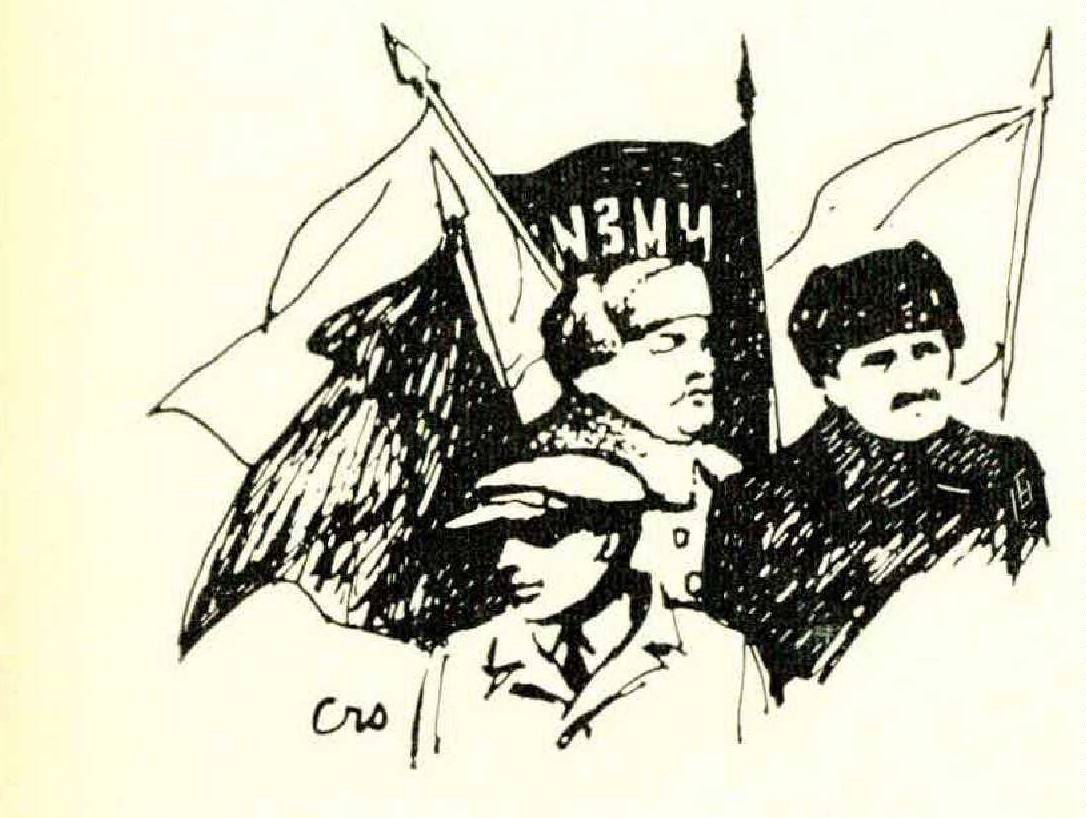
The noise from Moscow these days is as bleak as the frozen Russian winter.
In public and even in private the Russians strike out against the United States as a matter of casual daily routine, as if Washington were solely responsible for everything wrong in the world today. For the limited Western community here, the prevailing Soviet mood is neither pleasant nor amusing. Moscow, at least for the moment, gives the appearance of taking almost savage delight in the problems of others, mainly the Americans.
To hear the Kremlin and the official press tell it, you might think the East-West equation offers nothing of mutual interest to either the Soviet Union or the United States. The public Soviet argument suggests that under present circumstances it is futile to think about a SovietAmerican accommodation of any sort. And so the incessant antiAmerican haranguing goes on.
Washington’s military and political posture in Southeast Asia is seen from this capital as the classic example of a vast and evil conspiracy proving American criminal intent on a global scale. The crisis in the Middle East is treated in the same manner. And it does not stop there.
America’s domestic ills, from urban problems of poverty and slums to outbursts of racial tension, support either what the Soviet Union wants to believe about the United States or what it wishes to draw attention to. Thus international pressure against the dollar becomes a symbol of a faltering political system in the United States. All this endless and often distorted Soviet comment on the American scene constitutes a careful attempt to argue that time and history are moving not with the United States, but away from it.
Inaccurate scorecard
The problem with this peculiar Soviet preoccupation with American foreign and domestic policy is that it is misleading. It lacks perspective because Moscow either fails or refuses to deal in public with its own shortcomings both at home and abroad.
What is missing is balance, an accurate scorecard which takes into account the twists and turns of Soviet policy, sometimes successful, sometimes not. Such a reading is not always easy in a closed society that tolerates little, if any, open criticism about the conduct of official Soviet policy. The Kremlin has always been acutely sensitive to outside advice of any kind. This is partly the result of an overriding inferiority complex in this country, and partly due to a belief that whatever the Soviet Union does will be distorted and ridiculed in the Western world.
But it is not enough for the Soviet Union to argue its successes within the framework of American failures, or at least what Moscow sees as American failures. That is not an accurate record; it is simply one assessment based on a single set of Soviet ground rules. The other side of the picture is a closer look at Moscow’s record through the clatter of 1967, the fiftieth anniversary of the Soviet state, and the first months of the new year.
None of the answers
Within Western diplomatic circles, among some Russians, and within the foreign community generally, there is very little to support the extraordinarily boastful attitude coming from this capital in recent months. As one respected Western diplomat put it: “For the Russians, 1967 was a bad year in almost every way.” He sees nothing to suggest an improvement in the coming year. The problem, he says, is that Moscow has all the problems but none of the answers.
Secretary of State Dean Rusk has often said that under no circumstances would he trade Washington’s troubles for those facing the Soviet Union. A glance at the Soviet foreign and domestic record over the past year or so perhaps proves the Secretary’s point.
This is not to suggest that everything the Soviet Union has tried during this period failed. Such is not the case. For the second year in a row, the U.S.S.R. enjoyed a good agricultural harvest, a factor critical to the health of the entire Soviet economy. The Middle East crisis deepened Soviet influence in that area of the world. It also raised a whole host of new difficulties ranging from heavier Soviet economic outlays to possible Arab disillusionment with Russian commitments. Moscow also can take satisfaction from a decline in U.S. prestige as a result of the Middle East and the Vietnam War.
But whatever Moscow’s successes, the list of setbacks or serious difficulties would still seem to dominate the Soviet diplomatic ledger.
Reform and rebellion
On internal affairs, now this country’s major preoccupation, the Soviet economy, specifically economic reform, continues to be a source of concern. The Kremlin remains deeply committed to reforms that would help to decentralize the economy by giving plant directors and other lower-level personnel broader authority to take decisions without interference from Moscow.
But the point about reform is that the question tends to be more political than economic. To push the reform successfully, the Kremlin must first deal with the far more complicated dilemma of the Communist Party and its inhibiting influence on critical economic matters. Thus far Moscow has chosen to avoid the issue. Moving the Party out of the economy means tampering with its fundamental authority, and the implications of this are something the Kremlin apparently is not prepared to grapple with at present.
Accordingly, the Soviet economy continues to plod along, with some improvement but without substantive progress in key areas the Soviet leadership is most interested in, mainly on matters concerning longrange investment. There are other clear economic difficulties, such as the absence of a Five-Year Plan promised more than two years ago.
The debate goes forward at the highest levels of government over the proper allocation of economic resources within the military, industrial, agricultural, and consumer sectors of the economy. Military spending is way up at a time when heavy investment is sorely needed in other economic areas.
The list of Soviet domestic troubles goes on and on. What, for example, does the Soviet leadership intend to do with its disaffected intellectual community? Periodic trials, followed by severe jail sentences, are not likely to resolve the embarrassing dilemma of dissident writers and poets who, in spite of official pressure to the contrary, insist on publishing their works not only in the West but by clandestine means within the Soviet Union itself.
Like so many other Soviet difficulties these days, the problem of rebellious intellectuals, such as Pavel Litvinov and the recently prosecuted Aleksandr Ginzburg, Yuri Galanskov, and Aleksei Dobrovolsky, would appear to be not the result of an incorrect policy but, instead, the lack of any policy at all. The Soviet leadership clearly does not want to risk a severe crackdown of the sort that led to serious international censure over the 1966 Sinyavsky-Daniel trial. For the time being Moscow is attempting to find some middle ground between the liberals, who want a freer hand to criticize and tamper with accepted art forms, and the conservatives, who violently oppose experimentation of any kind. The result is that everybody is unhappy, especially the government, which is forced to commit itself on the deeply sensitive question of intellectual freedom.
Wait
Rising political pressures of one sort or another have clearly been felt by the ruling Soviet triumvirate of First Party Secretary Leonid I. Brezhnev, Premier Alexei N. Kosygin, and President Nikolai V. Podgorny. This would seem evident in the careful but steady erosion of Alexander Shelepin’s political base. While Shelepin still retains His Politburo membership, he unmistakenly has been moved away from the seat of power as a member of the hierarchy’s younger generation.
The Western community in this capital views the past year as one of drift for the Soviet Union. It was a year when bold decisions were avoided in an effort to limit the chance of controversy or disagreement while the Communist world celebrated fifty years of Soviet power. The best judgment here is that the Soviet leadership has conducted a holding operation on domestic and foreign affairs in recent months. It is also felt, however, that coming months may provide the West with a clearer understanding of Soviet policy directives, because, in large part, certain long-delayed decisions must now be taken.
If the domestic front seems tangled to the leadership, the same might be said of the confused state of affairs within the Communist bloc generally.
Moscow has given up virtually all hope of improving the convulsive Sino-Soviet dispute. Over the course of a little more than a year, the feud between Peking and Moscow has gotten worse, not better. The Kremlin’s only alternative now is to wait out the Mao leadership and hope for the best — not unlike Washington’s attitude toward General de Gaulle’s divisive posture within the North Atlantic community.
In Eastern Europe Rumania has pushed its independent line further than ever before. Yugoslavia continues to question certain political and economic principles fundamental to the Communist community. Czechoslovakia recently experienced a major power shuffle. The loser there was one of Moscow’s staunchest supporters, former First Party Secretary Antonin Novotny.
West German penetration of Eastern Europe is a fact, not a theory any longer. Bonn’s overtures have stirred interest even in such capitals as Budapest and Sofia, not to mention more serious inroads in Bucharest, Belgrade, and Prague, and this raises troublesome implications for East Germany and its outspoken leader, Walter Ulbricht.
Shift
That the Kremlin is concerned with all this restless shifting about in Eastern Europe is to put it mildly. There are repeated declarations from Moscow denouncing West German policy; Brezhnev apparently felt that personal intervention was called for on the spot in Prague; and SovietRumanian disagreements are now a matter of public record.
It is this sort of movement in Eastern Europe and within Communist circles elsewhere in the world that helps to explain the Kremlin’s insistent drive for a full-blown world Communist Party conference. A preliminary or consultative meeting was held in Budapest in February. The conference idea initially was raised to deal with the Sino-Soviet conflict.
A final conference, if and when it is held, would take on added significance, given the chaotic state of Communist affairs on almost every continent. Communist Parties in Western Europe are in disagreement over the proper approach to the present turmoil, and even Moscow’s relations with Havana have suffered badly during the past six months. And yet the Kremlin is convinced of the need for a conference in spite of either serious reservation or outright opposition to such a meeting as expressed by a full one half of the world’s fourteen ruling Communist Parties.
Accordingly, the Soviet Union has dropped the idea of an international meeting designed primarily to read China out of the Communist Party. The dimensions of the Soviet problem go far beyond the dispute with China. Thus, among qualified Western sources, it is felt that any eventual Party conference may mark the beginning of a serious Soviet search for ways and means to live within a truncated Communist world.
If Moscow cannot reverse an increasingly independent line taken by its allies, then it must find a way to lead this restless movement. It is sometimes suggested that the Kremlin’s next step is a shift of position to permit both unity and diversity within a Communist community now seriously fractured at almost every point on the globe. This may mean more stress on state-to-state rather than Party-to-Party relations, an approach Moscow already has experimented with in the case of China, the United Arab Republic, and Syria.
Reading Washington
On the Soviet-American front, Vietnam remains the obstacle to improved relations. It apparently will remain so until an accommodation is reached. The Soviet Union seems less disposed toward peaceful initiatives in the Southeast Asia crisis today than, was true when Kosygin went to London just over a year ago. Last summer’s ArabIsraeli conflict further complicated the Soviet-American equation.
And America’s preoccupation with a national election year in coming months will not help. The history of U.S. elections is that they tend to inhibit any serious effort to improve relations between Moscow and Washington. Unless the EastWest climate changes dramatically, 1968 is not likely to raise acceptable diplomatic initiatives from either capital.
The rising political turmoil in the United States has already had an effect here. Moscow seems less certain about its reading of the American political scene than it was some months ago. It appears somewhat bewildered by the strength of opposition to President Johnson and by the depth of political division over Vietnam. This seems to trouble the official Soviet community, possibly from fear of misinterpreting Washington’s next step in Southeast Asia.
Even the U.S. diplomatic mission here is deeply discouraged about its capacity to accomplish anything useful between Moscow and Washington in the months ahead. Some American diplomats suggest the Soviet leadership may welcome a prolonged breather provided by the presidential election. It is felt that the Kremlin is now anxious to turn inward in an effort to resolve problems at home, as well as difficulties among Communist Parties outside Soviet borders.
Moreover, Western sources believe Moscow is in a particularly cautious mood after suffering a series of 1967 setbacks and embarrassments ranging from a major space tragedy — the death of a cosmonaut in flight — to the defection of Stalin’s daughter to the United States.
Mischief
Outside the sphere of SovietAmerican contact, there is nothing to indicate any major Soviet policy departure on wider East-West questions. This means continued Soviet attempts to exploit U.S. difficulties within the Western allied world and among nonaligned nations. Seeking wider divisions in the North Atlantic community, the Soviet Union no doubt will keep heavy political pressure on West Germany, while trying, particularly in scientific and technical fields, to move closer to both France and Britain.
Western experts in Moscow interpret Soviet pressure of this sort as having more to do with mischief than with any serious new Russian attempt at major diplomatic breakthroughs at the expense of the United States. They also concede that the Vietnam War, coupled with a presidential campaign, may wind up in some political gains for the Kremlin.
Nevertheless, if Washington was glad to see 1967 pass, and even if Washington is worried about the coming year — as one might suspect from the distant vantage point — the same might be said for Moscow. The point is that the United States can claim no monopoly on international problems these days. The Soviet Union has more than its share in spite of what Moscow would have the West believe on the basis of its feverish anti-American propaganda of the moment. —Richard Reston