Reader's Choice
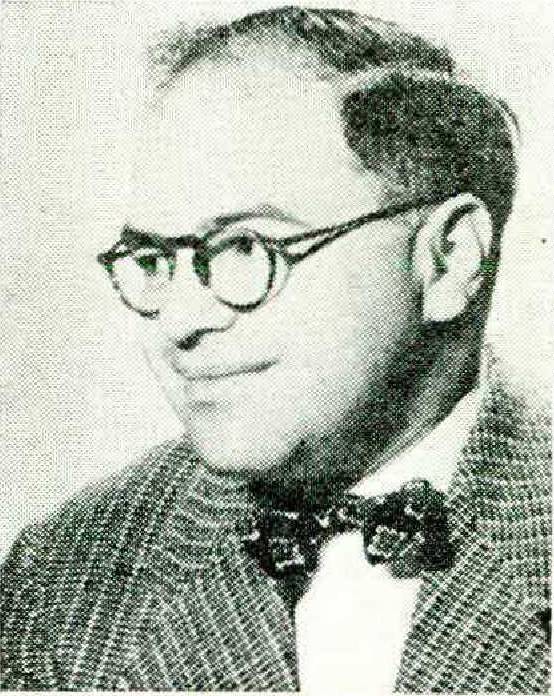
BY OSCAR HANDLIN
In EARTHLY PARADISE (Farrar, Straus & Giroux, $6.95), ROBERT PHELPS has assembled a coherent account of the life of Colette using her own words. This device has already been used in a French compilation by Germaine Beaumont, and even Margaret Crosland’s biography some years ago depended heavily upon passages from its subject’s books. Mr. Phelps has performed his task skillfully. There is ample biographical material in the novels, and selections from letters and from journalistic writings fill out a story rich in personal as well as literary interest. One of the most eloquent voices in modern French literature is thus allowed to speak for itself.
Colette was born in 1873; she died in 1954. Her life traversed an era of tremendous change in society, in values, and in modes of expression. Her own experience was full. The husband she married at the age of seventeen threw her into the brilliant but corrupt world of Paris journalism at the end of the nineteenth century. He appropriated her first writings and published them under his own name. In time she rebelled, left her husband, and embarked upon a scandalous liaison with the daughter of the Due de Morny. Colette continued to write, but also played the mime in the music halls, danced, and took occasional acting roles. For a while she ran a beauty shop. She entered upon a second marriage and then a third — happiness for her was a matter of changing troubles.
Nothing in Colette’s experience was likely to generate illusions; her novels dealt boldly with the most difficult problems of personality. Human life was by nature impure; to grow was daily to lose the innocence with which men were born. Yet if she was without illusions, she was not without faith. Humans could find relief in love, in work, and in watching the earthly paradise about them. To be sentient was the daily miracle of life, for it established a communication between the individual and the world. The conviction akin to pantheism which animated her novels, particularly those of the interwar years, also gives life to these autobiographical selections.
PARISIAN WOMEN
The glittering life of the cafés and the salons in which Colette moved did not really conceal the underlying tensions that disturbed the society of the Third French Republic. A losing war in 1870 and an unsuccessful social revolution a year later left a sense of guilt and frustration even among the Frenchmen who enjoyed the material prosperity of the last quarter of the century. For the less fortunate there was bitterness and deprivation as well. And just as Colette’s experience illuminates the haut monde in which she moved, so the role assigned to humbler women throws light on a much more popular contemporary demimonde.
The vast submerged mass of common women, unhappily, leave behind even fewer records than the common men; these are not the characters of heroic history. They are more likely to make an appearance in the pages of realistic novels than in works of scholarship.
It is the great virtue of EDITH THOMAS’ THE WOMEN INCENDIARIES (Braziller, $7.95) to bring these neglected people to life. The book is much broader than its title indicates. It deals, in the first instance, with the false accusation that the female riffraff of Paris burned down the city after the repression of the revolutionary Commune in 1871. In actuality, this moving account of the part women played in the Commune also presents a dramatic picture of the experiences of the wives and mothers and daughters of the poor in the great cities of the nineteenth century.
Thousands of other women flocked to Paris in the years of the salons, not to enjoy its high life but to supply it with labor. As the urban population grew, the distance between its two classes widened — between the self-indulgent possessors of wealth, to whom every luxury was available, and the great mass teetering on the edge of destitution. The two groups were distinct in culture and way of life as they were in economic position. To Americans who imagine that the problems of the urban poor are recent or necessarily connected with the special situation of the Negro, the picture of the life of Paris women will come as a shocking revelation. The young girl arriving in the big city had
access only to menial labor, and at wages that made starvation a daily threat. Poverty and inferiority of status left her practically without rights. Without a male “protector,” she was helpless. In this class, marriages were less common than unions libres, the illegitimate products of which were doomed to repeat the experience of their parents.
The other, more fortunate sector of society was callous in its disregard of the problem; and the halting debate over women’s rights was largely irrelevant to the hardships of the masses. It was not surprising, therefore, that women flocked to the standards of the Commune. The most active participants in the uprising of 1871 were men and women from the provinces and from abroad. Such people were not socialists; nor were the Communards particularly sensitive to female rights. The women stood at the barricades in outraged protest against a social order which considered them unworthy of attention.
Two months elapsed between the Commune’s defiance in March, 1871, and the reduction of the city by the troops of the Versailles government in May. All Paris suffered from the siege: normal economic life broke down; food became scarce; fear spread. But the crisis brought women unprecedented liberation. They entered into politics, formed a Union des Femmes, organized clubs in the wards, and gave serious thought to the reform of education. When the fighting became fierce, they served not only as nurses but also as soldiers, shoulder to shoulder with their men. Men and women alike were victims of the savage repression which followed the fall of the Commune. Their leaders of both sexes who were not shot on the spot were sent into penal servitude in Guiana or Polynesia.
Miss Thomas is a competent storyteller. She knows her way among newspapers, memoirs, and the dossiers of the archives; and she displays the judicious temperament of the trained historian. Yet she is also a woman who, during the Second World War, took part in the Resistance as a member of the Union des Femmes Françaises. Her own share in the fighting of 1944 no doubt influences her thinking about the barricades of 1871, for she writes with impassioned indignation. She succeeds in bringing to life memorable characters — the teacher Louise Michelle, the journalist André Leo, the Russian Elizabeth Dimitrieff, and Blanche Lefèbvre, the dressmaker who wore a red scarf and a revolver at her waist and loved the Commune as others loved a man.
STYLE, FORM, AND CHAOS
HORTENSE CALISHER still writes as if there were a relationship between what she has to say and how she says it. Her two novellas THE RAILWAY POLICE and THE LAST TROLLEY
RIDE (Little, Brown, $5.00) are composed with such precision that any summary of their plots would do little to convey a sense of their quality. Their themes — friendship, love, and loneliness — are developed not through a simple story line, but through careful composition of detail which in the end conveys a total impression.
Miss Calisher is a modern writer; she has read Faulkner, and her narrative sometimes seems both intricate and leisurely. That appearance, however, is the product of art, not of carelessness. Every word, every sentence, has been deliberately contrived to serve its appropriate purpose. The characters, relatively few in number, appear in vague outline at the beginning of each story; they live at the end. And the unfolding plots gradually draw the reader toward comprehension.
Any work with a distinct sense of style is attractive in a period in which tolerance of chaos corrupts the talented and shields the untalented.
THE CRYING OF LOT 49, THOMAS PYNCHON’S most recent novel (Lippincott, $3.95), reveals the waste of a considerable talent. A young woman is inexplicably named executrix of the estate of her former lover, who was probably a millionaire. In the effort to liquidate the assets, among them a stamp collection, she discovers what may be a conspiracy of global proportions, the overt manifestation of which is a secret postal system, W.A.S.T.E. Or all this may be a figment of her imagination.
The test, which never comes, is the sale at auction of the stamp collection, Lot 49, which contains the evidence that might give the conspiracy away. Whatever meaning Pynchon may have intended to impart to the story simply fails to come through. He depends upon shock, outrage, and exaggeration. Yet the effects of hyperbole soon become boring. It is mildly amusing to find the heroine called Oedipa Maas; but by the time we have met Peter Fallopian, Manny DiPresso, and Stanley Koteks, Genghis Cohen ceases to be funny.
Formlessness also provides cover for the untalented. That accounts for the inflation of LEROI JONES’S reputation as a poet and dramatist. HOME (Morrow, $4.00), a collection of “social essays,” reveals how meager are his gifts as a writer.
The book deals with subjects as diverse as Cuba, the Negro writer, and American culture. Its parts have in common only the strident self-assertiveness of their author. Uninhibited by information, he is fatally attracted by such bogus authorities as Leo Huberman, Paul Sweezy, and W. A. Williams. Jones flings out his opinions without regard for the limits of logic, or even for the meaning of words. Some of his sentences are pure gibberish.
That does not matter to him, because he is describing a world of hallucination, one in which America is the great enemy of mankind. Its journalists, paid to disseminate lies by a usurious ruling class, conceal the fact that Lyndon Johnson is a war criminal. Uncle Sap (or Uncle Sham) is the universal economic and sexual exploiter. “Most American white men are trained to be fags”; perhaps because they never understood the sex act, they must prey upon others. Liberals like Michael Harrington are as much at fault as the rest of the middle class; the NAACP and other secret societies have sold out just as have Ebony and CORE. Even SNCC seeks “simply a continuation of the status quo.” James Baldwin, Martin Luther King, Ralph Ellison all have been corrupted, and the appearance of Negro progress is an illusion. Whenever a “select coon” gets ahead, it is a sign of “subservience, cowardice, and loss of manhood.” For Jones, the true heroes are Castro, Nkrumah, Sukarno, Nasser, and Sonny Liston. “The Black man’s paths are alien to the white man. Black Culture is alien to the white man.” Therefore the blacks of the world must unite to destroy the America we know.
Jones is therefore insensitive to human values; he considers whites devils and the black population their pawns. Freedom is an abstraction, not a goal that real people seek. Hence the special character of his judgments. “Fascism has been made obsolete by . . . Americanism.” South Vietnam and South Korea are “the most brutal governments in the world.” Mexico and West Germany persecute dissenters. “India for all practical purposes is still a Crown Colony.” After all, “how do you know that the Indian people love Nehru?” Only China and Cuba are free. It never occurred to him, in Cuba, to wonder whether the enslaved people really loved Castro, or why the promised elections on that island were never held. The sight of a “wild mad crowd” was enough.
Who listens to this call for chaos? Jones has delivered speeches in front of the Hotel Teresa. However, the readers of his books, the audiences at his plays are not his black brothers, but precisely the members of that white middle class which is the object of his abuse. His apocalyptic vision of the “Last Days of the American Empire” supplies kicks of a sort to those irked by the uneventfulness of their own lives.
Jones is thus Rastus in reverse. The old minstrel grin assured the audience of an earlier day that all was jolly down in the quarters where the blacks rollicked. When Jones proclaims, “I advocate a violence, a literal murdering of the American socio-political” system, he sparks the excitement of an audience thrilled by the danger that the blacks may get out of hand. The stereotypes are the same, only now upside down.
THE POLITICAL PROCESS
In THE GERMANS AND THEIR MODERN HISTORY (Columbia University Press, $4.50), FRITZ ERNST, formerly rector of the University of Heidelberg, surveys the disastrous half century within which Hitlerism reduced German civilization to chaos. His point of departure is 1911, when the Kaiser’s empire was at its apogee. The First World War, the dilemmas of the 1920s, the rise of the National Socialist Party to power, and the cataclysm touched off by the invasion of Poland in 1939 are the subjects of this analysis.
Dr. Ernst is not primarily concerned with presenting a narrative of events. A humane and learned scholar, he seeks to understand why his countrymen yielded to the impulses that ultimately destroyed them and brought ruin to most of Europe. The German people in these years tossed and turned “as if burning with a fever, now to the right, now to the left, in the belief that this makes it easier to endure . . . but the fever is in its blood.” Dr. Ernst is unwilling to believe that any flaw inherent in their culture made Germans more susceptible either to war or to Nazism than their neighbors. The fault was historical.
Dr. Ernst was never himself a Nazi and offers no apology for the movement. But he insists that not all who joined Hitler’s ranks were evil. Some were morally apathetic and others opportunistic; but among the Brown Shirts there were also some genuine idealists moved by genuine conviction. The central theme of the book is the explanation of how laudable motives were thus distorted.
Defeat in the First World War had a shattering effect. It shook the influence of the old authorities in the state, in society, and in education, and undermined confidence in the capacity of intelligence and reason to grasp the realities of life. A substantial group of Germans thereafter were prepared to clutch at illusions in the face of the economic and social crises of reconstruction.
But there was a more immediate cause for the rise of Hitler to power. The Weimar Republic collapsed not by reason of any defect in its constitutional structure, but because utopianism drained away its popular support. It was easy enough to find imperfections in the government of the 1920s so long as its critics compared it with ideal societies rather than with feasible alternatives. Under such circumstances, the Republic’s apparent inactivity, its incapacity for dramatic action built up a body of activists anxious to do something, no matter what. Revolutionaries of the right and of the left offered the possibilities of action that generated faith even if it did not meet the tests of reason.
MASTER SPY
Among the many unfortunate results of the McCarthyite hysteria was the dense fog it cast across the true nature of Communist espionage. The grossly exaggerated accusations against people who had signed liberal petitions or had participated in unorthodox causes obscured the fact that serious Soviet agents had been transmitting information to Moscow ever since the formation of the Communist Party. It is as absurd to disregard these genuine conspirators as it is to fear a universal Red network.
THE CASE OF RICHARD SORGE
(Harper & Row, $5.95), by F. W. DEAKIIN and G. R. STORRY, deals with one important segment of the Soviet espionage apparatus. Richard Sorge became a secret agent of the German Communist Party in 1919. In the next few years he used plausible academic connections as a cover while he plotted a revolution that did not come. He then moved into the service of the Communist International, working in Moscow, in Scandinavia, and in England. In 1929 he entered the Red Army, which dispatched him to Shanghai, where he remained for four years, acquiring a respectable identity as a journalist. In 1933, his Superiors sent him to Tokyo, where he played the role of newspaper correspondent and Nazi Party member. Not until late in 1941 did the Japanese uncover his identity. Sorge lost his life, but in the intervening years he had provided his Communist masters with a continuing flow of information drawn from the German Embassy and from a wide network of Japanese informants.
The authors of this book have diligently searched the record and have soberly brought together the scattered fragments that throw light on Sorge’s lurid career. Sorge was no dreamy idealist, but a wily and ruthless operator who preyed on the idealism of others. The universities, research institutes, and newspapers provided him an ideal cover, whether in Frankfort, in Shanghai, or in Tokyo. And gullible men and women of all nationalities, including Americans, were ready to act as his tools.
The ultimate irony of the story was the failure of the Soviet military intelligence to use the materials Sorge supplied them. Well before the German invasion of Russia in June, 1941, Sorge had fed to the Red Army full reports of Hitler’s intentions to attack. They were filed in Moscow under the heading “Doubtful and Misleading Information.”