The Peripatetic Reviewer
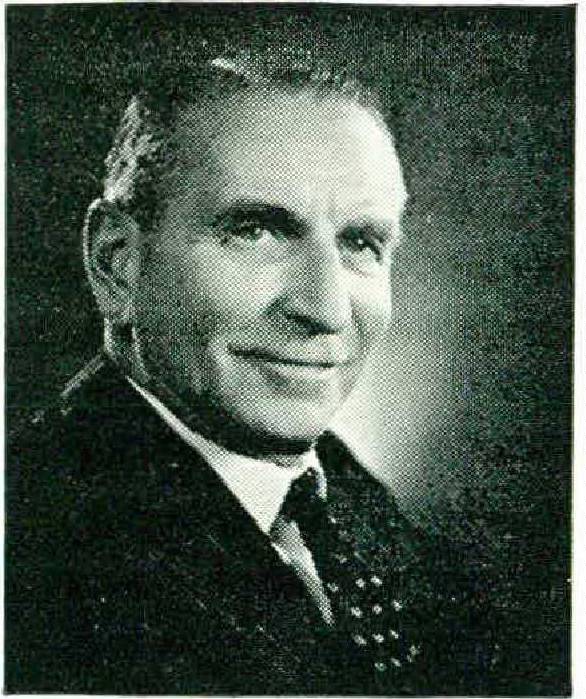
BY EDWARD WEEKS
EARLY in my apprenticeship in Boston I had my first run-in with plagiarism. There were four of us who composed the Atlantic staff in 1923: Ellery Sedgwick, the editor, Florence Converse of Wellesley, his right hand, who ran the show when he was away and did all the cutting and fitting, Caroline Church, a classicist from Radcliffe who proofread every paragraph with incredible resourcefulness, and myself, first reader and chief bottle-washer. A short story of a bucolic love affair carried on against the irascible opposition of the father seemed uncommonly good to “F.C.” and me, and with our recommendations went up to the boss. Mr. Sedgwick liked it well enough to term it “a discovery”; he enclosed the fee with his letter of appreciation, and he asked the author, whom none of us had heard of, to tell us something of his background and whether we were right in believing that he was at work on a novel. The reply was slow in coming; meanwhile the manuscript had gone to Miss Church’s desk to be copyedited, and she demurred. “I wish you wouldn’t schedule it yet,” she said. “Tell the boss I’m uneasy about it. I suspect I’ve read something very like it somewhere, and I’ll try to run it to earth.” It took her more than a month before she found the original in the collected works of Frank Stockton; the buggy in which the courting took place had been changed to a Ford in our version, and the dialogue had been updated, but in every other essential this was the short story as Frank Stockton told it. Our discovery elicited no comment from the plagiarist, and the check had been cashed. This was my first burn but not the last.
Plagiarism succeeds because no one can have read everything, and this occasionally produces comic results. After her death, some early verses by Edna St. Vincent Millay were submitted to us by her husband. They were a long way short of her best work, and we let them go, but Miss Millay’s fame was tempting, and eventually one of the women’s magazines succumbed. The poem which they featured in a big splashy page had originally appeared in Robert Louis Stevenson’s A Child’s Garden of Verses. Miss Millay liked the meter in an apprentice exercise, and had copied it out stanza by stanza, at the end devising two or three additional stanzas of her own.
I learned to be wary of manuscripts coming into us from penal institutions. Usually they were the work of inmates who had time on their hands and whose intelligence had stirred the sympathy of a social worker or the prison chaplain. One’s instinct is to help, and certainly every editor knows that O. Henry did some of his earliest and best writing while serving time in a Texas jail. The warden made him the drug clerk, and on the evening rounds as he dealt out medicine to the ailing, he heard their life stories or as much as they cared to tell. But for every O. Henry serving time there are a score of prisoners confident that they can fool the world by copying.
And they do — at least for long enough to get the first check. Rather recently the Atlantic received several typed pages of light verse from a young poet serving time in a reform school. His work was uneven, but the best of the poems were deft and amusing, as they should have been, for the two we accepted and published had originally appeared, the one in a book, Wry on the Rocks, by Steve Allen, the comedian, and the other in an anthology, Creative Youth, published in 1925. The point here is that though we editors were fooled, our readers were not; both poems were spotted for us within a fortnight of their appearance in the Atlantic.
In 1962 Arthur Koestler established in England a series of awards in his name to encourage prisoners to do creative work in literature, music, painting, and the handicrafts. The judges of the fiction included such well-known writers as J. B. Priestley, Henry Green, V. S. Pritchett, and Philip Toynbee. The English prison novel which won first prize in 1963 was Young and Sensitive by Don Robson. Hutchinson published the book, which sold about three thousand copies, translations appeared in French and German, and the reprint rights were sold to Penguin Books. Now two years later it has been discovered that Young and Sensitive is an almost verbatim copy of an American paperback novel entitled Fires of Youth by Charles Williams, which had been dumped on the English market. The chief difference between the two is that the English version omits certain pornographic passages, proving, at any rate, that the copyist was fastidious.
Despite this plagiarism the Koestler Awards are continuing; indeed, the prizewinning novel for 1965, The Caldron, an hour-by-hour account of the Battle of Arnhem, has already been accepted with pleasure and credence by Macmillan. The author writes under the nom de plume of Zeno, and it is to be assumed that both the judges and the editors have been more vigilant this time. The truth is that if he is clever enough, the plagiarist can get away with it, and the companion truth is that some reader somewhere is sure to run him to earth, often in an incredibly short time.
SCHLESINGER’S KENNEDY
At Harvard, where he was the youngest member of the faculty at the time of his appointment in 1946, ARTHUR M. SCHLESINGER, JR., was known as an irascible liberal. He was an undeviating Democrat, one of the founders of the A.D.A., who took leaves of absence to write speeches for Stevenson in 1952 and 1956. His public endorsement of JFK in the primaries of 1960 made him welcome at Hyannisport, and the publication of his polemic Kennedy and Nixon and his hard-nosed effectiveness in the caucuses at Los Angeles commended him for a Washington appointment. His position in the White House, as William Shannon puts it, was that of “resident intellectual,” scouting for views and eliciting confidences from friends in Latin America, from Reinhold Niebuhr, or from Kornienko, the Soviet diplomat, which the President might not otherwise have heard. Kennedy had warned his inner circle not to keep journals, but after the Bay of Pigs he specifically charged Schlesinger to take note of what was happening. The research for his three big books on the Age of Roosevelt had given “Young Arthur,” as Cambridge called him, a working knowledge of the Democratic Party. Now as a participant in the Executive branch he was to feel the power, tHe complexity, and the exhaustion of the machinery of government.
What sets A THOUSAND DAYS (Houghton Mifflin, $9.00) above most political memoirs is the trenchant writing, the disciplined assimilation of detail with which Schlesinger leads up to the momentous decisions, the affectionate observation of his hero and Mrs. Kennedy, and the diamond edge of his exasperation and prejudice. His method is to move from the perimeter into the center, as he himself did, and I think he is particularly successful in characterizing JFK’s attitude toward his rivals and his Cabinet, and in showing us how swiftly and how thoroughly Kennedy was briefed for the presidency by the twentyfour task forces which reported to him in the interregnum. The historian makes much of the President’s bafflement and indignation over the Cuban disaster, “an option,” as he puts it, “which became a necessity” under the combined pressure of the CIA and the Joint Chiefs. He shows us the skill with which Kennedy conducted himself in his initial visits to De Gaulle, Khrushchev, and Macmillan, and no one can miss the anguish of the mounting crises over the Bay of Pigs, the missile sites, and recurrently, Berlin. In the re-creation of these scenes the historian is at his best.
The text was written with incredible speed — 420 manuscript pages in August alone — and under such tension it has gained in urgency what it may have lost in judgment. Schlesinger is passionate in his commitment to the President; he signalizes, but himself does not possess, Kennedy’s sardonic modesty; and it is often difficult to determine how far his prejudice has colored the scene. For the Republican Party he has a partisan’s contempt, especially for Nixon, Dulles, and George Humphrey. He invariably, and I suspect for the most part rightly, rejects “the hard line” of the military, specifically as advocated by General Lemnitzer (“If we are given the right to use nuclear arms we can guarantee victory”), and he rails against the deterioration of the State Department in its enormous growth. He waged a futile war against State’s guarded, padded, “automatic writing,” such as the continued use of “Sino-Soviet unity” long after the split had made such a tag nonsense. Secretary Rusk he describes as being slow and circumspect. Yes, but what Schlesinger tells us by inference is that Kennedy was surrounded by quick-deciders; that Harriman, ambassador-at-large, was reporting direct to the President, that the swift availability of Bundy and the National Security Council made State seem cumbersome, and finally, that JFK, unlike Eisenhower, was determined to be his own Secretary of State. In the midst of so much impulsiveness the President needed a brake, which he had in Rusk.
The most valuable things in the book are the splendid portraits of JFK and Jacqueline; the description of those dinosaur bodies, the Pentagon and the State Department, and of how their very size is resistant to cfliciency; the fundamental question of whether Kennedy tried to run things with too tight a rein, as Woodrow Wilson had before him; and the superb narration of how the President behaved in his finest hours. His asides, tossed off in heat, touch the heart, as when in the midst of the missile crisis he said to someone, “I guess this is the week I earn my salary,” and on the last day, when Khrushchev had thrown in his hand, JFK remarked, “This is the night to go to the theater, like Abraham Lincoln.”
ISABELLA GARDNER
In every generation, Boston has produced strong-minded rebels, some like Amy Lowell who stay on at home defying convention with impunity; and others like Harry Crosby who are driven by their rebelliousness into exile. When Isabella Stewart Gardner left her well-to-do family in Manhattan to marry a wealthy Bostonian, John Gardner, she carried with her an impulsive love for painting and sculpture, a zest for entertainment, a style that would have set her apart anywhere, and an aggressiveness that grew with the years. She was not beautiful, but her animation and her independence, her insatiable curiosity, and her sympathy made her powerfully attractive to men. She was hostess of the most spectacular salon Boston has known, and although conservatives never ceased to resent her as a willful outsider, they came in the end to acknowledge her unique contribution to the city.
Her husband adored and indulged her, with the result that “Mrs. Jack,” as the town called her, moved and spent with a freedom others envied. She read Dante with Charles Eliot Norton, she made an early capture of Henry James, and when she was forty-six and he was twenty-nine, she spent months encouraging and cajoling F. Marion Crawford toward his career as a novelist. There were times when she drove her husband to jealousy; he must have had a hand in breaking off the affair with Crawford, and he angrily withheld permission to exhibit John Singer Sargent’s famous portrait of her after the scurrilous remarks about it overheard at his club. His reaction when such ructions occurred was to take her abroad, where she made fresh conquests, such as James McNeill Whistler and Anders Zorn, scandalously exaggerated in Town Topics, and where Mr. Jack renewed her affection by buying the rubies or the paintings she yearned for. I have said enough to indicate how long we have waited for a book which would piece together Mrs. Gardner’s travels and adventures, her conquests and her acquisitions, as LOUISE HALL THARP has done in MRS, JACK (Little, Brown, $6.95).
While she lived, Isabella Gardner, the inner spirit, was as elusive as she was conspicuous, and she left doors closed behind her which no biographer can hope to open. Mrs. Tharp has chartered her heroine’s course with understanding; she has described the coterie of young men who were requisitioned as attendants each year from Cambridge; through correspondence and table talk she has followed the more famous friendships: with careful citation of figures she has shown how the magnificent collection in Fenway Court was acquired and housed; and with tenderness she has written of Mrs. Gardner’s grief at the death of her only infant son, and of the courage with which she pursued her ideal after her husband’s death. Here are the gay parties, when Sando the Strong Man posed behind a screen at Fenway Court; here is the woman who mixed the paint and flung a sponge of it high against the wall to show the tint she was after in the interior court; and here is the woman who in her old age lived so frugally to preserve the endowment of “her palace” for the city. It is a pity that stylistically the text does not do her full justice.
CREATORS OF THE BORZOI
When last autumn Alfred and Blanche Knopf celebrated their fiftieth anniversary in publishing, one realized that no other husband-and-wife team in American letters has ever approached their record. In 1921 the Knopfs made their first trip abroad, and ever since they have worked unceasingly to cultivate American interest in foreign authors: this was their major achievement, signalized by the fourteen Nobel Prize winners on their list, the last being Mikhail Sholokov of the Soviet Union. At home they have had a moderate share of Pulitzer Prize winners. Their overall performance is now commemorated in the anthology FIFTY YEARS, edited by Clifton Fadiman (Knopf, $10.00): novellas, short stories, essays, and verse; prose as versatile as The Stranger by Albert Camus. “Two Friends” by Willa Cather, Farewell, My Lovely by Raymond Chandler, “Enoch Soames” by Max Beerbohm, “The Fly” by Katherine Mansfield, “Snowing in Greenwich Village” by John Updike. It seems to me stretching a point to have crowded in the brief introductions by Joseph Conrad and Joseph Hergesheimer, I find the excerpt from E. M. Forster sentimental, and I miss Conrad Richter’s Sea of Grass. But all in all this is an anthology of rare quality and versatility, and like all Knopf books, exquisitely made.