Jack Kerouac Comes Home
Dan Wakefield is a free-lance writer and spent the 1963-1964 academic year as a Nieman Fellow at Harvard. He is the author of ISLAND IN THE CITY and a 1955 graduate of Columbia College.
by DAN WAKEFIELD
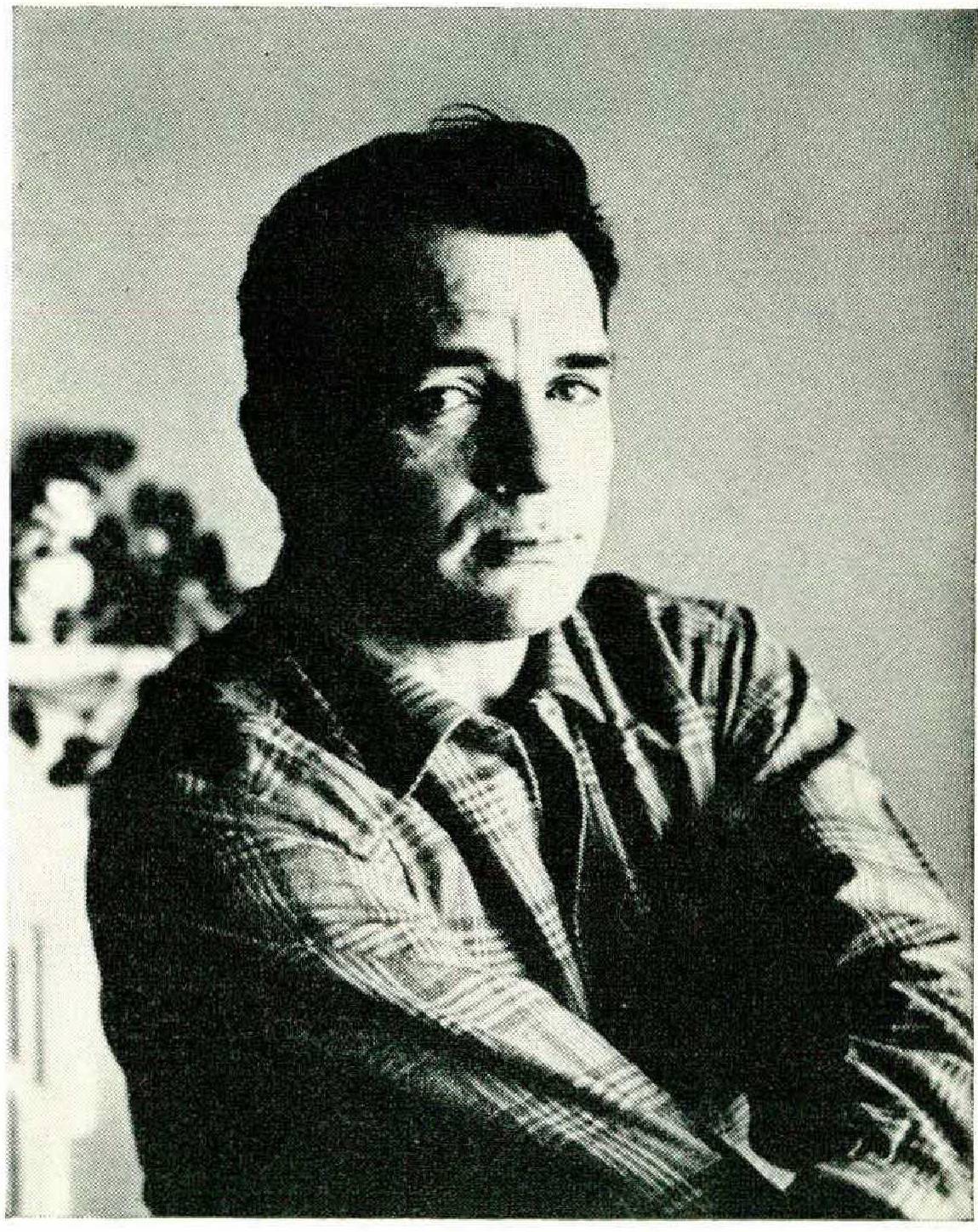
The Beat Generation is the name of a young people’s social, literary, and travel club that started up in this country after World War II and first gained nationwide prominence in 1957. Though it once was mistakenly believed to be a dangerous revolutionary movement, it actually served society by providing restless American youth with an alternative to graduate school, the old man’s business, organized crime, and careers in copywriting. The club’s “philosophy” has been summed up by one of its spokesmen as “Jazz-Junk-PotPoetry Ideas Orgasm God!” a set of stimuli which still attract countless thousands of new recruits each year, not only in the United States but all over the world. The mass popularity and acceptance of the movement among the young has resulted in the loss of its original chic, and its followers now are identified with the derogatory label “beatniks.”
After the Beat movement and its leaders were first discovered and lionized by the news magazines, the fashion journals, and the Sunday supplements, they soon were yanked from the “in” file and relegated to the dustbin of fashion by our cultural commissars. The journalist Alfred Aronowitz, who amassed a great deal of data on the Beats at the time of their vogue, has recently been discouraged from writing a book about the subject because, the publishers explain, the material is “dated” now.
As the movement itself has fallen out of fashion, so have the reputations of the several talented writers who popularized it in the first place. The principal victim of this process has been Jack Kerouac, who has had to bear the brief glory and extended burden of being known as the main literary “spokesman” of the Beats. Probably no other recent American writer — no, not even Norman Mailer — has been subjected to such a barrage of ridicule, venom, and cute-socialacumen as Kerouac. For years now he has been battered by aloof social and literary observers, including myself, who have never failed to make satirical mileage out of his connection with the no longer fashionable Beat brigade. It seems only fair and appropriate then that the laugh is on us. For it turns out that Kerouac became bored with the Beat scene even before we squares had heard about it, and by the time the life he described in On the Road was being discussed and dissected all over the country, he had left it and gone home to live with his mother.
All this is revealed in Kerouac’s latest book, Desolation Angels, an “autobiographical novel” which gives an inside, personally felt and observed account of the Beat movement and his own part in it, ending with his defection from active membership in 1957, just before publication of On the Road. The book is very sad and sometimes funny, sparing of neither the hero-narrator nor his fellow travelers, and it provides a far better feeling of the awful forlornness of modern bohemian life than could possibly have been conveyed by any of us condescending outsiders.
The book begins in the summer of 1956, when Kerouac, feeling the first symptoms of disillusionment with the Beat life, goes up to spend a month alone as a fire watcher on a mountain in the Pacific Northwest. The chronicle continues when he comes down to rejoin the gang in San Francisco that fall, and ends with his travels to Mexico, Paris, Tangiers, and home again in the spring of 1957. The first two sections, “Desolation in Solitude” and “Desolation in the World,” were written in 1956, and the last section, “Passing Through,” was not written until 1961, though it follows chronologically in the narrative.
For the sake of “fiction,” the personalities described are issued false names, rather like funny hats that serve more for decoration than disguise, since the characters are readily identifiable not only by their descriptions but also by the pseudonyms Kerouac gives them, which sound very much like their real names: thus Allen Ginsberg is “Irwin Garden,” Gregory Corso is “Raphael Urso,” William Burroughs is “Bull Hubbard,” Peter Orlovsky is “Simon Darlovsky,” and so forth. For the sake of historical accuracy, the book comes supplied with a sympathetic introduction by Seymour Krim, the most perceptive of the Beats’ few literary defenders, in which the characters are officially identified for the benefit of outsiders and the background is laid out in terms of the history of the movement and of the author.
AT the time of the book’s beginning in 1956, Jack Kerouac was thirty-four years old and had pretty much been on the road for more than a decade since being discharged from the Navy in World War II as a “schizoid personality” (a catchall category under which several healthy poets of my acquaintance were weeded out of the service during the Korean War). He had come down from Lowell, Massachusetts, a textile town in French-Canadian Catholic New England country, and entered Columbia College, where he broke a leg playing freshman football and set a record (the claim is his own, and subject to dispute) for cutting classes. The two most important influences in his life at this formative time seem to have been Thomas Wolfe and Allen Ginsberg. He ate potato soup and listened to Bach with Ginsberg, who became his friend and guru, though Kerouac still maintains that “I never understand what he’s driving at.” He read and absorbed the books of Thomas Wolfe, from whom he was later to borrow a great deal, including those literary “O’s” that Kerouac still sprinkles through his pages (“O Proust . . . O West Coast!”). Kerouac wrote a Wolfeian first novel in 1950, The Town and the City, which he since has dismissed as a “novel novel” — that is, done in the style of traditional fiction. A year after it was published he hit upon a new method for his writing, which marked a departure from Wolfe in speed if not altogether in style. The new technique, which has sometimes been called Instant Literature, is explained by Kerouac as
a new way of writing about life, no fiction, no craft, no revising afterthoughts, the heartbreaking discipline of the veritable fire ordeal where you cant go back but have made the vow of ‘speak now or forever hold your tongue’ and all of it innocent go-ahead confession, the discipline of making the mind the slave of the tongue with no chance to lie or re-elaborate. . . .
Whatever the drawbacks of that method, it enabled Kerouac to step up his literary production at a terrific rate. It had taken him three years to write the traditional Town novel, but using his new Instant formula, he knocked off On the Road in three weeks, and in a mighty record-breaking burst, raced through The Subterraneans in three days and nights. Kerouac’s supercharged assault on the typewriter resulted in a total of eleven books completed between 1951 and 1956. And here lies the reason for a great deal of confusion about his career. At the end of his frenzied five years of production, the eleven books had been, as Allen Ginsberg explained, “published in heaven,” but none had been issued by any of the infernal — or earthly — publishing houses. The first of the books to be published for the public was On the Road in 1957, and since then, eight others from the batch of eleven have been brought out, at roughly annual intervals through 1963. Kerouac, then, had already composed the entire legend of the Beat life before the first installment of it was published and the fashionmongers discovered it, by which time he had already kicked it. No wonder the present volume describing his disillusionment with that life wasn’t brought out till now! It would have ruined the other installments —just as if Ben Casey announced he was quitting medicine and then asked you to keep on watching the programs about his life as a doctor.
Kerouac — called “Duluoz” in the series — is the hero and narrator of these adventures, and the popular notion of the public is that he is one of those subversive antiheroes, a brooding intellectual type who is out to overthrow home, country, and mother, stealing occasional candy bars from kids along the way. Much closer to the truth is the observation made by Robert Phelps a few years ago, in reviewing one of the books of the series, that Jack Kerouac is the closest thing we have to Jack Armstrong. The identification of Kerouac as the all-American boy is not made in a spirit of contempt, but of recognition of his basic qualities, which shine forth from this newest and most mature of his books as stubborn innocence, idealism (even in disillusionment), respect for family, love of friends, and a kind of romantic nostalgia that is special to Americans, a reverent remembrance of
sweet days of home that I didn’t appreciate when I had them — afternoons then, when I was 15, 16, it meant Ritz Brothers crackers and peanut butter and milk, at the old round kitchen table, and my chess problems or self-invented baseball games, as the orange sun of Lowell October’d slant thru the porch and kitchen curtains. . . .
Yet Kerouac still wants us to believe in his public image as a wild mutineer mystic: he tells us he is, but the evidence he offers is not convincing. For instance, he confesses that he got depressed one night and “called Madeline Watson on the phone to make a date with her to see if she was going to marry me, a kind of fit of madness like I’m subject to, I really am a ‘madman bum and angel.'”
Then so am I, and so is Holden Caulfield and Zooey Glass. In fact, I can hardly think of anyone I know who has not at some time or other got depressed and called Madeline Watson. Madmen? Bums? Angels? No, just American boys.
Though Kerouac is most famous for his jazzedup, breathless outbursts of language — the sort of thing Ginsberg described as “bop prosody” — he is also in love with the old-fashioned folksy style that speaks of “staying up late-a-nights,” or “I see the yellow moon a-sinkin as the earth rolls away.” Scratch the surface of Kerouac’s prose — and pose — and you are likely to find the heart of Carl Sandburg rather than Céline.
In its style as well as its content, Desolation Angels, the inside story of the Beats, turns out to be the most thoroughly American book since the autobiography of William Allen White. We were told that the Beat Generation was a reaction against (among other things) the Eisenhower age and the spirit of togetherness, and yet its members created an intense togetherness of their own. Seymour Krim speaks accurately of the Beat “community” and of “Kerouac’s gang,” and in fact it was a real old-fashioned American gang, more in the tradition of the Hardy Boys than the Bowery Boys. Kerouac is the leader and is always aware of that role and its responsibilities. When he finds two of the fellows arguing, he tries to patch things up because “I don’t want none of my boys fighting.” When the gang gathers in Mexico City, Kerouac notes that “it was a great occasion. There we all were in the same room,” and a few days later they have their picture taken, “like a Team.”
This is an all-American team, and it never really seemed comfortable playing the Buddhist-OrientalZen-Contemplation games that it tried so hard to master, with a result that was rather like a bunch of missionary-taught Zulu tribesmen earnestly trying to sing “What a Friend I Have in Jesus.” When Kerouac went up to meditate on the mountain, he soon was longing to see the old gang and wishing that he had “the whole bloody mess of boredom done. . . .” He was anxious to return to his captaincy of the “Team” — the Desolation Angels, a club that performs best on the road.
THE basis of the whole Beat movement is movement, an effort to escape the spirit of a mobile society simply by accelerating that society’s own habit of keeping on the go. As every Cunard customer knows, getting there is half the fun, and yet you must finally arrive, and then what? Kerouac’s disillusionment with the “cure” of travel, especially of the answer offered by exotic foreign places, is a frank and eloquent expression of a common American ailment, known to corporation men on expense account and college kids on summer abroad as well as to Beat seers and bards on the road. This sort of disillusionment is universal, and yet I think it strikes Americans harder because they expect so much more to begin with, and so are especially disappointed to find “how unbelievably bleak the actual world is after you’ve dreamed of gay whore streets and gay dancing night clubs.” I am sure that many of us could define our European adventures with Kerouac’s complaint that “you imagine that when you get to Paris . . . there’ll be raincoats and Arc de Triomphes of brilliant sadness and all the time you’ll be yawning at bus stops.”
When movement and drugs and mysticism failed to offer a sufficient answer, the Beats turned to that patented American domestic-brewed elixir, that famous surefire fix, success. Ginsberg prescribed it for Kerouac and all the gang in Mexico during that dreary fall of 1956; he announced that the time had come for them to make it. Get published, sign autographs, buy islands, be photographed and famous. The world was waiting, the time was ripe. Ginsberg was elated at the prospect, and, perhaps with a Howl of joy (rather than protest), announced his plans for the glorious future: “I go out and buy everything I want in the supermarket — I have a voice in the supermarket!” Corso was also anxious to make it, and he summarized his own version of that desired condition with a line that says more than a ten-pound sociological study about the American dream of success: “When I meet Kirk Douglas I don’t wanta have to apologize.” In other words, behind their beards, the Beats were just like all the rest of us.
But success proved as sour to Kerouac as it did to the Man in the Gray Flannel Suit, and his accounts of the Beats on the make are among the saddest parts of the story. There is lunch at the Russian Tea Room with Salvador Dali, an audience with William Carlos Williams, parties and dinners, and posing for photographers from Mademoiselle. The whole business is best summed up when Kerouac dutifully gets high for the photographers from Life and stands on his head while they snap his picture. Of course Life never used the pictures, and Kerouac wearily remarks that the whole thing “was an awful waste of energy and in a way a grisly joke.”
After he had sold On the Road to a New York publisher, Kerouac took off for Tangiers to visit William Burroughs, but it turned out to be his last bleak journey: “It was on this trip that the great change took place in my life . . . turning from a youthful brave sense of adventure to a complete nausea concerning experience in the world at large, a revulsion in all the six senses.” In a room in Burrough’s apartment building he took an overdose of opium and dreamed not of Xanadu, but of America. Tired and homesick, he had to wait for the gang to arrive — Ginsberg and Orlovsky were on their way — and in what must surely rank as one of the fine ironic moments of American letters, Kerouac passed the time sitting on the roof of Burroughs’ hotel reading Van Wyck Brooks.
Kerouac is often a considerate and helpful friend to his buddies, and during his time in Tangiers he typed up the manuscript of Naked Lunch as a favor to Burroughs. Like many other readers, Kerouac wondered why Burroughs had put so much “vile” stuff in his book. Was it a new stylistic-philosophic approach to life and letters? No. Burroughs explained that he was simply trying to purge himself of his Midwestern background once and for all: “It’s a matter of catharsis where I say the most horrible thing I can think of. ... By the time I finish this book I’ll be pure as an angel, my dear.”
Kerouac’s homesickness wasn’t helped by the arrival of his teammates, and he wasn’t in the mood when Ginsberg called up to his window (“JackKee”) to come down and play — a very gregarious and friendly guy is that mild-mannered “mad” poet — but he went down one evening to a scene that marked the death of the Beats and the birth of the beatniks. It was one of those moments when a private myth that was sold to the public had been taken over by the buyers, a bunch of “chicks” and “hipsters” who had made a pilgrimage to Burroughs’ hotel:
. . . just like in New York or Frisco or anywhere there they are all hunching around in marijuana smoke, talking, the cool girls with long thin legs in slacks, the men with goatees, all an enormous drag after all and at the time (1957) not even started yet officially with the name of ‘Beat Generation.’ To think that I had so much to do with it, too, in fact at that very moment the manuscript of Road was being linotyped for imminent publication and I was already sick of the whole subject. . . . But all I could do was sit on the edge of the bed in despair like Lazarus listening to their awful ‘likes’ and ‘like you know’ and ‘wow crazy’ and ‘a wig, man’
‘a real gas’ — All this was about to sprout out all over America even down to High School level and be attributed in part to my doing!
Just like Dr. Frankenstein, Kerouac had created a monster — the beatnik. He was doomed to watch it grow and multiply, bearing, like that other monster, the name of its embarrassed inventor.
Back in America, Kerouac made his last road trip, accompanied not by the Beats but by his mother, and searching not for kicks but for a home. Their bus trip from Florida to San Francisco is one of the most true, comic, and grizzly journeys in American literature. The terrible fatigue of that cross-country pilgrimage is relieved only by Mrs. Kerouac’s remedy of aspirins and Cokes three times a day to “calm the nerves.” Kerouac’s mother, sixty-two at the time, is a staunch and admirable little lady who wonders why his friends have no jobs and why they have become Buddhists instead of “sticking to their own religion.” To Kerouac she is the “best” and “most important” person in his story, and he is proud to want to make a home with her in spite of all Freudian fashion. Few men who have been through the big city’s meat grinder of one-night stands and frantic “affairs” can fail to appreciate Kerouac’s reflections on his mother’s quiet virtues compared to
all the girls I’d known in America who dabbled at blue cheese and let it harden on the sill! Who’d spent hours before the mirror with blue eye shade! . . . Who’d left me because I complained! . . . My mother provided me with the means for peace and good sense — She didnt tear at her slip and rant I didnt love her and knock over dressers of makeup.”
O single girls in single apartments! O America! Home at last, Kerouac reports that he and his mother live in a house miles from the city (New York) and that “a peaceful sorrow at home is the best I’ll ever be able to offer the world, in the end, so I told my Desolation Angels goodbye. A new life for me.”
We do not yet know what literary fruits the new life has produced, but there is no doubt that this book is a fine ending for the old life. If the Pulitzer Prize in fiction were given for the book that is most representative of American life, I would nominate Desolation Angels. Of course, the judges would probably cast it aside as some kind of dangerous, antisocial tract about the lives of a group of rebellious oddballs. We seldom recognize a real American Dream when we see one.