The Young Drug Addict Can We Help Him?
Since it was founded in 1893. the Henry Street Settlement has served the children and the young people of New York‘s Lower East Side, helping them to cope ivilh disease, filth, overcrowding, gang warfare, and other problems arising out of poverty and unemployment. In the last decade, drug addiction among teen-agers has been an ever more serious concern. The article which follows has been drawn from THE ADDICT IN THE STREET,a book of interviews with heroin addicts edited by JEREMY LARNERand shortly to be published by Grove Press. Mr. Larner is the author of DRIVE, HE SAID,a novel that won the $10,000 Delta Prize.
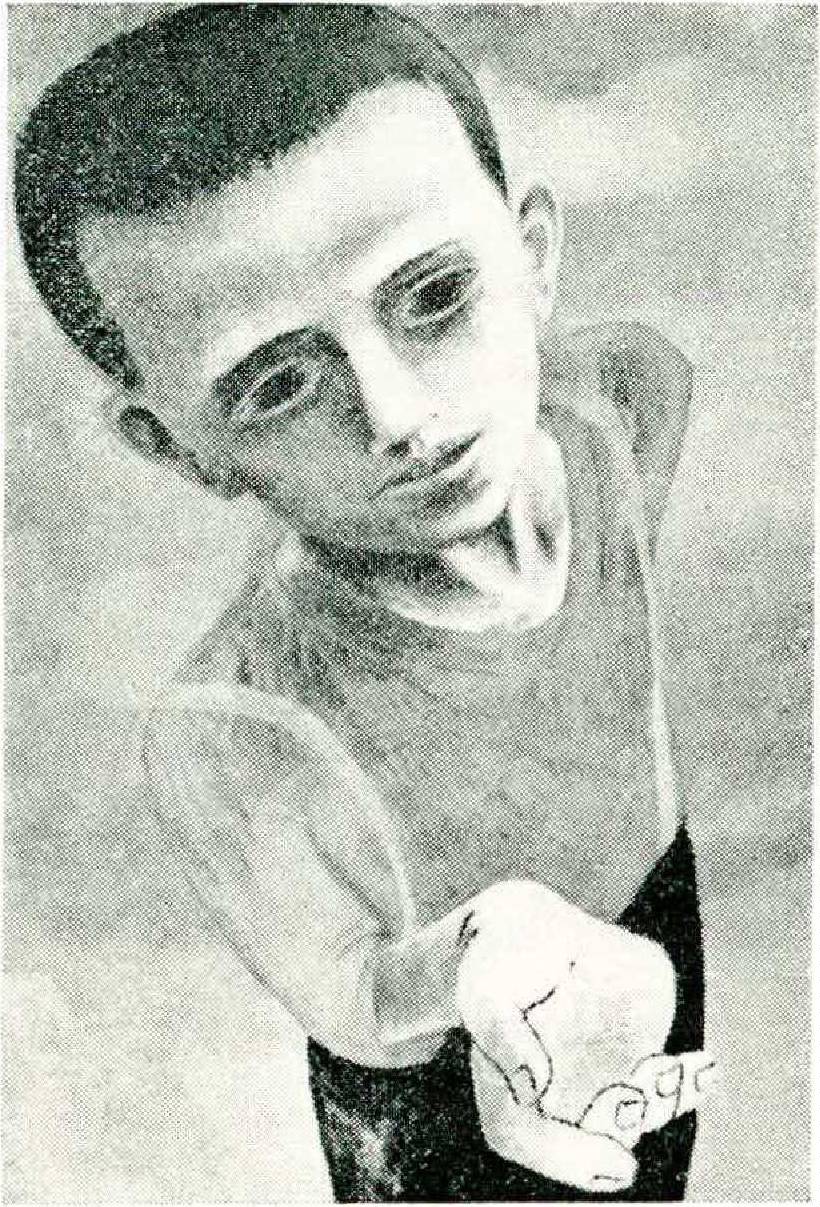
THE first teen-age narcotics users in the neighborhood of the Henry Street Settlement on New York‘s Lower East Side were not the newcomers to the area. They belonged to the older families, Irish, Italian, and Jewish. It was not long, however, before they were joined by teen-age members of the new Negro and Puerto Rican families who had begun moving in at an accelerated pace after World War II. By 1951 the younger brothers of these teen-age experimenters were telling social workers in the Mental Hygiene Clinic of their fear of being drawn into the same trouble.
Through the joint efforts of neighborhood churches and settlements, a narcotics information center was set up to help addicts and their families as drug use spread through the area. In all this, Helen Hall, the director of the Henry Street Settlement, and Ralph Tefferteller, who has been associate director for eighteen years, took a leading part. Mr. Tefferteller was working closely with the young boys who came to him in those days bewildered by their predicament and unwilling to face the fact that they were hooked. The statements quoted here were drawn from hundreds of hours of tape-recorded interviews which he held with the young people he was trying to help. What kind of people become addicts? How do they feel about themselves and others? What are their lives like?
The drug addict is not a phenomenon entirely of his own creation. Though he has placed himself outside society, he has by no means left it behind: he is, in fact, hopelessly dependent on the institutions of society and absolutely dominated by fear of them. With the cooperation of law and custom, the junkie lives in constant threat of torture, arrest, and degradation. He is treated and cured, escapes and is recaptured, shakes free and falls back, dreams and despairs, resolves and capitulates– always, in the end, capitulates. He has no choice, it seems; the frenzy of his suffering has gone far beyond mere will.
In the popular mythology, if a drug addict can manage to kick his habit, he is cured. In reality, addicts are constantly kicking and returning to drugs again. Arrest, for example, means kicking cold turkey, which accounts for the addict’s dread of arrest and perhaps for the fact that he is almost certain to go back on heroin the day he is released from prison. But there is a physical motive for the kicking-and-returning cycle which is mostly unknown to nonaddicts. I am referring to the mechanism of tolerance, whereby an addict in pursuit of euphoria builds up his daily dosage until simply to get “straight” – that is, to keep from experiencing withdrawal symptoms – he may need hundreds of times the narcotic that would kill an ordinary person. To get high the addict needs even more. Thus a habit is likely to be constantly increasing, a predicament which demands accelerating activity in begging, borrowing, burglary, shoplifting, prostitution, and all the other means by which the free-enterprise addict obtains funds.
“I guess it was sort of a lark,” Dom Abruzzi said. “I was sixteen years old exactly, and I was walking with one friend on Henry Street, and he asked me, ‘Have you ever smoked pot before?’ I didn’t know what pot was, and I had to ask him, so he told me it was marijuana, and I almost fell with shock. But then he talked about it, and he explained to me it was nothing to worry about, and three days later I was smoking my first weed. Three months afterward, I started snorting heroin. I got in on that because it was so cheap – a dollar and a half apiece to split a three-dollar bag – and everybody was getting so high and seemed so happy. A few months after that I took my first shot. That was a skin pop, and was followed a week later by a main line. But for the first few years, I would say, I was an oddity, because I kept myself in check; I didn’t get a habit. I was going out with a very wonderful girl at the time, and I wanted to marry her. But in the next few years that followed, I got arrested once, then a second time, and the girl and I broke up. We had money in the bank, in a joint account. After we broke up, I took it all out and spent it on dope, and that’s how I acquired my first habit.
“I didn’t even know I was hooked. I was sitting on a bench right here in the Vladeck project; I was yawning, and my eyes were tearing, and a friend came over to me and started talking to me and said, ‘Dom, you know you’re sick.’ And for the first time I realized I was actually addicted. I had the habit, and I had to have it. So from then on it was every day, and when I ran out of the bank money, I began borrowing. I soon saw I couldn‘t support my habit just by running around borrowing money or trying to steal money, and I started pushing. I made a lot of money pushing. I wasn‘t looking to make money, but it just so happened, a stroke of if-you-want-to-call-it luck, I made a lot of money. I could support my habit, I could buy clothes, I even bought a car; and odd as it may seem, I could work, just so long as I had my tools — my needle, my eyedropper, and my heroin. I would take a shot maybe three times a day while I was at work, come home, and continue selling dope. I did that for seven or eight months.
“I was young and I was small scale, actually; I guess I coulda went deeper into it, but I was scoring in weight an eighth, and it was costing me fifty dollars an eighth. And I would buy one eighth or two, or I would get a quarter, the equivalent of two eighths. An eighth is one eighth of an ounce. Half of it I would use for myself because I had to, and the other half I would sell, and it would bring me back three times the amount I paid for it. I did no cutting; the heroin I was getting was considered very good. Now it could have been cut a number of times, I could have made much more money, but I guess I just didn’t want to cut it. The quality was terrific, and I didn’t want to be bothered. I was just thinking of my habit. Today the same dope would turn over an enormous amount of money, because you don’t find the same stuff anymore.
“To buy my heroin, I could go to any part of the city. At that time, I knew some people on the west end of Harlem; it was the Spanish-Italian section. It’s all according to who you know at the time.
“After seven, eight months of dealing I stopped it. I was really fed up. I went to a Dr. W. on Forty-seventh Street, who supposedly will take you off the habit by lowering the shots every day. The price was sixty dollars a week, double for two weeks. But it didn‘t help, and the disadvantage of it was that I stopped dealing, and I found myself in a hole with money and everything. I lost my car, I lost my job, and I was back in the street with holes in my pockets and seven days of beard on my face.”
A NUMBER of addicts are able to support their habits by working at regular jobs – until their tolerance increases, and the resulting need for heavier dosages sends them into illegal activities. When tolerance increases still further, the addicts express their desire to kick, speaking urgently of the pains and humiliations of addiction and summoning up dreams of rehabilitation and respectability. If the addict can kick a big habit, he can start all over on a much smaller, cheaper dose of drugs. Social workers and the various clinicians who help addicts undergo detoxification programs estimate that over 95 percent return to addiction.
Of course, psychological habituation as well as physical dependence is involved in addiction. Probably there are character types more readily vulnerable to narcotics and addiction than the socalled normal person.
“I don’t know how many times I’ve wanted to scream and say the heck with it,” Dom Abruzzi said. “I wish I could walk away from it like it was a rotten egg. But I’m stuck with the fumes; I need it, I can’t walk away.
“So I went to the hospital one week in August, another week in October, and each time I got out I was clean, but I was so anxious, so mentally disturbed at the idea of getting off, that I was actually nervous. Do you know that guys actually get sick, even when they’re clean? As soon as they hit the streets, they’ll get butterflies. And before you know it, it’s on your mind. And of course you have this damn habit, this mental thing you’ve built up for years and years. You’re so afraid – you want to stay away from it, but the first negative thought in your mind, or somebody coming over and approaching you about it, that’s it. You forget any idea of kicking. You forget it completely, whatever you‘ve said in the hospital about staying off – all this is forgotten. You start to pace again, and you’re running to get it, and you’re gonna do something. The nervousness goes, everything leaves you, and you know you’re doing what’s in you, what your body is used to and your mind is used to. And of course this is the habit to break. And I don‘t know how to do it.”
MOST addicts who grew up in crowded, lowerclass neighborhoods were introduced to heroin as teen-agers. Bored and delinquent at school, they couldn’t face the prospect of starting at the bottom of the social ladder. College was unthinkable, and once school was left behind, there was little to do but hang around the neighborhood, and no group with which to identify but one’s comrades on the corner: in brief, no place to aspire to. Small wonder that when asked why he started on heroin, almost every addict will include in his answer the phrase “to kill time.”
To be sure, they could have gotten jobs and worked and saved and become respectable middleclass householders with families of their own. But frequently the model for such industry was missing; in almost every case, the subject reported a negative relationship with his father.
In lacking a father figure the addict lacks also a model of a successful relationship with the opposite sex, as well as a model of a breadwinner. It seems hardly a coincidence that heroin robs the user of sexual desire; perhaps the tension of such a possibility is simply too much to be endured. At any rate, more than one of the subjects broke up marriages they swear were happy ones to return to the needle. As it happens, addicts find their friends almost entirely within a male peer group of users, and the injection itself is usually performed in company and with an elaborate ritual. Contempt for women is a constant theme, typically expressed by the remark that women addicts have it easy because they can raise money by hustling.
It might fairly be asked at this point, What of the bored delinquent children coming from broken homes in slum areas who don’t resort to drug addiction? One doesn’t even have to be at the bottom of the economic heap to find oneself oppressed by boredom or sexual ambiguity. No, the portrait cannot be made definitive simply by listing the objective problems which the potential addict faces. What marks the addict is his extreme response.
Psychiatrists make a distinction between neurotic and psychotic illnesses. If we can speak of the neurotic as fighting reality, the psychotic by comparison is fleeing reality. The psychotic withdraws from his environment in favor of suffering or bliss within a world of his own fabrication. When I suggest an analogy between heroin addicts and psychotics, I am not saying that addicts are in fact psychotic, but that their response to anxiety moves beyond neurosis toward an absolute escapism from which there is small hope of rescuing them.
A vast chasm gapes between an addict’s self-portrait and his actual needs and desires as expressed through the life he leads. Almost always the urgent flow of words enforces an utter separation between thought and actuality. The compulsive retelling of his stories leads not to self-understanding but to rigid isolation.
“I’m twenty-three years old,” Danny Stern told us, “and I’ve been on narcotics for about six years. There were four or five of us; one boy had been doing it for quite a while and said, ‘Would you like to try?’ This was at a sweet-sixteen party at the Clinton Plaza. It was heroin, and it was a mainline shot from the very first. The boy who’d been taking narcotics staked everybody to a free shot, and administered it and made a big adventure out of it. He said that we could try it once and not get addicted, which I can say, so many years later, was the truth. He explained that you can steal and carry on all kinds of perverted things to get it, but at the time you’re not concerned about what’s going to happen later; it‘s what’s going to happen now and the feeling you‘re going to achieve. And the feeling is so overpowering that it clouds your mind to any idea of going to jail, breaking society’s rules, stealing, or anything like it. You don’t believe it. Of the five kids who took a shot at that party, four of us are still addicts today, that still keep in touch and see each other and try and play this big game of not getting caught by the police.
“I just came back last November from doing a hitch at Elmira. I was sent to Elmira for five years, and I did forty-eight months. And upon my getting out, the first thing I did, the first day, was look to secure some narcotics. To see if, was this forty-eight months worth it? And now that I took that fix, I feel that no amount of keeping anyone incapacitated will cure it – if you want to do it, you will do it.
“I wouldn’t consider myself a criminal at heart. I’m disturbed to a degree, because I like narcotics and I wouldn’t want anyone to sway me from the thought of narcotics. But I was subjected to perverts, wise guys, guys that had much more time than me. They send a guy that has zip-five – that’s a maximum of five years – in with a guy that has twenty to life. And that boy who has twenty to life, he’s lost hope to a certain degree. He doesn’t care how much aggravation he causes you while you‘re there. You run into so much difficulty; you have to be a fighter, and you have to fight back. And it makes you hard. You come out, you resent people, and you just want to go into a shell. And that’s only another reason I went back to narcotics. To forget the past. I don’t want to remember that forty-eight months; it was the most horrible forty-eight months in my life. I don’t think anything could have done as much harm as Elmira. I don’t feel narcotics has done any greater harm to me. It taught me things I didn’t have any need to learn, like how to steal a car. It graduated me into the higher crime bracket. It gave me telephone numbers of people to look up when I got out, more connections, more criminal activity.
“An addict is very yellow. Once he’s hooked, he‘s very afraid of withdrawal. So what he does, he steals from people he knows will not send him to jail. That takes in your own immediate family, your mom and pop’s friends. People that like you, that you know will try and help you and say, Well, it was a mistake. That is the first step in stealing for a narcotics addict.
Second step is boosting. That’s going into a dc pai tment store and walking out with two pair of pants. It‘s easy, it’s tempting, and you learn very easy. Once you do it and get away with it, there’s no stopping you from coming back and doing it a second or third time.
“ The third way is selling fake narcotics to other addicts, to fool them. In other words, you take a cellophane bag, and fill it up with any white powder that looks like heroin. And when you sec a sick addict that comes strutting down, pounding the pavement begging for a fix, you sell him this. It’s very cutthroat; you rob from one another. There’s no honor among dope addicts.
“Or you tell a fellow you’re a gopher. You know the pusher, and you’ll gopher narcotics. The addict is from another neighborhood, but he knows you, and he doesn’t know the pusher. So you promise him: give me your ten, fifteen, twenty, and I‘ll go look for the pusher for you. As soon as I score the dope, I’ll bring it back to you. What happens then is you take his money and you buy the dope, but you never bring it back to him. You take it yourself. It‘s too overpowering. Narcotics is mental; it’s also physical. One shot cures you.
“What I try and do is, being I’m taking narcotics, I try to keep it to a minimum, where I can control it. I don‘t ever want narcotics to control me again. And I feel that if it’s done rationally, with a realistic mind, to a certain degree you can control it. Unless it takes over your body. Mentally, if you’re strong and have a good willpower, you can control it to a degree.
“When it really comes down to it basically, everybody wants to be recognized. Everybody. Now these boys that stick with it – the reason they stick with it is narcotics brought them a new way of life. It‘s an adventure. Let’s face it: if narcotics was easy to come by, there wouldn’t be half as many addicts. To take narcotics right now, it’s cloakand-dagger, it’s spy work, it’s something out of television, believe me. You have to walk the street, you have to secure a pusher, you have to locate the money to buy this narcotic, you have to check in dark hallways, on roofs, go through cellars, all this running about, all the time keeping one eye out for the police.
“All this is an adventure for a young man. And when you finally get your narcotics back to your pad where you can use it, you say to yourself: Man, I did it, I beat the fuzz, I made the scene. And you feel relieved.
“Then the second stage is to take it. And that clouds your mind. You feel content just to sit there and not be annoyed and let the world go by. Just leave me alone; I’m happy the way I am.”
THE addict cannot openly express hostility; if he could, he would not have to become addicted. His only conscious gripe against society is that it doesn‘t understand drug addicts, and this gripe is made only after he is safely within the closed room of addiction. It is as though the addict were formed from the individual who doesn’t dare to be self-consciously angry or frustrated. The addict is the person under pressure who simply splits down the middle: he combines the most conventional morals and aspirations with the most completely antisocial behavior. Almost literally, his left hand knows not what his right hand is doing. He lives in the most advanced stage of alienation, alienated even from himself.
In short, addiction is a kind of “cop-out.” Without heroin, there would be pain and uncertainty, the empty anonymity of people on the bottom. But as nearly every addict will explain, when you are high on heroin, you don‘t feel a thing; nothing bothers you.
As Dom put it: “Why does an addict go back to drugs? Well, just to get away from this daily routine, this hunch on his back, this great responsibility that society has given. Every normal person takes responsibility as it comes along, and goes through life not taking drugs. But a drug addict knows the feeling of drugs, knows the great sedative it can be, and how mild and complacent it can make a person. Once you’re high, you don’t have to worry about anything, I must say truthfully: just sit back and all your problems are gone for a few hours and that’s it. But to go look for a job, or to go pay money for rent, or to give money to people . . . just working is a big problem. I think most of us are afraid of people, can’t associate with anybody; I guess that stems from our childhood. But as teen-agers and before we took dope, we had a clique; and although now they’re new faces, colored. Spanish, white, we still have this little group of drug addicts, and we stick together and are basically afraid of people.”
It is an exciting life, a dangerous life – at the farthest remove from the safety and savings banks of the middle classes. Addiction is a poor boy‘s university. One addict calls it the “Wild West” and the “New Frontier.”
It seems possible, however, that if the law were willing to call off its posses and make concerted elforts in more humane directions, much of the addict’s “Wild West” might be turned into ghost towns. Indeed, the continued activity on the addict’s “New Frontier” compels one to wonder if the addict-at-large is not vital to the social and economic systems within which he operates. For certainly the most scientific methods of treatment are resisted in this country. Most people won’t even permit themselves to see an addict when he is squarely before their eyes. Perhaps they feel some need to keep the addict outlawed and invisible; why else does the suggestion of clinics which might register addicts and supply them with controlled maintenance dosages meet with general indignation? More than one addict insists that if the large department stores would sponsor such clinics, they would save enormous sums through the elimination of shoplifting. But if addicts were treated clinically, the conditions which provoke addiction, such as unemployment and boredom and poverty and discontent, might press more fiercely on the naked eye. And narcotics bulls would lose their “Wild West.”
Surely it‘s easy to feel an irrational resentment toward addicts. As with alcoholics, the obvious physical pain that addicts suffer does not atone for their outrageous flouting of the unspoken law that forbids pure pleasure-seeking. Most people wish to punish addicts from the same instinct that makes them bridle when approached by any sort of derelict.
The addict exists, however, and incurs further resentment by wallowing in his unspeakable physical pain. It is easy enough to point out the masochistic element in the addict’s inevitable torment. Yet for the addict himself the pain is not without reward, for it is a prelude to the high, which he may call a cure, as if to acknowledge the necessity of the disease. In contrast to the prescribed social model of contentment-building, the addict fills his hours, days, and years with the cycle of search and discovery, need and fulfillment, cures and backslidings, despair and nirvana. And paradoxically, through the presence of heroin in his system, this most alienated of men finds himself utterly involved in his life process. He at least is quit of boredom and empty role-playing. He reduces himself to a need, and becomes that need.
Drug addiction, he repeatedly insists, was thrust on him from the outside. He did not invent it, it was brought to him by profiteers, and he is kept from defeating it by self-righteous puritans. Yes, he knows he is weak-willed (though next time his will is going to triumph!), but still he cannot forgive the rest of us.
The addict is an indefatigable moralizer. The only trouble is that he uses his moral invention to obscure the reality of his desires. No matter what happens, it turns out that he is doing his best but fate is against him. He really wants to kick and be an upright citizen, but the bastards won’t give him a decent chance.
Certainly the addict has a better chance if he is not hunted as a common criminal, if he is permitted to become visible rather than thrown into torture cells which only confirm his guilt and reinforce his alienation. If we are to listen to our medical authorities rather than to our captains of purity, we must be willing, experimentally, to treat the junkie with narcotics, either medicinally or as maintenance. But this is a social problem with roots deep in the psychological and historical makeup of our civilization. We cannot expect quick solutions, but it is high time we let the drug addict appear in our field of vision, that we may step toward him with some sense of shared humanity.
TOMMY BLAKE was thirteen when he started using dope. “I feel like a real idiot,” he said, “to have to go up and beg people for money. It‘s no more like I was a kid and I say, Ma, give me some money, I want to go to a movie. It’s different. What a change! Maybe I’ve lied to fill that gap. Maybe I think that I’m putting something over on somebody else. And while I‘m thinking that, I m covering up my own feelings of belittling myself of me myself being the fool, instead of the other person who’s giving me the money out of the kindness of their heart. Maybe that‘s why I do these things, to cover up. Because I really am a fool. And these lies help me hide the fear, help me hide the truth from myself.
“When I started, it was a big kick. I was doing something that nobody else was doing. Now, after all these years, you learn that you didn‘t do anything. You only put yourself back ten years.
“I should be so far ahead of myself! I should have so much money in the bank, I should have clothes, a wife – I should have a beautiful home now. I‘ve made money. I’ve made good money, honest. And it all went into somebody else’s arm; it went to put a pusher behind the wheel of a Cadillac; it went to put somebody up in a penthouse. And me: I gotta roll around in dirt, suffer pain, go to hospitals, beat people for money, lie.
“I would tell kids today, don–t go near it. And don’t ever think you’re the one that can beat it. Because nobody beats it. Everybody says, not me, I’ll beat it. Don’t ever think that, because you’ll be the first one hooked. Everybody’s said the same thing. Even after kicking, guys I know will say, I‘m not gonna get hooked now, I can use on weekends. And they‘re hooked again in two weeks. I know, because it was me. I’ve done it.
“I wish they’d wipe narcotics off the face of the earth.”
Helen Hall points out how complicated the problem of the drug addict is when she says, “We have not decided whether an addict is a patient or a criminal; whether the British system has any meaning at all for us; whether a doctor’s ‘sustaining dose‘ can be sustained in court, and whether the doctor’s reputation will be ruined in the process. Synanon House in Santa Monica on the West Coast, and now in Westport, Connecticut, claims to have brought a higher proportion of success than anything so far, but we do not yet know for whom it works best.
“It is obvious that halfway houses, some form of stopover and help, are indicated on the way back from hospital or jail to the home corner. It is also obvious that the families of addicts are some of the most bewildered and tragic people in our communities, but nowhere is much help given them. Psychiatry does not seem to have found its place in the whole complicated picture, and because the addict himself is such a pitiable personality, we are apt to overlook to some degree the train of misery he brings with him. It is their families whom they torment, their friends whom they may contaminate, and the neighborhoods where they live to which they bring fear and deterioration. New York City’s rising crime rate is in great measure attributable to narcotics users who must steal to live.
“If the community stands confused and impotent to deal with the factors present in drug addiction, think how helpless the individual addict is who struggles, first and last with his addiction, but in the process, with the police, with the courts, jails, hospitals, his family, and his community – a community that has, as yet, found few ways to help him.”