Reader's Choice
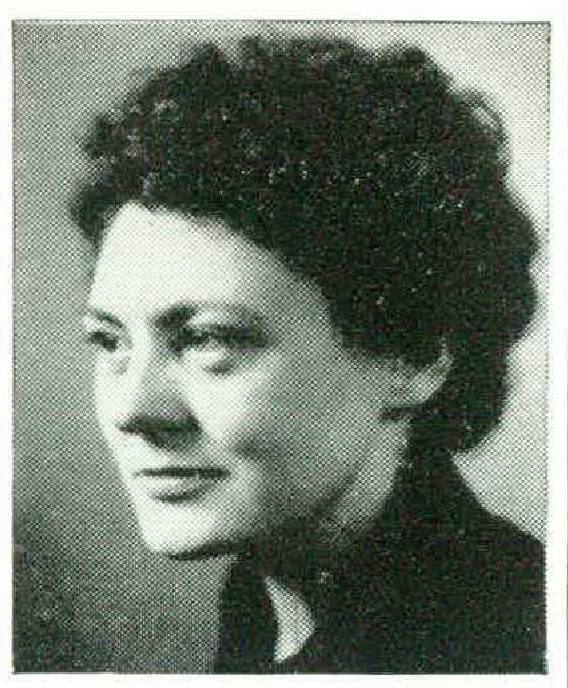
BY PHOEBE ADAMS
Since letters never represent more than a part of the writer’s life, selected letters are necessarily a fragment of a fragment, more or less tantalizing according to the interest of the invisible whole. THE SELECTED LETTERS OF ROBERT FROST (Holt, Rinehart and Winston, $10.00) are extremely tantalizing because, despite the careful editing of Frost’s old friend and official biographer, LAWRANCE THOMPSON, they raise as many questions as they answer. Mr.
Thompson refers, for instance, to Frost’s “destructive and suicidal tendencies, particularly when crises drove him to violent outbursts of rage.” Nothing in the letters indicates that Frost’s temper was remarkable. He could be waspish about Ezra Pound, whom he never quite liked, although he acknowledged Pound’s services to poetry and, however clumsily, to Frost himself. He could roar against fate or compose a sizzling diatribe against the academic landlady who accused him of damaging a chamber pot. He could pass along gossip with an air of perfect innocence, making sure that information discreditable to an enemy went where it would do the greatest possible damage.
Well — who doesn’t? Except unfortunates who can’t write.
Frost could write, although he had reason for the prayer “May God amend my spelling.” His letters are beautiful examples of idiomatic, conversational prose which looks as easy and simple as a boiled egg. But try to revise one of his sentences to get the same meaning and emotional tone with other words, and the casual surface is discovered to be a fraud disguising a most precise, calculated rhetorical structure. It seems unlikely that a fit of rage, or any other unconsidered emotion, could ever have controlled the writing of such letters.
Like any civilized correspondent, Frost adjusted his manner as well as his subject matter to his audience, with the result that his opinions are not always consistent. Perhaps, as his editor suggests, they were not consistent anyway, but Frost seems to have been amiably willing to temper the wind to certain shorn lambs of his acquaintance. He is quite consistent on two points: the importance of poetry and the right to reticence.
His opinions cover a great range of subjects and are invariably intelligent. This is, I think, the most striking impression produced by these letters — the extreme acuteness of understanding that Frost was able to apply to any topic that caught his attention. His conclusions were often unorthodox, or mischievously distorted to stimulate his friends’ wits, or put in fanciful, burlesque terms to conceal his own feelings, but they were never frivolous or foolish. This condition is by no means something to count on among authors, who are subject to blind spots like other people.
The book includes a number of letters to Frost, which is an excellent device for setting the poet’s ideas in their original context, and brief interpolations in which the editor tells where Frost was living during a particular period, how he was employed, and what was going on among his relatives. It is on affairs within the family that Frost’s letters are noticeably unsatisfactory, through no fault of his. He could hardly be expected to write pages of domestic detail and financial difficulty to literary friends who no doubt had problems of their own. Consequently, the impression is that Frost never foresaw disaster until it struck, yet his account of his son’s suicide, beginning bluntly, “I took the wrong way with him,”indicates that he had known something was seriously wrong with Carol.
There was, in fact, a great deal wrong with the Frost family, from two cases of tuberculosis to the suicide of the son and the insanity of Frost’s sister. Frost himself was continually ill with a variety of diseases, some of which he catalogued, ruefully, as imaginary. One child died young, and one daughter died in childbirth. Frost’s wife is frequently mentioned as not well and on more than one occasion is out of action with what Frost calls “nervous collapse.”
There is no clue in the letters to how much of this was bad luck and how much the result of interacting physiological and psychological morbidities among the members of frost’s family. In one moment of misery, frost wrote, “All this sickness and scatteration of the family is our fault and not our misfortune . . . we ought to have stayed farming when we knew we were well off,” but later he repudiated any claim to positive knowledge of how any life should be lived. It is natural that the letters do not tell what frost himself could not know with any certainty, but Mr. Thompson’s comments might have thrown a few glimmers of light if he had seen fit to tell something of the material conditions in which the Frosts lived. “Nervous collapse” in comfortable urban circumstances is not the same thing as nervous collapse on a farm without running water or kindred conveniences. I have no idea what any of Frost’s farms were like, and without this information, there is no knowing whether Mrs. Frost was nervous or simply overworked.
I would not complain of Mr. Thompson’s failure to provide a detailed background for the letters if he himself, in his introduction to the book, had not invited “any thoughtful and imaginative reader to ‘roll his own’ biography of Robert Frost.” The facts presented do not warrant any such undertaking.
VOICE FROM LIMBO
As a contrast to the wide-ranging, outspoken Frost letters, there is ISAAC BABEL: THE LONELY YEARS (Farrar, Straus, $6.75), a volume of unpublished stories and of letters written by Babel in Russia to his mother, sister, and wife, who were scattered about Belgium and France. The stories are few, good, and much like Babel’s published Work. The letters run from 1925 to 1939. The collection has been edited by his daughter, NATHALIE BABEL.
In 1925, Babel was a popular and well-regarded Soviet author. In 1939, after years of publishing almost nothing, he was abruptly arrested and disappeared into a silence from which no report has ever emerged except the terse, long-delayed announcement of his death. Presumably he was executed, but how and on what charge remains unknown.
Throughout the fourteen-year period of separation from his family, Babel wrote faithfully to his womenfolk abroad. He sent advice and money, reported the doings of old friends and an army of kinsmen, prattled the kind of family jokes that no amount of explanation can make funny to an outsider, and told absolutely nothing of what was going on in Russia. Neither did he tell much about his work, for he was unable to write anything that satisfied him. Occasionally he appealed to his wife to come home — it seems never to have been admitted that she had in fact left him for good — and complained because she paid no attention.
Babel was an accomplished author, an artist of distinction. It would be daft to take these letters as any sort of measure of his abilities or any indication of his opinions or feelings. I doubt that it is safe to assume his absolute sincerity even on the nonpolitical topics, which fill up most of the space not given to family news. If he couldn’t afford to mention the latest political purge, could he afford to speak frankly of anything? Who knows what a suspicious censor might make of the most innocent reference?
Thanks to the eye of Big Brother watching Babel, the ultimate effect of this author’s correspondence is that of a voice from limbo, crying irrelevancies.
THE DEEP SEA
C. P. IDYLL, professor of marine science at the University of Miami, has written a book about the deep sea, calling it ABYSS (Crowell, $6.95). Because the author has thought it necessary to explain the origin of the sea, his first fifty pages are slow going — a compendium of geologists’ speculations well peppered with scholarly reservations and qualifications. The upshot of all this is, one does not learn about the origin of the sea from Mr. Idyll, because neither he nor any other scientist knows for sure how all that water came to be where it is.
Regardless of history, the sea is there, it is deep, and things live in it. On these points, Mr. Idyll has some definite information, and once he starts rolling out the catalogue of fish, currents, migrations, and discoveries, Abyss becomes engaging reading. The text is not purely ichthyological. The author throws in bits of history and takes time to discuss the revulsion aroused in most observers, even sober scientists, by octopuses, and to consider the reason for it. He admits to an interest in sea serpents. He describes a forest of luminescent polyps activated by the passage of a fish and setting acres of sea bottom alight with cold rainbow fires. The desire to see this glorious display would be irresistible if one did not notice that Mr. Idyll has never seen it himself; he is imagining, vividly and persuasively, the whole entrancing picture.
There is no suggestion that everything in the book arises from the author’s personal study. Mr. Idyll has assembled a great pile of information about life in the deep sea, and explains carefully where his facts come from, who discovered them, and sometimes, if it makes a good story, exactly how. There is an appendix listing books for readers who wish to follow the subject further. Although Mr. Idyll is no great stylist, he is eloquent on the need for continued study of the deep sea, which he considers, with understandable bias and for very convincing reasons, far more important than exploration of the moon.
PRISONER OF THE PERVERSE
CHRISTOPHER ISHERWOOD’S A SINGLE MAN (Simon and Schuster, $4.00) is a grim, witty novel about an aging homosexual professor of literature and his battle with the normal world. George is English, long settled in California, where his accent has proved a decided social and professional asset. His housemate and lover, a man considerably younger, has recently been killed in a car smash, leaving George stranded in heterosexual, child-infested suburbia. Mention of his genuine, painful grief is so unthinkable in these surroundings that George has arranged a deception, telling his neighbors and his university colleagues that Jim has gone East for a long visit.
This odd, unnecessary maneuver is typical of George’s whole life, which has been a succession of evasions, deceits, fears, and grudges, all controlled by his unacceptable erotic habits. George is a prisoner of his perverse physical appetites; Mr. Isherwood constantly describes him in terms of purely physical functions, and George thinks of his body as an alien structure over which he has only nominal control. The creature’s illegal tastes cause George much danger and difficulty. The problem of finding a new partner, for instance, is going to involve far more wariness and diplomacy than is ever required of a man courting a woman.
Not that George longs to be normal. He despises normal men and hates women with real fury, although the only friend he has is a harddrinking divorcée. George merely wants to be left alone to go his own way with his own kind, and the ironic truth is that he has been permitted to do just that. George’s suburban neighbors avoid him but pay him no real attention. In the academic circles where he works, nobody is likely to be concerned about his peculiarities unless he is fool enough to assault a schoolboy in broad daylight. It is George who makes his own persecution, worries about the opinions of people who hardly know he exists, lies without need, and runs from imaginary enemies. George appears to be no great shakes as a teacher, but he is wholeheartedly dedicated to the profession of homosexuality.
Mr. Isherwood is agreeably unsentimental about his hero from the moment he sets George before a mirror to see what “isn’t so much a face as the expression of a predicament.”Mr. Isherwood does not suggest that George would be a brighter and better man if his tastes were either normal or legal. The question is much more basic. George is not a man, in the sense of being a true individual, at all. In every circumstance, he is first of all a member of a deviant minority, and both George and his creator find this a boring and hampering condition. But Mr. Isherwood has made the description of it very interesting, part funny, part melancholy, and inoffensive through the matter-of-fact acceptance of George as part of the way of the world.
STRANGER ABROAD
THE OFFENSIVE TRAVELLER (Knopf, $4.95) is V. S. PRITCHETT’S title for his recollections of a trip, or trips, through Czechoslovakia, Poland, Hungary, Bulgaria, Romania, Spain, Turkey, and Iran. This is a terrible lot of territory for one book, but the author does not dig deeply in any of it and so proceeds without delay along his route.
Mr. Pritchett is a tolerant traveler with a sharp eye for the shape of a landscape or a town and a kindly ear for the opinions of the locals. This equipment serves him well in Iran, where everybody is talkative, or Poland, where debate is like breathing, but severely limits his discoveries in a place like Romania, stronghold of a Communist doctrine rigid beyond discussion. Mr. Pritchett was annoyed by the political smugness of his Romanian guides (he was annoyed at being saddled with a guide in the first place), but he is a fair man; reluctantly but honestly he reports that Romania has style, that the buildings and the people are elegant far beyond the call of Communist duty, and that the food is superb.
It would be unreasonable to look for profound revelations in this book. Mr. Pritchett is simply describing what a traveler may expect to find in Warsaw or Teheran, and he does this in a gentle, unpretentious fashion. If the chapter on Czechoslovakia is a bit dull, it is because Mr. Pritchett thought the country dull and refuses, although courteously, to lie about it.
Why, then, does the honest, easygoing Mr. Pritchett call himself an offensive traveler? He repudiates the usual bad habits of the breed. “I do not refuse to drink the water; I do not see bacteria everywhere. . . . I do not suspect everyone who speaks a foreign language of being a thief. I do not scream that I cannot get a good steak in Morocco — steak travellers are the hypochondriacs of motion — a decent haggis in Naples, or an edible chop suey on Ascension Island. I do not complain of the lack of Night Life in English villages or the absence of thatch in Ohio. One thing, of course, does annoy me: other tourists. . . . To the inhabitants I am as obliging as a Portuguese. By ‘being offensive’ I mean that I travel, therefore I offend. I represent that ancient enemy of all communities: the stranger.”
This is true as well as amusing, and I wish that Mr. Pritchett had applied wit of this sort to Bulgarians and Turks instead of confining it, so very politely, to his own affairs.