Psychiatrists and the Poor
DR. ROBERT COLESis a child psychiatrist whose major interest is social psychiatry. For several years he studied Negroes and whites under the crises of desegregation in the South, and more recently, the adjustment of migrant farm families along the Eastern seaboard. He is a research psychiatrist to the Harvard University Health Services and a consultant to the Southern Regional Council.
THEY live not far from a fine old Carolina city with its light, clear air and its city living hedged on all sides by heavily farmed hills. They cultivate one of those hills — a large tenant farming family whose little girl used to travel many miles to a Negro school, passing other suitable schools on the way. She was now attending the fourth grade of one of the latter, and I had come upon her and her family because I wanted to compare their lives as they faced desegregation in that rural mountain setting with those I knew better in Atlanta and New Orleans.
I spent a number of days with them and at the same time visited a nearby white family (their son was in class with the Negro girl) scarcely unlike them in occupation, income, education, and other categories which describe how lives are spent and sometimes squandered. When I left I had gained some interesting information about how children manage — and, in this case, manage well — in difficult and changing times. I had discovered other circumstances, however, which were harder for me to accept.
The girl’s father drank heavily and was often exceedingly cruel to his wife and children. Sometimes he would be pleasant enough, but at other times he became sullen and withdrawn. Though poorly educated, he was natively a bright man and certainly a shrewd one. He had seen a local doctor about a year earlier and told him that he felt himself ill mentally, a significant disclosure for him and one which distinguishes him from many others who would not know enough or care enough to do even that. The doctor gave him what he called, as he showed them to me, “quieting pills.” They were strong tranquilizers, and they were prescribed with a message: they were all he could expect, given where he lived, his race, his class. His income. “I can’t afford much to buy these pills, so I treats them like the gold they looks to be [they are orangecolored], and I uses them for real bad times.”
What struck me and troubled me was that this man was really a rather responsive human being, with problems not too hard to fathom and easier to treat than many I have seen. Moreover, his discouraging predicament was shared by the mother of a white boy in the same school with his daughter. With five young children, she was intelligent enough and earnest enough to be ambitious for them, for their health and education. Still, with her concern, with her hard work and zealous pride in her home and family went a severe, a crippling kind of migraine. For days she would be nearly bedridden, and the consequent chaos, it seemed to me, set the stage for a recovery destined all too soon to give way to an anxious, depressed recurrence of illness. She needed better medical care than she was getting; aspirin was simply not the answer for the kind of pain she suffered. She also needed and could make good use of psychiatric care. Her husband knew this, too. One day, while talking of racial matters in the county, he slipped into another vein: “One thing both races lack equally here is good doctoring care for those who need it and want it bad.”
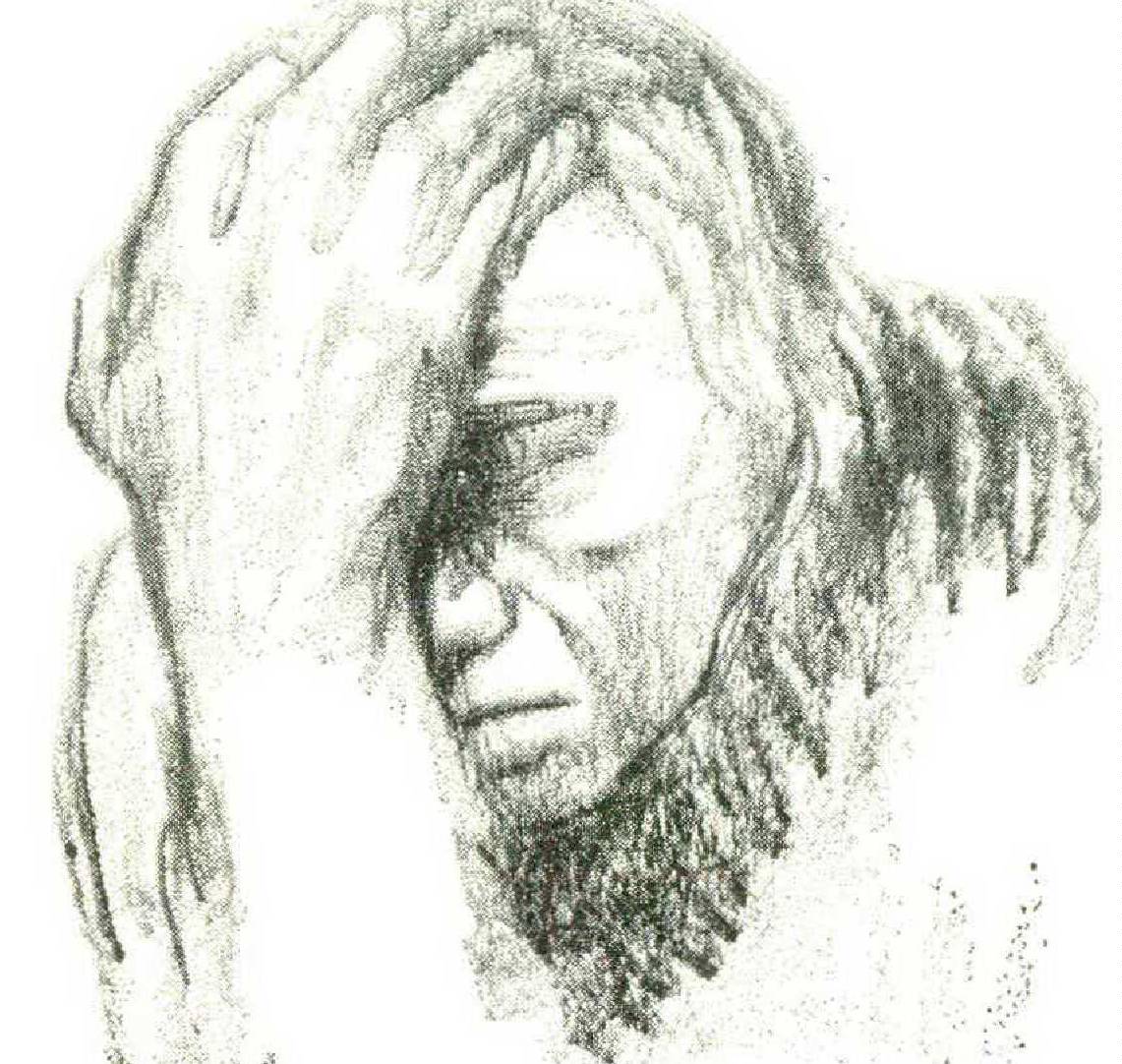
There are also those who need medical or psychiatric care and would not dream of asking for it. Yet, if we are to reach these people — and, given sensible planning in a rich country, we should aim to do just that — we will have to keep in mind what I once heard a public health doctor say about some Negro sharecroppers: “We can cure their infections, but I’d hate to have to know what they’re thinking.”
Psychiatrists have to know a lot about what their patients are thinking and about what they themselves are thinking. In the United States they are called in consultation on so many problems that one would suppose they know a good deal more than they sometimes do. The demands upon them are enormous, and some of them inappropriate. Unlike the work of their friends in many other fields, their work is still to be satisfactorily defined, and information badly needed by others from them is sometimes simply not to be had at all.
Psychiatrists should not be particularly blamed for their predominantly middle-class clientele or for their increasing concern with the certification of their position in medical centers and wealthy suburbs. Although some people think of them as gods, there is ample proof to the contrary. Psychiatrists are all clearly human, and in America clearly doctors. Whatever general criticism can be made of them is also applicable to others in American prolessional life. Lawyers are now beginning to see how hard it is for the poor to obtain “equal protection under the law,” and for the first time our highest courts are prodding them in this regard. Educators are troubled by their failure to reach millions of potentially educable, even gifted children. The fact that money purchases the best medical care and that the want of it frequently consigns one to the worst is a fact of life throughout the nation. When psychiatric goods and services follow similar patterns of distribution, they are simply conforming to the way our society is set up.
Yet, psychiatry cannot afford to be protected in American life. Before it lie the mysteries of illness and healing, the great tasks of sorting out genetic and environmental influences, of learning how they come together in the astonishing diversity of ways which mark off one human being from another. Equally challenging are the reasons why people do not become ill, the sources of human courage and dignity. Illness is not only a matter of what we dream but how we live.
Freud’s long and constantly creative life showed a concern for both individual psychopathology and its relationship to social and cultural forces. Faced with these twin problems, certain American psychiatrists have shown a similar breadth of interest and responsibility.
There have been important advances in what is now called social psychiatry. Before the term came into popular professional use, Anna Freud had done her moving and courageous work with English children under the Nazi blitz, establishing the practical value of psychoanalytic advice in a Serious social crisis. In America a few bold spirits were intent on finding out how our isolated and rejected Indians survived individually, with their separate culture. In the thirties, Sol Ginsberg, a compassionate New York psychiatrist, studied the reactions of the unemployed to their grim and unnerving lot; and years before the 1954 Supreme Court decision, Erik Erikson had described the effects of segregation on the Negroes in America.
These pioneering efforts were followed by three major studies which stand out as landmarks: the Yale study by A. Hollingshead and F. C. Redlich of the relationship between social class and mental illness, and the two studies which have come from the social psychiatry unit of the Cornell Medical School — the Stirling County Study of Psychiatric Disorder and Sociocultural Environment and the Midtown Manhattan Study, whose findings were published in book form under the title Mental Health in the Metropolis. These carefully documented researches have all been concerned with the relationship of class — social and economic background — to mental illness, and with the incidence of mental illness in cities and towns. What we learn from these reports is revealing about psychiatrists, their patients, and our society. There is, in fact, a selfscrutiny, an honest self-appraisal in these investigations which represents the very best tradition of scholarly research.
THE Yale study, published under the title Social Class and Mental Illness, concerns itself with the relationship between social class and both psychiatric symptoms and care, and is a sociological and psychiatric study of New Haven. It was done with scrupulous concern for statistical validity. The class structure of the city was analyzed and described. The patterns of mental illness and its treatment are shown. The book reveals that poor people tend to have a higher incidence of diagnosed psychoses, the most serious form of mental disease, and also receive radically different forms of medical and psychiatric care for their difficulties. Whereas the wealthy and the well-to-do are more likely to be treated with individual psychotherapy, purchased privately or secured at clinics which largely provide for the middle classes, the poor are usually sent to hospitals and, once there, receive the less humane treatment of electric shock or drugs.
The authors of the Yale study are not content merely to emphasize these cold-blooded facts and the influence of money on psychiatric diagnoses and treatment. They examine the interesting relationship of the psychiatrist, as a middle-class citizen, to the large number of poor patients he may be called to see and subsequently — persuaded by forces in his own life — reject or diagnose in ways reflecting more about his life than their illness. These two social scientists, Dr. Hollingshead and Dr. Redlich, have the courage and honesty to face directly the serious differences between psychiatry and the rest of medicine. An infection is an infection, and rich or poor respond to the same dosage of penicillin. Mental illness is not so easy to treat, and the psychiatrist cannot depend upon pills, vaccines, or intravenous solutions, all nicely free of biases of personality and prejudices of class.
In a sense, most of the findings of the Yale study confirm the difficult problems of psychiatry as a profession under heavy demands in American life. The calls for it are everywhere; the respect for its capabilities are sometimes even too generous. The hopes for its future ability to cure mental illness and even change future generations through its understanding of child behavior and growth are certainly high. Yet, as Redlich and Hollingshead point out at the end of their book, there are too few good therapists, meeting all too many patients; the poor, the culturally or socially exiled, are frequently hard for many psychiatrists to understand, hence suitably treat; large numbers of patients therefore find their way to those sad and sometimes outrageous back wards of state institutions. Or they may run the risk of inadequate evaluation and hasty, basically faulty treatment. Such are the troubles with which the poor and their society, including its psychiatrists, must cope.
The apathy of the poor needs no psychiatric study for its proof, nor do their widespread dependency, their common lack of tidiness, thrift, and respect for the legal and moral codes embraced by their “betters.” What is needed, the Yale investigators emphasize, is careful studies of incidence, of prevalence of disease in communities, of attempted correlation of such occurrence with as large a number of environmental facts as possible. The more we know of the external forces involved in mental illness, the more we understand the obviously complex connection between individual and social pathology.
The Cornell unit in social psychiatry has taken up where its brother group in New Haven suggested the need was greatest. Its work is both extensive and impressive. Its intention, exemplified by such studies as the Yorkville one in Manhattan and the Stirling County one in Nova Scotia, has been to find out how many people actually are mentally ill in a large city, or a small town, or a village, and who those people are, by race, religion, occupation, education, marital status, and a host of significant social and economic variables.
One of their crucial findings ties in all too neatly with the Yale study: social disorganization is associated with a significantly higher incidence of mental illness. And, in any case, the incidence of mental illness may well be higher than the statistics indicate. Among the poor it frequently goes unrecorded or unrecognized. Indeed, the gist of the Cornell studies is that psychiatric symptoms bear substantial relationship to various social, cultural, and economic conditions. Worse, among large numbers of poor these symptoms abound and tend to be handed down to children as a kind of grim social inheritance, making it harder and harder for each generation to escape the bondage rising out of the hopelessness and shallowness of life in the rural or city slum.
WHAT these statistics and research studies with their abstractions tell us, all too many testify to in their daily lives — lives hobbled with joblessness, with uselessness, with arbitrary unkind ness or contempt at the hands of others. Millions in such straits know constant mental hurt, emotional suffering, despair of the soul without any possibility of help. Their troubles are both real and imaginary — hunger breeds suspicion, hate breeds fear and retaliatory hate — and relief for both kinds of troubles is often inadequate. It is an ironic sorrow for many wellintentioned people in the social sciences that they know these facts and are unable to do much to correct them.
I remember visiting with the guidance counselor of a school in a small town in Tennessee. The state had by then passed the worst of the turmoil over desegregation. In state after state of the South — and also in some Northern cities now struggling with the issue of segregated housing and schools — mobs and their foul words and deeds express the active, festering discontent of those other minorities, the poor, the fearful, the sick of mind.
This Tennessee town had finished with its mobs, had at least begun to come to terms with its future. Negroes were then in schools with whites, but tensely so on both sides. The teachers had to deal with a variety of troublesome social and psychological problems. They had to deal with themselves, their own conflicts of feeling, their own uncertainties. They had to deal with the problems of the schoolchildren, new problems indeed. They needed help. They needed to talk with one another, share their feelings and experiences. They needed the definite assistance of someone skilled in helping people meet, reach, and inform one another. They needed, in short, help hard to get. In their state, in all states, even the wealthiest, there is a desperate scarcity of people trained in psychiatry, psychology, and social work. Not too far away from them, troubled people of high means, living in one of the largest cities in the state, were receiving the sympathetic help they needed for a variety of individual complaints. A small town facing a serious social crisis was less fortunate.
The irony revealed by both the Yale and Cornell studies is that psychiatrists are frequently out of touch with the conditions which help create their potentially sickest patients. The incidence of paranoid schizophrenia among Negroes is high, probably an example of social reality kindling medical ruin. How many Negroes in the South can go to strictly segregated psychiatric facilities and feel secure and wanted enough to discuss their innermost thoughts and fears? We talk about segregation, by custom, law, or fact; we easily denounce it. A state of affairs which renders a mentally disturbed Negro, wherever he lives, unable to seek or secure competent medical and psychiatric care is a personal tragedy, not an abstract injustice, for millions of individuals — and not the least for the doctors concerned.
I have seen some segregated Negro “state hospitals” in the South, and all too many seriously disturbed Negro children, youths, and adults in Northern cities. The mother of one of the Negro children who is pioneering desegregation in his state had received the care of that state’s mental hospital system. Curious, I went there for a visit. She had called the place “that hell.” I found her description a bit subdued. The real hell for anyone, especially when troubled, is loneliness. It is hellish to be mentally ill, additionally so to be confined and largely ignored, particularly at the hands of white officials who have little respect for one’s basic human dignity. “Maybe I could talk with some white doctors; I’m not saying I can’t,” the mother said, “but I sometimes wonder — and anyway, even if I could, they never have wanted to talk with me.” She suffered from periodic depressions, crippling while they lasted. She could be reached, be helped, at least in theory. Her name is indeed legion, just as the Cornell social scientists suggested when they gave one of their books the title My Name Is Legion.
Those pockets of poverty whose existence is increasingly acknowledged are also pockets of many kinds of psychopathology, mostly untreated. In some instances — with migratory farm workers, Indians, and many of the Appalachian whites — the people are not merely poor, not only beyond the reach or even ken of medical or psychiatric attention, but are really striking examples of what social scientists call “subcultures.” They mean by such a term groups of people living significantly apart from the rest of us in habits, customs, and beliefs, so that even though we speak a common language, even though we share a national history and citizenship with them and need the same goods and services, they see a different world or have different assumptions about our world.
Such people may confuse, then alarm, and finally anger us, doctors included. Their experience has not been ours. We are provoked by their laziness or various forms of easy living. They, in turn, are at a loss to understand, given what is possible for them, what we would have them do. “I tried,” a white hillbilly told me, and he repeated the words, “I tried to get a job for a long time here, and then I even went up to Chicago, but there wasn’t anything to do, and so we figured we’d rather die here where our kin come from.”
There was no question in my mind that two of his children needed the help of a child psychiatrist. One was irritable, still wet the bed at ten, was much too mean to herself (picking at her scalp) and to her all too many brothers and sisters as well. Another child, a boy of twelve, was deeply, deadly silent and had been so for a long time. Regional sentimentality aside, it is a hard life the poor live anywhere, and one filled with high risks for diseases of the body and mind. This is so in Appalachia, in spite of those lovely pictures of quaint rural pathways along fetching Hills whose inhabitants, always smiling, sing their specially pure ballads and appear to be our last nostalgic contact with our pioneer ancestors.
WHAT do they do, these millions of our poor? What happens to their neuroses and psychoses? They live with them and die with them or of them. In cities, violence, vagrancy, alcoholism, addiction, apathy, high suicide rates, high murder rates, high delinquency rates bespeak the hopelessness which becomes depression, the doubts which become paranoia, the confusions which become addiction, the frantic attempt to make sense of a senseless world which becomes drunkenness or sudden irrational ferocity. In rural areas, on farms or reservations, the same human scene can be found: retarded children, epileptic children kept, and their limitations accepted, not as possible challenges to be overcome, but as the grim reminders of an all-toofamiliar fate; disgruntled, liquored parents venting their frustrations and discouragement in angry feuds and spells of silence or inaction which in many of us would warrant immediate hospitalization.
There are some who try to cope with the troubles of such among our fellow citizens. Nurses, social workers, schoolteachers, public health doctors, ministers, and medical missionaries labor long and hard, sometimes against appalling odds. I am thinking of two social workers I know, one working with Southern migrants, another in the deepest shadows of a Northern ghetto. They, as well as their cases, need help and backing, all the support, emotional, spiritual, and financial, that they can get.
“I know it’ll take a long time for the President’s war on poverty to get going, but just hearing of its being planned has boosted my spirits.” I was told this by a quiet public health nurse, a hard worker who has to conceal her sympathies and moral indignation under a veneer of unsmiling efficiency and a touch of the pedantic appropriate enough for a nurse who instructs so many people in so many matters foreign to them. Later she said to me, “I think it would help if we could talk about some of these problems with trained specialists.” Those specialists would have a lot to learn from her, in turn.
The solutions to some of these problems will come in part with the recognition of them, followed by laws which authorize more money and more trained personnel to deal with them. As for the problem of the limited relationship between psychiatrists and some of the neediest of our mentally ill, the Yale and Cornell studies emphasize the necessity to look closely at the training of psychiatrists and those in associated professions. They suggest changes in training programs, a fresh look at how to get more suitably trained and better motivated recruits.
Some of their recommendations are to a limited extent being followed by recent federal legislation on mental retardation and mental health. Others are a direct challenge to several professions to look at their work and their ideals, to free themselves of certain rigidities of thought, to make themselves more responsive to critical needs.
Yet, even with more planning and some new professional flexibility from social scientists, there will remain serious problems for both the poor and our American psychiatrists. Psychiatrists cannot solve many difficulties really created by unfair social and economic conditions, and they had better know that. And if most of our poor should become more comfortable, more secure members of our puzzling, always increasing middle class, psychiatrists would still have other demands from a secular society, churchgoing but often not Godfearing, itself struggling with matters of direction as much as we in our profession are. Many of the problems brought to us are really ethical and spiritual; there are many kinds of poverty. They come our way because our patients think that we are the ones to be trusted with such problems. Some psychiatrists are all too willing to exploit such situations. Others try to be honest and helpful, as persons as well as psychiatrists, with those indeterminate complaints which skirt the border of medical and religious territory.
The public must become more informed about just what psychiatrists can and what they cannot do. The flashy, the glib, the dogmatic, and sometimes even the absurd and commercial have plagued and tarnished some areas of American psychiatry, as they have touched American life generally, fulfilling Freud’s premonition of just such a possibility. For the most part, American psychiatrists are dedicated, serious, and socially concerned citizens. If, like others, they have not freed themselves of all of the contaminants supplied by their culture, they have at least been willing to examine their own limitations while learning facts that are hard to live with, or, for that matter, live by.
The poor neither know about us nor can they afford our expensive care. And often we do not know about the poor and seem little concerned about getting to know them. These are the facts, plain to see but not so easy to change. Nevertheless, the medical profession and its several specialties will have to serve the large numbers who need them most and can afford them least. To do this will require effort in changing curricula and effort in living up to the old but sometimes forgotten ideals of what a doctor should be. The Yale study is even more explicit: doctors largely come with middle-class views when they approach the poor and usually have little interest in going beyond those views, many of them unsympathetic or outright antagonistic to lower-class people and their kind of living. I have seen many bright young men and women who will never get to college, let alone medical school, because of who they are and their environmental handicaps.
Some of them might become doctors and psychiatrists if they could get financial assistance and continue their education. And then they might help their own people and their profession to achieve an urgently needed mutual understanding.