Living Clocks
Plants and animals have long given evidence that they can keep time, but do they possess an internal biological clock, or are they merely responding to the cosmic rhythms of the external world? N.J. BERRILLis professor of zoology at McGill University and the author of several books, includingJOURNEY INTO WONDER, SEX AND THE NATURE OF THINGS,andMAN’S EMERGING MIND.
by N. J. Berrill
ALL living things — earthlings, for short—live upon a tilted planet which moves around the sun, is circled by the moon, and spins on its axis once in every twenty-four hours. Except near the poles, light and dark follow one another in regular succession. The moon waxes and wanes during every lunar month. And the seasons change with the time of year. To live at all is to be at the right place at the right time, and to do the right things at the right time. No wonder a sense of time seems to be built into the very substance of life itself, and living clocks mark off the period of the earth’s rotation. The question is, are the clocks real? Do living organisms behave in a timely way because they are organized to do so, or do they merely respond to the cosmic rhythms of the world without, reacting to dawn and dusk, solstice and equinox, and the light of the moon? This has been the subject of investigation and lively debate among biologists during the last decade. Evidence says that the clocks exist but leaves their nature and location in living systems a persisting challenge to our understanding and ingenuity.
The rotation of the earth, which brings alternating day and night to most of the earth’s surface, and the monthly rotation of the moon around the earth are ready-made external clocks that could well serve as time signals for the regulation of various activities of animals and plants. Many flowers close at dusk, fireflies and bats become active at dusk, birds wake at dawn. The fireworms of the West Indian reefs come to the surface of the sea to show their ethereal light and to spawn during summer months at forty minutes after sunset and only on the first few nights following the full moon, when all is dark. Time regulation is strikingly evident, with signals apparently called by the sun and the moon. Why look for an internal clock when none seems to be needed?
Evidence that plants and animals can keep time without the aid of obvious external signals has been accumulating for many years. As long ago as 1729, the Parisian astronomer De Marian, who was especially interested in the rotation of the earth about its axis, observed that plants maintained in constant darkness and at a fairly constant temperature still performed the regular daily, or diurnal, movements of their leaves, and in phase with day and night as though they were still exposed. This persistence of the light-dark rhythm in plants under experimental conditions of darkness has been investigated intensively in recent times. Free-wandering animals, however, have more diverse activities, and time enters their lives in many ways. In fact, the existence of biological clocks was virtually demanded to account for certain aspects of the behavior of birds and bees.
Until 1949 almost nothing was known concerning how birds orient themselves on long-distance migrations. At that time Gustav Kramer, at the Max Planck Institute in Wilhelmshaven, Germany, observed that starlings kept in an outdoor aviary showed a migratory restlessness aimed in the direction normal for migration of the starling population of that region. This observation of directed migratory behavior within a restricted space made possible experimental work that could not be conducted with free-flying birds, and led to Kramer’s discovery of sun orientation in birds. Birds showed definite direction even in small circular cages. In addition. they maintained direction for more than six hours, even though the sun had moved through about ninety degrees of arc. Various experiments, using captive birds in circular cages and involving mirrors to change the apparent position of the sun, showed conclusively that the birds employed the sun’s position as a means for orienting to a particular compass point, and also that in some way they compensated for the apparent movement of the sun as it rose toward the zenith. The birds behaved as if they had both a compass and a clock.
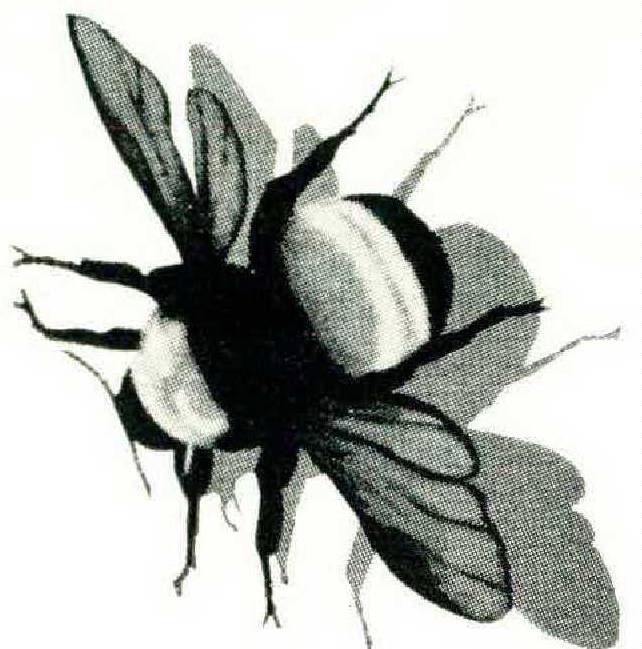
THE existence of such a time-compensated sun compass was shown in the same year to be present also in bees. This was the culmination of many years of investigation of bee behavior by Karl von Frisch in Austria. Half a century earlier the Swiss physician and naturalist Auguste Forel observed that bees visiting his breakfast table each morning in search of food always arrived at the same accustomed time, even when no food was offered. Some simple experiments led him to conclude “that the bees remember the hours at which they had usually found sweets . . . and that they had a memory for time.” The first exact investigation of this time sense was made by one of von Frisch’s first students, using a procedure now in general practice: a group of foraging bees were marked individually, after which they were offered sugar-water at an artificial feeding place and always at the same time of day — for example, from 9:00 to 10:00 A.M.— and at no other. During the test period the feeding place remained without food all day. It was quickly discovered that bees can be trained to visit at any time of day and even several times a day if the intervals are longer than two hours. The question remained whether bees use external diurnal events as time signals or possess an internal living clock.
The first efforts to find an answer consisted of excluding the possible effect of important environmental factors. Experimental colonics of bees were kept in rooms with constant illumination, temperature, and humidity. The effect of daily rhythms of air ionization were eliminated with the aid of radioactive substances. Cosmic radiation was eliminated by carrying out the training and testing six hundred feet belowground in the gallery of a salt mine. In all cases the punctuality of the bees remained unchanged. Bees hatched in an incubator which eliminated all rhythmic environmental changes throughout the period of their development also showed the same punctuality.
It seemed necessary to postulate an innate, internal time sense. On the other hand, it was found to be impossible to train bees to any rhythm not related to a twenty-four-hour periodicity, even after weeks of training. It was impossible to train them to visit feeding stations at intervals, for example, of nineteen or of forty-eight hours. This was true also of bees hatched in incubators and never exposed to the twenty-four-hour cycle of earthly change, and experimentally exposed only to rhythms of a different sort. Neither metabolic drugs nor any temperature change except actual cold shock affected the time accuracy. What, then, could be running the clock except external events?
Scientific progress depends greatly on asking the right questions. The right question leads to the crucial experiment, which gives an unequivocal answer. What is required is insight and clear thinking. Von Frisch reasoned as follows: all environmental phenomena that show a daily rhythm derive their periodicity from the rotation of the earth; these phenomena, such as the rise of the sun, occur at places of different geographical longitude at different times in accordance with the Real Local Time of each area; therefore, bees trained at a certain geographic longitude and tested at another should provide a definite answer to the question concerning the nature of the time sense of bees; if the environmental phenomena are decisive, the bees should come to a test dish either before or after the twenty-four-hour period, depending upon whether they have been moved east or west; however, if the punctuality is governed by an internal clock independent of external diurnal factors, but maintaining a twenty-four-hour rhythm, the bees should come to the food as usual, exactly twentyfour hours after the last feeding.
Such was the insight, but World War II had to come and go and transcontinental and transoceanic air travel had to become general before the experiments could be made. The crucial tests were made in 1955, and they proved that the time sense of bees was essentially independent of external events. Bees were trained in Paris to collect sugar-water from 8:15 to 10:15 P.M. French Daylight Time. They were then flown overnight to New York and put to the test. In New York they came to feed at about 3:00 P.M. E.D.T., which was twenty-four hours after the last feeding, and none came between 8:15 and 10:15 E.D.T. The reciprocal experiment, from New York to Paris, had comparable results. Both experiments were carried out in closed chambers under conditions of constant light and temperature. The internal clock is real.
The question still remained whether in natural surroundings the altitude of the sun or the daynight alternation might affect the time orientation of bees, in addition to or in connection with the proved internal clock. Consequently, in 1958 bees were trained in Long Island to collect food between 12:54 and 2:24 P.M. E.S.T., and were flown overnight to Davis, California, a distance in longitude representing a difference in Real Local Time of three hours and fifteen minutes. The bees were then tested on successive days. At first they came to feed twenty-four hours after the last training time at Long Island, but they drifted later, by one and a half hours, each of the next two days, and half an hour the third day, thus stabilizing at about three and a half hours later altogether. The clock was reset to the correct local time. The conclusions, accordingly, are that true internal biological clocks exist, that they run on an approximately twentyfour-hour cycle, and that they can be reset or adjusted to local external twenty-four-hour cycles related to the earth’s rotation. These conclusions have been generally accepted, though not by all biologists concerned with the problem.
MOST scientists are aware that new ideas and points of view are present in a widespread but unformulated state long before definitive work is accomplished, and it is not unusual for several voices to start speaking more or less at the same time. So with the recognition of rhythms and clocks. In the same year that the critical experiments on birds and bees were reported, comparable work on fiddler crabs was independently conducted at the marine laboratory at Woods Hole, Massachusetts, by H. M. Webb and F. A. Brown, in this case the rhythms observed were those of daily activity and of color change, which were found to persist as regular twenty-four-hour cycles even under constant conditions of light and temperature within the laboratory for many weeks. Moreover, the cycles were in no way disturbed when the crabs were transported from the Atlantic to the Pacific coast.
Fiddler crabs live on the intertidal beaches and are most active when the tide is low. The time of the tides is related to the phase of the moon, and the crabs have a secondary rhythm with a period corresponding to the length of the lunar day. This is not surprising, since lunar rhythms are common enough in nature and range from the reproductive rhythms of lower animals and plants, locked to the phases of the moon, to the lunar periodicity in the menstrual cycle of the human female. Yet the twenty-five-hour lunar-day cycle of fiddler crabs persists under controlled conditions, just as the twenty-four-hour solar-day cycles do. Atmospheric tides, produced by the moon and expressed as regular changes in barometric pressure, could affect crabs even under these circumstances, and they have been suspected to be the controlling, timesetting agent for the lunar rhythm. Any resetting of the twenty-four-hour fiddler clock, however, shifts the lunar clock accordingly, and the one seems to be in some way an extension of the other.
The most definite demonstration of the internal, innate nature of a biological clock was made by Colin Pittendrigh in connection with the development of the common fruit fly, Drosophila, a famous creature in the annals of classical genetics, it is readily reared, and the flies, after passing through larval and pupal stages, emerge from the pupal case as adult flies after about seventeen days at ordinary room temperatures. They normally do so in the early morning, when, in natural circumstances, conditions are relatively cool and moist. When reared from the egg in continuous darkness, the emergence of a particular batch of flies extends over several days and occurs at all hours. The unexpected discovery was that a single flash of light served to start their biological clock, so that all finally emerged at whatever time of day the flash was administered, although in lots spread out over a number of days. Each developing fly had its twenty-four-hour clock, but the clock had to be set in motion by an external stimulus. The other very important feature that the work on fruit flies showed even more clearly than had previous work on other organisms was that the biological clock is virtually independent of temperature changes. It keeps its steady, approximately twenty-four-hour rhythm whether the temperature is hot or cold, as any useful clock should.
The independence of temperature is crucial. A clock that ran fast or slow when the temperature rose or fell would be of little use as a clock. The heartheat is a rhythmic event of this type, and it may well be a measure of how fast or slow the living force of an animal is being spent, but it is no measure of cosmic time. A true clock needs to keep fairly constant time under the most inconstant conditions, which is perhaps the most outstanding feature of the biological clock. If the clock kept fully accurate twenty-four-hour time, however, that in itself would suggest it was run by external agents related to the earth’s rotation. The fact is, the clock keeps only approximate time, with a so-called free-running cycle of from twenty-three and a half to twenty-four and a half hours. Because the rhythms are only approximations to the twentyfour-hour period, they are customarily called circadian rhythms, and they generally require continual adjustment to the external daily cycles of the environment. This relatively small inaccuracy and the fact that the circadian rhythms can be slightly, though not seriously changed by temperature fluctuations are further indications that the clocks are truly a part of the living system. On the other hand, the comparative insensitivity to temperature change indicates that they are not linked to the ordinary metabolic processes of the cell or organism, in contrast to such activities as the rhythmic beat of the heart. The slight temperature dependence of the biological clock suggests that the clock operates by a physical rather than a chemical mechanism.
THE inquiry concerning biological clocks has, accordingly, shifted from whether they are externally or internally run to the problem of their nature and location in the animal. Actual location of a clock has been discovered so far in only one creature, the common cockroach. The presence of a clock is shown in this animal as a daily rhythm of activity, with the typical attributes of time regularity and of displacement to earlier or later peaks. Cockroaches and all other insects have a small brain above the mouth region and a secondary brain, or ganglion, behind the mouth which governs their activity more directly. Jane Harker of Cambridge University has traced the controlling agent for the daily increase in activity to certain small neurosecretory cells associated with this secondary, or subesophageal, ganglion which liberate chemical secretions into the blood system of the insect.
When a subesophageal ganglion from a rhythmic, active cockroach is transplanted into the body of a headless, nonrhythmic individual, this second cockroach shows a daily activity rhythm the same as that which characterized the individual from which the ganglion was taken. This indicates quite clearly that the secretory cells of the ganglion go on secreting with a circadian rhythm after all nervous connections have been broken.
The discovery of the location and transplantability of a biological clock supplies us with an invaluable tool for further research. Two features of much significance, however, have come to light in connection with this work: the neurosecretory clock is a biological clock, to be sure, but it is not the clock, for its rhythm and the length of time it can run by itself are under the control of nerves from the true brain; even more surprising is the discovery that, whereas transplanting a neurosecretory clock into another cockroach does no harm if the clock of the donor and the host are in phase with one another, when they are out of phase a transplantable, malignant tumor grows beneath the donor clock. Thus, the search for the clock in the cockroach, although successful in one sense, has led to more mystery than we started with, for now we know there are clocks and clocks, and we have also an unexplained association of a clock with cancer.
If there is a master clock, where is it? A promising subject for analysis is a single-celled, plant-type marine organism called Gonyaulax. It luminesces at night and photosynthesizes by day, is responsible for much of the northern seas’ starlike phosphorescence seen on dark nights, and is suspected of being responsible for the fact that certain shellfish that directly or indirectly feed upon it are poisonous to man. It lives strictly according to the twenty-four-hour cycle of day and night, and photosynthesizes, luminesces, grows, and reproduces by division in a regular sequence between one dawn and the next. The twenty-four-hour rhythm is maintained under constant conditions of light and temperature, except that in continuous dark the photosynthetic process cannot occur and in continuous light the luminescence is suppressed. Therefore, neither of these two biological processes can be regarded as the clock, but only temporal subjects of the clock.
Cell division may also be suppressed without inhibiting the other features of the rhythm as a whole. Although biological clocks are as well known among single-cell organisms as in larger forms of life, so that whatever the clock is, it is or can be a property of an individual cell, no one of the major activities of a cell appears to be the clock. They are subject to it.
Perhaps something is wrong with our whole approach. What is a clock? The original meaning of the word is “bell,” which is a time signaler rather than a time measurer. Even so, clock mechanisms are primarily regular oscillations of a spring or a pendulum, rather than cyclic processes, and it is now fairly generally conceded that biological clocks are self-sustaining oscillations of the living system, whether of the individual cell or of the whole organism. and that they are part of the system and do not have to be learned from the environment. Their wide distribution throughout the living kingdom and their characteristic and often remarkably precise twenty-four-hour period suggest that they evolved long ago, when life, as well as the earth, was young.
The search for the clock as a discrete mechanism which the cell possesses may prove fruitless because the search is founded on too loose a use of language. Although the living cell consists of many diverse components about which much is known, the cell as a whole seems to be the unit of life, and only as a whole does it function. We can say much the same of a clock or a watch. It consists of many different parts, each with its particular structure and function, but no one part is the timekeeper, for the timekeeping mechanism is clearly the whole. This may be true also for the biological clock. The problem may be not what part of a cell’s known organization serves as a clock but what is the organization of a cell that makes it a clock. This is the fundamental problem of life — namely, the problem of biological organization itself. The biological clock gains more interest from this point of view, not less, for we may be forced to look in the opposite direction and, instead of dismantling the organism or cell, concentrate on how everything is put together so that it does have the properties of clocks and other living qualities of life. Joseph Needham, of UNESCO and Chinese history fame, has said, “The organization of living systems is the problem, not the axiomatic starting point for biological research.”
Whatever they may be, biological clocks are put to good use. They are employed for timing the fine details of daily living, for regulating life according to the sun or the moon, and for adjusting to the annual succession of the seasons. The muttonbirds of the Pacific, which are a kind of shearwater, spend most of the year fishing, spread out over the vast space of the north Pacific, from the equator to the Bering Strait. In November of each year, however, they all arrive, within a few days of one another, at a small island off the Australian coast, with uncanny accuracy in timing and direction. The greater yellowlegs, which are birds that breed in northern Canada, fly to Patagonia for the winter and return in the spring — a total distance of about eighteen thousand miles. Yet the whole migration is performed with such timing that their eggs all hatch in the northern nests between May 26 and May 29, year after year.
The lunar, or tidal, rhythm shows strongly in the grunion, a small fish of Californian waters, which breeds from February to late September, coming right out of the water to spawn on the southern Californian beaches during the times of the new and the full moon. Large sections of the beach are often covered by the silvery bodies of temporarily stranded fish, for the eggs and milt are shed into the wet sand when the fish are left at the reach of a wave. To be certain that the next high tide will not wash away the eggs, the spawning occurs only during the three or four nights following the full and the new moon, when the spring tides prevail.
Annual migrations and monthly romances are spectacular but are no more important than the run-of-the-mill work of the daily rhythms. Even here they may be spectacular, and the fireflies’ exhibition is not the least. They start to flash at dusk as though dusk itself were the signal, although they would do so at that time had it been dark all day. Time to a firefly, however, means more than this. Both male and female fireflies emerge from the grass at dusk, and the males fly about, emitting a single flash at regular intervals. The female climbs up a blade of grass and perches there. If a male flashes within three or four yards, she usually responds by flashing back. He then turns toward her, and each emits the regular flashing signal until the tryst is attained. Each species of firefly has its own rate of flash and none responds to another’s, so that miscegenation is avoided.
Man, too, has his circadian rhythms, as do mammals as a whole. The twenty-four-hour cycle of peaks and lows is evident in most of the body functions — in heart rate, metabolism, blood sugar level, blood cell count, frequency of cell division, body temperature, and kidney function, not to mention the rhythms of sleeping and waking. The ability that many persons have for setting a mental alarm clock and waking exactly on the hour is almost certainly a product of the biological clock. So we may answer Walter De la Mare’s question, “why this absurd concern with clocks, my friend?", by saying that time is of the essence and that it is as much a quality of life to measure time and keep in temporal harmony with the spin of the earth and the moon around the sun as it is to grow in space, transform energy, or perpetuate its kind.