The Peripatetic Reviewer
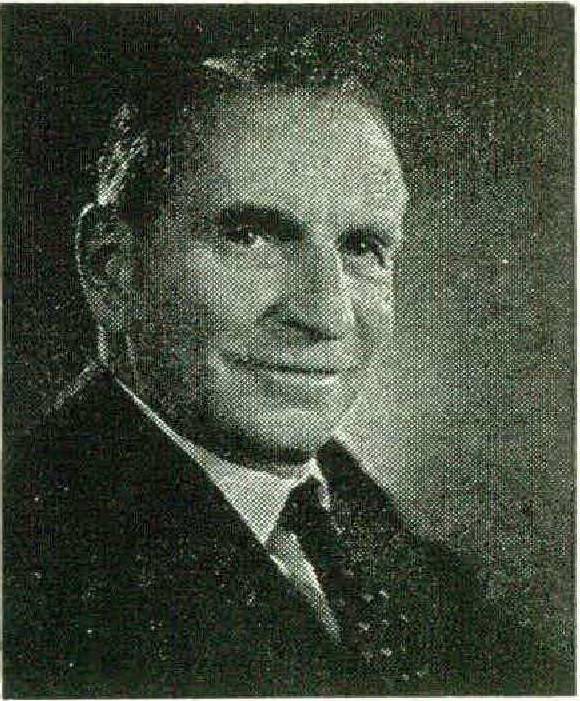
BY EDWARD WEEKS
PRESIDENTS when Presidents are still entitled to their pastimes. The most athletic of them all in our century was Teddy Roosevelt, who played tennis, rode daily in Rock Creek Park, fished, and hunted big game. TR, like JFK, was also a swift and omnivorous reader. William Howard Taft was a Gargantua on the golf links, and, while playing the Kebo Valley course at Mt. Desert, took twenty-seven shots on the seventeenth hole. Eisenhower left his spike marks on the lower floor of the White House on his way to practice approach shots. Woodrow Wilson was a born mimic. He loved going backstage at Keith’s in Washington, and in 1917 had Pat Dowling give him a lesson in tap dancing. Harry Truman was the best piano player and the stoutest walker. During the relaxed evenings of Normalcy, Harding enjoyed his poker parties, as, in a more exacting time, Ike enjoyed his bridge. FDR — and, after him, JFK — forgot his troubles on salt water.
Four in our time were fly fishermen. TR being the most enthusiastic, though probably not the most patient; indeed, he and Mrs. Roosevelt were fishing in the Adirondacks when the news was relayed to him of McKinley’s assassination. As a young man, Teddy, on his trips West with his friend Owen Wister, took along buckets of trout and bass fingerlings with which he hoped to stock the Wyoming streams, but the long train ride and the final hot exposure in the buckboard usually ruined the experiment. Calvin Coolidge used the fly rod sparingly, in a stiff collar and with such a dour expression that one can only surmise that he did it for the same reason that he donned that famous Indian headdress — for the sake of the picture. Ike is an able, if not expert, angler; what is more, he insists on cooking his fish wrapped in aluminum foil, to preserve their juiciness. I saw him do it and, I must say, admired the flash of that famous temper when he found that certain waters had been especially stocked and the outlets netted for his coming. “I don’t enjoy fishing in a prison!” he exclaimed. Herbert Hoover has been a lifelong fly fisherman and is, I think, the only one of the four to have published a book about it.
WHY PRESIDENTS FISH
In FISHING FOR FUN (Random House, $3.95) HERBERT HOOVER has pieced together with a needle of humor his meditations on his favorite sport. He got his baptism of worm fishing in the creeks of Iowa, but at the age of ten he was transported to Oregon, where access to the mountain streams and the gift of three artificial flies opened a new vista. Like all honest anglers, he learned to fish anywhere for anything, and although one soon gathers that his preference is for trout, he has shrewd things to say about bonefish, stuffed fish, and the Atlantic salmon, which, with Quaker exaggeration, he says you kill at an average cost of $1000 each. He is quite aware of what the automobile has done to depopulate the streams, yet he still holds that each fisherman ought “by rights" to catch at least fifty fish during the season, not counting salmon. His advice on pollution, which he published in the Atlantic while Secretary of Commerce, is far-reaching and sensible. He would make a survey of all our streams and then divide them into three categories: in the first he would place all those which have not yet been polluted and which should be given protection against the infiltration of industry; in the second he would place all streams which have been industrialized and polluted to the finish; and in the third those streams now partially polluted which by systematic treatment could be restored to life.
“That Presidents have taken to fishing,” writes Mr. Hoover, “seems to me worthy of investigation. I think I have discovered the reason: it is the silent sport. . . . Next to prayer, fishing is the most personal relationship of man; and of more importance, everyone concedes that the fish will not bite in the presence of the public, including newspapermen. Fishing seems to be one of the few avenues left to Presidents through which they may escape to their own thoughts . . . find relief from the pneumatic hammer of constant personal contacts, and refreshment of mind in rippling water.” In support of this philosophy, Mr. Hoover retells President Cleveland’s story about how Daniel Webster composed his famous oration for the dedication of the Bunker Hill Monument while wading waist-deep in the Mashapee. The speech was to be addressed to the survivors of the Revolution. Mr. Webster’s guide could not understand why the great man was missing his fish until he heard the organ voice roll forth with “Venerable Men —” Mr. Webster, added the guide, was in the habit of addressing “mighty strong and fine talk to the fish.” An attractive little volume which even a Democrat could enjoy for Christmas, this has been edited by William Nichols, with excellent illustrations by Bill Hofmann.
THE BEEHIVE
A relic of Edwardian London, the May of Teck Club was an endowed and capacious mansion, obliquely opposite the Albert Memorial and somewhat severely dedicated to “the Pecuniary Convenience and Social Protection of Ladies of Slender Means below the age of Thirty Years, who are obliged to reside apart from their Families.” So read the first article of its constitution, and by the spring of 1945 there were some forty of these ladies in residence, of all ages — for the war had abolished that limitation — “protected” by a strident, gray-haired warden who “drove a car as she would have driven a man had she possessed one.” This beehive, with its food coupons and lean diet; its ecclesiastical feuds between the daughters of High and Low churchmen; its war romances and the more immediate lovemaking on the roof, which only the slimmest could reach by squirming through the skylight — this beehive, whose genteel poverty is symbolized by the one Schiaparelli dress swapped about by the decorous members, is the centerpiece MURIEL SPARK describes with such delightful satire in her clever novel THE GIRLS OF SLENDER MEANS (Knopf, S3.95).
Miss Spark handles a group picture with cool and consummate skill, and in this one she directs our attention to Greggie, the most attractive of the spinsters; to Joanna, who teaches elocution (“she recites from memory”) and whose incantations supply a background chorus to whatever is going on in the Club; to fat Jane, who works for a publisher and yearns to be loved; and to tall, beautiful Selina, who is “liable to provoke possessiveness,” and very willing, provided the gent is gay and dances well. The story is touched off by the murder of one of Selina’s lovers years later, and Miss Spark weaves it now in reminiscence, now in direct action, now in forecast. The defects are inherent in her method: the repetitions — Joanna’s overheard recitations grow noticeably tedious; the caricatures which must serve for the lesser members of the cast, such as the mad Pauline; and, more serious, the contrived ending. As is the case with most English novelists, her parody of American talk misses by a mile.
THE SNAKE LOVER
When Hamish Hamilton, the English publisher, and his wife were in Kenya, they met and were spellbound by a white hunter, an alumnus of Rugby and Sandhurst who has lived for more than half his life in Tanganyika, and who now, in retirement, is no longer a killer but a collector of live and deadly snakes. This singular being goes by the name of lonides, and to record his story Mr. Hamilton persuaded MARGARET LANE, the biographer and author of The Brontë Story, to talk to the hunter when he came to London for medical treatment two years ago. “In his threadbare clothes and aura of strangeness, with blue eyes warningly alert in his emaciated face, talking of snakes and solitude.” he was the epitome of an African convert. His invitation to come out and see for herself led in time to Miss Lane’s LIFE WITH IONIDES (Viking, 55.00), the portrayal of a scarred and independent naturalist and of the adventures which brought him at last under the hypnotic spell of the most wondrous snakes (he has captured more than a thousand of them alive), and them into the safe custody of his hands.
Ionides was a lawbreaker from the start, and the chicken stealing and game poaching which all but led to his expulsion from Rugby, the sawed-off shotgun with which he bagged his prey, and the knickerbockers into which he stuffed the dead quail or pheasant were merely a prelude to his profitable enterprise as an ivory poacher and elephant killer in East Africa. Eventually he was appointed Game Ranger in Tanganyika and took to pursuing other poachers as zestfully as he had once pursued the elephant. Then the lust for killing wore itself out, and on his retirement in 1956 he perfected the art of capturing alive the most beautiful and the most vicious of the great snakes, the black and green mambas, the black and white cobras and the spitting cobras, the gaboon vipers and boomslangs. An avid reader of history, a conversationalist and an eager listener, Ionides was ripe for the plucking when Miss Lane came to his bachelor quarters on the bank of the escarpment. When better eccentrics are needed, the British will devise them; for the moment, Ionides is certainly one of the most fascinating to be found anywhere. No more colorful travel book has been written this year, and it is to Margaret Lane’s lasting credit that she has caught the audacity of Ionides’ mind, the peculiar rhythm of his speech, the smell of danger — as when she tells of his capturing a viper or of being trampled by an elephant — and, strange as it may sound, the asceticism of his extraordinary career. Seeing him through her eyes is a treat.
THE OFFICER CASTE
It can be argued, although not palatably in London, that the best writing in England today is coming from the colonials: certainly the Africans Alan Paton, Nadine Gordimer, Dan Jacobson, and Gwyn Griffin; the Australians Alan Moorehead and Patrick White; and the Anglo-Indian John Masters arc a seven hard to beat. Welsh as his name sounds, GWYN GRIFFIN was born in Africa and was working as a cotton planter in the Sudan before entering war service, first as cipher officer to Major (later General) Wingate and then as captain of his own company of British African colonial troops. Colonials since the days of George Washington have always been snotted by the British Regular; whatever his provocation, Mr. Griffin, in his tense short novel A SIONIFICANT EXPERIENCE (Holt, Rinehart and Winston, $3.00), has written as stinging an indictment of the outmoded traditions of the officer caste as I have read since C. S. Forester’s ironic story of Flanders, The General. This is a masculine and moving piece of prose.
The novel is laid in an officers’ training camp in Egypt, presumably in 1942; here under the broiling sun a thousand cadets and N.G.O.’s are sweating out the drills and assault tactics that will fit them for their commissions. The youngest among them, not yet eighteen, is from Syria — Van der Haar, wanted by Intelligence for his linguistic ability and sent here to go through the motions of four months’ training. The boy can do nothing right, and the fact that he is slim, goodlooking, and French-schooled only makes his case worse. Since he can still be classified as “a boy” by army regulation he can be caned, that relic of flogging respected by Sandhurst, and his officers concur — the commandant because he is indolent and contemptuous; Captain Lutwyche because he has made advances which have been repelled; Lieutenant Hood because of the beatings he had taken at school. Major Seligman, not of the Guards and the only one to have seen action and been wounded, is made to do the dirty work, and it is his indignation which stirs ours. Beautifully controlled, without an unnecessary word, this is the work of a highly competent narrator.