Who's Who Among the Undesirables
Baseball players are still allowed to come and go much like other citizens in their off-diamond hours. I assert this perhaps rashly, but at any rate in the absence of any stories to the contrary in the sports pages. Even as the baseball season nears its peak, the players require no close chaperonage while away from their work. Those who can read and write may receive and send letters without censorship; they have free access to the telephone; their homes and hotel rooms remain unbugged.
The status of the baseball player is remarkable in its implication — rarely found nowadays among professional athletes — that he can keep away, quite without police supervision, from what are euphemistically called “undesirable elements” in cities where he works. One reason for this easygoing attitude is that everyone knows where the undesirable elements are in baseball: in the stands and box seats, drunk, and being undesirable to all within reach or earshot.
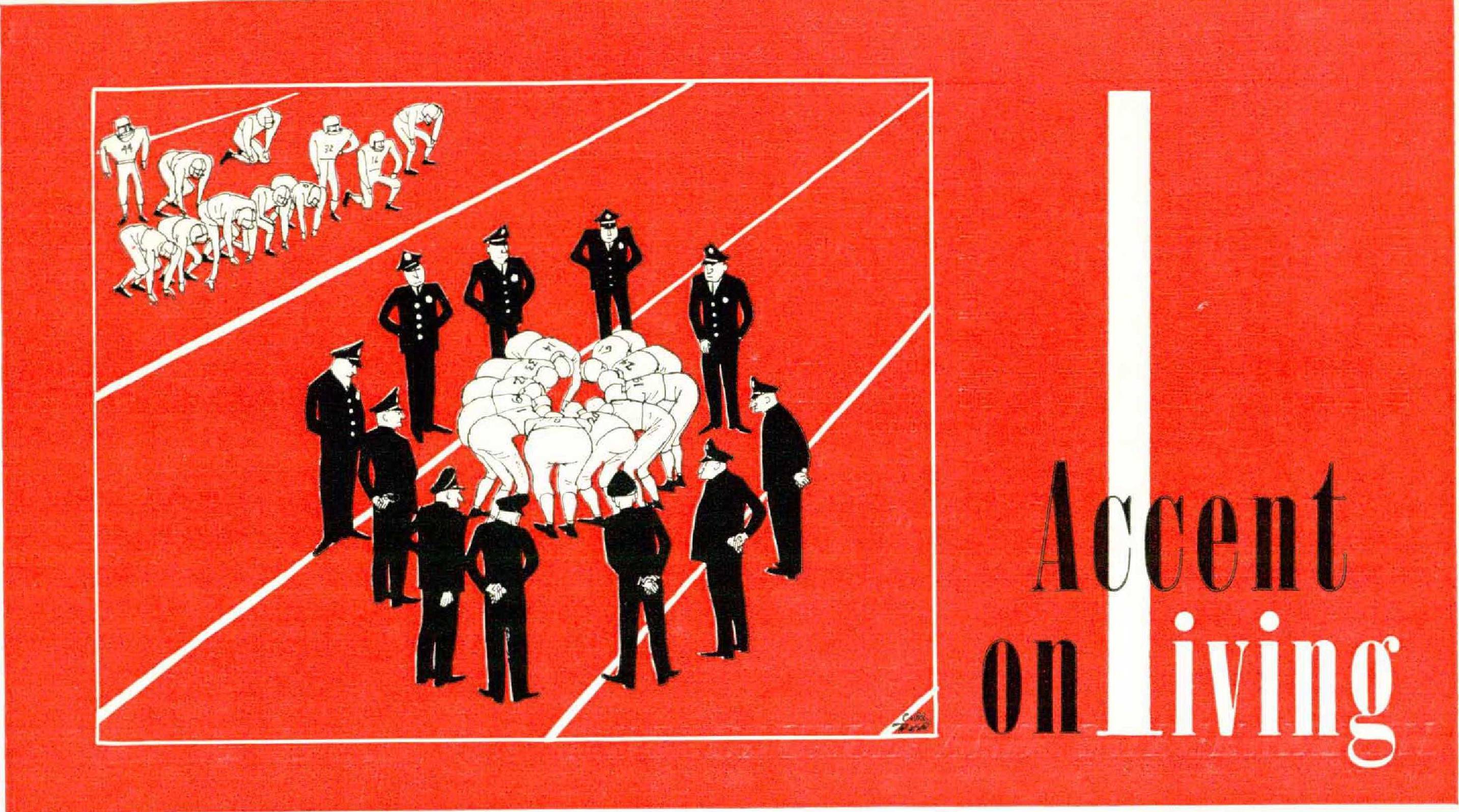
Professional football, by contrast, finds itself beset by far more numerous and varied undesirables. One of its major leagues, for instance, is hiring an ex-policeman as a “roving watchdog” to keep the undesirables away from the players and league personnel. The watchdog will also “check out background information on game officials and any prospective owners who might desire league franchises,” so the UPI report went.
Football’s problem, in other words, is not only crooked players but also crooked club owners, trainers, coaches, and the fixers and gamblers of the world at large. The players themselves will be hard enough to rehabilitate.
Unlike baseball players, who learned the game in sandlot competition on their own, the football professional has usually been exposed to a college education. He has been obliged to pose as an amateur while earning his living and other expenses by playing football, and he has been obliged to pose as a student by taking fake courses or by getting fake grades in courses he could not otherwise pass. The colleges and not the sandlots are the source of football professionals.
Perpetration of the frauds in college football needs connivance by the crooked college president, a reasonably crooked faculty, a crooked coach (himself a product of the same system), and a sufficiently influential group of low-grade alumni. It is plain, therefore, that by the time the newly graduated player comes bounding out toward the TV camera in his first professional appearance, he has been pretty thoroughly acclimatized to the seamy side of it all.
Whether a single watchdog can rove widely enough to keep professional football players away from elements even more undesirable than themselves is the question. Hundreds of players need the watching. Every play must be scrutinized. The long pass that is caught may be just as suspect as the one that is dropped. Is the onetime star of Berserk U ripping holes past such a lineman as the former Wingding School of Mines all-American? What about that quarterback? Is he sulking about the raise he failed to get?
More watchdogs are the answer. Let every spectator be able to say of any game in the new season: “It was a great job of first-class police work.”