The Peripatetic Reviewer
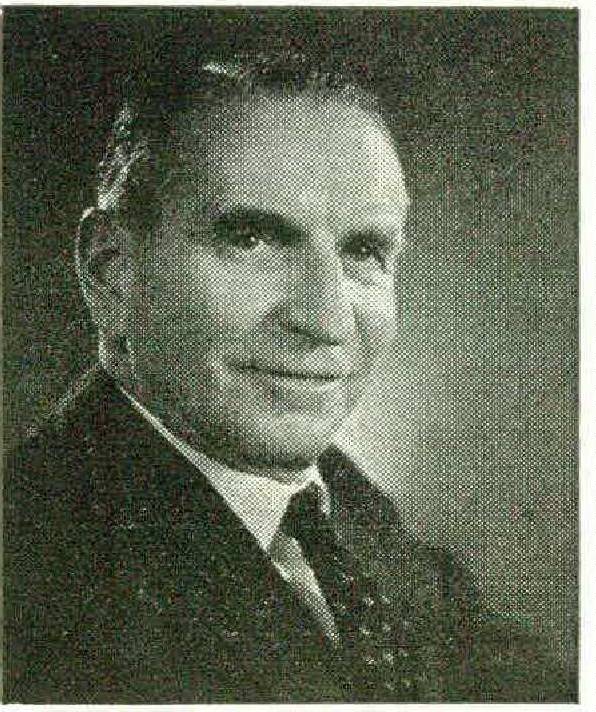
IN THIS season when an angler’s hopes are as fresh as the new grass, my thoughts go back to a Canadian who held a very special place in the heart wherever he was known, Dr. J. A. M. Bell of Fredericton, New Brunswick. Let the accent fall on the “Doctor,” for he was one of that vanishing breed of unsparing general practitioners; in the length and breadth of the St. John Valley and in the villages and lumber camps north of Newcastle are those who owe their recovery and their adjustment to life to the cheery ministrations of Dr. Alex Bell. Medicine was his calling, his family was his first love, and the Atlantic salmon, its protection and its capture, his avocation.
Alex was one of those rare beings whose looks do not change. He emerged from the Canadian Army at the end of the First World War a young stocky medico, eager for country practice, already well on the way to his shining baldness, with ruddy cheeks and that welcoming smile that age was never to touch. His nature was sunny, but there was no more rugged fighter in the Maritimes, as you knew from the light in his eyes and the set of his jaw when he was aroused. What he fought for was better health and education in an impoverished province, better hospitals — the Fredericton Polio Clinic is a monument to him — and unpolluted, better-policed rivers.
Legends grew out of his hardihood, his willingness to answer any call. In the early days, when the snows were deep he went by sleigh, and returning, the seat and the runners would be crowded with schoolchildren he had picked up on the way home. Later, in a skimobile with skis in place of front wheels, he traveled the back roads which were otherwise impassable. Cars he drove like Jehu, and many a patrolling Mountie must have looked the other way when Alex went roaring by. He had the gift of rallying his patients; recovery was his mission, and not even his secretary, Lillian Copp, could sum up the countless bills he did not collect. He would never accept a fee from students at the university. Many patients paid what they could in potatoes, as Cannie, his wife, who had to dispose of them, was well aware.
Alex’s word was as good as his bond, and in time it covered the behavior of many. Among his patients in a small village at the mouth of the Miramichi was a huge family of French Canadians whom I shall call the Latourettes. During Prohibition, Papa Latourette made a pretty penny running rum from the French islands of St. Pierre and Miquelon. When Papa was captured and locked up in the jail at Newcastle, he sent for Alex. “Doctor, Doctor. I am not seek!” he kept repeating through the bars. “I not send for you because I am seek, Doctor, but because I cannot stay here in ze jail. My wife and family, she starve,” and on Alex’s word he went free.
The river Alex loved best was the Northwest Miramichi, where for three decades he staffed and operated two privately owned camps in its headwaters. The camps were a hundred and thirty-five miles to the north of Fredericton, the last sixteen through a tote road in the Fraser Forest, and they were as close to heaven as Alex wanted. The Northwest is a wild, swift, narrow stream which has carved its way deep through rocky canyons and steep spruce slopes. You fish it on foot from rocky stands with a backhand cast to keep your fly out of the conifers.
To protect the river, Alex used persuasion, blasphemy, guile, personal intervention at Ottawa, and, when necessary, the arm of the law. It takes eternal vigilance to keep a salmon river alive. A balance must be struck between the trawlers patrolling the waters at the mouth and the owners of the set nets, some thirty miles of them, blocking two thirds of the channel, through whose gauntlet the entering salmon must pass. When the spring run was on, Alex fought for a weekend lifting of all nets to make sure that enough mature fish would reach the spawning beds, a hundred and twenty miles upstream. He fought against the irresponsible dumping of bark from the pulp mills; he fought the lumber bosses for felling the shade trees on the banks, in whose shadows the salmon spawned. He looked skeptically at the drenching of the forests with DDT when budworm was ravaging the spruce — what would the poison do to the life underwater? He suspected what Rachel Carson found. He fought the poachers, who become desperate at times of unemployment. They work in teams of three or four at night, and a warden, who must go unarmed in Canada, may lose an ear or an eye if he tries to interfere. Above all, Alex was wary of the mines, which in a burst of hope and publicity seemed to offer New Brunswick a new prosperity. For a time they had things their own way, free of provincial regulation, and the lethal pollution which flowed from their zinc and copper corridors down brooks and into streams as beautiful as the Northwest Miramichi would have driven him into a fury. It was the negation of every precaution for which he and Canada had long stood.
The river was Alex’s tonic. In his latter years, in his Jeep he could travel the distance from office to camp in less than three hours, and after he had had his first heart attack, just to see the pools and hear the voice of the water were enough. Like many great doctors before him, Alex considered his own health last. On one occasion when overwork had brought him to the point of exhaustion, he turned his practice over to an assistant and went into the woods to be alone at Stony Brook. There, in thirty days he regained his strength — and, incidentally, took twenty-three fish, beached, of course, since there was no one to net for him. His favorite fly was the Green Highlander, which he fished wet and fast; his favorite pool, the Top of the Falls, where the angler casts into the slick water at the very lip of the falls. When a salmon takes here, like as not he’ll go down over, and how Alex would hoot as the angler followed after, leaping and slipping from basin to basin. Then would come the breathless question — was the fish still on?
Driving back from camp with him was an education. At sixty mph and more his talk would touch on the history of the valley; on the Loyalists from Long Island and New York who settled here after the Revolution; on the University of New Brunswick, in which he profoundly believed; on the preservation of the elms, which in Fredericton are more beautiful than in any other city I know; and on the guides and cooks, every one of them his friend, Howard and Henry and George and Art and Kathleen. They and their children mattered deeply to him, and he knew they kept him young.
Alex used to tease us about our Yankee veneration for royalty, but I remember how honored he felt when Princess Margaret took far more than the expected time to open the Polio Clinic in Fredericton, the clinic he had planned, equipped, and helped to finance.
Dear as he was to us on the river, he was even dearer in his home in Fredericton with its big windows facing the Cathedral Green. This was our point of departure, and he sped us on our way with those famous martinis which he poured from his big silver bell of a shaker. Here we listened to the tales of the party coming out from the camp, while our anticipation rose, or, if we were just emerging from the enchantment of the woods, here we would enlarge on our own adventures, just before both parties went in for Cannie’s delectable roast chicken, Alex would make his toast: “I looks toward ye, smiles, and likewise bows accordin’ ” —our hail and farewell with the man who would keep the river and our hopes alive for another year.
THE OCEAN FLOOR
One of the few good things to come out of the German domination of France was the AquaLung, the invention of JACQUES-YVES COUSTEAU and Emile Gagnan, French naval officers who had been immobilized by Hitler’s conquest and who, with the assistance of Cousteau’s wife, Simone, began to pioneer deeper and deeper into the hidden mysteries of the sea. Captain Cousteau’s first book, The Silent World, was an adventure story which opened the doors to oceanography, to archaeology, and to undersea photography. In the ten years since its appearance, Captain Cousteau and his team of expert divers have improved their depth-exploring techniques and have probed deeper and deeper into those fascinating realms which hitherto had been seen only by Dr. Will Beebe and Otis Barton in Barton’s Bathosphere. But Cousteau and company were mobile, and with extraordinary invention and physical resourcefulness they have explored the coral graveyards which have doomed ships since the days of the Greeks. They have studied the rise and fall of the Deep Scattering Layers and have devised the Deepsea Camera Sled, which travels miles below the surface of the ocean, photographing as it goes. These are a few of the salient episodes told in a most personal way by Captain Cousteau in his new and wellillustrated book, THE LIVING SEA (Harper & Row, $6.50), the May selection of the Book-of-theMonth Club.
The Living Sea begins with a description of the Calypso, the 140-foot flagship of Cousteau’s expeditions. She was originally a minesweeper built for the Royal Navy and was transformed into a mobile laboratory with the aid of Group Captain Guinness. In the late forties all divers wanted to work with Captain Cousteau, and, taking his pick, he cruised the Red Sea, ranging along the coast of the Sudan close to the deadly uncharted coral reefs which held their treasure. No reviewer should give away this book. It is enough to mention how they found the black coral for Picasso; how they watched the bumpfish steadily chewing his way up a coral strand; how they came upon the Aegean wreck and from it brought to the surface wine which had been laid down in Delos more than two thousand years ago; how they avoided the abyssal sharks and tracked to his lair the gargantuan truckfish; and how and why they lost their eager spirit, the diver Serventi. This is a book to relish slowly.
DEVOTO AT WORK
With the passing of that pungent trio, Henry L. Mencken, Bernard DeVoto, and Elmer Davis, American criticism momentarily lost its voice, and we have been waiting overlong for a younger man to fill their shoes. A full measure of DeVoto as a teacher, historian, and critic is given to us this spring in a little book as hot as a live coal, BERNAD DEVOTO: A TRIBUTE AND AN EVALUATION, with essays by Catherine Drinker Bowen, the late Edith R. Mirrielees, Arthur M. Schlesinger, Jr., and Wallace Stegner, and a bibliography by Julius P. Barclay (Houghton Mifflin, $4.50). Benny, as he was known to his friends and enemies, could be pugnacious, strident, tenderly generous, humble in moments of self-doubt, and magnificently angry in defense of what he valued. His indignation at what was being done to our plundered public lands lit up the cause of conservation, and his knowledge and love of the West are fused and made permanent in his three splendid volumes of history.
Now he is seen affectionately and with perception by four of his contemporaries: Catherine Drinker Bowen writes of him as a teacher, urging her on and guiding her in her biographical writing; Miss Mirrielees speaks of him as an essayist, so vigorous in his letters and in the Easy Chair of Harper’ s; Arthur Schlesinger shows us the political man and the scholar; and Wallace Stegner, like Benny, familiar with Utah, traces the paths which led him away from his home city of Ogden and eventually back overland through his stilted fiction to his vital historical conquest of the Southwest.