The Anarchists
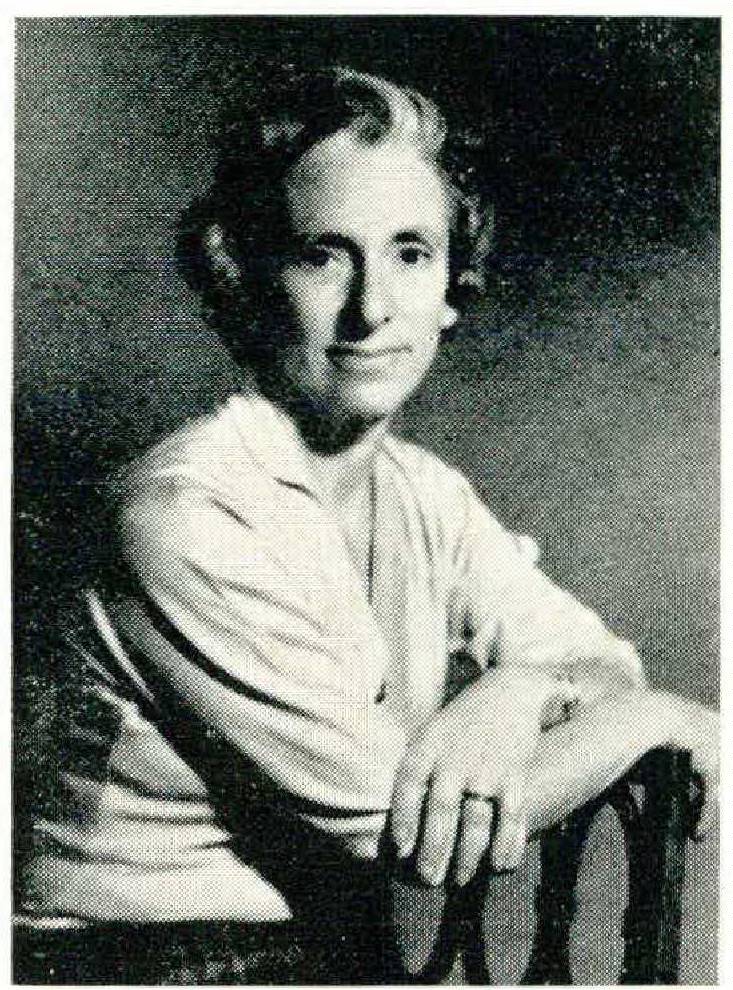
BARBARA W. TUCHMAN is the author of three books of history, THE GUNS OF AUGUST, THE ZIMMERMAN TELEGRAM, and BIBLE AND SWORD. She is the mother of three daughters and is a graduate and trustee of Radcliffe College. This article is a shortened version of a chapter from a book on which she is now at work, dealing with the last two decades before the First World War and the quality of the world that died in 1914 The chapter in its completed form, includes also the Spanish and Russian Anarchists.
So ENCHANTING was the vision of a stateless society, without government, without law, without ownership of property, in which, corrupt institutions having been swept away, man would be free to be good as God intended him, that six heads of state were assassinated for its sake in the twenty years before 1914. They were President Carnot of France in 1894, Premier Cánovas of Spain in 1897, Empress Elizabeth of Austria in 1898, King Humbert of Italy in 1900, President McKinley of the United States in 1901, and another Premier of Spain, Canalejas, in 1912. Not one could qualify as a tyrant. Their deaths were the gestures of desperate or deluded men to call attention to the Anarchist idea.
No single individual was the hero of the movement that swallowed up these lives. The Idea was its hero. It was, as a historian of revolt has called it, “a daydream of desperate romantics.” It had its theorists and thinkers, men of intellect, sincere and earnest, who loved humanity. It also had its tools, the little men whom misfortune or despair or the anger, degradation, and hopelessness of poverty made susceptible to the Idea until they became possessed by it and were driven to act. These became the assassins.
Between the two groups there was no contact. The thinkers in press and pamphlet constructed marvelous paper models of the Anarchist millennium; poured out tirades of hate and invective upon the ruling class and its despised ally, the bourgeoisie; issued trumpet calls for action, for a “propaganda of the deed” to accomplish the enemy’s overthrow. Whom were they calling? What deed were they asking for? They did not say precisely. Unknown to them, down in the lower depths of society lonely men were listening. They heard echoes of the tirades and the trumpets and caught a glimpse of the shining millennium that promised a life without hunger and without a boss. Suddenly one of them, with a sense of injury or a sense of mission, would rise up, go out, and kill — and sacrifice his own life on the altar of the Idea.
The Anarchists believed that with Property, the monarch of all evil, eliminated, no man could again live off the labor of another, and human nature would be released to seek its natural level of justice among men. The role of the state would be replaced by voluntary cooperation among individuals, and the role of the law by the supreme law of the general welfare. To this end no reform of present social evils through vote or persuasion was of any use, for the ruling class would never give up its property nor the powers and laws which protected ownership of property. Therefore, the necessity of violence. Only revolutionary overturn of the entire malignant existing system would accomplish the desired result. Once the old structure was in rubble, a new social order of utter equality and no authority, with enough of everything for everybody, would settle smilingly upon the earth. So reasonable seemed the proposition that once apprised of it the oppressed classes could not fail to respond. The Anarchist task was to awaken them to the Idea by propaganda of the word and of the deed, and one day one such deed would flash the signal of revolt.
Besides the sovereigns and statesmen, several scores of ordinary people were killed by bombs exploded in parliament, restaurants, railroad stations, theaters, and public processions. For these various crimes as well as the assassinations, twenty-one Anarchists were condemned to death and executed, of whom six were demonstrably guilty and the rest were citizens of Spain, where the revenge of the state was both careless and drastic.
THE twenty-year period before 1914 was Anarchism’s second bloom. The first and formulative period lasted from around the time of the revolutionary year 1848 to the assassination of Czar Alexander II in 1881. Its two major prophets were Pierre Proudhon of France, a self-taught, irrepressible, and original mind, and his disciple, Michael Bakunin, a Russian exile, based usually in Geneva, who became the active leader of the movement.
“Whoever lays his hand on me to govern me,” Proudhon proclaimed, “is a usurper and a tyrant; I declare him to be my enemy. . . . Government of man by man is slavery,” and its laws are “cobwebs for the rich and chains of steel for the poor.” The “highest perfection” for free society is no government, to which Proudhon was the first to give the name “ An-archy.” He excoriated government in a passion of contempt. “To be governed is to be watched, preached at, controlled, ruled, censored, by persons who have neither wisdom nor virtue. It is in every action and transaction to be registered, stamped, taxed, patented, licensed, assessed, measured, reprimanded, corrected, frustrated. Under pretext of the public good it is to be exploited, monopolized, embezzled, robbed and then, at the least protest or word of complaint, to be fined, harassed, vilified, beaten up, bludgeoned, disarmed, judged, condemned, imprisoned, shot, garrotted, deported, sold, betrayed, swindled, deceived, outraged, dishonored. That’s government, that’s its justice, that’s its morality! And imagine that among us there are democrats who believe government to be good, socialists who in the name of liberty, equality and fraternity support this ignominy, proletarians who offer themselves as candidates for President of the Republic! What hypocrisy!”
Proudhon believed that the “abstract idea of right” would obviate the need of revolution, and man would be persuaded to adopt the stateless society through reason.
What Bakunin added, learning from Russia under Nicholas I, was the necessity of violent revolution. In other countries people could sustain a belief in progress through reform; in his country this was difficult. He saw revolution as the womb of the perfect society and expressed Anarchist philosophy in his phrase, “The passion for destruction is also a creative passion.” Born in a family of the landed nobility and having resigned from the Imperial Guard in protest against Russian treatment of Poland, Bakunin came to Paris in 1840, where, under the influence of Proudhon, he espoused Anarchism. He saw man, like every living thing in the process of evolution, struggling to perfect himself and believed his triumph was inevitable, but “we seek to hasten it.”
As opposed to his rival, Karl Marx, who maintained that revolution would come only from an industrial proletariat, organized and trained for the task, Bakunin believed that immediate revolution could explode in one of the more economically backward countries — Italy, Spain, or Russia — where the workers, though untrained, unorganized, and illiterate, with no understanding of their own wants, would be ready to rise because they had nothing to lose. The task of the conscientious revolutionist was to popularize the Idea among the masses, hitherto bound in ignorance and prejudice by the ruling class. It was necessary to make them conscious of their own wants and “evoke” from them thoughts to match their impulses, thoughts of revolt. When this happened, the workers would know their own will, and then “their power will be irresistible.”
Bakunin’s following grew until it precipitated a struggle with Marx for control of the First International, which Marx won by some active chicanery among the delegates to the Congress of 1872. But the basic quarrel between the two autocrats of revolution was over idea and method.
There was an inherent paradox within the body of Anarchism that frustrated its progress. Anarchism rejected any form of government, including party government, which was regarded as a “state in little” and, in Proudhon’s words, just another “variety of absolutism.” Yet to bring about a revolution it was necessary to submit to authority, organization, and discipline. Whenever Anarchists met to prepare a program, this terrible necessity rose up to face them. Loyal to their Idea, they rejected it. Revolution would burst from the masses spontaneously. All that was needed was the Idea — and a spark.
Each strike or bread riot or local uprising the Anarchist hoped — and the capitalist feared — might be the spark. Mme. Hennebau, the manager’s wife in Zola’s Germinal, watching the march of the striking miners under the bloody gleam of the setting sun, saw “the red vision of revolution that on some sombre evening at the end of the century would carry everything away. Yes, on that evening the people, unbridled at last, would make the blood of the middle class flow ... in a thunder of boots the same terrible troop, with their dirty skins and tainted breath, would sweep away the old world. . . . Fires would flame, there would be nothing left, not a sou of the great fortunes, not a title-deed of acquired properties.”
Each time, as when Zola’s miners faced the guns of the gendarmerie, the spark was stamped out. The magic moment when the masses would awaken to their wants and their power did not come. The Paris Commune flared and died in 1871 and failed to signal a general insurrection. “We reckoned without the masses who did not want to be roused to passion for their own freedom,” wrote Bakunin, disillusioned, to his wife. “This passion being absent what good did it do us to have been right theoretically? We were powerless.” He died in 1876, a Columbus, as Herzen said, without America.
Meanwhile, in his native land his ideas took root in the Narodniki, or Populists, otherwise the Party of the People’s Will. In 1881 the Narodniki struck a blow that startled the world: they assassinated the Czar, Alexander II. It was a triumphant coup, equal, they imagined, to the battering down of the Bastille. It would shout aloud their protest, summon the oppressed, and terrorize the oppressors. Instead it ushered in reaction. The dead Czar, whose crown may have been the symbol of autocracy but who in person was the liberator of the serfs, was mourned by the peasants, who believed “the gentry had murdered the Czar to get back the land.” His ministers opened a campaign of savage repression; the public, abandoning all thoughts of reform, acquiesced; and the revolutionary movement, “broken and demoralized, withdrew into the conspirators’ cellar.” There Anarchism’s first period came to an end.
BEFORE the new era of violence opened in the nineties, a single terrible and isolated event took place, not in Europe but in America, in the city of Chicago. This was Judge Gary’s sentence of death upon eight Anarchists accused of responsibility for the bomb that killed seven policemen and four other persons and wounded over a hundred in Haymarket Square in May, 1886. The occasion was the MeCormick-Harvester strike for an eight-hour day, in the course of which several strikers had already been killed by the police. The eight Anarchists organized a demonstration; who threw the bomb has never been discovered. Three of the accused were reprieved and sentenced to prison terms; one, Louis Lingg, the youngest, handsomest, and most fervent, blew himself up with fulminate of mercury on the night before execution, and four were hanged on November 11, 1887. All but one were foreign-born, mostly German, and all were known followers of Johann Most, the editor of Freiheit and priest of violence, who had been expelled even from England for his too enthusiastic approval of regicide on the death of Alexander II and had brought his paper and his passion to the United States.
The defendants’ speeches to the court after sentence, firm in Anarchist principle and throbbing with consciousness of martyrdom, resounded through Europe and America and provided the best propaganda Anarchism ever had. They knew and loudly stated that they were being tried and sentenced for the crime not of murder but of Anarchism. “Let the world know,” cried one of them, August Spies, “that in 1886 in the state of Illinois eight men were sentenced to death because they believed in a better future!”
For years thereafter the silhouette of the gallows and its four hanging bodies decorated Anarchist literature, and the anniversary of November 11 was celebrated as a revolutionary memorial. The Haymarket martyrs were to give a renewed impulse to Anarchism, but for the moment there was no immediate sequel.
Yet men who were Anarchists without knowing it stood on every street corner. Jacob Riis, the New York police reporter who described in 1890 How the Other Half Lines, saw one on the corner of Fifth Avenue and Fourteenth Street. The man suddenly leaped at a carriage carrying two fashionable ladies on an afternoon’s shopping and slashed at the sleek and shiny horses with a knife. When arrested and locked up, he said, “They don’t have to think of tomorrow. They spend in an hour what would keep me and my little ones for a year.” He was the kind from which Anarchists of the deed were made.
They came from the warrens of the poor, where hunger and dirt were king; where consumptives coughed and the air was thick with the smell of latrines, boiling cabbage, and stale beer; where babies wailed and couples screamed in sudden quarrels; where roofs leaked and unmended windows let in the cold blasts of winter; where privacy was unimaginable; where men, women, grandparents, and children lived together, eating, sleeping, fornicating, defecating, sickening, and dying in one room; where a teakettle served as a wash boiler between meals, old boxes served as chairs, heaps of foul straw as beds, and boards propped across two crates as tables; where sometimes not all the children in the family could go out at one time because there were not enough clothes to go around; where decent families lived among drunkards, wife beaters, thieves, and prostitutes; where life was a seesaw of unemployment or endless toil; where a cigar maker and his wife, earning thirteen cents an hour, worked seventeen hours a day, seven days a week, to support themselves and three children; where death was the only exit and the only extravagance and the scraped savings of a lifetime would be squandered on a funeral coach with flowers and a parade of mourners to ensure against the anonymity and last ignominy of potter’s field.
The poor lived in a society in which power, wealth, and magnificent spending were never more opulent, in which the rich dined on fish, fowl, and red meat at one meal, lived in houses of marble floors and damask-covered walls and of thirty or forty or fifty rooms, wrapped themselves in furs in winter, and were cared for by a retinue of servants who blacked their boots, arranged their hair, drew their baths, and lit their fires. In this world Comte Boni de Castellane hired the Bois de Boulogne to give a party for three thousand guests, who were entertained by flights of white swans and the corps de ballet from the opera.
These were the rulers and men of property whose immense possessions could, it seemed, only be explained as having been accumulated out of the pockets of the exploited masses. “What is Property?” asked Proudhon in a famous question, and answered, “Property is theft.” “Do you not know,” cried Enrico Malatcsta in his Talk Between Two Workers, an Anarchist classic of the nineties, “that every bit of bread they eat is taken from your children, every fine present they give to their wives means the poverty, hunger, cold, even perhaps prostitution of yours?”
If in their economics the Anarchists were hazy, their hatred of the ruling class was strong and vibrant. “They hated “all mankind’s tormenters,” as Bakunin called them: “Priests, monarchs, statesmen, soldiers, officials, financiers, capitalists, moneylenders, lawyers.” To the workers themselves it was not the faraway rich but their visible representatives, the landlord, the factory owner, the boss, the policeman, who were the Enemy.
They could hate, but only a few were rebels. Most existed in apathy, stupefied by poverty. Some gave up. A woman with four children who made matchboxes at four and a half cents a gross and, working fourteen hours, could make seven gross a day for a total of thirty-one and a half cents, threw herself out of the window one day and was carried up from the street dead. She was “discouraged,” a neighbor said. A young man who lost his job and had a sick mother was charged in magistrate’s court with attempted suicide. The lockkeeper’s wife who pulled him out of the river testified how, “as fast as I pulled to get him out, he crawled back,” until some workmen came to assist her. When the magistrate congratulated the woman on her muscular powers, the courtroom laughed, but an observer named Jack London wrote, “All I could see was a boy on the threshold of life passionately crawling to a muddy death.”
The failure of practical attempts at Anarchism in Bakunin’s period caused Anarchist theory and practice to veer off in a direction not toward the earth but toward the clouds. In the new period beginning in the nineties, its aims, always idyllic, became even more utopian and its deeds less than ever connected with reality. It became impatient. It despised the puny efforts of socialists and trade unionists to achieve the eight-hour day, which it considered reformist and antirevolutionary. “Eight hours of work for the boss is eight hours too much.” proclaimed the Anarchist paper La Révolte. “We know that what is wrong with our society is not that the worker works ten, twelve or fourteen hours, but that the boss exists.”
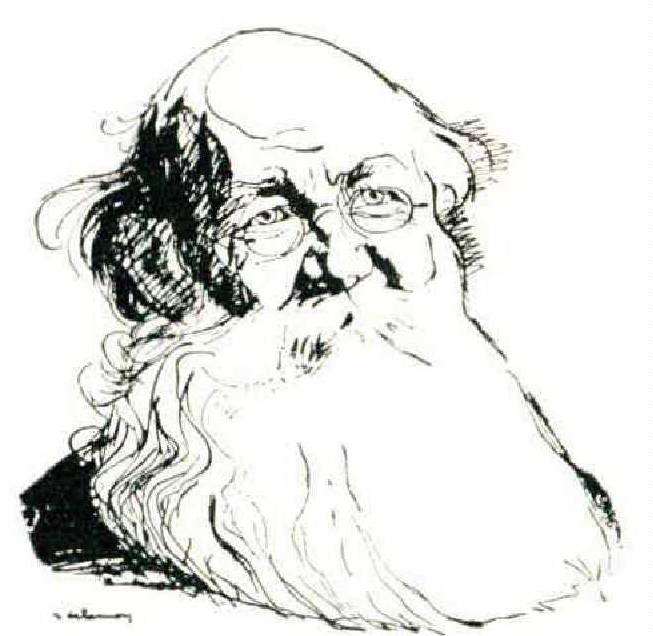
THE most prominent among the new Anarchist leaders was Prince Peter Kropotkin, by birth an aristocrat, by profession a geographer, and by conviction a revolutionist. His sensational escape after two years’ imprisonment from the grim fortress of Peter and Paul in 1876 had endowed him with a heroic aura, kept bright afterward during his years of exile in Switzerland, France, and England by unrepentant and unremitting preaching in the cause of revolt.
Kropotkin’s faith in mankind, despite a life of hard experience, was inexhaustible and unshatterable. He gave the impression, said an English journalist, Henry Nevinson, who knew him well, of “longing to take all mankind to his bosom and keep it warm.” Kindliness shone from his bald and noble dome ringed with a low halo of bushy brown hair. An ample beard, thick enough for Edward Lear’s owls to nest in, spread comfortably beneath his chin. He was very short “with hardly enough body to hold up the massive head.” Descended from princes of Smolensk who, according to family tradition, belonged to the Rurik dynasty that had ruled Russia before the Romanovs, Kropotkin took his place in that long line of “conscience-stricken" Russian nobility who felt guilty for belonging to a class that had oppressed the people for centuries.
He was born in 1842. After service as an officer of Cossacks in Siberia, where he studied the geography of the region, he became secretary of the Geographical Society, for whom he explored the glaciers of Finland and Sweden in 1871. Meanwhile, he had joined a secret revolutionary committee, an action which, on being revealed, caused his arrest and imprisonment. After his escape in 1876 — the year Bakunin died—he went to Switzerland, where he worked with Elisée Reclus, the French geographer and a fellow Anarchist, on Reclus’s monumental geography of the world. Kropotkin wrote the volume on Siberia and with Reclus founded and for three years edited Le Révolté, which, after suppression and a rebirth in Paris as La Révolte, was to become the best-known and longest-lived Anarchist journal. His stream ol convincing and passionate polemics, the prestige of his escape from the most dreaded Russian prison, his active work with the Swiss Anarchists ol the Jura, which caused his expulsion from Switzerland, all topped by his title of Prince made him Bakunin’s recognized successor as leader of the Anarchists.
In France, where he came in 1882, the traditions of the Commune had nourished a militant Anarchist movement of which there was a flourishing group in Lyons. A police raid and a retaliatory bomb causing one death had been followed by the arrest and trial of fifty-two Anarchists, including Kropotkin, on charges of belonging to an international league dedicated to the abolition of property, family, country, and religion. Sentenced to prison for five years, Kropotkin had served three, had then been pardoned by President Grévy, and with his wife and daughter had settled in England, the inevitable refuge of political exiles from other countries.
In a small house in Hammersmith, a drearily respectable suburb of London, he continued to write fiery paeans to violence for La Revolte, scholarly articles for geographical journals in five languages, to lecture Anarchist club meetings in a cellar off Tottenham Court Road, to thump the piano and paint, and to charm with his sweet temper and genial manners everyone who met him. “He was amiable to the point of saintliness,” wrote Shaw, “and with his full beard and lovable expression might have been a shepherd from the Delectable Mountains. His only weakness was the habit of prophesying war within the next fortnight. And he was right in the end.” This weakness was in fact an expression of Kropotkin’s optimism, for war to him was the expected catastrophe that was to destroy the old world and clear the way for the triumph of Anarchy. The “galloping decay” of states was hastening the triumph. “It cannot be far off,” he wrote. “Everything brings it nearer.”
This agreeable person, conventionally dressed in the black frock coat of a Victorian gentleman, was an uncompromising apostle of the necessity of violence. Man’s progress toward perfection was being held back, he wrote, by the “inertia of those who have a vested interest in existing conditions.” Progress needed a push; in short, a violent event “to hurl mankind out of its ruts into new roads. . . . Revolution becomes a pre-emptory necessity.” The spirit of revolt must be awakened in the masses by repeated “propaganda of the deed.” This phrase, which was to become the banner of Anarchist violence, was first used by a French socialist, Paul Brousse, in 1878, apropos of an attempt on the life of Wilhelm I of Germany. “The idea is on the march,” he wrote, “and we must seek to inaugurate the propaganda of the deed. Through a royal breast is the way to open the road to revolution!”
In 1879 at an Anarchist Congress in the Swiss Jura, Kropotkin specifically advocated propaganda of the deed, if somewhat less explicitly as to method. Though never recommending assassination in so many words, he continued during the eighties to urge a propaganda by “speech and written word, by dagger, gun and dynamite.” He sounded an inspiring summons in the pages of La Révolte to “men of courage willing not only to speak but to act, pure characters who prefer prison, exile and death to a life that contradicts their principles, bold natures who know that in order to win one must dare.” Men such as these must form an advance guard of revolution long before the masses are ready and, in the midst of “talking, complaining, discussing,” must do the “deed of mutiny.” A “single deed,” he wrote at another time, “is better propaganda than a thousand pamphlets.”
How many impressionable minds absorbed these words? How many bitter and ardent souls were stirred to attempt a deed that would perform the function so loftily called for by Kropotkin on paper?
In the nineties, when he was in his fifties, Kropotkin, though never altering his demand for revolt, subdued a little his enthusiasm for the indivictual deed. Although “the revolutionary spirit gains immensely through such deeds of individual heroism,” he wrote in La Révolte of March, 1891, “nevertheless it is not these heroic acts that make revolutions. Revolution is above all a mass movement. . . . Institutions rooted in centuries of history are not destroyed by a few pounds of explosives. The time for such action is passed and the time for the anarchist and communist idea to penetrate the masses has come.”Disclaimers, however, rarely have the same force as the original proposition.
IN A restaurant in Holborn during the coal strike of 1893, Kropotkin was arguing with Ben Tillett and Tom Mann, two tough-minded trade unionists. “We must destroy! We must pull down! We must be rid of the tyrants!” shouted Mann.
“No,” said Kropotkin in his foreign accent, with the eyes of a scientist gleaming behind his spectacles, “we must build. We must build in the hearts of men. We must establish a kingdom of God.”
He had the plans for the kingdom already drawn. After the revolution, which he calculated would lake three to five years to accomplish the overthrow of Europe’s governments, the destruction of prisons, forts, and slums, and the expropriation of land, industries, and all forms of property, volunteers would take inventory of all food stocks, dwellings, and means of production. Printed lists would be distributed “by the million.”Everyone would take what he needed of things which exist in plenty, and there would be rationing of things of which there was shortage. All property would be community property. Everyone would draw upon the community warehouse for food and goods according to his needs and would have the right “to decide for himself what he needs for a comfortable life.” As there would be no more inheritance, there would be no more greed. All ablebodied males would enter into contracts with society, through their groups and communes, by which they would engage to do five hours daily work from the age of twenty-one to about fortyfive or fifty, each in a labor of his choice. In return, society would guarantee them the enjoyment of “houses, stores, streets, conveyances, schools, museums, etc.”There would be no need for enforcement or for judges or penalties because people would fulfill their contracts out of their own need of “co-operation, support and sympathy” from their neighbors. The process would work because of its very reasonableness, although even Kropotkin might have noticed that the reasonableness of something is rarely a motive in human affairs.
Shaw, that uncomfortable person, picked out the trouble in a Fabian tract called The Impossibilities of Anarchism, published in 1891 and reprinted several times during the nineties. If man is good and institutions bad, he asked, if man will be good again as soon as the corrupt system ceases to oppress him, “how did the corruption and oppression under which he groans ever arise?” (Yet the fact that Shaw felt required to write the tract was his tribute to the Idea.)
The most vexing problem of the Anarchist plan was the question of an accounting of the value of goods and services. According to the theories of Proudhon and Bakunin, everyone would get paid in goods in proportion to what he produced. But this required a body to establish values and do the accounting, an Authority, which was anathema to pure Anarchy. As resolved by Kropotkin and Malatesta, the solution was to assume that everyone would want to work for the good of the whole, and since all work would be agreeable and dignified, everyone would contribute freely and take from the community warehouse freely without the necessity of accounting.
In proof Kropotkin evolved his theory of “mutual aid” to show that Anarchism had a scientific basis in the laws of nature. Darwin, he argued, had been perverted by capitalist political thinkers. Nature was not, in fact, red in tooth and claw nor animated by the instinct of each living thing to survive at the cost of its fellow but, on the contrary, bv the instinct of each to preserve the species through “mutual assistance.” He drew examples from the ants and the bees and from wild horses and cattle, which form a ring when attacked by wolves, and from the communal field and village life of men in the Middle Ages. He admired the rabbit, which, defenseless and adapted to nothing in particular, survived and multiplied.
Although Kropotkin never slackened his lust for the total destruction of the bourgeois world, that world could not forbear to honor him. He was such a distinguished scholar — and besides, a Prince! When he refused membership in the Royal Geographic Society because it was under royal patronage, he was invited anyway to the society’s dinner, and when he refused to rise upon the chairman’s toast to “The King!”, the chairman promptly rose again to propose, “Long live Prince Kropotkin!”, whereupon the whole company stood up to join in the toast. When he visited the United States in 1901 he lectured to the Lowell Institute in Boston, was entertained by its intellectual elite and, not to be outdone, by Mrs. Potter Palmer in Chicago. His memoirs were commissioned by the Atlantic; his books bore the imprint of the most respectable publishers. When Mutual Aid appeared the Atheneum said it revealed “a most attractive and generous personality.”and the Review of Reviews called it “a good healthy cheerful, delightful book which does one good to read.”
ASIDE from Kropotkin, Anarchist thought was most highly developed in France. France, in these years, had erected the tallest structure in the world, had invented the balloon, the bicycle, and radioactivity, nurtured a group of painters of genius and the most original composers of their time, gloried in the most cultivated capital, and had, naturally, the most explicit Anarchists. Among a wide assortment, some serious and some frivolous, the leaders were Élisee Reclus and Jean Grave. Reclus, with a dark-bearded face of somber beauty and melancholy like that of a Byzantine Christ, was the soothsayer of the movement. He had fought on the barricades of the Commune and marched to prison down the dusty bloodstained road to Versailles. He came from a distinguished family of scholars and, besides his work as a geographer, devoted years to explaining and preaching the Anarchist system through his books and through the periodicals he edited at one time or another with Kropotkin and Grave.
In contrast, Grave came from a working-class family. Once a shoemaker and then, like Proudhon, a typesetter and printer, he had in the eighties practiced making fulminate of mercury to blow up the Prefecture of Police or the Palais Bourbon, seat of the French Parliament. His book The Dying Society and Anarchism so persuasively argued the destruction of the state and offered so many insidious suggestions that it cost him two years in prison. While there he wrote another book, Society After the Revolution, which he promptly printed himself and published upon his release. Being utopian, it was not considered dangerously subversive by the authorities. In a fifth-floor walk-up garret on a working-class street, the Rue Mouffetard. he now edited, largely wrote, and printed on a handpress the weekly La Révolte, while at the same time working on his great history, Le Mouvement libertaire sous la troisième république. In a room furnished with a table and two chairs, he lived and worked, dressed invariably in a French workman’s long black blouse, surrounded by pamphlets and newspapers, “simple, silent, indefatigable,” and so absorbed in his thought and task that “he seemed like a hermit from the Middle Ages who forgot to die 800 years ago.”
The followers who were the body of the movement never formed a party but associated only in small, localized clubs and groups. A few comrades would pass out notices informing friends that, for instance, “The Anarchists of Marseilles are establishing a group to be called The Avengers and Famished which will meet every Sunday at-. Comrades are invited to come and bring reliable friends to hear and take part in the discussions.” Such groups existed not only in Paris but in most of the large cities and many small towns. Among them were “The Indomitables” of Armentieres, “The Forced Labor” of Lille, the “Ever-Ready” of Blois, “Land and Independence” of Nantes, the “Dynamite” of Lyons, “The Anti-Patriots” of Charleville. With similar groups from other countries, they occasionally held congresses such as the one in Chicago during the World’s Fair in 1893, but they neither organized nor federated.
Another of the leading figures was an Italian, Enrico Malatesta, the firebrand of Anarchism, always carrying the flame into whatever corner of the world there was an Anarchist group. Ten years younger than Kropotkin, he looked like a romantic bandit who might have befriended the Count of Monte Cristo. In fact, he came from a well-off bourgeois family, and as a young medical student had been expelled from the University of Naples for participating in a student riot at the time of the Paris Commune. Thereafter, to make a living he learned the electrician’s trade, joined the Italian section of the International, sided with Bakunin against Marx, led an abortive peasant revolt in Apulia, went to prison and then into exile. He tried to direct the Belgian general strike of 1891 away from its petty aim of manhood suffrage, since the vote, in the Anarchist credo, was merely another booby trap of the bourgeois state. He was expelled for similar revolutionary efforts from one country after another and condemned to five years on tHe prison island of Lampedusa, from which he escaped in a rowboat during a storm. When confined to Italy he escaped in a packing case marked “Sewing Machines” which was loaded on a boat for Argentina, where he hoped to prospect for gold in Patagonia to provide funds for the cause, and where, in fact, he found gold, only to have his claim confiscated by the Argentine government.
Not content merely with talking about the coming disappearance of the state, Malatesta was constantly embroiled in practical attempts designed to help it disappear, which caused him to be suspected of deviating from pure Anarchism and even of leaning toward Marxism. On one occasion he was shot by an Italian fellow Anarchist of the extreme anti-organizzatori wing. Never discouraged, no matter how many of the insurrections he midwifed were stillborn, Malatesta was always just in or out of prison, fresh from some dramatic escape or desperate adventure, forever an exile without a home or hardly a room to call his own, always turning up, as Kropotkin said, “just as we saw him last, ready to renew the struggle, with the same love of man, the same absence of hatred for adversaries or jailers.”
Their optimism was the outstanding characteristic of these leaders. They were certain that Anarchism, because of its rightness, must triumph and the capitalist system, because of its rottenness, must fall, and they sensed a mysterious deadline in the approaching end of the century. “All are awaiting the birth of a new order of things,” wrote Reclus. “The century which has witnessed so many grand discoveries in the world of science cannot pass away without giving us still greater conquests. After so much hatred we yearn to love each other and for this reason we are the enemies of private property and the despisers of law.”
As formulated by men like Kropotkin, Malatesta, Jean Grave, and Reclus, Anarchism at the end of the century may have attained, in the words of one of its recorders, “a shining moral grandeur,”but only at the cost of a noticeable removal from reality. These men had all suffered prison more than once for their beliefs. Kropotkin himself had lost his teeth as a result of prison scurvy. I hey were not men of the ivory tower, except insolar as their heads were in ivory towers. They were able to draw blueprints of a state of universal harmony only by ignoring the evidence ol human behavior and the testimony of history. Their insistence on revolution stemmed directly from their faith in humanity, which, they believed, needed only a shining example and a sharp blow to start it on its way to the golden age. They spoke their faith aloud. The consequences were frequently fatal.
ANARCIHSM’S new era of violence opened in France just after the one-hundredth anniversary of the French Revolution. A two-year reign of dynamite, dagger, and gunshot erupted, killed ordinary men as well as great ones, destroyed property, banished safety, spread terror, and then subsided. The signal was given in 1892 by a man whose name, Ravachol, seemed to “breathe revolt and hatred” and became the symbol of the new era.
His act, like nearly all that followed it, was a gesture of revenge for comrades who had suffered at the hands of the state. On the previous May Day of 1891, at Clichy, a working-class suburb of Paris, a workers’ demonstration led by les anarchos carrying red banners with revolutionary slogans was charged by mounted police. In the melee five police were slightly injured and three Anarchist leaders, Descamps, Dardare, and Léveillé, severely wounded. Dragged to the police station, the Anarchists were subjected, while still bleeding and untended, to a passage a tabac of uncontrolled savagery, being made to pass between two lines of policemen under kicks and blows and beatings with revolver butts. At their trial, Bulot, the prosecuting attorney, charged that Descamps, on the day before the riot, had called on the workers to arm themselves and told them, “If the police come, let no one fear to kill them like the dogs they are! Down with Government! Vive la revolution/” Bulot thereupon demanded the dealh penalty for all three, which, since no one had been killed, was an impossible demand that he might better not have made. It was to start a train of dynamite. For the moment, M. Benoist, the presiding judge, acquitted one defendant and sentenced the other two to five and three years’ imprisonment respectively, the maximum penalty allowable in the circumstances.
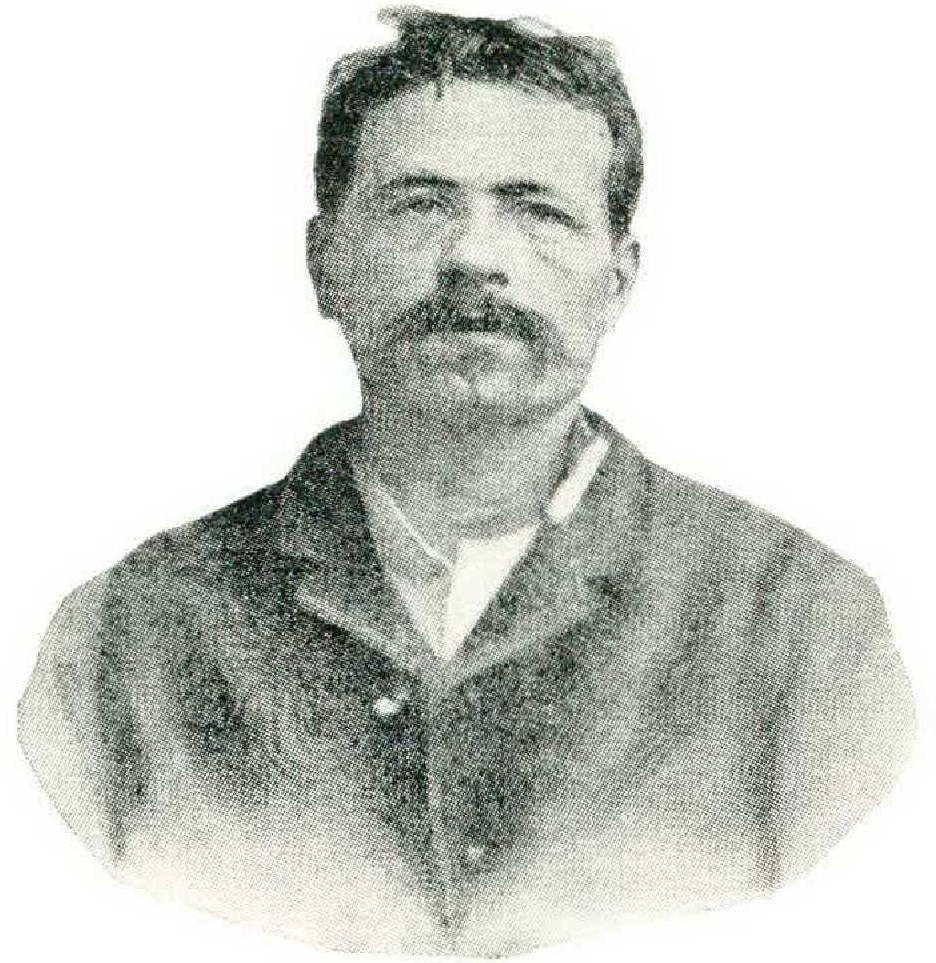
Six months after the trial, on March 14, 1892, the home of M. Benoist on the Boulevard St. Germain was blown up by a bomb. Two weeks later, on March 27, another bomb blew up the home of Bulot, the prosecuting attorney, in the Rue de Clichy. Between the two explosions the police had circulated a description of the suspected criminal as a thin but muscular young man in his twenties with a bony, yellowish face, brown hair and beard, a look of ill health, and a round scar between thumb and first finger of the left hand. On the day of the second explosion a man of this appearance took dinner at the Restaurant Véry in the Boulevard Magenta, where he talked volubly to a waiter named Lherot about the explosion, which no one in the quarter yet knew had taken place. He also expressed antimilitarist and anarchist opinions. Lhérot wondered about him but did nothing. Two days later the man returned, and this time Lhérot, noticing the scar, called the police. When they arrived to arrest him the slight young man suddenly became a giant of maniacal strength, and it required ten men and a terrific struggle to subdue him and take him prisoner.
This was Ravachol. He had adopted his mother’s name in preference to Koenigstein, the name of his father, who had abandoned his wife and four children, leaving Ravachol at eight years of age as chief breadwinner of the family. At eighteen, after reading Eugene Sue’s The Wandering Jew, he had lost faith in religion, adopted Anarchist sentiments, attended their meetings, and as a result was dismissed with a younger brother from his job as a dyer’s assistant. Meanwhile, his younger sister died and his older sister bore an illegitimate child. Although Ravachol found other jobs, they did not pay enough to keep the family from misery, so he took to illegal supplements but with a certain fierce pride of principle. Robbery of the rich was the right of the poor “to escape living like beasts,” he said in prison. “To die of hunger is cowardly and degrading. I preferred to turn thief, counterfeiter, murderer.” He had in fact been all these, and grave robber as well.
At his trial on April 26 he stated that his motive had been to avenge the Anarchists of Clichy who had been beaten up by the police and “not even given water to wash their wounds,” and upon whom Bulot and Benoist had imposed the maximum penalty although the jury had recommended the minimum. His manner was resolute, and his eyes had the peculiarly piercing gaze expressive of inner conviction. “My object was to terrorize so as to force society to look attentively at those who suffer,” he said, putting volumes into a sentence. While the press described him as a figure of sinister violence and cunning and a “colossus of strength,”witnesses testified that he had given money to the wife of one of the imprisoned Clichy Anarchists and bought clothes for her children. At the end of the one-day trial he was sentenced to imprisonment at hard labor for life. But the Ravachol affair had just begun.
The waiter Lhérot, meanwhile, was winning heroic notoriety by regaling customers and journalists with his story of the scar, the recognition, and the arrest. As a result he attracted an unknown avenger of Ravachol who set off a bomb in the Restaurant Very which killed not Lhérot but his brotherin-law, M. Véry, the proprietor, The act was hailed by Le Père Peinard, the most slangy and popular of the Anarchist journals, with the ghoulish double pun, “ Vérification!”
By now the police had uncovered a whole series of Ravachol’s crimes, including a grave robbery for the jewelry on a corpse, the murder of a ninetytwo-year-old miser and his housekeeper, the further murder of two old women who kept a hardware shop, which had netted him forty sous, and of another shopkeeper, which had netted him nothing. “See this hand?” Ravachol was quoted as saying. “It has killed as many bourgeois as it has lingers.” At the same time he had been living peaceably in lodgings, teaching the little daughter of his landlord to read.
His retrial opened on June 21 in an atmosphere of terror induced by the avenger’s bomb in the Restaurant Véry. Everyone expected the Palais de Justice to be blown up; it was surrounded by troops, every entrance guarded, and jurors, judges, and counsel heavily escorted by police. Upon being sentenced to death, Ravachol said that what he had done had been for the “Anarchist Idea” and added the terrible words, “I know I shall be avenged.”
Faced with this extraordinary person, at once a monster of criminality and a protector and avenger of the unfortunate, the Anarchist press fell into discord. In La Révolte Kropotkin repudiated Ravachol as “not the true, the authentic” revolutionary but the “opéra-bouffe variety.” These deeds, he wrote, “are not the steady, daily work of preparation, little seen but immense, which the revolution demands. This requires other men than Ravachols. Leave them to the fin de siecle bourgeois whose product they are.” Malatesta likewise, in the literary Anarchist journal l’En Dehors, rejected Ravachol’s gesture.
The difficulty was that Ravachol belonged almost but not quite to that class of Ego Anarchists who had one serious theorist in the German Max Stirner and a hundred practitioners of the culte de moi. They professed an extreme contempt for every bourgeois sentiment and social restraint, recognizing only the individual’s right to “live anarchistically,” which included burglary or any other crime that served the need of the moment. They were interested in themselves, not in revolution. The unbridled operations of these “miniature Borgias,” usually ending in gun battles with the police and flaunted under the banner of Anarchism, added much to the fear and anger of the public, which did not distinguish between the aberrant and the true variety. Ravachol was both. There was in him a streak of genuine pity and fellow feeling for the oppressed of his class which led one Anarchist paper to compare him to Jesus.
On July 11, calm and unrepentant, he went to the guillotine, crying at the end, “ Vive l’anarchie!” At once the issue was clear. Overnight he became an Anarchist martyr, and among the underworld a popular hero. La Revolte reversed itself. “He wall be avenged!” it proclaimed, adding its bit to the unfolding cycle of revenge. A verb, ravacholiser, meaning “to wipe out an enemy,” became current, and a street song called La Ravachole, sung to the tune of La Carmagnole, carried the refrain:
Every bourgeois will have his bomb!
Ravachol’s significance was not in his bombs but in his execution. Meantime, violence erupted across the Atlantic.
ANARCHISM, which rejected government in sexual matters as in all others, had its love affairs, and one that was to have explosive effect upon the movement in America was at this time in progress in New York. It began in 1890 at a memorial meeting for the Haymarket martyrs at which the German-born Johann Most was the speaker. An untended childhood accident had left him with a scarred and twisted face and deformed body. His scorned and lonely youth, when he wandered from place to place, sometimes starving, sometimes finding odd jobs, was natural soil for an animus against society. In Johann Most it sprouted with the energy of a weed. He learned the bookbinder’s trade, wrote wrathfully for the revolutionary press, and achieved one term as deputy in the Reichstag in the seventies. But his vehemence kept him forever a wanderer, repeatedly imprisoned, repeatedly expelled, until he reached the United States in 1882 and by the force of his pen and personality took over leadership of the Anarchists. In 1890 he was forty-four, a harsh, embittered man, yet so eloquent and impassioned when he spoke at the memorial meeting that his repellent appearance was forgotten. To one female member of the audience he seemed to “radiate hatred and love” (a phrase which succinctly describes Anarchism).
Emma Goldman, a Russian Jewish recent immigrant of twenty-one, with blue eyes, a rebellious soul, and a highly excitable nature, was transported. Her companion of the evening was Alexander Berkman, like herself a Russian Jew, who had lived in the United States less than three years. Persecution in Russia and poverty in America had endowed both these young people with exalted revolutionary purpose. Emma’s first job in the United States was sewing in a factory ten and a half hours a day for $2.50 a week. Her room cost $3.00 a month. Berkman came from a slightly better class of family which in Russia had been sufficiently well off to employ servants and send their son to the gymnasium. But economic disaster had overtaken them; a favorite uncle of revolutionary sentiments had been seized by the police and never seen again, and Sasha (Alexander) had been expelled from school for writing a nihilist and atheistic composition. Now twenty, he had “the neck and chest of a giant,” a high studious forehead, intelligent eyes, and a severe expression. From the “tension and fearful excitement” of Most’s speech about the martyrs, Emma sought “relief” in Sasha’s arms, and subsequently her enthusiasm led her to Most’s arms as well. The tensions of this arrangement proved no different from those of any bourgeois triangle.
In June, 1892, in Homestead, Pennsylvania, the steel workers’ union struck in protest against a reduction of wages by the Carnegie Steel Company. The company was determined to crush the union. Having become a philanthropist, Andrew Carnegie discreetly retreated for the summer to a salmon river in Scotland, leaving his manager, Henry Clay Frick, to do battle with organized labor. No one was more competent or more willing. A remarkably handsome man of forty-three, with a strong black mustache merging into a short black beard, a courteous controlled manner, and eyes which could become “very steely” suddenly, Frick came from a well-established Pennsylvania family. He dressed with quiet distinction in dark blue with a hairline stripe, never wore jewelry, and when offended by a cartoon of himself in the Pittsburgh Leader, said to his secretary, “This won’t do. This won’t do at all. Find out who owns this paper and buy it.” He now recruited three hundred strikebreakers from the Pinkerton Agency and prepared to operate the mills behind a military stockade.
On July 5, when Frick’s private army advanced in armored barges across the Monongahela and prepared to land, the strikers attacked with homemade cannon, rifles, dynamite, and burning oil. The day of furious battle ended with ten killed, seventy wounded, and the Pinkertons thrown back from the plant by the bleeding but triumphant workers. The governor of Pennsylvania sent in eight thousand militia, the country was electrified, and Frick, in the midst of smoke, death, and uproar, issued an ultimatum declaring his refusal to deal with the union and his intention to operate with nonunion labor and to discharge and evict from their homes any workers who refused to return to their jobs.
“Homestead! I must go to Homestead!” shouted Berkman on the memorable evening when Emma rushed in waving the newspaper. It was, they felt, “the psychological moment for the deed. . . . The whole country was aroused against Frick and a blow aimed at him now would call the attention of the whole world to the cause.” The workers were striking not only for themselves but “for all time, for a free life, for Anarchism” — although they did not know it.
Berkman boarded the train for Pittsburgh bent on killing Frick but surviving long enough himself “to justify my case in court.” Then, in prison he would “die by my own hand like Lingg.”
On July 23 he made his way to Frick’s office, where he was admitted when he presented a card on which he had written “Agent of a New York employment firm.” Frick was conferring with his vice chairman, John Leishman, when Berkman entered, pulled out a revolver, and fired. His bullet wounded Frick on the left side of his neck; he fired again, wounding him on the right side; and as he fired the third time, his arm was knocked up by Leishman, so that he missed a fatal shot again. Frick, bleeding, had risen and lunged at Berkman, who, attacked also by Leishman, fell to the floor dragging the other two men with him. Freeing one hand, he managed to extract a dagger from his pocket and stabbed Frick in the side and legs seven times before he was finally pulled off by a deputy sheriff and others who rushed into the room.
“Let me see his face!" whispered Frick, his own face ashen, his beard and clothes streaked with blood. The sheriff jerked Berkman’s head back by his hair, and the eyes of Frick and his assailant met. At the police station two Caps of fulminate of mercury of the same kind Lingg had used to blow himself tip were found on Berkman’s person (some say, in his mouth). Frick lived, the strike was broken by the militia, and Berkman went to prison for sixteen years.
All this left the country gasping, but the public shock was as nothing compared with that which rocked Anarchist circles when in Freiheit of August 27 Johann Most, inveterate champion of violence, turned apostate to his past and denounced Berkman’s attempt at tyrannicide. He said the importance of the terrorist deed had been overestimated and that it could not be effective where the revolutionary movement was inchoate and weak, and he dealt with Berkman, now a hero in Anarchist eyes, in terms of contempt. When he repeated these views verbally at a meeting, a female fury rose up out of the audience. It was Emma Goldman, armed with a horsewhip, who sprang upon the platform and flayed her former lover across his face and body. The scandal was tremendous. It was clearly jealousy of Berkman as a younger rival, both in love and in the revolutionary movement, that galled Most. His splenetic attack on a fellow Anarchist who had been ready to die for the deed was a stunning betrayal from which Anarchism in America never fully recovered.
IN FRANCE there was no pause in the assaults. On November 8, 1892, at the time of a miners’ strike against the Société des Mines de Carmaux, a bomb was deposited in the Paris office of the company on the Avenue de 1’Opéra. Discovered by the concierge, it was taken out to the sidewalk and carefully carried off by a policeman to the nearest precinct station in the Rue des Bons Enfants. As the policeman was bringing it in, it burst with a devastating explosion, killing five other policemen who were in the room. They were blown to fragments, blood and bits of flesh were splashed over shattered walls and windows, pieces of arms and legs lay about. Police suspicion centered on Emile Henry, younger brother of a wellknown radical orator and son of Fortune Henry, who had escaped to Spain after being condemned to death in the Commune. When Emile Henry’s movements during the day were traced, it appeared impossible that he could have been in the Avenue de 1’Opéra at the right moment, and for the time being no arrests were made.
The bomb in the police station put Paris in a panic; no one knew where the next bomb would hit. Anyone connected with the law or police was regarded by his neighbors — since Parisians live largely in apartments — as if he had the plague and was often given notice to leave by his landlord. The city, wrote an English visitor, was “absolutely paralyzed” with fear. The upper classes “lived again as if in the days of the Commune. They dared not go to the theatres, to restaurants, to the fashionable shops in the Rue de la Paix or to ride in the Bois where Anarchists were suspected behind every tree.”
The time was, in any case, one of public rancor and disgust. Hardly had the republic warded off the Boulanger coup d’etat when it was put to shame by the nests of corruption revealed in the Panama scandal and the official traffic in decorations. Day after day in Parliament during 18901892 the chain of Panama financing through loans, bribes, slush funds, and sales of influence was uncovered, until, it was said, 104 deputies were involved. Even Georges Clemenceau was smeared by association and lost his seat in the next election.
In proportion, as the prestige of the state sank, Anarchism flourished. Intellectuals flirted with it. The poet Laurent Tailhade hailed the future Anarchist society as a “blessed time” when aristocracy would be one of intellect and “the common man will kiss the footprints of the poets.” Scores of ephemeral journals and bulletins appeared with names like Antichrist, New Dawn, Black Flag, Enemy of the People, The People’s Cry, The Torch, The Whip, New Humanity, Incorruptible, Sans-Culotte, Land and Liberty, Vengeance. To them the state, in its panic over the Ravachol affair, in its rottenness revealed by the Panama affair, appeared to be already crumbling.
In March of 1893 a man of thirty-two named August Vaillant returned to Paris from Argentina, where he had gone in the hope of starting a new life in the New World but had failed to establish himself. Born illegitimate, he was ten months old when his mother married a man not his father who refused to support the child. He was given to foster parents. At twelve, the boy was on his own in Paris, living by odd jobs, petty theft, and begging. Somehow he went to school and found white-collar jobs. At one time he edited a shortlived weekly called l’Union Socialiste, but soon, like others among the disinherited, gravitated to Anarchist circles. As secretary of a Fédération des groupes independants he had some contact with Anarchist spokesmen like Jean Grave and Sébastien Faure. Vaillant married, parted from his wife, but kept with him their daughter, Sidonie, and acquired a mistress. Not the footloose or libertarian type, he held together his tiny family until the end. After his failure in Argentina he tried again to make a living in Paris and, like his contemporary, Knut Hamsun, then hungrily wandering the streets of Christiania, experienced the humiliation of “the frequent repulses, halfpromises, the curt noes, the cherished deluded hopes and fresh endeavors that always resulted in nothing,” until the last frustration, when he no longer had any respectable clothes to wear when applying for a job. Unable to afford a new pair of shoes, Vaillant wore a pair of discarded galoshes he had picked up in the street. Finally he found work in a sugar refinery paying three francs a day, too little to support three people.
Ashamed and bitter to see his daughter and mistress go hungry, disillusioned with a world he never made, he decided to end his life. He would not go silently, but with a cry of protest, “a cry of that whole class,” as he wrote the night before he acted, “which demands its rights and some day soon will join acts to words. At least I shall die with the satisfaction of knowing that I have done what I could to hasten the advent of a new era.”
Not a man to kill, Vaillant planned a gesture that had some logic. He saw the disease of society exemplified by the scandal-ridden Parliament. He manufactured a bomb out of a saucepan filled with nails and with a nonlethal charge of explosive. On the afternoon of December 9, 1893, he took a seat in a public gallery of the Chambre des Deputes and threw his bomb into the midst of the debate. It detonated with the roar of a cannon, spraying the deputies with metal fragments, wounding several but killing none.
The sensation, as soon as the news was known, was enormous and was made memorable by an enterprising journalist. He asked for comment that night at a dinner given by the journal La Plume to a number of celebrities, including Zola, Verlaine, Mallarmé, Rodin, and Laurent Tailhade. The last-named replied grandly and in exquisite rhythm, “ Qu’imborte les victimes si le geste est beau?” — “What do the victims matter if it’s a fine gesture?” Published in Le Journal next morning, the remark was soon to be recalled in gruesome circumstances. That same morning Vaillant gave himself up.
All France understood, and some, other than Anarchists, even sympathized with his gesture. Ironically, these sympathizers came from the extreme right, whose antirepublican forces — royalists, Jesuits, floating aristocracy, and anti-Semites — despised the bourgeois state for their own reasons. Edouard Drumont, author of La France Juive and editor of La Libre Parole, who was busy raging at the Jews involved in the Panama scandal, produced a piece richly entitled, “On Mud, Blood and Gold —from Panama to Anarchism.” “The men of blood,” he said, “were born out of the mud of Panama.”
On January 10 Vaillant came to trial before five judges in red robes and black gold-braided caps. Charged with intent to kill, he insisted that he had intended only to wound. “If I had wanted to kill I could have used a heavier charge and filled the container with bullets; instead I used only nails.” Nevertheless, Vaillant received the death penalty, the first time in the nineteenth century that this had been imposed on a person who had not killed. Trial, verdict, and sentence were rushed through in a single day. Almost immediately petitions for pardon began to assail President Sadi Carnot, including one from a group of sixty deputies led by Abbé Lemire, who had been one of those wounded by the bomb. A fiery socialist, Jules Breton, predicted that if Carnot “pronounced coldly for death, not a single man in France would grieve for him if he were one day himself to be victim of a bomb.” As incitement to murder, this cost Breton two years in prison and proved to be the second comment on the Vaillant affair which was to end in strange and sinister coincidence.
The government could not pardon an Anarchist attack upon the state. Carnot refused to remit the sentence, and Vaillant was duly executed on February 5, 1894, crying “Death to bourgeois society! Long live Anarchy!”
THE train of death gathered speed. Only seven days after Vaillant went to the guillotine, he was avenged by a blow of such seemingly vicious unreason that the public felt itself in the midst of nightmare. This time the bomb was aimed not against any representative of law, property, or state but against the man in the street. It exploded in the Café Terminus of the Gare St. Lazare in the midst, as Le Journal wrote, “of peaceful, anonymous citizens gathered in a café to have a beer before going to bed.” One was killed and twenty wounded. As later became clear, the perpetrator acted upon a mad logic of his own. Even before he came to trial, the streets of Paris rocked with more explosions. One in the Rue St. Jacques killed a passerby, one in the Faubourg St. Germain did no damage, and a third exploded in the pocket of Jean Pauwels, a Belgian Anarchist, as he was entering the Church of the Madeleine. He was killed, and proved to have set the other two. On April 4, 1894, a fourth exploded in the fashionable Restaurant Foyot, where, though it killed no one, it put out the eye of Laurent Tailhade, who happened to be dining there and who only four months ago had shrugged aside the victims of a “fine gesture.”
Public hysteria mounted. When, at a theatrical performance, some scenery backstage fell with a clatter, half the audience rushed tor the exits screaming, “Les Anarchistes! Une bombe!” Newspapers took to printing a daily bulletin under the heading La Dynamite. When the trial of the bomber of the Cafe Terminus opened on April 27, the terrible capacity of the Anarchist Idea to be transformed from love of mankind to hatred of men was revealed.
The accused turned out to be the same Emile Henry who had been suspected of setting the earlier bomb in the office of the Mines de Carmaux which had ultimately killed the five policemen. Already charged for murder in the Café Terminus, he now claimed credit for the other deaths as well, although no proof could be found. He stated that he had bombed the Cafe Terminus to avenge Vaillant, and with full intention to kill “as many as possible. I counted on fifteen dead and twenty wounded.” In fact, police had found in His room enough equipment to make twelve or fifteen bombs. In his cold passion, intellectual pride, and contempt for the common man, Henry seemed the “St. Just of Anarchism.” At twenty-two he was, along with Berkman, the best educated and bestacquainted with Anarchist theory of all the assassins, and of them all. the most explicit.
In prison he wrote a long, closely reasoned account of his experience of the cynicism and injustice of bourgeois society, of his “too great respect for individual initiative” to permit him to join the herdlike socialists, and of his approach to Anarchism. He showed himself thoroughly familiar with its doctrines and with the writings of Kropotkin, Reclus, Grave, Faure, and others, although he affirmed that Anarchists were not “blind believers” who swallowed whole any or all the ideas of the theorists.
But it was when he explained his choice of the Café Terminus that he suddenly set himself apart. There, he said, come “all those who are satisfied with the established order, all the accomplices and employees of Property and the State . . . all that mass of good little bourgeois who make 300 to 500 francs a month, who are more reactionary than their masters, who hate the poor and range themselves on the side of the strong. These are the clientele of the Terminus and the big cafes of its kind. Now you know why I struck where I did.”
In court, when reproached by the judge for endangering innocent lives, he replied with icy hauteur, in words that should have been blazoned on some Anarchist banner, “There are no innocent bourgeois.”
As for the Anarchist leaders, he said, who “dissociate themselves from the propaganda of the deed,” like Kropotkin and Malatesta in the case of Ravachol, and “who try to make a subtle distinction between theorists and terrorists, they are cowards. . . . We who hand out death know how to take it. . . . Mine is not the last head you will cut off. You have hung in Chicago, beheaded in Germany, garrotted at Jerez, shot in Barcelona, guillotined in Paris, but there is one thing you cannot destroy: Anarchism. ... It is in violent revolt against the established order. It will finish by killing you.”
Henry himself took death staunchly. Even the caustic Clemenceau, who witnessed the execution on May 21, 1894, was moved and disturbed. He saw Henry “with the face of a tormented Christ, terribly pale, implacable in expression, trying to impose his intellectual pride upon his child’s body.” The condemned man walked quickly, despite his shackles, up the steps of the scaffold, threw a glance around, and called out in a raucous strangled cry, “Courage, Camarades! Vive l’Anarchie!” Society’s answer to Henry seemed to Clemenceau at that moment “an act of savagery.”
ALMOST without pause fell the next blow, the last In the French series and the most important in its victim, although the least in its assassin. In Lyons on June 24, 1894, during a visit to the Exposition in that city, President Sadi Carnot was stabbed to death by a young Italian workman with the cry, “Vive la revolution! Vive Anarchie!” The President was driving in an open carriage through crowds that lined the street and had given orders to his escort to let people approach. When a young man holding a rolled-up newspaper thrust himself forward from the front row, the guards did not stop him. They thought the newspaper contained flowers. Instead it contained a dagger, and with a terrible blow the young man plunged it six inches into the President’s abdomen. Carnot died within three hours.
The assassin was a baker’s apprentice, not yet twenty-one, named Santo Caserio. Born in Italy, he had become acquainted with Anarchist groups in Milan, the home of political turbulence. At eighteen he was sentenced for distributing Anarchist tracts to soldiers. Following the drift of other restless and troublesome characters, he went to Switzerland and then to Cette in the south of France, where he found work and a local group of Anarchists which went by the name Les Coeurs de Chène — “Hearts of Oak.” He was brooding over Vaidant’s case and the refusal of the President to give a reprieve when he read in the newspapers of the President’s forthcoming visit to Lyons. Caserio decided at once to do a “great deed.”He asked for a holiday from his job and for twenty francs that were due him — and with the money bought a dagger and took the train for Lyons. There he followed the crowds until he met his opportunity.
Afterward in the hands of his captors and in court he was docile, smiling, and calm. His wan and rather common but gentle face looked to one journalist like “the white mask of a floured Pierrot illuminated by two bright little blue eyes, obstinately fixed. His lip was ornamented by a poor little shadow of a moustache which seemed to have sprouted almost apologetically.” During his interrogation and trial he remained altogether placid and talked quite rationally about Anarchist principles, by which he appeared obsessed. He described his act as a deliberate “propaganda of the deed.”His only show of emotion was at mention of his mother, to whom he was greatly attached and to whom he had been writing letters regularly when away from home. When the jailer came to wake him on August 15, the day of execution, he wept for a moment and then made no further sound on the way to the guillotine. Just as his neck was placed on the block he murmured a few words which were interpreted by some as the traditional “Vive l’Anarchic!” and by others as “A voeni nen,” meaning, in the Lombard dialect, “I don’t want to.”
WHEN Anarchism slew the very chief of state, it reached a climax in France, after which, suddenly, face to face with political realities and the facts of life in the labor movement, it retreated. At first, however, it looked as if the Anarchists would be handed a magnificent opportunity for either propaganda or martyrdom. Charging to the offensive, the government on August 6 staged a mass trial of thirty of the best-known Anarchists in an effort to prove conspiracy between theorists and terrorists. In the absence of evidence, however, the jury was not impressed and acquitted all except three of the burglar variety, who were given prison terms. Once again French common sense had reasserted itself, as is its peculiar way whenever things seem most deplorable and the friends of France are already preparing to celebrate her obsequies.
The jury’s sensible verdict deprived Anarchism of a cause célebre, but a greater reason for the decline that followed was that the French working class was too realistic to be drawn into a movement suffering from self-inflicted impotence. The sterility of deeds of terror was already beginning to be recognized by leaders like Kropotkin, Malatesta, Reclus, and even Johann Most. Searching for other means of bringing down the state, they were always tripped up by the inherent paradox: Revolution demands organization, discipline, and authority; Anarchism disallows them. The futility of their position was beginning to make itself felt. Yet in the end there was a kind of tragic sense in the Anarchist rejection of authority. As Sébastien Faure, who had been educated by Jesuits, said in a moment of cold realism, “Every revolution ends in the reappearance of a new ruling class.”
Realists of another kind during these years began to come to terms with the labor movement. It was the eight-hour day that the French working class wanted, not bombs in Parliament or murdered presidents. But it was the Anarchist propaganda of the deed that woke them to recognition of what they wanted and the necessity of fighting for it. That was why Ravachol, whom they understood, became a popular hero and songs were sung about him in the streets. Ever since the massacres of the Commune the French proletariat had been prostrate; it was the Anarchist assaults that brought them to their feet. They sensed that their strength lay in collective action, and in 1895, only a year after the last of the Anarchist assaults, there was formed the C.G.T., France’s federation of labor.
Upon the Anarchists, frustrated by their own inherent paradox, it exerted a strong pull. One by one they drifted into the trade unions, bringing with them as much of their doctrine as could be applied. This merger of Anarchist theory and trade union practice took the form known as Syndicalism, and in this altered form, though extremists of the pure kind like Jean Grave shunned it, French Anarchism developed during the years 1895-1914.
Its dogma was direct action through the general strike, and its new prophet was Georges Sorel. Under his banner the general strike was to replace propaganda of the deed. The Syndicalists continued to abhor the state or anyone willing, like the Socialists, to cooperate with it, and they had no more use than their Anarchist predecessors for halfway reformist measures. The strike was all, the general strike and nothing but the strike. They retained the sinews of the old movement; but something of its soul, its mad marvelous independence, was gone.
PUBLIC excitement over Anarchist deeds, giving promise of heroic notoriety, acted as an intoxicant to unsound minds and produced the next two fatalities. The first took place on September 10, 1898, alongside the lake steamer at the Quai du Mont Blanc in Geneva. Here met, in mortal junction, as meaningless as when a stroke of lightning kills a child, two persons so unconnected, so far apart in the real world that their lives could never have touched except in a demented moment. One was the Empress Elizabeth of Austria, wife of Franz Joseph, the other Luigi Lucheni, a vagrant Italian workman.
The most beautiful and the most melancholy royal personage in Europe, married and crowned at sixteen, Elizabeth was still, at sixty-one, forever moving restlessly from one place to another in endless escape from an unquiet soul. Renowned for her loveliness, her golden-brown hair a yard long, her slender elegance and floating walk, her sparkling moods when she was the “incarnation of charm,” she suffered also from “court-ball headaches” and could not appear in public without holding a fan before her face. She was “a fairies’ child,” wrote Carmen Sylva, the Queen of Romania, “with hidden wings, who flies away whenever she finds the world unbearable. She wiote sad romantic poetry and had seen her son s life end in the most melodramatic suicide of the century. Her insane first cousin, King Ludwig of Bavaria, had died by drowning; her husband’s brother, Maximilian, by firing squad in Mexico, her sister by fire at a charity bazaar in Paris. I feel the burden of life so heavily,’ she wrote her daughter, “that it is often like a physical pain and I would far rather be dead.” She would rush off to England or Ireland to spend weeks in the hunting field riding recklessly over the most breakneck fences. In Vienna she took lessons in the most dangerous tricks of circus riding. What she was seeking was plain: “I long for death, she wrote her daughter four months before she reached Geneva.
On September 9 she visited the lakeside villa of the Baroness Adolfe de Rothschild, a remote, enchanted world where tame miniature porcupines from Java and exotic colored birds decorated a private park planted with cedars of Lebanon. As she left her hotel next morning to take the lake steamer, the Italian, Lucheni, was waiting outside on the street.
He had come from Lausanne, where he recently had been reported to the police as a suspicious character. The orderly of a hospital where he had been taken for an injury suffered during a building job had found among his belongings a notebook containing Anarchist songs and the drawing of a bludgeon labeled ‘Anarchia5 and underneath, in Italian, “for Humbert I.” Accustomed to misfits, radicals, and exiles of all kinds, the Swiss police had not considered this sufficient cause for arrest or surveillance.
According to what he told the hospital orderly, Lucheni’s mother, pregnant at eighteen with an illegitimate child, had made her way to Paris to give birth among the anonymous millions of a great city. Then she had returned to Italy, where she left her child in the poorhouse in Parma, and had disappeared to America. At nine years old the boy was a day laborer on an Italian railroad. Later, when drafted into a cavalry regiment of the Italian Army, he made a good record and was promoted to corporal. Upon his discharge in 1897, having neither savings nor prospects, he became manservant to his former captain, the Prince d’Aragona, but on being denied a raise, left in anger. Later he asked to come back, but the Prince, considering him too insubordinate for domestic service, refused. Resentful and jobless, Lucheni took to reading L’Agitatore, Il Socialista, Avanti, and other revolutionary papers and pamphlets whose theme at the moment was the rottenness of bourgeois society as demonstrated by the Dreyfus case. A single Samson, they indicated, could bring down the state at a blow. Lucheni, now in Lausanne, sent clippings from these papers with his comments to comrades in his former cavalry regiment. Apropos of a workman killed in a quarrel, he remarked to a friend at this time, “Ah, how I’d like to kill somebody. But it must be someone important so it gels into the papers.”
Meanwhile, the Swiss papers reported the coming visit of the Empress Elizabeth to Geneva. Lucheni tried to buy a stiletto, but lacked the necessary twelve francs, so he fashioned a homemade dagger out of an old file, carefully sharpened and fitted to a handle made from a piece of firewood. As the Empress and her lady-in-waiting, Countess Sztaray, walked toward the Quai du Mont Blanc, Lucheni stood in their path. He rushed upon them with hand upraised, stopped and peered beneath her parasol to make sure of the Empress’ identity, then stabbed her through the heart. Carried back to the hotel, she died four hours later. Lucheni, seized by two gendarmes, was caught in his great moment by an alert passerby with a camera. The picture shows him walking jauntily between his captors with a satisfied smile, almost a smirk, on his face. At the police station he eagerly described all his proceedings and preparations, and when later it was learned that the Empress had died, expressed himself as “delighted.” He declared himself an Anarchist and insisted on its being understood that he had acted on his own initiative and not as a member of any group or party. Asked why he had killed the Empress, he replied, “As part of the war on the rich and the great. ... It will be Humbert’s turn next.”
From prison he wrote letters to the President of Switzerland and to the newspapers proclaiming his creed and the coming downfall of the state, and signing himself, “Luigi Lucheni, Anarchist, and one of the most dangerous of them.” There being no death penalty in Geneva, Lucheni was sentenced to life imprisonment. Twelve years later, after a quarrel with the warder which resulted in his being given a term of solitary, he hanged himself by his belt.
In 1897, an Anarchist blacksmith named Pietro Acciarito had attempted to kill King Humbert of Italy, leaping upon him in his carriage with a dagger in the identical manner not only of Caserio upon President Carnot, but of an earlier attempt on Humbert himself in 1878. More alert than Carnot to these occupational hazards, the King had jumped aside, escaped the blow, and remarking with a shrug to his escort, “Sono gli incerii del mestiere” — “These are the risks of the job” — he ordered his coachman to drive on.
The hatred for constituted society that seethed in the lower classes and the helplessness of society to defend itself against these attacks were becoming more and more apparent. As usual, the police, in wishful hunt for a “plot,” arrested half a dozen alleged accomplices of Acciarito, none of whom in the end could be proved to have had any connection with him. Plots by groups or parties could be dealt with; there were always informers. But how could the sudden spring of these solitary tigers be prevented?
The war of the rich upon the poor (or the reverse, depending on the angle of vision) went too deep. In 1899, in Italy, it burst into the open. Taxes and an import duty on grain, which the Anarchists saw as another aspect of the war on the poor by the state, caused bread riots in Ancona. They spread north and south despite repressive measures and bloody collision between troops and people. In Milan, streetcars were overturned to make barricades, people hurled stones at police armed with guns, women threw themselves in front of trains to prevent the arrival of troops, a state of siege was declared, and all Tuscany put under martial law. The cry that at last the revolution had come brought thousands of Italian workmen back from Spain, Switzerland, and the south ol France to take part. Control was only regained by the dispatch of half an army corps to Milan. All socialist and revolutionary papers were suppressed, Parliament was prorogued, and although the government succeeded in re-establishing order, it was only on the surface.
The inoffensive monarch who found himself presiding over this situation had a fierce white mustache, personal courage, a gallant soul, and no more noticeable talent for kingship than any of the House of Savoy. Humbert was passionately fond of horses and hunting, totally impervious to the arts, which he left to the patronage of his Queen, and very regular in his habits. Every afternoon he drove out in his carriage at the same hour over the same route through the Borghese Gardens. Every evening at the same hour he visited a lady to whom he had remained devotedly faithful since before his marriage thirty years earlier. On July 29, 1900, he was distributing prizes from his carriage to athletic competitors in Monza, the royal summer residence near Milan, when he was shot four times by a man who stepped up to the carriage and fired at hardly two yards’ distance. The King gazed at him reproachfully for a moment, then fell over against the shoulder of his aide-de-camp, murmured “Avanti!” to his coachman, and expired.
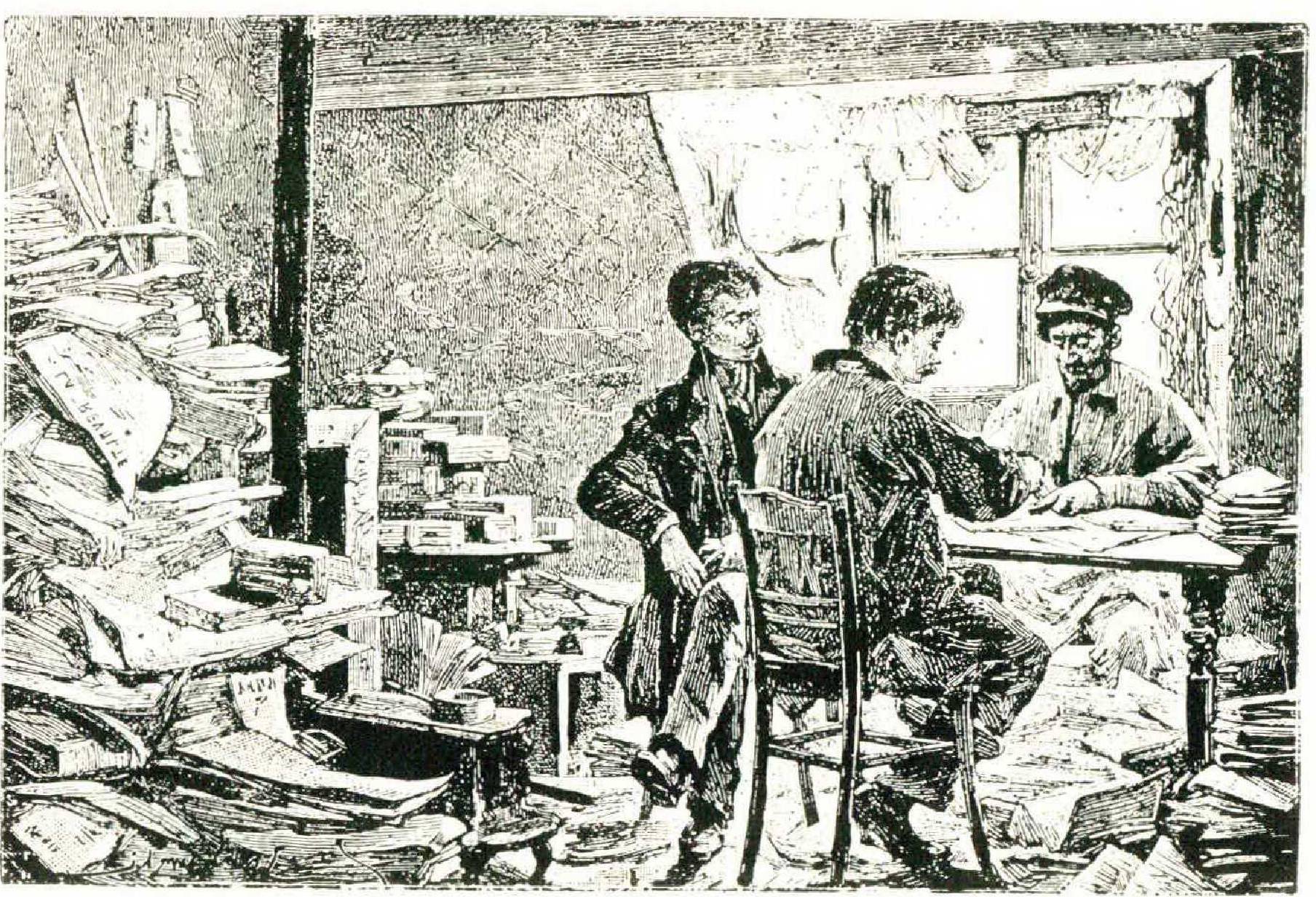
The assassin, “holding his smoking weapon exultantly aloft,” was immediately seized. He was identified as Gaetano Bresci, a thirty-year-old Anarchist and silk weaver who had come from Paterson, New Jersey, to Italy with intent to assassinate the King. His act was the only instance of Anarchist propaganda of the deed tor which there is some evidence, though unproven, of previous conspiracy.
Paterson was a center of Italians and of Anarchism. Certainly the Anarchists of Paterson held many meetings and heatedly discussed a “deed” which would be the signal for overthrow of the oppressor. Certainly the King of Italy figured as their preferred target, but whether, as charged in reports after the event, lots were actually chosen to select the person to do the deed, or whether the discussions simply inspired Bresci to act of his own accord, is not certain. The picture of a cabal of Anarchists in a cellar drawing lots to select an assassin was a favorite journalistic imagery of the time.
One imaginative reporter pictured Bresci as having been “indoctrinated by Malatesta, “the head and moving spirit of all the conspiracies which have recently startled the world by their awful success.” From the moment that Malatesta had been glimpsed quietly drinking at an Italian bar in Paterson, “Anarchists everywhere recognized the group at Paterson as the most important in the world.”
In fact, the police found no evidence that Bresci had ever met Malatesta. He had, however, either obtained or been given a revolver in Paterson with which he practiced shooting in the woods while his wife and three-year-old daughter picked flowers nearby. Also, he was given by his comrades, or somehow obtained, money to buy a steerage ticket on the French Line with enough left over to make his way from Le Havre to Italy.
After the assassination, his Paterson comrades sent a congratulatory cable to him in prison. They gloried in his magnificent gesture and wore his picture on buttons in their coat lapels. They also insisted at a mass meeting in Paterson, attended by over a thousand persons, that there had been no plot.
Bresci himself suffered the same fate as other instruments of the Idea. As Italy had abolished the death penalty, he was sentenced to life imprisonment, the first seven years to be spent in solitary confinement. After the first few months he killed himself in prison.
IN THE United States the newspaper account of King Humbert’s assassination was read over and over again by a Polish-American named Leon Czolgosz. The clipping became a precious possession that he took to bed with him every night. Twenty-seven at this time, he was small and slight, with a peculiar fixed gaze in his light-blue eyes. Born in the United States shortly after his parents came to America, he was one of six brothers and two sisters and lived with his family on a small farm in Ohio. According to his father, he had “the appearance of thinking more than most children,” and because of his fondness for reading was considered the intellectual of the family. When he was twenty, in 1893, he had been laid off during a strike and afterward, according to his brother, “he got quiet and not so happy.” He joined a Polish workers’ circle where Socialism and Anarchism were among the topics discussed, and also, as he said later, “we discussed Presidents and that they were no good.”
In 1898 he suffered an ill-defined sickness which left him moody and dull. He gave up work, stayed home, took his meals upstairs to his bedroom, kept to himself, read the Chicago Anarchist paper Free Society and Bellamy’s utopia, Looking Backward, and brooded. He made trips to Chicago and Cleveland, where he attended Anarchist meetings, heard speeches by Emma Goldman, and had talks with an Anarchist named Emil Schilling, to whom he expressed himself as troubled by the conduct of the American Army, which, after liberating the Philippines from Spain, was now engaged in war upon the Filipinos. “It does not harmonize with the teachings in our public schools about our flag,” said Czolgosz worriedly.
As flags were a matter of no respect to Anarchists, and as Czolgosz read none of the literature Schilling gave him, Schilling became suspicious of him and published a warning in Free Society that the oddly behaved Polish visitor might be an agent provocateur. This was on September 1, 1901, and was wide of the mark. Five days later Czolgosz turned up in Buffalo, where, in a receiving line at the Pan-American Exposition, he shot President McKinley. The President died eight days later and was succeeded by Theodore Roosevelt. Thus Czolgosz, on the lowest level of understanding among Anarchist assassins, performed, of them all, the act with the greatest consequences.
“I killed President McKinley,” Czolgosz wrote in his confession, “because I done my duty,” and later added, “because he was an enemy of the good working people.” He also said, “McKinley was going around the country shouting prosperity when there was no prosperity for the poor man.” In another interview he said, “I don’t believe we should have any rulers. It is right to kill them. ... I know other men who believe what I do that it would be a good thing to kill the President and to have no rulers.” In a fumbling way he was trying to associate himself with what he knew of Anarchism. “I don’t believe in voting; it is against my principles. I am an Anarchist. I don’t believe in marriage. I believe in free love.”
The Idea of Anarchism, its vision of a better society, had not come within Czolgosz’s ken. Like Caserio, the simple assassin of President Carnot, he was of the type of regicide who becomes obsessed by the delusion that it is his mission to kill the sovereign. This was brought out shortly after Czolgosz’s hurried trial and electrocution on October 29, by Dr. Walter Channing, Professor of Mental Diseases at Tufts and son of the poet William Ellery Channing. Dissatisfied with the official alienists’ report, Channing made his own study and concluded that Czolgosz had been “drifting in the direction of dementia praecox” and was a victim of a delusion already isolated and described by a French alienist, Dr. Emanuel Regis, in 1890. According to Dr. Regis, the regicide type is much given to cogitations and solitude, and “whatever sane reason he may have possessed gives way to a sickly fixation that he is called on to deal a great blow, sacrifice his life to a just cause and kill a monarch or a dignitary in the name of God, Country, Liberty, Anarchy or some analogous principle.” He is characterized by premeditation and obsession. He does not act suddenly or blindly but, on the contrary, prepares carefully and alone. He is a solitaire. Proud of his mission and his role, he acts always in daylight and in public, and never uses a secret weapon like poison but one that demands personal violence. Afterward, he does not seek to escape but exhibits pride in his deed and desire for glory and for death, either by suicide or “indirect suicide” as an executed martyr.
The description fits, but for the delusions to become active there is required a certain climate of protest and an example. This the Anarchist creed and deeds provided. There may be at any time a hundred Czolgoszes living mute inactive lives; it took the series of acts from Ravachol’s to Bresci’s to inspire one to kill the President of the United States.
The public was by now thoroughly uneasy, and the public was composed not only of the rich but of the imitators of the rich. The ordinary man, the petty bourgeois, the salaried employee, associated himself—as Emile Henry knew when he threw his bomb in the Cafe Terminus—with his employers. His living, as he thought, depended on their property. When this was threatened, he felt threatened. He felt a peculiar horror, even more than of the assassinations, of the Anarchist’s desire to destroy the foundations on which everyday life was based: the flag, the legal family, marriage, the church, the vote, the law. The Anarchist became everybody’s enemy. His sinister figure became synonymous with everything wicked and subversive; synonymous, said a professor of political science in Harper’s Weekly, with “the king of all Anarchists, the arch-rebel Satan.”
Of the dual nature of Anarchism, half hatred of society, half love of humanity, the public was aware only of the first. It was the bombs and explosions, the gunshots and the daggers that impressed the public. They knew nothing of the other side of Anarchism, which hoped to lead humanity through the slough of violence to the Delectable Mountains.
Since the public likewise knew nothing of the theory of propaganda by the deed, it could make no sense of the Anarchist acts. They seemed purposeless, mad, a pure indulgence in evil for its own sake. The press customarily referred to Anarchists as “wild beasts,” “crypto-lunatics,” degenerates, cowards, felons, “odious fanatics prompted by perverted intellect and morbid frenzy.”
Yet the cry of protest in the throat of every Anarchist act was heard by some, and understood. In the midst of the hysteria over McKinley, the New England preacher Lyman Abbott, who succeeded Henry Ward Beecher at the Plymouth Church of Brooklyn, had the courage to ask if the Anarchist’s hatred of government and law did not derive from the fact that government and law operated unjustly. So long, he said, as legislators legislate for special classes, “encourage the spoliation of the many for the benefit of the few, protect the rich and forget the poor,” so long will Anarchism “demand the abolition of all law because it sees in law only an instrument of injustice.” Speaking to the comfortable gentlemen of the Nineteenth Century Club, he suggested that “the place to attack Anarchism is where the offenses grow.”
Abbott was not alone. However self-limited its acts, however visionary its dream, Anarchism had terribly dramatized the war between the two divisions of society, between the world of privilege and the world of protest. In the one it shook awake a social conscience; in the other, as its energy passed into Syndicalism, it added its quality of violence and extremism to the struggle for power of organized labor.