The Telltale Art
MARGARET BENNETT is a writer of light articles who lives in North Hollywood, California. This marks her second appearance in Accent on Living.
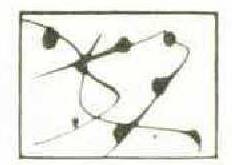
For some time now I’ve been wandering through modern art galleries trying to appreciate what our contemporary painters are doing. I have gazed upon room after room full of
and
and
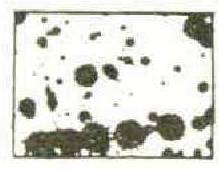
I have stood respectfully before canvases described by informed critics as “the thrust of a jagged knife into the flab of our society” or as “an allegorical exemplification of freedom transcending the restrictions of humanity.”
I have searched for what I was supposed to see with the earnestness of a school girl in the Uffizi. When I have failed to see it, I have assumed a humble attitude.
Recently, however, I’ve learned by word of mouth, and in occasional newspaper items, that many of these paintings, which look as if they could have been painted by chimpanzees, five-year-old children, or extremely untalented adults, actually were painted by chimpanzees, fiveyear-old children, and extremely untalented adults. Experts and laymen alike have been taken in by these hoaxes.
Knowing this, upon entering an art gallery I am now overcome by a feeling of disquietude. I hardly knowhow to behave. If I appreciate and comment favorably, I may be made a laughingstock when the truth is out. If I scorn, I may be insulting the masterpiece of the artistic genius of the century.
After putting much thought to the problem, I have evolved a practical plan for the protection of the amateur viewer.
As I understand it, practitioners of abstract art have selected this mode of painting because it enables them to convey complex expressions ot truth, freedom, and perfection. Some of them have, in fact, mastered representational art, found it lacking, rejected it, and gone on to a higher plane. Fine. I accept that. I am willing to appreciate their work with every fiber of my being. First, however, I want proof that the rest of them have gone through this period of mastery and rejection.
My idea, then, is this: at every exhibit of an abstract artist, there should appear three compulsory representational canvases.
The first should be a human figure with all of its fingers and toes. I would here allow the artist the latitude of the choice of sex and state of undress, but I would insist upon the fingers and toes. I understand that they are quite difficult to draw.
Next, there should be a still life consisting of a wine bottle, a scarf, and a bowl filled with the artist’s preference in fruit. A fly or bee on one of the pieces of fruit would be a welcome addition, though not mandatory.
The third canvas should be a cow standing under an apple tree in full blossom. Of course, a sheep or some other pastoral animal would be an acceptable substitute for the cow.
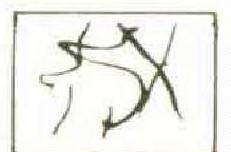
A quick glance at these three paintings would allow the viewer to assess the artist’s mastery of his medium. He could then go on to enjoy the
,
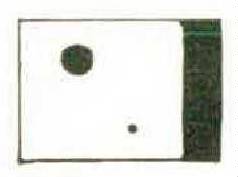
,or
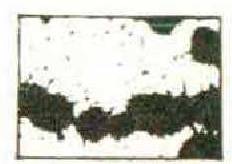
in a relaxed frame of mind.
These required pictures would have the additional benefit of helping the visitor to an exhibit adjust his appreciation to the proper level. If the artist draws a damned fine toe or banana or cow, it stands to reason that his
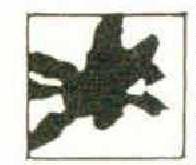
will also be well executed.
Then, too, people who don’t like abstract art and have no intention of playing the game could have something to look at when friends drag them to exhibits.
I cannot see any possible objection to this plan from a serious, talented artist. After all, he needs only to paint these pictures once. After that he can use them with any of his exhibitions. And, I can assure him that under this plan he will have more chances for exhibits, since galleries will have to give up showing the works of chimpanzees, five-yearolds, and untalented adults.