The Peripatetic Reviewer
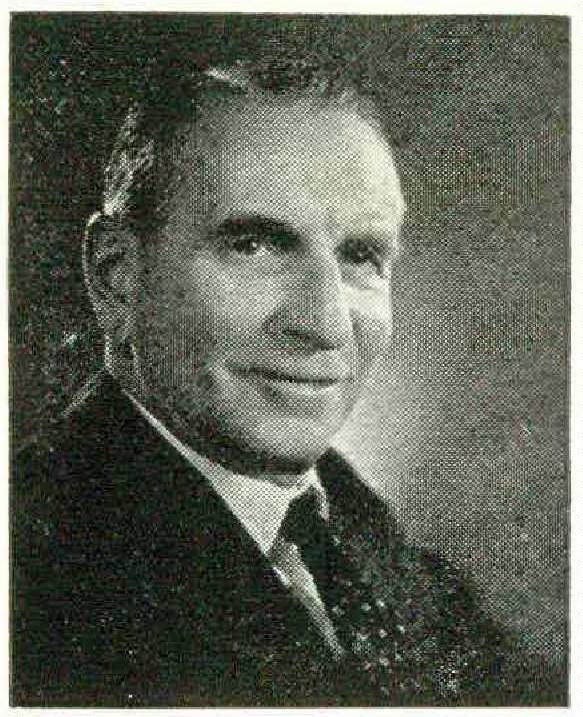
BY EDWARD WEEKS
WELL, it’s all in the way you look at it.” That comment, usually coming from an elder and always implying a difference in the point of view, is one of the most provocative expressions in the American vocabulary. Audubon, here when the continent was unspoiled, preserved by his looking the wild beauty we have lost; Thoreau, when his contemporaries were opening and exploiting the West, threw his imperishable protection about a familiar pond; and Edwin Muir, when most men saw in a sequoia so many thousand board feet of lumber, staked off the Mariposa Grove in Yosemite, our first national park. To have walked, listening, with any one of these would have been an education.
Most of us do not have a naturalist in the family, and our perception of the physical world is awakened by what we do. The man who led me afield in New Jersey was my scoutmaster, Ned Olmsted, a frustrated West Pointer who at last got his general’s star in 1918. He was a rugged guide, and on our hikes to Salem Dam or our winter scouting through the Kean’s woods or the adventurous bike rides on dusty roads to Morristown, we were somehow invested with his military fervor. Nature seemed to confront us with a series of tests, like making a fire without matches. Off duty in our long summers on the Jersey Coast we were so absorbed in tennis and sailing, swimming and beach parties that the casual moments — the first sight of the ocean in June, the hunt for moonstones in the low tide before breakfast, morning glories and sweet peas with the dew on them, the strong stink of the marshes, the swift, low-flying arrows of snipe and yellowlegs, the boats coming ashore from the fish pounds with their fresh-caught blues and bonitos — were as quick as snapshots and were as soon forgotten.
A desire for solitude, happiness in a quiet place is the prelude to a conscious communication with nature. A few are born with it, but for most the passkey is not found until competition and the wear of city life have left us needy of replenishment. I learned to be alone and like it in England:
I was reading English authors in their native heath, Wordsworth in the Lake Country, Pickwick in Kent, Chaucer on the Pilgrims’ Way, Hardy in Dorset, Puck of Pook’s Hill on the Roman Roads; and on bike trips that might run to several hundred miles I was pumping — always uphill it seemed — for a scenic beauty beyond anticipation. The habit was still growing when I settled as a bachelor in Boston, and when friends with a vast estate along the Sudbury River offered me a single-room screened cabin for the summer and fall, here I came for solitary weekends. It was Thoreau country, and from the Journals I could follow his walks along the riverbank and spot his landmarks. The chestnuts which he had measured with his arms — two embraces or more, the giants — were dead but still standing.
What I am describing is a conversion, and Henry Thoreau converted me just as surely as he has men the world over to a new reverence for their country. He has a genius for the short muscular sentence that shakes us up, making us realize that his words apply to us even more than to his contemporaries, so fast have we been spending the country. Listen: “We live but a fraction of our life. . . .” “Men have become the tools of their tools. . . .” “The river is my own highway, the only wild and unfenced part of the world hereabouts. . . .” “Many large trees, especially elms, about a house are a surer indication of old family distinction and worth than any evidences of wealth.” “It is more glorious to expect a better, than to enjoy a worse.” “It takes a man of genius to travel in his own country, in his native village; to make any progress between his door and his gate. . . “What is the use of a house if you haven’t got a tolerable planet to put it on?” Where can you find such a compound of common sense and American beauty? In THE THOUGHTS OF THOREAU (Dodd, Mead, $3.75), edited by EDWIN WAY TEALE.
IN WILDERNESS IS PRESERVATION
Teale tells us how he absorbed Thoreau on a four-hundred-mile trip in a rowboat down the Ohio. “I would let the boat ride with the current for half an hour at a time, reading as I drifted.” In some such way the man from Concord has entered the bloodstream of all American naturalists. Roy Bedichek in Texas, Henry Beston on Cape Cod, Joseph Wood Krutch in Arizona, Sigurd Olson, Paul Brooks, Donald Culross Peattie are a few of his countless disciples. Thoreau’s aim and his very words have been the motivation of volunteer groups like the Wilderness Society and, on the West Coast, the Sierra Club, groups who have banded together to preserve national monuments now threatened with extinction, and who live in the belief, so well expressed by David Brower, that “the natural and civilized worlds must live together or perish separately.”
The Sierra Club, founded in 1902 by John Muir, has devoted itself to the study and protection of national scenic resources, particularly those of mountain regions. The books it publishes include photographic studies of the Sierras, of our great canyons, rain forests, and river valleys: “This is your heritage,” these books say. “See that you preserve it.” A number of the series have gone through several printings; and this fortuitous blend of prose and picture now comes to beautiful fruition in “IN WILDNESS IS THE PRESERVATION OF THE WORLD” (Sierra Club, $20.00), with selections from Thoreau’s prose and verse on the left hand and to the right a series of seventy-two color plates by Eliot Porter.
Dr. Porter is a state-of-Mainer who half a century ago spent summer after summer on the white beaches and in the spruce forests of Great Spruce Head Island in Maine. Here he first read Walden, “finding it rather a chore,” and on this family island he learned, as a great photographer must, to let nature tell its own story. In his new book his color plates compliment and reinforce the spirit of what Thoreau is saying. The pictures follow the four seasons, beginning with spring, and for me those which achieve the greatest beauty are of the marsh in March flood, and of the wild azalea, and those of the late autumn with the turning leaves, the cooling water, and the subtly sere ferns. The greens of deep summer seem the hardest to approximate. The water lilies are perfect; so are the grasses with the dewy cobwebs; but the very glossy leaves and the tender moss are more elusive. By any comparison, this is a rare book, and it reminds us, as do the excerpts from Thoreau’s journals and letters, of the exquisite artistry of nature if only we will look.
UPRIVER IN CHINA
THE SAND PEBBLES (Harper & Row, $5.95) wears the seal of the Harper Prize Novel. It is a long, loose-jointed, somewhat predictable story of a gunboat, the U.S.S. San Pablo, an ancient relic which patrols the upper reaches of the Yangtze River “showing the flag” and ostensibly protecting American missions and property from warlords and revolutionaries. The book rings true, and so it should, for the author, RICHARD MCKENNA, served two hitches in the navy, the first for ten years in the Far East, two of them aboard a Yangtze River gunboat, and the second as a machinist’s mate on a troop transport, from which he graduated to a destroyer at the time of Korea. He knows his ships, the types that man them, and their lingo, and he brings to every aspect of discipline or shore leave the grasp of detail and a sage, amusing detachment which make for verisimilitude.
The San Pablo, with its complement of two officers and twenty-two ratings, is a ship like no other. Built in the dark ages by the Chinese for the Spaniards, it is more a houseboat than a battlewagon and so encrusted with deckhouses and upperworks that it would capsize in the open sea. Chinese coolies, growing fat on squeeze, do all of the dirty work, including that of the black gang, and Big Chew, the cook, serves up meals an admiral would envy. For the ratings, who are not even expected to shave themselves, it is the most lush berth imaginable. But they must simulate a bold front, for it is the dedicated belief of their commanding officer, Lieutenant Collins, that they will have to fight without warning against overwhelming odds, and the practice of repelling boarders is an almost daily drill.
Into this musical comedy of a ship comes a replacement — square-set, powerful Jake Holman, a maverick who worships engines and loathes discipline. It riles Jake that the coolies should have firsthand control of his engines; he resents the belowdecks sovereignty of Lop Eye Shing, and he infuriates the captain by his contempt for drill. On the transport which takes him upriver, Holman meets an incoming missionary, Miss Eckert; she is the first decent, attractive woman that he is likely to see much of in China, and one can predict that when she is in trouble he will come to her rescue. Jake Holman is nearly as much fun to follow as Mr. Roberts; were it not for his magnetism, the story would be intolerably long. Among the coolies he finds an eager apprentice, Po-han, whom he trains in his own likeness; and with these two allies — Miss Eckert in his mind, Po-han at his side — and with Lieutenant Collins like an avenging fate hanging over him, Jake and his shipmates drift closer and closer to the days of tumult and real shooting. Could it all have been said in less space? Why, certainly. Cuts would have been particularly desirable in the tense, overdramatic close.
THE BUILDING OF A CATHEDRAL
SIR BASIL SPENCE, architect of the new cathedral of Coventry, has described his experiences as a church builder in PHOENIX AT COVENTRY (Harper & Row, $6.95). With infinite good humor and an artless manner, Sir Basil tells of the excitement of creating the design, part of which came to him under gas in a dentist’s office, and of his innocent delight when the judges selected his plans from the considerable number submitted in the contest.
His troubles had just begun. Although in his own opinion the architect had designed a new cathedral which retained the spirit of the old one, he was savagely denounced for not following the Gothic letter. The authorities who had awarded him the job stood firmly by their choice, but public suspicion of a building labeled controversial made it difficult to collect funds. Sir Basil had to barnstorm around England and Canada with an illustrated lecture on his plans in order to help his employers raise the money to pay him. He had to find artists in iron and in the almost forgotten field of stained glass. He persuaded Graham Sutherland to design an immense tapestry, and when it proved impossible to weave it in Britain, he maneuvered like a diplomat to soothe Britain s injured dignity while getting the tapestry done in France. He found that the acoustical expert whose advice he needed was so inflamed by the thought of a modern cathedral that he would have nothing to do with it. The architect struggled patiently with all these complications and finally had the satisfaction of seeing his design rise into brilliant life beside the bombed ruins of the old cathedral.
Sir Basil is a thoughtful and sympathetic writer who never assumes that his reader shares his own technical knowledge and who seldom fails to foresee, and answer, the questions that will arise in the layman’s mind about putting up a building. His book tells a great deal about architecture in general as well as about his particular project. One learns, among other things, that old cathedrals should never be dusted because it spoils the acoustics. The book’s handsome color plates reveal that the new building is not modern, nor Gothic, nor Romanesque, nor anything except what Sir Basil intended it to be — a very beautiful church.