Lampedusa in Sicily: The Lair of the Leopard
Giuseppe di Lampedusa wrote only one novel, THE LEOPARD, and a few short pieces before his death five years ago,but ever since, his reputation has been growing with readers around the world. The rich background — social, literary, and family — of his work is here discussed by ARCHIBALD COLQUHOUN, general editor of the Oxford Library of Italian Classics and the translator of Lampedusa’s work. A short version of this essay appeared in Lampedusa’s TWO STORIES AND A MEMORY, published by Pantheon.

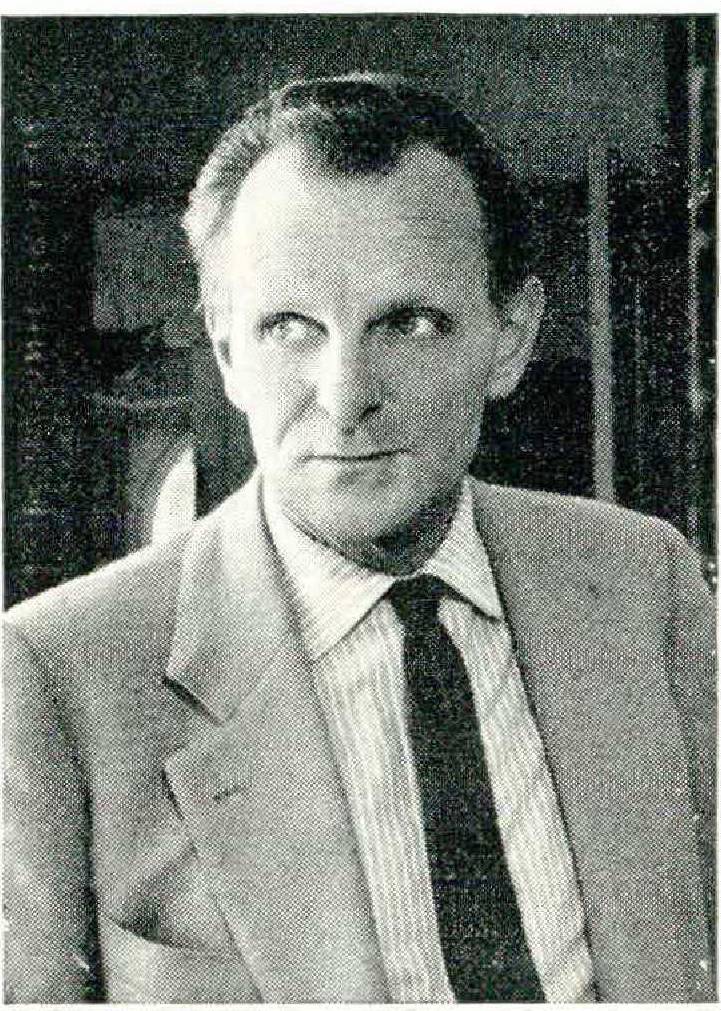
THE town of Palma di Montechiaro in southern Sicily seems an unlikely place to find on the main coast road. The motorist may go straight down its main street and never give its dusty length more than a glance. He would certainly not think of turning off just before the road leaves the town and winds on over bare hills toward Agrigento. Here is to be found a little square, timeless and sunscorched, on one side of which rise the ramps and arches of the local Convent of the Holy Ghost. It is worth a visit, for this is not only redolent of old Sicily but closely connected with the feudal lords of the town, the Tomasi di Lampedusa.
In the convent church, beneath the tomb of a Tomasi forebear, Venerable Suor Maria Crocifissa, is a stone flung at her by the devil during an argument, and nearby a letter which he wrote her on that occasion. Next door in the convent parlor can be acquired those almond cakes so enjoyed by Don Fabrizio and his family in The Leopard and still made by the nuns “on an ancient recipe.” But the convent is strictly enclosed, and a male visitor not highly privileged will never be allowed through a massive door into the freshness of the cloister and the murmur of assembled nuns which greeted the Salina family in the novel; though an exception was once made in favor of a film director, the only men permitted entry are the King of the Two Sicilies and the chief of the founder’s family “together with two gentlemen of his suite if the Abbess so permits.” This privilege, those cakes, the remote tinkle of a silver bell, a sprig of jasmine presented on a salver before departure all tugged at the heart of Giuseppe di Lampedusa, the last male of the founder’s family, when he called there on a drive one autumn afternoon in 1955. On the only other visit he ever paid to Palma, a Te Deum was improvised in the main church, and every bell in town rang a festive welcome. Even so he never once spent the night there.
But those fleeting visits had some deep impact, for according to his adopted son, Gioacchino Lanza, who now perpetuates the name as Duke of Palma and who accompanied him that time inside the convent as a “gentleman of his suite,” the episode was a seminal influence on the novel which, after twenty-five years of talking about it, he had begun that August. So the impulse to creation, dormant for half a lifetime, came to Lampedusa just two years before he died, and from a place where the spirit of his saintly forebear still actively presides.
The Venerable Suor Maria Crocifissa, born Tomasi di Lampedusa, lived in the middle of the seventeenth century and is still deeply venerated in the area, where her votive cards are in every prayer book. An ecstatic in the Spanish style of the day, she figures in The Leopard as the Blessed Corbera. Both she and her brother, the Blessed Giuseppe Maria Cardinal Tomasi, are at the moment (and have been for the last two hundred years or so) under process for sanctification.
Nowadays, apart from an occasional leopard rampant clambering legless above a doorway, local memories of the Tomasi family are mainly confined to these two and to their father, the Saint-Duke, founder and builder of the town. Civic offices now occupy the gaunt palace under whose coffered ceilings he, in his descendant’s description, “scourged himself alone, in sight of God and his estates, when it must have seemed to him that the drops of his own blood were about to rain down on the land and redeem it.”
Suffering is in the air at Palma di Montechiaro, which is one of the horror spots of the Mediterranean. No one would guess from its nondescript main street what is the state of the rest of the town, though the sullen apathy with which inhabitants peer at any stranger might make him wonder. Everything induces him to press on, unless he is inveigled by glimpses of decaying baroque cupolas and terraces, ramps and balustrades. In 1637, when the town was built, its layout was one of the wonders of the Spanish Empire; all has remained untouched except by the hand of time. Now the town is a byword for indigence, disease, and crime; its carefully planned streets become open sewers where trachoma-ridden children play with human excrement. Twelve percent trachoma, two percent tuberculosis — such is the state of Palma that it was chosen by the reformer Danilo Dolci as the setting for his congress on depressed areas in the spring of 1960. No tourist guide to Sicily dwells on the town of the SaintDuke, remarkable as it is architecturally, and when the place is mentioned the foreigner finds himself warned off.
Many reasons could be suggested why this area is one of the most depressed on the island: age-old deforestation (Sicily has a quarter fewer trees than the Italian mainland), chalky soil, changes in the grain trade, even the effects, still lasting, of economic shifts due to the Spanish conquest of South America. This province of Agrigento is also a main stronghold of that blight the Mafia — l’Onorata Società — no inducement for any landlord to live in the area.
But the main reason for the decay of Palma is much simpler. The Saint-Duke and his children on their deaths left nearly all the local family lands and properties to the Church; Palma for three centuries was a flourishing center of ecclesiastical life, with six convents and monasteries living on income. The place was well maintained, and seven notaries were kept busy in the town. The expropriation of ecclesiastical properties in 1862 meant the collapse of the local economy. Locals were left with nothing but a few strips of chalky soil. Now the families of those busy notaries have transferred to Palermo, and in the whole town of Palma there are not more than seven people who have taken any sort of university degree.
It is, anyway, oversimplifying the malaise of western Sicily to blame all on the ex-feudatories, the baroni, hopeless landlords though most of these have been, particularly since they were caught in the collapse of a system whose reform was centuries overdue.
TO THESE causes of decay the author of The Leopard, participator and observer in the decline of his own class, would have added something older, linking criminal exploitation, economic upsets, foreign invasions, and climatic extremes - fatalism, a state of mind prevalent over western Sicily and probably of Arab origin. This concept of a Sicily incapable of change or improvement, put by a writer who was a member of a class described by himself as “old and uselessly wise,” is particularly objectionable to the new literary establishment which has dominated Italian letters since the war. Alberto Moravia deplores The Leopard’s success as inflated (“a goodish minor novel”); Carlo Levi sees this success as another sign of modern Italian decadence and cites the more robust qualities of his own Christ Stopped at Eboli, the last book to have an equivalent public appeal. Lampedusa might have objected that, though he had no remedies to propose, he was writing with an actively involved conscience, and that the glimpses he gives of southern misery, though few, have a ring of authentic horror more deeply felt, more part of his own inner fabric than Levi’s.
To the dogmatic materialist who is also a professional literary man, the Lampedusa literary phenomenon, il caso Lampedusa, has become a bogey, parallel in its effect to the Montesi case among politicians. Mario Soldati has been the only one of that generation of Italian writers to face the motivation of their distress: “He’s done it and we haven’t.” A prince (and a Sicilian prince, what is more, a species about whom we catch a whiff of contempt even from Henry James) born in 1896, who had never appeared in print before, was found after his death to have produced not only what is more and more being acknowledged as a minor masterpiece, but also a major breakthrough of modern Italian writing internationally. Yet its style, elaborate, allusive, has no equivalent in modern Italian and for us recalls Proust’s (though the author’s widow says his choice of words is closest to Tolstoy’s in the original Russian); it totally ignores the new stripped style of Italian writing since the war.
As for attacks on The Leopard for its fatalism, this seems no more a literary sin than the “alienation” which is now the rage; a parallel might be found a hundred and thirty years ago in Luigi Settembrini’s strictures on Manzoni’s Christian acceptance in the first Italian novel, The Betrothed. Lampedusa’s fatalism was Muslim. Neither novel led to direct action, but Manzoni’s novel turned out to be a major influence in the Risorgimento, as The Leopard may be in a foreigner’s understanding of Sicily. Such criticisms only serve to show how rash is any attempt to chart “that tangle of the human heart,” as Manzoni called it, and its relation to creative vitality. They do little to explain the carrying power of a book potent enough to catch at hearts from America to Japan, and by now, Russia (the young Soviet translator was touring Sicily recently, amazing all by his knowledge of island lore).
To most of The Leopard’s readers, Sicily must be little more than an evocative word, and very few could distinguish one Bourbon king from another. A reason for its universal appeal may be that its theme, like Proust’s, is change. It crystallizes, in a moment of Sicilian history, the sense of social metamorphosis felt in recent years by a vaster proportion of the world’s inhabitants than ever before. This may partly explain the favorable reaction of France’s major Communist poet, Louis Aragon, which threw into confusion Italian Partyliners and sympathizers who had been attacking the novel on orthodox Marxist lines. “One of the great books of this century, one of the great books of all time,” runs Aragon’s judgment in a streamer across the French edition.
THIS bare sociological view of a work of art should be offset by two remarks by E. M. Forster: “It has certainly enlarged my life — an unusual experience for a life which is well on into its eighties”; and, ruminatively: “It is one of the great lonely books.”
Aloneness is an impression any inquirer after the Prince of Lampedusa in Palermo today is bound to bring away; the closer one thinks to approach, the more one feels him to have been a very private person, successfully putting up barriers around a life that was mysterious only because it looked so ordinary. Certainly there is no lack of information about the head of one of the island’s leading families, who kept to the same routine for decades and left traces of his literary sources scattered over Sicily for all to find. Friends are most willing to talk about him, and being, most of them, highly sophisticated people, can evoke subtly his personality; his widow is a gracious and judicious fount of information; everyone in Palermo, even waiters at cafés, remembers the compact, withdrawn figure. But a sense of detachment about him persists.
One would expect to find some clue to this either in his circumstances or perhaps in his immediate ancestry. In his great-grandfather, the original Leopard, “There fomented,” he tells us, “strains particularly disturbing to a Sicilian aristocrat in 1860” which showed in a “rosy hue and honey-coloured skin” from a Bavarian mother. Perhaps the pride and intellectuality of Don Fabrizio’s mother, contrasted in the novel with the sensuality and irresponsibility of his father, have some parallel in the author’s parentage. His own mother was a Filangeri di Cutò, granddaughter of a viceroy of Sicily who had been faithful to the Bourbons and followed them into exile. She was one of five brilliant daughters of the Princess of Cutò, who had been brought up in France under a strong Voltairean tradition, reflected in the author’s description of the Cuto library at Santa Margherita Belice in an early autobiographical fragment, “Places of My Infancy,” which was a precursor to the novel.
This mother was an adored figure in his life, while he was partially estranged from his father. Gay and social in her youth, with a wit not devoid of malice, one of the major lights in the Palermo of her day, the Duchess of Palma must at one time have had a great influence on her son. (The author’s widow refuses to accept this: “She never influenced anybody.”) It is permissible to surmise this influence in his attitude toward the Church, common enough among the established classes of southern Europe, by which She is merely a useful part of the fabric of society to which it is bad taste not to adhere, and it is near cant to consider Her anything else. In spite of Lampedusa’s views on religious matters — and, unlike his hero, he died before a priest could be called — the novel is impregnated with the spiritual yearning, at times barely transmuted, of a particular kind of artist who is also a nonpracticing Catholic.
Lampedusa’s father was an elegant man of the world, whose equipages dazzled at the races at La Favorita around the turn of the century and who for years financed singers at the Teatro Massimo. One might wonder if the sense of apartness of the son, which seems at first sight to have cut him off from the life of his peers, could have been due to financial encumbrances. Or maybe the author simply spent his money differently, on travel, old pictures, and books. The family finances were certainly not the same as in the time of his great-grandfather. But though the old Leopard had left no will on his sudden death in Florence (there is a rumor that it was destroyed by the Princess Maria Stella, who has the same name in the book), this was actually a “dispensation of Providence” according to a member of the family. Instead of the inheritance’s being divided equally among the old man’s nine children, according to the succession laws which have broken up the great Sicilian estates since the abrogation of primogeniture in 1812, it was largely under official administration until some ten years ago. Nearly half the family fortune seems to have been given away by the inadvertence of Lampedusa’s paternal great-aunts, and he was for some time left with little but his palace. When this was destroyed during the war, and at the same time the administrator escaped to Rome with what money there was, the author and his wife went through a very bad patch. Finances arranged themselves enough by the early 1950s for them to buy back half of the old Leopard’s house on the sea and furnish it with its present elegance.
Between the wars, the great Lampedusa palace in Palermo, with an interior of subdued splendor that is said to have been full of charm (it was partly the scene of certain interiors described, as at Donnafugata and the Ponteleone’s ball, in the novel), was never the scene of any large-scale entertaining. Even people who went everywhere at the time have no memory of it. For years, between the wars, young Lampedusa and his mother moved from one large hotel to another throughout Italy and Europe; winters at the Quirinale Hotel in Rome, stays in Turin, then Paris, and sometimes London. Is The Leopard the peaks, in more or less continuous range, of a vast submerged novel that never got written? If so, it is possibly better that it never did, for many are those who have set out to write their own War and Peace and overreached themselves. Here each episode stands almost by itself. The first chapter was written and rewritten in the spring and summer of 1955; at this stage there was no plan, according to Lampedusa’s adopted son, so this may have been as far as he originally thought of going in describing a day in the file of his great-grandfather. Then he wrote another chapter, that of the arrival at Donnafugata; then the death scene; then the last chapter, about the relics. These four chapters were typed and sent off to a publisher, Mondadori. Meanwhile, he had written the description of his childhood homes, “Places of My Infancy”; his memory and imagination stirred by this and by the visit to Palma di Montechiaro, he expanded the Donnafugata chapter into three, adding the bits about saints, shooting, and the conversation with Chevalley. On the manuscript’s return from its first journey to a publisher in the summer of 1956, he left it untouched for three months on Piccolo’s piano at Capo d’Orlando, then eventually had it retyped with his additions. In the autumn of 1956 he wrote “The Professor and the Mermaid” and another very short story, “La Gioia e La Legge,” in the manner of Maupassant. That winter he drafted and read to friends the chapter on Father Pirrone at home; in the spring of 1957 he wrote the ball scene, which was a kind of afterthought, though it is now the climax of the film version. He also wrote out the final copy of the whole manuscript, together with an index used as subtitles for each chapter in the American and French editions. This manuscript is now in the possession of the Duke of Palma. Also, in the first months of 1957 he wrote the first chapter of what was to be a new novel entitled The Blind Kittens. He had just finished his hand-copying when, at the end of May, 1957, he heard from a specialist in Rome that he had cancer. He never returned to Palermo. In the clinic, and then at his sister-in-law’s, where he died, he corrected the short stories and discussed whether to change the names in the Pirrone chapter and make that into a short story too. Sometime before he left Palermo he also wrote six pages of an otherwise unfinished chapter, giving a glimpse of Don Fabrizio’s sudden passion for Angelica. As told to his adopted son, this chapter would have been set in a place of assignation where Angelica was to meet a lover. Don Fabrizio hears of this and substitutes himself. There are also two short poems, and an anagram beginning “Angelica mia.”
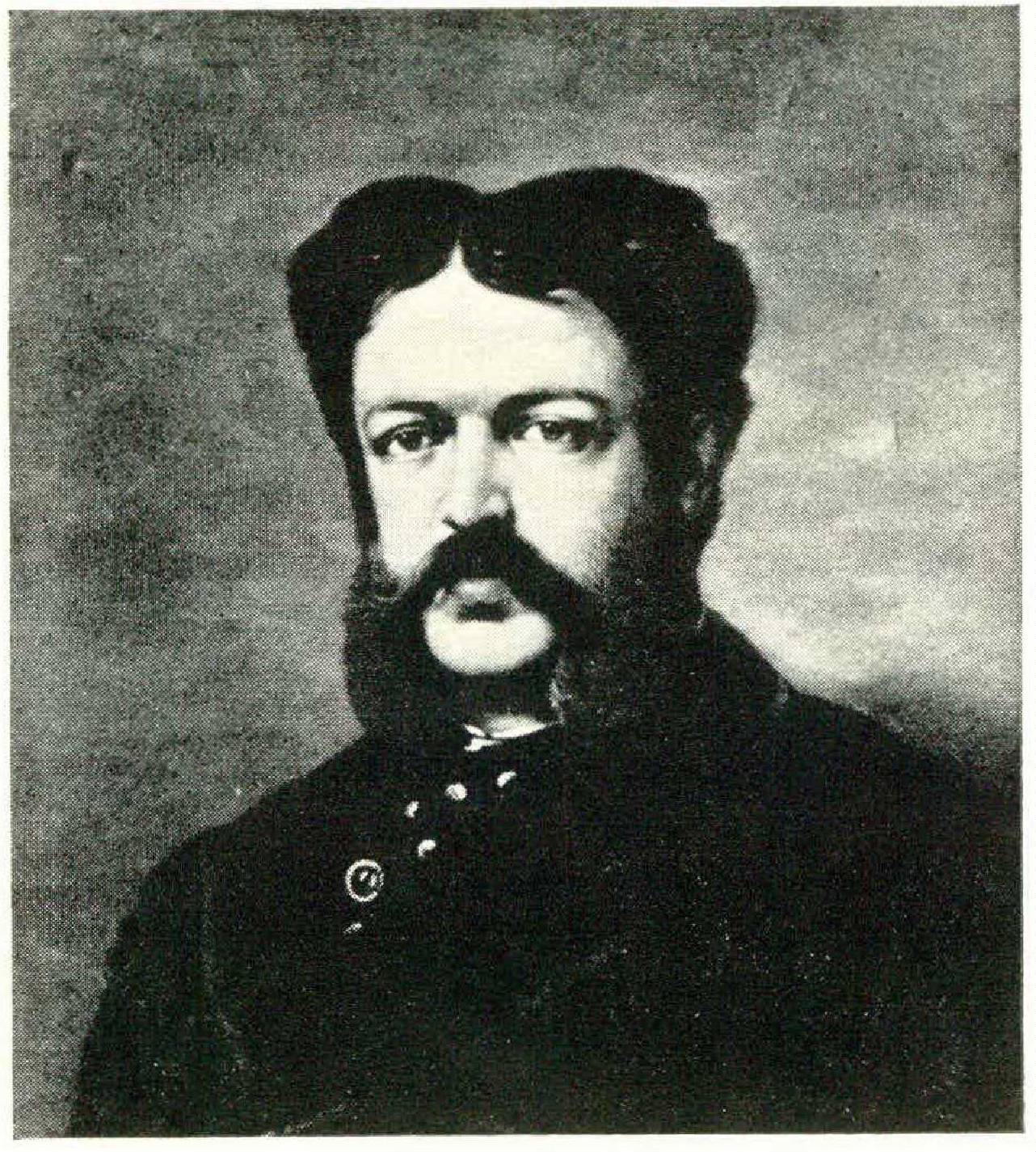
Such absences from Sicily were prolonged far longer than any need for a change of air. Their reason lay partly in a famous scandal which overwhelmed the whole family in 1911. This was the murder in a low hotel in Rome, the Albergo Rebecchini, of the author’s aunt on his mother’s side, Princess Trigona di Sant’ Elia, by her lover, a cavalry officer called Paterno. This crime is still well known in Italy, where only recently I have heard it described in all its bloody detail, for it was committed with a large kitchen knife. Paternò had become jealous, she had decided to throw him off, and one of those terrible Sicilian reflexes connected with primeval honor seems to have come into play with him. She was lady-in-waiting to Queen Elena of Italy at the time and a favorite of the royal family.
The scandal ricocheted particularly among the Sicilian aristocracy, whose love affairs the Italian press, unscrupulous even in those days, did not hesitate to hint at. Even in England today, the scandals of the Edwardian era have a way of affecting the children and grandchildren of those involved. In Sicily, with its time lag of fifty or a hundred years, such miseries are closer. Princess Trigona’s murder caused her sister to avoid her native island for over a quarter of a century, and on the rare occasions when she was there, to see only her intimates. The episode, with its nagging repercussions, would not be evoked here did it not go some way toward explaining the psychology of the author’s youth, and so toward understanding his sensibility as an artist.
The family of Tomasi di Lampedusa have figured among the major grandees of the island for over three centuries. Their names appear and reappear, holding the great offices of state that were shuffled among a half dozen families with ringing names. They had been settled in Sicily since the end of the sixteenth century, after young Mario Tomasi, in Capua, attracted the notice of the viceroy of Sicily. Marcantonio Colonna. Throughout their long history, the Tomasi cadets had a way with heiresses. This young man now married the last of the De Caro family, Catalans whose lands near Agrigento had been granted them when the former owners, the powerful Chiaramonte family, fell into disgrace with the Spanish crown. Then, on a new site near the old fortress of Montechiaro (an inversion of Chiaramonte, a name anathema to royal ears) was built the town of Palma.
At the same time, the Tomasi became grandees of Spain and princes of another Caro property, Lampedusa (in Roman times, Lopadosa), a little island some two hundred kilometers to the south, bulwark against the Saracens. After the cession of Malta to Britain during the Napoleonic Wars, when Lampedusa had been tentatively offered instead and withdrawn after the Prince of Lampedusa of the day said he needed it for shooting, the smaller island was expropriated by the Bourbon crown as a strongpoint. The money from this was used to buy three houses in and around Palermo, two of them mentioned in the novel, one the palace in Via Butera which is now the main family home; “though of course,” added the Princess of Lampedusa, to whom I owe this information, “the title was confirmed.” Anyway, no member of the family had even been known to visit the island of Lampedusa, and the “island of the twin mountains” mentioned in The Leopard is actually the islet of Salina in the Lipari group off the northern coast.
In Sicily, where pedigrees count by millennia and time’s envelope is particularly thin, ancestor worship seems almost justifiable. The Tomasi, though not boasting a descent from the sun-god like their peers, the Alliata, could trace their line back to a decently imperial source, Tiberius I, Emperor of Byzantium from 578 to 582. His daughter Irene married the founder of the gens Thomasa-Leopardi — Tomaso Leopardi, whose daughter Eudoxia married the Emperor Heracles I, while his twin sons became the first Tomasi; the leopard or panther motif has been thought to have some esoteric significance, traceable, some say, back to Osiris and connected with the mysterious cat cults which flourished in the eastern Mediterranean during the early Christian era. Certainly the armorial shield with the prancing leopard can be found far and wide.
The clan has the honor of including among its septs one of Italy’s greatest poets, Giacomo Leopardi, the representative of whose family once wrote to Lampedusa, himself quite uninterested in heraldry, to acknowledge their kinship. After a palace revolution in Constantinople during which Irene’s nephew, the Emperor Constantine III, was murdered, the family moved from Byzantium to the west. In medieval Italy another fortunate alliance with the sister of Pope Alexander III consolidated their prestige; and it is from that period in Tuscany that the Tomasi papers exist, though the entry in the Almanach de Gotha begins only with the family’s arrival in Sicily. Toward the end of the eighteenth century, when Sicilian princes were at the height of their power and prestige, one Don Giuseppe Maria TomasiColonna, Prince of Lampedusa, Duke of Palma, Baron of Montechiaro, of La Torretta with Falconeri, of Rafforoso, Racalzarat, and Monte Colombino (place names reverberating with Arab and Spanish undertones), married as his second wife a Bavarian, Carolina von Wochinger. This lady, “whose haughtiness,” we are told by her descendant in his novel, “had frozen the easygoing Court of the Two Sicilies,” to which she was ladyin-waiting in the days of King Ferdinand I and Queen Maria Carolina, was the mother of the next Prince of Lampedusa, Don Giulio Maria Fabrizio, distinguished mathematician and astronomer, discoverer of two asteroids to which he gave the names of Palma and Lampedusa, and recipient of a prize at the Sorbonne. He married the Marchesina Maria Stella Guccia, sat in the Sicilian chamber of peers in 1848, and died of typhus in Florence during an epidemic in 1885. His body, instead of lying with the grinning mummies of his forebears in the vaults of the Capucin friary outside Palermo, is to be found above the vaults, near the present grave of his great-grandson, Don Giuseppe Maria Fabrizio, the last Prince of Lampedusa, author of The Leobard, who used him as the original, insofar as an artist’s concept has any original outside the land of poetry, for his hero, Don Fabrizio.
THE author Lampedusa’s early manhood was spent as a regular officer of artillery, with service during the First World War on the Austrian front, near Bolzano. He had an adventurous war. One night he was sent to an isolated observation post, which was attacked; he shot one Austrian before being knocked out, and when he came to, found himself a prisoner in a forest. For over a year no news was heard, and he was announced as presumed dead. Then his father learned that in a prisoner-of-war camp at Szombathely in Hungary there was an officer called Tomasi who read all day long. This description made his father reopen the search and get him traced through the Vatican.
Later he would often tell stories about life in this camp, and his wife even suggested, after he had written The Leopard, that this should be the subject of his next book (“but he never accepted any suggestions, so it was quite unnecessary to make them”). From this camp he made two attempts to escape, the second time successfully. He crossed Europe alone, in disguise and on foot. He did not leave regular service until 1921, and when he did, it was with a very good military record.
About this time there seems to have been a nervous breakdown, a mysterious crisis which made him give up the idea of trying to get into the Italian diplomatic service. The time between the two wars was spent largely abroad, first with his mother in her peregrinations, then, after he married in 1932, every summer and sometimes longer at his wife’s romantic castle of Stormersee in Latvia. The happiest years of his life, he would say, were the early 1920s, spent in central and northern Italy; in Modena, Turin, and Genoa he had a number of close friends made in the prisoner-ofwar camp, particularly Professor Revel, son of a Waldensian pastor, with whom he often stayed at Torrepelice in Piedmont. During a stay in Genoa he even made an attempt at starting a literary career, possibly writing two or three articles in a local review on modern French literature.
An additional reason that kept his mother and him away from Sicily was the sale of the Cutò house at Santa Margherita Belice, a remote paradise of his youth, so movingly described in his autobiographical fragment “Places of My Infancy” and part original of that house in the land of poetry, the Donnafugata of the novel. The properties at Santa Margherita Belice were precipitately sold in 1921 by his uncle, the last Prince of Cutò in the Filangeri line. The news of the sale of this uncle’s portion of the family estates, which included part of the house and made the rest of it uninhabitable, was given to the family as they were at table. The shock of that moment was still with Lampedusa years later.
He did not marry until he was in his mid-thirties, late for a Sicilian. The first meeting with his future wife has been described by the Princess of Lampedusa herself. It was at the Italian embassy in Grosvenor Square in London, where his uncle, Marchese Tomasi della Torretta, was ambassador in the mid-twenties. Strangely enough, the ambassador had married a widow who was the mother of Lampedusa’s future wife. The young Baroness Alessandra von Wolff-Stormersee was of Baltic origin (her own father had been Grand Chamberlain at the Court of St. Petersburg). Her silent young relative from Palermo reached the embassy doors at the very moment when her mother and his uncle were off to a Court at Buckingham Palace, and she was told to entertain him. So, she remembers, they discovered a mutual passion, Shakespeare, as they walked to Whitechapel.
Now the Princess of Lampedusa is a leading Freudian analyst in Italy, one of the very few from that country on the international list, and past president of the Italian Psychoanalysts’ Association. She is also a highly cultivated woman. For years she and her husband read aloud to each other in the evenings from their favorite authors in five languages, and it was she who first encouraged him to write, originally as a palliative for his nostalgia for the lost house, and who listened to The Leobard as he brought each section home from the café. “We think together,” he used to tell her. She insisted on sending the manuscript to publishers, comforted his disappointment when it was turned down, collaborated with the publisher who eventually took it after his death, and faced the considerable bothers of partisan interpretation which have not ceased in Palermo even today. She has corrected misapprehensions, been interviewed by journalists, advised literary critics, and discoursed to the unknowing on the mysteries of Sicilian life. Her throaty, considered tones, as she presides over brandy and liqueur chocolates, her cigarette half hidden by furs, have become part of the fabric of il caso Lamtedusa.
I was first put in touch with her by Miss Freya Stark, who has a summer villa near the Princess’ sister at La Mortola on the French-Italian frontier. We met, so that she might see my translation in draft for the first time, in Rome at the apartment of her stepfather, the now very aged Marchese Tomasi della Torretta, only surviving grandson of the original Leopard. Buildings in that quarter of the city are in a flamboyant but flaking neobaroque style known as Umbertino, roughly equivalent to the British Edwardian. A heavy door was opened and a servitor bowed with age showed me into a drawing room so dark that at first I could make out nothing but dim hangings and a faint gleam on silver frames of royal photographs signed in flowing hand, “To our Cousin of the Collar of the Annunziata,” and another, “Eloise de France.”
In the darkness I was at first unaware of the appearance in the room of a very tall and imposing lady in coal-black — furs, toque, and all. Curtains were parted into an inner room, she sank onto a sofa and waved me to a chair, murmuring in perfect but emphatic English, “And now, Mr. Colquhoun, I want you to read me the death of the Prince — in your translation.” Since I was put on trial and passed the test, her help has been unstinting. Certainly no more impressive and charmingly dogged custodian could be imagined for the shrine of a one-book man.
ALL over western Sicily there is a strange tension, so strong that at times one can imagine it as almost tangible, or audible, like a twang; its corollary is a muted sadness and Oriental languor. Hereabouts organized violence is in the air, as can be seen in the local newspapers devoted to the daily crop of murders committed with that favorite Mafia weapon, a shotgun loaded alla lupara —with cartridges containing ball bearings. It is wiser for a local not to move far out of town after depositing a large Sum in a Palermo bank; and cases have been known of guests who left an elegant party at the local bathing resort and found themselves kidnapped in the street. Pathetic attempts are sometimes made to camouflage this as a tourist attraction, an attitude preferable to that of some foreign writers who come for a short period to describe the ills of western Sicily, compared with their native lands, with profitable zest and relish.
Unlike the Greek parts of Sicily, which bore all the main writers from Archimedes to Pirandello, Palermo has no tradition of literary attainment, only long-forgotten Arab-Norman songsters and an eighteenth-century dialect poet. It must have been a stunning surprise for Lampedusa’s little group when the friend whom they remembered for years holding his tertulla at a café, like any man of leisure throughout the southern Mediterranean, suddenly turned, posthumously and almost overnight, into a national celebrity. “We none of us thought Giuseppe had it in him,” said the Princess of Spadaforo, a friend of his mother’s, with a shake of her pearl choker.
For a visitor, the old world of Palermo still preserves cohesion and allure. Though splendid equipages no longer move at a slow trot by the baroque Quattro Canti as they did at the time of Bernard Berenson’s first visit in 1888, the local time lag imparts an indefinable atmosphere of the turn of the century to the more prosperous parts of town. “Your Excellency” is still heard as a form of address. Those creatures of fable, the baroni, still droop, night after night, like warriors deprived of their armor, over the bar of the Hotel des Palmes. The double box of the Nobles Club, the Bellini, hung with English sporting prints, still dominates the opera house on an opening night. A ballroom at that most improbable of grand hotels, the Villa Igiea, is a perfect example of art nouveau or stile Liberty, redolent of afternoons when ladies in tea gowns wondered if someone could be uno di quelli. At a party in one of the remaining great houses one can catch a glimpse down half a dozen drawing rooms of ladies in flowered hats, craned in gossip like flamingos, amid a haze of filtered light, tortoiseshell furniture, and Trapani corals that would have delighted Ronald Firbank. One conservatory, where Wagner and Paul Bourget often sat, contains, amid rare ferns, a gilt rococo Russian sled.
In this world the last Prince of Lampedusa only put in an occasional and dutiful appearance, the occasions being remembered chiefly for his silence;
but he used to attend his wife’s “Sundays,” making sometimes a disconcerting comment from behind a distant chair. Among intimates, though, he gave the impression of chirruping like a bird; certain brilliant little dinners at a restaurant in Palermo with his wife and friends when talk and malice flowed free were, for instance, watched with fascination by a local journalist with a regular table nearby, who (such are the stratifications of the Sicilian class system) did not then know who they were.
WE CAN picture him on his daily routine, setting off from the house by the sea in Via Butera in the early morning and leaving his wife to her patients. These he once described as “floating spectrally around the palace courtyard and stairs” to the Venetian writer Guido Piovene, who added, when recounting this, that he took the remark to be a typically Sicilian joke. Lampedusa is a quietly dressed, rather thickset figure holding a bulky briefcase, his general appearance that of a retired senior officer, which in fact he was. He threads his way among hanging laundry, screaming children, and street vendors, for the monumental Via Butera, badly bombed during the war, is on the way to becoming a slum unless the municipal plan for its redemption gets under way soon.
The building next door, now reduced to a tenement, has a plaque on it to say that Garibaldi stayed there before the Aspromonte adventure in 1862, for this was once the Hotel Trinacria, the most elegant in town; here Lampedusa set the superb death scene of the Prince, who from its windows watched “blinding light reflected from the nearby sea” and in his last moments heard a barrel organ playing Bellini’s “You who opened your wings to God.” On he moves under the hulk of Palazzo Butera and by the baroque arms of Porta Felice, the state entry into Palermo in viceregal and Bourbon days, once opening out onto one of the most splendid marine parades in Europe, now ruined by debris from bombing dumped in the last war.
All this old patrician part of Palermo has so recently fallen into decay that one can still people it with open carriages, lace sunshades, and English governesses taking children for a walk in Villa Giulia and the Botanical Gardens. Then the quarter even included a tearoom, presided over by a retired governess of the Trabìa family, where homemade sweets and gossip about former charges were dispensed. Now in Via Butera the great coats of arms look down on poverty-stricken vitality spilling over from the old Arab quarter, the Kalsa, nearby. Through these and other teeming alleys lies the shortest way to the center of town; but a carriage, when bearing a local lady of rank, will still be driven on a long detour around the main streets, lest her eye be offended by some of the most squalid, if picturesque, slums in Europe. Whole areas of central Palermo have never recovered from the so-called carpet bombing. Nothing much has been done to improve things since, and life amid the rubble and the bassi, where a dozen people often sleep in one room together with the family carts and motorcycles, has to be seen to be believed; Danilo Dolci has given some idea of the horrors that can go on inside.
One can imagine the bitter twist to Lampedusa’s lips (it shows on most of his later photographs) as he reached this quarter in which he spent his youth. One goes into the aneient streets behind San Domenico, where Arab-Norman windows and late Renaissance arches molder amid refuse and boys playing football in rubble, up the slope where the Salina carriage stopped on the way to the ball and Don Fabrizio knelt on the pavement as the viaticum passed, through the peeling baroque grandeur of the square of the Knights of Malta, and down Via di Lampedusa, where nothing but a long wall remains of the family palace. Here is the “livid dust” on which, at the end of The Leopard, is flung the dog Bendicò, mysterious symbol of continuity and life, Osiris of the family mythology.
From this point on, his daily routine, the very café tables he used, the waiters who served him, even the cakes he ate, had an invariable pattern: breakfast at the Pasticceria del Massimo in Via Maqueda; a call at Flaccovio’s, the imaginative bookseller and publisher whose shop is a kind of literary club and who was one of the first to encourage his writing; by eleven in the morning he would be settled in his personal version of an ivory tower, the back room of the Café Mazzara, under the only skyscraper in town.
The briefcase was opened. Among, maybe, a few cakes from the last café (like all Sicilians, he loved cakes), it contained books — the addictions, the secret loves which made him an object of suspicion to his fellow grandees, as had been his great-grandfather with his telescope and comet finder. These books might vary but were all in their original languages: Tolstoy and Dostoevsky, Racine, Flaubert, and Proust, Thomas Mann, Dickens, and, later, Virginia Woolf and E. M. Forster. Also included might have been some work by the German military tactician Clausewitz, on whom he was an expert (“I begged him not to read Clausewitz aloud to me,” says his widow). Certainly always, somewhere in briefcase or pocket, was a volume from one of his many editions of Shakespeare, for whom he had an admiration reminiscent of Manzoni’s for “il mio Shakespeare.”
That concentrated reading throughout the morning at a café table was in a way creative in itself, though during the last two years it was often abandoned for a mysterious scribbling, the copying out of The Leopard chapter by chapter, after writing the first draft, mostly in the afternoons, at home or at Capo d’Orlando. His cousin and intimate friend, the poet Lucio Piccolo di Calanovella, whose mother was another of those brilliant Cutò sisters, can remember his spending an entire summer reading the novels of Samuel Richardson and journeying out to the Piccolo home at Capo d’Orlando to discuss Clarissa Harlowe.
This might seem improbable to anyone who has not spent an afternoon or evening conversing with Piccolo himself, a charming fey person who once corresponded with Yeats on the subject of fairies (letters which cannot be got at, he says, as for years some spell has been on the lock of that particular cupboard). His conversation is sparkling and elusive, interspersed with sudden zestful little laughs, with a range of reference and quotation from Ariosto to himself, from Crawshaw to Hopkins, vast and at the same time oddly personal — “very Cutò.” No wonder the discerning flock to hear him when he leaves his orange groves, his savage dogs, splendid vases, and the necromantic studies in which he and his brother Casimiro spend their nights and visits Palermo to attend Pelléas et Mélisande, or to read and explain his Canti Barocchi in public.
WHEN Lucio Piccolo talks of his cousin, one catches a glimpse of their subtle, private world. “You are immersed in the lowest superstitions,” would tease Giuseppe, would-be Voltairean, at his cousin’s spiritualistic interests. “I have an ear tuned to whispers from the shades,” murmurs Piccolo. Their talk, like what remains of their correspondence, was full of private jokes, of laughter and their own kind of nonchalant fun, a lifetime of exchange between cousins who had suddenly found themselves, in middle age, to be dedicated artists.
“For years we were both in the same position,” Piccolo recently told Camilla Cederna. “We were not writing, we wanted to write, and we could not make up our minds to begin, both of us having a very Sicilian aversion to action.” Once, after each had destroyed many an effort for fear of the other’s sarcasm, they decided to write a piece together. “Something between Proust and SaintSimon about a club in Palermo, in which we said appalling things about stupid prominent people, monsters in their cloaks of ignorance.” But, alas, this was destroyed too.
Of his cousin’s humor, Piccolo remembers a gadfly quality which must have been not unlike his own. “He could distill the bitterest essence from things, transform a dramatic episode into a witty remark.” Piccolo himself was often a victim of his cousin’s jokes; every now and again “to humiliate my ignorance,” Lampedusa would read out some passage from a famous author and pass it off as his own, and only occasionally did the other get even by catching Giuseppe out making a reference to some book he had never read. One little story of Piccolo’s also illustrates a strong trait in Lampedusa’s character, his pride. Once the two cousins were asked to write something of their own in a hostess’ album. Piccolo copied out a lyric of his own and signed it, but Lampedusa only scribbled four words in English: “Too proud to compete.”
“Culturally,” says Piccolo, generously, “I owe him everything,” though in fact his own culture is far more impregnated with Greece and Rome than was his cousin’s. Lampedusa’s sarcasms and persiflage ceased on first hearing Canti Barocchi; he encouraged Piccolo to find a publisher and even wrote out himself the accompanying letter to the poet Eugenio Montale. Though he called Piccolo’s readings on spiritualism “ces balivernes,” he respected the state of “raptus” in which all these poems were written and which suddenly made Lucio Piccolo into one of the major poets in Italy when he was well into middle age.
Five years or so before Lampedusa died, those conversations in the Palermo café about literature turned into some kind of lessons or lectures for which he wrote out elaborate notes; those on French literature (“An Invitation to Read French Letters,” he called them) have been preserved. They range from Rabelais to Lesage, Pascal, and Racine, from whom, according to his widow, “he learned interpersonal relations,” and a long separate essay on Stendhal, full of passages of subtlety and intuition. His knowledge of the Elizabethans also is said to have been extraordinary.
At times, when Palermo and, even more, the rest of Sicily appear to be in the grip of some illcoordinated time machine gone into reverse, this little group meeting day after day in a public place to discuss literature seems to be repeating scenes in a coffeehouse in eighteenth-century London. Mazzara’s is now a characterless place, lively and cheerful, with no resemblance to the spectral café in Turin where the ghosts of retired judges and generals play draughts at the opening of Lampedusa’s story “The Professor and the Mermaid.” But Mazzara’s has a long-standing reputation for those splendidly flavored and decorated ices which, like Sicilian cakes and sweets, are quite unlike anything in the rest of Italy and date back to Arab times. Even now, at the parade or ice cream hour, l’ora del gelato, open carriages can be seen pausing outside while waiters hurry out with trays whose contents are eaten then and there.
In an inner room at Mazzara’s, at a table in the corner, screened off if there was a particularly noisy party, for it is a family sort of place, Lampedusa would be joined by one or two select friends, a couple of noble literati, Baron Fratta della Fatta, an expert on Saint-Simon, more at home in Paris than in Rome, or the late Baron Lo Monaco, exquisite musicologist. Here, as morning wound into the dead hour of early southern afternoons, and later maybe to the library in the palace at Via Butera, would come what the Princess of Lampedusa calls “my husband’s pupils.” These were a handful of young men, of whom the most regular, for whom the “lessons” were mainly intended, were the brilliant young Francesco Orlando, grandson of Italy’s Prime Minister in the First World War, now professor of French literature at Pisa University; young Agnello, dedicated now to organizing musical life in Sicily and famous also for being kidnapped by the Mafia; his adopted son, Gioacchino Lanza di Mazzarino, now Duke of Palma; and more occasionally one or two others.
But though no local university professor was ever seen in the group, there is no doubt about the seriousness of these lessons on literature, and how deep an impression they made on Lampedusa’s pupils. Observations of a lifetime condensed and distilled from so deep and broad a love of literature must have been almost overwhelming when expressed in talk. Subdued though his personality may have been, he seems to have given out a kind of effulgent smolder. Sometimes one catches a hint almost of domination, and there is a suggestion that Orlando may have escaped to the mainland. Wit can be very caustic when linked to unused talents and powers.
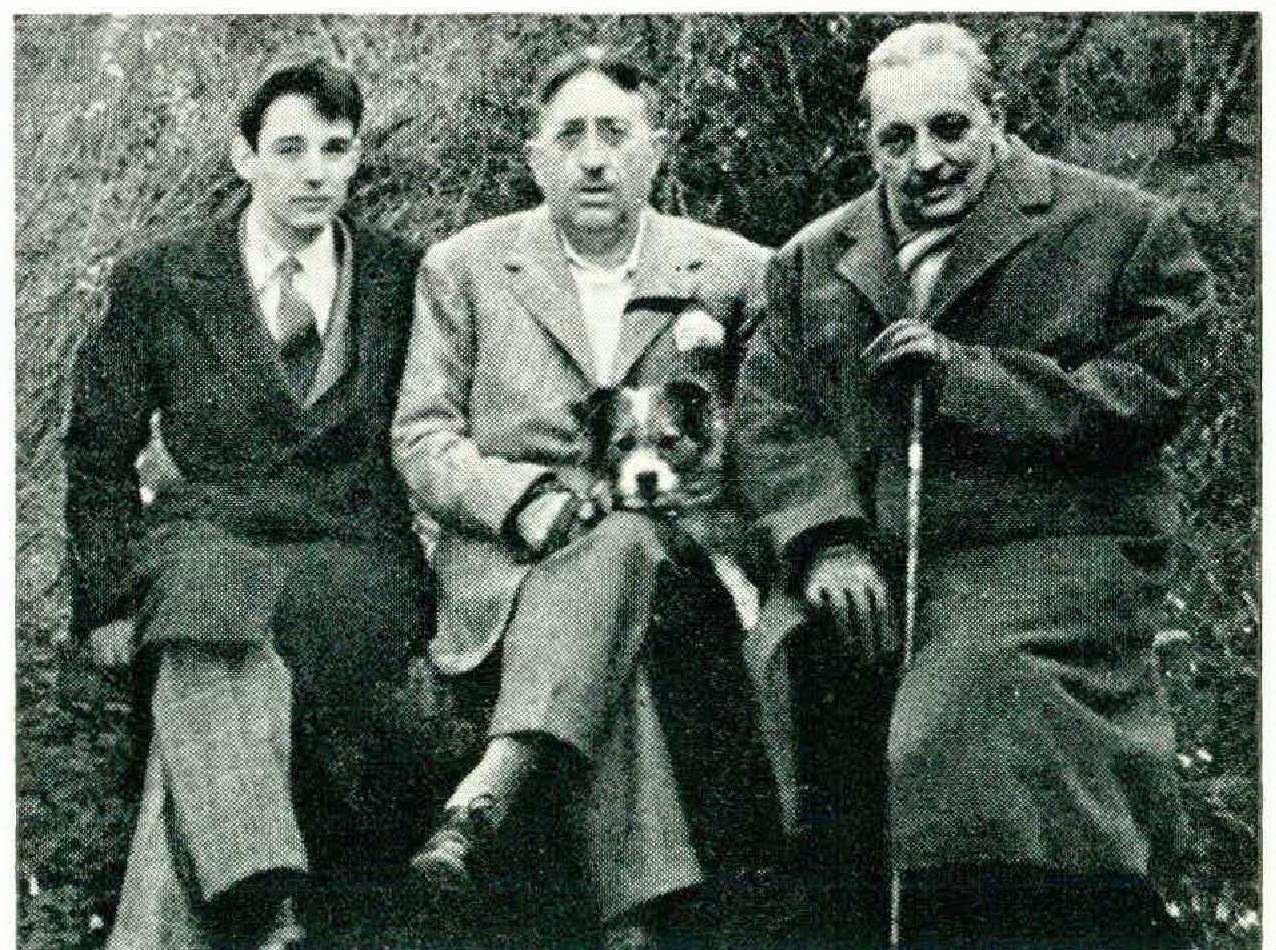
It seems extraordinary that a man who had in many ways so penetratingly broken through the prejudices of his class did not broaden his group to include experts or enthusiasts who were bourgeois. If his pride needed any protection, his screen of refined irony must have been far more opaque than any the café could provide. But “Les privilèges de la naissance,” Manzoni once scribbled somberly in the margin of a book, “sont des privilèges contre la naissance.”
SICILIANS are fond of saying that their homeland, like England, is an island off the coast of Europe. Those of them who could afford to travel have always been more international than their equivalents on the Italian mainland. If in former eras their capital was Constantinople or Madrid, during the last hundred years it has been Paris or London; criteria of material delights have been the Pré Catalan or the Rue Daru. Anglophilia in men’s clothes and accouterments has, of course, long been general in Europe, but it was surely taken to extremes by the Sicilian valet who ran into his master’s bedroom on their first morning in London to report that he was “the only man dressed like an Englishman in London!” Atkinson’s lemmo-liscio, that mysterious hair lotion which is mentioned in The Leopard as arriving in crates for Don Fabrizio, turns out after investigation to be a “long discontinued line,” so the firm says, exported in Edwardian days to southern Europe and called “lemon and glycerine.”
Germany was high in favor for education, and the influence of German philosophy can be traced particularly on Pirandello, and also on Lampedusa himself. Maybe only rarely did the civilizing mission of France penetrate very deep. When it did, via, for instance, the three Cutò sisters to Piccolo and Lampedusa, it produced a distillation both potent and rare.
In Italy itself, Lampedusa traveled extensively only in the twenties, seldom after. He was not a club man and never a member of the Caccia in Rome, though there is his sort of choreographic charm about its gambling rooms, where fortunes are staked and lost beneath green-shaded lights and the indifferent gaze of Proustian footmen in knee breeches. Certainly he did not frequent literary salons, though there is a rumor of his having been seen once at the late Alberto Savinio’s conversazione in Rome. However, the one literary group he is known to have visited on the mainland did give him a decisive impulse toward writing his long-talked-of novel. In the summer of 1954 he accompanied Lucio Piccolo to a literary congress at the watering place of San Pellegrino Terme, where his cousin was to receive a prize for his poems Canti Barocchi.
The assembled Italian literati thought they were granting an accolade to an unknown adolescent; but instead of “the youth in blue jeans everyone was expecting,” according to an account of the episode in Paris Match, to the rostrum advanced a grave Sicilian gentleman in clothes of antique cut. With him, to complete the general bewilderment, were a silent man of military aspect introduced as the Prince of Lampedusa and a sun-blackened chauffeur who accompanied Piccolo everywhere and whose attendance had been insisted on by the poet’s sister. The novelist Giorgio Bassani, subsequently the first to recognize the merit of the anonymous manuscript of The Leopard and as editor largely responsible for its present form, remembers Piccolo’s cousin as bowing gravely at anything said.
The established writers present, who regarded the pair as odd provincial survivals (“though of excellent family, of course,” added Piccolo slyly when telling me this tale), would have been surprised had they seen or heard the pair of cousins when settled into the train home. “We imitated all the conventional pomposities we had heard. Lampedusa excelled himself at catching the puppet element, even in people to be taken seriously. We wrote imaginary articles about ourselves as they might have been done by the various critics and journalists there.” Here Piccolo broke into one of his contagious little laughs.
It was after this writers’ congress that Lampedusa was finally galvanized into starting to write the book which he had been talking about for years. “It was the pin that brought the scent out of the bottle,” said Piccolo. “Heavens” — he caught himself up. “What a phrase! To think I’ve been struggling against D’Annunzio for years!”
Contacts could have been different on journeys farther afield. But his friends in London, when he first visited there, were “people around the Embassy.” Either he was too proud or merely too lazy to try to meet anyone on a level with his own standards of taste and knowledge. On one journey to Paris and London made with Piccolo in 1932, Lampedusa decided to play the part of an ironical old mentor to a young provincial who had never traveled before (they were almost exactly the same age). It was a delightfully relaxed journey. “Once over the frontier, Lampedusa, who was quite heavily built, seemed to get light as a feather. I still remember the flutter of his raincoat as he skipped up to the top of a London bus.” Much of this visit was spent at bookstalls in the Charing Cross Road. It seems odd that for all the two cousins’ admiration for the Sitwells, of whom they were in some ways private Sicilian equivalents, neither of them ever seems to have thought of trying to arrange a meeting.
Certainly Lampedusa traveled into the English countryside, for Piccolo tells of his cousin’s visiting Capo d’Orlando after one such trip and his saying with tears in his eyes: “The castles! The parks! The deer!” He had been staying at Powis Castle on the Welsh border. A story that may also originate from the same visit shows that he could be taken for an Englishman. Wandering around some remote country churchyard, he struck up a conversation with the vicar, who asked, “Do you belong to the High Church or the Low?” To which Lampedusa replied, “ I belong to the Highest Church,” and was delighted by his own answer.
THE Second World War put an end to these journeys abroad and to the summers spent in Latvia at his wife’s castle of Stormersee. About this house he would reminisce nostalgically with another Balt, Baron de Boltho, now living in Palermo, who remembers descriptions of white birches, dark pines, and pale-blue sky, all mirrored in a lake — symbolic selections by memory.
When, in 1943, during the carpet bombing of Palermo that preceded the American landing, “a bomb manufactured in Pittsburgh, Penn” totally destroyed the great family house in Via di Lampedusa, the owner was a refugee in the hills. He had escaped with the family Bellini, a big portrait of Catherine II of Russia, and his wife’s sable furs, all loaded on a bicycle; she gives a graphic description of him dragging this load through the orange groves and says: “he was so tired.” On his return he found that even his old photographs, like those of the Greek statues mentioned in the last bitter lines of “The Professor and the Mermaid,” had been used as torches by looters.
The total loss of his home came to weigh more and more on his spirits, and even the later repurchase of the old house by the sea in Via Butera, where the original Leopard had spent his summers, did not assuage his nostalgic gloom.
In the early summer of 1955, persuaded by his wife that the best therapy would be to write a description of his lost home, Lampedusa sat down and produced the beautiful fragment called “Places of My Infancy.” This was never intended for publication, and he never revised it. But as past memories welled up in him, the suppressed artist took over, and the descriptions of the palace at Palermo and of the Cutò house at Santa Margherita Belice became the first inspiration of the house at Donnafugata in the novel.
Dear Donnafugata! Never-never home of protective coziness, of tinkling fountains, of relaxed ease, and yet of mystery! All the homes of his youth were lost paradises in which he wandered like a fairy prince. In the great house at Donnafugata they were fused into a single whole, like a piece of music. From the Palazzo Lampedusa, tucked away deep in teeming old Palermo, came the sense of a great house rising from slums like a lily from mud, its vastness, the enfilade of drawing rooms dappled with sunbeams on red carpets and gilt furniture, the warren of passages, such as those in which Tancredi and Angelica wandered. One memory from that lost house was transplanted to the new home in Via Butera, where it can be heard today — a system of handbells rung in the entrance courtyard to warn servants upstairs of a visitor; at Via Butera now a bent crone rings a handbell twice for a man, once for a woman, and one and a half times for a priest. Then wide shallow stairs await, hung with dark portraits of powerful-looking grandees; double doors are already open on a little rococo salon leading into the main drawing room, then to a library and terrace overlooking the sea.
All that is left now of the old Palazzo Lampedusa is a low wall running along most of Via di Lampedusa and a neighboring alley. It scarcely reaches the height of the row of first-floor balconies. Perhaps it was better that these were not left, for gaping baroque windows opening onto the sky give an aching sense of loss to many a Palermo street and make the war still seem very close there. It was to Palazzo Lampedusa, so the author’s widow insists, that her husband’s thoughts turned consciously when he described the interior of Donnafugata and also the ballroom at Palazzo Ponteleone, where Don Fabrizio and Angelica danced amid varied shades of gold like hues of Sicilian corn.
Luckily, the house of Santa Margherita Belice is still in good enough repair, even if the descriptions in “Places of My Infancy” did not prove it, to show how close that country house was to the one in the novel. Its scale is smaller, though the present owners have counted 110 rooms, and the description of it in the memoir as a “little Vatican” refers more to its self-containment than its size. Childhood memories may also have played their usual tricks of aggrandizement, though the author is known to have visited the place as recently as the last war, when he was stationed for a short time at Poggioreale.
There one can still see the three courtyards and the main facade, dated 1751, as well as the row of library-ballroom windows overlooking the square; this is not quite as Don Fabrizio saw it when he peered out at Tancredi going courting, for the ground level has been raised, playing havoc with the front view of the house. The courtyards open out of each other, and in the last is a great open flight of steps leading to the main door where Tancredi and Cavriaghi are described as making a dripping appearance. The air of poetic gaiety which once enveloped the house can still be sensed. Even the magic of the garden is not entirely lost, though the fountain of Amphitrite is sadly despoiled and there are no monkeys now in the rusticated cage which ends the vista.
Many of the minor characters in The Leopard have retained their original local names; the same initials of the family agent can still be seen entwined above a doorway; Zzu Menico lu Chiatti, who kept the tavern, only died in 1936, while the wife of a keeper mentioned by his real name, Saverio, is actually still alive. Near the house is the Circolo Civile, where the story of a member’s being shot every year by the local Mafia as he dozed in his chair outside could have happened anywhere in western Sicily except for Palma di Montechiaro, too rough for a club of any kind.
MEMOIRES of yearly visits to the great house at Santa Margherita gave Lampedusa the idea of Sicilian vie de château, a form of life almost totally unknown to the island in 1860 and little appreciated even now. It was imported from France by the Filangeri family, together with a private theater, which is still there, with a coquettish flight of rococo steps on one side of the facade. Within only the last five years the remains of the velvet Louis Seize boxes and stalls have been stripped away; the husk of the place, its form still clearly discernible, is now a cinema; backstage is the warren of passages described in “Places of My Infancy,” which has an achingly moving picture of this house in its heyday, “an eighteenth century Pompeii,” all miraculously preserved intact as it had been two hundred years before.
That essay mentions a story attached to this house which may partly explain the author’s choice of the name Donnafugata in the novel, which belongs to a totally different castle, a mockGothic plaisance near Ragusa, though there are at least five houses or places with that name in Sicily. The word “Donnafugata,” probably of Arab origin, meaning “enclosed fountain,” may simply have appealed from the sound. But in Italian it can also mean “woman fled,” and this may have referred to the fact that in the winter of 1813-1814 the Cutò house at Santa Margherita was the last refuge in Sicily, when the island was under British occupation, of Queen Maria Carolina of Naples, the sister of Marie Antoinette, before she set off, at the nearby port of Mazzara, on that final journey to her death in Vienna so brilliantly described by Harold Acton in The Bourbons of Naples. From that visit date the ironically triumphal arch of the town gates and the remains of a splendid avenue of statues and pines leading up to the nearby hunting lodge of La Venarìa, perched on a rock overlooking most of central Sicily and the objective of family jaunts described in “Places of My Infancy.” The British High Commissioner Bentinck in 1813 had to post British troops to the town as the queen’s jailers, and artillery was set up facing the palace in the main square. A memento of that distant British occupation may still be seen in the public gardens donated by Filangeri munificence to the townsfolk about that time. There is a small colonnaded temple in Adam style, described only as a kiosk in the memoir, still known locally by the mysterious syllables il coffee-hoùse.
Locals can still remember Lampedusa as a boy riding out through the public gardens, a sturdy figure followed by a cockaded groom. Nor have they forgotten those autumn arrivals of the family, as Lampedusa had not when he described one. In the memory of a returned emigrant it was 1913, the year he came back from the States, and Lhe family that alighted at the town gates from gilded coaches to the strains of “Noi siamo zingarelle” were all dressed in white. The coaches must in reality have been traveling landaus, but maybe the passengers were in white piqué, or they were white with dust and the scene transmuted by memory, a charming reversal of symbols of the ineffable, between the Americano’s angelic vision linked to his own homecoming and Lampedusa’s dream of a lost land of innocence.
Of Palma di Montechiaro there is no more than a mention in the autobiographical essay “Places of My Infancy,” and then only that the family never went there. Nothing could be less suitable for children than the dank palace of the SaintDuke, though its coffered seventeenth-century ceilings are still resplendent above the grimy whitewash on the walls. The castle of Montechiaro, which stands romantically on the height outside the town, was also listed among the family’s houses, but had never been inhabited since Renaissance times. There is a photograph of its owner standing in its ruined gateway, and according to local accounts he visited his dilapidated feudal domains twice or more after the war and once, at least, spent a week under those coffered ceilings; but the latter story seems to be a confusion of him with an uncle who had actually stayed there before the war, a fact so rare as to stick in the family memory. Anyway, those visits, including the one to the Convent of the Holy Ghost, must have made Lampedusa well acquainted with the town. This is undoubtedly the inspiration for the town surrounding the house of Donnafugata, “apparently despairing” in its misery and disease, the place which the new Piedmontese administrator in 1860, Chevalley, promised himself would change entirely and has, if anything, worsened since. There, as in the novel, is also the church with its great flight of steps and the squat columns of its nave, as well as all the detailed memories of family saints.
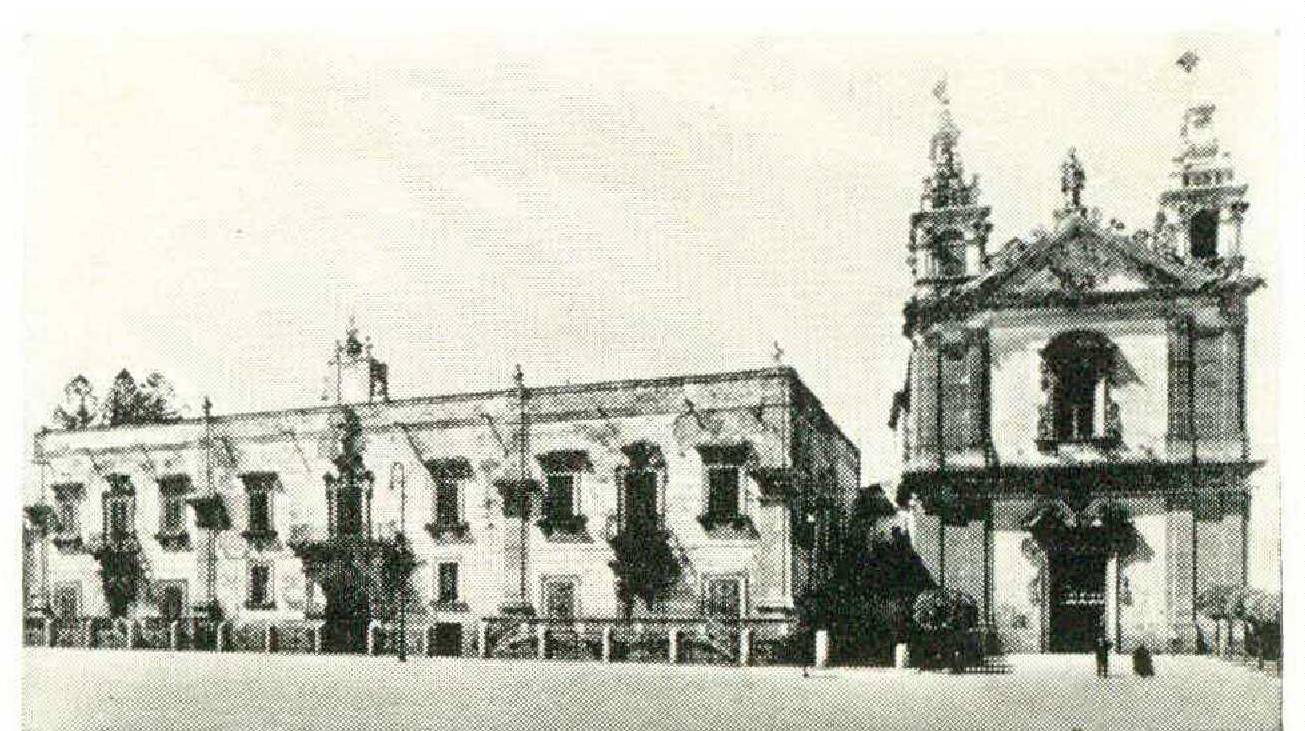
For the last three years there had been a polemic going on between Santa Margherita Belice and Palma di Montechiaro as to where the novel was set. Now there has even been discovered a group of more or less parallel saints, including a kind of duplicate Saint-Duke, all members of the Corbera family, who once lived at Santa Margherita and whose last heiress married a Filangeri. Certainly not only is that family name used in the novel, but many of the local place names there are mentioned. Even hills where Don Fabrizio went shooting have been identified as a locality called La Dragonara, where the view toward the sea and Misilbesi and even the aromatic scents that Don Fabrizio breathed have been traced by local enthusiasts; they have also found a grandfather of Lampedusa’s on his mother’s side, Don Lucio Mastrogiovanni Tasca, who used to go out shooting there with the organist of the mother church, just as in the book.
Santa Margherita Belice, on its uplands in the remote interior, rebuilt by the now extinct Corbera on an ancient Arab site, is poor according to our standards, but clean and open, scoured by winds. It is an isolated spot; its two approaches from Palermo, described both in the novel and the memoir, and the roads to it, “the famous Sicilian roads which lost the Vice-royalty of Sicily to the Prince of Satriano” (as Lampedusa tells us), are still appalling. This is an ageless world. In the little bare white rooms of the local hostelry, where the word “traveler” means only a salesman, one wakes to the clop-clop of donkeys as the inhabitants jog out on their daily commuting to distant fields. This is a place to remain in a poet’s mind.
AT THIS stage, what looks like a rough diagram of The Leopard’s sources can be drawn up, and it is tempting to trace some sort of pattern in the inspiration of what is in no sense a roman à clef. Thus, not only are the various members of the Lampedusa family of a hundred years ago mentioned in the novel by their real Christian names, including the old Leopard himself, his mother, wife, sons, and daughters, the three sisters of the last chapter; but their former chaplain for twenty years, the young priest censured by the ecclesiastical authorities for accepting so many false relics, is now to be found, a grave monsignor loaded with years and honors, expert on Sicilian dynastic history, saying his mass a few hundred yards from the Hotel des Palmes or at the Capella Palatina. “Yes, I was Father Titta,” he will say, then murmur if pressed, “Far too much was made of those false relics.” But even the most minor characters, the most glancingly mentioned places, seem transferred from the existing originals.
What emerges more and more clearly from such investigations is that the reproduction of true detail in the book heightens the contrasting imaginative treatment of its major characters and themes. These seem partly to have acquired their extraordinary sense of actuality, of the reader’s being right there, by a process of double perspective, a kind of stereoscopic view of two or more originals fused into one. Thus, the arrival of the Garibaldini in 1860 is merged with personal memories of the Allies in 1943; a cousin, Prince Niscèmi, himself a rare example of the genus “Sicilian prince” in full flower, remembers a conversation about a possible last chapter to be based on the actual arrival of the American troops. This might have been fascinatingly ironic (“If we want things to stay as they are, things will have to change”), for the liberation of Palermo was rich with anticlimax, the cowed terror of most inhabitants soon turning to Te Deums and kinship hunts, while princes worked their potent magic on Allied officers, Sicilian separatists intrigued, and the leaders of the American Mafia returned in triumph as advisers to Allied military governments. Lampedusa’s distaste for his compatriots’ behavior at the time was projected back onto the period of Garibaldi’s landing and the end of the Bourbons, infused with a fastidious sense of principle and a tugging love-hate for his native island.
A similar pattern of double focus was used for the main characters, taken partly from parallel originals a hundred years ago and partly from recent ones. The original Leopard, for instance, did have a dog called Bendicò (a name shortened from bene-di-cuore, or “good of heart,” which was considered too sentimental). This was a brindled Great Dane, later stuffed and kept for years by the old Lampedusa sisters. The actual behavior of the Bendicò of the book was based on the author’s observation of his own dogs, cocker spaniels called Crab (after a character in Two Gentlemen oj Verona), Poppy, and Pansy.
By this method is the hero, Don Fabrizio, thrown into prismatic relief. He is not wholly historical portrait or autobiographical projection or wish-fulfillment or the result of an interior monologue, and yet is something of them all. The real Leopard, old Don Giulio Fabrizio, seems to have been a far more bullying character who ruled with a rod of iron and followed his every whim, however absurd. Once, just before Christmas, swept by the dismay that is apt to come over those in a position of responsibility at the approach of the festive season, he announced that Christmas that year for the family had been transposed to February, an order faithfully followed by his cowed household, who treated Christmas like any other day. However, there is no doubt that this old terror was the original of the book’s hero, as Lampedusa had made clear for years when he talked to his cousin Piccolo about the novel based on his great-grandfather that he one day proposed to write.
Some such parallel pattern can be found for Tancredi, though here we are on shiftier ground. Originally the author had thought of making Tancredi into Don Fabrizio’s younger and favorite son, to be called Ruggiero, preferred to the duller heir, Paolo (the name, but not the character, being taken from his own grandfather). But, as he told his wife “the situation of younger sons has been too often written about in literature,” so he made him a nephew and ward.
Since Lampedusa himself, childless and without heirs, adopted a young man who has now perpetuated the family name as Gioacchino Lanza Tomasi, Duke of Palma, there is clearly more than mere coincidence here. “He chose him because he is the last person who believes in the mot d’esprit,” says Piccolo, reminding one of the aging Neapolitan duchess of the novel who had insisted on having Tancredi with her all the time “because no one else knows how to tell les petits riens like him.”
Tancredi is obviously a composite figure infused with personal emotion and treated with poetic license; for instance, though he is often described as witty, not a single amusing remark is attributed to him throughout the book. But as there has been some measure of disagreement about the originals of Tancredi (Piccolo does not consider that the adopted son came into it), the Princess has now produced a copy of an unpublished letter written by her husband when he was working on the novel to his old friend of the POW cage, the late Professor Revel. “The protagonist, Don Fabrizio, completely expresses my own ideas, and Tancredi, his nephew, is a portrait of Giò as to appearance and mannerisms, though as regards morals Giò is, luckily, far better than him.” Certainly Gioacchino Lanza’s charm — even, apparently, some of his pet phrases — are set down in the novel in detail. This young man, a younger son of the Lanza Trabia di Mazzarino, one of the oldest families on the island and one of the few which have kept their money and palaces intact, is now married to a delightful wife and has a son to perpetuate his adopted name. He is a serious musicologist and writer on music as well as being a very considerable expert on Sicilian art and manners; but he seems unlikely to emulate the later career of Tancredi as ambassador and minister of state “up the slippery rungs of the new society.”
On the origins of Angelica it is unnecessary to dwell, though there has been much gossip about this in Palermo. The author is said to have thought of her appearance and behavior as like those of the morganatic wife of Ring Victor Emmanuel II of Italy, called the Contessa Mirafiore. Of her literary sources, it might be worth mentioning Verga’s Duchessa di Leyra in the greatest of Sicilian novels, Mastro Don Gesualdo. Lampedusa, in a discussion with his wife, once wondered whether he had not made two mistakes with Angelica: one, that her father could not have become so rich so quickly before 1860; the other, that a marriage to the daughter of such a man would have been unlikely quite so early in the century. The fact is that the 1860 Niscèmi did marry the daughter of a self-made man called Favara. The daughters of the new class, enriched by land transfers and expropriations after the unification, held the position in Sicily that American heiresses held in Europe at much the same period, so there is plenty of material for support.
LAMPEDUSA was too humane, as well as too wellmannered a man, to have wanted to stir up the hornet’s nest his book undoubtedly has in certain sections of Palermo society. Though quite uninterested in what his fellow citizens thought, when he told his wife in English, “If they don’t like it, they can lump it,” he was probably referring to some of the more controversial attitudes of his own Don Fabrizio toward his native island, particularly to the plebiscite of 1860. What gives his novel its power is not the actual and undoubted correspondence of incident and character to reality, but its mysterious fused vitality as a work of art, its potency as a poetic statement about the human condition.
This is easy enough to say now, but it was not so obvious to competent literary folk when the anonymous manuscript from Palermo was making the rounds of publishers’ offices. “It’s a pity, but at least he has read it attentively,” was all the author murmured on his deathbed when a letter arrived from Elio Vittorini, literary adviser to the publisher Einaudi, to say he considered it “troppo saggistico” (“too essaylike”) for publication. And, as Giorgio Bassani wrote in the preface to the first edition, when another copy of the manuscript reached Signora Elena Graven Croce, literary light and daughter of Benedetto Croce, she glanced at it, judged it to be some family chronicle by an old spinster of the Sicilian aristocracy, and put it away in her drawer for a year.
The concept of a fitting death, based partly on his great-grandfather’s in Florence, became its own reality some eighteen months after it was written. The announcement of cancer came as a particular shock to one who was so healthy that he had not visited a doctor for years and joked about keeping a pile of old doctors’ recipes in a drawer which he dipped into now and again. All June in Rome he was in a very bad state; three weeks at the Clinica Sanatrix, then under cobalt bomb treatment at another clinic, and finally he begged to go at least to his sister-in-law’s home at Piazza dell’Indipendenza near the railway station in Rome. In his last days he longed to get back to Sicily, particularly Capo d’Orlando. The letter from Elio Vittorini rejecting The Leopard arrived and was read to him by his adopted son, who had joined him in Rome on Saturday, July 22. On Sunday he was very bad. Late on Monday afternoon he was given oxygen. The family left him for the night, alone with the doctor. At about midnight he awoke and began chatting coherently with the doctor about Norman-Arab art in Sicily, Cefalù, and a certain baroque archway in Palermo destroyed during the war. Then he stopped, went to sleep, and seems to have died instantly from an internal hemorrhage. He was already dead when a priest and nuns were called to impart the last rites.
ART has two constant unending preoccupations; it is always meditating upon death and it is always creating life.” That description of an imaginary death helped to remove the stoppages to creative writing of a lifetime. If the memoir “Places of My Infancy” was a forerunner to his one complete novel, the single chapter of The Blind Kittens was the beginning of a sequel, and the story “The Professor and The Mermaid" was an attempt in some unresolved way at summing up.
The plot of the new novel, as described to his wife and his adopted son, was to be about the descendants of the new rich of 1860, the Sedàras of the novel here transposed to the area of Agrigento and renamed Ibba. The novel was to trace how for the hundred years since 1860 these Ibbas had been trying to get themselves accepted by the noble world of Sicily; and when they finally succeeded by a marriage due to war, they were just in time to join the old landowners in having their riches swept away from them by the land reforms of the late 1950s. According to the author’s widow, this first chapter was meant as an introduction into the ambience of the hero; he was to be a son of Ibba’s, a fascist, and the “blind kittens” were to be the Sicilian landed bourgeoisie and profiteers who stumbled into fascism and later into the agrarian reforms. The theme of the book would have been quite different from that of The Leobard. The rather macabre title referred to creatures “born into a world,” as E. M. Forster writes of this story, “to which they are blind and in which they will perish.” Death wish apart, this theme of social aspiration is perennial in all literatures, but in Sicily feudalism and its effects on social life lasted longer than anywhere else in Western Europe. The theme of social change, its impact on a noble family, the arrival of new men and their destruction by the Furies has been a theme of every major Sicilian novelist, notably Verga, de Roberto, and even Pirandello. The influence of 1860 in one way or another can be traced in nearly all later Sicilian writers from Brancati to Sciascia. That date is a kind of obsessive touchstone in Sicily; and here, in this only chapter of The Blind Kittens, we have a potent whiff of its aftermath. The opening is set in a country place near Agrigento, probably not far from Palma di Montechiaro, for some of the former Tomasi properties thereabouts are mentioned by name. The Ibbas’ story and the comic yet touching scene of nobles on the wane discussing it at what is presumably the Bellini Club in Palermo are powerful enough to stand as writing on their own. They also have a more direct quality than anything else he wrote and might have foreshadowed his future development. They give us a last glimpse of what a novelist was lost by Lampedusa’s death.
More autobiographical, for all its apparent fantasy, is the last and most elaborate tale, “The Professor and the Mermaid,” written for a bet, according to the author’s widow, and “after he had reread Wells’ ‘The Sea Lady.’ ‘I will rewrite it differently,’ he told me then. This explains the slightly bookish choice of theme.” It opens with the familiar scene of an aged litterateur, Professor La Ciura, talking in a café to a young Sicilian who turns out to be the last Corbera of Salina, and so the modern descendant of Don Fabrizio. A recording exists of the author reading this story; it has only been heard once, so far as is known, and is now somewhere in the great warren of Palazzo Mazzarino. This must be fascinating to listen to, for the famous and world-weary old classical scholar is clearly another partial projection of the author himself, another facet of Don Fabrizio, a composite of all the Don Maria Fabrizios watching their own ruin. The siren Lighea in the story is another expression of their soif de l’absolu, like the star Venus waiting for Don Fabrizio after the ball or the young woman in the brown traveling dress who came to him at the moment of death. Lighea’s solemn chant about herself as the ultimate mediatrix, those caverns of hers beneath the sea, reminiscent though they are of D’Annunzio’s aesthetic or the Mona Lisa whom Pater saw as “older than the rocks among which she sits,” surely draw their power from a spiritual reality described in the Book of Wisdom: “From the beginning, and before the world, was I created and unto the world to come I shall not cease to be, and in the holy dwelling place I have ministered before him.”