Reader's Choice
BY WILLIAM BARRETT
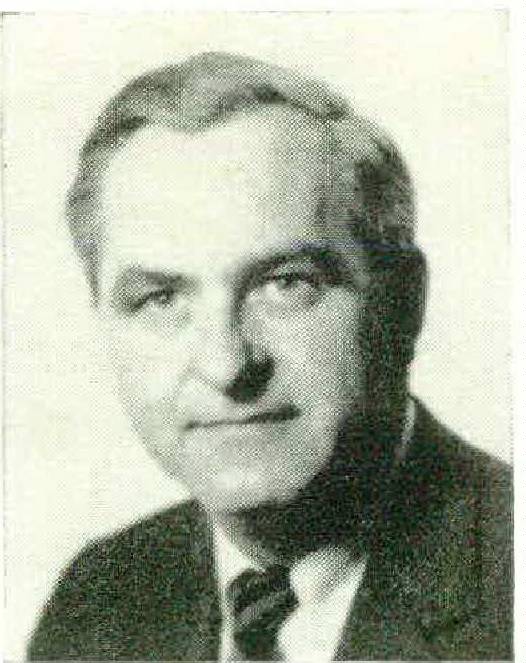
In a literary, no less than in a musical, performance there is always a special delight provided by sheer virtuosity. A dazzling virtuoso of letters, perhaps the most dexterous now writing, VLADIMIR NABOKOV can always be counted on to do the unexpected thing. In Lolita he loosed a storm of scandal across the nation; PALE FIRE (Putnam, $5.00) will hardly seem scandalous by comparison, but as a literary tour de force it surpasses anything else Mr. Nabokov has done. The story is told in the form of a poem and a commentary on the poem and deals with the escapades of a deposed Balkan King in a New England college town. Impossible, you say. Well, the impossible seems to be what Mr. Nabokov thrives on, and he not only brings off his complex project successfully, but does so with such brio and ease that we are reminded of the magician waving his hand deprecatingly at the conclusion of an amazing feat of conjuring, as if to say: It was nothing, really.
The poem itself is an altogether remarkable performance. A thousand lines long, divided into four cantos, it purports to be the composition of John Shade, a white-thatched and venerable poet in residence at a New England university. Though rambling and unpolished in spots — which is appropriate to the story, since John Shade is killed before he can complete the work — the poem is nevertheless so deft and contains so many moving passages that it establishes Mr. Nabokov beyond doubt as a respectable poet in English (for him, an acquired tongue!). As a novelistic device the poem is justified as the most immediate path into the mind and heart of John Shade. A deeper justification is provided by Shade’s own remark that our lives are like a commentary to some great unfinished poem. All the small dissonances of life seem to strain after some great encompassing harmony that we never quite attain.
The commentator — hence, the first person singular of the novel — is revealed in the beginning as Charles Kinbote, a queer émigré teaching at Shade’s university. The commentary loses no time in plunging us into the extracurricular bickerings and intrigues of the academic world of New Wye, Appalachia. One target of Mr. Nabokov’s satire is the literary scholarship now being practiced in our universities. But while line-by-line annotation has become in its real-life practitioners a dull revenge against poetry itself, Mr. Nabokov transforms this creeping scholarship into hilarious farce. Fortunately for us, Kinbote is an incurable gossip who cannot stick to his text.
Satire and burlesque are Suddenly blended with the suspense of an ingenious mystery story. Gradually, it becomes clear that Kinbote is not what he seems. He is, in fact, the deposed King of Zembla, identified only as “a distant northern land,” which would suggest the Russian province of Novaya Zemlya, but which in Mr. Nabokov’s treatment has all the characteristics of a Balkan kingdom out of musical comedy. The tunes of musical comedy give way to the grim clashing chords of an organized spy system. A secret agent, Gradus, is dispatched from Zembla to kill the King, and his progress across continents is followed step by step in Kinbote’s commentary until he arrives in New Wye. By mistake, Gradus kills John Shade. Modern dictatorships spare the buffoon (Kinbote) but kill the poet (Shade).
Shade and Kinbote are thoroughly antithetical men. Kinbote is an extravagant and baroque caricature of White Russian royalty; Shade, a sensitive, thoughtful, fine-grained New Englander. Yet it is just this bold counterpoint between the two opposing personalities that makes the central interest of Pale Fire. Mr. Nabokov’s penchant for irony has often placed him in too great detachment from his characters; from his previous writings I could never have guessed that he could create so sympathetic and subtle an American as John Shade. Perhaps the poem in this book announces the emergence of a more profound, less ironic Nabokov. Among his other extraordinary talents, Mr. Nabokov is a learned scientist of butterflies; he has chosen here to cover the poet in himself with an intricate literary cocoon. It might be a beautiful sight if the butterfly were to take wing on its own.
ROSE WITH THORNS
In her last novel, A Severed Head, IRIS MURDOCH gave such a taut and incisive portrayal of an urban intellectual whose head was divorced from the rest of his being that the only critical reservation seemed to be the question of why the author had expended so much brilliance on so brittle a character. As if in response to this criticism, in AN UNOFFICIAL ROSE (Viking, $4.95) Miss Murdoch has shifted from city to country and attempts to give her characters a more earthy and human substance. The human resonances are indeed deeper; there are more feeling and more breadth here than in anything Miss Murdoch has yet done. But the effect of the book as a whole is disappointing; its intentions are too diffuse and ambiguous to jell into any compact unity.
With this novel Miss Murdoch appears to be invading the territory of Ivy Compton-Burnett. There is the same large country house; the three generations of grandparents, parents, and grandchildren centering about this house; and the too close and intricate relationships of these generations as they seek to manipulate each other’s lives.
For a few moments, at the very beginning, the whole family stands together beside the grave of grandfather Hugh Peronett’s dead wife under a merciful rain that makes it impossible to tell who is really weeping. It is one of the most economical and moving scenes of the book. But this moment of family unity quickly fades, and things fall apart. Hugh’s son, Randall, finds that his country roses have thorns, and, tired of growing them, he abandons his wife and runs off to the Continent with a beautiful young woman. Hugh himself goes ridiculously in chase of a former flame, Emma Sands, a rather fierce old lady who as an outsider fancies herself in the role of a fate spinning out the threads of family destiny. Her counterpart in the youngest generation is grandchild Miranda, an emotionally disturbed but guileful teenage witch who prevents her mother from finding happiness with the one man who has loved her honorably and steadfastly for years.
Perhaps Miss Murdoch has too many stories to tell here. Despite many fine chapters, both comic and touching, the net effect is of something not quite resolved in the author’s own mind. Hugh Peronett is too blurred and vacuous to be the central figure uniting all these strands of family destiny that emanate from him.
MASTER CRAFTSMAN
GRAHAM GREENE has never particularly favored the short story, yet it turns out that in his mastery of this form he is as sure and accomplished a craftsman as in the departments of drama and the novel. TWENTY-ONE STORIES (Viking S3.95) gives us all the tales that Mr. Greene seems to want to preserve from his long and prolific career, and they bring out in very sharp relief all of his literary qualities, positive as well as negative.
The very conciseness of the shortstory form, indeed, can give a greater intensity — like a harsh black-andwhite drawing — to the macabre side of Mr. Greene’s imagination. “In a Basement Room,” a boy’s glimpse into the marital tragedy of his beloved butler’s life, is far more bleak and grim in its mood than the fine motion picture that was made from it some years ago by the distinguished English director Carol Reed. But the story, in its compression, has also more bite and power than the picture.
When the comic mood is upon him, Mr. Greene can be very funny, but the humor is never relaxing. “A Chance for Mr. Lever” tells the absurd tale of a middle-aged salesman chasing through the heart of Africa, swatting at flies and swearing at native bearers, in order to get a mining engineer’s signature on a contract. He finds the engineer at last, dead of fever, and forges the signature. Does justice triumph? Of course — the once down-at-the-heels but righteous salesman, now prosperous but damned, leads the pleasant life of a bon vivant through all the capitals of Europe.
These stories are not evocations of mood, moment, or character, in the manner of Chekhov; they always revolve about some definite and very well plotted narrative idea. When they deal with children (as three of them do), the world of the child is never evoked; Mr. Greene is seeing the child’s world through his own eyes and not through the eyes of the child. This, I think, is the clue to the final limitations of this extraordinary writer; Graham Greene never gets outside of Graham Greene, despite the range and intensity of situations and plots that his imagination can contrive. In “A Drive in the Country” an unemployed ne’erdo-well, hopeless for the future, proposes a suicide pact to his girl; she refuses, and while running away hears the fatal suicide shot behind her; calmly hitching a ride back to town, she steals unobserved into her father’s house — the affair over. The story is absorbing; but halfway through we begin to feel uneasily that we are sitting in the dark watching upon the screen a melodrama in which the characters have their backs to us and never once turn around to show their faces as real people.
CARIBBEAN CAPER
Some few souls, overly sensitive to the loss of United States prestige in Latin America, may be further alarmed by PAUL HYDE BONNER’S AMBASSADOR EXTRAORDINARY (Scribner’s, $4.50). Most of us, however, will welcome this occasion for therapy by laughter and find relief in the thought that, however gauche and blundering we have been south of the border, we still have the wit and the wisdom to see our errors and laugh at them intelligently.
The setting for this diplomatic comedy is the island of Antilla, which resembles Cuba and the Dominican Republic, though no literal correspondence is intended by the author. The American ambassador, Sherman Biggs, a rich-born and lustful oaf, has no discernible qualifications for his office beyond his generous contributions to the party in power. Despite his official position, Sherm cannot check his roving eye, and when it lights upon Juanita, the beautiful wife of General de Cespedes, he goes as limp as a diplomatic pouch. Juanita is playing a double, eventually a triple, game; she is supposed to exploit her favor in the eyes of Ambassador Biggs to obtain information for the dictator Olmedo, while she is also working with the rebels in the hills for Olmedo’s overthrow. Neither game succeeds, and Juanita winds up as an exile in Miami, her integrity miraculously restored since she has broken with the rebels after they have shown their real Communist sympathies. With a wink at the reader, the author allows poetic justice to make some surprising and tidy marital readjustments that no reviewer should divulge in advance.
Mr. Bonner’s humor is broader and his plot more symmetrically manipulated than heretofore. But his touch is as sure, adult, and relaxed as ever; and his Caribbean tale goes down as smoothly and refreshingly as a well-made cuba libre.
EXILE’S RETURN
In the years after Stalin’s death, thousands of Russians returned from the Siberian prison camps. What happened when they came back? What did they have to say to those who had survived the purges and remained at home? Some answer to these questions is suggested by VICTOR NEKRASOV’S KIRA GEORGIEVNA (Pantheon, S3.50), which seems to me only moderately successful as a novel, but which is very well worth reading as a glimpse, however brief and veiled, of life on the other side of the Iron Curtain.
Kira Georgievna, a forty-twoyear-old sculptress, is a self-centered and facile woman married to a man twenty years her senior. Without any qualms of conscience she takes her young male model as a lover. But she had not always been like this; once she, too, had been young and idealistic, blissfully if briefly married to a young poet, Vadim, whom Stalin snatched from her arms and exiled to Siberia. Now, twenty years later, Vadim returns and appears to threaten the neat little design for living that sculptress Kira has carved out for herself. But the past is dead; the exile cannot communicate with those who remained behind during the years of the purges. Vadim goes his way with the common-law wife and child he has acquired during his exile.
Everything in this novel is muted, understated — indeed, hardly stated at all. If there was intense heartbreak in the return of the political exiles, we would never gather it from Mr. Nekrasov’s novel. Far from being a scathing attack upon the Stalinist era, as it has been touted, this is merely a touching little story told strictly within the family. No note of revolt or dissent comes through, but only a depressing sense of passivity and fatalism. The Stalin years were a nightmare, but these Russians seem to shrug them off as if they were inevitable as the Russian winter.
NEW WAVE IN THE THEATER
Though some of the most boldly imaginative writing of our time is now being done for the theater, many of the new plays, because they are produced mostly by smaller theatrical groups, have not reached as wide an audience as they deserve. HAROLD CLURMAN, director, drama critic, and general man about the theater, has therefore performed a useful editing job by collecting SEVEN PLAYS OF THE MODERN THEATER (Grove, S8.50), for which he has also provided a brief but very illuminating introduction.
The seven playwrights collected are Samuel Beckett, Jean Genêt, Eugène Ionesco — the founding fathers of the new drama, all writing in Paris; two young English dramatists, Harold Pinter and Shelagh Delaney; an Irishman, Brendan Behan; and one American, Jack Gelber, whose The Connection has won several international prizes and, now in its fourth year, is enjoying one of the longest runs in the history of offBroadway theater in New York.
Reading a play always requires the additional effort of making one’s imagination do what the actors are supposed to do for one in the theater. If this effort is made, most of these plays will be found to stand up remarkably well in reading. Sometimes the reader may even have an advantage over the spectator of an actual production. In the case of Samuel Beckett’s controversial Waiting for Godot, for example, I have always extracted more nuance and meaning from reading the text than from seeing it produced. The stark rhythms of Mr. Beckett’s prose tend to get wrenched or lost in theatrical declamation. And to read Jean Genêt’s The Balcony is to find one’s imagination liberated for an encounter with a dramatist who for sheer theatrical inventiveness probably has no peer today.
No easy formula can sum up this new wave in the theater. Mr. Clurman once offered the label “theatre of negation,” but now withdraws it, reminding us, with Albert Camus, that no work of literature can be purely negative, since the writer who takes pen in hand to address other human beings is already performing an act of affirmation. If these plays do sometimes seem to lead us to the edge of the abyss, they nevertheless summon us to face essential questions. And these questions, be it noted, were not concocted by the dramatists in an idle moment, but were thrust upon their doorstep by the ambivalent progress of our civilization.
For those who want to go further in exploring these new experiments in drama, I particularly recommend THE THEATRE OF THE ABSURD (Doubleday Anchor, $1.45) by MARTIN ESSLIN. Here is a study that is thorough, sensitive, and highly intelligent, and that seeks to place the newer style within a tradition extending from Shakespearean comedy through the nonsense verse of Lewis Carroll and Edward Lear.
Mr. Esslin’s title is meant to convey that a good many dramatists today, unconvinced by any religious or philosophical explanation of man and the universe, find themselves confronting a reality that does not make sense; and in their dispassionate glance, the minute particulars of life seem a disjointed and illogical affair. Hence their favored genre is tragicomedy, and their comedy often turns into clowning, for the clown is a pathetic image of man’s futile attempt to make sense of the world around him. In these plays logic often dissolves into non sequiturs and language cunningly assists in its own disintegration. Yet, despite this confusion on the surface, Mr, Esslin believes that these plays do have their own peculiar dramatic tension and unity, and that they make a very significant statement about contemporary life.
Though he is on the whole sound and convincing, Mr. Esslin does not seem to have found a satisfying formula for the forces at work in this new theater. Of the three principal playwrights he examines — Beckett, Genêt, Ionesco — his formula seems to fit only the last. M. Genêt has written in The Maids a psychological drama that is as classic and logical in its development as Racine. And though his characters do indulge in verbal absurdities, Samuel Beckett works out his themes — particularly in the plays after Godot — with the grim and remorseless logic of a geometrical proof. Perhaps we must let this movement run its course before we seek any defining formula.
I suspect, moreover, that no single philosophical idea moves these playwrights so much as the sheer excitement of rediscovering certain possibilities latent in the dramatic medium itself. Once freed from the bonds of literal realism, the theater has almost inexhaustible resources for producing direct dramatic images of its meanings, Take as an example one scene from The American Dream, a devastating satire on the commercialization of the family, by Edward Albee, one of our younger and more promising playwrights. Mother, Father, and Grandmother sit like lumps and spout clichés. When Grandmother becomes too saucy, Mother and Dad suspect that she has been looking at too much television, and go off to smash her set; from offstage come their confused cries that they cannot find the set, and then, that they cannot even find Grandma’s room. Meanwhile, Grandma, onstage, chuckles to the audience: “I’ve hidden that too.” The whole action is burlesque, but it is also a direct dramatic image for the fact that the members of this family remain hidden from each other as human beings. They cannot find separate rooms where each lives.
MEDICINES FOR THE MIND
Until very recently, medicine had occupied itself almost exclusively with the problems of the body. In the last decade, however, a number of drugs have turned out to be surprisingly efficacious in the treatment of schizophrenia and other mental illnesses. Medical science thus took a bold step toward dealing with the enigma of man’s mind. There nowlooms the possibility that newer drugs will be found that will help the sane but frustrated to live more complete and human lives.
One such promising drug is lysergic acid, which produces a peculiar dissociation of mind in which the subject seems at once awake and dreaming, able to observe directly all the fantasies of his unconscious self.
In MY SELF AND I (CowardMcCann, $4.95), CONSTANCE V. NEWLAND gives a very interesting and valuable account of her experiences under this drug. Unlike some recent psychoanalytic confessionals, Mrs. Newland’s does not begin on the far side of despair or in the depths of alcoholism and debauchery. On the contrary, she seemed so well adjusted a person that she had difficulty persuading the doctor to take her on as an experimental subject. Thus she writes with a convincing sobriety throughout, even though her experiences were often weird and sensational. Mrs. Newland’s book is a fascinating glimpse beyond our present medical horizons. No doubt, there will be many ancient and stubborn prejudices against the use of drugs to cure the soul. But after the history of this century, can there be any doubt that mankind’s worst foes are no longer the floods and earthquakes of material nature, but the evils that lurk in the human mind?