Reader's Choice
BY CHARLES ROLO
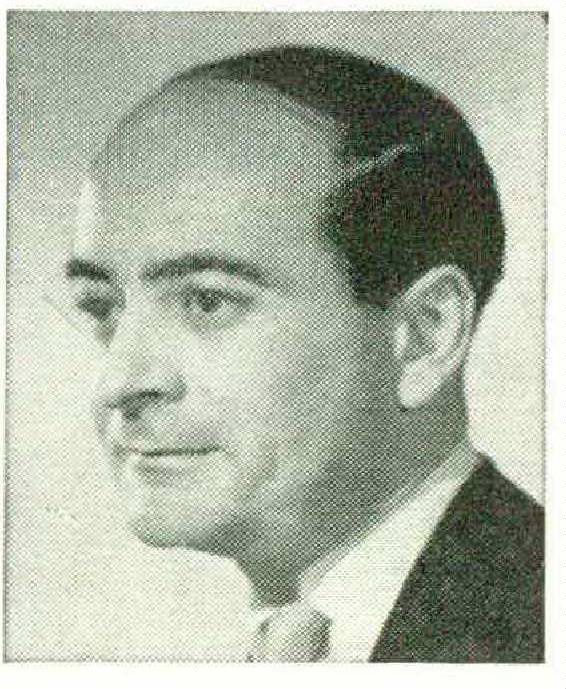
Many of us, on occasion, have experienced the frustration of the lady who complained to James Thurber: “So much has been written about everything that you can’t find out anything about it.” However, one is periodically surprised by the discovery that some subject of the most obvious importance has not been adequately written about.GEORGE F. KENNAN, for instance, points out that there exists as yet no comprehensive, authoritative study covering the entire span of Russia’s relations with the West. Meanwhile, Soviet historians have been busily engaged in mythmaking, and their fabrications are playing an important part in Russia’s campaign to discredit the West. To fill, in part, this gap in Western historiography, Mr. Kennan has shaped lectures he delivered at Oxford and Harvard into a book entitled RUSSIA AND THE WEST UNDER LENIN AND STALIN (Atlantic-Little, Brown, $5.75). Mr. Kennan, well known as one of America’s top specialists in Russian affairs, has won three prizes for historical writing, and the present volume will probably earn him a fourth. It makes a major contribution to scholarship and is readable enough to be the June Book-of-theMonth Club selection; anyone with a serious interest in this phase of history should find it enthralling. Kennan maintains a judicious balance between dispassionate scrutiny of the record and the expression of personal opinions. And his chronicle is so rich in fresh perspectives and challenging ideas that nothing short of an essay could begin to do justice to it.
Kennan believes that World War I — mistakenly prolonged by Allied insistence on complete victory — was the great catastrophe of Western civilization and that the havoc it wrought is the key to understanding much of the subsequent history of the West. The Allies’ all-absorbing preoccupation with the defeat ol Germany prevented them from grasping the fateful urgency of the political upheaval in Russia, and the bankruptcy of their policy in the early stages of the Revolution may have been the determining factor in the triumph of Bolshevik extremism. The various Allied interventions in Russia, initiated with the illusory hope of reopening the Eastern front, degenerated into halfhearted and confused support for anti-Bolshevik factions, and their effect was to strengthen the hand of the Communists. But, deplorable though these interventions were, the much-publicized Soviet version of them is a travesty of the facts; they were chaotic side shows, not a deliberate, all-out military effort to overthrow the Soviet government.
Kennan’s study ot the period between wars sheds a bright light on the amateurism, complacency, and disunity of the Western Allies in their dealings with Russia: on their shortsightedness in behaving shabbily toward the Weimar Republic; on the role the Communists played in the destruction of German socialism, a role dictated by Stalin’s conviction that the road to a Soviet Germany lay through Hitler; and on Stalin’s personal pathology and its effect on his policies.
In his scrutiny of World War II, Kennan concludes that the fear which prompted the West’s disastrous concessions to Stalin, the fear Russia would sign a separate peace, was greatly exaggerated. He rejects the overworked thesis that Communist penetration into the U.S. government was a major factor in our softness toward Russia; and he points out that the Yalta Conference, granted it was a sorry affair, did not “hand over” Eastern Europe to Communism — Eastern Europe was already occupied by and lost to the Russians. Among the other topics searchingly examined are American sentimentality and fantasies about China, and Russo-Chinese relations. The complete victory of the Chinese Communists, Kennan maintains, was a frustrating setback for Stalin: he wanted a satellite China and found himself saddled with a potentially dangerous ally, to whom he had to concede most of the Far Eastern gains he grabbed at Yalta.
The period Kennan has chronicled has been one of tragedy for the West, and for its share in this tragedy, American statesmanship has much to reproach itself with. Why, Kennan asks, has it made so many blunders? And these are his answers: It has been self-righteous, parochial, and uninformed. It tends to think in terms of total virtue versus total evil, and therefore in wartime has committed itself to the doctrine of unconditional surrender, which Kennan considers the source of many of our ills. Above all, Americans are unwilling “to occupy themselves soberly and respectfully with the phenomenon of power [and to] probe the depths of human motive that cause other governments to behave the way they do.” Much of Kennan’s analysis remains in the domain of controversy; much that has been controversial has been made less so by his presentation of the record.
INFORMATION, PLEASE
To turn from Kennan’s book to WILLIAM J. LEDERER’S A NATION OF SHEEP (Norton, $3.75) is to pass from a plane where the complexity of things is constantly in view to one where things are neatly oversimplified. Mr. Lederer reports that, since the publication of The Ugly American, he and its co-author have received thousands of letters inquiring what the average citizen can do to improve the posture of the United States in foreign affairs. His present book is an attempt to answer that question.
If social utility were the only relevant yardstick, Lederer’s brisk treatise would deserve almost unqualified praise. He documents in hard-hitting detail the thesis that, in the sphere of foreign affairs, our government is sometimes inexcusably ill-informed; that its coyness about acquainting the public with unpalatable facts has left the nation appallingly ignorant and is undermining the democratic process; and that, with some exceptions, the newspapers are doing a sloppy and skimpy job of covering foreign news. We are living, says Lederer, “on a shifty and slippery foundation of self-deception and misinformation.” These accusatory sections are good crusading journalism about a vital issue. And they are followed by specific recommendations of what could be done by government and by the individual to improve the situation.
Unfortunately, it must be added that Lederer overplays his hand and displays, too, considerable ingenuousness. He maintains, for instance, that if only the ugly facts about Chiang Kai-shek and Syngman Rhce had not been withheld from the American public, this country would not have made the mistakes of continuing to back Rhee’s corrupt dictatorship and of committing itself to keeping Formosa safe for Chiang. Now, for one thing, the facts in question have been repeatedly circulated by some newspapers, many influential magazines, and a raft of books. Secondly, Lederer seems to take it for granted that people, confronted with the relevant data, will reach the conclusions he considers enlightened; he forgets that a kilomegaton of facts will not convince William Buckley, Jr. — or, indeed, many thousands who espouse a saner conservatism — that Chiang Kai-shek is not a hero to whom we owe unstinting support. Lederer’s book is weakened throughout by his faith in an exploded dogma, the assumption of the Enlightenment and of nineteenthcentury liberalism that man is a perfectly rational being whose errors are due solely to ignorance.
“THE SMOOTH DEAL”
TIN-: NEW AMERICA (Basic Books, $4.50) by KARL E. MEYER, a Washington newspaperman, is a work of social criticism which cleverly and waspishly embroiders the theme that we are living in the “age of the Smooth Deal.” Mr. Meyer begins by noting that Eisenhower has been made the scapegoat for a trend in American politics, to which, Meyer contends, the Democratic leadership also subscribes: the trend toward middle-of-the-roadism, avoidance of controversy, indifference to ideas, and heavy reliance on the black arts of Madison Avenue. The latter, Meyer asserts, have so corrupted our political system that the candidate is now looked on as “a product,” the campaign as a promotion drive, and issues as “themes.” The pervasive preoccupation of Washington has become not politics but the methodology of politics. The primary concern of the politician has become his “image,” which implies that appearance is much more important than substance. (Lincoln’s image would be rated “dismal” by the image makers, and Harding’s, as a candidate, “perfect.”) Nowadays, the customary flabbiness of the proceedings on the floor of Congress is in striking contrast to the hyperactive job of self-promotion which our lawmakers are doing with the help of the Robotyper, the more versatile Flexowriter, the Autopen (which signs letters), and the film clip made at bargain rates in the studios of Congress.
Meyer goes on to complain about the bland reasonableness of the new breed of political pundits, the increasing loss of diversity in American life, the decline among the intellectuals of the spirit of radical protest, and other matters. Sonic of what he says is genuinely interesting; much of it is fairly familiar. His book seems to me, ironically, a characteristic product of the “age of tlie Smooth Deal.” it is cleverly packaged, eminently “consumable,” and it has an appearance of seriousness. But it is really quite lacking in ideas of any depth or originality. It maintains a running fire of generally, though not invariably, persuasive criticism; but it does not bother to inquire what basic forces are causing the changes which the author deplores.
A FRENCH SATIRIST
MARCEL AYMÉ currently represented by THE PROVERB AND OTHER STORIES (Athencum, $4.50), has been highly praised by American reviewers, and I find it a bit puzzling that he should have so limited an audience. He is, to be sure, an oddity among contemporary French writers, but his oddity is such as might be expected to recommend him to American readers. Aymé has never become involved in literary and ideological cults; he is an old-fashioned individualist, more interested in people than in ideas. He is, moreover, a born storyteller, one of the best practicing in any language, and even in translation his prose is elegant and extremely readable. What possibly disconcerts some Anglo-Saxons is that Aymé’s satire and farce grow out of a profound and tolerant cynicism. He distrusts or finds ridiculous high-minded idealists, revolutionary middle-class intellectuals — in fact, people of all kinds who want to remake the human animal or bowdlerize die truth about his nature. For Ayme, hypocrisy is more vicious than the natural vices of man, and one senses in his work a strong affection for life as it is. Within this framework, his range is wide. In addition to being consistently amusing, he can be gay, tender, cruel, horrifying, or sardonic.
A couple of stories in the present collection are memorable examples of Aymé’s distinctive combination of fantasy and down-to-earth realism. “The Fife-Ration” describes, through the diary of a novelist, the consequences of a wartime law which rations people to so many days of existence a month according to their usefulness. “La Bonne Peinture,” which seems to me a masterpiece, begins with the discovery that the canvases of a minor painter are as physically nourishing as la grande cuisine and ends with the satiric vision of a French utopia: all of the arts have become “effective,” and France is fed by painting and heated by poems and novels, its people are made beautiful by looking at sculpture, and its machines arc driven by music. “The Bogus Policeman" is a grisly parody of the idealistic orgies of “purification" which swept France after the Liberation. And “Backwards” parodies the French climate of opinion, which makes it prudent and fashionable for the very rich to represent themselves as socialists and champions of the masses.
There are twelve stories in the book, and more than half of them arc outstanding. Among the readers who have so iar missed Aymé’s work, there must be a good many who would find this volume an entertaining introduction to the fictional world of a first-rate writer.
SERENITY HOUSE
Farce of the higher order — a literary commodity which has nothing in common with the synthetic products of the professional funnyman — is a genre which has had many distinguished practitioners in England: Wilde, Beerbohm, Firbank, Powell, and Waugh, among others. It continues to flourish there, but in the United States it is something of a rarity. It is therefore pleasant to find that LOUIS KRONENBERGER, a man of letters both gifted and versatile, lias taken a holiday from drama criticism and biography to turn out an extravagant comic novel entitled A MONTH OF SUMIVYS (Viking. S3.75).
Mr. Kronenberger has devised a delightfully exotic setting and has peopled it with a genuinely bizarre cast of characters. The place is Serenity House, a $1500 a week hostelry with a French chef, a resident psychiatrist, and a luxurious annex to accommodate its customers’ personal psychoanalysts. Serenity’s policy is: “No guests with nightmare lives — only guests with dream ones.” Its select clientele is composed of persons who are “a tiny bit off their trolley . . . but from the right side of the tracks.” Old Mrs. Rawlings pretends to be afflicted with tremors because she enjoys knocking things over. Lord Festilent tells weird tales of how his ancestral seat simply vanished from the earth. Miss La Fosse, a young woman generally mistaken for a nymphet, has had a little salon “for writers and artifacts and people who were rather unhappy”; it was “kind of pre-Bcatnik,” just a few drugs, readings of Yeats, and elderberry wine.
The story describes a disastrous dinner party, a ball of lunatic opulence, an abortive wedding ceremony, and a venture into television which proves so successful that the Serenity House program, “Up The Rebels,” wins sponsorship on a national hookup. The book is full of happy inventions, and much of it is extremely funny; but the parts are better than the whole. Kronenberger’s burlesque of some of the zanier aspects of contemporary life does not achieve the sustained élan, the effect of purposeful coherence behind the chaos which are needed if farce is to be a really telling comment on the follies of the age. Still, A Month of Sundays is a richly imagined and sophisticated divertisement, in which everything is touched with a glint of the fantastic. And that is something to be thankful for.
THE POLITICS OF LOVE
IGNAZIO SILONE’S new novel, THE FOX AND THE CAMELLIAS (Harper, $3.50), needs to be approached with a few words about the course along which the author has been traveling. Silone’s body of work is at once highly representative and highly individual. Like many European intellectuals, he made a deep commitment to, and a searing withdrawal from, the Communist Party. But in contrast to a Koestlcr or a Malraux, Silonc grew up in a “medieval world” — a village in the Abruzzo, whose only culture was a primitive Christianity. And although Silone himself was not a believing Christian, it was a religious impulse rather than Marxist ideology which made him a revolutionary: he became convinced that, since formal religion had lost its authority, political action was the only channel through which the love of man could be made effective.
Alter his departure from Communism in 1931, Silone pursued a course similar to that later chosen by Albert Camus. He has shown that the abstractions of ideology inevitably lead to inhumanity and nihilism, and he has asserted that the brotherhood of man is a human truth; Camus finds it rooted in the universality of man’s revolt against his fate, Silone in the universality of suffering. Thus there is an ironic self-awareness in the words which Silone puts into the mouth of one of his characters, who says to a former revolutionary: “You have the sadness of one who set out to go very far and ends up by finding himself where he began.”But Silone’s journey has not really been circular. He has arrived at the position that polities is the dragon which consumes friendship and love, and this is the theme which is unobtrusively dramatized in The Fox and the Camellias.
As a young man, the hero, Daniele, left the farm of his stiff-necked father in the Italian part of Switzerland and went to work in a city, where he became involved in underground activities against the fascist dictatorship across the border. Now, after his father’s death, he has returned to the farm with his wife and two children to preserve his inheritance. His political commitments have left him little time for family life and have made him an austere and solitary man, but on the farm he and his elder daughter become devoted companions. This relationship is painfully disrupted when she falls in love with a young Italian, a visitor to the valley, whose bourgeois, conformist background Daniele finds unacceptable. Meanwhile. Danicle learns that the dictator’s agents have arrived in the valley, and presently his whole apparatus is endangered. At this point, the dramas of love and of politics become intertwined and move to an altogether surprising climax.
Although it is a beautifully wrought tale, The Fox and the Camellias gives the impression of being a distinctly modest work, and one might conclude that it represents a lessening of Silone’s powers. But the effect of modesty is, I think, deliberate — a formal expression of the author’s modest credo, which rejects the intoxication of doctrinaire politics for the sober, humanizing politics of charity and love.