The New Spanish Painters
In the past ten years the young painters of Spain have been producing art that is exciting and unconventional, yet at the same time thoroughly Spanish. For an explanation of this new art the ATLANTIC has turned to CARLTON LAKE, art critic for the CHRISTIAN SCIENCE MONITOR, who has lived abroad since 1952.
CARLTON LAKE
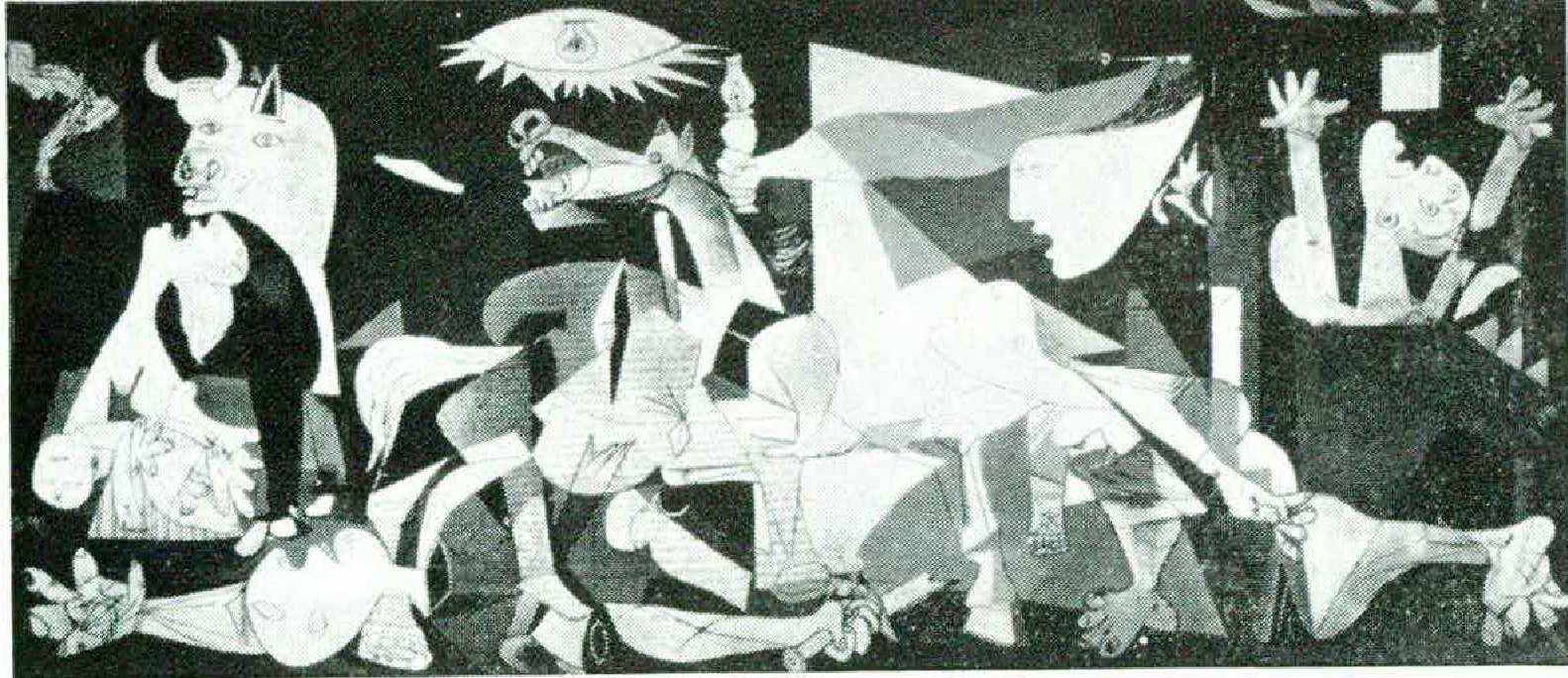
PAINTING, Picasso once said, is not made to decorate apartments; it is “an instrument of offensive and defensive warfare against the enemy.” And what is the enemy? Many things — not least, the dead hand of the past passing itself off as the present.
Twentieth-century Spanish painting has a noble lineage. But the great contemporaries — Picasso, Gris, Miró — had to make their names in Paris. Even a generation later, honors in Spain were still reserved for the peddlers of the picturesque and a watered-down impressionism. Modern meant Matisse and Dufy — at second hand. There was the enemy, and the objective.
And so, in 1948, in Barcelona, a small group of painters and writers banded together to cut the enemy down to size and dispose of him. they took the name Dau A1 Set, a Catalan version of the French surrealist phrase, La septième face du dé — “the seventh face of the die.” The painters: Antoni Tàpies, Joan Josep Tharrats, Modest Cuixart, Juan Ponç. Ponç petered out; he is now in Brazil. The other three have made history.
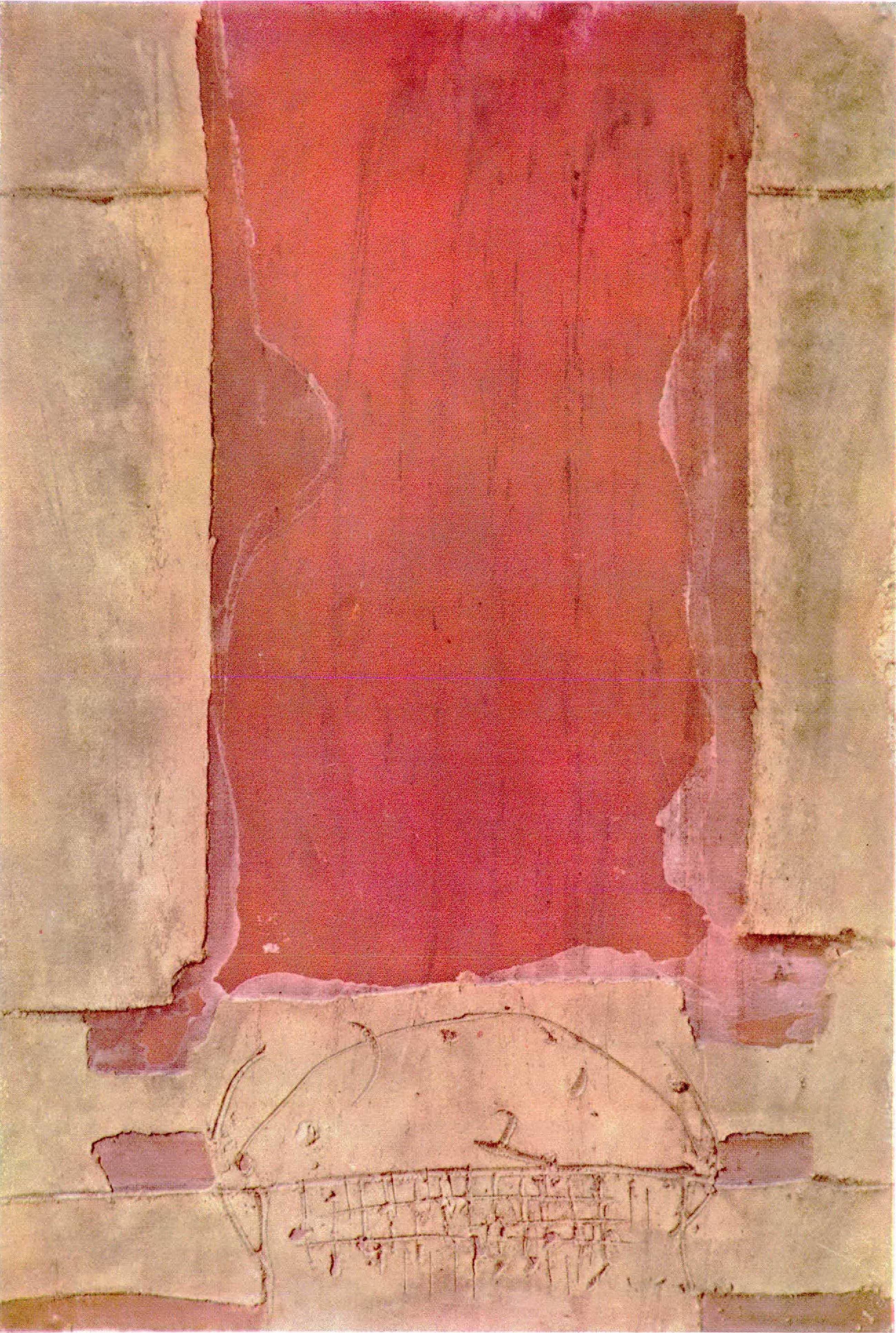
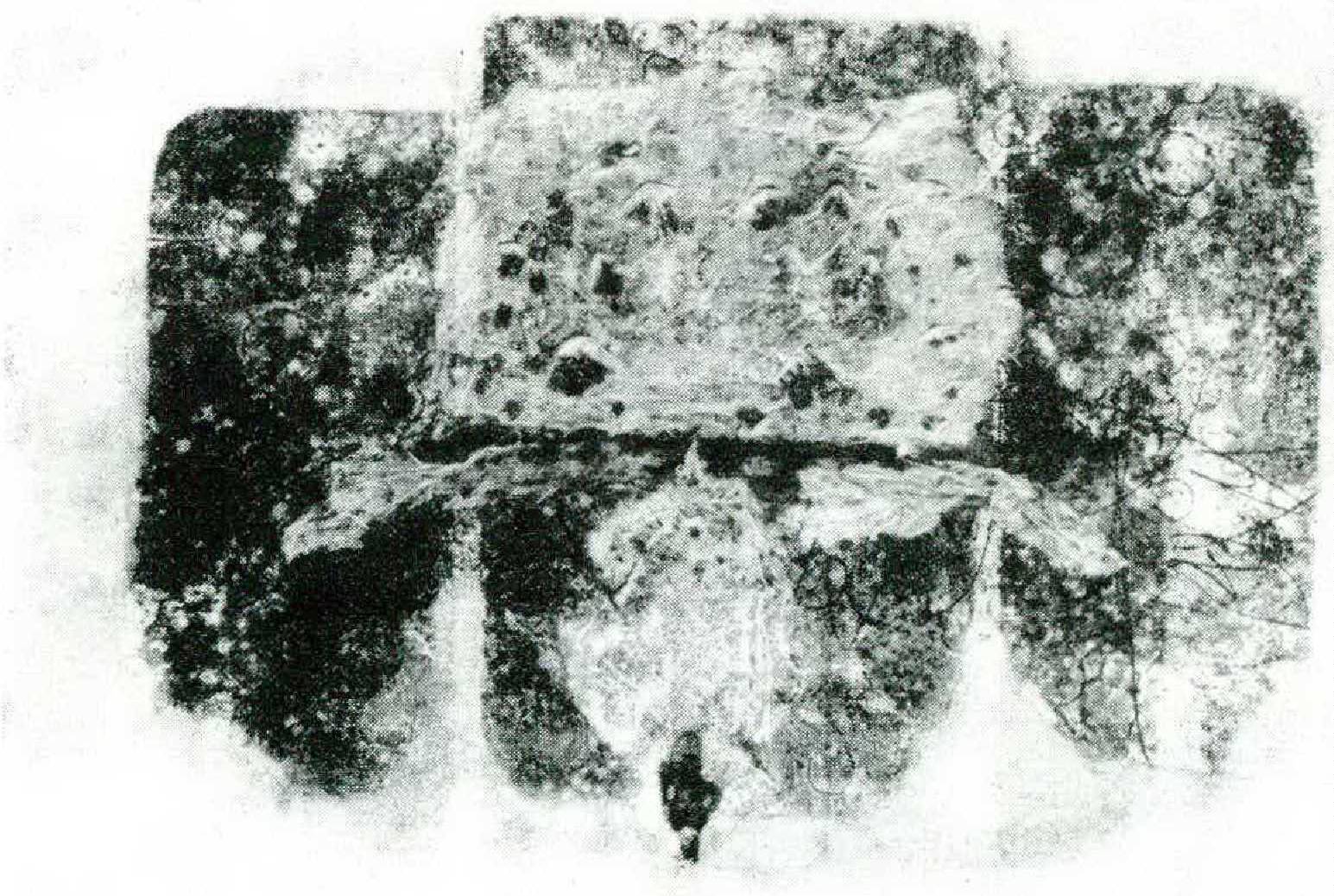
The art of Tàpies has traveled a long road since then. His early paintings were strongly intluenced by the work of Paul Klee: a delicately suggestive linear art of half tones and magic symbols which often evoked a kind of lunar or submarine landscape. Miró, too, is present in this early work; there is a touch of Dubuffet, and here and there a suggestion of the early Kandinsky.
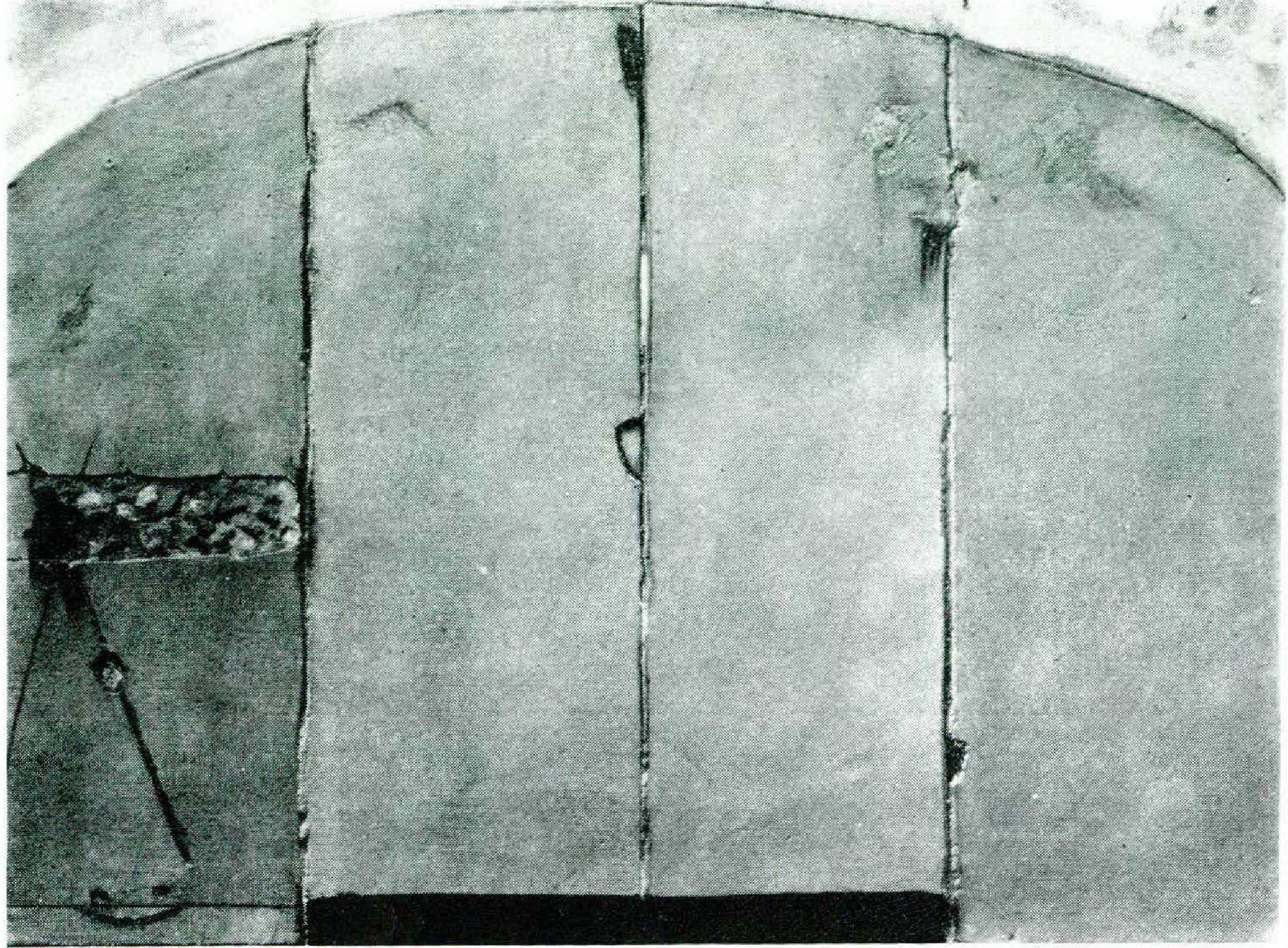
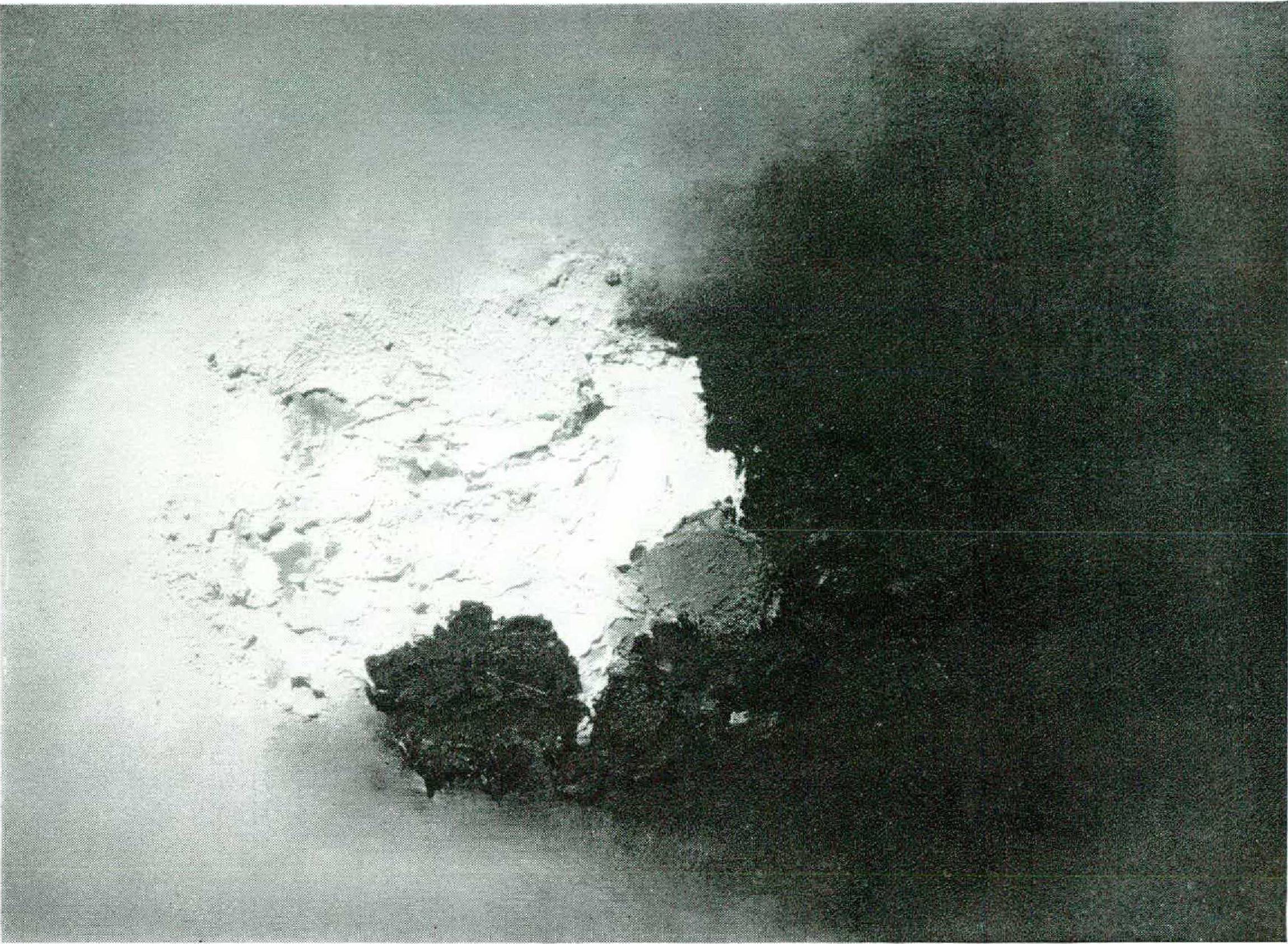
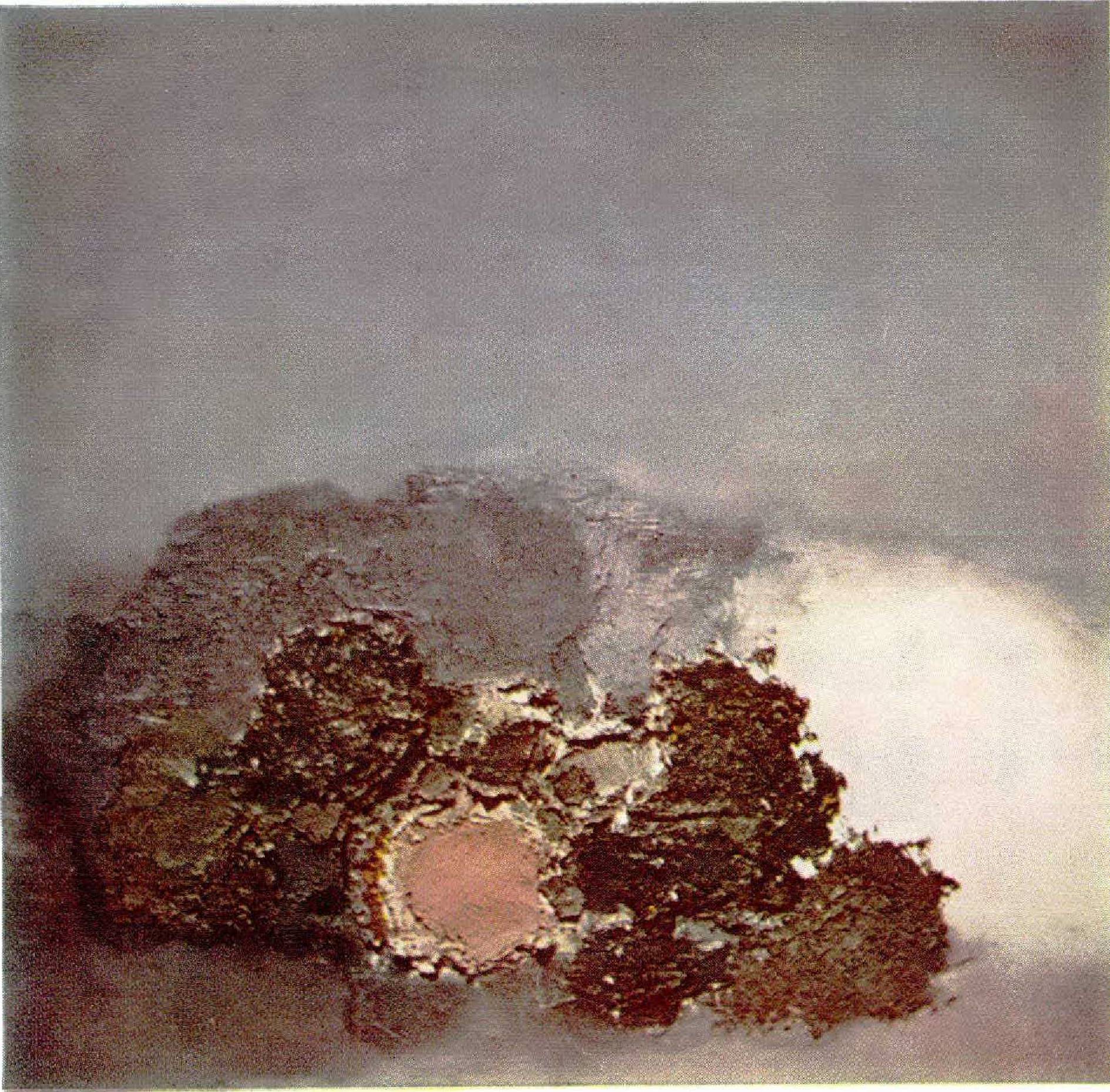
Gradually the more derivative imagery receded. Tàpies’s art became more informal, influences were absorbed or thrown off, and the essential Tàpies emerged. This is an art in which many see the face of modern Spain: battered, weatherbeaten doors, scarred torsos, segmented, parched landscapes, occasional symbols of the viselike grip of an authoritarian church. Tàpies often mixes sand and other ingredients with his pigments and builds up surfaces to the depth of bas relief. He makes use of graffiti and gives the canvas, by means of impasto and incision, a physical third dimension that conventional perspective had only suggested and earlier twentieth-century painting had frequently eliminated entirely. His palette is restrained: there is an occasional blood red or smoldering purple, but more and more it is a question of black and grays, a touch of ocher. It is, as much as anything in contemporary painting, the “tragic sense of life” in plastic form.
The Dau A1 Set group published a review of the same name, edited and printed by Tharrats. It ranks with the best of the surrealist publications, and although it was not as ambitious in scope as, say, Minotaure, which Skira brought out a generation ago, it was surely as effective.
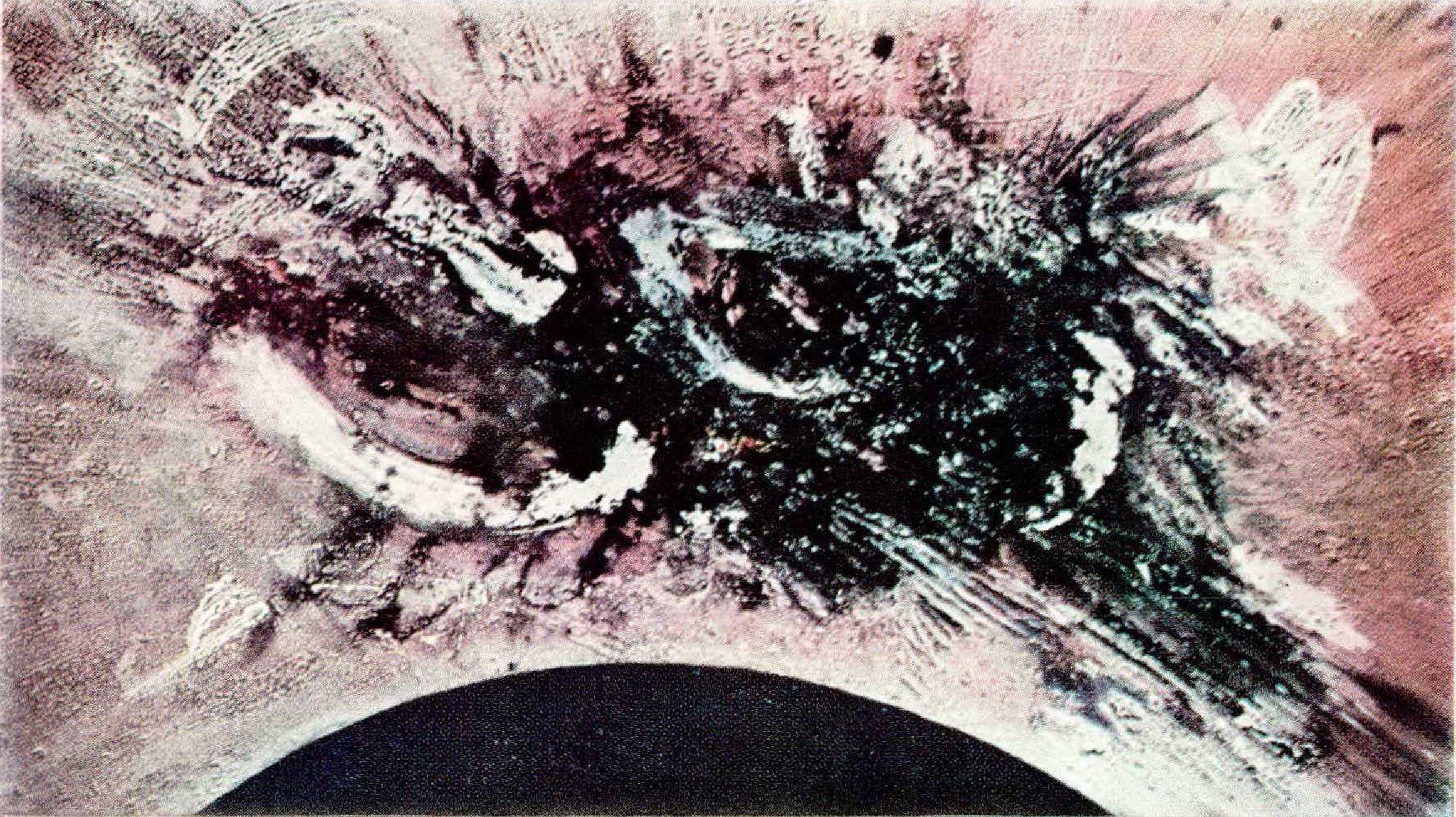
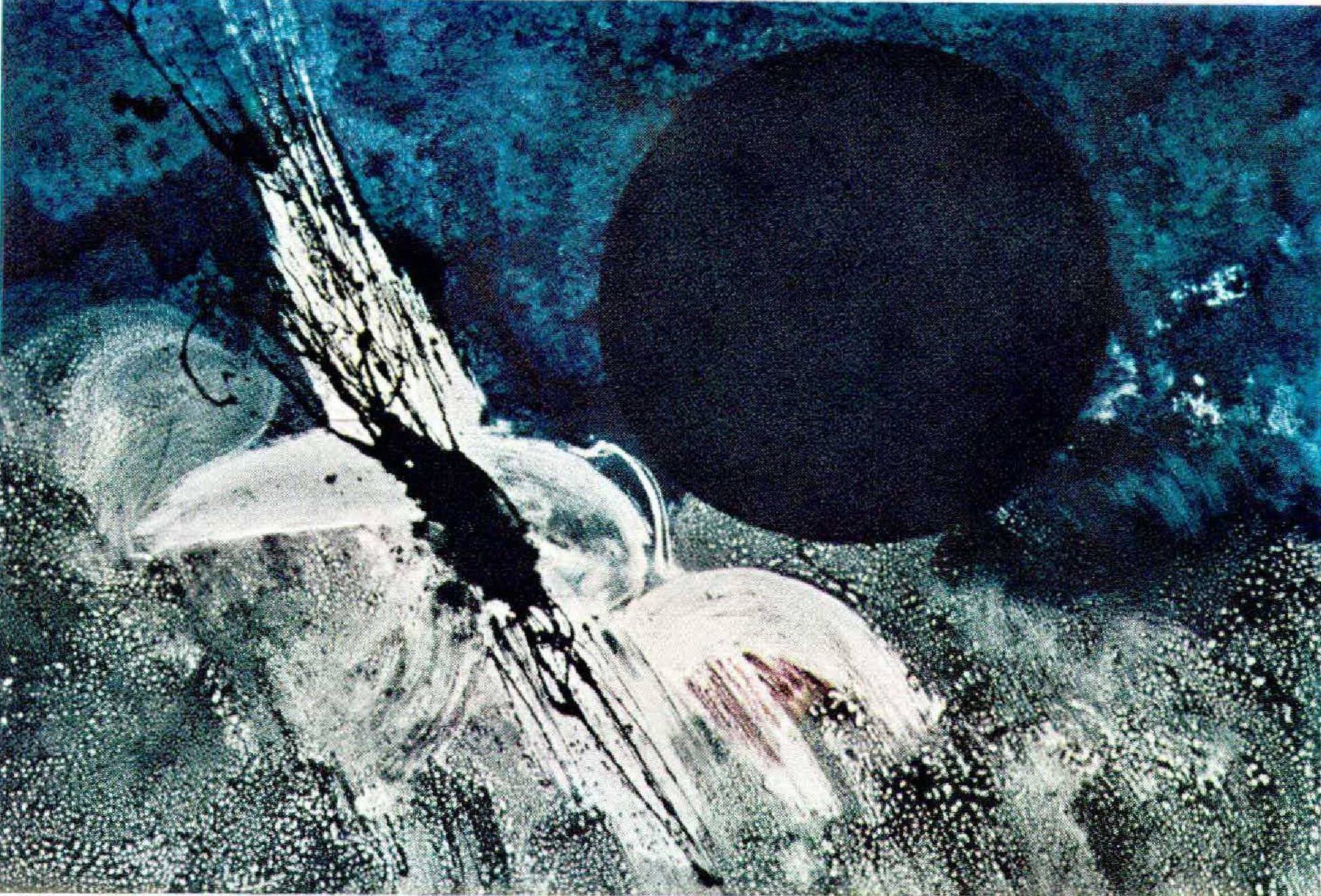
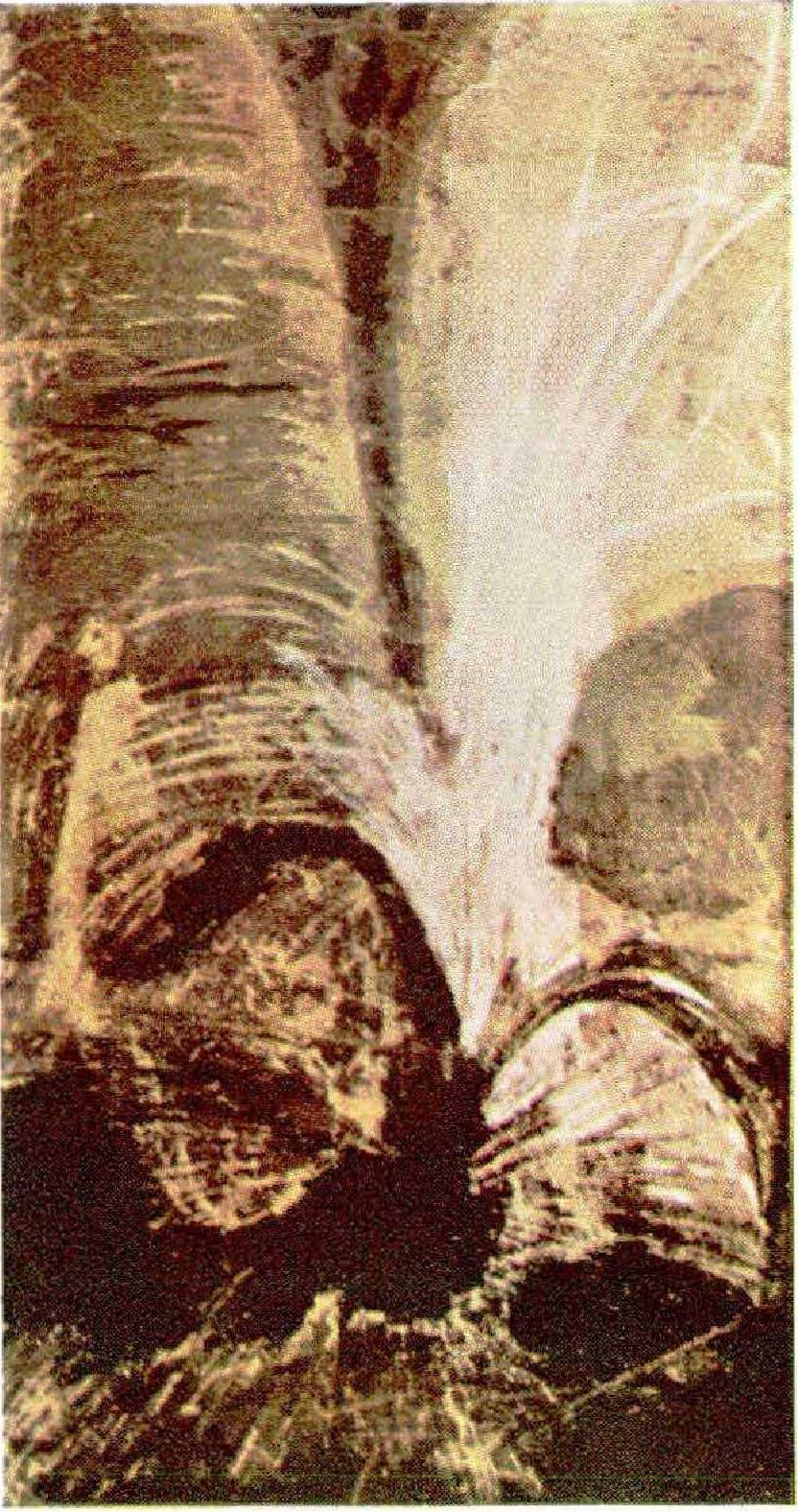
Tharrats is, certainly, one of the most interesting and the most versatile of the new Spanish artists. He is an able polemicist and a master craftsman in many fields, a tireless explorer of new paths, a visionary whose painting has evolved slowly and meaningfully to its present degree of power. His work is the counterpoise, in a sense, to that of Tàpies. The impact of Tàpies’s work has an immediacy that derives from its dramatic starkness. A painting by Tharrats is often technically more complex, and as a result — since Tharrats is, pictorially, both perceptive and articulate — a satisfying intellectual experience as well as an emotional one. This is not to say that his paintings are cerebral rather than plastic. They are richly painted, and his matière has a life of its own.
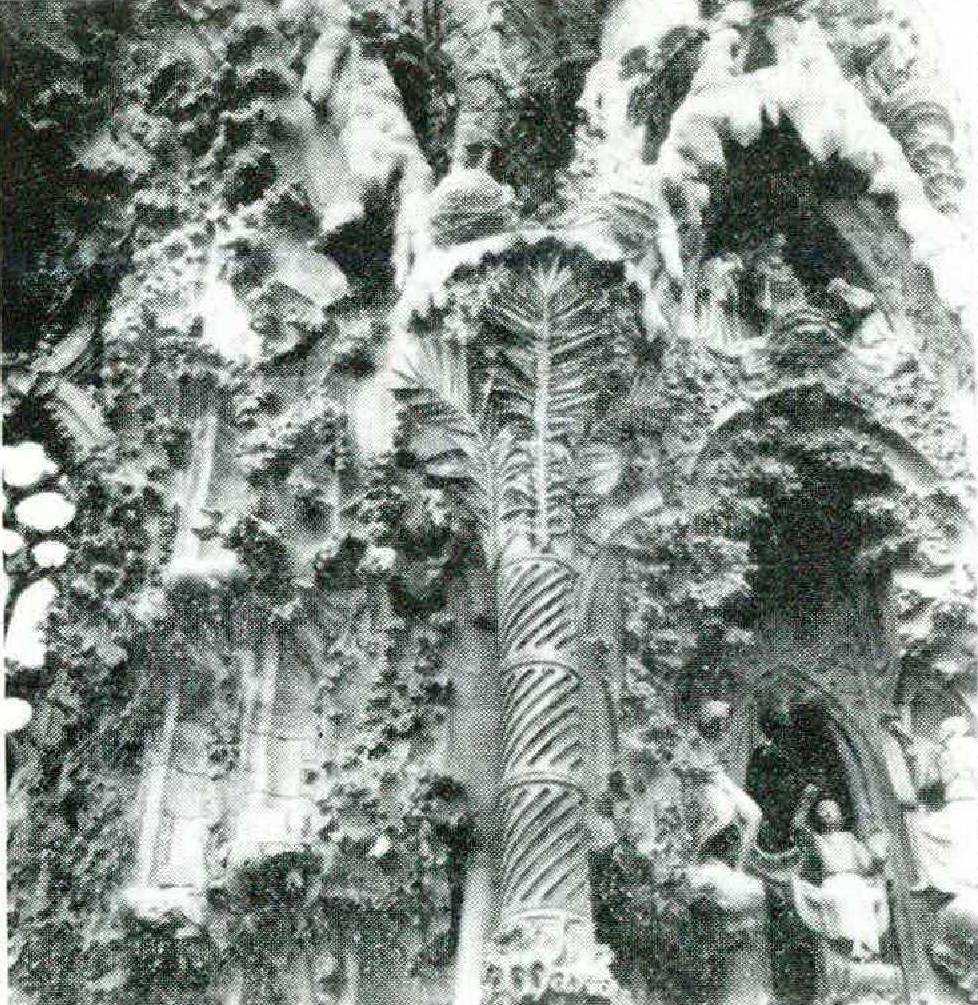
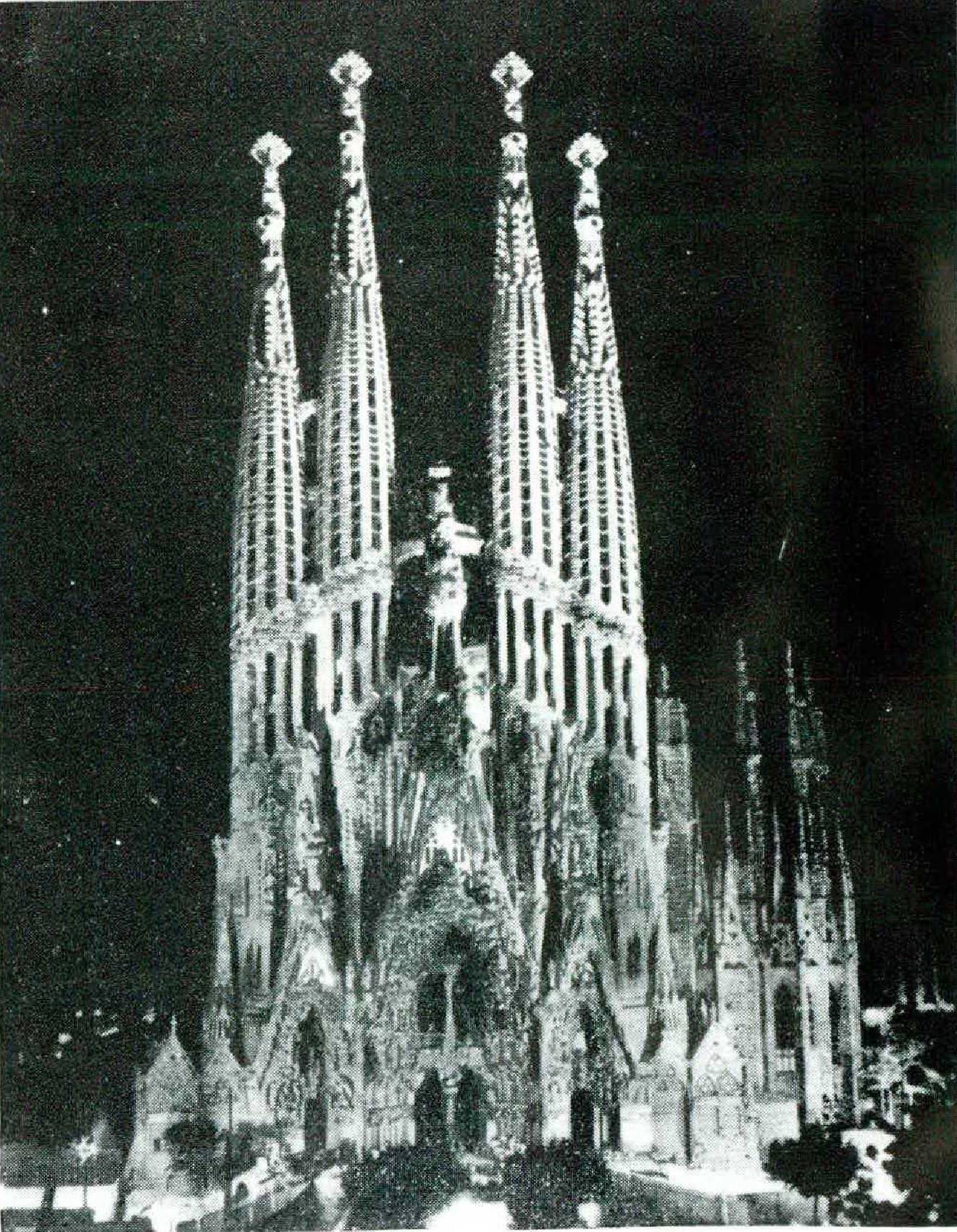
The heavy impastos in such a painting as Médamothi reflect the same organic exuberance as the decorative detail in Gaudi’s Sagrada Familia, for example. It was, in large measure, through Dalí and Miró that the younger generation of Catalan painters had been led to a reassessment of the genius of Gaudí. When Gaudí died in 1927, Spanish architecture buried his reputation with him. The painters revived it. The first appreciation of his work to be published in Spain after the Civil War appeared in Dau Al Set.
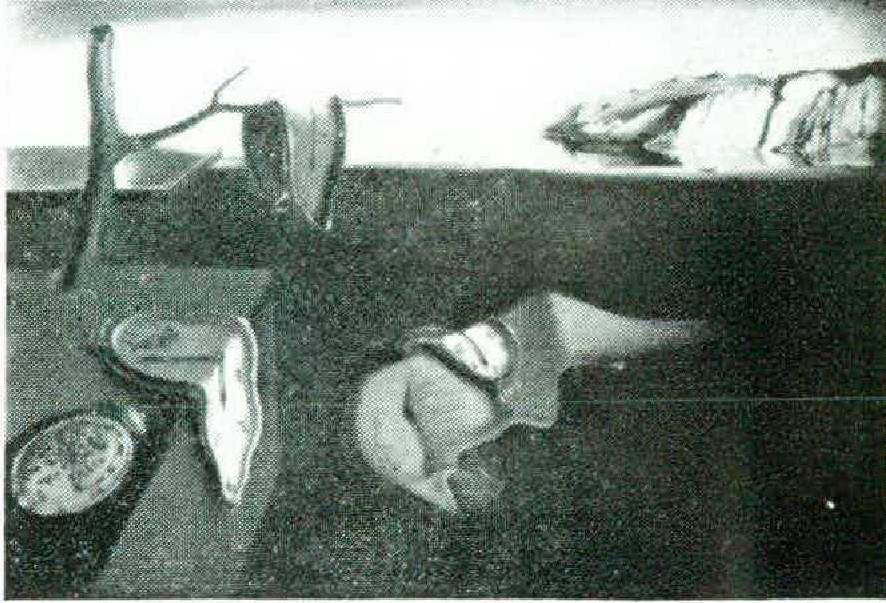
Tharrats’s painting is conditioned by visual reality. His house in Cadaqués is not far from Dalí’s. The landscape we find in many of Dalí’s paintings, recorded with a more than photographic fidelity, forms the point of departure for Tharrats, who often transposes the same lonely stretches of rocky Mediterranean promontory into a highly individual vision of his land.
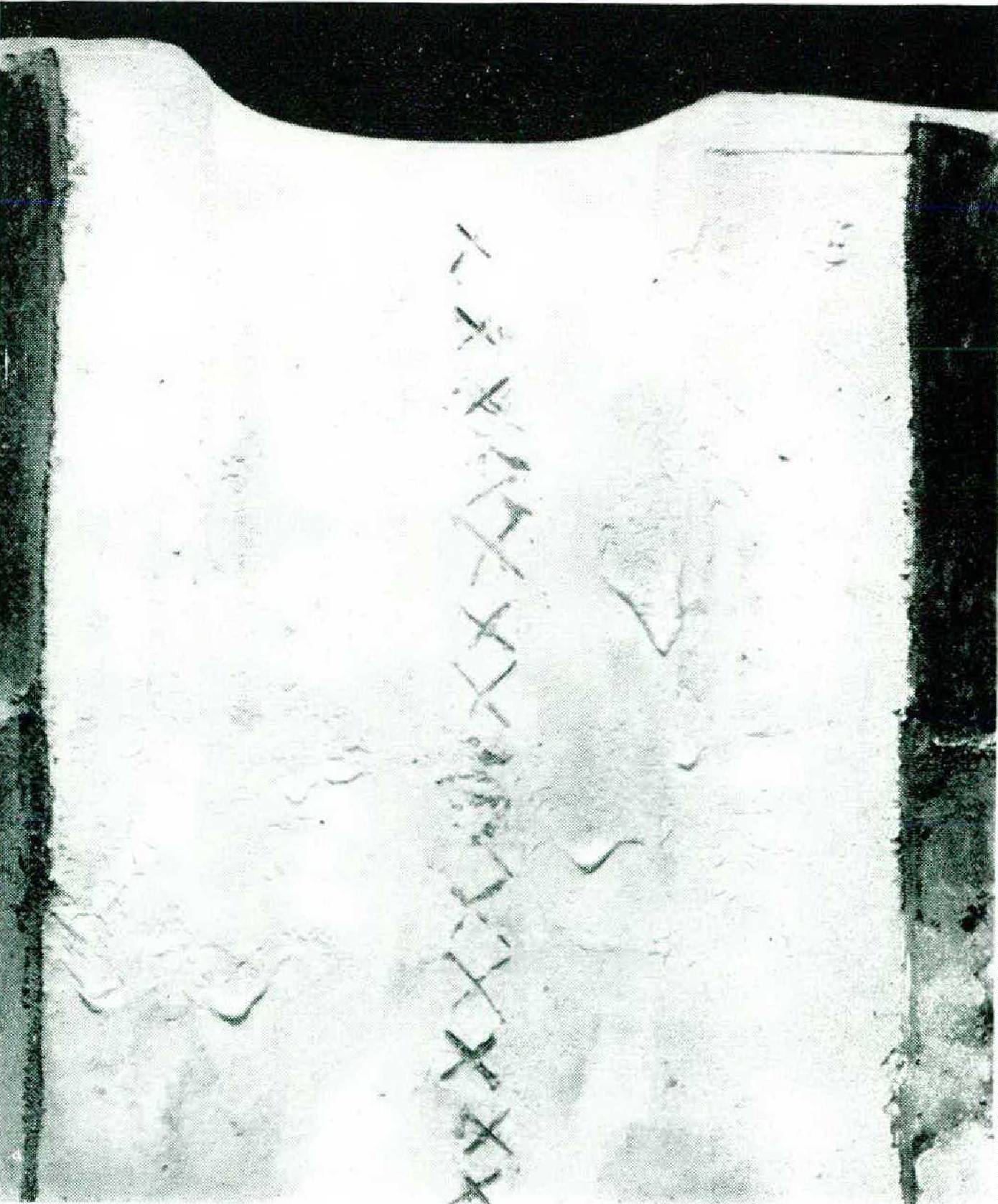
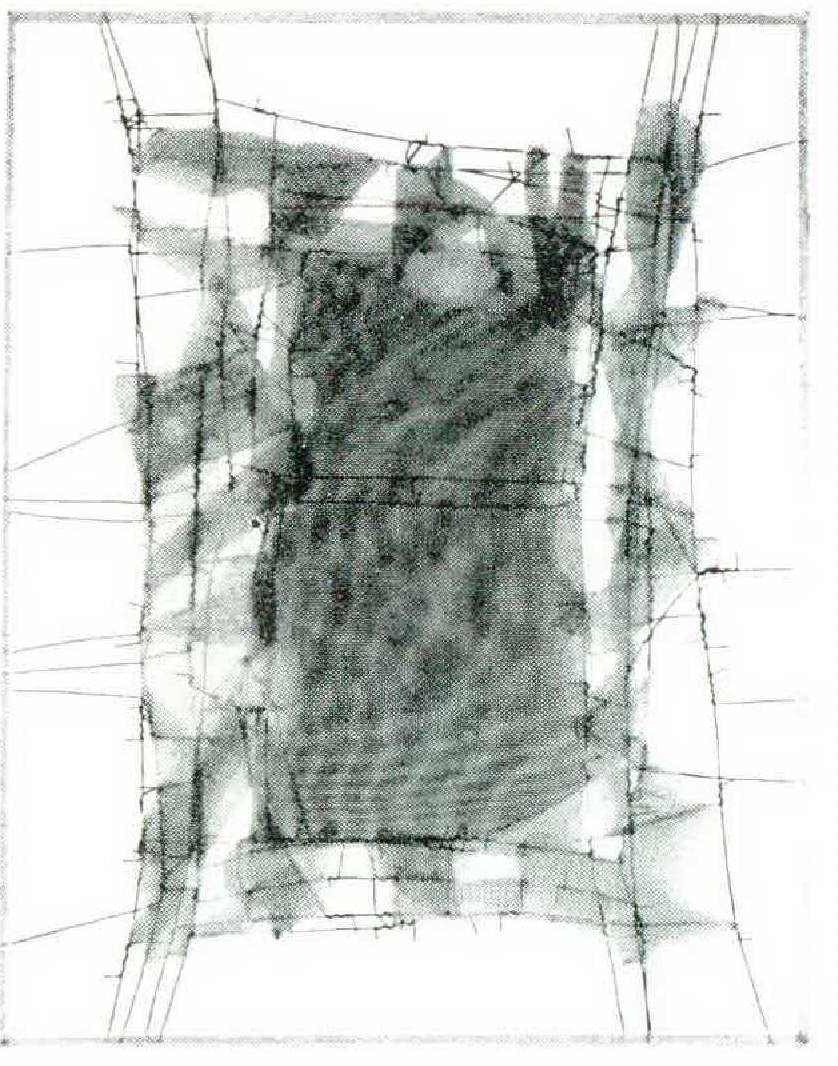
Tharrats has proved to be one of the most inventive of contemporary graphic artists. He produces what he calls a maculatura, a kind of unique print resulting from an original and complex succession of hand processes. He works on heavy paper with a mixture of lithographic inks, diluted oil, and water color, which often produces spectacular effects in the course of impression. Pieces of metal or cardboard, wood, or other materials with interesting textures are impressed onto the picture surface. The latest development of Tharrats’s maculaturas, to which a special room was devoted at last summer’s Venice Biennale, incorporates techniques of monotype, painting, and collage to a point that such a work is not classifiable. We are forced to adopt the artist’s term maculatura as a category in itself.
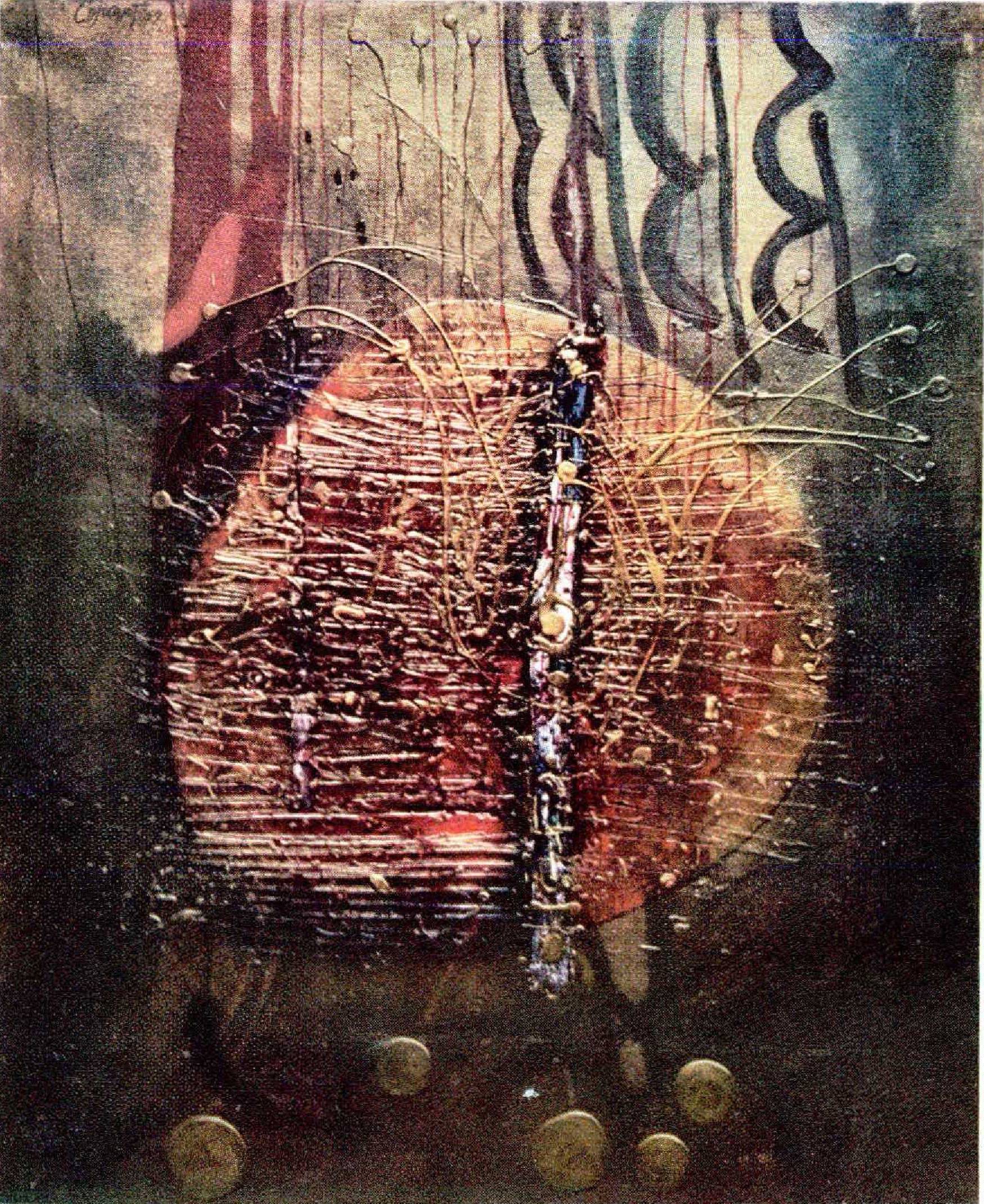
Cuixart, too, is an alchemist. To the more conventional ingredients he adds gilt and silver emulsions, latex, and enamel. His surfaces are an intricately wrought calligraphy which may have been stimulated by Action Painting but which has its roots in Moorish metalwork and decorative arts. Underneath is a glowing palette of sumptuous, if muted, richness. There are often cabalistic signs and script that echo back through the centuries. Surfaces are built up in encaustic in such a way as to suggest organic excrescence — another recall of Gaudí’s sculptured architecture.
THE Spanish government was still officially ignoring the new art well into the fifties, but critics and foreign gallery owners were finding their way to the studios in Barcelona. The works were being shown in Barcelona, then in Madrid, and gradually in salons and competitions in Paris, Mexico, South America, Italy, Sweden, London, New York, Chicago, and Pittsburgh. They were beginning to win prizes. Tàpies and Tharrats came to Paris to work and study; Cuixart, too, after an initial stay in Lyon.
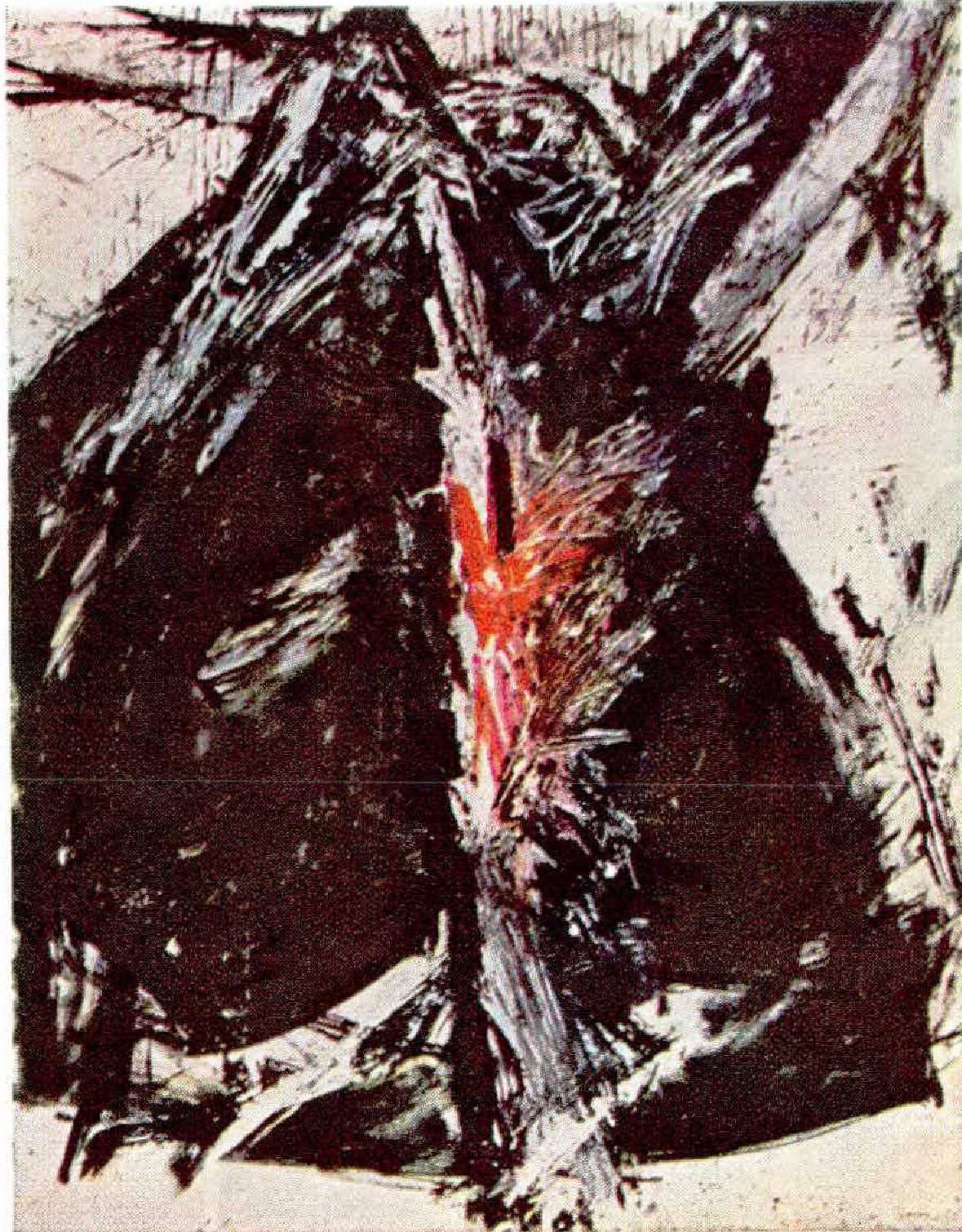
In 1957 a new group was formed in Madrid, with the name El Paso. It included Antonio Saura, Luis Feito, Manolo Millares, and Rafael Canogar. As early as 1950, Saura had allied himself with the Dau Al Set group in Barcelona. His early work had been surrealist in derivation, but by 1954 he had evolved a personal style of portraiture that had its roots in Action Painting. Of all the new Spanish painters, Saura is closest to the American school.
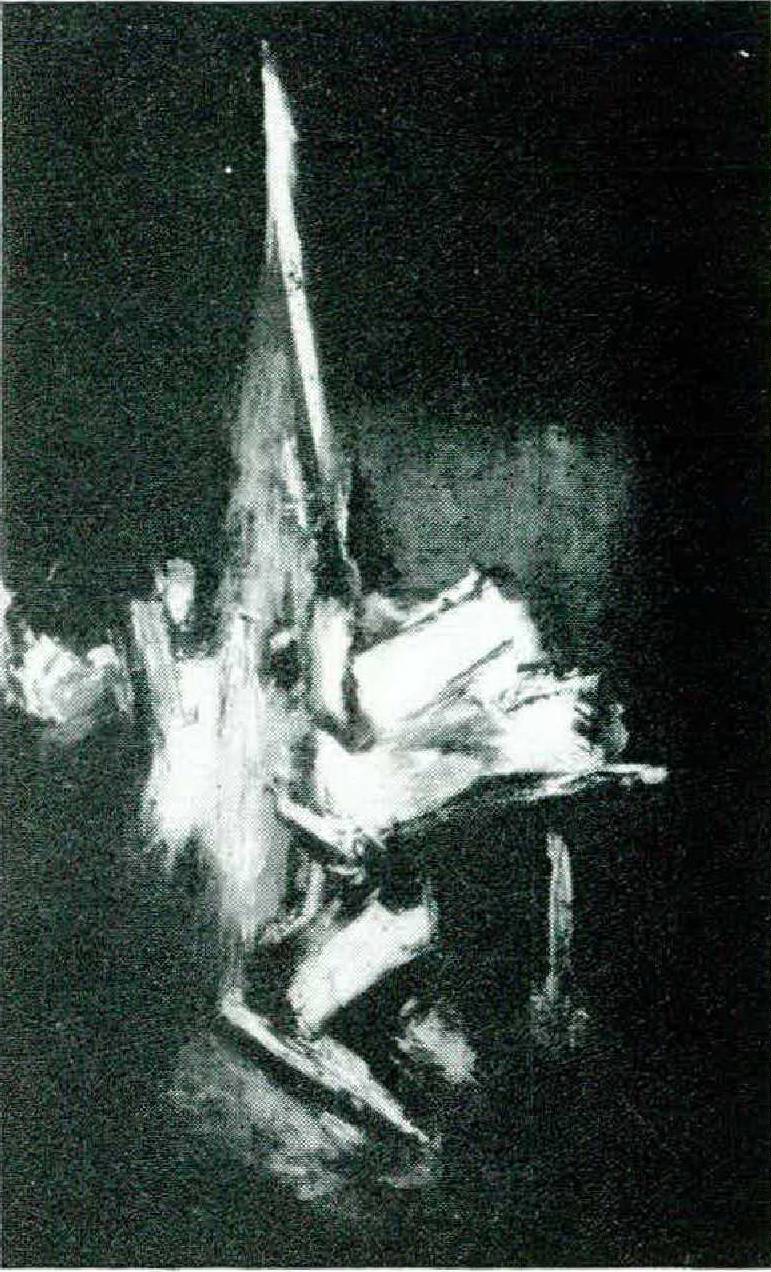
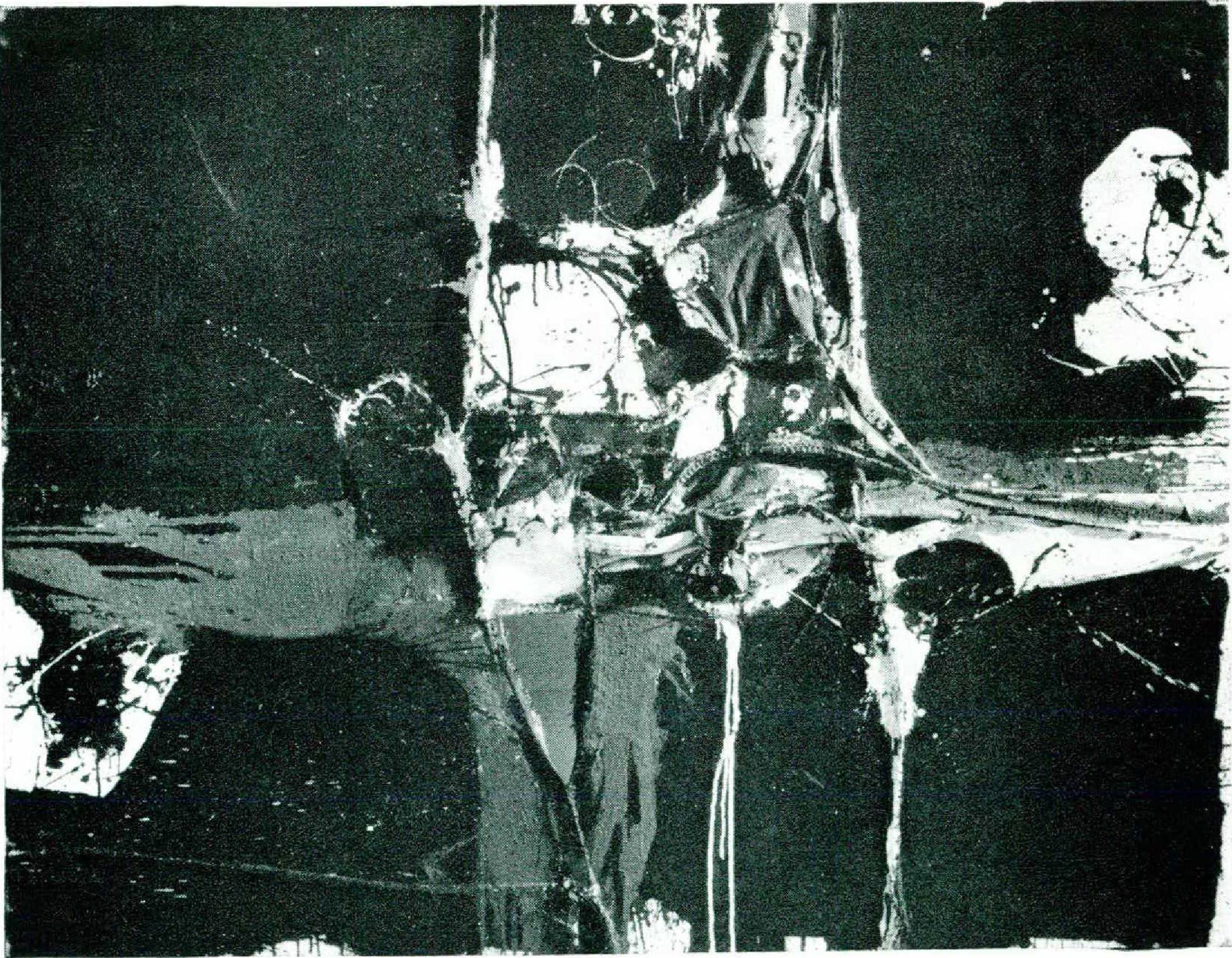
Feito, like Tàpies, is a dramatic painter, but whereas Tàpies’s work is somber and stark, Feito’s reveals the drama of light. Technically, Feito is the more skillful painter, and the opposition between his sooty blacks and incandescent whites reaches a sometimes dazzling vibrancy, particularly in his most recent work, where his palette is sharply restricted. In other paintings, tonal gradations in the range of gray-blues and mauve, light ocher, or warm earth colors relieve that opposition and at the same time create more subtle spatial relationships. Feito uses an admixture of sand and fine gravel to build up areas in relief, and the textural contrasts seem to intensify or counterbalance the struggle between light and dark as the color range narrows or widens.
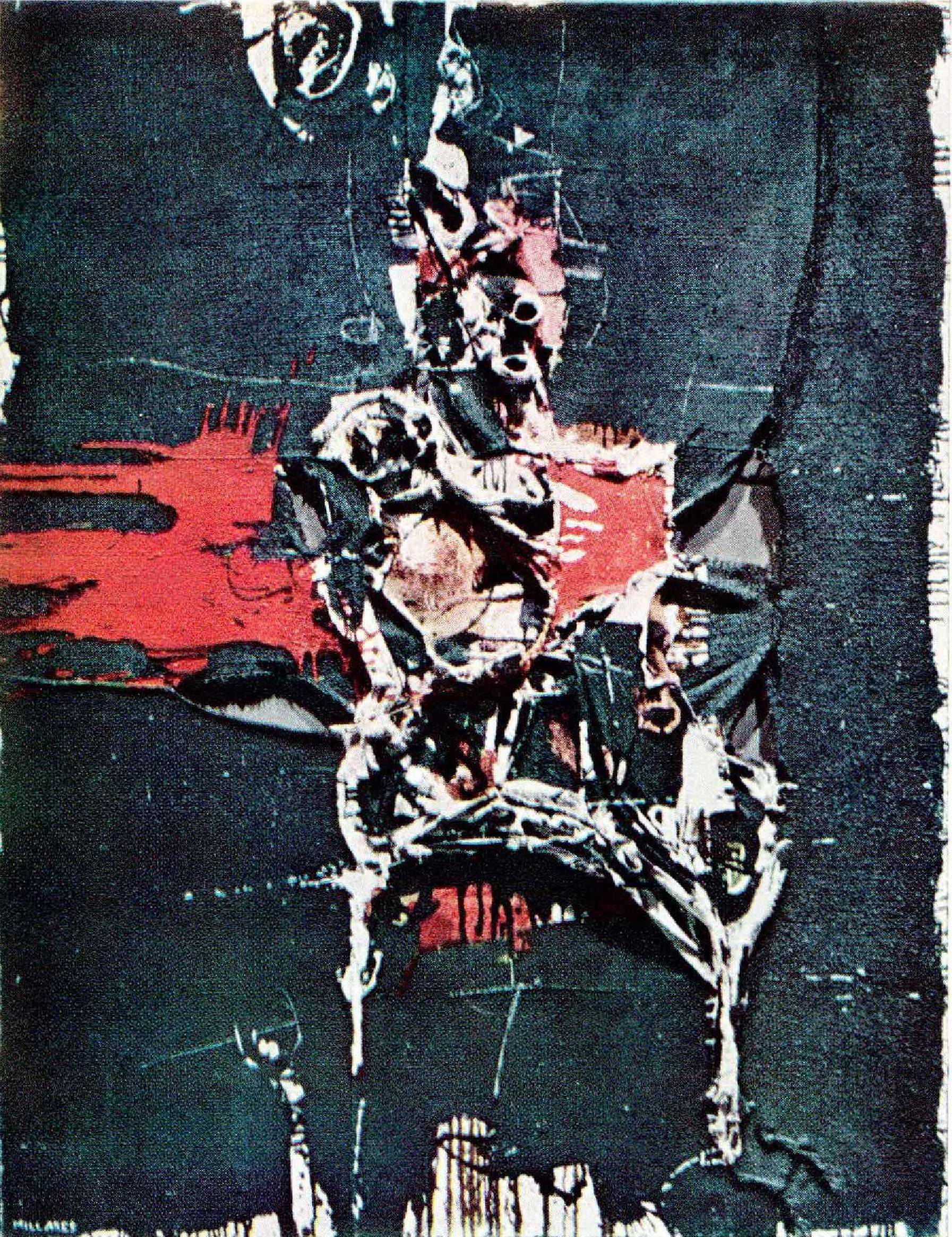
In Millares’s work some have seen the recurrent theme of death. But by the very nature of his art, which involves, to a degree, the physical destruction and reconstitution of the work of art itself, the process becomes a continuing cycle of death and rebirth. Millares has reinterpreted the traditional canons of painting. Burlap is pulled taut over the stretcher; it is pierced, gashed, mended, pieced out with other weaves, gathered up in coarse gobbets, and stained with white, red, black, or deep slate. It is possible to see in his paintings references to the bloodshed of the Spanish Civil War or of the corrida. In some of them one can make out the form of a crucifixion. Art today, Millares has observed, has reached the frontiers of the impossible. And it is out of the desperation that this creates for many artists that an art such as his is born. He freely admits that he does not understand everything he does, nor does he feel the need to.
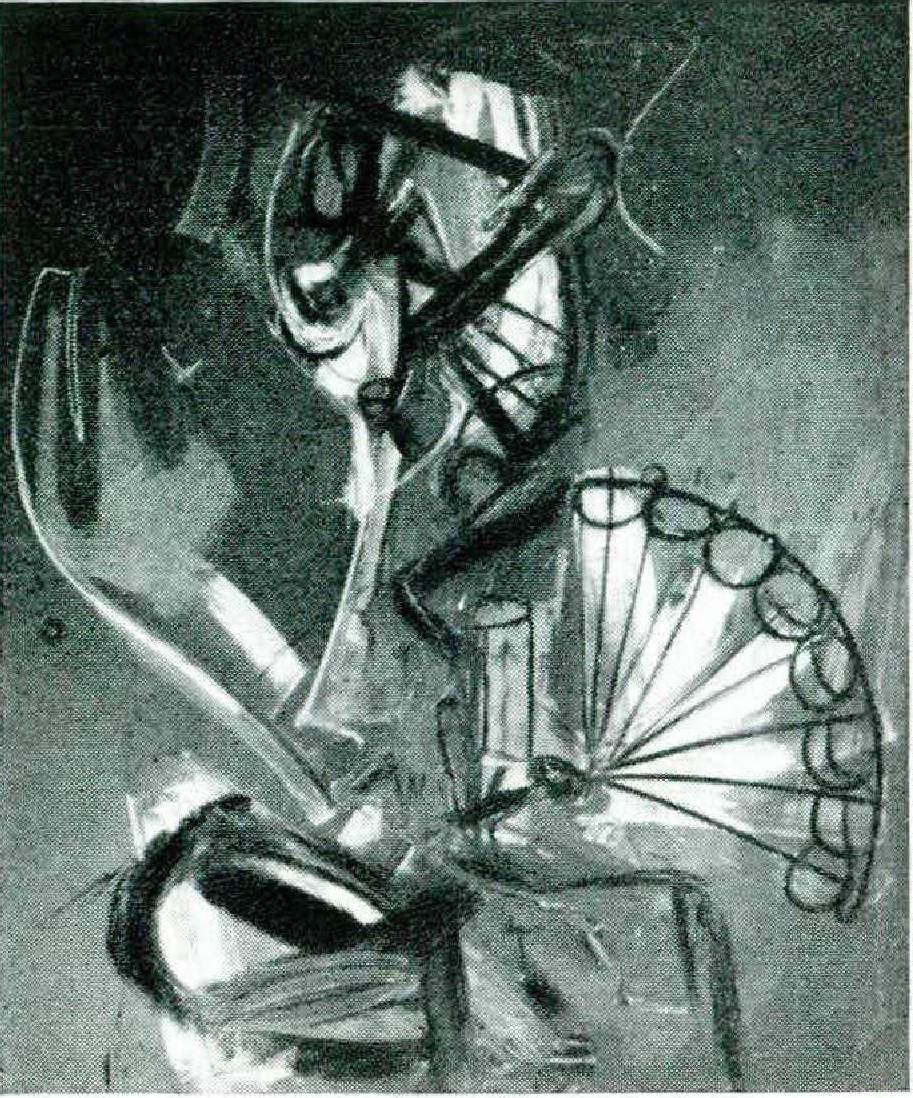
Canogar, born in Toledo in 1934, is the youngest of the Spanish painters. His work is brilliant, and at times paroxysmal. Although one discerns in it his debt to the Gothic vein of Max Ernst, Canogar’s Castilian heritage and dynamic brushwork make of it something distinctly personal.
Art in any dictatorship has validity only insofar as it serves the state. Good propaganda, good art. The peculiarly individual and personal nature of the new Spanish painting, the difficulties presented by its nonfigurative and evolutionary basis, made it particularly unsuitable for government patronage. And there was another side to the coin: If the new painting is not blankly hermetic, then it says something. But is what it does say officially acceptable?
Tàpies had managed to be represented — alongside the official favorites — in the Spanish section at the Venice Biennale as early as 1952, and again in 1954 (together with Francisco Farreras). In 1956 Tharrats, Feito, Millares, Saura, and Canogar were shown there. Critical opinion throughout the world supported them. It was no longer possible for the Spanish official art bureaucracy, against the current of world opinion, to play them down. In 1958, at the Twenty-ninth Venice Biennale, they were Spain — with official blessing.
In 1959 the Spanish government sponsored the showing of “13 Contemporary Spanish Painters” at the Musée des Arts Décoratifs in Paris, an event accompanied by all the pomp and fanfare of the official cultural exchange program. Don José Ruiz Morales, Franco’s director-general of cultural relations, was able to write, in his foreword to the exhibition catalogue:
“To see the world in a drop of water. To divine the purpose of life in contemplating the crack of a wall.” Such is the meaning of the contemporary aesthetic revolution. Spain . . . one of the most ancient cultures of the West . . . whose ambition it is to renew herself continuously, could not be unaware of these new orientations.
He was able to point out, with only a passing nod to a few of the regime’s old stand-bys, that Spain today “affirms her strong individuality . . . especially in the domain of painting, where her contribution has been, for centuries, in the front rank.” The battle was won.
By 1960 the growth of world interest in the new Spanish painters could be measured by their presence in individual and group shows in almost every major country where art competes on its own terms rather than on the basis of government specifications. There were larger showings and more honors at the Thirtieth Biennale in Venice.
In New York, the Pierre Matisse, Martha Jackson, Grace Borgenicht, and Bertha Schaefer galleries were showing some of the young veterans and their younger followers. (A large painting by Tàpies was fetching $4000.) James Johnson Sweeney’s grouping of eighteen “After Miró” painters was pulling crowds into the Guggenheim Museum. At the Museum of Modern Art an exhibition assembled by Frank O’Hara presented the work of twelve of the new painters and four sculptors. This exhibition, when it closed in the fall, started on a tour of the United States and Canada which will keep it circulating until at least the beginning of 1962.
Since it is customary to tie up painters in neat little packages labeled schools, what can we find among such varied and individual talents that denotes a common heritage? Such characteristics are of two kinds, conceptual and technical. To begin with, all these painters look back to the great figures of Spanish art: to the brutality and the surrealism avant la lettre of Goya; to the mystic exaltation (most notable in Feito) of El Greco; to the vitality of light in Velázquez; and to the rigor of Zurbarán (reflected also in Juan Gris). Picasso is for them the greatest painter since Goya, but it is the independence of his spirit rather than the character of his work that moves them most strongly. They look up to Miró, too, and they feel closer to his work than to Picasso’s. Most of them have been greatly influenced by dada and surrealism. Most have passed through a surrealist period in their own work. Nearly all of them reject Dalí as a painter but respect his historical contribution of the L’Age d’Or period. Technically and conceptually, Gaudí has been a dominant influence. The work of all of them shows a preoccupation with “the nature of materials.” They are greatly interested in texture and surface and have a positive tropism for unconventional adjuncts to the painting process. They have a deeper sense of métier — the painter’s craft — than almost any comparable group. They favor mixed media and have no interest in maintaining the classical boundaries between, for example, painting and sculpture.
They work with a palette reduced to the point of austerity, but with an effectiveness that makes them the spiritual godsons of one of the greatest colorists of all time, Renoir, who said that “a painter’s palette means nothing. It is his eye that does everything.” They are all-absorbed by the Spanish earth. No country has ever had more minutely attentive topographers — in depth. They are acutely sensitive to the sores on the Spanish body: bloodshed as a national preoccupation, and the deformation of a continuing social and ecclesiastical medievalism. And always, one senses their consciousness of the reality of death as the central fact of life.
Finally, gesture. It is a vital element in their painting, whether explicit, as in the violence of Saura and Millares, or implicit, as in the ritualistic restraint of Tàpies and the lambent sexuality of Canogar. It is through such affinities as these that past and present coalesce and produce an art in which the historical and the actual have been more tellingly synthesized than in that of any other country today.