The Don Quixote of Salamanca
SALVADOR DE MADARIAGA,who was at one time the Spanish ambassador to the United States, is one of Spain’s leading writers in the fields of biography, history, and politics. He here gives us an intimate portrait of the poet, novelist, and playwright Unamuno, the great Spanish literary crusader of the early part of this century and a man whom Madariaga knew well.
UNAMUNO
SALVADOR DE MADARIAGA
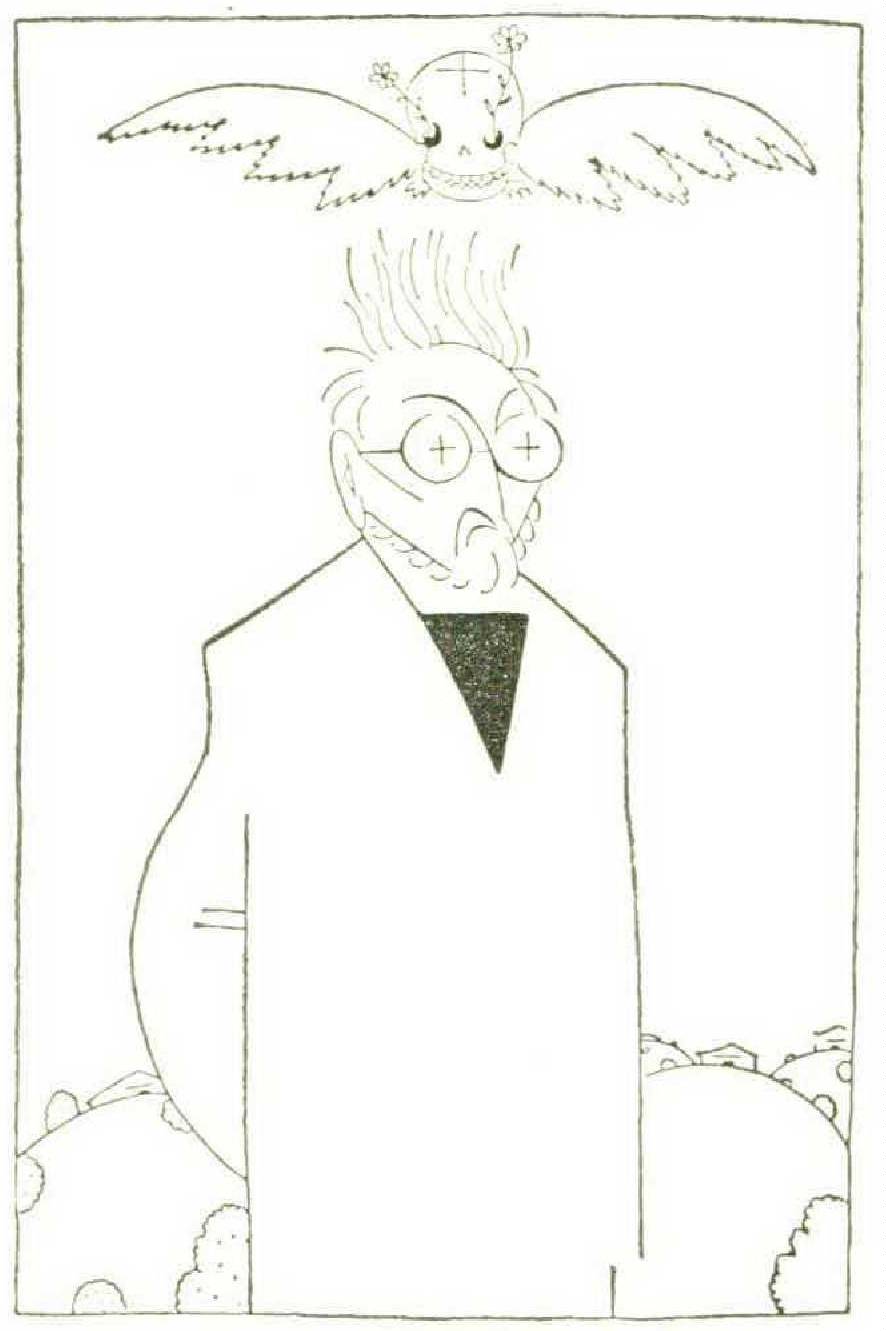
A TALL, muscular frame, a long, sharp, beaklike, almost crooked nose, a wide, curved forehead above two vigorous eyebrows, eyes ever on the alert, indeed challenging, Unamuno at once brought to mind haunting memories of Don Quixote. That tension, which he kept always alive, between his overflowing sell and the world outside shaped and colored his attire. He wore no tie, but a waistcoat covered his shirt up to the stud in his collar, which, together with a soft, shortbrimmed hat that he was wont to sculpt into squarish shapes suggesting a priestly biretta, would have made him look like a cleric had his face and mien been less explosive.
We in Spain were so used to seeing the intellectuals who happened to leave the Catholic faith go the whole way into agnosticism or a total atheism that the sight of this vigorous writer, this strong poet, this original novelist, this classic scholar, haunted by his relation to God, imitating the ways and garb of a Protestant cleric, seeking arguments with church canons rather than with university philosophers, appealed to us as singularly refreshing.
Those were the days when Spain was beginning to gather the fruits of a cultural renascence which began about 1876, when the nation, invigorated by the loss of the last islands left from its imperial days — Cuba, Puerto Rico, the Philippines — was rediscovering its own inner strength. A crop of new names, soon to become world-wide in their fame, was beginning to give Spanish intellectual life a new luster and brilliancy. The officials, however, did not always feel in tune with the new look of things; and in 1913 or thereabouts, a politician who happened to be in charge of the Ministry of Education fell out with Don Miguel de Unamuno, then rector of the University of Salamanca, and Unamuno was summarily deposed .
Thereupon, Ortega y Gasset organized a banquet in honor of the deposed rector as a protest against the inconsiderate minister. This was on Ortega’s part an elegant gesture, for in the keen world of Spanish ideas at the time, he and Unamuno stood for opposite ways of thinking. Ortega was our Turgenev, and Unamuno was our Dostoevsky. Ortega would Europeanize Spain, while Unamuno would Hispanify Europe. What did the one and the other mean? At the risk, perhaps, of slightly misrepresenting their views by simplifying them, the answer might be that by “Europeanizing” Spain Ortega meant making it objective; while for Unamuno, to “Hispanify” Europe amounted to making it subjective. Ortega wanted order, science, technology, and more social service and social spirit — a movement forward. Unamuno longed for character, experience, self-expression, individual freedom, and creativeness — a yearning upward. Ortega stressed social morality; Unamuno, individual faith.
Both were our leaders. But they could not agree on how or where to lead. Ortega, struck by the relative poverty of Spain’s contribution to scientific and technical progress, kept exhorting Spaniards to study and invent; to which Unamuno would retort with a vigorous and carefree, “Let them invent!” — “them” meaning the Europeans north of the Pyrenees. For, he would argue, one poem of our great mystic, St. John of the Cross, was worth all the inventions of the world.
This, of course, is true, but only in a certain sense and up to a certain point. Nor is it positive that Ortega would, within such limits, have disputed it. But Unamuno was not a man to be bound and circumvented by limits of any kind. He was, on the contrary, all of a piece and peninsular to a degree. Peninsular, despite what etymologists may say, means not less, but far more than insular. Unamuno was a kind of human castle rising on a knoll of his own.
At the time, therefore, no more formidable obstacle could have been found to the intelligent work of Ortega than this powerful Basque converted to the gospel of integral quixotism by the Castile that he had come to love so deeply. Unamuno was no Basque nationalist. In spite — or possibly because — of his peninsularity, he was too human and universal not to realize that it was through the genius of Spain that the Basque genius had made its mark in history, and while he knew Basque well, he deprecated the claims of some of his extremist countrymen to a kind of nationalist isolationism based on linguistic prepossessions. This led him at times to attitudes partly objective, partly contrary, and always antagonistic toward specialists of the Basque language.
Spain meant for Unamuno that particular way of reaching universality which yearns upward and not forward, and this deep conviction in him made him by nature and affinity a Castilian; far more of a Castilian than Ortega, who, born in Madrid, might be deemed a son of New Castile. Madrid, however, is not Castile, but the melting pot of all the Spanish kingdoms or regions, and this was not the least striking of the aspects of that polarity we all felt then between Ortega and Unamuno — an aspect paradoxical enough to please Unamuno, that he, the Basque, should incarnate Castile in a deeper sense than the Castilian-born Ortega.
No, I haven’t forgotten that banquet which Ortega organized for Unamuno. Ortega was then the beloved leader of Spanish youth. I was present at the banquet. I had as yet written nothing and was serving as head of the electrical services in the Spanish Northern Railway (I was educated as a scientist and a mining engineer). Ortega was determined that I should speak on that occasion, precisely because, so far as he knew — indeed, so far as I knew — I was not a man of letters but a technician. It was to be my first public speech. I wrote it out, typed it, folded the script, and put it in my pocket — where I found it the next day.
Two memories have lingered in my mind from that banquet. The first is Ortega’s mastery of the spoken language, on a par with his superb mastery of written Spanish, and the dramatic gesture with which he drank the health of “our enemy brother,” Unamuno. The second was the fire, the force that emanated not merely from the words and gestures but from the very person of Unamuno. On the one hand, a charm, an elegance, a moderation, a sense of form, a talent which seemed to attain their perfection by some fairylike gift of nature; on the other, a conviction, an inspiration, a genius which were overpowering. Such was my first meeting with the great Don Quixote of Salamanca.
ABOUT 1918, when I was living in London, I began to send to España, the weekly founded in Madrid by Ortega, some poems under the general title of Romances de Ciego (Blind Man’s Ballads), which I was then writing under the effect of my father’s death. Someone told me that Don Miguel de Unamuno used to cut them out, put them in his pocket, and read them to his friends during his long walks in the wide plains around the old city. He did not know that they were by me, for I signed them with a pseudonym. I sent him all my poems and asked him to write a preface for them, which he did, a beautiful page, a poem in itself.
I think he had been happy to find in my ballads that feeling of austerity, of bareness in the face of Destiny, which he sensed in Castile and which made him say of my poems in his prelace: “These are the words of the Iberian Ecclesiastes.” Such a view of Castile was, of course, like everything in him, strongly colored by his own forceful spirit; for he was so subjective that everything he saw and touched became Unamuno. His egotism made him concentrate all the world in his own self. Bagaría, in my opinion the greatest cartoonist the world has ever seen, used to picture him as an owl, a profound intuition indeed. For Unamuno seemed ever to be watching life as if endeavoring to penetrate its mystery, not in the least in a spirit of detached research, but in order to extract from its obstinate silence the answer to the question of questions: Shall I survive physical death?
This is in a sense the theme of all his works, but more specifically, of that monument of subjective and personal philosophy which he called The Tragic Sense of Life in Men and Peoples. This book, perhaps his masterpiece, became familiar soon to the English-speaking world, thanks to one of those eccentric Englishmen who are among the most precious gifts of England to the world. His name was Crawford Flitch, and he turned up in Spain from nowhere in particular, as that type of Englishman will, in a nonchalant, leisurely way, carting about the typescript of his translation. Tall, well-built, sporting an almost military mustache, the picture of health, a glimmer of humor in his eye, he was the very image of what an intellectual could not possibly look like. In later years he was to lease and manage a well-known public house in Oxford.
But I am anticipating. He came to see me on a double errand: first, to ask me to write a preface in English for his translation, and then to consult me on a number of passages of the original and his own translation of them. I was glad to grant the first request, which enabled me to present Unamuno to the English world as an essayist as he had presented me to the Spanish world as a poet; and I willingly offered Crawford Flitch my advice on his translation for what it might be worth. I was disappointed. He queried phrases which seemed to me obvious and raised difficulties where I could see none. But I gradually came to realize that in most cases he was right and I was wrong, for a more careful and attentive reading of Unamuno’s text gave rise to more doubts than I at first sight had imagined as to his meaning and intent.
As is often the case with these nonchalant English men of leisure, Crawford Flitch had a scholarly, accurate mind; he was as widely read as Unamuno (who was omnivorous and whose knowledge of English books included even collections of sermons); he was a keen and expert handler of ideas and, as it happened, an admirer of Unamuno’s freedom from mere logic and philosophy and of his bold assertion of the right of the individual soul to break loose from the collective mind. So well did he perform his work as a translator that Unamuno used to say that he preferred Crawford Flitch’s translation to his own original.
One feels in this magnum opus, as in all Unamuno’s works, that his real aim is to prove that God exists, not so much for the sake of God or of the world, but because if God exists, Unamuno will live forever, while if God does not exist, Unamuno’s hope of surviving his own death on earth all but vanishes. “All but” because even then Unamuno would be sure to fight for it.
This obsession with “above-tiles matters” (as we say in Spain, meaning matters above the roof, or heavenly) did not, however, prevent him from playing an active part in public affairs, which he did with characteristic tenacity. One day (Spain was then living under the dictatorship of Primo de Rivera, 1923-1930) Unamuno wrote to a friend in Buenos Aires a bitter and biting letter on the dictator. Through an awkward indiscretion, the letter found its way into a prominent newspaper in Argentina. Primo de Rivera was incensed, and as he knew no law but his whims and moods, he had Unamuno exiled to Fuerteventura, the most arid and inhospitable of the Canary Islands. Primo was at bottom a good-humored man, and it seems that he soon regretted his rash decision. Nothing could have pleased him more than that Unamuno should have slipped through a police net which the dictator made as loose as possible. But Unamuno was not to be deprived of his exile. He remained in Salamanca until he was forced by the police to begin his long journey to Madrid and Cádiz by railroad, and on from Cádiz by sea to Fuerteventura, and he refused to seize the many opportunities of escape afforded him on the way.
Nothing, of course, of this underlying comedy was known to the world outside. What the world saw was one of the two chief figures of Spanish letters exiled to a lonely, remote, hot, and arid island by a capricious and omnipotent dictator. We have seen, we have become so used to seeing such savage, subhuman events that our age has become callous; but it was stiff sensitive then. An outcry of protest went forth from every civilized nation. The Quotidien, a French radical paper, then almost newly founded and very enterprising, undertook to liberate Unamuno. In the utmost secrecy, the paper freighted a yacht for that purpose. Primo scented the conspiracy and tried to take the wind out of the sails of that yacht by letting Unamuno go free. He was able to walk undisturbed the two miles of stony paths which separated him from the shore where, in broad daylight, a motor launch awaited to convey him aboard the brig. Presently Don Miguel, suntanned from tropical Fuerteventura, landed in the December mists of Le Havre.
UNAMUNO was still in Paris when I called on him soon alter his escape. He was living in a small, neat, and modern-looking boardinghouse near the Place de l’Etoile. We had not seen each other for five or six years. He entered the small drawing room, and I at once felt how his timeless figure stood as a living protest against the neat modernity of the self-conscious carpet and furniture. He smiled with his sharp eyes behind his glittering glasses, but not with his mouth, stubborn and stern in the gray bushes of his mustache and beard. And, without a word, he brought out of his pocket a yellowish, thick, noisy paper which he unfolded, thus spreading between himself and me a sheet on which, in his tiny, crisscross writing, were aligned, I should think, about one hundred sonnets — the poetic crop of his exile. He read them all aloud with sober but forcible gestures of the head and eyes — both his hands busy holding the sail of his poetry — finished the reading, smiled, stood up, and offered me his hand in farewell.
He was the prototype of the Spanish monologuist. (Not soliloquist, for the soliloquist speaks to himself without listeners, while the monologuist must have an audience.) This, by the way, may well have been Unamuno’s only feature in common with Ortega: for both, conversation consisted in talking but never listening. And as for Unamuno, if by any chance he listened and what he heard was not to his taste, the retort would be ruthless and deadly — at any rate, for the conversation. Once, as he was explaining how he needed nine or ten hours of sleep a day, an unfortunate man in the circle blurted out: “Well, I don’t see why. Five are enough for me!” Unamuno ferociously shot back: “Ah, but when I am awake, I am far more awake than you.”
He was thus apt now and then to betray a manly pride, sometimes akin to a childlike vanity, for, as often happens with men of genius, he could be at times downright puerile. He took a childish pleasure in merely verbal victories. After his liberation, the Quotidien invited him to write articles. Unamuno began by writing them in French. The framework of French is far more rigid than that of Spanish, even of Spanish as written by an ordinary mortal, which Unamuno was not. He did not realize that the bold, even brutal way in which he dealt with, and at times mauled, his own native Spanish, when tried on the more precise and prim French, led to mere absurdities with no sense whatsoever. “Don Miguel, one cannot say that in French.”
“Can’t one? Here it is. I am saying it,” and he smiled victoriously. In the end he consented to writing his articles in Spanish and having them translated. “Impossible!” he told me one day in Paris. “Impossible! The translator has no idea of what I am aiming at. He is far too logical. I got so impatient with him that in the end I thought I’d give him a lesson. So I said to him: ‘Monsieur, I know French better than you do Spanish, don’t I?’ ‘Yes, Don Miguel.’ ‘Very good. But I also know Spanish better than you do French.’ ” And he looked at me with an air of unbounded triumph. Such were the weaknesses of the great mind who knew as no one has known before or since how to express in unforgettable ways the austere poetry of the Castilian landscape or the anguish of the godforsaken human soul.
From Paris, whose sophisticated literary atmosphere he could not stand, he went to settle in Hendaye, on the Spanish frontier, where he could look every day over the border toward his beloved Spain. It was there that he spent the rest of his exile. After lunch he used to go for his coffee to a small café, where he nearly always sat surrounded by friends. I have been told (not by him) that one day one of these friends warned him that a particular man in a brown suit who used to sit at a nearby table was a secret agent sent by the Spanish dictator to spy on him. That afternoon, Unamuno went to his usual table, and no sooner had he sat down when the man in the brown suit turned up and occupied the table next to his. Unamuno went over to the spy’s table, sat opposite him, put his elbows on the table, his stubborn chin on his hands, and staring at the secret agent, asked: “Do you know what a prostitute is?” The man, caught unaware by this onslaught, mumbled some obscure affirmation. “Well, then, your profession is less honorable,” and he rose, turned his back on the spy, and returned to his coffee.
He was not aggressive for the sake of aggressiveness. He was simple, almost humble, though proud and conscious of his own worth. Years before his exile, when King Alfonso was still a constitutional monarch, Unamuno had been granted an order reserved for rewarding intellectual merit. He was accordingly received in audience so that he could present thanks to the King. “Sir,” he began, “I am here to thank your Majesty for this order which I have fully deserved.”
The King laughed outright. “How wonderful! They all come here telling me, ‘Sir, I do not deserve it.’ ”
“And we all tell the truth,” Unamuno almost shouted back.
But there was far less ill will than mischievous wit in his remark. Unamuno was one of the greatest Spaniards of our century. What stands out in my memories of him is precisely his stature. Ortega once said of him that it he sometimes wrote as if he were shouting instead of speaking quietly, this was due to the fact that it is so difficult to make oneself heard in Spain. And this opens up another of the paradoxical avenues in the life of Unamuno: busy though he fundamentally was with God, he needed the company of men. He was, despite appearances, most sensitive to criticism, good or bad. Under the hard crust of a dour and independent Basque, Unamuno hid a heart as tender as that of a child.