The Years With Ross
Celebrated for his contributions to the NEW YORKER as writer and artist, JAMES THURBERis uniquely qualified to undertake this memoir of Harold W. Ross, that magazine’s creator. In this, the first of a series, we are shown the early stages of the turbulent and affectionate relationship — Thurber as staff man and Ross as editor — which began in 1927 and ended with Ross’s death in December, 1951.
HAROLD ROSS died December 6, 1951, exactly one month after his fifty-ninth birthday. In November of the following year the New Yorker entertained the editors of Punch and some of its outstanding artists and writers. I was in Bermuda and missed the party, but weeks later met Rowland Emett for lunch at the Algonquin. “I’m sorry you didn’t get to meet Ross,”I began as we sat down. “Oh, but I did.”he said. “He was all over the place. Nobody talked about anybody else.”
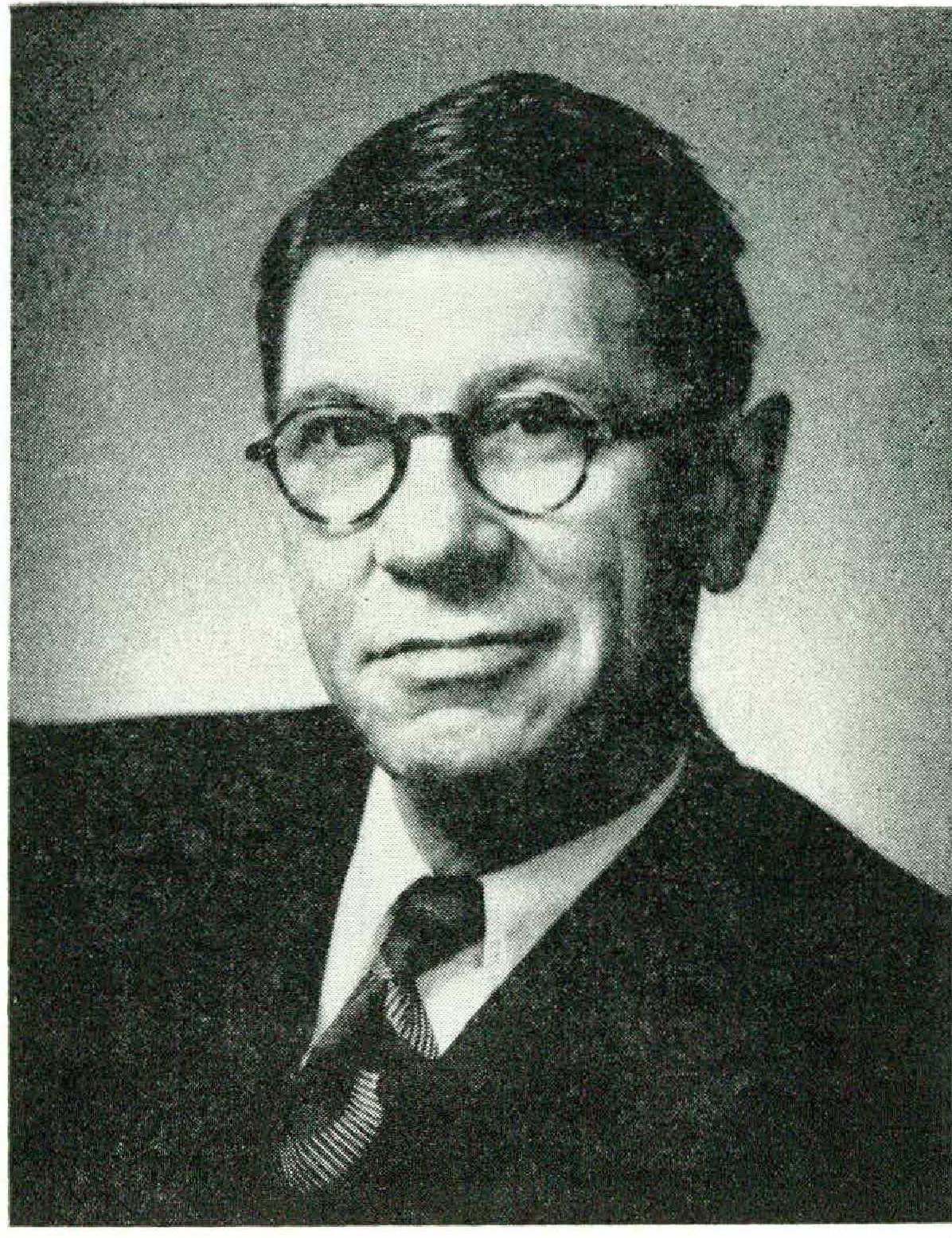
Ross is still all over the place for many of us, vitally stalking the corridors of our lives, disturbed and disturbing, fretting, stimulating, more evident in death than the living presence of ordinary men. A photograph of him‚ full face, almost alive with a sense of contained restlessness, hangs on a wall outside his old office. 1I am sure he had just said to the photographer, “I haven’t got time for this.”That’s what he said, impatiently, to anyone — doctor, lawyer, taxman — who interrupted, even momentarily, the stream of his dedicated energy. Unless a meeting, conference, or consultation touched somehow upon the working of his magazine, he began mentally pacing.
I first met Harold Ross in February, 1927. when his weekly was just two years old. He was thirty-four and I was thirty-two. The New Yorker had printed a few small pieces of mine, and a brief note from Ross had asked me to stop in and see him some day when my job as a reporter for the New York Evening Post chanced to take me uptown. Since I was getting only forty dollars a week and wanted to work for the New Yorker, I showed up at his office the next day. Our meeting was to become for me the first of a thousand vibrant memories of this exhilarating and exasperating man.
You caught only glimpses of Ross, even if you spent a long evening with him. He was always in mid-flight, or on the edge of his chair, alighting or about to take off. He won’t sit still in anybody’s mind long enough for a full-length portrait. After six years of thinking about it, I realized that to do justice to Harold Ross I must write about him the way he talked and lived — leaping from peak to peak. What follows here is a monologue montage of that first day and of half a dozen swift and similar sessions. He was standing behind his desk, scowling at a manuscript lying on it, as if it were about to lash out at him. I had caught glimpses of him at the theater and at the Algonquin and, like everybody else, was familiar with the mobile face that constantly changed expression, the carrying voice, the eloquent large-fingered hands that were never in repose but kept darting this way and that to emphasize his points or running through the thatch of hair that stood straight up until Ina Claire said she would like to take her shoes off and walk through it. That got into the gossip columns and Ross promptly had his barber flatten down the pompadour.
He wanted, first of all, to know how old I was, and when I told him it set him off on a lecture. “Men don’t mature in this country, Thurber,” he said. “They’re children. I was editor of the Stars and Stripes when I was twenty-five. Most men in their twenties don’t know their way around yet. I think it’s the goddam system of women schoolteachers.” He went to the window behind his desk and stared disconsolately down into the street, jingling coins in one of his pants pockets. I learned later that he made a point of keeping four or five dollars worth of change in this pocket because he had once got stuck in a taxi, to his vast irritation, with nothing smaller than a tendollar bill. The driver couldn’t change it and had to park and go into a store for coins and bills, and Ross didn’t have time for that.
I told him that I wanted to write, and he snarled, “Writers are a dime a dozen, Thurber. What I want is an editor. I can’t find editors. Nobody grows up. Do you know English?” I said I thought I knew English, and this started him off on a subject with which I was to become intensely familiar. “Everybody thinks he knows English,” he said, “but nobody does. I think it’s because of the goddam women schoolteachers.” He turned away from the window and glared at me as if I were on the witness stand and he were the prosecuting attorney. “I want to make a business office out of this place, like any other business office,” he said. “I’m surrounded by women and children. We have no manpower or ingenuity. I never know where anybody is, and I can’t find out. Nobody tells me anything. They sit out there at their desks, getting me deeper and deeper into God knows what. Nobody has any self-discipline, nobody gets anything done. Nobody knows how to delegate anything. What I need is a man who can sit at a central desk and make this place operate like a business office, keep track of things, find out where people are. I am, by God, going to keep sex out of this office — sex is an incident. You’ve got to hold the artists’ hands. Artists never go anywhere, they don’t know anybody, they’re antisocial.”
Ross was never conscious of his dramatic gestures, or of his natural gift of theatrical speech. At times he seemed to be on stage, and you half expected the curtain to fall on such an agonized tagline as “God, how I pity me!” Anthony Ross played him in Wolcott Gibbs’s comedy Season in the Sun, and an old friend of his, Lee Tracy, was Ross in a short-lived play called Metropole, written by a former secretary of the editor. Ross sneaked in to see the Gibbs play one matinee, but he never saw the other one. I doubt if he recognized himself in the Anthony Ross part. I sometimes think he would have disowned a movie of himself, sound track and all.
He once found out that I had done an impersonation of him for a group of his friends at Dorothy Parker’s apartment, and he called me into his office. “I hear you were imitating me last night, Thurber,” he snarled. “I don’t know what the hell there is to imitate — go ahead and show me.” All this time his face was undergoing its familiar changes of expression and his fingers were flying. His flexible voice ran from a low register of growl to an upper register of what I can only call Western quacking. It was an instrument that could give special quality to such Rossisms as “Done and done!” and “You have me there!” and “Get it on paper!” and such a memorable tagline as his farewell to John McNulty on that writer’s departure for Hollywood: “Well, God bless you, McNulty, goddam it.”
Ross was, at first view, oddly disappointing. No one, I think, would have picked him out of a line-up as the editor of the New Yorker. Even in a dinner jacket he looked loosely informal, like a carelessly carried umbrella. He was meticulous to the point of obsession about the appearance of his magazine, but he gave no thought to himself. He was usually dressed in a dark suit, with a plain dark tie, as if for protective coloration. In the spring of 1927 he came to work in a black hat so unbecoming that his secretary, Elsie Dick, went out and bought him another one. “What became of my hat?" he demanded later. “I threw it away,” said Miss Dick. “It was awful.”He wore the new one without argument. Miss Dick, then in her early twenties, was a calm, quiet girl, never ruffled by Ross’s moods. She was one of the few persons to whom he ever gave a photograph of himself. On it he wrote, “For Miss Dick, to whom ! owe practically everything.” She could spell, never sang, whistled, or hummed, knew how to fend off unwanted visitors, and had an intuitive sense of when the coast was clear so that he could go down in the elevator alone and not have to talk to anybody, and these things were practically everything.
IN THOSE early years the magazine occupied a floor in the same building as the Saturday Review of Literature on West 45th Street. Christopher Morley often rode in the elevator, a tweedy man, smelling of pipe tobacco and books, unmistakably a literary figure. I don’t know that Ross ever met him. “I know too many people,” he used to say. The editor of the New Yorker, wearing no mark of his trade, strove to be inconspicuous and liked to get to his office in the morning, if possible, without being recognized and greeted.
From the beginning Ross cherished his dream of a Central Desk at which an infallible omniscience would sit, a dedicated genius, out of Technology by Mysticism, effortlessly controlling and coördinating editorial personnel, contributors, office boys, cranks and other visitors, manuscripts, proofs, cartoons, captions, covers, fiction, poetry, and facts, and bringing forth each Thursday a magazine at once funny, journalistically sound, and flawless. This dehumanized figure, disguised as a man, was a goal only in the sense that the mechanical rabbit of a whippet track is a quarry. Ross’s mind was always filled with dreams ol precision and efficiency beyond attainment, but exciting to contemplate.
This conception of a Central Desk and its superhuman engineer was the largest of half a dozen intense preoccupations. You could see it smoldering in his eyes if you encountered him walking to work, oblivious of passers-by, his tongue edging reflectively out of the corner of his mouth, his round-shouldered torso seeming, as Lois Long once put it, to be pushing something invisible ahead of him. He had no Empire Urge, unlike Henry Luce and a dozen other founders of proliferating enterprises. He was a onemagazine‚ one-project man, (His financial interest in Dave Chasen’s Hollywood restaurant was no more central to his ambition than his onetime investment in a paint-spraying machine — I don’t know whatever became of that.) He dreamed of perfection, not of power or personal fortune. He was a visionary and a practicalist, imperfect at both, a dreamer and a hard worker, a genius and a plodder, obstinate and reasonable, cosmopolitan and provincial, wide-eyed and world-weary. There is only one word that fits him perfectly, and the word is Ross.
When I agreed to work for the New Yorker as a desk man, it was with deep misgivings. I felt that Ross didn’t know, and wasn’t much interested in finding out, anything about me. He had persuaded himself, without evidence, that I might be just the wonder man he was looking for, a mistake he had made before and was to make again in the case of other newspapermen, including James M. Cain, who was just about as miscast for the job as I was. Ross’s wishful thinking was, it seems to me now, tinged with hallucination. In expecting to find, in everybody that turned up, the Ideal Executive, he came to remind me of the Charlie Chaplin of The Gold Rush, who, snowbound and starving with another man in a cabin teetering on the edge of a cliff, suddenly beholds his companion turning into an enormous tender spring chicken, wonderfully edible, supplied by Providence. “Done and done, Thurber,” said Ross. “I’ll give you $75 a week. If you write anything, goddam it, your salary will take care of it.” Later that afternoon he phoned my apartment and said, “I’ve decided to make that $90 a week, Thurber.” When my first check came through it was for $100. “I couldn’t take advantage of a newspaperman,” Ross explained.
By the spring of 1927 Ross’s young New Yorker was safely past financial and other shoals that had menaced its launching, skies were clearing, the glass was rising, and everybody felt secure except the skipper of the ship. From the first day I met him till the last time I saw him, Ross was like a sleepless, apprehensive sea captain pacing the bridge, expecting any minute to run aground, collide with something nameless in a sudden fog, or find his vessel abandoned and adrift, like the Mary Celeste. When, at the age of thirty-two, Ross had got his magazine afloat with the aid of Raoul Fleischmann and a handful of associates, the proudest thing he had behind him was his editorship of the Stars and Stripes in Paris from 1917 to 1919.
As the poet is born a poet, Ross was born a newspaperman, “He could not only get it, he could write it,” said his friend Herbert Asbury. Ross got it and wrote it for seven different newspapers before he was twenty-five years old, beginning as a reporter for the Salt Lake City Tribune when he was only fourteen. One of his assignments there was to interview the madam of a house of prostitution. Always self-conscious and usually uncomfortable in the presence of all but his closest women friends, the young reporter began by saying to the bad woman (he divided the other sex into good and bad), “How many fallen women do you have?”
Later he worked for the Marysville (California) Appeal, Sacramento Union, Panama Star and Herald, New Orleans Item, Atlanta Journal, and San Francisco Call.
The wanderer — some of his early associates called him “Hobo” — reached New York in 1919 and worked for several magazines, including Judge and the American Legion Weekly, his mind increasingly occupied with plans for a new kind of weekly to be called the New Yorker. It was born at last, in travail and trauma, but he always felt uneasy as the R of the F-R Publishing Company, for he had none of the instincts and equipment of the businessman except the capacity for overwork and overworry. In his new position of high responsibility he soon developed the notion, as Marc Connelly has put it, that the world was designed to wear him down. A dozen years ago I found myself almost unconsciously making a Harold Ross out of one King Clode, a rugged pessimist in a fairy tale I was writing. At one point the palace astronomer rushed into the royal presence crying, “A huge pink comet, Sire, just barely missed the earth a little while ago. It made an awful hissing sound, like hot irons stuck in water.” “They aim these things at me!” said Clode. “Everything is aimed at me.” In this fantasy Clode pursues a fabulously swift white deer which, when brought to bay, turns into a woman, a parable that parallels Ross’s headlong quest for the wonder man who invariably turned into a human being with feet of clay, as useless to Ross as any enchanted princess.
Among the agencies in mischievous or malicious conspiracy to wear Ross down were his own business department (“They’re not only what’s the matter with me, they’re what’s the matter with the country”), the state and federal tax systems, women and children (all the females and males that worked for him), temperament and fallibility in writers and artists, marriages and illnesses — to both of which his staff seemed especially susceptible — printers, engravers, distributors, and the like, who seemed to aim their strikes and illtimed holidays directly at him, and human nature in general.
HAROLD WALLACE Ross, born in Aspen, Colorado, in 1892, in a year and decade whose cradles were filled with infants destined to darken his days and plague his nights, was in the midst of a project involving the tearing down of walls the week I started to work. When he outlined his schemes of reconstruction, it was often hard to tell where rationale left off and mystique began. (How he would hate those smart-aleck words.) He seemed to believe that certain basic problems of personnel might just possibly be solved by some fortuitous rearrangement of the offices. Time has mercifully foreshortened the months of my ordeal as executive editor, and only the highlights of what he called “practical matters” still remain. There must have been a dozen Through the Looking Glass conferences with him about those damned walls. As an efficiency expert or construction engineer, I was a little boy with an alarm clock and a hammer, and my utter incapacity in such a role would have been apparent in two hours to an unobsessed man. I took to drinking Martinis at lunch to fortify myself for the tortured afternoons of discussion.
“Why don’t we put the walls on wheels?” I demanded one day. “We might get somewhere with adjustable walls.”
Ross’s eyes lighted gloomily, in an expression of combined hope and dismay which no other face I have known could duplicate. “The hell with it,” he said. “You could hear everybody talking. You could see everybody’s feet.”
He and I worked seven days a week, often late into the night, for at least two months, without a day off. I began to lose weight, editing factual copy for sports departments and those dealing with new apartments, women’s fashions, and men’s wear.
“Gretta Palmer keeps using words like introvert and extrovert,” Ross complained one day. “I’m not interested in the housing problems of neurotics. Everybody’s neurotic. Life is hard, but I haven’t got time for people’s personal troubles. You’ve got to watch Woollcott and Long and Parker — they keep trying to get double meanings into their stuff to embarrass me. Question everything. We damn near printed a newsbreak about a girl falling off the roof. That’s feminine hygiene, somebody told me just in time. You probably never heard the expression in Ohio.”
“In Ohio,” I told him, “we say the mirror cracked from side to side.”
“I don’t want to hear about it,” he said.
He nursed an editorial phobia about what he called the functional: “bathroom and bedroom stuff.” Years later he deleted from a Janet Flanner “London Letter” a forthright explanation of the long nonliquid diet imposed upon the royal family and important dignitaries during the coronation of George VI. He was amused by the drawing of a water plug squirting a stream at a small astonished dog, with the caption “News,” but he wouldn’t print it. “So-and-so can’t write a story without a man in it carrying a woman to a bed,” he wailed. And again, “I’ll never print another O’Hara story I don’t understand. I want to know what his people are doing.” He was depressed for weeks after the appearance of a full-page Arno depicting a man and a girl on a road in the moonlight, the man carrying the back seat of an automobile. “Why didn’t somebody tell me what it meant?” he asked. Ross had insight, perception, and a unique kind of intuition, but they were matched by a dozen blind spots and strange areas of ignorance, surprising in a virile and observant reporter who had knocked about the world and lived two years in France. There were so many different Rosses, conflicting and contradictory, that the task of drawing him in words sometimes appears impossible, for the composite of all the Rosses should produce a single unmistakable entity: the most remarkable man I have ever known and the greatest editor. “If you get him down on paper,” Wolcott Gibbs once warned me, “nobody will believe it.”
I MADE deliberate mistakes and let things slide as the summer wore on, hoping to be demoted to rewriting the “Talk of the Town,” with time of my own in which to write “casuals.” That was Ross’s word for fiction and humorous pieces of all kinds. Like “Profile” and “Reporter at Large” and “Notes and Comment,” the word “casual” indicated Ross’s determination to give the magazine an offhand, chatty, informal quality. Nothing was to be labored or studied, arty, literary, or intellectual. Formal short stories and other “formula stuff” were under the ban. Writers were to be played down; the accent was on content, not personalities. “All writers are writer-conscious,” he said a thousand times.
One day he came to me with a letter from a men’s furnishing store which complained that it wasn’t getting fair treatment in the “As to Men” department. “What are you going to do about that?” he growled. I swept it off my desk onto the floor. “The hell with it,” I said. Ross didn’t pick it up, just stared at it dolefully. “That’s direct action, anyway,” he said. “Maybe that’s the way to handle grousing. We can’t please everybody.” Thus he rationalized everything I did, steadfastly refusing to perceive that he was dealing with a writer who intended to write or to be thrown out. “Thurber has honesty,” he told Andy White, “admits his mistakes, never passes the buck. Only editor with common sense I’ve ever had.”
I finally told Ross, late in the summer, that I was losing weight, my grip, and possibly my mind, and had to have a rest. He had not realized I had never taken a day off, even Saturday or Sunday. “All right, Thurber,” he said, “but I think you’re wearing yourself down writing pieces. Take a couple of weeks, anyway. Levick can hold things down while you’re gone. I guess.”
It was, suitably enough, a dog that brought Ross and me together out of the artificiality and stuffiness of our strained and mistaken relationship. I went to Columbus on vacation and took a Scotty with me, and she disappeared out there. It took me two days to find her, with the help of newspaper ads and the police department. When I got back to the New Yorker, two days late, Ross called me into his office about seven o’clock, having avoided me all day. He was in one of his worst God-how-I-pity-me moods, a state of mind often made up of monumentally magnified trivialities. I was later to see this mood develop out of his exasperation with the way Niven Busch walked, or the way Ralph Ingersoll talked, or his feeling that “White is being silent about something and I don’t know what it is.” It could start because there weren’t enough laughs in “Talk of the Town,” or because he couldn’t reach Arno on the phone, or because he was suddenly afflicted by the fear that nobody around the place could “find out the facts.” (Once a nerve-racked editor yelled at him, “Why don’t you get Westinghouse to build you a fact-finding machine?”)
This day, however, the Ossa on the Pelion of his molehill miseries was the lost and found Jeannie. Thunder was on his forehead and lightning in his voice. “I understand you’ve overstayed your vacation to look for a dog,” he growled. “Seems to me that was the act of a sis.” (His vocabulary held some quaint and unexpected words and phrases out of the past. “They were spooning,” he told me irritably about some couple years later, and, “I think she’s stuck on him.”) The word sis, which I had last heard about 1908, the era of skidoo, was the straw that shattered my patience. Even at sixty-two my temper is precarious, but at thirty-two it had a hair trigger.
The scene that followed was brief, loud, and incoherent. I told him what to do with his goddam magazine, that I was through, and that he couldn’t call me a sis while sitting down, since it was a fighting word. I offered to fight him then and there, told him he had the heart of a cast-iron lawn editor, and suggested that he call in one of his friends to help him. Ross hated scenes, physical violence or the threat of it, temper and the unruly.
“Who would you suggest I call in?” he demanded, the thunder clearing from his brow.
“Alexander Woollcott!” I yelled, and he began laughing.
His was a wonderful, room-filling laugh when it came, and this was my first experience of it. It cooled the air like summer rain. An hour later we were having dinner together at Tony’s after a couple of drinks, and that night was the beginning of our knowledge of each other underneath the office make-up‚ and of a lasting and deepening friendship. “I’m sorry, Thurber,” he said. “I’m married to this magazine. It’s all I think about. I knew a dog I liked once, a shepherd dog, when I was a boy. I don’t like dogs as such, though, and I’ll, by God, never run a department about dogs — or about baseball, or about lawyers.” His eyes grew sad; then he gritted his teeth, always a sign that he was about to express some deep antipathy, or grievance, or regret. “I’m running a column about women’s fashions,” he moaned, “and I never thought I’d come to that.” I told him the “On and Off the Avenue” department was sound, a word he always liked to hear, but used sparingly. It cheered him up.
It wasn’t long after that fateful night that Ross banged into my office one afternoon. He paced around for a full minute without saying anything, jingling the coins in his pocket. “You’ve been writing,” he said finally. “I don’t know how in hell you found time to write. I admit I didn’t want you to. I could hit a dozen writers from here with this ash tray. They’re undependable, no system, no self-discipline. Dorothy Parker says you’re a writer, and so does Baird Leonard.” His voice rose to its level of high decision. “All right then, if you’re a writer, write! Maybe you’ve got something to say.” He gave one of his famous prolonged sighs, an agonized protesting acceptance of a fact he had been fighting.
From then on I was a completely different man from the one he had futilely struggled to make me. No longer did he tell White that I had common sense. I was a writer now, not a hand-holder of artists, but a man who needed guidance. Years later he wrote my wife a letter to which he appended this postscript: “Your husband’s opinion on a practical matter of this sort would have no value.” We never again discussed tearing down walls, the Central Desk, the problems of advertisers, or anything else in the realm of the practical. If a manuscript was lost, “Thurber lost it.”Once he accused me of losing a typescript that later turned up in an old brief case of his own. This little fact made no difference. “If it hadn’t been there&‚” he said, “Thurber would have lost it.”As I became more and more “productive,” another of his fondest words, he became more and more convinced of my helplessness. “Thurber hasn’t the vaguest idea what goes on around here,” he would say.
I became one of the trio about whom he fretted and fussed continually—the others were Andy White and Wolcott Gibbs. His admiration of good executive editors, except in the case of William Shawn, never carried with it the deep affection he had for productive writers. His warmth was genuine, but always carefully covered over by gruffness or snarl or a semblance of deep disapproval. Once, and only once, he took White and Gibbs and me to lunch at the Algonquin, with all the fret and fuss of a mother hen trying to get her chicks across a main thoroughfare. Later, back at the office, I heard him saying to someone on the phone, “I just came from lunch with three writers who couldn’t have got back to the office alone.”
Our illnesses, or moods, or periods of unproductivity were a constant source of worry to him. He visited me several times when I was in a hospital undergoing a series of eye operations in 1940 and 1941. On one of these visits, just before he left he came over to the bed and snarled, “Goddam it, Thurber, I worry about you and England.” England was at that time going through the German blitz. As my blindness increased. so did his concern. One noon he stopped at a table in the Algonquin lobby where I was having a single cocktail with some friends before lunch. That afternoon he told White or Gibbs, “Thurber’s over at the Algonquin lacing ‘em in. He’s the only drinking blind man I know.”
He wouldn’t go to the theater the night The Male Animal opened in January, 1940, but he wouldn’t go to bed, either, until he had read the reviews, which fortunately were favorable. Then he began telephoning around town until, at a quarter of two in the morning, he reached me at Bleeck’s. I went to the phone. The editor of the New Yorker began every phone conversation by announcing “Ross,” a monosyllable into which he was able to pack the sound and sign of all his worries and anxieties. His loud voice seemed to fill the receiver to overflowing. “Well, God bless you’ Thurber,” he said warmly, and then came the old familiar snarl: “Now, goddam it, maybe you can get something written for the magazine,” and he hung up. but I can still hear him, over the years, loud and snarling, fond and comforting.
(To be continued)