The General's Boots
WILLIAM K. GOOLRICK, JR., spent most of his six years in the Army on General Patton’s staff. A Virginian by birth and a graduate of the Virginia Military Institute, he is now on the staff of LIFE in New York.
Whenever I see a transcript of a presidential press conference in the New York Times, I am a little jealous of the reporters who can ask the President of the United States all those questions. Ever since World War II, I have had a question I’ve wanted to ask General Eisenhower, It has nothing to do with politics, the budget, or international affairs. I’d just like to know whether the President ever wore cavalry boots.
My curiosity about the boots goes back to the summer of 1943. I was on General Patton’s staff, stationed in Mostaganem, Algeria, about forty miles east of Oran. General Patton had been called back from Tunisia to plan the invasion of Sicily, and when the plans were under way, General Eisenhower flew down from his headquarters in Algiers to look them over.
A short time earlier an epidemic of cavalry boots had broken out in our headquarters. An officer had shown up in a pair one day, and they looked so good that most of the officers were wearing boots just like them within a week or so. The boots were made of soft leather that was easy to polish, and with their tops cut off they were snappy tank boots.
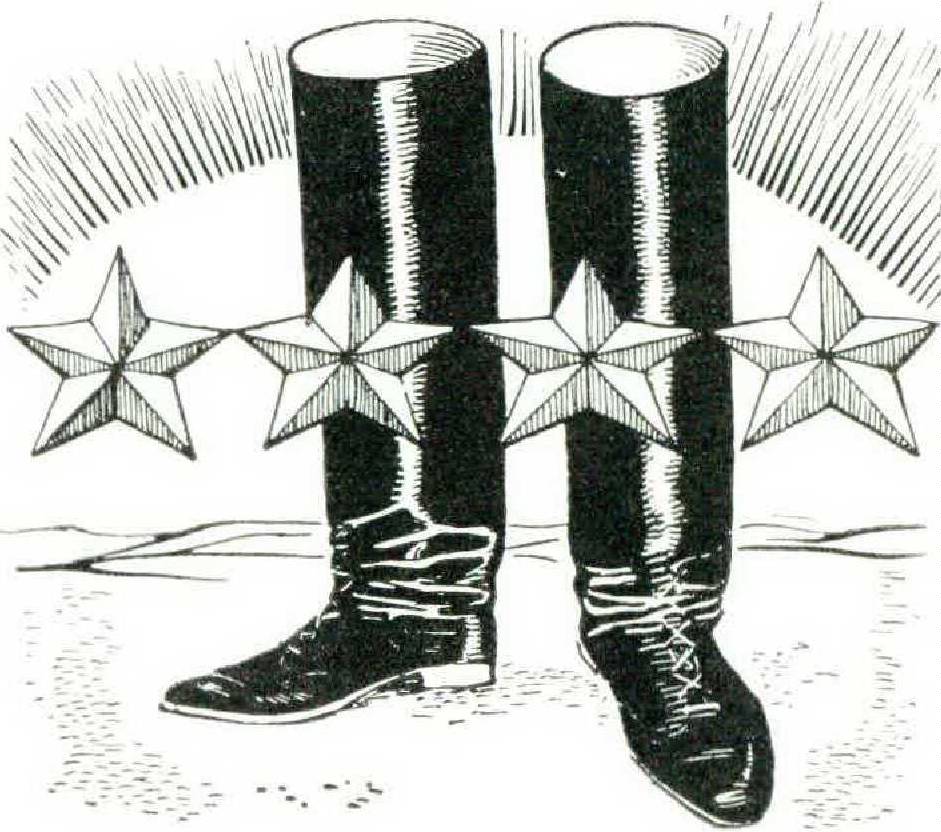
A large delegation of generals, colonels, and aides went out to the airport to meet General Eisenhower and to escort him to our headquarters. I was one of those flunkies whose chief purpose in life was to stand outside the general’s office and snap to attention whenever anybody of any importance passed by. I had just fulfilled my chief purpose when I heard General Eisenhower’s booming voice say to General Patton, “Georgie, that’s a fine-looking pair of boots you’re wearing.”
His remark was a signal for immediate action in General Patton’s headquarters. The chief of staff instantly stuck his hand in his pocket, fished out several hundred francs, handed them to me, and said, “Go get General Eisenhower a pair of those boots.”
“What size, sir?”
He went into Patton’s office, found out the size from General Eisenhower, came back, and gave it to me. “You be back here with those boots in an hour,” he said. “General Eisenhower’s leaving in an hour.”
I had lived in obscurity until that moment, but I knew from military school that great military reputations had been made from smaller opportunities than the one at hand, and that success in war goes to the man who seizes the initiative and exploits it boldly and fearlessly.
Quickly I called the quartermaster and asked him where I could get the boots.
“I’m not sure where they came from,” he said. “Sergeant Walsh got mine for me, and he’s not here now. I think he said he got them from the Oran base section.”
“You mean I’d have to go all the way to Oran for them?”
“No, I think the base section has an outfit here in Mostaganem, but they just came here a few days ago, and I don’t know where they’re set up. You could call Oran, but all they’d probably be able to tell you is that they have an outfit in Mostaganem. They probably wouldn’t know the address, because that outfit hasn’t been here long, and the base section never knows anything anyway. Why don’t you call our QM depot and maybe one of the men there would know where the base section outfit is.”
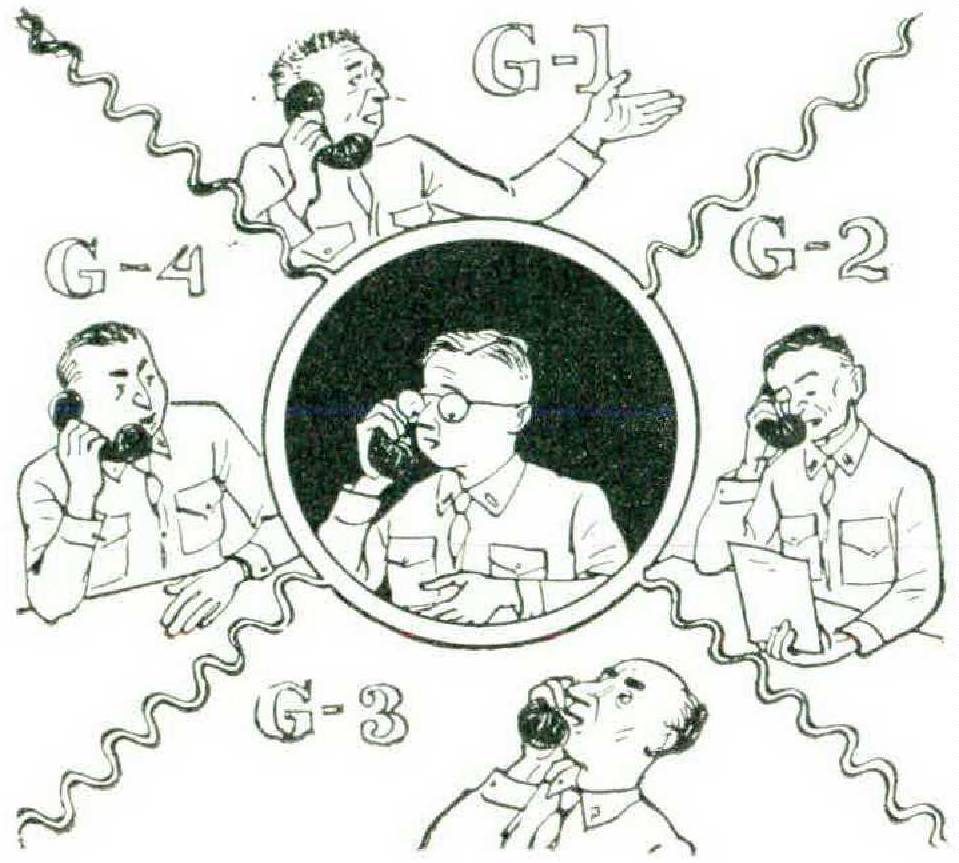
I called the QM depot, but the man on duty there didn’t know anything about the base section or the boots. Most of the senior officers in our headquarters were wearing the boots, so I decided to try some of them. I called the G-l (personnel), the G-2 (intelligence), the G-3 (operations), the G-4 (supply), the adjutant general, the signal officer, the medical officer, the ordnance officer, and even the chaplain, but not one of them could help me.
I got a jeep and told the driver to go down the main street of Mostaganem, but I found no sign of a QM depot there. After that we drove a mile or so along the road to Oran where several Army outfits were bivouacked. At four or five of the outfits we stopped and I asked whether anybody knew anything about the base section QM, but nobody there had ever heard of it.
“Maybe the base section doesn’t have a QM depot in Mostaganem,” I thought. “Maybe there aren’t any boots left. Maybe they never even had the boots. What will General Patton think of somebody who can’t even find a QM depot?”
On the way back through Mostaganem I saw a supply sergeant walking along the street. I knew him. He was one of those wily old regular army supply sergeants who can find anything if he wants to. We pulled up beside the sergeant, and I asked him where the base section was.
“It’s down a side street about four blocks from headquarters,” he said. “I’ll show you where it is.”
When we rushed into the depot, we found a second lieutenant on duty. He was slouched in a chair with his feet propped on a desk. He was wearing a pair of brightly shining cavalry boots.
“Lieutenant,” I said, “I’ve gotta have a pair of those boots.”
“Have you got a requisition?”
“No. But I gotta have them for General Eisenhower. I need them right away. He’s leaving in a few minutes.”
“Now I’ve heard it all. What some guys won’t do for a pair of boots!”
“I’m not kidding, lieutenant. General Eisenhower is at General Patton’s headquarters right now, and he’s leaving in a few minutes. I have to have a pair of those boots for him.”
“Nobody gets those boots without a requisition.”
“Can’t somebody give me a verbal O.K.?”
“The only man who can do that is Colonel Barker at base section.”
“Lieutenant,” I said frantically, “I haven’t got time to call him. I can’t tell him they’re for General Eisenhower, because I’m not supposed to say over the phone that General Eisenhower’s in Mostaganem.”
“That’s your problem, not mine. II Colonel Barker says it’s O.K., it’s O.K.”
After an almost interminable time I managed to get Oran on the line, and then after several wrong numbers I got a voice that said it was Colonel Barker.
I told him what I wanted. My request moved him to a lengthy soliloquy on requisitions, forms in triplicate, proper procedure, and a number of other subjects that are dear to the heart of the quartermaster.
“But, sir. these are for a V.I.P., a very important person.”
“I can’t help that. You have to follow the proper procedure. We have an order from General Eisenhower saying that nothing is to be issued from any QM depot without the proper authorization.”
I hung up.
“The colonel says it’s O.K.,” I said.
It worked. The lieutenant got up, walked to the rear of the depot, and came back with a pair of boots. I signed a receipt.
After we left the depot, I looked at my watch. An hour and fifteen minutes had passed since the chief of staff had told me to get the boots. I knew that General Eisenhower had left. All that I could do was to go back to headquarters and tell the chief of staff that the lieutenant at the depot had made me late.
We drove back to headquarters, and when we came to the gate, we saw an officer standing in the road.
“Go right on out to the field,” he yelled. “General Eisenhower left ten minutes ago. You might be able to catch him if you hurry.”
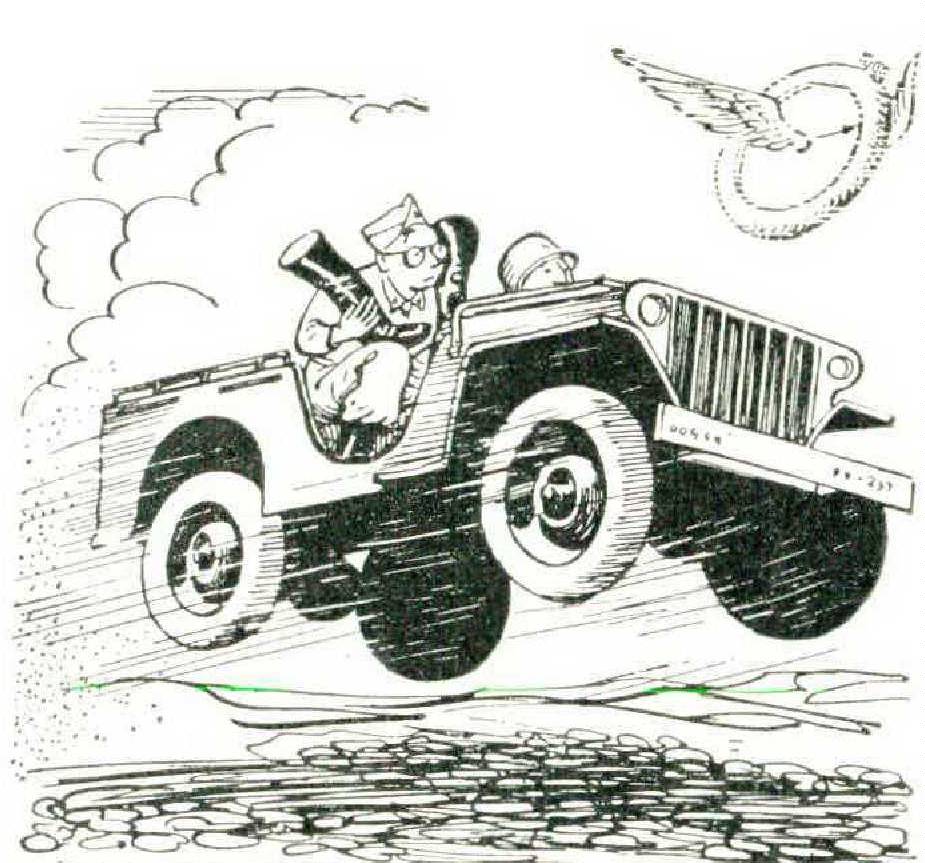
We went bounding and bouncing down the road as fast as the jeep would go. Over a rough winding African road we made the fourteen miles to the airport in a little more than twenty minutes.
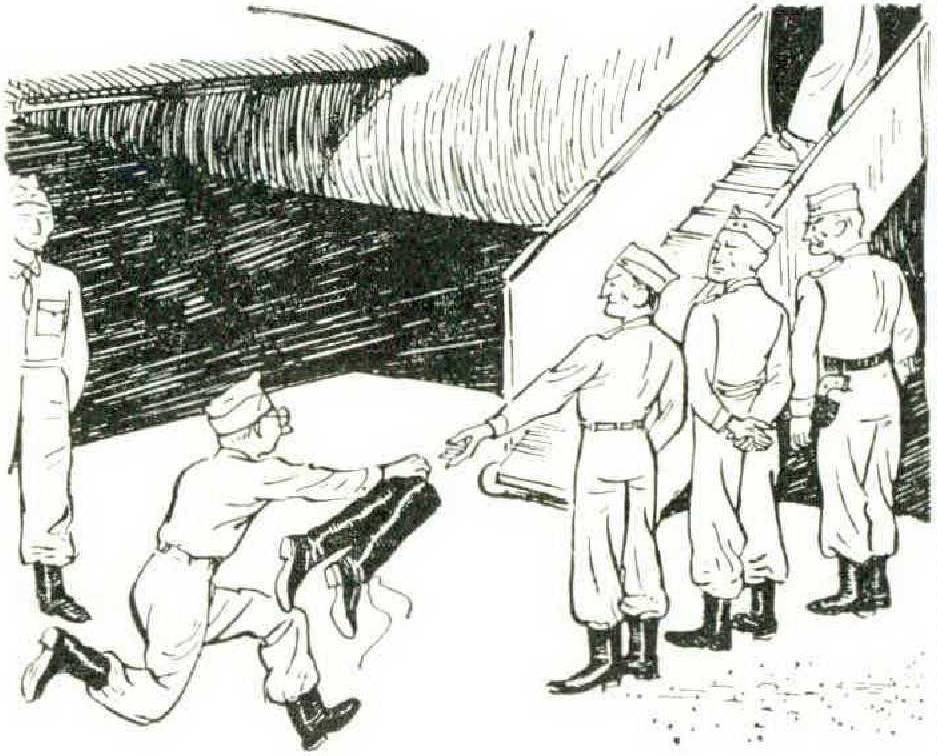
When we came to the edge of the field, we could see a group of people gathered beside the plane. We raced across the field at top speed and slid to a stop in a swirl of dust. I jumped out of the jeep, ran over to the plane, and handed the boots to a colonel, The colonel handed them to the chief of staff, who handed them to General Patton, who handed them to General Eisenhower. He said good-by, saluted, got in the plane, and flew away.