Aluminum: A Modern Success Story
An Atlantic Public Interest Advertisement
In previous Public Interest Advertisements, Aluminium Limited, independent Canadian aluminum producer, has told the story of aluminum, its properties, the expansion here and in Canada, and the future of the metal. Now, it reports on four typical American enterprises which have helped make aluminum the “world’s fastest growing metal. ”
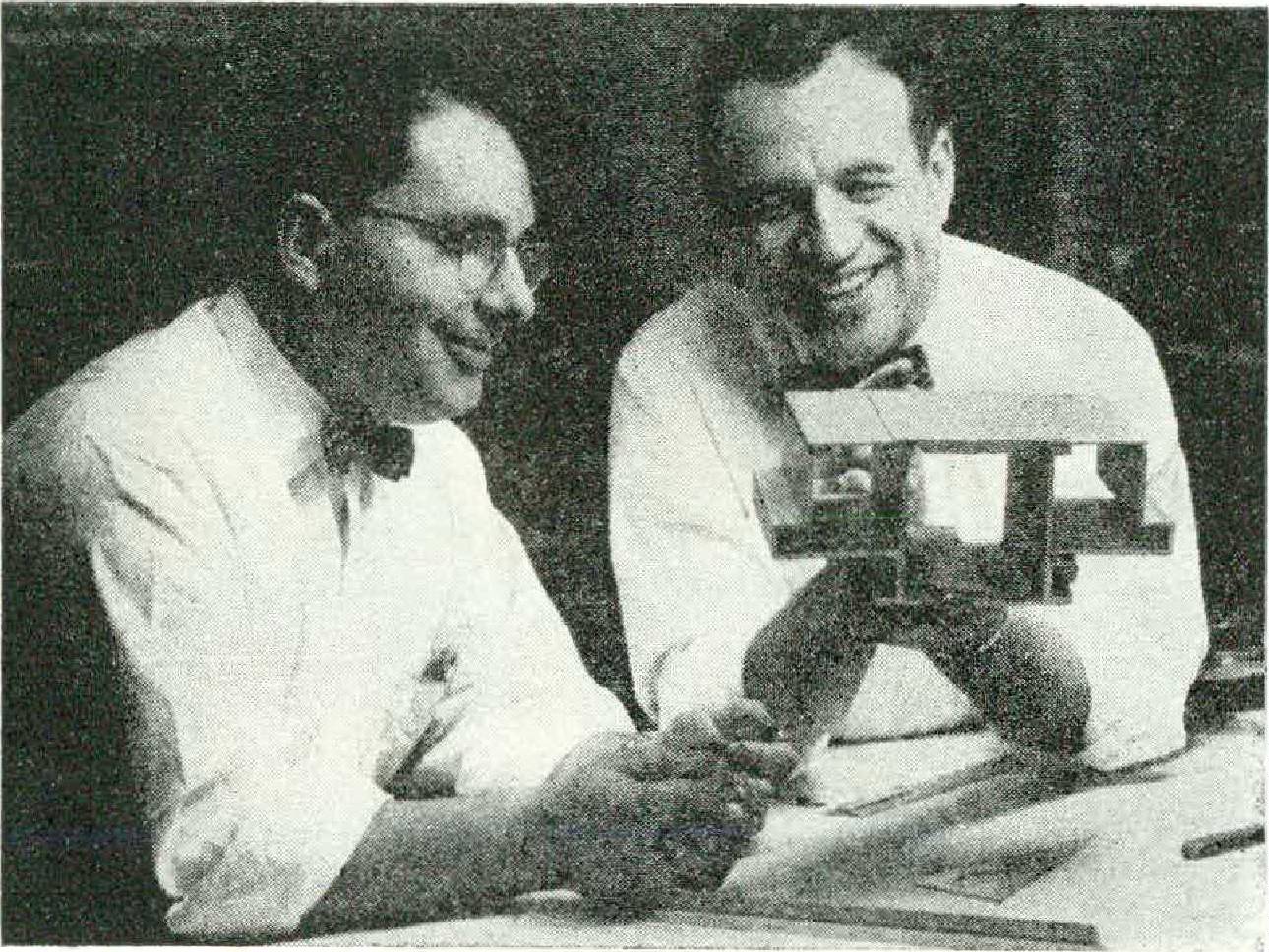
LIKE many other servicemen, Milton Smith wanted to set up his own business when he got out of the Navy in 1945.
He had one advantage many veterans didn’t have: He had built up a successful Venetian blind manufacturing company in Youngstown, Ohio, only two years after getting out of college.
After the war ended and Smith moved to Boston, he became convinced there was a big future for aluminum in New England. His own survey had shown that there wasn’t a manufacturer of aluminum trim in the region. So, in 1946, at the age of twenty-eight, he founded Trim Alloys, Inc,
Success didn’t come easily. Milton admits that if in those early years he had taken as much as $20 a week for himself, he probably would have bankrupted the business.
Up until 1951, Trim Alloys bought their extrusions—the shapes formed by squeezing preheated aluminum, like toothpaste, through a die—and turned them into trim for table and stair edging, sink frames, and other products. But by 1951 business had grown enough for Smith to think about making his own extrusions. (Diagram, next page.)
Using a knowledge of hydraulics he had picked up aboard submarines during the war, plus a set of borrowed blueprints, he did something most extruders wouldn’t attempt—he built his own extrusion press. The machine took more than a year to put together. But after a few kinks were ironed out, it ran smoothly. Later, as business continued to prosper, Mr. Smith bought two other presses.
Today, Trim Alloys has more than 100 employees, an annual payroll of more than $370,000, and annual sales of better than $2,000,000. Its products are shipped as far as Kansas City and Dallas. Among other things, the Boston concern does a brisk trade in gold-colored “anodized" aluminum trim for kitchen table edges and other uses.
As to the future, President Smith has big plans: Possibly a new plant, equipment to remelt the metal scrap from his plant, and he may start casting his own billets from the primary ingot he buys from the aluminum producers.
Looking back, he says: “Our whole program was undertaken with more nerve than anything else.”lint a report written recently for a Boston bank said the case of Trim Alloys proved there was a big potential for New England in aluminum fabricating. It commented that this potential was realized at Trim Alloys by “competent, aggressive management—despite little formal training or experience. ...”
There are hundreds of other success stories in aluminum fabricating, one of the fastest growing industries in the nation. They’re made up of many elements: daring, imagination, good business sense, and a growing public appreciation of aluminum’s qualities—lightness and beauty, strength, corrosionresistance, conductivity. One of the most important elements of all is a steady supply of primary ingot from aluminum smelters in this country and Canada.
Another success story that combines all these elements is to be found in Carrollton, Georgia, a pleasant, quiet farm community southwest of Atlanta. This used to be one of the nation’s leading cotton growing regions but the cotton industry has largely died out. Now, aluminum and its growing use in electrical transmission wire and cable are shaping men’s lives in Carrollton.
Seven years ago, an alert Carrollton businessman, Mr. Roy Richards, aware of this trend, set up the Southwire Company. It opened for business in 1950 with a handful of employees housed in one small building. Sales that year amounted to about a half-million dollars.
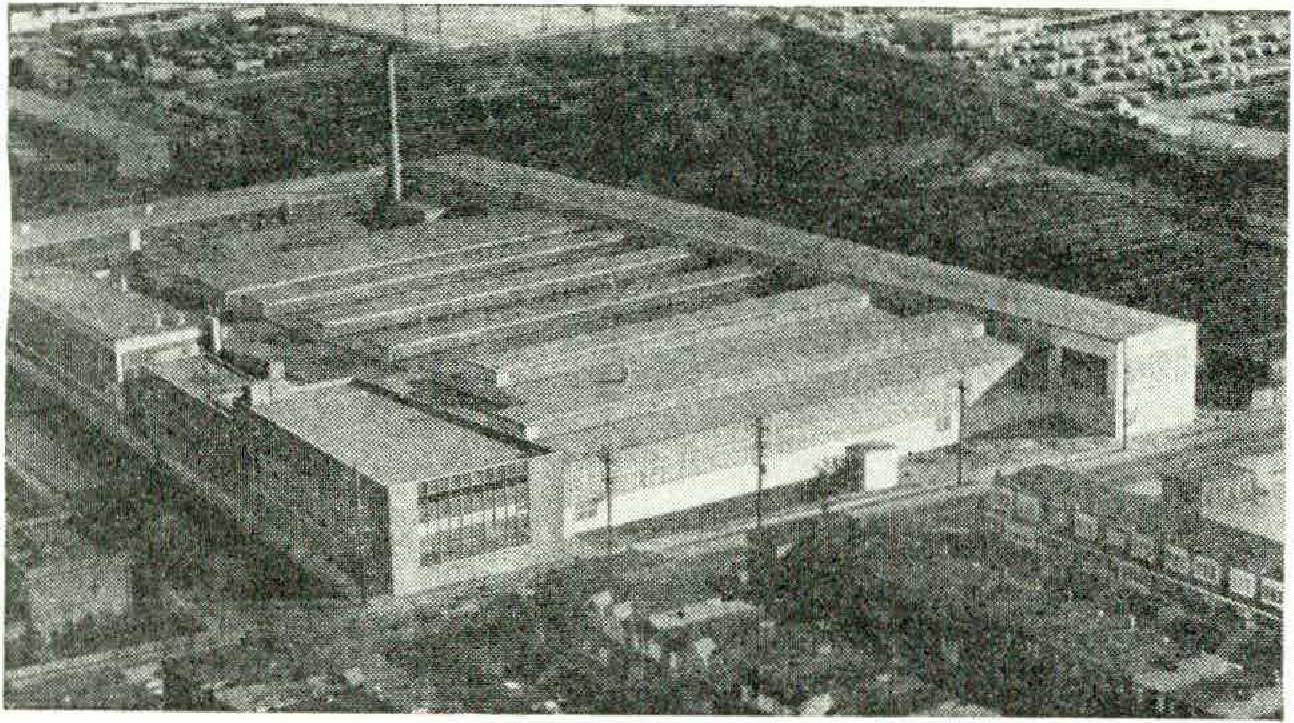
Today, Southwire has nearly 300 employees, working in a half-dozen aluminum-clad buildings with the latest equipment, including a unique “continuous casting” machine. Last year, they turned out more than fifteen times as much as in 1950—33,000,000 pounds of wire and cable—and gross sales rose to $12,000,000.
South wire’s output in its first year represented only 1 per cent of the U.S. cable business. Now the company is one of the leaders in its field. And, following the nation-wide trend toward replacement of copper and other metals with aluminum, Southwire has turned more and more to the light metal. Aluminum wire and cable made up almost two-thirds of Southwire’s production last year and copper’s share was down to a third.
Even though his company has increased its plant facilities and sales volume 50 per cent each year since it opened, Richards sees even more growth ahead. “We think the South will more than double its consumption of electricity by 1965, and thus need more and more wire and cable,” he says. “We’re not afraid to expand to meet this demand.”
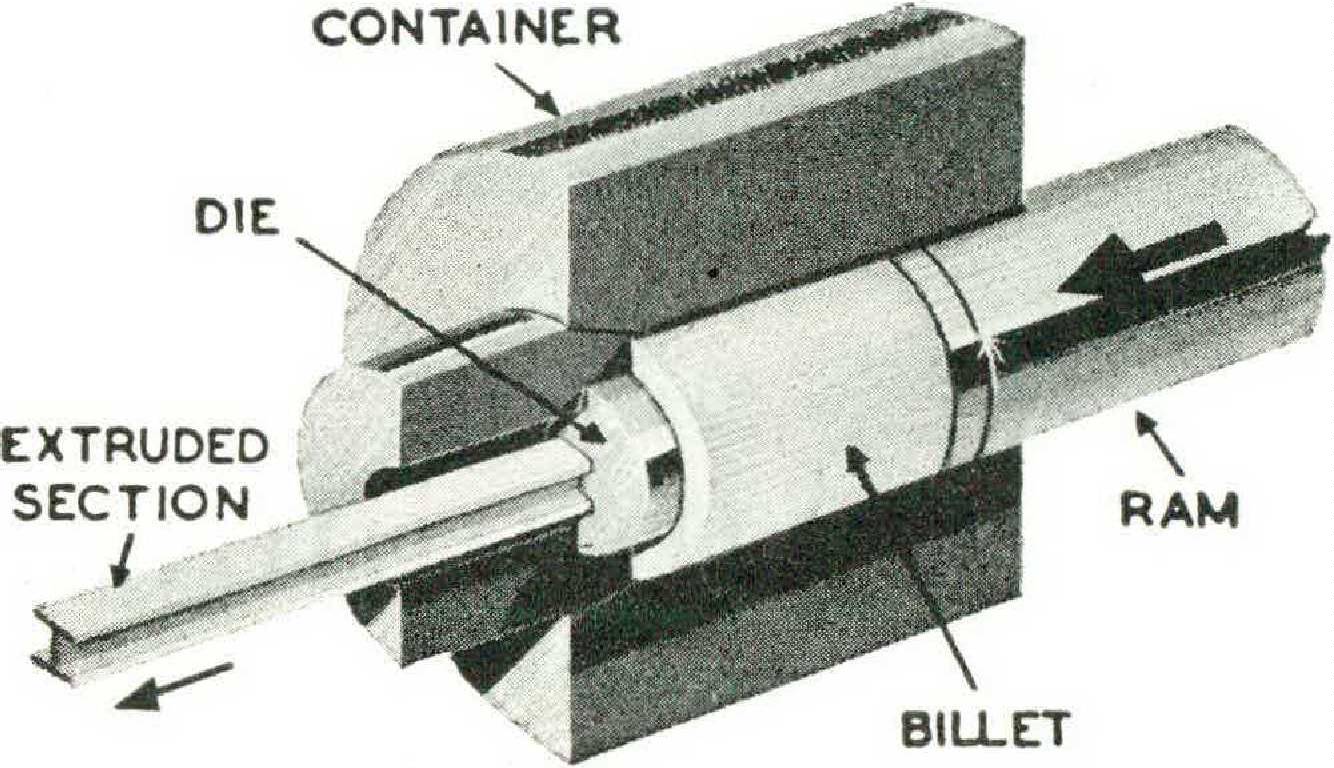
The Extrusion Process
While the use of aluminum in electrical equipment has been skyrocketing, so has its use in building and construction. One of the most successful companies to capitalize on this development is the Michael Flynn Manufacturing Company, of Philadelphia, another independent fabricator which looks to Canada for a growing part of its primary ingot needs.
An old-timer in this young business, Michael Flynn was organized in 1935 Lo make steel windows. By 1949 the company management saw that aluminum windows were the coming thing. That year they made their first window of the light metal. Company officials soon learned, just as Milton Smith had, that it ‘s cheaper to make extruded sections than to buy them, so a year later Michael Flynn put in its first extrusion press. A second was added in 1954.
Today, although steel windows still are an important part of Michael Flynn’s business, more than half its windows are made ot aluminum. The company now produces 10 per cent of all the aluminum residential and industrial windows made in the country. Last year gross sales of its “Lupton" windows and doors, and many other products, added up to $15,000,000. From an old plant and a handful of employees, Michael Flynn has grown to a modern factory in North Philadelphia employing 750 people.
One need only walk through the plant to sense the growth of aluminum in building and construction. The company is turning out big “curtain wall” sections, like those it installed in the 300 Park Avenue Building in New York and the Mall Building in Philadelphia. And it’s extruding big sections and making castings for twenty bridge and highway projects under way around the country. Michael Flynn bridge railings are going into the Hampton Roads, Virginia, tunnel project, the Fitzgerald Expressway in Boston, the Walt Whitman Bridge in Philadelphia, and many others.
Michael Flynn officials see a tremendous potential in bridges and highways, and feel the market for aluminum in the building held is relatively untapped.
Variety of Products
It’s a long way from urban Philadelphia to rural Bellefontaine, Ohio, but you’ll find the aluminum fabricating business prospering there, too.
Bellefontaine, a pretty town of 11,000 population some sixty miles northwest of Columbus, is the home of National Extrusions and Manufacturing Company. National’s story is that of a small company with a wide variety of quality products and an unusually strong technical background. It has shown solid growth since its birth seven years ago.
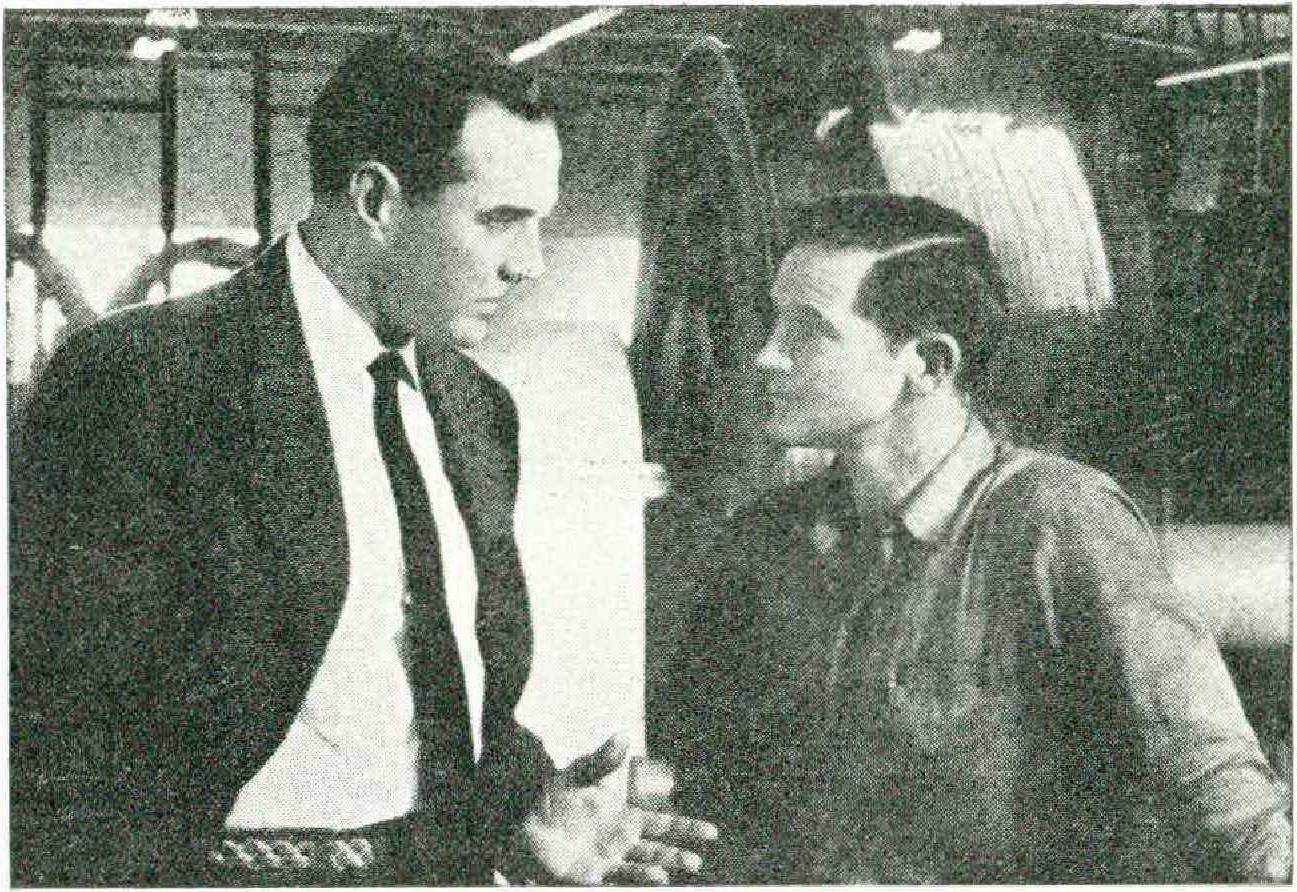
Joseph Schwerak, former chief engineer of a large aluminum company, struck out on his own in 1950. He founded National and put Jim Emmons, his former assistant, in charge as president. Schwerak, now National’s board chairman, recalls that the company got under way with thirty employees, and that its first job was to make a batch of aluminum storm windows.
Today, seventy-five people work for National, gross sales run about $1,500,000 a year, and the company manufactures refrigerator parts, windows, bodies for model trains, license plate attachments, air conditioner louvers, stair treads, aircraft parts, and a hundred other items. During the Korean War, 80 per cent of National’s output consisted of jet aircraft parts, but military business is now only 10 per cent of the total.
Schwerak’s and Emmons’ engineering backgrounds have paid off in several ways: The company is able to cast its own extrusion billets from primary ingot and it has the technical know-how to analyze its customers’ products and give them valuable help.
What of the future? Schwerak sees almost unlimited opportunities for aluminum.
“We see a great potential in the automotive business, especially,” he says. “We believe that a tremendous amount of aluminum interior trim will be used in cars—just as it’s being used widely now in ambulances and other vehicles.”
National Extrusions is a strong booster of Canadian primary aluminum as a supply source for independent fabricators like themselves. When National went into business in 1950 a shortage of primary ingot supplies—which has now eased—was just beginning. In its early years, although primary ingot was hard to come by, National was able to buy enough from Canada to keep going.
The story of these four companies symbolizes the boom in aluminum fabricating which began just after World War II. Now, the industry has grown to where there are nearly 200 companies like those described here, which make sheet, foil, extrusions and other “wrought” products. In addition, there are several thousand other concerns which remelt, cast, and work with aluminum in other ways.
Known in the industry as the independent nonintegrated fabricators, these companies supply the tens of thousands of aluminum users throughout all of industry. In 1955, these independents bought an estimated 470,000 tons of primary aluminum. Last year their purchases were up to 560,000 tons. This year they’ll need even more.
Aluminum is such a versatile metal that it is worked in many different ways. For example, in die casting, molten metal is pressure-molded into car and truck parts, kitchen utensils, appliances, instruments, and the like. In extruding, sections are squeezed out for car trim, doors, store fronts, trailers, airplanes, and a thousand other items.
Thick extruded tubing is drawn through a series of dies and made into light-gauge tubing. Similarly, rod is pulled through dies and comes out as wire.
Airplane propellers and landing gear, truck wheels and other parts which have to stand a lot of stress are forged. In this method a piece of aluminum is hammered or pressed between a set of hard steel dies.
And aluminum sheet—used for roofing, siding, aircraft skin, and truck bodies—is made by passing a huge heated aluminum slab back and forth between rollers until it’s squeezed down to the correct thickness. Familiar household foil used to wrap and protect so many products today is made by rolling sheet still thinner.
A few figures gathered from government and trade sources show how the independent fabricators have developed over the past few years, and how they’re likely to grow in the future.
Growth and Trends
The figures show, for example, a spectacular growth in extruding since World War II. Just ten years ago there were only eight extruders in the nation. But today, as a result of the boom in aluminum storm windows, doors, and other extruded shapes, there are nearly 150 of them scattered from coast to coast, many operating more than one press. These companies turned out nearly a quarter of a million tons of products last year.
The figures also show that the output of aluminum sheet, foil, and cable by independent fabricators doubled from 1950 to 1955. The production of aluminum cable by independents jumped 53 per cent from 1955 to 1956—the biggest single increase in aluminum fabricating by independents in that period.
While aluminum fabricating has been growing in the postwar years, Canada has been supplying more and more primary ingot to the industry.
Back in 1946, Aluminium Limited’s shipments to independents in this country amounted to only 1,600 tons. Shipments have grown, with some ups and downs, to the point where last year the company supplied 100,000 tons of ingot to these fabricators, representing nearly 18 per cent of their total ingot supply.
This trend represents a conscious policy on the part of the company. Aluminium Limited’s principal role in the United States is that of a supplier of aluminum ingot. It sells no end products in this country and, hence, does not compete with its own customers. The Canadian company also is able to give customers valuable technical help in fabricating and in developing new products and processes.
Last year a House of Representatives Small Business Subcommittee looking into the aluminum fabricating business said: “On balance, Alcan (the
Aluminum Company of Canada, Ltd., chief Aluminium Limited subsidiary) remains as potentially one of the most dependable sources of supply of small business in the United States.”
All indications are that Trim Alloys, Southwire, Michael Flynn, National Extrusions, and other independents will consume more and more primary aluminum in the coming years.
Aluminium Limited is now investing $3,000,000 a week to expand smelter facilities in Quebec and British Columbia and ore resources abroad, in addition to putting a great deal of effort into research and new product development. It looks forward to supplying more of the needs of these independent businessmen and helping them to expand the market for products made of aluminum —the world’s fastest growing metal.