Delta Weeding
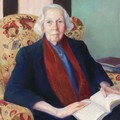
The Atlantic published EUDORA WELTY’S first contribution to its pages, her story “A Worn Path,” four years ago this month. That story was ultimately to receive an O. Henry Award. But more than that, it proclaimed the arrival of an American author in whom the South must take exceptional pride. In her middle thirties and as modest as she is talented, Miss Welty has this to say about her early career: —

by EUDORA WELTY
1
THE nickname of the train was the Yellow Dog. Its real name was the Yazoo-Delta. It was a mixed train. The day was the tenth of September, 1923 — afternoon. Laura McRaven, who was nine years old, was on her first journey alone. She was going up from Jackson to visit her mother’s people, the Fairchilds, at their plantation named Shellmound, at Fairchilds, Mississippi. When she got there, “Poor Laura, little motherless girl,” they would all run out and say, for her mother had died in the winter and they had not seen Laura since the funeral. Her father had come as far as Yazoo City with her and put her on the Dog. Her cousin Dabney Fairchild, who was seventeen, was going to be married, but Laura could not be in the wedding for the reason that her mother was dead. Of these facts the one most persistent in Laura’s mind was the most intimate one: that her age was nine.
In the passenger car every window was propped open with a stick of kindling wood. A breeze blew through, hot and then cool, fragrant of the woods and yellow flowers and of the train. The yellow butterflies flew in at any window, out at any other; and outdoors one of them could keep up with the train, which then seemed to be racing with the butterfly. Overhead a black lamp in which a circle of flowers had been cut out swung round and round on a chain as the car rocked from side to side, sending down dainty drifts of kerosene smell.
Laura had the scat facing the stove, but of course no fire was burning in it. She sat leaning at the window, the light and the sooty air trying to make her close her eyes. Her ticket to Fairchilds was stuck up in her Madge Evans straw hat, in imitation of the drummer across the aisle. Once the Dog stopped in the open fields and Laura saw the engineer, Mr. Doolittle, go out and pick some specially fine goldenrod there — for whom, she could not know. Then the long September cry rang from the thousand unseen locusts, urgent at the open windows of the train.
At one place, a white foxy farm dog ran beside the Yellow Dog for a distance just under Laura’s window, barking sharply, and then they left him behind, or he turned back. And then, as if a hand reached along the green ridge and all of a sudden pulled down with a sweep the hill and every tree in the world and left cotton fields, the Delta began. The drummer, with a groan, sank into sleep. Laura peeled her saved banana down and bit into it.
Thoughts went out of her head and the landscape filled it. In the Delta, most of the world seemed sky. The clouds were large — larger than horses or houses, larger than boats or churches or gins, larger than anything except the fields the Fairchilds planted. Her nose in the banana skin as in the cup of a lily, she watched the Delta. The land was perfectly flat and level but it shimmered like the wing of a lighted dragonfly. It seemed strummed, as though it were an instrument and something had touched it. Sometimes in the cotton were trees with one, two, or three arms — she could draw better trees than those were. Sometimes, like a fuzzy caterpillar, in the cotton was a winding line of thick green willows and cypresses, and when the train crossed this green, running on a loud iron bridge, down its center like a golden mark on the caterpillar’s back would be a bayou.
When the day lengthened, a rosy light lay over the cotton. Laura stretched her arm out the window and let the soot sprinkle it. There went a black mule — in the .diamond-light of far distance, going into the light, a child drove a black mule home, and all behind, the hidden track through the fields was marked by the lifted, fading train of dust. The Delta buzzards, which seemed to wheel as wide and high as the sun, with evening were going down too, settling into faraway violet tree-stumps for the night.
In the Delta the sunsets were reddest light. The sun went down, lopsided and wide as a rose on a stem, in the west, and the west was a milk-white edge, like the foam of the sea. The sky, the field, the little track, and the bayou, over and over — all that had been bright or dark was now one color. From the warm window sill the endless fields glowed like a hearth in firelight, and Laura, looking out, leaning on her elbows with her head between her hands, felt what an arriver in a land feels — that slow hard pounding in the breast.
“Fairchilds, Fairchilds!”
2
MR TERRY BLACK lifted down the suitcase Laura’s father had put up in the rack. The Dog ran through an iron bridge over James’s Bayou, and past a long twilighted gin and a platform where cotton bales were so close they seemed to lean out to the train. Behind it, dark gold and shadowy, was the river, the Yazoo. They came to the station, the dark-yellow color of goldenrod, and stopped.
Through the windows Laura could see five or six cousins at once, all jumping up and down at different moments. Each mane of light hair waved like a holiday banner, so that you could see the Fairchilds everywhere. There were cries — Mr. Doolittle had sprinkled sticks of gum out his window for children. When Mr. Terry set her on the little iron steps, holding her square doll’s suitcase (in which her doll Marmion was horizontally suspended), and gave her a spank, she staggered, and was lifted down among flying arms to the earth.
“Kiss Bluet!” The baby was put in her face.
She was kissed and laughed at and her hat would have been snatched away but for the new elastic that pulled it back, and was then half-carried along like a drunken reveler at a festival, not quite recognizing who anyone was. India hadn’t come — “ We couldn’t find her” — and Dabney hadn’t come, she was going to be married. They piled her into the Studebaker, into the little folding seat, with Ranny reaching sections of an orange into her mouth from where he stood behind her. Where were her suitcases?
They drove rattling across the Yazoo bridge and whirled through the shady, river-smelling street where the town, Fairchild’s store and all, looked like a row of dark barns, while the boys sang “Abdul Abulbul Amir” or shouted “Let Bluet drive!” and the baby was handed over her head and stood between Orrin’s knees, proudly. Orrin was fourteen — a wonderful driver. They went up and down the street three times, backing into cottonfields to turn around, before they went across the bridge again, homeward.
On this side of the river were the gin and compress, the railroad track, the forest-filled cemetery where her mother was buried in the Fairchild lot, the Old Methodist Church with the steamboat bell glinting pink in the light, and Brunswick-town where the Negroes were, smoking now on every doorstep. Then the car traveled in its cloud of dust like a blind being through the fields one after the other, all like one field but Laura knew they had names — the Mound Field, and Moon Field after Moon Lake. Then the car crossed the little bayou bridge, whose rackety rhythm she remembered, and there was Shellmound.
Facing James’s Bayou, back under the planted pecan grove, it was gently glowing in the late summer light, the brightest thing in the evening — the tall, white, wide frame house with a porch all around, its bayed tower on one side, its tinted windows open and its curtains stirring, and even from here plainly to be heard a song coming out of the music room, played on the piano by a stranger to Laura. They curved in at the gate. All the way up the drive the boy cousins with a shout would jump and spill out, and pick up a ball from the ground and throw it, rocket-like.
By the riding block in front of the house Laura was pulled out of the car and held by the hand. Shelley had hold of her — the oldest girl. Laura did not know if she had been in the car with her or not. Shelley had her long hair done up, parted in the middle, with a ribbon around it low across her brow and knotted behind, like a chariot racer. She wore a fountain pen on a chain now, and had her initials done in runny ink on her tennis shoes, over the ankle bones. Inside the house, the music all at once ended.
“Shelley!” somebody called imploringly.
“Dabney is an example of madness on earth,” said Shelley now, and then she ran off, trailed by Bluet beating plaintively with a little stick on a drum found in the grass. The boys were scattered like magic. Laura was deserted.
Grass softly touched her legs and her garter rosettes, grass sweet and springy, for this was the country. On the narrow little walk along the front of the house, hung over with closing lemon lilies, there was a quieting and vanishing of sound. It was not yet dark. The sky was the color of violets, and the snow-white moon in the sky had not yet begun to shine. Where it hung above the water tank, behind the house, the swallows were circling busy as the spinning of a top. By the flaky front steps, a thrush was singing water-like notes from the sweet-olive tree, which was in flower; it was not too dark to see the breast of the thrush or the little white blooms either.
Laura remembered everything, with the fragrance and the song. She looked up the steps, through the porch, where there was a wooden scroll on the screen door, which her finger knew how to trace, and lifted her eyes to the old fanlight, now reflecting a skyey light as of a past summer, which she had been dared — oh, by Maureen! — to throw a stone through, and had not.
She dropped her suitcase in the grass and ran to the back yard and jumped up with two of the boys on the joggling board. In between Roy and Little Battle she jumped, and the delights of anticipation seemed to shake her up and down.
3
SHE remembered (as one remembers first the eyes of a loved person) the old blue water-cooler on the back porch — how thirsty she always was here! — among the round and square wooden tables always piled with snap beans, turnip greens, and onions from the day’s trip to Greemvood; and while you drank, your eyes were on this green place here in the back yard, the joggling board, the neglected greenhouse, the springhouse, Aunt Ellen’s guineas in the old buggy, the stable wall elbow-deep in a vine.
In the halls would be the rising smell of girls’ fudge cooking, the sound of the phone by the roll-top desk going unanswered. She could remember mostly the dining room, the paintings by Great-aunt Mashula that was dead, of full-blown yellow roses and a watermelon split to the heart by a jackknife, and every ornamental plate around the rail different because painted by a different aunt at a different time; the big table never quite cleared; the innumerable packs of old, old playing cards. She could remember India’s paper dolls coming out flatter from the law books than hers from a shoe box, and smelling as if they were scorched.
She remembered the Negroes, Bitsy, Roxie, Little Uncle, and Vi’let. She put out her arms like wings and knew in her fingers the thready pattern of red roses in the carpet on the stairs, and she could hear the high-pitched calls and answers going up the stairs and down. She thought of the upstairs hall, where it was twilight all the time from the green shadow of an awning, and where an old, lopsided baseball lay all summer in a silver dish on the lid of the papercrammed plantation desk, and how away at either end of the hall was a balcony, and the little square butterflies that flew so high were going by, and the June bugs knocking.
Little Battle crowded her a little as he jumped, and she had to move down the board a few inches. They could play an endless game of hide-and-seek in so many rooms and up and down the halls that intersected and turned into dead-end porches and rooms full of wax begonias and elephant-ears, or rooms full of trunks. She remembered the nights — the moonvine, the everblooming Cape jessamines, the verbena smelling under running feet, the lateness of dancers. A dizziness rose in Laura’s head, and Roy crowded her now, but she jumped on, keeping in with their rhythm.
She remembered life in the indeterminate number of other rooms going on around her and India, where they lay in bed — life not stopping for a moment in deference to children going to sleep, but filling with later and later laughter, with Uncle Battle reciting
Break! Break! Break!” the phone ringing its two longs and a short for the Fairchilds, Aunt Mac reading the Bible aloud (was she dead yet?), the visiting planters and her other uncle, Uncle George, arguing with Uncle Battle from dining room to library to porch, Aunt Ellen slipping by in the hall looking for something or someone, the distant silvery creak of the porch swung by night, like a frog’s voice.
There would be little Ranny crying out in his dream, and the winding of the victrola and then a song called “I Wish I Could Shimmy Like My Sister Kate” or Uncle Pinck’s favorite (where was he?), Sir Harry Lauder singing “Stop Yer Tickling, Jock.” The girls that were old enough, dressed in colors called jade and flamingo, danced with each other around the dining-room table until the boys came to get them, and could be watched from the upper landing cavorting below, like marvelous mermaids down a transparent sea.
In bed Laura and India would slap mosquitoes and tell each other things. Last summer India had told Laura about the showboat that came on the high water with the same old Rabbit’s Foot Minstrel as always, and Laura told India about Babes in the Wood, Thurston the Magician, Annette Kellerman in Daughter of the Gods, and Clara Kimball Young in Drums of Jeopardy, and if Laura went off to sleep, India would choke her. She remembered the baying of the dogs at night; and how Roy believed that if you heard dogs bay, a convict had got out of Parchman and they were after him in the swamp; every night the dogs would bay, and Roy would lie somewhere in the house shaking in his bed.
Just then, with a last move down the joggling board, Roy edged Laura off. She ran back to the steps and picked up her suitcase again. Then her heart pounded: India came abruptly around the house, bathed and dressed, busily watering the verbena in the flower bed out of a doll’s cream pitcher, one drop to each plant. India too was nine. Her hair was all spun out down her back, and she had a blue ribbon in it; Laura touched her own Buster Brown hair, tangled now beyond anyone’s help. Their white dresses (Laura’s in her suitcase, folded by her father; and for a man to fold anything suddenly nearly killed her) were still identical; India had blue insertion in the waist now and Laura had white, but the same three little interlocking hoops were briar-stitched in the yokes, and their identical gold lockets still banged there against their chests.
“My mother is dead!” said Laura.
India looked around at her and said, “Greenie!”
Laura took a step back.
“We never did unjoin,” said India. “Greenie!”
“All right,” Laura said. “Owe you something.” She stooped and put a pinch of grass in her shoe.
“You have to wash now,” said India. She added, looking in her pitcher, “Here’s your drop of water.”
All of a sudden Maureen ran out from under the pecan trees — the cousin who was funny in her head, though it was not her fault. Besides her own fine clothes, she got India’s dresses that she wanted and India’s ribbons, and India said she would get them till she died. She had never talked plain. Now she ran in front of Laura and straddled the walk at the foot of the steps. She danced from side to side with her arms spread, chanting, “Cou-lin Lau-la can-na get-la by-y!” She was nine too.
Roy and Little Battle ran up blandly as if they had never let Laura joggle with them at all, giving no recognition. Orrin walked, tall as a man, up from the bayou with a live fish he must have just caught, jumping on a string. He waved it at little Ranny, who at that moment rode out the front door and down the steps standing on the back of his tricycle, like Ben Hur, a towel tied around his neck and flying behind him. The dinner bell was ringing inside, over and over, the way Roxie rang — like an insistence against disbelief. Laura, avoiding sight of the fish, avoiding India’s little drop, and Ranny and Maureen, made her way up the steps. Just as she reached the top, she threw up. There she waited, like a little dog.
But Aunt Ellen, though she was late for everything, was now running out the screen door with open arms. She was the mother of them all. Something fell behind her, her apron, as she came, and she was as breathless as any of her children. Now she knelt and held Laura very firmly. “Laura — poor little motherless girl,” she said. When Laura lifted her head, she kissed her. She sent India for a wringingwet cloth.
Laura put her head on Aunt Ellen s shoulder and sank her teeth in the thick Irish lace on the collar of her white voile dress, which smelled like sweet-peas. She hugged her, and touched her forehead, the steady head held so near to hers with its flying soft hair and its erect bearing of gentle, explicit, but unfathomed alarm. With the cool on her face, she could see clearer and clearer, though it was almost dark now, the pearl-edged side comb so hazardously bringing up the strands of Aunt Ellen’s dark hair. Laura let her go, and if she could she would have smoothed and patted her aunt’s hair and cleared the part with her own fingers, and said, “Aunt Ellen, you must never mind!”
Then she jumped up and ran after Orrin into the house, beating India to the table.
4
WHERE’S Uncle George?” Laura asked, looking from Uncle Battle around to everybody at the long, broad table. At suppertime, since she had come, she was expecting to see everybody gathered; but Uncle George and his wife, Aunt Robbie, would not drive in from Memphis until tomorrow; Aunt Tempe and her husband, Uncle Pinck Summers, and their daughter Mary Denis’s little girl, Lady Clare Buchanan, were not driving over from Inverness until Mary Denis had her baby; and the two aunts from the Grove, Aunt Primrose and Aunt Jim Allen, had not come up to supper tonight. There was just Uncle Battle’s and Aunt Ellen’s family of children at the table — besides of course t he two great-aunts, Greataunt Shannon and Great-aunt Mac, and Cousin Maureen who lived here with them, and only one visitor, Dabney’s best friend, Mary Lamar Mackey of Lookback Plantation — it was she who played the piano.
“Skeeta! Next!” called Uncle Battle resoundingly, fixing his eye on Laura. She passed her plate up to him. Uncle Battle, her mother’s brother, with his corrugated brow, his planter’s boots creaking under the table when he stood to carve the turkeys, was so tremendous that he always called children “Skeeta.” His thick fair hair over his bulging brow had been combed with water before he came to the table, exactly like Orrin’s, Roy’s, Little Battle’s, and Ranny’s. As his eye roved over them, Laura remembered that he had broken every child at the table now from being left-handed. Laura was ever hopeful that she would see Uncle Battle the Fire-eater take up some fire and cat it, and thought it would be some night at supper.
“ How Annie Laurie would have loved this very plate!” Uncle Battle said softly just now, holding up Laura’s serving. “Breast, gizzard, and wing! Pass it, boy.”
Even cutting up the turkeys at the head of his table, he was a rushing, mysterious, very laughing man to have had so many children coming up busy too, and he could put on a tender, irresponsible air, as if he were asking ladies and little girls, “Look at me! What can I do? Such a thing it all is!” and he meant Life — although he could also mention death and people’s absence in an ordinary way. It was his habit to drive quickly off from the house at any time of the day or night — in a buggy, or a car now. Automobiles had come in just as Uncle Battle got too heavy to ride his horse. He rode out to see work done or “trouble” helped; sometimes “trouble” came at night. When Negroes clear to Greenwood cut each other up, it was well known that it took Uncle Battle to protect them from the sheriff or prevail on a bad one to come out and surrender.
“Now eat it all!” Uncle Battle called to her as the plate reached her. But it was a joke, his giving her the gizzard, she saw, for it was her mother that loved it and she could not stand that piece of turkey. She did not dare tell him what he knew.
“Where is Dabney?” she asked, for it was Dabney they had been talking about ever since they sat down to the table, and her place by her father was empty
“She’ll be down directly,” said Aunt Ellen. “She’s going to be married, you know, Laura.”
“Tonight?” asked Laura.
“Oh!” groaned Uncle Battle. “Oh! Oh!” He always groaned three times.
“Where is her husband now?” Laura asked.
“Now don’t, Battle,” said Aunt Ellen anxiously. “Laura naturally wants to know how soon Dabney will marry Troy. Not till Saturday, dear.”
“This is only Monday,” Laura told her uncle consolingly.
“Oh, Papa’s really proud of Dabney, no matter how he groans because she won’t wait till cotton picking’s over,” said Shelley. She was sitting beside Laura, and looked so seriously even at her that the black grosgrain ribbon crossing her forehead seemed to indent it.
“I am, am I?” said Battle. “Suppose you help your mother serve the pickled peaches at your end.”
When Laura looked at her plate, the gizzard was gone. She almost jumped to her feet — she almost cried to think of all that had happened to her. Next she was afraid she had eaten that bite without thinking. But then she saw Great-aunt Shannon calmly eating the gizzard, on the other side of her. She had stolen it — Great-aunt Shannon, who would talk conversationally with Uncle Denis and Aunt Rowena and Great-uncle George, who had all died no telling how long ago, that she thought were at the table with her. But just now, after eating a little bit of something, the gizzard and a biscuit or so, — “No more than a bird!” they protested, — she was escorted by Orrin up to bed without saying a word. Greataunt Mac glared after her; Great-aunt Mac was not dead at all. “Now be ashamed of yourself!” she called after her. “For starving yourself!”
The boys all looked at each other, and even unwillingly they let smiles break out on their faces. The four boys were all ages — Orrin older than Laura; Roy, Little Battle, and Ranny younger — and constantly seeking one another, even at the table, with their eyes, seeking the girls only for their audience when they hadn’t one another. They were always rushing, chasing, flying, getting hurt — only eating and the knot of their napkins could keep them in chairs. All their knickerbockers, and Ranny’s rompers, had fresh holes for Aunt Ellen in both knees every evening. They ate turkey until they bit their fingers and cried “Ouch!”
They were so filled with their energy that once when Laura saw some old map on the wall, with the blowing winds in the corners, mischievous-eyed and round-cheeked, blowing the ships and dolphins around Scotland, she had asked her mother if they were India’s four brothers. She loved them dearly. Of course she expected them to fly from her side like birds, and light on the joggling board, as they had done when she arrived, and to edge her off when she climbed up with them. That changed nothing.
The boys were only like all the Fairchilds, but it was the boys and the men that defined that family always. All the girls knew it. When she looked at the boys and the men, Laura was without words but she knew that company like a dream that comes back again and again, each aspect familiar and longing not to be forgotten. Great-great-uncle George on his horse, in his portrait in the parlor, — the one who had been murdered on the Natchez Trace and buried, horse, bridle, himself, and all, by the robbers on his way to the wilderness to keep Great-great-grandfather company, — even he, she had learned by looking up at him, had the family trait of quick, upturning smiles, instant comprehension of the smallest eddy of life in the current of the day, which would surely be entered in a kind of reckless pleasure. This pleasure either the young men copied from the older ones, and the older ones always kept. The grown people, like the children, looked with kindling eyes at all turmoil, expecting delight for themselves and for you. They were shocked only at disappointment.
But boys and men, girls and ladies, all, the old and the young of the Delta kin — even the dead and the living, for Aunt Shannon — were alike; no gap opened between them. Laura sat among them with her eyes wide. At any moment she might expose her ignorance; at any moment she might learn everything.
All the Fairchilds in the Delta looked alike — Little Battle, now, pushing his bobbed hair behind his ears before he took up a fresh drumstick, looked exactly like Dabney the way she would think at the window. They all had a fleetness about them, though they were tall, solid people, with “Scotch legs” — a neatness that was actually a readiness for gayeties and departures, a distraction that was endearing as a lack of burdens. Laura felt their quality, their being, in the degree that they were portentous to her. For Laura found them all portentous — all except Aunt Ellen, who had only married into the family; Uncle George more than Uncle Battle for some reason; Dabney more than Shelley.
Without a primary beauty, with only a fairness of color (a thin-skinnedness, really) and an ease in the body, they had a demurring, gray-eyed way about them that turned out to be halfway mocking — for these cousins were the sensations of life and they knew it. (Why didn’t Uncle George come on tonight — the best loved? Why wasn’t Dabney on time to supper — the bride?) Things waited for the Fairchilds to appear, laughing to one another and amazed, in order to happen. They were never too busy for anything, they were generously and almost seriously of (he moment: the past (even Laura’s arrival today was past now) was a private, dull matter that would be forgotten except by aunts.
5
JUST as Roxie was about to clear the table, Dabney gently but distractedly came in — dressed in blue, drying tears from her eyes, and murmuring to her mother as she passed her chair, “Oh, Mama, that was just because my brain isn’t working. Why did you bring up your children with faulty brains?”
“She ought to have drowned you when you were little,” said Uncle Battle, and this was their extravagant way of talk. “ Sit down. I saved you a wishbone and a heart besides what poor pickings is left.”
“Run some more biscuit in the oven, Roxie,” Ellen said. “I think too you’d better bring Miss Dabney a little ham, there’s such a dearth of turkey to tempt her.”
Holding out her plate for her father to serve (she sat close by him, at his right), Dabney smiled and waited. How beautiful she was — all flushed and knowing. Now they would tease her. An only child, Laura found teasing the thing she kept forgetting about the Delta cousins from one summer to the next. Uncle Battle might put the heart on Dabney’s plate yet, knowing she could not bear to look at the heart; though Dabney would know what to do. Was it possible that it was their love for one another that made them set little traps to catch one another; They looked with shining eyes upon their kin; and all their abundance of love, as if it were a devilment, was made reckless and inspired or was belittled in fun, though never, so far, was it said out. They had never told Laura they loved her.
She sighed. “Where’s Aunt Primrose and Aunt Jim Allen?”
“Why don’t you ask any questions about who’s here?” said India.
“They said I had to come see them and tell them first,” said Dabney, beginning to eat hungrily. “Touchy, touchy.”
“I’m touchy too,” said Uncle Battle.
“Oh, Laura!” cried Dabney delightedly. “I didn’t know you’d got here! Why, honey!” She flew around the table and kissed her.
“I came to your wedding,” said Laura, casting pleased, shy glances all around.
“Oh, Laura, you want me to marry Troy, don’t you? You approve, don’t you?”
“Yes,” said Laura. “I approve, Dabney!”
“You be in my wedding! You be a flower girl!”
“I can’t,” said Laura helplessly. “Mama died.”
“Oh,” cried Dabney, as if Laura had slapped her, running away from her and back to her place at the table, hiding her face. “It’s just so hard, everything’s just so hard.”
“Here’s your little ham, Miss Dab,” said Roxie, coming in. “Do you good.”
“Oh, Roxie, you were sweet to bring it to me but no one will ever believe me, that I just can’t swallow until Saturday. There’s no use trying any more.”
“You can bring the ice cream and cake then, Roxie,” Aunt Ellen said. “It’s Georgie’s favorite cake. I do wish they could be here a day sooner!”
They sat sighing, eating cake, drinking coffee. The throb of the compress had never stopped. Laura could feel it now in the handle of her cup; the noiseless vibration that trembled in the best china was within it.
It was hard to leave the dining room after supper. It would be still faintly day, and not much cooler. They all still sat, until the baby, who had hung from her high-chair (“Mama, let Bluet eat at the table!”) teasing crumbs and coffee out of them, wilted over like a little flower in her kimono with the butterfly sleeves and was kissed all around and carried up in flushed sleep in Dabney’s overeager arms.
The table was in the middle of the large room, and there was little tendency to leave even that. But besides the old walnut-and-cane chairs (Great-grandfather made them) there were easy chairs covered with cotton in a faded peony pattern, and rockers for the two great-aunts, sewing stands and fireshields beside them, all near the watery-green tile hearth. A spready fern stood in front of the grate in summertime, with a cricket in it now that nobody could do anything about. Along the wall the china closets reflected the windows, except for one visible shelf where some shell-pattern candlesticks shone, and the Port Gibson epergne, a fan of Apostle spoons, and the silver sugar basket with the pierced work in it and its old cracked purplish glass lining.
At the other end of the room the victrola stood like a big morning-glory and there, laid with somebody’s game, was the card table Great-grandfather also made out of his walnut trees when he cut his way in to the Yazoo wilderness. A long ornate rattan settee, upslanting at the ends, with a steep scrolled back, was in the bay alcove. In the half-moon space behind it were marble pedestals and wicker stands each holding a fern of advanced size or a little rooted cutting, sometimes in bloom.
6
THIS evening there was nobody but Uncle Battle to take cherry bounce, and hating anything alone, he would not have it, but with a groan sat down and took Bluet’s doll out of his chair onto his knee. Dabney wandered in, Aunt Ellen wandered out, Mary Lamar Mackey wandered across the hall into the music room and began to play softly to herself; but nobody else — Great-aunt Mac or anybody — could be persuaded to stir. Maureen, gentle now, sat on a stool and listened, listened for the cricket. In a little while Dabney and Shelley and Mary Lamar would have to go dress for a dance in Glen Alan, but now the two sisters stretched on the settee, each with her head at an elevated end and her stockinged feet in her sister’s hair. Catching the light like drops of a waterfall, the fronds of a maidenhair fern hung from a dark tub over them.
“Fan us, fan us, India,” said Dabney, though the big overhead fan turned too.
“Ranny will fan you before he goes to bed,” India said, and Ranny came radiantly forward with Great-aunt Shannon’s palmetto.
“Ho hum,” said Dabney. “You’d think I had nothing to do. I wonder if Troy is in from the fields.”
“There’s one speck of light left,” said Shelley.
“Cousin Laura,” said Orrin kindly, looking up from his book at her. He leaned on the table. “You weren’t here, but Uncle George and Maureen nearly got killed.”
“Uncle George?” Laura alone had not reclined; she stood looking into the big mirror over the sideboard, which reflected the roomful of cousins.
“Ranny, you fan too hard. They nearly let the Yellow Dog run over them on the Dry Creek trestle.” Dabney softly laughed from her prone position.
India moaned from the chair she was leaning over to read a book on the floor.
“It was almost a tragedy,” said Shelley. She lifted up her head, then let it fall back.
“Why did they let the Yellow Dog almost run over them?” Laura made her way to the table and leaned on it to ask Orrin, who answered her gravely, with his finger in his place in the book. “Here’s the way it was — ” For all of them told happenings like narrations, chronologically and carefully, as if the ear of the world listened and wished to know surely.
“The whole family but Papa and Mama, and ten or twenty Negroes with us, went fishing in Drowning Lake. It will be two weeks ago Sunday. And so coming home we walked the track. We were tired — we were singing. On the trestle Maureen danced and caught her foot. I’ve done that, but I know how to get loose. Uncle George kneeled down and went to work on Maureen’s foot, and the train came. He hadn’t got Maureen’s foot loose, so he didn’t jump either. The rest of us did jump, and the Dog stopped just before it hit them and ground them all to pieces.”
Uncle Battle looked at Dabney with a kind of outraged puffing of his sunburned cheeks, a glare in her direction like some fatherly malediction; whether it was meant for Dabney herself in front of his eyes, or for what he had heard, Laura could not tell. And as if glaring itself made him nervous, he dandled the rag doll heavily on his knee.
Dabney gave a half-smile. “The engineer looked out the window — he said he was sorry.”
Laura looked at her gravely. “I’m glad I wasn’t thefe,” she told her.
7
THEN Aunt Ellen came in, meditatively, as the hall clock finished striking two, which meant it was eight. She had a feather on her skirt — had she been out for her precious guinea eggs? She was a slight, almost delicate lady, seeming exactly strong enough for what was needed of her life. She was scarcely taller than Orrin, and Dabney and Shelley had been both taller and bigger than their mother for two years. She walked in to the roomful of family without immediately telling them anything. She was more restful than the Fairchilds. Her brown hair and her darkblue eyes seemed part of her quietness — like the colors of water, reflective. Her Virginia voice, while no softer or lighter than theirs, was a less questioning, a never teasing one. It was a voice to speak to the one child or the one man her eyes would go to. They all watched her with soft eyes, but distractedly.
She was one of those little mothers that the wind seems almost to hurt, and they knew they needed to look after her. She held her back very straight, like a little boy who can do right in dancing class. And while she meditated, she hurried — how she hurried! She was never slow — she was either still or darting. I hey said she had no need for hurry with a houseful of Negroes to do the first thing she told them. But she did not wait for them to wait on her. “ Your mother is killing herself,” Battle’s sisters told the children. “But you can’t do a thing in the world with her,” they answered. “We’re going to have to whip her or kill her before she’ll lie down in the afternoons, even.” They spoke of killing and whipping in the exasperation and helplessness of much love. Laura could see as far as that she was the opposite of a Fairchild, and that was a stopping point.
Aunt Ellen would be seen busy in a room where Aunt Tempe, for instance, was never seen except proceeding down halls, or seated. She never cared how she dressed any more than a child. Aunt Tempe said to India last summer, in the voice in which she always spoke to little girls, as if everything were a severe revelation, “ When your mother goes to Greenwood she simply goes to the closet and says, ‘ Clothes, I’m going to Greenwood; anything that wants to go along, get on my back.’ She has never learned what is reprehensible and what is not, in the Delta.” She was often a little confused about her keys, and sometimes would ask Dabney, “What was I going for? Why am I here?” When she threw her head back dramatically, it meant she was listening for a baby. Her small sweetly shaped nose was sparingly freckled like a little girl’s, like India’s in summer.
Sometimes, as when now she stood still for a moment in the room full of talking people, an unaccountable rosiness would jump into her cheeks and a look of merriment would make her eyes grow wide. Down low over the dinner table hung a lamp with a rectangular shade of tinted glass, like a lighted shoebox toy, a choo-choo boat with its colored paper windows. In its light she would look over the room, at the youngest ones intertwining on the rug and hating so the approach of night, the older ones leaning across the cleared table, chasing each other in a circle, or reading, or lost to themselves on the flimsy settee; Battle pondering in his way or fuming, while from time to time the voices of the girls called out to the telephone would sound somewhere in the air like the twittering of birds — and it would be as if she had never before seen anything at all of this room with the big breasting china closets and the fruit and cake plates around the rail, had never watered the plants in the window or encountered till now these intent, absorbed people — never before in her life, Laura thought.
At that moment a whisper might have said Look! to her, and the dining-room curtains might have traveled back on their rings, and there they were. Did she come in and look at them like this every night? Even some unused love seemed to Laura to be in Aunt Ellen’s eyes when she gazed, after supper, at her own family. Could she get it? Laura s heart pounded. But the baby had dreams and soon she would cry out on the upper floor, and Aunt Ellen, listening, would run straight to her, calling to her on the way, and forgetting everything in this room.
8
How Ellen loved their wide and towering foreheads, their hairlines on the fresh skin, silver as the edge of a peach, clean as a pencil line, dipping to a perfect widow’s peak in every child she had. Their cheeks were wide and their chins narrow but pressed a little forward — lips caught, then parted, as if in constant expectation — so that their faces looked sturdy and resolute, unrevealing, from the side, but tender and heart-shaped from the front. Their coloring their fair hair and their soot-dark, high eyebrows and shadowy lashes, the long eyes of gray that seemed more luminous, more observant, and more passionate than blue eyes — moved her deeply and freshly in each child.
Dear Orrin, talking so seriously now, the dignity in his look! And little Ranny with his burning cheeks and the silver bleach of summer on his hair, so deliberately wielding the fan over his sisters! She had never had a child to take after herself and would be as astonished as Battle now to see her own ways or looks dominant, a blue-eyed, dark-haired, smallboned baby lying in her arms. All the mystery of looks moved her, for she was with child once more.
In the men grown, in Battle and George, it was a paradoxical thing, the fineness and tenderness with the bulk and weight of their big bodies. All the Fairchild men (the old-maid sister, Jim Allen, would recite that like a bit of catechism) were six feet tall by the time they were sixteen and weighed two hundred pounds by the time they were forty. But Battle weighed two hundred and fifty, and strained to be gentle as he was; and George, though he was not himself fat, was markedly bigger and fairer than any of them in the early portraits, as if he were not a throwback to the type (which had faltered but little, after all, through marriages with little women like her, like Laura Allen and Mary Shannon before her) but a new original — a sport of the tree itself.
She guessed she apprehended everything through the way they looked and felt — George sometimes more than Battle. Battle wore the glower of fatherhood, or its little under-mask of helplessness, that. George had not put on. And George had remained left-handed, the thing they all inherited, as was somehow apparent, not just momently but always — perhaps by such a thing as the part in his hair. Her secret tremor at Battle’s determined breaking of her children’s left-handedness made her cherish it like a failing in George.
The fineness in her men called to mind their unwieldiness, and the other way round, in a way infinitely endearing to her. The fineness could so soon look delicate — nobody could get tireder, fall sicker, and more quickly so, than her men. She thought yet. of the other brother Denis, who was dead in France, as holding this look; from the grave he gave her that look, partly of hurt: “ How could I have been brought like this?” as Battle cried in the Far Field when his horse, unaccountably terrified at the old Yellow Dog one day, threw him and left him unable to raise himself from the ditch.
“Oh, it was cloudy, or we would have remembered it was time for the Dog,” Orrin was saying, looking up from his book. “We wouldn t have made that mistake another day, when we could see the sun.”
“The Dog was most likely running an hour late, and it wouldn’t have done us any good.” Dabney smiled. She twisted her foot in Shelley’s hair, where they were lying together on the settee. “I’m making a hole in your net with my big toe.”
“I won’t lie here with you any longer,” Shelley said languidly. But she did not move, or close her eyes fully. She looked rather dreamily down the slope of her own body, middy blouse, skirt, dark-blue stockings, and up Dabney’s light-blue stockings, light-blue swiss dress with one lace panel floating in’ Ranny’s breeze, and Dabney’s just-washed hair flying on her clasped hands behind her head. Dabney’s face was suffused and soft now as Bluet’s when she was waked from her nap. Her eyes seemed to swim in some essence not tears, but as bright — an essence that made the pupils large. The sisters looked now into each other’s eyes, and as if there was no help for it, a flare leaped between them.
There was a lusty cry from Maureen.
“She’s caught the cricket! She’s pulling his wings off—she’ll kill the cricket!” Roy was on his feet.
“Don’t stop her, don’t stop her! Let. her have her way!” Battle said, his voice rumbling in Ellen’s
“The cricket minded, I think,” Ranny said, holding the fan still.
“Come help me make a cake before bedtime, Laura,” said Ellen; now she saw Laura’s eyes fastened on her. She’s the poor little old thing, she thought. When a man alone has to look after a little girl, in even eight months she will get long-legged and skinny. She will as like as not need to have glasses when school starts. He doesn’t cut her hair, or he will cut it too short. How sharp her elbows are — Maureen looks like a cherub beside her—the difference just in their elbows!
“I’ll be glad to, Aunt Ellen,” Laura said, and put her hand in hers as if she were Ranny’s age. She came along in a toiling little walk.
“Get out of the kitchen, Roxie. We want to make Mr. George and Miss Robbie a cake. They’re coming tomorrow.”
“You loves them,” said Roxie. “You’re fixin’ to ask me to grate you a coconut, not get out.”
“Yes, I am. Grate me the coconut.” Ellen smiled. “I got fourteen guinea eggs this evening, and that’s a sign I ought to make it, Roxie.”
“Take ‘em all— guineas,” said Roxie belittlingly.
“Well, you get the oven hot.” Ellen tied her apron back on. “You can grate me the coconut, and a lemon while you’re at it, and blanch me the almonds. I’m going to let Laura pound me the almonds in the mortar and pestle.”
“Is that very hard?” asked Laura, running out for a drink at the water-cooler.
9
ELLEN was breaking and separating the fourteen eggs. “Yes, I do want coconut,” she murmured. For Ellen’s hope for Dabney, that had to lie in something, some secret nest, lay in George’s happiness. He had married “beneath” him, too, in Tempe’s unvarying word. When he got home from the war he married, in the middle of one spring night, little Robbie Reid, Old Man Swanson’s granddaughter, who had grown up in the town of Fairchilds to work in Fairchild’s store.
She beat the egg yolks and began creaming the sugar and butter; and saying a word from time to time for Laura, who hung on the table and watched her, she felt busily consoled for the loss of Dabney to Troy Flavin by the happiness of George lost to Robbie. She remembered, as if she vigorously worked the memory up out of the mixture, a picnic at the Grove
— the old place — an exuberant night in the spring before — it was not long after the death of Annie Laurie down in Jackson. Robbie had tantalizingly let herself be chased and had jumped in the river with George in after her, everybody screaming from where they lay.
Dalliance, pure play, George was after that night — he was enchanted with his wife, he made it plain then. They were in moonlight. With great splashing he took her dress and petticoat off in the water, flung them out on the willow bushes, and carried her up screaming in her very teddies, her lost ribbon in his teeth, and the shining water running down her kicking legs and flying off her heels as she screamed and buried her face in his chest, laughing too, proud too. The sisters’ — Jim Allen’s and Primrose’s — garden ran right down to the water there. How could they have known their brother George would some day carry a dripping girl out of the river and fling her down thrashing and laughing on a bed of their darling sweet-peas, pulling vines and all down on her?
George flung himself down by her too and threw his wet arm out and drew her onto his fast-breathing chest. They lay there smiling and worn out, but twined together — appealing, shining in moonlight, and almost, somehow, threatening, Ellen felt. They were so boldly happy, with Dabney and Shelley there, with Primrose and Jim Allen trembling for their sweet-peas if not daring to think of George’s life risked, and India seizing the opportunity of running up and sprinkling them with pomegranate flowers and handfuls of grass to tickle them.
Dabney had brought young Dickie Boy Featherstone along that night; they had sat timidly holding hands on the river bank, Dabney with a clover-chain circling and festooning her like a net. They had chided Robbie that she had endangered George — he could not swim well for a wound of war. But no one can stare back more languorously and alluringly than a rescued woman, Ellen believed, from the memory of Robbie’s slumbrous eyes and surfeited little smile as she lay on George’s wet arm.
As Ellen put in the nutmeg and the grated lemon rind she diligently assumed George’s happiness, seeing it in the Fairchild aspects of exuberance and satiety; if it was unabashed, it was the best part true. But — adding the milk and the flour, carefully and alternately as Mashula’s recipe said — she could be diligent and still not wholly sure, never wholly. She loved George too dearly herself to seek her knowledge of him through the family attitude, keen and subtle as that was — just as she loved Dabney too much to see her prospect without its risk, now familydeplored, the happiness covered with danger.
“Look who Robbie Reid is!” they had said once, and now, “Who is Troy Flavin?” Indeed, who was Troy Flavin, beyond being the Fairchild overseer? Nobody knew. Only that he had a little mother in the hills. It was killing Battle; she heard him now, calling, “Dabney, Dabney! Dickie Boy Featherstone’s blowing his horn!” And at the telephone Dabney was talking softly to Troy, “I’m with Dickie Boy Featherstone, gone to Glen Alan. . . . Good night. . . . Good night. . . It seemed to Ellen that it was for every one of them that added care pressed her heart on these late summer nights (“Now you can taste, Laura,” she said), care that stirred in her and that she herself shielded, like the child she carried.
She folded in the egg whites.
“Now, Laura. Go get that little bottle of rosewater off the top shelf in the pantry. Climb where Roy climbs for the cookie jar and you’ll reach it. Now be putting in a little rose-water as you go. Pound good.”
She poured her cake out in four layer pans and set the first two in the oven, gently shutting the door. “Be ready, Laura, when I call you. Oh, save me twenty-four perfect halves — to go on top.”
She began with the rest of the eggs to make the filling; she would just trust that Laura’s paste would do, and make the icing thick on top with the perfect almonds over it close enough to touch.
“Smell my cake?” she challenged, as Dabney appeared radiant at the pantry door, and then came through, spreading her pink dress to let her mother ee her. Ellen turned a little dizzily. Was the cake going to turn out all right? She was always nervous about her cakes. And for George she did want it to be nice—he was so appreciative. “Don’t pound your poor finger, Laura.”
“I wasn’t going to, Aunt. Ellen.”
“Oh, Mother, am I beautiful — tonight?” Dabney asked urgently, almost painfully, as though she would run if she heard the answer.
Laura laid down the noisy pestle. Her lips parted. Dabney rushed across the kitchen and threw her arms tightly around her mother and clung to her.
Roxie, waiting on the porch, could be heard laughing, two high gentle notes out in the dark.
From an upper window India’s voice came out on the soft air, chanting,
First star I’ve seen tonight,
I wish I may, I wish I might
Have the wish I wish tonight.”
For a moment longer they all held still: India was wishing.
10
IT WAS the next afternoon. Dabney came down the stairs vaguely in time to the song Mary Lamar Mackey was rippling out in the music room — “Drink to Me Only with Thine Eyes.”
“Oh, I’m a wreck,” she sighed absently.
“Did you have your breakfast? Then run on to your aunts,” said her mother, pausing in the hall below, pointing a silver dinner knife at her. “You re a girl engaged to be married and your aunts want to see you.”
“Your aunts” always referred to the two old-maid sisters of her father, who lived at the Grove, the old place on the river, Aunt Primrose and Aunt Jim Allen, and not to Aunt Tempe, who had married Uncle Pinck, or Aunt Rowena or Aunt Annie Laurie, who were dead. “ I’ve got all the Negroes your papa could spare me up here on the silver and those miserable chandelier prisms — I don’t want you underfoot, even.”
“They saw me that Sunday they came up to dinner,” said Dabney, still on the stairs.
“But you weren’t engaged that Sunday — or you hadn’t told.”
A veil came over Dabney’s eyes — a sort of pleased mournfulness.
“They’ll ask me ten thousand questions.”
“Let me go!” said India quickly. She was sitting on the bottom step finishing a leaf hat. “I’m not really busy.”
“Come on, then,” said Dabney. She ran down and leaned over her little sister and smiled at her for what seemed the first time in years.
“I can come! I’ll hop!” Bluet instantly came hopping up with one shoe off, her sunny hair flying. In the corner Roxie’s little Sudie, who was “watching her, stretched meek on the floor with chin in hand. Little Battle tore through the house but didn’t stop a minute, except to spank Dabney hard. Mary Lamar Mackey dreamily called, “Where are you all
going?” “Now get away from Dabney everybody, and let her go,” said Ellen. “No, Dabney, not Ranny either, this time. You’ll dawdle, and let him fall off the horse — and Primrose and Jim Allen’ll have to invite you to supper.”
“Will they have spoon bread?” cried India.
“That’s enough, India. You can carry that bucket of molasses if you’re going, and I think I’ll send a taste more of that blackberry wine — wait till I pour it off.”
“You can wear this, Dabney.” On her two forefingers India offered up the leaf hat to her sister, who had on a new dress.
“Oh, I couldn’t! Never mind, you wear it,” said Dabney. She herself fixed it on India’s hair. Dabney had gotten awfully fixey, said the calm stare in India’s eyes at that moment. The little girl set her jaw, Dabney frowned, and one of the rose thorns did scratch.
“Be sure that sack on the front porch gets to Jim Allen!” called their mother from the back porch. “Oh, where’s my wine!”
“Take Aunt. Primrose my plaid wool and my cape pattern!” called Shelley from right under their feet. She was under the house looking for the key to the clock, which she insisted had fallen through the floor. “In Mama’s room! Vi’let!”
Dabney drew her brows together for a moment. — Shelley was a year older than she was, and now that Dabney was the one getting married, she seemed to spend her time in the oddest places. “Shelley, come out! Mama, do you think they want all those hyacinth bulbs?” she called.
“They’re onions! India, did you call Little Uncle to bring up Junie and Rob?”
“Wait a second, India,” said Dabney. She caught at her sticking-out skirt. “You look plenty tacky, India — you’re just the age where you look tacky and that’s all there is to it.” She sighed again, and ran lightly down the steps. “You ride with the onions, I’m going to see Troy tonight.”
“Well, my golly,” said India.
“We ought to send them back that candy dish — but we can’t send it back empty,” called Ellen in a falling voice.
Little Uncle and Vi’let got them loaded up on the horses and fixed all the buckets and sacks so that they weren’t very likely to fall open. “I don’t know why we didn’t take the car,” Dabney said dreamily. They rode out the gate.
India said, “Haven’t I got to see Troy, and the whole family got to see Troy, Troy, Troy, every single night the rest of our lives, besides the day? Does Troy hate onions? Does he declare he hates them? Does he hate peaches? Figs? Black-eyed peas?
“We’ll be further away than that,” said Dabney, still dreamily.
It was a soft day, brimming with the light of afternoon. It was the fifth beautiful week, with only that one threatening day. The gold mass of the distant shade trees seemed to dance, to sway, under the plum-colored sky. On either side of their horses’ feet the cotton twinkled like stars. Then a red-pop flew up from her nest in the cotton. Above in an unbroken circle all around the wheel of the level world lay silvery-blue clouds whose edges melted and changed into the pink and blue of sky.
Girls and horses lifted their heads like swimmers. Here and there and far away the cotton wagons, hand-painted green, stood up to their wheel tops in the white and were loaded with white, like cloud wagons. All along, the Negroes would lift up and smile glaringly and pump their arms — they knew Miss Dabney was going to step off Saturday with Mr. Troy.
11
A MAN on a black horse rode across their path at right angles, down the Mound Field. He waved, his arm like a gun against the sky — it was Troy on Isabelle. A long stream of dust followed him, pink in the light.
Dabney lifted her hand. “Wave, India,” she said. “It’s Troy.”
There was the distance where he still charmed her most — it was strange. Just here, coming now to the Indian mound, was where she really noticed him first — last summer, riding with India on Junie and Rob. (Though later, they would go clear to Marmion to sit in the moonlight by the old house and by the river, teasing and playing, when it was fall.) And she looked with joy, as if it marked the pre-eminent place, at the Indian mound topped with trees like a masted green boat on the cottony sea. That he was at this distance obviously not a Fairchild still filled her with an awe that had grown most easily from idle condescension — that made it hard to think of him as he would come closer.
Troy, a slow talker, had been the object of little stories and ridicule at the table — then suddenly he was real. She shut her eyes. She saw a blinding light, or was it a dark cloud — that intensity under her flickering lids? She rode with her eyes shut. Troy Flavin was the overseer. The Fairchilds would die, everybody said, if this happened. But now everybody seemed to be just too busy to die.
He was twice as old as she was now, but that was just a funny accident, thirty-four being twice seventeen; it wouldn’t be so later on. When she was as much as twenty-five, he wouldn’t be fifty! “Things will probably go on about as they do now,” she would hear her mother say. “It isn’t as if Dabney was going out of the Delta — like Mary Denis Summers.”
They would have Marmion, and Troy could manage the two places. “Marmion can’t belong to Maureen!” she had cried, when she first asked.
“Yes — not legally, but really,” her father said; he thought it was complicated.
So Dabney had said to Maureen, “Look, honey — will you give your house to me?” They had been lying half-asleep together in the hammock after dinner.
And Maureen, hanging over her to look at her, face close above hers, had chosen to smile radiantly. “Yes,” she had said, “you can have my house-la, and a bite-la of my apple too.”
Oh, everything could be so easy! Troy had simply slapped his hand on his saddle when she told him, at the way she could have Marmion with a little airy remark! She had blushed — surely that was flattery! Troy was slow on words.
“I don’t hear anything but nice things about Troy,” everybody was telling her. As though he were invisible, and only she had seen him! She thought of him proudly (he was right back of the mound now, she knew), a dark thundercloud, his slowness rumbling and his laugh flickering through in bright flashes; any “nice thing” would sound absurd — as if you were talking about a cousin or a friend. Later they would laugh together about this. Uncle George would be on her side. lie would treat it as if it wasn’t any side, which would make it better — make it perfect — unless he got on Troy’s side. He liked Troy.
“There goes Pinchy, trying to come through,” said India, to make Dabney open her eyes. Sure enough, there went Pinchy wandering in the cotton rows, Roxie’s helper, not speaking to them at all but giving up every moment to seeking.
“I hope she comes through soon.” Dabney frowned.
“I forgot the onions, too.”
“Hyacinths, you mean.”
“Onions. You’re crazy as a June bug now, Dabney,” said India thoughtfully. “Will I be like you?”
“You’re crazy the way you forget things, onions or hyacinths either.”
Troy was far to the right now — they had turned. They rode around the blue shadow of the Indian mound, and he was behind her. Faintly she could hear his busy shout, “Sylvanus! Sylvanus!”
“All the Fairchilds forget things,” said India, beginning to gallop joyfully, making the wine splash.
They rode through the Far Field and into the pasture where three mules were looking out together from a green glade. The sedge was glowing, the round meadow had a bloom like fruit, and the sweet gums were like a soft curtain beyond, fading into the pink of the near sky. Here the season showed. Queen Anne’s lace brushed their feet as they rode, and the tight yellow goldenrod knocked at them. She seemed to hear the rustle of the partridgy shadows.
12
SOMETIMES, Dabney was not so sure she was a Fairchild — sometimes she did not care, that was it. There were moments in life when it did not matter who she was — even where. Something, happiness — with Troy, but not necessarily, even the happiness of a fine day — seemed to leap away from identity as if it were an old skin, and that she was one of the Fairchilds was of no more need to her than the locust shells now hanging to the trees everywhere were to the singing locusts.
What she felt, nobody knew! It would kill her father — of course for her to be a Fairchild was an inescapable thing, to him. Oh, she did cherish the relent less way he was acting, not wanting to let her go! The caprices of his restraining power over his daughters filled her with delight now that she had declared what she could do. She felt a double pride between them now — it tied them closer than ever as they laughed, bragged, reproached each other, and flaunted themselves. But her mother, who had never spoken the first word against her sudden decision to marry, or questioned her wildness for Troy or her defiance of her father’s wishes, in the whole two weeks, somehow defeated her,
Dabney and her mother had gone into shells of mutual contemplation — like two shy young girls meeting in a country of a strange language. Perhaps it was only her mother’s condition, thought Dabney, shaking her head a little. Only when she forgot herself, flashed out in the old way, shed tears and begged her pardon, did Dabney feel again in her mother’s quick kiss, like a peck, her watchfulness, the kind of pity for children that mothers might feel always until they were dead, reassuring to the mother and the little girl together.
Troy treated her like a Fairchild — he still did; he wouldn’t stop work when she rode by even today. Sometimes he was so standoffish, gentle-like; other times he laughed and mocked her, and shook her, and played like fighting — once he had really hurt her. How sorry it made him! She took a deep breath. Sometimes Troy was really ever so much like a Fairchild. Nobody guessed that, just seeing him go by on Isabelle! He had not revealed very much to her yet. He would — that dark shouting rider would throw back the skin of this very time, of this moment. There would be a whole other world, with other cotton, even.
It was actually Uncle George who had shown her that there was another way to be, something else — Uncle George, the youngest of the older ones, who stood in — who was — the very heart of the family, who was like them, looked like them (only far handsomer, she thought, seeing at once his picnic smile), but was different, somehow. Perhaps the heart always was made of different stuff and had a different life from the rest of the body. She saw Uncle George lying on his arm at a picnic, smiling to hear what someone was telling, with a butterfly going across his gaze, a way to make her imagine all at once that in that moment he erected an entire, complicated house for the butterfly inside his sleepy body. It was very strange, but she had felt it.
She had then known something he knew all along, it seemed —that when you felt, touched, heard, looked at things in the world, and found their fragrances, they themselves made a sort of house within you, which filled with life to hold them, filled with knowledge all by itself; and all else, the other ways to know, seemed calculation and tyranny. Blindly and proudly Dabney rode, her eyes shut against what was too bright. Uncle George would be coming some time today — she would be glad. He would be sweet to her, sweet to Troy.
In a way, their same old way, the family were leaving any sweetness, any celebration and good wishing, to Uncle George. They had said nothing very tender or final to her yet. They had put it off, she guessed, sighing. This was too much in cotton-picking time, that was all — or else they still had hope that she would not do this to them. Dabney smiled again, — she smiled as often as tears, once started, would fall, — her flickering eyes on India shaking her switch like a wand at a scampering rabbit.
Uncle George would come and say something just right — or rather he would come and not say any special thing at all, just show them the champagne he brought for the wedding night, while Shelley, perhaps, was coaxed to cry — and they would not fret or worry or hold back any longer. Dabney herself would then be entirely happy.
“ Has James’s Bayou really got a whirlpool in the middle of it?” cried India intensely.
“No, India, always no, but you stay out of it.” They rode into the tarnished light of a swampy place.
“But has it really got a ghost? Everybody knows it has.”
“Then don’t ask me every time. Just so it won’t cry for my wedding, that’s all I ask! ” Dabney sighed.
“I’d love it to cry for me,” India said luringly. “Cry and cry.”
They rode across the railroad track and on. The fields shone and seemed to tremble like a veil in the light. The song of distant pickers started up like the agitation of birds.
13
LOOK pretty. Here we are,” said India.
They were riding by the row of Negro houses and the manager’s house. The horses lifted their noses, smelling the river. Little Matthew saw them and opened the back gate, swinging on it, and ran after them to help them off Junie and Rob. He put his little flat nose against the horses’ long noses and spoke to them. Dabney and India loaded him up. Greatgrandmother’s magnolia, its lower branches taken root, spread over them. Only bits of sunlight came through the dark tree.
The house at the Grove, a dove-gray box with its deep porch turned to the river breeze, stood under shade trees with its back to the Shellmound road. It was a cypress house on brick pillars now painted green and latticed over, and its double chimneys at either end were green too. There was an open deck, never walked any more, on its roof; it was Denis’s place — he had loved to read poetry there. The garden, sun-faded, went down to the dusty moat, in which the big cypresses stood like towers with doors at their roots. The bank of the river was willowy and bright, wild and unraked, and the shadowy Yazoo went softly colored and lying narrow and low in the time of year.
Aunt Primrose caught sight of them through the window of the kitchen ell and agitatedly signaled to them that they must go round to the front door and not on any account come in at the back, and that she was caught in her boudoir cap and was ashamed.
They waded through the side yard of mint and nodding pink and white cosmos, the two pale bird dogs licking them. Lethe flew out to help and fuss at Matthew, while Aunt Primrose — they could hear her — spread the screen doors wide.
“Bless your hearts! Mercy! What all have you got there, always come loaded!” she cried. A brown thrush, nesting once again in September, flew out of the crape-myrtle tree at them and made Dabney nearly drop the wine she was carrying, to catch at her hair. Aunt Primrose, as if she should have known that thrush would do that, ran out with little cries — for she wos the most tender-headed of the Fairchilds and could not bear for anyone to have her hair caught or endangered.
India was allowed to go find Aunt Jim Allen, who was the deaf aunt. She was in the first place India looked, the pantry, tenderly writing out in her beautiful script the watermelon-rind preserve labels and singing in perfect tune, “Where Have You Been, Billy Boy?” India tickled her neck with a piece of verbena.
“Why, you monkey!” She was embraced.
Then, “Dabney!” and both aunts at last clutched the bride, their voices stricken over her name.
“We’ll sit in the parlor and Lethe will bring us some good banana ice cream, that’s what we’ll do. Oh, I was sorry when the figs left!” said Aunt Jim Allen.
“Then you’ll have to turn straight around and start back,” said Aunt Primrose.
They went on. “You’re looking mighty pretty. I declare, Dabney, if Sister Rowena had lived, I don’t know what she would have said. I don’t believe she could have realized it. Did you feel this way about Mary Denis Summers, Jim Allen? I didn’t.” In their pinks and blues they looked like two plump hydrangea bushes side by side.
“She’s having a baby right this minute,” India put in, while Dabney was saying, “It’s some of Mama’s wine, and she apologizes if it’s not as good as last year, and Shelley’s cape — she says please don’t work - too hard on it and put out your eyes. And I’m afraid we forgot the hyacinths, but we can send them by Little Uncle in the morning.”
Matthew, just now making his way in from the back, put everything down on the carpet in one heap. Both aunts immediately ran and took it all away, with soft cries.
“Neither Dabney nor me is scared to stay out after dark by ourselves, Aunt Primrose,” India said.
“Nonsense.”
Dabney felt as if she had not been at the Grove with her aunts since she was a little girl — all in two weeks they had gone backward in time for her. She looked at them tenderly.
“I started you a cutting of the Seven Sisters rose the minute I heard you were going to be married,” said Aunt Primrose, pointing her finger at her.
14
AUNT PRIMROSE was the youngest aunt, she was next to George, and Jim Allen had been next to Denis. They were both pretty for old maids. Aunt Primrose had almost golden hair, which she washed in camomile tea and waved on pale steel curlers which after twenty years still snapped harshly and fastened tightly, because her hair was so fine. Her skin was fine and tender as Bluet’s, and it had never had the midday sun touch it, or any sun, without a hat or a parasol between her and it. Her eyes were weak, but she could not be prevailed on to wear ugly glasses. Her tiny ears, fine-lined and delicate, had been pierced when she was seven years old (the last thing her mother had done for her before the day she fell dead) and she wore little straws through the holes until she was big enough for diamonds.
Her throat was full, with a mole like a tiny cameo in its hollow, which sometimes struggled with the beat of her heart, and her voice might have come out of such a throat like a singer’s, but it did not, being too soft and timid; Aunt Jim Allen’s came out strong. Aunt Primrose was growing plumper in the last few years, but she was always delicate and was thought of as the little sister of the family. Her hands (with her mother Laura Allen’s rings) most naturally clasped, and then suddenly flew apart — as if she were always eager to hear your story, and then let it surprise her. She could not tolerate a speck of dust in her house, and every room was ready for the inspection of the Queen, Aunt Mac said belittlingly. Her dresses, and Aunt Jim Allen’s, wore all dainty, with “touches,” and they wore little sachets tied and tucked here and there underneath, smelling of clove pinks or violets, nothing “artificial.”
Aunt Primrose was sweet to Aunt Jim Allen and never said a cross word all day to her or to Lethe or any of the men or her manager. She loved everybody but there was one living man she adored and that was her brother George.
“As well I might,” she said. She was not scared to live in the house alone with Jim Allen, because she simply had faith nothing would happen to her. Both of them would tell you that Jim Allen was the better cakemaker, but Primrose was better with preserves and pickles and candy, and knew just the minute any named thing ought to be taken off the fire. They swore by Mashula Hines’s cookbook, and at other times read Mary Shannon’s diary she kept when this was a wilderness, and it was full of things to make and the ways to set out cuttings and the proper times, along with all her troubles and provocations.
It was eternally cool in summer in this house; like the air of a dense little velvet-green wood it touched your forehead with stillness. Even the phone had a ring like a tiny silver bell. The Grove was really Uncle George’s place now; but he had put his two unmarried sisters in the house and given them Little Joe to manage it, and gone to Memphis to practice law when he married that Robbie Reid. Matting lay along the halls, and the silver doorknobs were not quite round but the shape of little muffins, not perfect.
Dabney went into the parlor. How softly all the doors shut, in this house by the river — a soft wind always pressed very gently against your closing. How quiet it was, without the loud driving noise of a big fan in every corner as there was at home, even when at moments people sighed and fell silent. Grandmother’s and Great-grandmother’s cherished things were so carefully kept here, and the Irish lace curtains were still good except for one little new place of Aunt Primrose’s that shone out.
Once a cyclone had come and drawn one pair of the curtains out the window and hung them in the top of a tall tree in the swamp, and Laura Allen had had Negroes in the tree all one day, instructed to get them down without tearing a thread, while her husband kept begging her to let them come help with the cows bellowing everywhere in the ditches, and when she had mended what could not help but be torn, no one could tell which pair had been damaged.
There were two portraits of Mary Shannon in this room: on the dark wall the one nobody liked, which Audubon painted down in Feliciana, when she visited home, and over the mantelpiece the one Greatgrandfather did. It showed the Mary Shannon for whom he had cleared away and built the Grove — it had hung in the first little mud house; he had painted it one wintertime, showing her in a dark dress with arms folded and an expression of pure dream in the almost shyly drawn lips. There was a white Christmas rose, from the new doorstep, in her severely dressed hair. There were circles under her eyes — he had not been reticent there, for that was the year the yellow fever was worst and she had nursed so many of her people, besides her family and neighbors; and two hunters, strangers, had died in her arms.
Shelley always thought., for some reason nobody understood, that this was why Great-grandfather made her fold her arms and hide her hands, but India thought that he could not draw hands, because she couldn’t, and had not needed to try by giving her a good defiant pose. Dabney thought that Mary folded her arms because she would soon have her first child. Great-grandfather painted only twice in his life: the romantic picture of his brother, in the library at home, and the realistic one of his wife — the two people he had in the world. Mary seemed to look down at her and at the dear parlor, with the foolish, breakable little things in it. How sure and how alone she looked, the eyes so tired! What if you lived in a house all alone and away from everybody, with no one but your husband?
“ Dabney, where were you? ” The aunts, with India holding their hands and swinging between them, came in. “Mary Denis Buchanan has come through her ordeal — very well, said Aunt Jim Allen. Tempe just telephoned from Inverness— didn’t you hear us calling you? She wanted us to tell you it was a boy.”
“I think Dabney’s been eating green apples, but I feel all right,” India said. Dabney stood watching them with her arms folded across herself, looking lost in wonder.
“Dabney! Do you feel a little — ? Run put back the spread and lie down on my bed. Aunt Jim Allen pulled her smelling salts out of her pocket.
“There’s too much excitement in the world altogether,” said Aunt Primrose, with a kind of consoling, gentle fury that came on her sometimes.
“Why, India! I feel perfect!” laughed Dabney, feeling them all looking at her. And all the little parlor things she had a moment ago cherished she suddenly wanted to break. She had once seen Uncle George, without saying a word, clench his fist in the dining room at home — the sweetest man in the Delta. It is because people are mostly layers of violence and tenderness — wrapped like bulbs, she thought soberly; I don’t know what makes them onions or hyacinths. She looked up and smiled back at the gay little knowing nods of her aunts. They all sat down on the two facing sofas and had a plate of banana ice cream and some hot fresh cake and felt better.
15
Now hurry and start back, said Aunt Primrose. “Oh, you never do come, and when you do you never stay a minute! Oh — growing up, and marrying. India, you’re still my little girl!” Aunt Primrose without warning kissed India rambunctiously and pulled her into her sacheted skirt.
Aunt Jim Allen took up her needlepoint and the green-threaded needle. “I’m going to give you this stool cover with the calla lily, of course, Dabney. I’ll have it ready by the time Battle can get Marmion ready, I dare say.”
“Dabney will have to have some kind of little old wedding present from us to take home,” said Aunt Primrose. “Jump up and pick you out something, honey. You take whatever you like. Don’t want to see you hesitate.”
“Oh — everything’s so soon now,” said Dabney, jumping up. “Papa said any kind of wedding I wanted I could have, if I had to get married at all, so I’m going to have shepherdess crooks and horsehair ruffled hats.”
“Can anybody put their feet on the stool?” asked India. “Troy?”
“Hush, dear,” said Aunt Primrose softly. “We hope not.”
“I’m going to be coming down the stairs while Mary Lamar Mackey plays — plays something — but you’ll see it all,” and Dabney was walking, rather gliding, around on the terribly slick parlor floor among all the little tables full of treasures. Some old friends of hers — two little china dogs — seemed to be going around with her.
“I’m a flower girl,” said India, following her. “Cousin Laura McRaven’s not one, because Aunt Annie Laurie is dead. Cousin Maureen and Cousin Lady Clare are flower girls. Bluet’s wild to be the ring-bearer but she can’t be — she’s not a boy. That’s Ranny.”
“I’m going to have my bridesmaids start off in American Beauty and fade on out,” said Dabney, turning about. “Two bridesmaids of each color, getting paler and paler, and then Shelley in flesh. She’s my maid of honor.”
“Of course,” sighed Aunt Primrose.
“The Hipless Wonder,” said India. “Her sweater belts go lower than anybody’s in Virginia.”
“Why, India.”
“Then me in pure white,” Dabney said. “Everything’s from Memphis, but nothing’s come.”
“ But if it does come, it will all be exquisite, honey,” said Aunt Primrose a little dimly.
“Who are the bridesmaids, Dabney, dear?” Aunt Jim Allen called out.
“Those fast girls I run with,” said Dabney irresistibly. “The ones that dance all night barefooted.”
“Child!”
“She was just teasing,” India said.
“Won’t she take our present?” Aunt Primrose began to fan herself a little with the palmetto fan she had bound in black velvet so that when anyone wanted to pull it apart it couldn’t be done.
“I hate to — I hate to take something you love!”
“Fiddlesticks!”
“We’ve never really seen Troy,” Aunt Jim Allen said faintly. She did sound actually frightened of Troy. “Not close to — you know.” She indicated the walls of the green-lit parlor with her little ringed finger.
“ You’ll have to see him at the wedding,” India told her loudly. “ He has red hair and cat eyes and a mustache.”
“I’m going to have him trim that off, when we are married,” said Dabney gravely.
“It’s not as if you were going out of the Delta, of course,” Aunt Jim Allen said, looking bemused from her little deaf perch on the sofa. “Now it’s time you chose something.”
Dabney stopped, and her hand reached out and touched a round flower bowl on the table in front of her. It was there between the two china retrievers —was it the little bunny in one mouth that looked like Aunt Jim Allen, and the little partridge in the other that was Aunt Primrose? “I’d love a flower bowl,” she said.
“You didn’t take the prettiest,” warned India.
Both aunts rose to see.
“No, no! No, indeed, you’ll not take that trifling little thing! It’s nothing but plain glass!”
“Now you’ll take something better than that, missy, something we’d want you to have,” declared Aunt Primrose. She marched almost stiffly around the room, frowning at all precious possessions. Then she gave a low croon.
“The night light! She must have the little night light!” She stood still, pointing.
16
IT WAS what they had all come to see when they were little — the bribe.
“Oh, I couldn’t.” Dabney drew back, holding the flower bowl in front of her.
“Put that down, child. She must have the night light, Jim Allen,” said Aunt Primrose, raising her small voice a clear octave. “Dabney shall have it. It’s company. That’s what it is. That little light, it was company as early as I can remember — when Papa and Mama died.”
“ As early as I can remember,” said Aunt Jim Allen, making her little joke about being the older sister.
“Dabney, Dabney, they’re giving you the little night light,” whispered India, pulling at her sister’s hand in a kind of anguish.
“I love it.” Dabney ran up and kissed them both and gave them both a big hug to make up for waiting like that.
“And Aunt Mashula loved it — that waited for Uncle George, waited for him to come home from the Civil War till the lightning one early morning stamped her picture on the windowpane. You’ve seen it, India; it’s her ghost you hear when you spend the night, breaking the wandow and crying up the bayou, and it’s not an Indian maid, for what would she be doing, breaking our window to get out? The Indian maid would be crying nearer your place, where the mound is, if she cried.”
“Jim Allen wants all the ghosts kept straight,” said Aunt Primrose, flicking a bit of thread from her sister’s dress.
“When did that Uncle George come back?” asked India,
“He never came back,” said Aunt Primrose. “Nobody ever heard a single word. His brother Battle was killed and his brother Gordon was killed, and Aunt Shannon’s husband, Lucian Miles, was killed and Aunt Maureen’s husband, Duncan Lawes, and yet she hoped. Our father and the children all gave up seeing him again in life. Aunt Mashula never did, but she was never the same. She put her dulcimer away, you know. I remember her face. Only this little night light comforted her, she said. We little children would be envious to see her burn it every dark night.”
“Who’s Aunt Maureen?” asked India desultorily.
“Aunt Mac Lawes, sitting in your house right now,” said Aunt Primrose rapidly. It made her nervous for people not to keep their kinsfolk and their tragedies straight.
“Oh, it’ll be company to you,” Aunt Jim Allen said, while India, just to look at the little night light, began jumping up and down, rattling and jingling everything in the room. “There’s nobody we’d rather have it — is there, Primrose?”
“I should say there isn’t!” called Aunt Primrose to her, “Though George loved it, for a man. Where would that little Robbie put it, in Memphis? What would she set it on?” And taking a match from the mantelpiece she walked over to the little clay-colored object they all gazed at, sitting alone on its table, the pretty one with the sword scars on it. It was a tiny porcelain lamp with a cylinder chimney decorated with a fine brush, and an amazing little teapot, perfect spout and all, resting on its top.
“ Shall we light it? ” But she knew what they would say.
India gave a single clap of her hands.
Aunt Primrose lighted the tiny candle inside and stepped back, and first the clay-colored chimney grew a clear blush-pink. The picture on it was a little town. Next, in the translucence, over the little town with trees, towers, people, windowed houses, and a bridge, over the clouds and stars and moon, you saw a redness glow and the little town was all on fire, even to the motion of fire, which came from the candle flame drawing. In their two high-pitched trebles the aunts laughed together to see, each accompanying and taunting the other a little with her delight , like the song and laughter of young children.
“Your tea would be nice and warm now if you had tea in the pot,” said Aunt Primrose in an airy voice, and gave a dainty sound — almost a smack.
“Oh,” said India gravely, “it’s precious, isn’t it?”
“You’ll find it a friendly little thing,” said Aunt Jim Allen, “if you’re ever by yourself. Look! Only to light it, and you see the Great Fire of London, in the dark. Pretty — pretty.” She put it in Dabney’s hand, still lighted, with its small teapot trembling. Aunt Primrose, with a respectful kind of look at Dabney, lifted the pot away and blew out the light.
Dabney held it, smiling. Then the aunts both drew back from the night light, as though Dabney had transformed it.
“Are you going to take it with you when you go on your honeymoon with Troy?” cried India.
“India Primrose Fairchild,” said Aunt Primrose, looking at her own sister.
“Little girls don’t talk about honeymoons,” said Aunt Jim Allen. “They don’t ask their sisters questions. It’s not a bit nice.”
“It’s just that she loves the night light too,” said Dabney. India took her around the waist and they went out together.
“Uncle George’s coming from Memphis today. He’s bringing champagne!” said Dabney over her shoulder.
“Mercy!” said both aunts. They smiled, looking faintly pink as they came to the door in the late sun. “I declare!” “George — wait till I get hold of him!” “He’ll bring all the champagne in Memphis! We’ll be tipsy, Primrose! He’ll make this little family wedding into a Saturnalian feast! That will show people,” Aunt Jim Allen said without hearing herself.
“ Bless his heart,” said Aunt Primrose. “ When’s he coming to see us? Tell him we expect him to noon dinner day after tomorrow. Ellen can have him first.”
“You’ll be coming up to dinner,” said Dabney. “Aunt Tempe and Lady Clare and Uncle Pinck will be there and dying to see you.”
“Mercy! Lady Clare!” said Aunt Primrose. “Don’t let her do your mother the way she did at Annie Laurie’s funeral, stamp her foot and get anything she wants.”
“She’s grown up more and been taking music,” said Dabney, “and I’ve made her a flower girl.”
17
SHE kissed them with both hands around her present. Now that she was so soon to be married, she could see her whole family being impelled to speak to her, to say one last thing before she waved good-bye. She would long to stretch out her arms to them, every one. But they simply never looked deeper than the flat surface of any tremendous thing, that was all there was to it. They didn’t try to understand her at all, her love, which they were free, welcome, to challenge and question. In fact, here these two old aunts were actually forgiving it.
All the Fairchilds were indulgent — indulgence was what she couldn’t stand! The night light! Uncle George they indulged too, but they could never hurt him as they could hurt her — she was a little like him, only far beneath, powerless, a girl. He had an incorruptible, and hence unchallenging, sweetness of heart, and all their tender blaming could beat safely upon it, that solid wall of too much love. But she — she would sometimes wish to get away.
“I declare I don’t know how you’re going to get a wedding present home on horseback — breakable,” said Aunt Primrose rather perkily.
“Of course she can, and run out and cut those roses too, Dabney. You’ve got India to help carry things.”
“Dabney can carry her night light home,” said India. “I’ll tote the little old bunch of flowers.”
The others sat in the porch rockers and watched Dabney cut the red and white roses. “That’s not enough — cut them all now, or we’ll be mad.”
“It’s not like you were going away, or out of the Delta. Things aren’t going to be any different, are they?” called Aunt Jim Allen. “Put those in something, child, and carry ‘em to your mother. Tell her not to kill herself.”
“ Yes’m.”
Aunt Primrose lifted one rose out of Dabney’s bouquet as she went by. “What rose is that?” she asked her sister loudly.
“Why, I don’t recognize it,” said Aunt Jim Allen, taking it from her. “Don’t recognize it at all.
They’re never going to ask Dabney the questions, India meditated. She went up to Aunt Jim Allen and worried her, clasped and unclasped her Harvest Moon breastpin, watching the way her sister went just a little prissily down the hall, being sent after a vase.
“They don’t make me say if I love Troy or if I don’t,” Dabney was thinking, clicking her heels in the pantry. But by the time she came back to the porch, the flowers in a Mason jar of water, she knew she would never say anything about love after all, if they didn’t want her to. Suppose they were afraid to ask her, little old aunts. She thought of how they both drew back to see her holding their night light. They would give her anything, but they wouldn t touch it again now for the world. It was a wedding present.
“I hope I have a baby right away,” she said loudly, just as she passed in front of them. India saw Dabney’s jaw drop the moment it was out, just as her own did, though she herself felt a wonderful delight and terror that made her nearly smile.
“I bet you do have, Dabney,” said India. She came up behind her and began to pull down on her and rub her and love her.
Aunt Primrose took a little sacheted handkerchief from her bosom and touched it to her lips, and a tear began to run down Aunt Jim Allen’s dry, ricepowdered cheek. They looked at nothing, as ladies do in church.
“I’ve done enough,” Dabney thought, frightened, not quite understanding things any longer. “I’ve done enough to them.” They all kissed good-bye again, while the green and gold shadows burned from the river — the sun was going down.
Dabney’s cheeks stung for a moment, while they were getting on their horses. The sisters rode away from the little house, and Dabney could not help it if she rode beautifully then and felt beautiful. Does happiness seek out, go to visit , the ones it can humble when it comes at last to show itself? The roses for her mother glimmered faintly on the steps of the aunts’ house, left behind, and they couldn’t go back.
They rode in silence. It was late, and the aunts might have been going to insist, that they stay to supper, if Dabney hadn’t said something a little ugly, a little unbecoming for Battle’s daughter.
“The thorns of my hat hurt,” said India.
She looked over at Dabney riding beside her, but would Dabney hear a word she said any more? Through parted lips her engaged sister breathed the soft blue air of seven o’clock in the evening on the Delta. In one easy hand she held the night light, the most enchanting thing in the world, and in the other hand she lightly held Junie’s reins. The river wind stirred her hair. Her clear profile looked penitent and triumphant all in one, as if she were picked out and were riding alone into the world. India made a circle with her lingers, imagining she held the little lamp. She held it very carefully. It seemed filled with the mysterious and flowing air of night.
18
JUST at sunset at Shellmound, meanwhile, Roxie and the others heard the sound of stranger-hoofs over the bayou bridge. Then coming over the grass in the yard rode Mr. George Fairchild — in his white clothes and all — on a horse they had never seen before. It was a sorrel filly with flax mane and tail and pretty stockings. “She’s lady broke. She’s wedding present for Miss Dab.” But just then the little filly kicked her heels. “Bitsy always think he knows.” “Wouldn’t it be a sight did Mr. George pull out and take a little swallow out of his flask made all of gold, sitting where he is — like he do take?” “Miss Ellen! Here come Mr. George!”
“Where’s Robbie?” Ellen called, running down the steps, light-footed as always at the sight of George coming. “Little Uncle! ” she called to both sides, and Little Uncle came running.
Ranny, barefooted, came flying over the grass, and George put out an arm. Ranny leaped up and was pulled on beside him. He rode up with him sideways, both bare feet extended gracefully together like a captured maiden’s. The little red filly almost danced — oh, she was so wet and tired. George was bareheaded now and his Panama hat was on the head of the little filly and she tossed at it.
“I came on Dabney’s wedding present — where’s Dabney?” he called.
“A horse! Ranny, look at Dabney’s horse! Oh, George, you shouldn’t. Ranny, I thought you were in bed asleep.”
“She was up at auction — I got on her and rode down.” George dismounted and Little Uncle led the horse around the house with Ranny riding. “Little Uncle!” George ran after, and gave some kind of special directions, Ellen supposed, and accepted his hat from Little Uncle, who bowed.
“All the way from Memphis? How long did it take you?” Ellen took hold of him and kissed him as if he had confessed a dark indulgence. “Just feel your forehead, you’ll have the sunstroke if you don’t get right in the house. Roxie!”
“Where’s Dabney?” he asked again at the front door, and suddenly smiled at her, as if she might have been whimsical or foolish. She told him but he did not half listen. He was looking at her intently as they went through the hall and into the dining room. Nobody was there. He threw his coat and hat down and fell with a groan on the settee, which trembled under him the way it always did. “Warm day,” he said at last, and shut his eyes. Roxie brought him the pitcher of lemonade, and he lifted up to drink a glass politely, but he would not have any cake just then. “I’ll stretch a minute,” he told Ellen, and at once his eyes shut again.
She took his shoes off and he thanked her with a distant groan. She pulled the blinds a little, but he seemed far gone already with that intensity with which all the Fairchilds slept. In the darkened room his hair and all looked dark — turbulent and dark, almost Spanish. Spanish! She looked at him tenderly to have thought of such a farfetched thing, and went out. The melting ice made a sound, and suddenly George did sigh heavily, as if protesting in his sleep.
“Poor man, he rode so far,” she thought.
“I’m in trouble, Ellen!” he called after her, his voice wide-awake and loud in the half-empty house. “Robbie’s left me!”
She ran back to him. He still lay back with his eyes shut. The Spanish look was not exhaustion, it was misery.
“She left me four days and nights ago. I’m hoping she’ll come on here — in time for the wedding.” He opened his eyes, but looked at her unrevealingly. All the affront of Robbie Reid came in a downpour over Ellen, the affront she had all alone declared to be purely a little summer cloud.
“I never saw anybody get here as wrinkled up in my life.” She kissed his cheek, and sat by him wordlessly for a little. “Why, Orrin’s meeting the Southbound, just in case you all came that way, ” she said still protesting.
“She took the car. That’s how I thought of a horse for Dabney.” He grinned.
Bluet, barefooted, with a sore finger, and with her hair put up in rags, came into the dining room to be kissed. “Don’t give me a lizard,” she decided to beg him.
He asked for his coat and gave her some little thing wrapped up in paper, which she took trustingly.
Shelley came in chasing Bluet, and listened stockstill. “She’d better not try to come here!” she cried, when she understood what Robbie had done. Her face was pale. “We wouldn’t let her in. To do you like that — you, Uncle George! How could she?”
He groaned and sat up, rumpled and yawning.
Battle came in, groaning too, from the heat, and was told the news. He closed his eyes, and shouted for Roxie or anybody to bring him something cold to drink. Roxie came back with the lemonade. Then he fell into his chair, where he wagged the pitcher back and forth to cool it.
Ellen said, “Oh, don’t tell Dabney — not yet —” She stopped in shame.
“Then don’t tell India,” said Shelley.
“And we can’t let poor Tempe know — she just couldn’t cope with this,” said Battle in a soft voice. “Hard enough on Tempe to have Dabney marrying the way she is, and after Mary Denis married a Northern man and moved so far off. Can’t tell Primrose and Jim Allen and hurt them.”
“Of course don’t tell any of the girls,” George said, staring at Shelley unseeingly, his mouth an impatient line.
“Look, George,” Battle said at length. “What’s that sister of hers name? Rebel. I bet you anything I’ve got, Robbie’s with Rebel.”
“I’ve a very good notion she is,” George said.
There were voices in the hall, Vi’let’s and somebody’s, a vaguely familiar voice.
“Troy’s here. What’s he doing here?” Ellen looked at Battle. “Oh — he’s invited to supper.”
“Man! Why don’t you go after her — are you paralyzed? Then wring her neck. Did you go — are you going?” Battle turned his eyes from George to Ellen, Shelley, Bluet, and around to Troy — standing foxy-haired and high-shouldered in the door, his slow smile beginning — to invite indignation.
“What else is in your coat, Uncle George?” Ranny asked politely in the silence.”
“No, I’m not going,” George said. He watched Ranny and Bluet mildly as they went through his coat pulling everything out, and kept watching how Ranny squatted down opening a present with fingers careful enough to unlock some strange mystery in the world.
“Oh, George,” Ellen was saying. “Oh, Battle.” She looked from one to the other, then went to watch helplessly at the darkening window, where they could hear the horses coming. “Here’s Dabney.”
As Dabney and India rode in, Uncle George was coming down the front steps to meet them. He always met them like that, and they could tell him from anybody in the world. He called Dabney’s name across the yard; his white shirt sleeve waved in the dark. He helped them down with the night light, and Dabney took it from him with a little predatory click of the tongue.
“Everything’s fine with you, I hear,” said George. “Troy’s in the house,” and Dabney brushed against him and kissed him.
India saw Troy—he was a black wedge in the lighted window.
“It’s all right,” Dabney said, coolly enough, and ran up the steps.
But they heard it — running, she dropped the little night light and it broke and its pieces scattered. They heard that but no cry at all — only the opening and closing of the screen door as she went inside.
India ran up to Uncle George and flung herself against his knees and beat on his legs. She could not stop crying, though Uncle George himself stayed out there holding her, and in a little began teasing her about a little old piece of glass that Dabney would never miss.
19
WHILE they were all still seated around the table drinking their last coffee, Mr. Dunstan Rondo, the Methodist preacher at Fairchilds, paid a noon call. They were all tired, trying to make Aunt Shannon eat.
“Eat, Aunt Shannon, you’ve had no more than a bird.”
“How can I eat, child,” Aunt Shannon would say mysteriously, “when there’s nothing to eat?”
They did not expect Mr. Rondo — they hardly knew him — but plainly, Ellen saw, he considered his dropping in a nice thing, since he was to marry Dabney and Troy so soon.
Aunt Mac and Aunt Shannon vanished. The children started to run.
“Come back here!” Battle shouted. “You stay right here. Mr. Rondo, there’s a baby too, somewhere.”
Mr. Rondo sat in Battle’s chair. Battle sat down on a little needlepoint-covered stool, and gave Mr. Rondo a rather argumentative look.
“I suppose you’ve met at some time or other my brother George, though he never put foot in a church that I know of. Fooling with practicing law in Memphis now — we’re hoping he’ll give it up and move back. He did plant the Grove over on the river, before he went to war.”
Mr. Rondo and George shook hands.
“Why, I believe I married him,” said Mr. Rondo.
“Of course! You did — you did. They got you out of bed in the middle of the night — you knew about it before we did!”
Battle laughed at Mr. Rondo as at some failing in him.
“Is your wife the former Miss Roberta Reid from Fairchilds City?”
“Yes, sir.”
“Yes, sir. That’s who she is,” Battle answered also.
“And have they children?” asked Mr. Rondo of Battle, as if that would be more polite.
Bluet, who never carried fewer than two t hings with her, hobbled in burdened under a suitcase and a croquet mallet. She was wearing a pair of Shelley’s gunmetal stockings around her neck like a fur. “I’m their little girl,” she said.
“They have not,” said Battle. “And he loves them — eats mine up. He loves children and they love him. Look at Bluet kiss him.” He scowled at Mr. Rondo.
“They get along beautifully, George and Robbie,” said Ellen in open anxiety, making her way around the table toward Mr. Rondo. “It’s in their faces — I don’t know if you pay much attention to that kind of thing, Mr. Rondo?”
“In their faces?” Dabney asked, looking at her mother in astonishment.
“I was thinking of one picnic night, particularly, dear.” Ellen’s voice suddenly trembled.
“You mean when they put on the Rape of the Sabines down at the Grove?” asked Battle.
“A family picnic,” Ellen smiled at the preacher firmly. “You should have come to dinner.” She offered her hand, seeming to reproach him for not being invited.
“A good deal — yes, a great deal — in people’s faces,” he said.
“Well, entertain Mr. Rondo. Tell him about George on the trestle — I bet he’d like that,” said Battle. “You tell it, Shelley.”
“Oh, Papa, not me!” Shelley cried.
“Not you?”
“Let me,” cried India. “I can tell it good — make everybody cry.”
“All right, India.”
“Very simply, now, India,” said Ellen calmly. She sat up straight and held Ranny’s hand.
“It was late in the afternoon! ” cried India, joining her hands. She came close to Mr. Rondo and stood in front of him. “Just before the thunderstorm!”
Immediately in Shelley’s delicate face Ellen could see reflected, as if she felt a physical blow now, the dark, rather brutal colors of the thunderclouded August landscape. “Simply, India.”
“Let her alone, Ellen.”
“What we’d been doing was fishing all Sunday morning in Drowning Lake. It was everybody but Papa and Mama — they missed it. It was me, Dabney and Shelley, Orrin and Roy, Little Battle and Ranny and Bluet, Uncle George and Aunt Robbie — Mama, when’s she coming? Soon? And Maureen. And Bitsy and Howard and Big Baby and Pinchy before she started seeking, and Sue Ellen’s boys and everybody in creation.”
“ And Troy,” said Dabney.
“Troy too. And then we didn’t catch nothing. Came home on the railroad track, came through the swamp. Came to the trestle.
“Everybody wanted to walk it, but Aunt Robbie said no. No, indeed, she had city heels and would never go on the trestle. So she sat down plump, but we weren’t going to carry her! We started across. Then Shelley couldn’t walk it either. She’s supposed to be such a tomboy! And she couldn’t look down. Everybody knows there isn’t any water in Dry Creek in the summertime. Did you know that, Mr, Rondo?”
“I believe that is the case,” said Mr. Rondo, when India waited.
“Well, Shelley went down the bank and walked through it. I was singing a song I know. ‘I’ll measure my love to show you, I’ll measure my love to show you —’”
“That’s enough of the song,” said Dabney tensely.
“‘For we have gained the day!’ Then Shelley said, ‘Look! Look! The Dog!’ and she yelled like a banshee and the Yellow Dog was coming creep-creep down the track with a flag on it.”
“A flag!” cried Dabney.
“I looked, if you didn’t,” said India. “We said, ‘Wait, wait! Go back! Stop! Don’t run over us!’ But it didn’t care!”
“Mercy!” said Mr. Rondo. Bluet, who had never taken her eyes off him, laughed delightedly, and circled round him. George watched her, a faint smile on his face.
“It couldn’t stop, India; it wasn’t that it didn’t care.” Dabney frowned. “Mr. Doolittle had fallen asleep. The engineer, you know.” She smiled at Mr. Rondo.
“Who’s telling this? Creep, creep. Then it was time for Aunt Robbie to jump up in her high heels and call,‘George! Comeback!’ But he didn’t. ‘All right, sweethearts, jump,’ Uncle George says, and the first one to jump was me. I landed on my feet and seat in an old snaky place. I made a horrible noise when I was going through the air — like this.
“I looked up and saw Dabney get Bluet in her arms and jump holding her, the craziest thing she ever did, but Bluet said, ‘Do it again!’ Creep, creep. Of course Roy hung by his hands instead of jumping, and Little Battle had to climb back and do it too. Look how ashamed they look! They got cinders in their eyes, both of them. Uncle George threw Ranny off, and Shelley picked him up. I forgot to say all the Negroes had run to the four corners of t he earth and we could hear Pinchy yelling like a banshee from away up in a tree.”
“Go faster,” said Dabney. “Mr. Rondo will get bored.”
“Oh, well. Maureen caught her foot. She was dancing up there, and that’s what she did — caught her foot good. Uncle George said to hold still a minute and he’d get it loose, but he couldn’t get her foot loose at all. So creep, creep.”
“It was coming fast!” cried Dabney. “Mr. Rondo, the whistle was blowing like everything, by that time!”
“The whistle was blowing,” said India, “but the Dog was not coming very fast. Aunt Robbie was crying behind us and saying, ‘Come back, George!’ and Shelley said, ‘Jump, jump!’ but he just stayed on the trestle with Maureen.”
“Path of least resistance.” Battle beamed at Mr. Rondo fiercely. “Path George’s taken all his life.”
“Hurry up, India,” said Dabney.
“Hurry up, India,” said Ranny and Bluet, banging dessert spoons on the back of the preacher’s chair.
“Now be still, or I won’t let India go any further,” Ellen said, her hand on her breast. Then Bluet beat her spoon very softly.
“Oh, well, Maureen said, ‘Litt-la train-ain can-na get-la by-y,’ and stuck her arms out.”
Battle gave a short laugh. “India, you’re a sight — you ought to go on the stage.”
“Creep, creep,” India smiled.
“Hurry up, India.”
“Well, Maureen and Uncle George kind of wrestled with each other and both of them fell off, and anyway the Dog stopped, and we all went home and Robbie was mad at Uncle George. I expect they had a fight all right. And that’s all.”
Bluet whimpered.
“Yes, that’s all, Bluet,” said Ellen. “India, you tell what you know about and then stop, that’s the way.”
“Now wait. Tell what Robbie said when it was all over, India,” said Battle, turning the corners of his mouth down. “Listen, Mr. Rondo.”
“Robbie said, ‘George Fairchild, you didn’t do this for me!’”
Battle roared with cross laughter from his stool.
Dabney cried, “You should have heard her!”
Shelley went white.
“Robbie said, ‘George Fairchild, you didn’t do this for me!’” India repeated. “Look, Shelley’s upset.”
“Shelley can’t stand anything, it looks like, with all this Dabney excitement,” said Battle. “Now don’t let me see you cry.”
“Leave me alone,” Shelley said.
“She’s crying,” India said, with finality. “Look, Mr. Rondo — she’s the oldest.”
“Who is Maureen?” asked Mr. Rondo pleasantly. “Is she this little girl?” He pointed at Laura.
“Oh, no, I wasn’t there,” Laura said.
He was told that Maureen had been dropped on her head as an infant, and that her mother, Virgie Lee Fairchild, who had dropped her, ran away into Fairchilds and lived by herself; she never came out, and she wore her black hair hanging and matted to the waist, not having combed it since the day she let the child fall. Their two lives had stopped on that day, and so Maureen had been brought up at Shellmound.
“Why, she’s Denis’s child!” they all said.
“She’s just as much Fairchild as you are,” said Battle. “ So don’t ever let me catch you getting stuck up, in your life.” He gave Laura a look.
“Is Maureen my first cousin?” Laura cried.
“We’re kin to Maureen the same as we’re kin to each other,” Shelley told her. “ On the Fairchild side. Her papa was Uncle Denis and he was killed in the war, don’t you remember?”
“I forgot,” said Laura. “When will she comb her hair?”
“We’ll let you know when she does.” Shelley and Dabney giggled, looking at each other.
“I guess I’d better be going,” said Mr. Rondo. “Midday’s a busy time to call.”
“But I know she won’t comb it for your wedding, Dabney,” said Battle. And he gave a hearty and rather prolonged laugh. “You might think your marrying Troy Flavin would bring anything about, but it won’t make your Aunt Virgie Lee take the tangles out of her hair!” And he laughed on, groaning, as if it hurt his side.
Dabney suddenly left the table. She had to be called three times, but when she came down she looked rather softened at being teased about her love before everybody. Mr. Rondo had already taken his departure, promising to be back to the rehearsal and supper on Friday night; they said they would show him just what to do.
(To be continued)