Can Representative Government Do the Job?
By
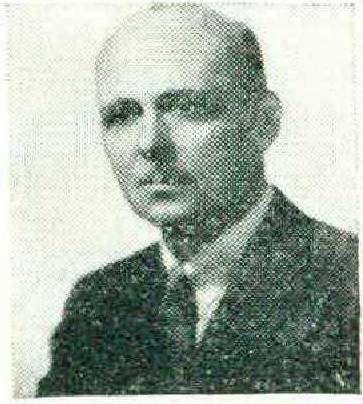
MR. FINLETTER, like every other man who knows the government at first hand, is convinced that the country is in dive peril if a way cannot be found to overcome “the spirit of arm’s length dealing and conflict between Congress and the Executive. What he has done is to write a book which is a reflection on Ins experience in the State Department, carefully and disinterestedly considered. The result is as mature, as cogent, as direct a work on the main difficulty of American government as we have had in this generation.
Mr. Finletter’s major premise is so simple that no one will deny it: that henceforth national policy must be positive and continuous in the conduct of foreign affairs and in the maintenance of employment at an acceptable standard of life. We are finally at the end of isolation and laissez faire — and a failure of government to deal effectively with the consequences will jeopardize our security in the world and our liberties at home.
As long, however, as Congress and the Executive are unable to proceed confidently together, and every few years become enemies, the government will not be good enough for the times we live in. This is an ancient weakness of our constitutional system, and it has now become a critical danger. Mr. Finletter addresses himself to the problem of finding both a remedy and a cure. His remedy does not require a constitutional amendment, but only revision of the rules of the two houses of Congress and executive orders. It is to create a Joint Executive Legislative Cabinet, which would consist of the members of the President’s Cabinet and the chairmen of an equal number of combined committees of the House and the Senate. Thus the Legislative branch would be represented inside the Executive, and the Executive would be represented inside Congress.
But Mr. Finletter recognizes that this remedy is not a complete cure. It could alleviate, and it might postpone, but it would not of itself prevent the kind of destructive deadlock which existed at the end of the Taft, the Wilson, and the Hoover Administrations. For a cure of this dangerous evil, the Constitution would have to he amended, and inevitably Mr. Finletter reaches the conclusion that when an unbreakable deadlock exists, the President should have the right to dissolve Congress and the Presidency, and call a general election.
Obviously, that is the way to end deadlocks, and some day we shall have to have a national debate on this proposal. Compelling as are the arguments in favor of it, I for one should wish to hear a fuller discussion of what, in view of the fact that the President is both the Head of the State and the Chief Executive, would be the consequences of putting an end to the fixed tenure of the Head of the State.
But when that debate takes place, I hope Mr. Finletter will be on hand. For he brings to the discussion of these issues an unusual dignity and high reasonableness which, if they were general in our public life, would make all political reforms much easier, and also, one might say, less urgent. Reynal & Hitchcock, $2.00.
WALTER LIPPMANN