Walt Whitman: An American
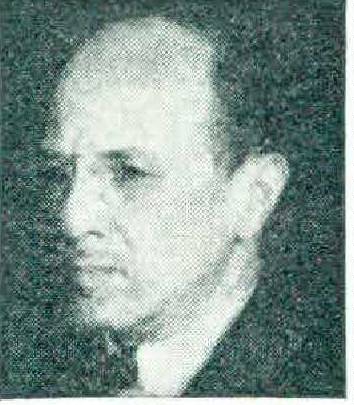
By
THIS new biographical approach to Walt Whitman provides a valuable catalytic agent to reduce our confused thinking about politics and literature to rational elements. It is based upon painstaking and accurate research. The statements of fact are reliable. There is little romancing. The hypothetical “Creole mistress in New Orleans” is the “mumbo-jumbo” with which would-be Whitman biographers have tried to hoodoo their audiences. Henry Canby disposes of this chimera with admirable dispatch and common sense. “There is no evidence whatsoever that anything of the kind happened. . . . Whitman’s difficult sexual make-up and his own words suggest a caresser of the voluptuous female in the imagination rather than in actuality.”
Canby excels in the portrayal of mass movements. He paints the historical background of his subject like a master. But when he treats the inner life and significance of Whitman, perhaps America’s most profound mystic, the result is comparable to what might have happened if Meissonier had set himself the task of executing a commissioned portrait of St. Francis of Assisi or George Fox.
Canby does have an intellectual conception of Whitman’s essentially Quaker philosophy, but he seems constitutionally incapable of grasping its core of spiritual reality as applied either to the life of the individual or to world affairs. Instead, he is preoccupied with what may happen to Whitman and to us in 1944. In his efforts to sell Whitman to a large public which is at present oblivious to the “bard of Democracy,” he expostulates too much about Whitman’s contemporaneousness. This limits his interpretation in scope and in depth. One misses that sense of the “amplitude of time” which is the very essence of Whitman, who said of himself: —
And whether I come to my own today or in ten thousand or ten million years,
I can cheerfully take it now, or with equal cheerfulness I can wait!
I can cheerfully take it now, or with equal cheerfulness I can wait!
Unequaled in all Whitman literature is Canby’s analytical emphasis upon this poet’s unique position as “the American man-of-letters with the most extensive, firsthand knowledge of the machinery of practical politics. The effect of Whitman’s experience in journalism as a shaping influence upon all his work is clearly brought out. But the author’s stirring exposition of Whitman’s clear thinking about “Democracy" is probably the most valuable element in this distinguished clinical study of America’s most discussed and least understood poet. Houghton Mifflin, $3.75.
CLIFTON JOSEPH FURNESS