Mr. Wilder Urges Us On
ByALEXANDER WOOLLCOTT
And slid into the valley; he that stood
Grinning with terror in the bamboo wood
Saw the earth heave and thrust its bowels through
The hill, and his own kitchen slide from view,
Spilling the warm bowl of his humble food
Into the lap of horror; mark how lewd
This cluttered gulf, — ’twas here his paddy grew.
Dread and dismay have not encompassed him;
The calm sun sets; unhurried and aloof
Into the riven village falls the rain;
Days pass; the ashes cool; he builds again
His paper house upon oblivion’s brim,
And plants the purple iris in its roof,
SO READS the eighth in that series of eighteen sonnets which Edna St. Vincent Millay once chiseled into some perishable substance as an “Epitaph for the Race of Man.” In the eighteenth, we are vouchsafed a last glimpse of her standing on a distant and empty shore, her witch-hair stirred by a wind of danger new and deep, in her hands a skull.
Alas, poor Man, a fellow of infinite jest! And courage, too! It had taken more than the eruption of Miyanoshita and its like to get him down. Ravening monsters, famine, cold unbearable, earthquake, flood these had left him undaunted. And he was quite bright. After aeons of study, jarred by wars, he had got good marks in music and astronomy and things like that. But as a species, he had proved inferior in one respect to the termites, let us say. At the all-important art of survival, he was not so good. From the first there had been that in him which foredoomed him to be done in by his own kind. Therefore, long before the end, there would be no trace of him on this indifferent planet, itself impermanent, save one round skull, left behind among the sand and pebbles of the bench. Thus Miss Millay, lifting herself by her poetic bootstraps, as one must to get the long view.
In the new and apparently agitating play called The Skin of Our Teeth, which has been packing the Plymouth Theatre in New York since mid-November, another solicitous friend of Man contemplates the same odd creature’s progress, surveying it from an eminence rather less dizzy but still lofty enough to induce symptoms of vertigo in some members of every startled audience. The result does not pretend to be so conclusive as an epitaph —or need to be so depressing. Rather call it a bulletin issued from the sickroom of a patient in whose health we are all pardonably interested, a bulletin signed by a physician named Thornton Wilder. In its matter that bulletin may conscientiously avoid anything which would encourage us to relax a bit, but there is something flagrantly optimistic in the good physician’s manner. There is exultation in the very title as it testifies to those same tonic dangers in spite of which Man, to the confounding of all skeptics, has wonderfully got as far as he has. Indeed, if another writing fellow named William De Morgan had not stolen a march on him, Wilder might have called his play “Somehow Good.” His prognosis in this case will be accepted with reservations by those who remember how dearly he loves the patient.
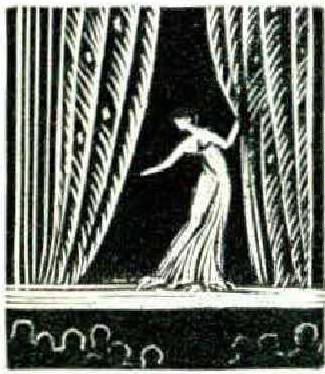
The Plymouth program might well have read:—
PLACE; Home of George Autrobus (Everyman to you)
TIME: All eternity up to now and then some.
It did take a bit of doing to crowd into the two hours’ traffic of the stage the invention of the wheel and the multiplication table and the alphabet, the killing off of the wistful old dinosaurs, one glacial period, one flood, and the end of some war or other. This one, perhaps. But here is a theatrical craftsman every bit as bold, as impatient, as ingenious, and as sovereign in his field as Frank Lloyd Wright is in the field of architecture. Therefore only a little muttered resistance is left in each audience when, at the end of Act One (the chill of the last Ice Age having reached New Jersey), there is the sound of rending wood at the back of the auditorium and the ushers come down the aisles bringing torn-up seats for the Antrobus fireplace, thereby aiding the Antrohus hired girl in her natural and perhaps commendable effort to save the human race.
But long before this, even with the rise of the first curtain, there had been another rending noise, the sound of Mr. Wilder, with a lot to be accomplished, briskly shattering all those comfortably familiar conventions of the theater which would only be in his way. Small wonder that every now and again there rushes forth from the Plymouth an immovable body, loudly voicing to the Broadway night his proverbial distaste for all irresistible forces.
Mr. Wilder probably thinks of such weaklings as playing hooky. You see, he is, like Bernard Shaw, a pedagogue at heart, and just before the final curtain of his exhilarating comedy he docs score a schoolmaster’s triumph. In some twilit hour when he was daydreaming of power, there may well have popped into his head the notion that it would be fun somet ime to take an average audience of flabby and itching Broadway playgoers and jolly well make them listen to the philosophers.
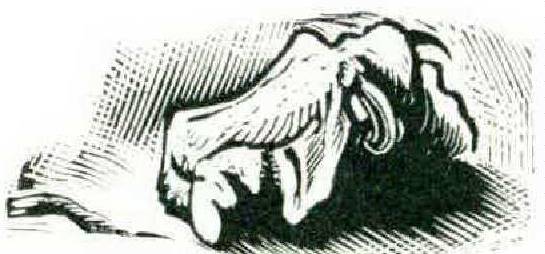
In The Skin of Our Teeth, in the very moment when a meeker playwright would be resigned to the sight of his patrons reaching for their hats — See how strict he is standing there, ruler in hand, all ready to crack down on a knuckle or so! — Mr. Wilder requires his boys and girls to sit still and listen hard to a few words from Spinoza, Plato, Aristotle, and the author of the Pentateuch. You may think of me as decently awe-struck when I report that they do listen — with all their ears and with all their might.
All this happens in a play of the stature, let us say, of Cyrano de Bergerac or Peer Gynt or The Cherry Orchard or Heartbreak House.
It is not easy to think of any other American play with so good a chance of being acted a hundred years from now. His own Our Town, perhaps. Or The Green Pastures or The Wisdom Tooth by Marc Connelly. Of course The Skin of Our Teeth is a war play. Only one who had forgotten The Trojan Women would have thought it impossible that a play could be at once so topical and so timeless.