Exploring the Dangerous Trades
The autobiography of DOCTOR ALICE HAMILTON
CHAPTERS XVII - XXIV

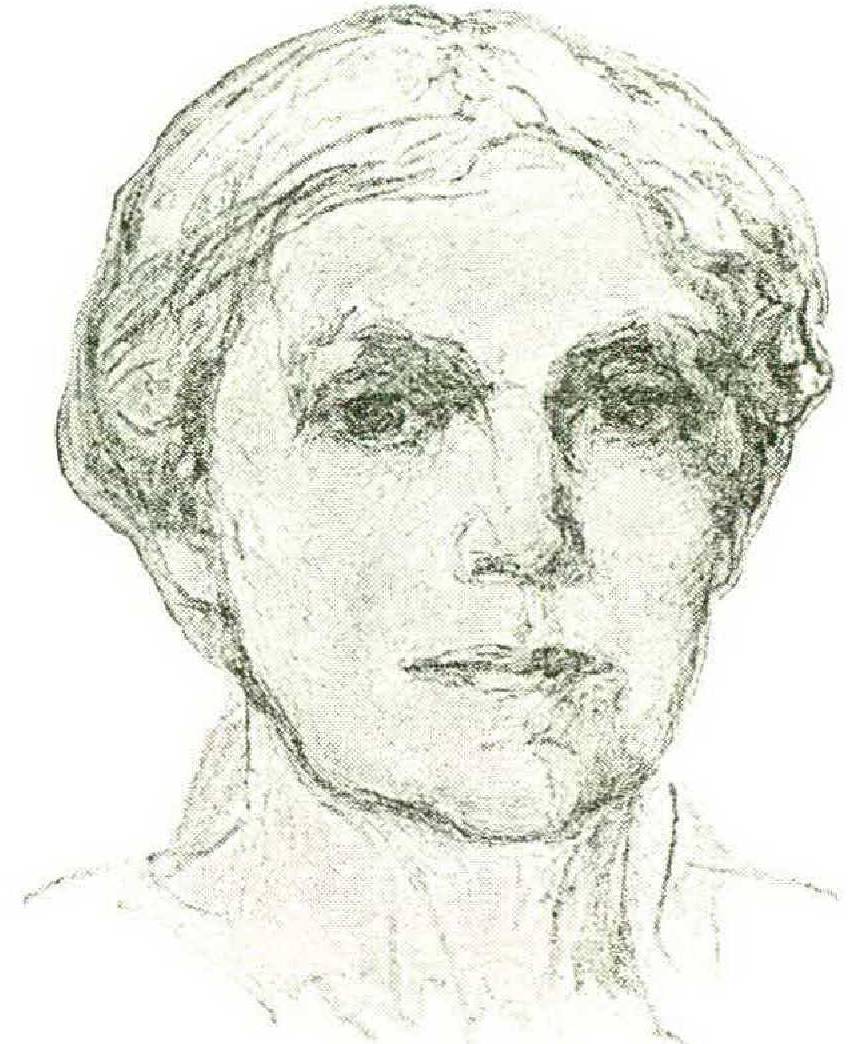
“Protection of workers in the dangerous trades,” writes Dr. Alice Hamilton, “is the chief but not the only subject of this book. Other things have played a great part in my life. I should never have taken up the cause of the working class had I not lived at Hull-House and learned much from Jane Addams, Florence Kelley, Julia Lathrop, and others. Living as I did with Jane Addams, I could not escape being drawn into the peace movement and the efforts to reconstruct Europe after the Armistice. So that too enters into my story. I have tried to paint a picture of life as I have seen it under the period of passionate and hopeful idealism in the nineties; of slowly increasing disillusion culminating in the shock of war in 1914; of the war years with their intolerance and bitterness and wave of reaction; of the ‘giddy twenties ‘ where, underneath the surface froth, I saw unemployment and exploitation; the soberer thirties with the increasing movement toward social justice. During those years I saw Europe at war, I saw the result of the starvation blockade of Germany and Austria, and the Quaker work of relief; I joined the League of Nations committee to fight disease; went to visit Russia under Lenin; took part in the Sacco-Vanzetti case; saw Germany under the early months of Hitler’s rule, Germany and France during the ‘Munich betrayal.’ All these go to make up my book.”
Thirty-two years have passed since young Dr. Alice Hamilton began her exploration of industrial poisons. From her sheltered childhood in Fort Wayne, Indiana, and her study at Miss Porter’s School, she emerged with that scientific bent and that blazing courage which she needed as a pioneer. She took her M.D. at the University of Michigan, did graduate work in Germany and at Johns Hopkins, and then went as an ardent young recruit to Hull-House. Her life at Hull-House gained her the confidence of the immigrant communities and aroused her interest in industrial diseases. Then in 1910 Governor Deneen appointed her to a Commission to investigate whitelead poisoning in Illinois — and her lifework had begun. . . .
EXPLORING THE DANGEROUS TRADES
by ALICE HAMILTON
17
WHILE the Illinois survey was still in progress the Commission decided to send me to Europe to attend the International Congress on Occupational Accidents and Diseases, which was to hold its fourth meeting that summer in Brussels. Dr. Henderson suggested that I take time also to visit lead plants in England and on the Continent. This was an important journey for me, not only because it taught me much in the field of preventive hygiene, but even more because it led to my taking up this new specialty as my life’s work.
The Brussels Congress was a very interesting experience for me, meeting and hearing the famous authorities I knew so well from their writings: chiefly German and English, but also French, Austrian, Dutch, Belgian, Italian. But for an American it was not an occasion for national pride. There were but two of us on the program: Major Bailey Ashford, with a paper on hookworm infestation in Puerto Rico, and I, with one on the white-lead industry in the United States. My paper revealed only too clearly the lack of such precautions as were a commonplace in the older countries. It was still more mortifying to be unable to answer any of the questions put to us: What was the rate of lead poisoning in such and such an industry? What legal regulations did we have for the dangerous trades? What was our system of compensation? Finally, Dr. Gilbert, of the Belgian Labor Department, dismissed the subject: “It is well known that there is no industrial hygiene in the United States. Ça n’existe pas.”
There was one man in attendance at the Congress who felt as keenly as did Major Ashford and I the deplorable impression our country made; and being in a position to do something about it, he resolved that he would. This was Charles O’Neill, Commissioner of Labor in the Department of Commerce, for there was no Department of Labor till 1913, only a Bureau. Soon after I had come home and was again absorbed in the Illinois survey, I received a letter from him asking me to undertake for the Federal government a similar survey, of the lead trades first, then perhaps other poisonous trades. The investigation was to cover all the States, taking one trade at a time, and it must be understood that I had, as a Federal agent, no right to enter any establishment — that must depend on the courtesy of the employer. I must discover for myself where the plants were, and the method of investigation to be followed. The time devoted to each survey — that and all else — was left to my discretion. Nobody would keep tabs on me, I should not even receive a salary; only when the report was ready for publication would the government buy it from me.
I accepted the offer, and never went back to the laboratory. Often I was homesick for the old life, but I had long been convinced that it was not in me to be anything more than a fourth-rate bacteriologist. Interesting as I found the subject, and pleasant as I found the life, I was never absorbed in it. Hull-House was more vital to me by far, and I had no scientific imagination — one problem did not suggest another to my mind. I shall always be thankful for the training in scientific method I had under Dr. Hektoen, but I never have doubted the wisdom of my decision to give it up and to devote myself to work which has been scientific only in part, but human and practical in greater measure.
My service with the Federal government was thus quite free from any red tape; it was really pleasant and independent, perhaps because the chief under whom most of my work there was done came to Washington from the faculty of Princeton, with traditions of university procedure. Dr. Royal Meeker was the Commissioner of Labor Statistics in the new Department of Labor, appointed by President Wilson, and I look back to my service under him with pleasure and gratitude. He gave me a free hand, but was always ready to help in any difficulty; he never edited my stuff, and when nervous manufacturers asked to see it before publication, he would arrange a conference with them, call me in to defend my statements, and stand by me. Also he refused to yield to requests for my dismissal during the war because I was a pacifist.
18
Already in my Illinois survey I had made the acquaintance of the sanitary-ware trade and had convinced myself that porcelain enameling was on a par with such dangerous trades as lead smelting and oxide roasting and corroding white lead. As to the prevalence of lead poisoning among enamel grinders and enamelers, I had an opportunity to decide that question for at least one group before I left Chicago. A strike was declared in a large sanitary-ware enameling works and it occurred to me that here was a chance to meet the usual working force, not only the invalided men, and to see if any of them were leaded. I went to A. F. of L. headquarters and there learned that the strikers were meeting in a Polish saloon and that Frank Fitzpatrick was trying to organize them. He was willing to take me along; so while he harangued the men in the front room, I interviewed them one by one in the back room.
Nowadays the making of a diagnosis of lead poisoning is an elaborate affair. Besides the usual physical examination, it includes examination of the blood, both chemical and microscopic; quantitative chemical tests of excreta; and delicate tests for nerve response. None of such aids were available to me; my methods were as crude as those of Tanquerel des Planches. I adopted a rigid standard. I would not accept a case as positive unless there was a clear lead line in addition to a typical history, or, if there was no line, a diagnosis of lead poisoning made by a doctor on the occasion of an acute attack.
The lead line is very rarely seen nowadays. It is a deposit of black lead sulphide in the cells of the lining of the mouth, usually clearest on the gum along the margin of the front teeth, and it is caused by the action of sulphuretted hydrogen on the lead in these cells, the sulphuretted hydrogen coming from decaying protein food in the mouth. Of course if a lead worker has a clean, healthy mouth, he will not have a lead line, and I have not seen one in over ten years, but in 1910 I looked on it as a common sign.
Among the 148 men I examined — all Slavs, many of them powerfully built peasants — there were 35 who fell into the first class, lead line and typical symptoms; 10 more not only had a line and present complaints but had been treated by physicians for colic; 9 had symptoms of chronic plumbism but no typical lead line because their gums were inflamed and sloughing, with continual loss of surface cells, although they often had bluish spots on the inside of their cheeks. These 54 cases I accepted, but refrained from adding 23 who had a clear lead line but only slight or vague symptoms, and another group of 15 who had symptoms but no line. It would be simply impossible to find nowadays in this country a group of lead workers revealing such a condition, and after an exposure averaging less than six years. The proportion of 54 out of 148 is more than one third.
Because enameling was notoriously hard, hot, and dangerous work American men shunned it. I found in Pittsburgh and the surrounding towns, in Trenton and Chicago, foreign-born workmen — Russians, Bohemians, Slovaks, Croatians, Poles. I remember a foreman saying to me, as we watched the enamelers at work, “They don’t last long at it. Four years at the most, I should say. Then they quit and go home to the old country.” “To die?” I asked. “Well, I suppose that is about the size of it,” he answered.
Only one employer was taking any notice of the lead dust. In all the other enameling rooms, this would be the picture: In front of the great furnaces stood the enameler and his helper. The door swung open, and with the aid of a mechanism which required strength to operate, a red-hot bathtub was lifted out. The enameler then dredged powdered enamel over the hot surface as quickly as possible. The powder melted and flowed to form an even coating. His helper stood beside him working the turntable on which the tub stood, so as to present all its inner surface to the enameler. The dredge was big and so heavy that part of its weight had to be taken by a chain from the roof. During this procedure the men were in a thick cloud of enamel dust, and were breathing rapidly and deeply because of the exertion and the extreme heat. I found that I could not stand the heat any nearer than twelve feet, but the workmen had to go much closer. They protected their faces and eyes by various devices — a light tin pan with eyeholes and a hoop to go around the head, or a piece of wood with eyeholes and a stick nailed at a right angle so that the man could hold it between his teeth.
When the coat had been applied, the tub was swung back into the furnace and then usually there would be a few minutes of respite, for the man to relax, to go to the window for a breath of air, or to take a bite of lunch. There was never any break in the sixor eight-hour shift, so the man had the choice between fasting — and an empty stomach favors lead poisoning — or eating his lunch with lead-covered hands in a leadladen atmosphere. I saw plenty of sandwiches lying on dusty windowsills, and plenty of hasty lunches taken between two bouts at the furnace; and women told me of finding white powder in their husbands’ lunch boxes.
I visited many of the homes of these workers. The enamelers are skilled men and their homes were well kept, yet they stayed only a few years in their well-paid jobs. I secured full histories of 186 cases of lead poisoning; 38 of these men had worked less than a year, 137 less than ten years. Lead poisoning and consumption both were notorious in those neighborhoods; I was told of them not only by the men but by doctors, priests, apothecaries, shopkeepers. And I found an unusually high proportion of severe forms of plumbism among these cases. From doctors and from employers I gained the details of 177 cases; of these, 28 had palsy, 8 had the brain form of plumbism, and 7 died.
Seventeen years later, in 1929, I made a second survey of this industry, this time with special regard to the dust hazard. Silicosis had by then become the most important of the industrial diseases and I knew that in making porcelainenameled sanitary ware not only the enamelers but many other workmen were exposed to silica dust. The lead hazard was still there, but I knew it had lessened during those years, and indeed I found the work of the enamelers not nearly so bad as it was before. In the first place no plant was using so much lead as it had in 1912, and three out of ten used none at all for ordinary enamel. There was also far less dust both in the grinding room and in enameling. The enamelers’ work was much less heavy; mechanical devices had been introduced for opening and closing furnaces, for lifting ware and controlling the turntable. The heat was still as great as ever, the workday still unbroken for lunch or rest, and many double furnaces had been introduced, which meant that the men must work without even the few moments’ break while the ware was heating. Even when the day was cut to six hours, the work was more exhausting than on the single furnaces.
But the department that interested me most in this second study was the one where the iron ware is prepared for coating with enamel. As the tubs come from the foundry their surface is smooth and enamel will not stick to it, so in order to roughen it a blast of fine sand is turned on it and the million particles of sand make millions of tiny dents in the metal so that it is frosted all over. Every industrial physician knew this to be one of the most dangerous jobs in all industry, and the National Safety Council had appointed a committee, of which I was a member, to study sandblasting and to suggest how the danger might be controlled. So I had seen a good deal of this process in other industries but never anything approaching what I saw in sanitary-ware manufacture.
Imagine a great room filled with men clearing mold sand off the tubs from the foundry. At one end, through a thick fog of dust, one can dimly see eight lamplit little rooms open to the big room, in each of which a grotesque figure is manipulating a sandblast which, with a deafening roar, shoots sand at something, one cannot see what. Great clouds of sand come eddying out into the room, filling the air the cleaners must breathe. Some attempt is made to protect the sand blaster, none at all to protect the cleaner.
This was the worst plant I saw, but three others were almost as bad, all in States where no compensation law for occupational disease existed. The others were all much less dangerous and one was excellent in every respect. This was the Kohler plant in Sheboygan, Wisconsin, or rather in the charming village of Kohler. I remembered it from 1912, for Walter Kohler was then the only manufacturer of sanitary ware I met who was seriously concerned with the problems of lead poisoning and of dust. In the intervening years he had done away with the lead and had brought the dust under control. In some of the other plants I saw excellent conditions, but Kohler’s stood at the head in 1929. What Mr. Kohler had done was to make the sandblast chambers dustproof, so that no man outside was endangered, and to provide the sand blaster with pure, dustfree air fed to him through a pipe which led to his respirator. And of course a physician kept close watch of all these men.
Enameling sanitary ware is still a dangerous trade, for only the greatest precautions can prevent silicosis in sand blasters and enamelers, and even if there is no lead in the enamel, the excessive heat is harmful. But compared with the situation in 1912 the trade has made enormous progress, aided, no doubt, by the passage of a law in Pennsylvania awarding compensation for occupational disease.
19
The potters’ trade is a very old one and from earliest times men have known that potters suffer from consumption, or phthisis, a disease of the lungs accompanied by wasting, more than ordinary workmen do. Silicious dust is not the only danger in the potters’ trade; lead is there also, and for a long time, before much was known about silicosis, the lead poisoning of potters was notorious, especially in England and Germany, It is in the glaze and in some forms of decoration that lead is used. The addition of lead makes a glaze more fusible, less heat is needed in firing, and as a consequence, firing is cheaper and less harm is done to colors than would occur if greater heat were used. The peasant potteries of Germany, Russia, Hungary, where lead glaze and lead colors were used in the home and the firing was done in a primitive kiln, were the cause of dreadful forms of lead poisoning even in the children.
Pottery is fascinating work, far the most attractive of all the trades I have studied, and it is full of old associations that come to mind as one beholds the “potter’s wheel,” the “clay in the hand of the potter,” the power of the potter over the clay, “of the same lump to make one vessel unto honour, and another unto dishonour.” Next to the shaping, the decoration fascinates one. Much of it is done by means of transfer papers — decalcomania — just like those we played with as children. Then there is tinting or color spraying, which means applying the color by means of an atomizer and compressed air. Ground laying is seen only on expensive ware, those plates and platters which have a wide solid band of color along the edge. To make this, dry color is dusted on a prepared surface with a pad of cotton. Of these three methods, decalcomania is devoid of any danger; both the others may poison the air with fine lead dust.
At the time of my survey, firing the ware was done always in the great kilns one sees as one passes through New Jersey and Southeastern Ohio. The dangerous features in pottery work are to be looked for in the dust: silicious dust (flint) that is mixed with the clay and with the glaze, lead dust in glaze and colors. Control the dust and you have made the place safe.
In mixing clay and glaze, no effort whatever was made to prevent escape of dust. Lead was added raw to the finished glaze, never before fusing. Dipping rooms had wooden floors impregnated with glaze dust, swept dry by the women helpers. The excess glaze was removed after it was quite dry, often not till the following day, by brushing, scraping, blowing. Everything was white with dust, and there was no wet cleansing anywhere. Usually the only washing facilities were small sinks with cold water: hot water was rarely supplied, soap and towels never. No medical care was given, except for some accident or for violent colic or convulsions occurring in the plant.
It was dreary work looking for cases of lead poisoning in Trenton, and even more dismal in East Liverpool, where I spent most of the month of March. There was plenty of lead poisoning, and for the first time I was discovering numerous cases in women and girls. It was the first organized trade I had studied, except for rather hasty surveys of printing and painting in Illinois, and I enjoyed very much the novelty of being able to question the men right before the foreman and to know that they felt perfectly at liberty to tell me everything. But I did not get the help from them that I had expected; in fact, the union men resented my effort at investigation. They said the insurance companies were discriminating against them already and this would make it worse. I gained a very strong impression of the aristocratic spirit of the craft unionist. Women were not eligible to membership in the union, nor were grinders and mixers — only dippers and kiln men. When I asked why, I was told that those people had no skill, they were not union material.
These workers were all Americans, easy to interview. The doctors were none of them employed by the companies and they were willing to tell me all they knew. The manufacturers too were ready to show me everything, with no slightest suspicion that there was anything to be ashamed of. Some pictures rise up before me as I write: one of a tile works, so dusty that the wooden floor was velvety to the foot. There were piles of dust in the corners; walls and windows were coated with it. Dipping and decorating was done with lead glaze containing 50 per cent white lead. I lingered after the work had stopped, to see what sort of cleaning would be done, and saw the dust swept into piles and shoveled into barrows. When I suggested a slotted floor and flushing, the foreman retorted, “Why, that would spoil it. You must remember, this dust is valuable.” Yes, I thought, the dust is valuable.
The other picture is an “art” pottery in Zanesville, then the center for such products. Art pottery meant — perhaps it still does — bowls and vases and umbrella stands and plaques and spittoons, decorated with colored glazes rich in lead. This particular pottery had one great room stacked with “art” spittoons which had been decorated with colored glazes containing 40 per cent white lead. That seemed to me the most striking illustration of an industrial civilization gone a little mad. Here were thousands of hideous objects which never should have been made, and in the making of them men and women had been exposed to painful and crippling disease.
My search resulted in the uncovering of a number of cases — not nearly all, of course, for very few doctors could give me individual histories and I could not do anything with vague statements. But even so, I found enough to make a record of one case of lead poisoning in men potters to twelve or thirteen employed in a year’s time, and of one to seven among women.
Here was an industry far more difficult to deal with than white lead or smelting because it had no big, rich companies which could put in drastic changes without going bankrupt. These potteries were mostly medium-sized or small, and suggestions as to needed reforms were taken as appalling, impossible. Yet pottery manufacture was one of the highly protected industries, and I could not help thinking that an industry which was actually subsidized by law should be made to submit to public control.
The argument that the tariff “protected” the American potter made no impression on me who had seen the conditions under which potters worked and lived. The Underwood tariff was in process of making at that time, and the pottery manufacturers were in Washington demanding higher rates. I wrote to Senator Underwood arguing that they should not be given a subsidy unless they were willing to give something in return, and that Americans should not be forced to buy inferior goods made under bad conditions. I included a brief description of English and American potteries and of the amount of lead poisoning present in the two. Senator Underwood read my letter at a hearing, but it met only fierce denials from the manufacturers, and nobody was there to defend my side.
I left the pottery field deeply depressed and hopeless as to any way of helping matters. But almost ten years later, in 1921, the United States Public Health Service, which by that time had an excellent division for industrial hygiene, made a thorough study of the pottery trades, with examination of over 1800 men and women, and analyses of the air to determine the amount of soluble lead dust. This extensive and thorough study showed that matters had not improved since 1912 and that there was much lead poisoning even in the large and newly constructed plants. An amount of lead dust was found in the air which far surpassed what was then thought to be the safe limit, and the cases of lead poisoning were numerous in proportion to the dustiness of the premises. The rate for men and women was 22.8 per cent, whereas the comparable rate in English potteries was 0.9 per cent.
This report had a very decided influence, since by 1921 both Ohio and New Jersey had greatly improved their factory inspection services. Whenever I visited a pottery center after that, I found conditions much better, sometimes surprisingly good. “Fritting” the lead — that is, making it insoluble by adding it to the glaze before it is fused — began to be a common procedure. I have since gone over one of the largest potteries in the country, the Onondaga in Syracuse, where all the glaze contains less than 5 per cent soluble lead. With this change there is no longer any need to take elaborate precautions to prevent lead poisoning,
20
There are several great lead smelters in Southern Illinois and refineries in the northeast corner of the State, so I had been obliged during the Illinois survey to familiarize myself with the complicated processes of lead metallurgy. Other methods came to light as I journeyed from the Atlantic Coast to Montana for my Federal survey. Smelters are huge concerns; they require a large outlay of capital and therefore their number is comparatively limited, but refineries can have a much simpler equipment — indeed they run all the way from little junk shops, which undertake to recover lead from all kinds of scrap, to huge plants which refine the products of smelting in Mexico.
In smelting, the danger comes from lead dust and lead fumes, and practically every process, from grinding the ore down to pouring the pure lead into molds, produces dust or fumes or both. I have never seen this done in such a way as to protect the workman completely. On the whole, there is more danger from fumes than from dust in a smelter, except for the periodic flue cleaning, but in a refinery it is the dust especially that must be controlled. This is because refineries — and junk shops — handle all kinds of lead scrap, some of it very dusty.
The great smelters were in Illinois, Missouri, Colorado, Utah, Montana, and along the Atlantic Coast. I went first to Southwestern Illinois for a second inspection of the great plants down there where the dangerous Scotch hearths are used, and then on to Western Missouri, to what is called the Tri-State area, a region of zinc and lead mines, concentrating mills and smelters, situated where three States come together — Missouri, Kansas, Oklahoma. We think of it now as one of the chief centers of silicosis. This disease comes from breathing silica-containing dust, such as sand, flint, feldspar, granite, much of the ore in metal mines, some of the dust in anthracite mines. The silica sets up a hardening process in the lungs which may lead to tuberculosis. Back in 1913 we knew only vaguely about that occupational disease, and it was the smelting of lead that sent me to Joplin, the chief city of that region. A large smelter and oxide-roasting plant not far from the city was being run by three young men who were in a desperate hurry to make money, but they had a great pride in their plant and had urged me to visit it.
I got there on a bleak day in January, with a heavy, gray sky overhead, mud and slush underfoot. It struck me as a good plan to explore the village first, so I spent a day on Smelter Hill. It was the dreariest, most depressing community I had ever seen, with ramshackle, hastily built wooden houses, unpainted, sagging; and around the village not a tree, only great heaps of tailings, — “chat” as the people called it, —the refuse from the concentrating mills, which formed huge pyramids of ground rock and wide stretches of fine sand as far as the eye could see.
The villagers were quite as depressing. They were hill people from the Ozarks or Western Kentucky, or farmers from Arkansas; they were full of malaria, hookworm, and silica dust from the chat heaps, to say nothing of lead. There was absolutely no touch of community life except a store which sold mostly patent medicines and liquor, and a water cart which creaked and slopped from door to door, peddling water by the gallon. It was easy enough to find cases of lead poisoning, of anemia and emaciation, of palsy, and of lead colic.
There was one amusing feature of that visit, however. I discovered that everybody in the village knew I was expected. The first woman who came to the door said, “Oh, you’re the lady from Washington,” and when I asked her how she knew about me, she said, “We all knew you was coming. They’ve been cleaning up for you something fierce. Why, in the room where my husband works, they tore out the ceiling because they couldn’t cover up the red lead. And a doctor came and looked at all the men, and them that’s got lead, forty of them, has got to keep to home the day you’re there.” It was amusing, but irritating too. Of course, I knew that I had no power to cause the managers the slightest discomfort, but I was thankful they thought I had; on the other hand, I was provoked to know that I should see, not the real state of things, but a hastily arranged special show.
The most amusing part came when I had been over the plant and sat down in the office to face three pleased and proud young men who waited for me to give them the praise they thought they deserved. “I am sorry,” I said, “that I cannot say anything about conditions here, because I have not really seen them as they are — only as they have been staged for me. You see, I spent yesterday on Smelter Hill and heard on all sides the story of the cleanup of the danger spots and the concealing of the cases of lead poisoning. So I simply do not know what I can say in my report to Washington.” There was an awful silence. The young managers looked like guilty schoolboys; it was so funny that I could not help bursting out laughing. At last they all joined in and the situation lightened; they gayly admitted the fraud and promised to let me see the doctor’s report and to do everything they could to make the temporary reforms permanent — including a regular medical examination of the men.
That evening the doctor and one of the department heads came to see me in the hotel and to tell me that they had had no share in the attempted deception and to assure me that their promises would be kept. Reforms were certainly needed. My notebook has records of 128 cases, all serious, in 1913, with 3 deaths, 9 cases of cerebral plumbism, and 10 of palsy. In the worst job, cleaning out the flues, the rate of poisoning was 62.5 per cent.
In April, 1940, I visited the Tri-State region again, this time on the invitation of Secretary Perkins, who called a conference in Joplin to consider not lead poisoning but silicosis, far more widespread and important. There is still a lead smelter there, but the dangers have been better controlled; the rate of poisoning now must be far below that of 1913. But to my amazement I found the same abomination of desolation in the countryside that I had seen twenty-seven years before, not in the same place, but spreading out far more extensively, over parts of three States. Wherever new mines have been opened, there the great pyramids have risen and the flow of fine sand has spread around their bases and blown far and wide over the desolate villages huddled around them. One village we visited might have been Smelter Hill in 1913, only that the water peddler now drives a truck instead of a horse, and the people tell you about “miner’s con” instead of lead colic.
Colorado came after Missouri, the great smelters in Pueblo, Denver, Leadville, Salida. Leadville is high up in the Rockies — the highest incorporated town in the United States at that time, they told me.
Leadville as I saw it was an ordinary smelting and mining town, but something of its history still clung around St. Vincent’s Hospital when I went to study the records. The books go back to the eighties, and as I read the brief items (name, age, sex, diagnosis) a picture formed it self of a camp full of men, young men mostly, reckless, quick with knife or gun, working in lead without any protection, taking their sport in drinking and fighting. Case after case read “Pneumonia, with alcoholism”; “Delirium tremens”; “Knife wounds”; “Gunshot wounds”; and, over and over again, “Lead poisoning.”
From Colorado I went on to Utah, where there were three large smelters. A letter I wrote my mother from Salt Lake City gives some of my impressions: —
Yesterday I visited doctors and druggists and hospitals. I am amazed to see how lightly lead poisoning is taken here. One would almost think I was inquiring about mosquito bites. When I asked an apothecary about lead poisoning in the neighborhood of the smelter, he said he had never known a case. I exclaimed that that was incredible anti he said: “Oh, maybe you are thinking of the Wops and Hunkies. I guess there’s plenty among them. I thought you meant white men.”
When I went through the records of the wards maintained in one of the hospitals by that smelting company, I realized why it seemed so unimportant — the accidents are so terrible and so numerous that a little thing like lead colic attracts no attention. My hair almost stood straight as I read of the burnings and crushings and laceratings, the amputation of both arms, the loss of eyes, the deaths from ruptured livers or intestines. And there is no system of workmen’s compensation in Utah, and the men themselves contribute all the money that their surgical and medical care costs.
At the medical meeting in Denver, I heard the head surgeon of the great —— Company describe the welfare work of that company: hospital, kindergarten, day nursery, domestic science school for foreign women, etc. Later on at lunch, I managed to ask most casually if the men’s contribution covered all that program, and he assured me it did.
It was much the same in the East. On the Atlantic Coast, I found a great smelter-refinery where lead poisoning was rife among the immigrants who made up the poorly paid force. The wage scale was the lowest I had found, because the men could be hired as they landed, before they had a chance to learn American ways. There was no attempt to protect them from dust and fumes, and so many sickened that the labor turnover was high. But that made little trouble: all the manager had to do was to go to the gates in the morning and pick out from the eagerly waiting crowd the number he needed. He took the company doctor with him to make sure of getting the healthiest men.
This doctor, in charge of over 6000 men in several plants, was a hard-boiled man, a good servant to the companies but with an attitude of contemptuous hostility toward his charges. When an accident occurred, a crushing, or falling, or burning, he was always ready to fend off a damage suit by certifying that the victim had heart disease and that it was heart failure, not negligence on the part of the company, that had injured or killed him. Yet his salary and the expenses of his dispensary were all paid by the men, from whose wages $1.75 was deducted every month for medical care. I found, as I talked with the men and their wives, that they did not trust him and resented his insolent ways. Those who could afford it went to other doctors and so had to pay twice over for sickness. This system was very common then in the smelting industry, though I remember that the St. Joseph Lead Company of Missouri even then had an optional system, the men receiving care if they chose to pay a dollar a month. Nowadays the great smelters bear the cost themselves, but the old system still survives in spots. I found it in force not long ago in one of the Mellon soft coal mines in Pennsylvania.
In smelting, as in white-lead production and pottery glazing and coating iron tubes with enamel, it was the pollution of the air with lead that one had to fight, together with the rooted prejudices of the employer, who held firmly to the belief that poisoning was caused by the worker’s own carelessness in handling his food and his chewing tobacco without first washing his hands. I heard the head physician of one of the great Colorado companies say in a medical meeting that it was not the lead a smelting worker encountered in the plant that poisoned him, only the lead he carried home on his body — certainly curious reasoning!
I interviewed another doctor, a well-trained man, who was in charge of the employees of a large smelter in Utah. He said to me, “I always tell the men that if they are careful to scrub their nails they need not fear lead poisoning.” That morning I had been over the smelter in question and had watched the dumping of the HuntingtonHeberlein pots. These are great round preroasters in which the ore is made ready for the blast furnaces. I had seen the huge pot carried by a crane to the dump, a pit with an iron grating over it. The halves of the pot separated and the red-hot, fuming ore crashed down on the dump. Men came forward with long-handled bars to break up the big chunks and push them through the grating, working in such clouds of dust and fumes that I could hardly see them. These were the men who had been told to protect themselves by scrubbing their nails. Incidentally, the only provision for washing in this smelter was a hydrant out in the yard.
This belief was doubtless a great comfort to the employer, for no man wants to feel he is responsible for the sickness and death of his workmen. But the most superficial observation would have been enough to discredit it. In every lead trade I studied I found ample proof that only by keeping the air they breathed clean could the men be protected from poisoning. By 1912, I had collected 52 cases of lead poisoning of the brain (later raised to 150 cases), that dangerous form which now has practically disappeared, and all these 40 men and 12 women had worked in air full of lead dust or fumes. Twenty of these cases were fatal, a much larger proportion than that found by Tanquerel des Planches, who reported only 16 deaths in 72 cases.
21
The investigation of the Pullman works was by all odds the most interesting incident in my study of the painters’ trade. During the Illinois survey I had been out there several times and had talked with many employees in their homes. It was the biggest and most varied industrial plant I had ever visited and I was deeply impressed by the hazardous processes which went on there — the many chances for serious injuries to the workmen. But my subject was lead poisoning and I stuck to it, particularly to the dusty job of painting and rubbing down the ceilings of Pullman cars. In the course of our searches through hospital records in Chicago, we had come across the histories of fifteen cases of severe acute lead poisoning in men who had done this work. They were not regular painters. The risks were too well known in the trade, so the job was left for recent immigrants, peasants from Hungary, Serbia, Poland. They had been so severely poisoned that the police had had to take them to the County Hospital, some twenty miles from Pullman.
After I had watched the men on that particular job I went to see the doctor, and my visit revealed an amazing state of affairs in a plant so huge. The medical department was of a primitive simplicity which seemed incredible. Its personnel consisted of one old doctor who had been a surgeon in the Civil War and who carried on all his work in the two front rooms of his private house. When an accident occurred, the first man summoned was always the company lawyer, who brought with him a diagram of the human body and noted upon it the parts apparently injured. Only then was the man carried to the doctor’s office, where he was given the sort of treatment that can be given in a private house with a minimum of asepsis and of apparatus. There was no nurse, and when I asked the old doctor how he managed when an anesthetic was needed, he said his wife was pretty handy. If the injury was serious, an ambulance was called from St. Luke’s Hospital in Chicago, some eight or ten miles away (there was not even an emergency bed for a severely injured man). The long delay between accident and skilled surgical treatment must have affected seriously the outcome of many a case, especially a case of shock. But there was no compensation law in Illinois then, and nobody paid any attention to such a trifle as lead poisoning.
I can remember how after that visit, as I would pass through Pullman on the train in the course of my journeyings, I would curse it in my soul, picturing what was going on there and realizing how powerless I was to do anything about it, for the management then was absolutely unapproachable. But suddenly I found to my relief that there was a chance to bring about a change. I had poured out the story to Miss Addams and she made me repeat it to Mrs. Joseph T. Bowen, one of the first and staunchest friends of Hull-House, and a member of that all too small class of wealthy people who feel a direct responsibility toward the sources of their wealth. She was a large holder of Pullman stock and she told me she would see what she could do through a formal protest.
Reforms in Pullman came quickly. I was sent for to put the case before the officials, who were by now concerned. Changes took place with breath-taking speed, and by the end of 1912 there were a modern surgical department with surgeons in charge, an eye specialist, and a medical department to supervise the 500-odd painters. Moreover, a less dangerous form of lead was used in the paint and every effort was being made to protect the men against lead dust. The results were striking. When the physicians made their first examination of the painters in 1911, they discovered 109 cases of plumbism among 489 men during the first six months, but in 1912—1913 only three cases were found in a year among 639 men. Since then, lead paint has been almost entirely eliminated. The Pullman Company rose rapidly to the first rank of industrial corporations in its health and safety work and it still holds its place there.
22
Nobody who was not a mature person in the summer of 1914 can realize now how remote, how unbelievable, a European war then seemed. Believing as we did then in the slow but sure progress of the human race, we looked forward to nothing worse than sporadic outbursts in such unknown regions as the Balkans or South America, never in the highly civilized countries of the Europe we knew so well.
We put all the blame then on the Germans. We had no doubt as to their war guilt, but I myself fastened it on the Kaiser and the military caste. The Germans I had known in my childhood in Fort Wayne, in my student life over there, could not be responsible for this ruthlessness and cruelty toward a small and helpless country; it must be laid to those arrogant, swaggering officers who had been so much in evidence in every German city. That the Germans would obey them meekly I was ready to believe, for never had I seen a sign of indignation, even of criticism, no matter how insolent an officer might be; but I was not ready to accuse the German people of anything worse than submissiveness to those on top.
But throughout the country the attitude toward war changed, and the demand grew strong and insistent that we throw our weight on the side of the Allies. In response to that, the peace movement began to gather force and to take definite shape, to adopt a concrete program. As early as the fall of 1914 women all over the country had begun to draw together for the study of possible steps toward a just peace, and the Women’s Peace Party was formed with Jane Addams as chairman.
Then in March, 1915, there came to Miss Addams a call, signed by British, Dutch, and Belgian women, to an international Congress of Women to protest against war. It was to be held in The Hague late in April and Miss Addams was asked to preside over a gathering of women from the warring countries as well as from the neutral. She accepted at once and I decided to go with her, as did some fifty American women. We had a long journey over, on the Noordam, for we were held up from Friday to Monday off the coast of England near Dover, waiting for British permission to go on.
Long as it was, the journey was far from tedious. There were interesting discussions, while the American group formulated the concrete proposal which they intended to lay before the meeting in The Hague. This was the plan, first proposed by Julia G. Wales, which came to be known as “continuous mediation.” After the Hague Congress was over, it was this plan which Jane Addams and Emily Batch carried to all the capitals of the warring countries and to several of the neutrals.
The plan involved the formation, under the initiative of the United States (simply because we were the only neutral who could be unafraid in that crisis), of a conference of men from the neutral nations, which should act as an agency of continuous mediation for the settlement of the war. We believed that, while offers of mediation by a single nation might be rejected because one side might feel doubts of the impartiality of that nation, the same objection would not be felt toward a conference which would include nations of different sympathies; and that while a given offer at a given moment might be refused, repeated offers made by a continuous conference might in the end meet acceptance.
The Congress of Women at The Hague was deeply impressive to us Americans. There were women from the neutral countries, and from Germany and Austria, from Belgium, from Russian Poland, and from England. Nothing we had read about the war had made us realize it as did a few talks with these women.
Miss Addams as always was the great figure at the Congress, the beloved leader, and the program she proposed, continuous mediation, met an enthusiastic acceptance. Indeed the reception went beyond what any of us had expected, and we were startled to discover that the Congress was moving to appoint two delegations of neutrals to visit the capitals of the warring countries and of the principal neutrals to place the plan before the Premier and the Foreign Minister of each, seeking endorsement if possible, or if not that, at least a pledge not to oppose it. Obviously Miss Addams was to head one delegation and, though rather dubious as to the wisdom of the scheme, she accepted. Emily Balch of Boston headed the second delegation, which was to visit the Scandinavian countries and Russia, while Miss Addams would go to England, France, Germany, Austria, Hungary, Italy, Holland, Switzerland, and the exiled Belgian government in France.
In my usual role of “confidante in white linen ” I was to go with Miss Addams and with Dr. Aletta Jacobs of Holland, a famous suffrage leader, who also took a friend, Mevrow Palthe. Miss Addams met me in Amsterdam. She had gone on the first lap of her mission, to London, and had talked with Asquith and Grey, meeting with a courteous, almost sympathetic, but noncommittal reception. As she was leaving Asquith she said, “I suppose to you this seems a very foolish performance,” and he said, “Not at all, It may be of some good. At any rate it is worth trying.” She had also been able to discuss the plan for continuous mediation with a number of influential people — Lord Haldane, Morley, Bryce, Graham Wallas, Ramsay MacDonald, Charles Trevelyan, Bertrand Russell, the Bishop of London. This experience had given her a greater degree of confidence in facing the task put on her by the Congress, the task of penetrating the chancelleries of Europe and placing before the men in charge of their countries’ policies a plan to shorten the war and to bring about a “peace without victory.” She had, of course, no standing except that of an American citizen; nevertheless, in each capital we visited, our Ambassador or Minister secured interviews for her and Dr. Jacobs with the Premier and the head of the Foreign Office. There were no difficulties on that score, nor did she meet with the slightest resentment from any of these statesmen.
Miss Addams and Dr. Jacobs made a purely human appeal based on the cruelty and futility of war, protesting as women against the suffering, the waste of life, and urging that at least an attempt be made to bring about, through nonviolent discussion, adjustments of the quarrels which had given rise to the war. They found often a surprisingly warm response to this appeal. One Minister said that it was the only sensible thing that had crossed his threshold for months; another said that he had often wondered why women had remained so long silent, because since women cannot join in the fighting, they may make a protest against war which is denied to men.
Berlin was our first objective. Miss Addams saw von Bethmann-Hollweg alone at the chancellery, and then she saw von Jagow with Dr. Jacobs. Both men gave her the impression that a peace offensive from the neutrals would not be unwelcome, and certainly Germany would not take it as a hostile act.
Vienna was sad, much sadder than Berlin, for even then, in the spring of 1915, the Austrians were hungry. Our restaurant meals were made painful by the sight of pale, emaciated faces lurking just outside the window or behind the potted shrubs on the sidewalk, hoping for a crust to be slipped to them. Already the official food ration was insufficient even for women. Everywhere we saw convalescent soldiers, on crutches or in wheel chairs.
The interviews with Graf Stürgkh and Baron Burian were easily secured by our Ambassador, Frederick Penfield, who was very kind to us. I went with Miss Addams to see the former Minister of Foreign Affairs, Count Berchtold, the man we all then held to be chiefly responsible for the war. He lived in a plain house in a little narrow street, but when the door opened it revealed a beautiful garden and a great hall and a lovely library opening onto a terrace, where the Count received us. He struck me as the perfect type of diplomat, highbred, with easy, cordial manners, and an apparent frankness which covered absolute secretiveness. He was eagerly curious to hear all Miss Addams could tell him, and plied her with questions — but when he had bowed us out and we looked back over the interview, we found he had said absolutely nothing.
Budapest was a very different experience. We went there because, though a part of Austria, Hungary had her own Prime Minister, the great Tisza, more important than either Stürgkh or Burian, and the Hungarian women had insisted that Miss Addams see him. The atmosphere there was amazingly free. Although in Berlin Miss Addams had been able to talk to the Women’s Club only if she promised not to mention peace, in Budapest she spoke to a large audience of men and women who insisted on hearing all about the Hague Congress and her mission.
We went through Switzerland to Rome, to a country which had just entered the war and was triumphant, bewildered, jittery. In Rome, Miss Addams’s formal interviews were purely perfunctory. Salandra and Sonnino would say no more than that Italy would not regard an offer of neutral mediation as a hostile act. But it was altogether different when we had our audience with Pope Benedict XV, for me the high spot of the whole trip.
Cardinal Gasparri arranged for the interview after a long and sympathetic talk with us. Our Italian friends were much excited when they heard we were to have a private interview and they saw to it that we were properly dressed in long-sleeved and high-necked black dresses — I remember much tucking of scarfs to hide the collarless state of our dresses — and with veils of black Spanish lace on our heads. We were ushered in past the gorgeous Swiss Guards one sees when one visits the Vatican Galleries, to the inner part of the palace where they were replaced by still more impressive figures, men in beautiful suits of ecclesiastical red silk, or of black velvet faced with blue satin and trimmed with silver.
We had been told that when we were admitted we must kneel and kiss the Pope’s ring, and we were fully prepared to do so, but Benedict XV was a man of the world; he saw at once that we were Protestants and did not know how to behave. He greeted us as any gentleman would, and we found ourselves somehow seated beside him without any awkward interlude. He was a little man, and very ugly, with a beak-like nose, sallow skin, and heavy-lidded eyes, but it was an ugliness that attracted, not repelled. He was dressed in a straight narrow gown of white (velvet, I think), with red buttons down the front and a red girdle and white skullcap.
He had been given the outline of the plan for continuous mediation by Cardinal Gasparri. He put eager questions to us about the response of the statesmen Miss Addams had seen and the prospects of American backing. It seemed to him more promising than any other effort he had heard of, and he told us to convey to President Wilson his hearty wishes for its success. “I should offer myself as one of the mediators,” he said, “did I not fear that it would be misunderstood and do more harm than good.”
Then he spoke to us of his deep grief over the war, with the Church split asunder, Catholics fighting Catholics, and he himself accused by each side of partiality toward the other. Our interview lasted forty minutes, then he rose and dismissed us.
In Paris Miss Addams saw Viviani and Delcasse — the former approachable, even cordial; the latter absolutely hostile. He said that this time it must be war à l’outrance; there must be no possibility of a German revival: victory must be complete and final. If ghosts have any knowledge of our present world, Delcassé’s must be an uneasy one.
We sailed home from England in a wretched little American steamer, the St. Louis, which profited by the sinking of the Lusitania to charge the highest rate to those who were afraid to take passage on any but an American ship. When we landed, Miss Addams faced the most difficult task of all: persuading President Wilson to put himself at the head of the neutral nations and, with them, to carry on continuing efforts for peace. She failed. Wilson preferred to work alone, through Colonel House, and secretly. The war went on.
There are a few of us who still believe that there was a better way than war, and that if Wilson had been willing to follow it there might have been a shortened war, a peace brought about by negotiation before the war had done its worst, before militarism had entrenched itself everywhere and nationalism grown to monstrous proportions; a peace which would have saved America from war madness and its aftereffects, and — who knows? — even a League of Nations growing out of this conference of neutrals instead of one formed by victors after years of bitterest conflict.
23
Soon after I returned from Europe the war became my daily absorption, for the Department of Labor immediately put me to work on the rapidly developing industry of high explosive production for Britain, France, and Russia. Under the stimulus of an increasing pressure from the Allies, plants had sprung up along the Atlantic seaboard for the manufacture of shells and mines and of picric acid, dinitrobenzol, trinitrotoluol, smokeless powder, military guncotton, mixed powders, and fulminate of mercury. The French demanded picric acid, the British and Russians TNT and mixed powders; all demanded fulminate of mercury, which is the “ booster charge,” — the detonator to start the explosion, — and the various powders which have nitrocellulose as their base. These are all nitrated compounds, made by the action of nitric acid on cellulose or glycerine or toluol or carbolic acid (phenol) or mercury, and therefore a great quantity of nitric acid was needed. Picric acid and TNT are made from coal-tar benzol and toluol, which are byproducts of coke ovens.
Up to this time we Americans had had little or no experience in producing these wartime chemicals. Now, with the blockade shutting us off from Germany, we had to construct coke by-products plants and to start production of nitric acid on a huge scale. These were new, unfamiliar procedures and brought new problems to our engineers. In addition to chemicals, the blockade shut off German dyes and also aniline, which the rubber industry depended on and which is another of the benzol derivatives. All the substances I have mentioned (except nitrocellulose) are poisonous to man — some producing their action through the breathing of fumes; some making their way into the body through the skin; all, with the exception of nitric acid and mercury fulminate, acting on the central nervous system, though in several cases this action is not so serious as the damage produced on blood and organs.
I had to go back to pioneer exploration. If there was anyone in Washington who knew where explosives were being produced and loaded (loading means filling shells and mines), he kept the secret. Neither Army nor Navy gave me any more information than I was able to pick up myself. Dr. Meeker could only tell me to follow my old procedure, visit the plants I knew and pick up gossip about the others. This method worked very well and I was helped also by the great clouds of yellow and orange fumes, nitrous gases, which in those days of crude procedure rose to the sky from picric acid and nitrocellulose plants. It was like the pillar of cloud by day that guided the children of Israel. I would hear vaguely of a nitrating plant in the New Jersey marshes and I would spot the orange fumes and go to them.
On one of my first trips in New Jersey, while I was waiting in a small railway station I noticed a Negro and a white man standing near me. Everyone waiting for the train was looking at them curiously. “Look at the canaries,” somebody whispered. The white man was of a leaden hue, thin and weary-looking, but touched into incongruous comedy by smears oi orange stain on his cheekbones and deeply dyed yellow eyebrows and hair. The Negro was frankly comic, nails of bright orange standing out from his black hands, hair and eyebrows orange-dyed, a golden burnish over the high spots on his face, the palms of his hands a deep yellow. I edged nearer and, being greeted with a friendly grin by the Negro, ventured a question: “Dyeing cotton goods?” “No, boss, we’re working over to the Canary Islands, making picric for the French.” “Is it dangerous?” I asked. “Not this yellow stuff ain’t, but there’s a red smoke comes off when the yellow stuff is making and it like to knocks you out, and if you don’t run it gets you. You don’t suspicion nothing much — you goes home and eats your supper and goes to bed and then in the night you starts to choke up and by morning you’re dead.” I turned a questioning look toward the white man, but he nodded in confirmation and the Negro insisted: “Sure it’s true, boss. The man who had the bunk under me, he died that way. I ain’t going to stay myself after next pay day.”
I found the Canary Islands off in the meadows with wide stretches of farmland about. I could not get into the plant that day because I needed a permit from the company office, but from the road I could see strange forms hurrying about, black men in motley garb with great stiff aprons, orange-colored woolen shirts eaten away to rags, high boots streaked with yellow, leather guards hanging down against their hands. As I was looking, orange smoke began to rise, rolling out in thick clouds that sank and spread over the ground and then sluggishly rose and rolled away, paling as they went, while the crowd of grotesque men came running out from a long shed and stood waiting for the fumes to scatter. A dog with his gray coat stained in absurd yellow spots came out from the guarded gate.
Near the barrier to the east the land rose a little and the trees there were blackened and withered, for the west wind swept the gases over there and they blighted whatever they touched. I wandered over to that side and suddenly I came on an old stone-flagged path with a decorous border of box on each side. There was a broken lilac bush and near-by a hearth and chimney, black with many fires, but the house it warmed had vanished. The rise in the land had saved the box and lilac, but all round them seeped a sluggish stream turning the earth into something poisonous and killing the roots of all green things.
A puff of wind from the west drove me, choking and gasping, before the angry fumes which were pouring out again and spreading over the spot where I stood. Escaping to clear air, I found myself in a great field all grown up with weeds. Corn used to grow there, but now ragweed and burdock. The farmers had left the fields for the acid sheds; and instead of yellow corn to feed men, their harvest was picric to kill men.
Nitric acid is a very powerful caustic; it cats through metals and soldering materials, and when it encounters organic matter, such as cotton, or wood fiber, or glycerine, or coal tar, or even water, it gives off quantities of nitrous fumes which may exert enough pressure to blow off the lid of a machine or to burst it into fragments. This used to happen often in those days. During one day’s visit to a great nitrocellulose plant I saw no fewer than eight accidents, the orange fumes pouring out of doors and windows, the men fleeing before them. Those fumes act on throat and lungs much as did the war gases used in Flanders. They are not nearly so choking, but this is really an added danger, for while men will escape as quickly as possible from chlorine gas, which they simply cannot breathe, they may linger long enough in an atmosphere of nitrous fumes to get a fatal dose.
Most doctors knew nothing about nitrous fumes and would pronounce a case heart failure or heat prostration. The typical picture of nitrous fume poisoning was as follows: The man wais exposed a short time to heavy fumes, or several hours to moderately heavy fumes, which made him choke and strangle, but in the open air this would pass over and he would go home thinking nothing serious had happened, eat his supper and go to bed. After some hours he would awaken with a sense of tightness in his chest and an increasing difficulty in breathing. When the doctor arrived, the man would be sitting up in bed, gasping and livid, using all his strength to pump air into his rapidly filling lungs. If the fumes had injured only part of the lungs, then oxygen might pull him through till the exudate was absorbed, but if he had breathed deeply he would have little chance, for all the lung tissue would be filled and he would “drown in his own fluids.” And as was true also in the war, it the lungs were already tuberculous, the effect of the gas was to light up the trouble and turn it into a form of “galloping consumption.” This happened more often with Negroes, for they are especially susceptible to tuberculosis, and therefore the largest munition company made it a rule not to employ Negroes on the “acid line,” Unfortunately the reverse was true of some of the less responsible concerns.
The picric acid plants were much the worst. Making the other explosives requires elaborate apparatus, but anybody can make picric acid by pouring carbolic acid into nitric acid; and if his mind is fixed only on profits, he can do it in a huge open shed, with nothing more elaborate than some big earthenware crocks. He can hire Negro field hands from the deep South and, if the fumes are too heavy and some of the men choke and die, he can see to it that the coroner realizes what an advantage it is to the county to have this huge plant, and that he pronounces such deaths as due to “natural causes.” That is exactly the history of the largest picric acid works I used to visit. From the spring of 1916 to the Armistice the industry grew steadily larger, but nothing else changed.
Nitrocellulose is the stuff from which military guncotton and smokeless powder are made. In the explosives industry everything that explodes is called “powder” even if it is a thick syrup like nitroglycerine or TNT, which looks like maple sugar, or smokeless powder, which looks like blackish macaroni, spaghetti, vermicelli.
The first plant for the production of smokeless powder which I visited was Picatinny Arsenal. It was one of the very few places where I realized that I was studying explosives, not only poisons. We were in a small room on the third floor looking at a huge bin into which was rushing a stream of macaroni strips from a big pipe. My guide said, “How’s the static today, Jim?” and flopped his hand over the bin. Jim flopped his and answered, “About as usual.” My guide went on to explain that what they had to look out for was a spark from the static electricity produced by the friction of the particles. “If that should happen,” he said, “you dash for that window and slide down and when you hit the ground, don’t look behind you, keep right on running.” I looked out of the window and saw a long chute going down to the ground. But no spark came there or anywhere, and I soon grew as used to it as to TNT. Nitroglycerine always made me a bit nervous: that heavy syrup, so scrupulously guarded, the plants often placed in narrow valleys to shut in the force of an explosion, the tanks of syrup poised over a reservoir of water into which the whole charge could be dumped at a moment’s notice, if the temperature shot up.
The most carefully guarded branch of the explosives industry is the production of mercury fulminate and of percussion charges made from it. This is more dangerous than even nitroglycerine, for it is extremely explosive. Such a plant is built in small units, to lessen the damage done by an explosion, or there may be small cubicles for single workers, separated by a wall of concrete two or three feet thick. The floors are covered with rubber, but in spite of that, the visitor must put on overshoes lest an exposed nail in a shoe heel strike against metal and produce a spark. The workers are given only tiny supplies of the stuff at a time; but even so, the greatest care must be used.
Mercury fulminate provided me with an experience I can never forget. We were in a large room where the fulminate was produced by the action of alcohol on mercury nitrate, and the sublimed crystals had formed on the inside of great glass balloons. A workman picked up one and carried it across the room. I watched him, frozen with terror, for each crystal in that glass vessel could cause an explosion, and there were thousands of them. Of course he did not stumble and nothing happened — but I still shiver when I think of it.
The chief interest in smokeless powder manufacture is in the pressing and cutting department where ether is used. In spite of all efforts to catch and recover the costly fumes, enough escapes into the air to cause more or less narcosis in the workers. Men were employed in this work in the years before we entered the war, and though it was not popular, they made no serious complaints — largely, of course, because those who suffered loss of health dropped out. “Ether jags” were common enough. First would come a stage of excitement, irritability, unreasonableness; then confusion, passing into drowsiness and loss of consciousness. It is just what happens, only more quickly, in surgical anesthesia, and as in the latter case, the man would come to with headache, nausea, and general misery. If this kept up for some time, the man would quit because of loss of appetite, obstinate constipation, and increasing apathy. Many stories were told me of the way alcohol acted on such a workman. The region around the plants was dry, but across the river was wide-open Wilmington. On the ferry going over, the passengers could always spot the powder men: their breath reeked of ether, and when even a little alcohol was added to the ether they had absorbed they were dead drunk. The next day the magistrate’s court would smell like an operating room. After a while the justice came to accept the men’s defense, that they had had only a couple of beers or one whiskey before they passed out.
24
For me the most important change when we entered the war was not so much the increased tempo and the vastly increased production as the new interest taken by my own profession in the protection of munition workers. While physicians in England connected with the Ministry of Munitions had been studying all forms of TNT poisoning and publishing their results, our doctors had been for the most part ignorant and indifferent, or secretive at the behest of their employers who thought that frankness might frighten the men away. But when we were actually at war, the English example began to have its effect and this field appeared as a proper one for medical research. I found that I could call on some of the foremost men in the country for advice. Presently the National Research Council made it possible for me to send into some of the TNT plants medical students well trained in laboratory work, to study on the spot some of the unsolved problems, such as the influence of sex, race, age, and summer heat; the earliest symptoms of poisoning; how long exposure lasts before such symptoms appear; how long it takes to get rid of the absorbed TNT.
Our students unearthed some shocking conditions, some criminally negligent doctors, all of which facts they reported to us — but even the committee backing me was not influential enough to bring about reforms. It is hard to believe that this rich and safe country should refuse to give its munition workers the sort of protection which France and England, who were fighting for their lives, provided as a matter of course. But it was impossible to overcome the arrogance of the manufacturers, the indifference of the military, and the contempt of the trade-unions for non-union labor. The War Labor Board tried to help but could only put the matter up to Samuel Gompers, President of the American Federation of Labor, and there it rested. We physicians strove hard to get a mandatory code for the protection of TNT workers. Only in April, 1919, did Gompers finally publish a code, not so strict as the English, not mandatory, and issued five months after the Armistice.
With the Army I had very friendly relations and visited arsenals as I did private plants. But the Navy was more difficult; every suggestion on my part that it would be well for me to look into the mine-loading departments of Navy arsenals met with a polite rejoinder that it was quite unnecessary—the Navy had no cases of TNT poisoning. Since I knew that such a situation was impossible, I decided to appeal to someone higher up. The young Assistant Secretary of the Navy, Franklin D. Roosevelt, was the one to whom I was referred. He received me very graciously and, what was far more important, listened carefully to my plea. Then he sent for an Admiral, who came in resplendent in white and gold and blue, a gorgeous creature who made me feel like a drab peahen. I cannot remember how Mr. Roosevelt did it, but I know that in some way he secured from the Admiral the permission I needed, and he did it in such a way that the gorgeous gentleman never lost face. It was a remarkable performance.
As I write we are in the Second World War and our plants for the production of high explosives and airplanes are working at a scale far beyond that of 1917-1918; they are employing many more men in this sort of work. But the picture has altered beyond recognition. It is true that the same products are needed: TNT, tetryl, military guncotton, smokeless powder, mixed powders, fulminate of mercury. Few new ones have been added, and all the important ones, new and old, are made with the use of nitric acid.
The dangers we faced in the First World War are still there, but now they are largely theoretical. In no field of industry is there a more striking contrast between the two periods than in this one, both as to knowledge concerning the dangers and as to determination to control them. As for medical care, where earlier there was a great dearth of experts, now there are hundreds of physicians who know what to do and are doing it. One branch of the Public Health Service is devoted entirely to industrial diseases, the Division of Labor Standards of the Department of Labor gives advice and help in the engineering problems, and the Army and the Navy have their own experts, both medical and engineering. It is good to have one cheerful feature in this dark picture of a return to barbarism.
(To be continued)
With each twelve months of the Atlantic
THREE GREAT BOOKS OF THE YEAR