Autobiography With Letters
by
[Oxford University Press, $3.75]
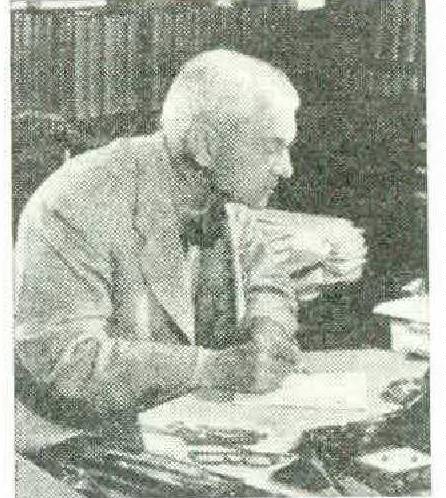
GOOD things happen, and the man with a blessing hears about them. William Lyon Phelps, at seventy-four, has detailed his peculiar blessedness, with its virtues and its admirable defects, so that he illustrates both faces in full, though hurried, lines. He belongs to the affirmative kind of men. He has enjoyed to the limit the remarkable defect of being able to dislike almost nothing, and almost no one. and he has practised the splendid virtue of sharing his enthusiasms during most of his years. He has so much to tell that, though the book is 972 pages in length, he never goes very deeply into the secrets of such a happy life; his has been crowded with fine people, famous, creative, exciting men and women, and with excellent books, plays, animals, music, solar eclipses, ceremonies, occasions, and games. Six years after his retirement from a long career of teaching at Yale, he sits down to recount all these matters.
Keeping more or less to the highroad, he cannot resist innumerable pauses to chat. These chats are of professors, cats, events in the theatre, birds, students, travel, and dozens of other matters; the book is divided into a hundred and eleven chapters. The story is there; thrust into the story are concentrated reminiscences of people and places, two three pages to each. The effect is not unhappy; but it is broken.
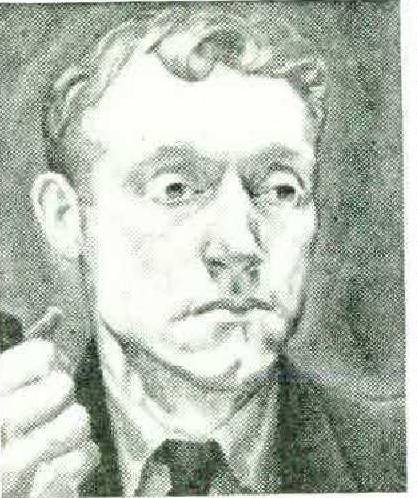
Professor Phelps does not weave the threads of his acquaintanceships, so that Gene Tunney appears and disappears, then George Moore, then William Howard Taft, then Tunney again. To each man he devotes a single short chapter. Each chapter describes the first encounter, then all the following meetings, and concludes with such letters as passed between the autobiographer and his friend. Very often the first meeting is the result of a letter from W. L. P. praising a new book. Though he assailed the stated privacy of Thomas Hardy, the friendship which resulted outlasted Hardy’s death and ended only with the death of Florence Hardy. It is clearly evident that Billy Phelps has, and always did have, a genius for friendship as well as a genius for enjoying his own company and his own career. Best of all the letters included are those from St. John Ervine, the English drama critic, for their warmth and wisdom, and those from Edna Ferber, for their gayety and freshness.
College professors young and old, and those who hope to be professors, will find William Lyon Phelps’s autobiography of great interest. Probably the most important single fact about the man is that he won. early in his teaching career, the admiration of his students. It grew and flourished, until, it would seem, the salt of the earth consists of Yale men who had Billy Phelps as a teacher and will never forget it. His tremendous success as a lecturer to the general public is accountable to the same remarkable talent for making himself liked. He loves his audiences, and his audiences love him; that is the story in a nutshell. But it is interesting to note that in his early years at Yale he almost lost a promotion. and was in danger of losing his job, simply because he was so popular with students.
Severely one may say that Professor Phelps has written his autobiography off the top of his mind, remembering with delight all that was good, and hurrying from bright memory to memory. There might better have been a thoughtful rewriting of the present material, so that the chapter-blocks would be fused into a magnificent structure. As it is, we have the building material stacked and ready. We may make of it what we can.
What we can make of it is the good life of a happy warrior. With fundamental religious beliefs, capacity for great joy in his home life and his teaching, and a never-failing eagerness for human company in games or in intellectual success, he has had seventy-four rich years. American civilization produced him and needed him; there is room for just one of his kind. He is famous for his teaching of Browning. He has known how to fire the enthusiasm of Yale men for books. He has known most of the famous artists of his time. He has traveled and played golf and tennis all over the world, and loved every minute of it. Sound scholarship, enthusiasm, faith, and a childlike unselfishness have come together m one man to enrich all of us. For his friends, and for any who may not believe that such noble joy is possible, William Lyon Phelps’s autobiography will be a pleasure and a rebuke.
JOHN HOLMES