The Editor Speaking
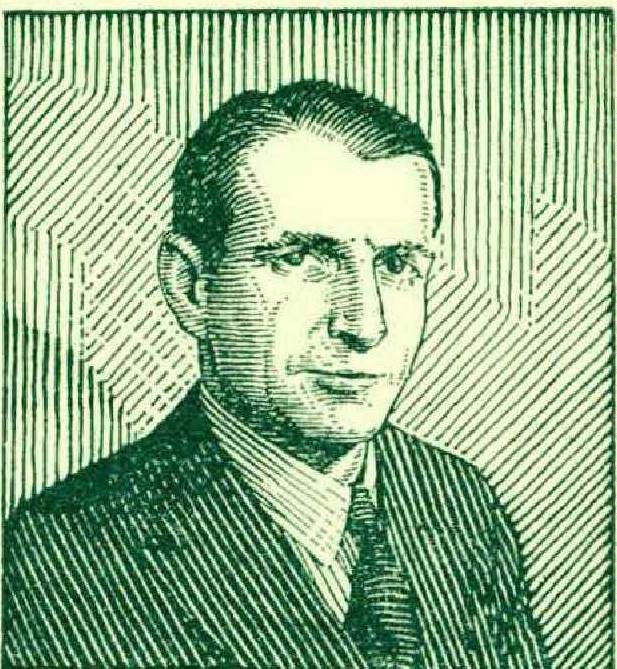
You know how it is. You come home at the end of an exhausting day. Business is off. Decisions are stubborn, often wrong. Work has lost its incentive. Your head is a fiery oven of anxiety. Things will never be any better. And then something does the trick. It may be a hot shower, or a nap, or a roughhouse with the children. Something sponges off your mind, and the world seems not so desperate.
What’s true of the individual is true of the nation this winter. We have all been living under a strain. We have all had too much worry, too much recession, too much politics, too much hurricane, too much fear of war. We have become short-tempered, bitterly partisan. Even the women’s hats are mad. Now there is a lull in which to regain our balance. What we need is peace of mind — and the chance to relax.
As a tonic for the New Year, the Atlantic proposes this three-point programme: Literature, delightful and plenty of it — the best biography, fiction, and poetry that are being written here and in England; Clear thinking — which will construct opinion and so formulate the ideas by which we live; Laughter—spontaneous and hearty as it bubbles up from our American sense of humor.
They make the Atlantic
THE WEDDING JOURNEY
A NOVELETTE
BY WALTER D. EDMONDS
Author of ROME HAUL and DRUMS ALONG THE MOHAWK
Time: August 18, 1833
Place: The Erie Canal
and the Girl: Bella Vincent, a bride
The charming story of an American honeymoon on the Erie Canal. Six hours after the wedding, Bella and Roger Wilcox were aboard the Western Lion out of Schenectady, bound for Buffalo and points West. The packet boat was new and capable of four miles an hour through the flood meadows. But even with fresh mules at every stop it would be four days before the young couple reached Niagara Falls.
The Ladies’ Cabin had three beds, and Viney, a Negro maid, to care for them. But no one was seasick. The gentlemen all slept together on folding beds in the dining saloon. It would have been an idyllic way to embark upon life had it not been for the elegant Mr. Atterbury, who looked like an elderly preacher — but was n’t!
ENGLAND’S HOPE
BY GRAHAM HUTTON
“The British and French Premiers, still less their advisers, could never have realized what they were giving to Herr Hitler when they handed him Czechoslovakia. Let us put aside political considerations, and assess the economic gains to Germany, the economic capacity for life of the new State, the economic effects of the Munich agreement upon Europe and ourselves. And then let us consider what must be England’s hopes and aims for a peaceful Europe.”
In addition to Mr. Hutton’s vital discussion of the adjustments which must be looked for in Europe, Pertinax will speak in the interests of France and Dr. Fritz Berber in the interests of Germany.
WHAT MAKES AN AMERICAN
BY RAOUL DE ROUSSY DE SALES
“An Englishman, a German, a Frenchman, are what they are because their sense of nationality is based on such things as their unchanged physical surroundings, their reverence for the language they speak, the consciousness that their respective cultures are monumental and inseparable.
“What makes an American is the acceptance of an outlook on life, the conviction that men who believe in freedom, progress, and more happiness on earth can achieve their end in America more satisfactorily than anywhere else. What makes an American is the faith in the American dream. A Frenchman believes that he will remain a Frenchman whether his country is ruled by a parliament, a king, a dictator, or a soviet. An American cannot conceive that democracy could disappear from this country without destroying the conception he has of himself as an American. Formed by rebels against the ‘tyrannies’ of Europe, by idealists, adventurers, and by immigrants seeking a better life, the American nation was born from a protest against Europe — a protest which has now become permanent.”
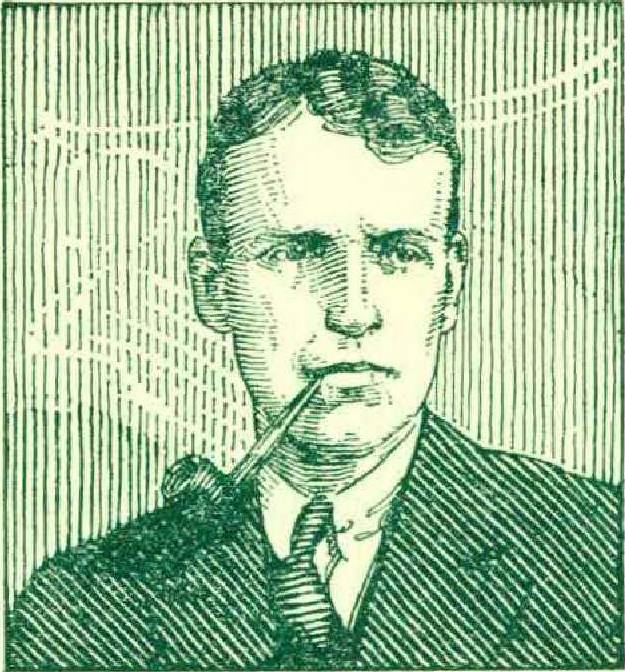
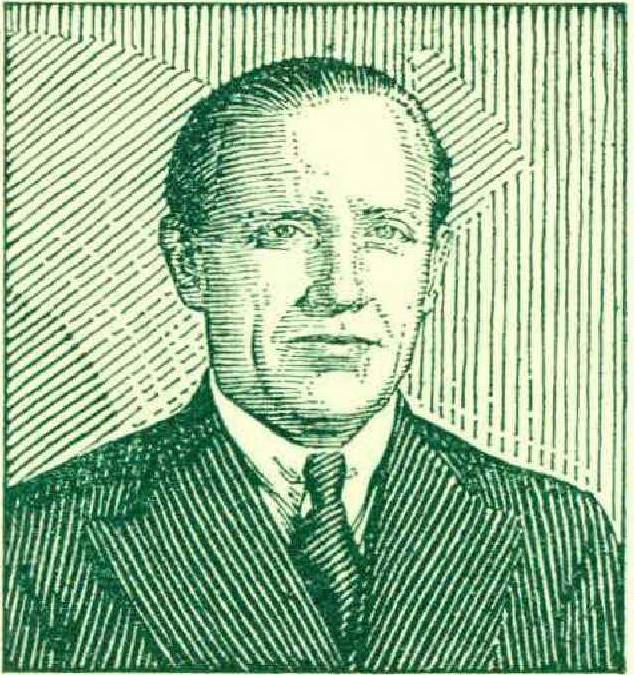
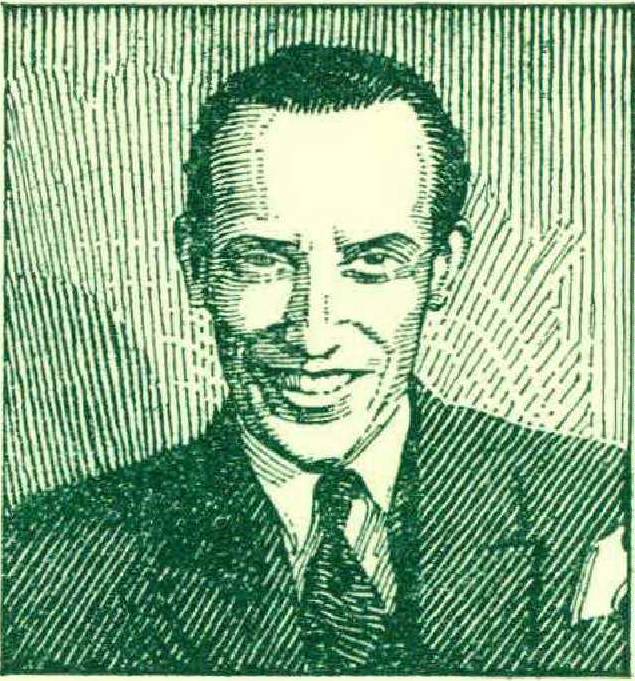
HEAVEN LIES ABOUT US
THE BOYHOOD OF HOWARD SPRING
Author of MY SON, MY SON!
“At the age of twelve, I was the smallest and thinnest office boy at Cardiff docks. I walked there and back — four miles — each day. Chinks and Dagoes, Lascars and Levantines, slippered about the faintly evil byways that ran from Bute Street. The whole place was a warren of seamen’s boardinghouses, dubious hotels, ship chandlers’ shops smelling of rope and tarpaulin, shops full of hard fiat ship’s biscuit, dingy chemist’s shops stored with doubtful-looking pills, herbs, and the works of Aristotle. It was a dirty, smelly, rotten, and romantic district, an offense and an inspiration, and I loved it.
“My brother and I made the discovery that you can work for a university degree without attending a university. We leapt at it, and for about five years we slaved as I hope never to slave again. English, French, Latin, mathematics, and history were ‘fitted in’ to our bursting days. As I see it, only the indefatigable realism of my mother kept us afloat. She worked her fingers to the bone, scrubbing and charring. It cost her much to bring up her sons. She lost two of them; and for the one she lost in the war she was awarded five shillings a week.
“It was I who had to be the realist then. She was very small, very gray, but fierce and energetic as ever. ‘They can keep it!’ she said. ‘He was worth more than that.’ ”
MEN, WOMEN, AND HATE
BY KARL A. MENNINGER, M. D.
Author of MAN AGAINST HIMSELF
“We think of the love of a man for a woman and her love for him as the most intense expression of the life instinct, the force which opposes the self-destructive instinct. To love and to be loved should exclude the possibility of hating, destroying, and permitting oneself to be destroyed. Where there is a full expression of love between two people there should be no weeping, no sorrow, no recriminations, no resentments; I would go further and say, no accidents and no sickness. If this seems a little Utopian, let us word it another way: people are permitted to love one another, encouraged in it by society, sanctioned by the law, inspired by the examples of their parents and friends. Yet, with all this impetus in the direction of mutual affection, why are men and women so frequently unhappy together? Why is divorce so frequent and contented marriage so rare? What, in short, is behind the war between the sexes?”
In a sequel, Dr. Menninger will discuss the Effect of Hate in a Home.
REACHING FOR THE STARS
BY NORA WALN
Author of THE HOUSE OF EXILE
The heart-stirring chronicle of an American Quaker which carries you past the barriers of Naziism. In her letter which accompanied the manuscript, Nora Wain wrote, “The mind which now guides my use of words strives only for accuracy. A task has been laid upon me. It is to tell as honestly as I can what I have learned from the Germans.”
Her affection for the people, what she saw and heard, make up this story of patient understanding and compassion.
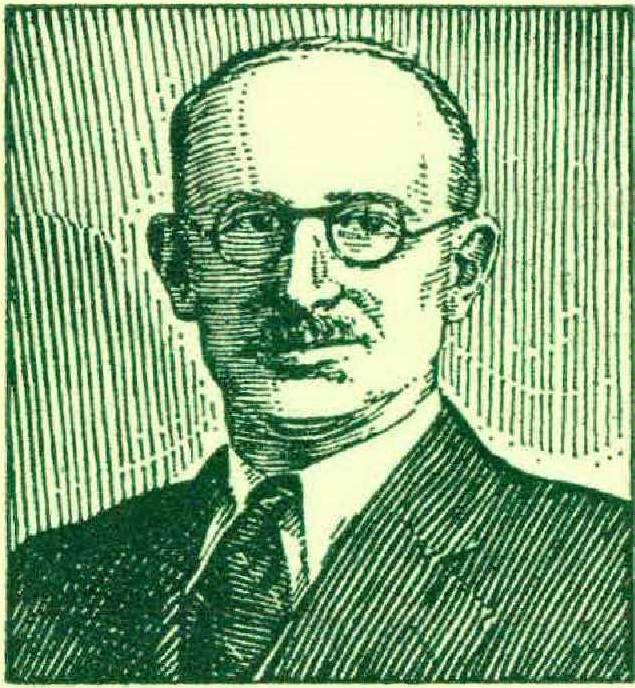
WHEN POPULATION HALTS
BY STUART CHASE
“There are more than a million empty desks in the elementary schools of America this year. Consider what these empty desks signify in terms of jobs for teachers, school building programmes, textbook sales, school budgets, taxes, public finance. This is only the beginning. If present trends in population continue, by 1960 there will be 10,000,000 empty desks in schools and colleges. But by 1960 the army of people over sixty-five will be 8,000,000 greater than it was in 1930. Consider what this means in terms of armchairs, ear trumpets, spectacles, house lots in St. Petersburg, doctors’ services, old-age pensions.
“The curve of American population, after three hundred years of unprecedented growth, is now rapidly leveling off. As it levels, its composition changes, cutting down the proportion of children and expanding the proportion of old people. Footballs give way to foot warmers. As it levels, the era of boomer, booster, bigger and better onward and upward world without end, draws to a close.
“To-day most of us know that population is slowing down. But few of us understand very clearly what it means and will mean. The repercussions are already considerable, and promise to be tremendous. Every business man, every government official, every banker, every school board, every citizen, will feel them.”
THE NOTE OF NOBILITY
BY HOWARD MUMFORD JONES
“When everybody else shouts out loud, one has at least to raise his voice to be heard at all; but unfortunately, when many authors write at the top of their voice, the results are raucousness. A climate of opinion is then generated which leads critics and readers to believe that raucousness is vigorous art.
“The direction of American letters has been away from De Quincey’s assumption that the primary purpose of literature is to restore to man’s mind the ideals of justice, of hope, of truth, of mercy, of retribution. Our literature has at the moment many virtues — wonderful dexterity, high technical accomplishments, humor of a satiric or ironical order, truth to life, or at least the appearance of truth to certain aspects of life, a laudable interest in social amelioration, intellectual liveliness and daring; but it lacks, as Newman would say, the note of nobility. I now wish to inquire into the causes of this situation.”
Nor would the New Year for the Atlantic be complete without the literary essays of Edmund Wilson and Conrad Aiken, the poetry of Laurence Binyon, James Norman Hall, Walter de la Mare, and Robert Frost, the humor of Walter Brooks and Frank Sullivan, and the articles on sport by Gene Tunney, George Lott, and Bernard Darwin. Modesty aside, these add relish to the best menu of reading in America.
You will find a convenient Gift Order Form following page 860