Biography at Close Range
THE life of Edwin Arlington Robinson by Hermann Hagedorn (Macmillan, $3.50) stands in marked contrast to George Frisbie Whicher’s critical biography of another important American poet, Emily Dickinson—This Was a Poet (Scribners, $3.00). To be brief, Mr. Whicher’s book is a brilliant success; to be frank as well as brief, Mr. Hagedorn’s is not.
There is always a danger that the biography of man who has recently died will read like an extended obituary, and Mr. Hagedorn’s Robinson has not escaped. The material lor the book is authentic beyond question, but the selection from it is evidence that Time has not yet contributed those shadows and highlights which set all characteristics in due proportion.
Mr. Hagedorn intended a portrait of a man and poet he greatly admired. But a reader who knew nothing of Robinson or his work would be totally misled. Many of the fragmentary quotations and the author’s commentaries build up a figure who, whatever the merits of his verse, was despicable as a man. This creature was spineless and whining. He looked forward to inheriting an income because ‘jobs and he could not live together.’ He sneered at his benefactor, Theodore Roosevelt, for providing him with a sinecure and a steady income. He had a gnawing feeling of inferiority that constantly incited him to prove to the people of Gardiner, Maine, that he was just as good as they were. He was a sell-apologist always ‘agonizing over his inadequacies. He was a cad who repeated Isadora Duncan’s passionate overture to himself — words that could have been known only TO HIM AND the dancer.
But Robinson was surely none of these things, nor did Mr. Hagedorn intend any such result. The biographer was, unfortunately, too near to his subject, and counted the pores while the general features eluded him. Yet it would be unjust wholly to condemn a book which has all the marks of sincerity and care. Properly warned against the odd angles of emphasis, the reader will find more facts concerning Robinson’s life than he will find elsewhere. The interpolated quotations from the poems, furthermore, are shrewdly and appropriately chosen.
Mr. Whicher’s Emily Dickinson brings out that poet fine and clear from the murk of bad editing, worse biography, and unseemly wrangling which hitherto has been her portion. In the excellent critical passages, Mr. Whicher does much to correct previous misreadings and — in later editions — departures from the poet’s metrical intention. The analyses and interpretations of the poems are masterly. Would that he could reedit the complete works!
But the greatest service Mr. Whicher has rendered the poet is to exorcise that phantom which should never have been raised: the Lover. Since 1930 . . . a considerable body of fresh evidence has come to light. I hope I may have used it with effect to terminate the persistent search for Emily’s unknown lover.’ The search is definitely terminated.
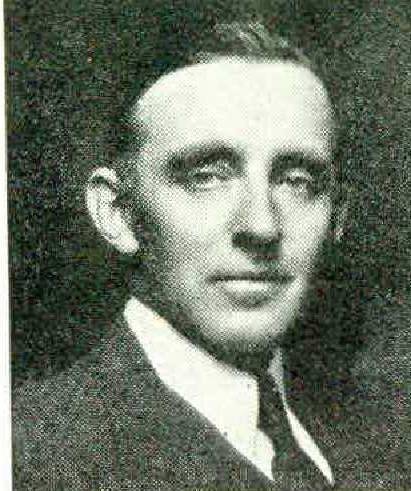
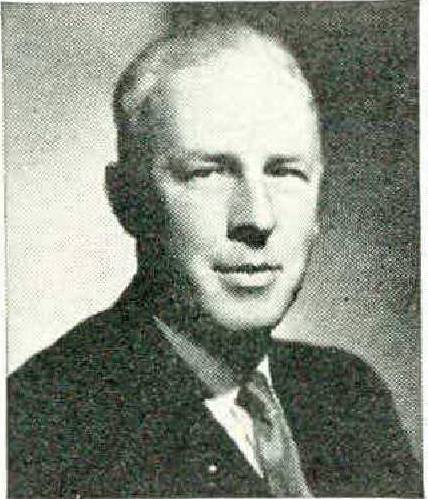
Most sensible people have always believed what the biographer now proves beyond a shadow of doubt; that the object of the ‘love poems’ was the Reverend Charles Wadsworth and that the poems themselves were dramatizations, by an extremely sensitive poet, of her devotion. ‘The supposition that any sort of lover’s understanding, no matter how attenuated, ever existed between them is inconceivable in view of his known character.’ And, it may be added, her character as well.
Along with the fable of frustrated passion goes its corollary, the conception of Edward Dickinson as a heavy Victorian father. The relations, too, between Emily and her sister-in-law are much clarified.
These are some of the corrections in the Dickinson legend. The treatment of more familiar material shows an equal care and sense of proportion. Of the many attempts to re-create the Amherst of a century ago, Mr. Whicher’s is by all odds the best.
The chapters on Emily’s reading and the influence of Emerson are notably good; and the link between her humor and the American humor of the period is a phase never before, as far as I know, sufficiently recognized.
One critical point passed over, however, is the ‘literary’ quality of the ‘love poems’ as opposed to Emily Dickinson’s characteristic freshness. Is this not in itself evidence that the group of love poems was inflamed by sparks from the more perfervid poetesses of the time, rather than by a personal, as opposed to a literary, emotion? The deplorable ‘dinna care’ lines sound more like Mrs. Sigourney than Emily Dickinson. Mrs. Browning and even Christina Rossetti had hearts to burn.
I must also admit that Mr. Whicher’s enthusiasm glosses over the fact that Emily Dickinson, great poet as she was, sometimes succumbed to a most irritating coyness of manner. I doubt if she was wholly guiltless of posing.
The footnotes are wisely relegated to the back of the volume, and are good reading in their own right. A volume of literary history is condensed in this wry remark: ‘It should be clearly stated that I have not asked or received aid from any surviving member of the Dickinson family. Whether this independence is considered an advantage or a disadvantage to a biographer of Emily Dickinson will depend on one’s point of view. I am inclined to value it.’
With this opinion, judging by all the results, I can but agree.
ROBERT HILLYER