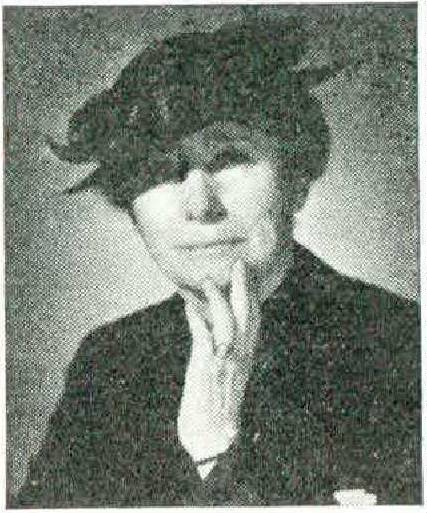
Fanny Kemble: A Passionate Victorian
The Atlantic BOOKSHELF
by
[Macmillan, $3.00]
FANNY KEMBLE, as Henry James observed in his wise and penetrating essay about her, ’was an admirable subject for the crystallization of anecdote, for encompassing legend.’ She makes an excellent subject for a biography: her vitality was great, her life was full of action, and her character was both captivating and contradictory.
The contradiction, as Miss Armstrong points out, was largely a matter of heredity. On her father’s side were the Kembles: her uncle John, to whose character the ’noble Roman’ rôle of Coriolanus was so congenial that he was said to have played it as much off the stage as on; her aunt, the formidable and awe-inspiring Mrs. Siddons; her other, and equally formidable, aunt, Elizabeth, whose rebuke to a New York shop assistant was so terrifying that it turned his hair immediately white — a race apart, the royal family of the stage.
On her mother’s side there were French vivacity and gayety, liveliness, charm, and no tradition at all. The mixture produced an exciting, but, in spite of everything, a not entirely satisfactory result.
The trouble was that Fanny Kemble hated her profession. She had an early and triumphant success as Juliet when she was only nineteen; she was the idol, for a time, of all the young men in England and America. But acting meant nothing to her; it was like smoke — it was unreal — and she abandoned if to marry Pierce Butler, a rich young Philadelphian, without any regrets. One of the reasons for this distaste — it is a point which Miss Armstrong might have brought out more clearly — was that Fanny, unlike many actresses, seemed to care very little for the impression she made on other people. Her personality was so vivid, she felt and behaved so intensely, that what other people thought made little difference to her. As a result she not only regarded the stage with indifference, but also got into trouble with Americans in general, because of what she said about them in her published Journal, and with her husband in particular.
Butler was not, as we read about him, an attractive figure; he was conventional, narrowminded, unimaginative, and unfaithful; but his wife could do little to soften or broaden him. She was too independent, too much herself; the marriage was a tragic failure, and Fanny returned to England and, for a time, to the profession she despised. At last, however, she found a satisfactory compromise: instead of acting Shakespeare to her audiences, she read him aloud, and her readings were the delight, as James observes, of three generations.
But to us, who cannot hear her voice, it is her character that makes an account of her life worth reading. She was not, in the highest sense of the word, a true artist. There seems to have been in her reading and acting, as in her writing, too much of the impressionist, the emotional opportunist, for that. But she was a remarkable human being — enthusiastic, delightful, hottempered, and intelligent, and Miss Armstrong has described her in a very readable and sympathetic fashion.
THEODORE SPENCER