With Malice Toward Some
The Atlantic BOOKSHELF
by
[Simon and Schuster, $2.00]
As every editor knows, there are high tides in the seasonal flow of manuscripts. One of them occurs in the late summer, when Americans come home from Europe and begin to talk and write about it. Each year there is an inundation of these ‘I Have Been to Europe’ manuscripts. Their relentless itinerary, their fatigued gayety, their cathedral ejaculations, seem to have been derived from guidebooks rather than from any actual and salty experience. Such writing has the inanimate look of picture postcards. And this is a pity. Because for generations the wiseacres of England and the Continent have been crossing over to our shores, remarking our idiosyncrasies with a candor which would be rude in anyone but a guest, and eventually compiling their reproof in books which we read, suffer, and pay for. Mrs. Trollope and Dickens, J. B. Priestley and the Provincial Lady — they each put us in our place while we grin and bear it. Slowly the hope has been expanding within me that some day the worm would turn. Now, praises be, it has!
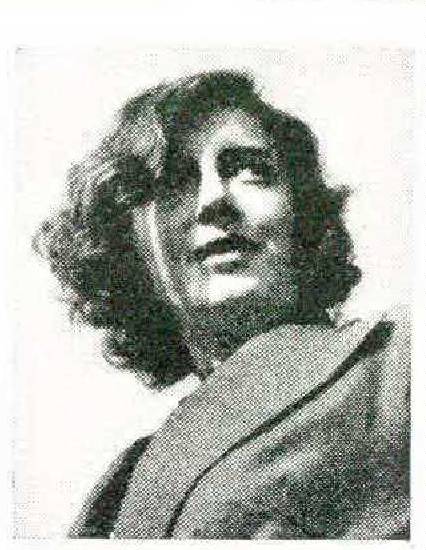
Margaret Halsey is hardly old enough to be a wiseacre. She is twenty-eight. She went to England with her husband Henry, a Ph.D. who had been offered an exchange professorship at a small college in Devon. She went with her eyes open and her sympathies and suspicions about equally accessible. She lived in a tiny village outside Exeter; with Henry she visited the tourist shrines and did the rounds of London, Paris, and Scandinavia. But first and last it was the English who occupied her. She made notes about them in her spasmodic diary, notes which, as they now appear in her book, With Malice toward Some, seem to me the most hilarious reading of 1938.
It has been some time since the Connecticut Yankee visited King Arthur. Margaret Halsey is in his direct descent: she has the same shrewd power of analysis, the irresistible sense of humor, and the capacity for the most endearing figures of speech. In addition she had Henry, an angular, somewhat moody professor who could cap the climax whenever she was at a loss. Henry is a friendly if unsuspecting hero; he got on well with his English hosts, and so through his eyes Margaret glimpsed those masculine perquisites, the clubs, the high tables, the good tailors, good liquor, and good talk, to which no ladies are admitted. But even Henry was uneasy in what Margaret calls ‘this dim aquarium of a country.’
It is hard not to overplay as good a hand as this, and I think it is an extra credit to say that only in her visit to Oxford does Margaret force the pace.
Here, then, delightfully perceived are those differences which, however we may bluff, do separate the English and American temperaments. Margaret was riled by the English food: ‘The soup, thin and dark and utterly savorless, tasted as if it had been drained out of the umbrella stand’; the boiled potatoes and Brussels sprouts; the raspberry tart — ‘it is possible to eat English piecrust, whatever you may think at first. The English eat it, and when they stand up and walk away, they are hardly bent over at all.’ She resented the stilted conversation (when ladies were present), she resented the lack of introductions at a cocktail party, she resented the women’s clothes — ‘the women looking as if they had all changed clothes with each other just for a lark.’ She resented ‘the relative scarcity of laughter. You can get a kind of whinnying sound out of the well-bred English merely by saying that it is raining, and the English who are not well-bred have a superlative gift for catching the humor of a situation. But when it comes to humorous language, American similes and metaphors land with a morbid thump in the midst of a puzzled silence.’
Fond as she became of the countryside and of what she calls ‘the ungentry,’ she could not learn to accommodate herself to the patronizing manner of the upper class toward anything American. And what made her feel more than ever amid the alien corn was the climate — and the everlasting talk about it.
‘We have had very little rain since we came back from Norway, but the days are cool and the nights cold. The manageress (manageress, the English always pronounce it) of the Guest House has gotten used to our having a fire in the evening, though the first time Henry approached her on the subject, she started back as if he had asked her for a brace of concubines.
‘“But it’s summer!” she exclaimed.
‘“That,” said Henry gently, “is a matter of opinion.”’
EDWARD WEEKS