The Contributors' Column
BORN on his father’s farm within sight and sound of the Black River Canal, a tributary of the Erie, Walter D. Edmonds (p. 143) walked straight into a storyteller’s paradise. He loves fishing, dogs, and the easy talk that rises with tobacco smoke. He has listened to farmers, old boatmen, lumbermen, and the hands who stopped at the Edmonds farm at threshing time. At Harvard he did his apprentice writing under Professor Copeland, then traveled back upstate to cultivate the source material for his three ‘Canawl’ books — Rome Haul, Erie Water, and Mostly Canallers — and to dig into the past for the history and human nature so vividly blended in Drums along the Mohawk.
Logan Pearsall Smith (p. 153) thought to repay his debt to Oxford by writing a book about it. So to Paris he went for the perspective, inspiration, — and distraction, — which only that capital can provide. ‘Paris,’ he found, ‘welcomes would-be artists with its urbane, heartless grace; it provides them with every facility for learning the art they will never learn to practise; if appropriates with a charming smile the savings they have brought with them, and with the Same smile it watches them fade away or perish, knowing that new generations will soon appear to occupy their little hotels and lodgings.’
A graduate of Edinburgh Academy of Art, Ramsay Traquair (p. 159) has been professor of architecture at McHill University since 1914. An unyielding opponent of ‘international art,’ he champions native genius wherever it is to be found. ‘Art, literature, and music,’ he says, ‘remain obstinately local; they rise from our way of life, and that has been moulded by climate and geographical position.’
A pilot of renown, Antoine de Saint Exupéry (p. 166) can write with as much skill as he flies. His novel, Night Flight, was chosen for the Book-of-the-Month Club in 1932. In the Preface to it, Andre Gide wrote as follows: —
‘Saint Exupéry in all he tells us speaks as one who has “been through it.” His personal contact with ever-recurrent danger seasons his book with an authentic and inimitable tang. We have had many stories of the war or of imaginary adventures winch, if they showed the author as a man of nimble wit, brought smiles to the faces of such old soldiers or genuine adventurers as read them. I admire this work not only on its literary merits but for its value as a record of realities, and it is the unlikely combination of these two qualities which gives Night Flight its quite exceptional importance.’
Saint Exupery’s latest adventure ended unhappily. He came over here four months ago with his own plane to carry out a goodwill flight from New York to South America, but unfortunately crashed in taking off at Guatemala City, owing to a mechanic’s carelessness in overloading the fuel tank. The plane was a total wreck, and Saint Exupery was unconscious for eight days. Luckily he is now well on his way to recovery.
‘It is heartbreaking to see the weakness of the older cultural group in the face of the new barbarism ; its hewildered, confused retreat.’ The speaker is Thomas Mann (p. 178), the most distinguished German novelist now living, author of Buddenbrooks and The Magic Mountain and winner of the Nobel Prize. His work in progress, the tetralogy Joseph and His Brothers, is being finished out of reach of the swastika in the comparative security of the United States.
Hungarian-born and a fluent linguist, for eighteen years M. W. Fodor (p. 185) was the Manchester Guardian’s correspondent in Central Europe. His headquarters were customarily in Vienna, but when Austria became a cemetery he was forced to move to Prague. Incidentally his check from the Atlantic was confiscated along with his other personal effects.
George Slocombe (p. 191), English author and journalist, served in the R. A. F. during the war and was subsequently Chief Foreign Correspondent of the Daily Herald until 1931. Now from his home in Normandy he surveys the world with a telescope, well-trained and accurate.
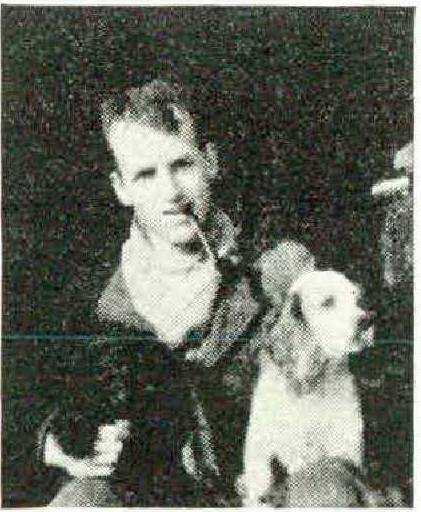
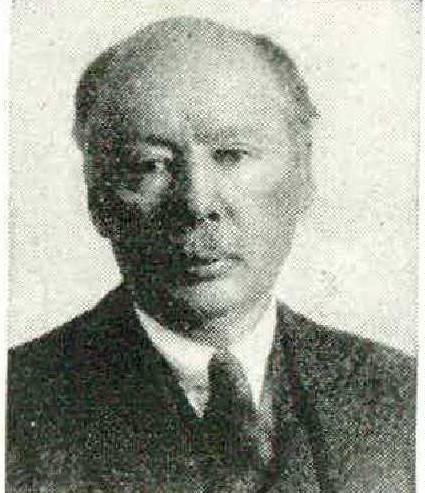
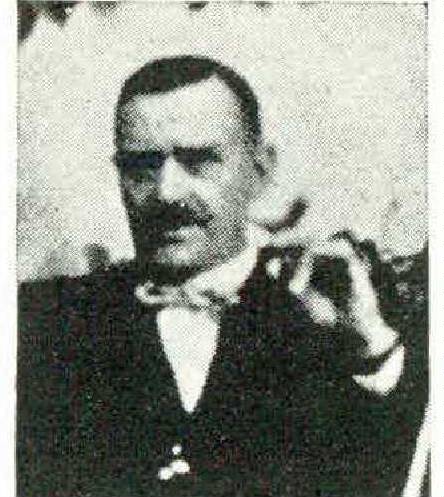
Co-holder of the American Doubles Championship for five years, runner-up in the National Singles in 1931, and a leading member of our Davis Cup Team from 1928 to 1934. George Lott (p. 196) has come through many a tight spot in tennis. He writes as he played, with a fine volley and great spirit.
A graduate of Brown and Oxford who held the world’s record for the mile in 1915, Norman S. Taber (p. 203) has been a trustee and manager affiliated with the John Nicholas Brown Estate (1920-1930) and a consultant on municipal finance since 1933.
Poet, novelist, and schoolmaster, L. A. G. Strong (p. 208) is a descendant of the Kings of Connaught, and an associate member of the Irish Aeademy of Letters.
Sonia Raiziss (p. 213) studied at the Sorbonne in 1931 -1932, and there received from Professor Cestre the encouragement her poetry needed. In 1937 she received a Guggenheim Fellowship for Creative Writing. Her home is in Philadelphia. A near neighbor of hers is Katharine Chambers (p. 213), who lives at Penllyn and who has, so she says, ‘no activities of any interest — save her poetry. In 1937 Lawrence Lee (p. 214) published his second volume of verse, Monticello and Other Poems.
Having had a year’s leave for advanced study at Harvard, he now returns to the University of Virginia, where he is instructor in French. Elizabeth Grey Stewart (p. 214) was born in Port Huron, Michigan, twenty-three years ago. While still in junior college she won a poetry award of Fifty dollars, which, she says, ‘meant fare to New York with a little left over! I’ve attended both Columbia and New York University. My first job was a modeling one; then I worked in the sales promotion office of a department store; now I’m connected with the fashion advertising department of the New Yorker
Colonel E. Alexander Powell (p. 215) has seen the Seven Wonders of the World and written many books about his travels, but wanderlust has never shaken his belief that the salt of the earth was to be found in Syracuse, New York. His paper is culled from his forthcoming volume, Gone Are the Days.
As General Counsel for the Social Security Board, Thomas H. Eliot (p. 225) directed the corps of ninety lawyers who initiated the operation of old-age insurance. A grandson of President Eliot of Harvard, he has filed his intention of running for Congress in the 9th Massachusetts District.
Biographer and novelist, André Maurois (p. 232) has established a delightful liaison between the French world of letters and the English.
Labor and industry have long had their welladvised spokesmen, but not until recently has anyone come forward to safeguard the consumer with the knowledge, candor, and caution of Margaret Dana (p. 234). Her Consumers’ Forum in the Atlantic has commanded nationwide attention.
Critic, playwright, and historian of the theatre, Walter Prichard Eaton (p. 238) has worked on both sides of the footlights. He is at present Assistant Professor in the Department of Drama. Yale University.
The Atlantic has been fortunate in securing the picturesque diaries of two foot soldiers in the Civil War, Private William B. Stark (p. 248) of the 34th Massachusetts, whose chronicle began in the July Atlanlic, and Private James Huffman of the 10th Virginia Infantry, whose record will appear in a subsequent issue.
A graduate of Harvard, C. L. Sulzberger (p. 253) spent two and one-half years covering labor news for the United Press. At the present time he is free-lancing abroad for magazines and newspapers. His book, Sit-Down with John L. Lewis, was published in June by Random House. Margaretta (p. 251) was born and brought up in Charleston, South Carolina, one of a large family. She now lives in Washington, D. C., where her husband has been leaching. E. Louise Magary (p. 255) is employed as a relief investigator by the Department of Welfare in New York City. She is a graduate of Western College for Women, Ohio, and of the Columbia School of Journalism.
Ask any group of English critics to name the most talented short-story writer in England today, and dollars to doughnuts the answer will be H. E. Bates (p. 261). But his writing has been too little known in the United States, and thus it is with a sense of discovery — and pride — that the Atlantic releases his novel of first importance, Spella Ho. The editors asked Mr. Bates to single out the short stories which have given him the most satisfaction to write. He chose ‘The Mill,’ ‘Alexander,’ and ‘The Station (look for them in anthologies), as well as ‘The Ox’ and ‘I Am Not Myself’ — the two last being manuscripts which will be published in the Atlantic in 1939.
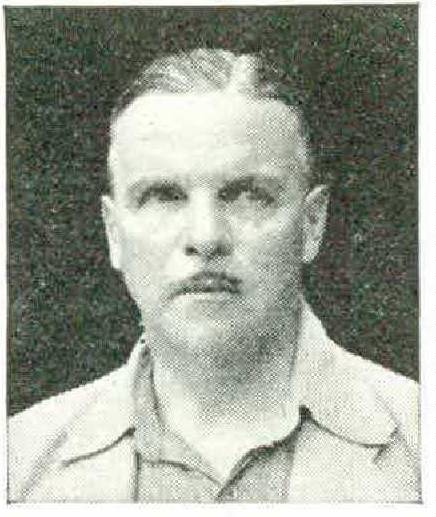
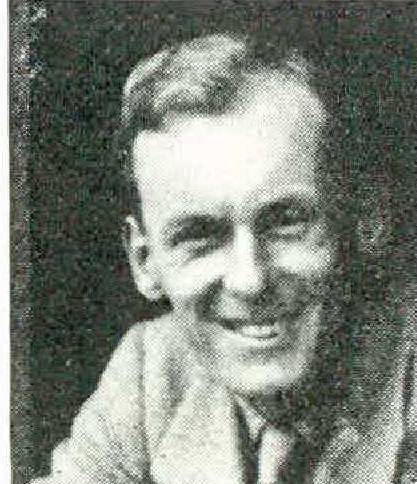
The Atlantic invitation to ‘Under Thirty’ has met with an instantaneous response. Close to one hundred letters were received in the three weeks following the publication of the June issue. They came from eighteen states and they spoke up for the post-war generation with a candor and vigor good to read. The best of them have been selected for the symposium in this and subsequent issues. Meantime we should like to reproduce here two of the many comments upon Robert James’s letter in the June Atlantic.
Porteville, California
To Robert James: —
You are twenty, you say, and a war is coming. I am nineteen and I don’t believe it. ‘ A war is coming,’ is it? Who says so? Mr. Roosevelt, perhaps? I don’t recall any catch phrases on the subject. Neville Chamberlain, maybe? He’s a realist , all right, but he has n’t gone that far yet. Daladier of France? I don’t think so. Bones of Czechoslovakia? He’s still hoping. Benito Puff-Puff and Adolf Fuss-and-Fumc? You won’t catch them predicting it. The Sphinx of the Kremlin? I doubt it.
You have heard no head of a state predict war. You have read no statement by any head of a state predicting war. The possibility of war, yes; but the certainty of war, no The rulers are n’t sure, you see; only the people, who of course know everything.
You take your authority from a public opinion stampeded by the press into a dulled and deadly defeatism. You take it from the vast psychological undercurrent which is carrying us more and more rapidly toward conflict; you allow yourself to be swept along on the tide of a dark and ancient fear in which the elements of excitement and secret anticipation are inextricably mixed.
We don’t even make a pretense to reason any more. We talk in the language of defeat already. We repeat, over and over again, the three words which are doing more than any other single thing to make needless Armageddon an accepted fact.
‘The next war . . .’ say the papers importantly. ‘ When the next w ar comes . . .’cry the magazines. ‘ In the next war . . .’ bewail the books.
Never, any more, you will notice, ‘If another war should come . . . ’ Never, ’In case of another war . . No longer, ‘Provided another war strikes Europe . . .'
Your letter is full of noble phrases about, ‘gasping out our lives on ground red with blood’ and ’education gone through the power of a hand grenade’ and ‘dreams drowned in the clatter of a machine gun.’ You think you can name catchwords and make them serve as whipping boys; you try to pin upon vague generalities a responsibility which lies with you, wit h the individual; you appeal to the older generation with one breath and succumb to its psychological sickness with the next.
I say we should stop believing. I say we should refuse to believe. I say we should so write, and talk, and think, and act , that when the time comes we can offer, as our gift to America, a skepticism which refuses to admit that anything, particularly war, can be inevitable.
You’re twenty, and I’m nineteen, and there are many thousands like us in this land. Because we are the ones who would suffer most, it seems doubly tragic to me that there should come from us the same hopeless cry that comes from the older generation.
We are in college, and that is our particular blessing. For just a little time, suspended halfway between childhood and maturity, we can afford to be tolerant, and brave, and broad-minded, and have a sense of humor, and wish nobody ill. It is the only time in which we can make for ourselves a permanent basis on which to build a happy life; it is our last chance to achieve a courage which will be strong enough to withstand the strain events may place upon it, and refuse to be stampeded by what so-andso thinks, somebody else predicts, or ‘they’ say.
War is not inevitable unless public psychology makes it so; and if we, the young, give in, if we begin so soon — as you are doing, and as so many of us are doing — to give up the fight, then we shall come to judgment with hands no cleaner than the rest.
ALLEN DRURY
Bristol, Tennessee
Dear Atlantic, —
As my husband has been a subscriber to the magazine for twenty-live years, I have had an opportunity to read it regularly, and to me ‘Under Thirty’ is a welcome innovation. The challenge of Robert James’s letter in the June issue should meet a thoughtful and sympathetic response from the older generation, especially from us who are the mothers of the youth of twenty.
We have dreamed dreams for them; we are proud of their four-square development, their ideals and ambitions. Can it be that we, ‘elder America,’ are going to be swept away by well-planned propaganda and be willing to see these sons of ours march away to the horrors of war? Instead, let us resolve to give Robert James and hundreds like him the chance they want, and deserve, to live constructively and nobly.
MARY HOLMAN POST
Building a social policy on hate.
Teachers College, Columbia University
Dear Atlantic, —
Some time ago I wrote you criticizing an article in the magazine. May I now thank you very much for Sir Herbert Gepp’s ‘One Democracy to Another,’in the June issue.
It so happens that I was in Australia for several months last year on invitation of the government and in coöperation with our Department of Agriculture. The assignment brought me into contact not only with government officials but with all six of the bank presidents and with several of the leading industrialists and many prominent agriculturalists and ranchers. Everywhere I found profound admiration for America and also profound concern because so many of our leaders were reacting to the present situation only by ‘hating Roosevelt’ rather than by trying to understand the great social forces that have made him and his support possible. As one man said, ‘To build a social policy on hate instead of full knowledge of all elements in the social situation is suicidal for a democracy.’
Sir Herbert has spoken not only for himself. He has done a stunning job of reporting in very restrained fashion the unanimous conviction of the leaders of a whole people about us.
EDMUND DES. BRUNNER
Will Oscar Lewis please step forward?
Greenfield, Massachusetts
My dear Mr. Lewis:
We are much interested in your serial beginning in the April Atlantic, ‘Men against Mountains,’ as Anna Pierce Judah was the aunt for whom I was named, my father’s only sister, and a member of our household for many years. Mr. Judah, my Uncle Theodore, I never knew, as he died long before I was born, but I often heard her talk about him. I only wish that some of the recognition that seems to be coming his way of late years might have come during her lifetime, as she was devoted to his memory and always felt that he was not valued at his true worth. Some of the words that you quote are the very words we have heard my aunt say, and you can imagine what a surprise it was to see them in print, and we are quite curious to know where you obtained your information after all these years.
ANNA JUDAH PIERCE
Is private philanthropy on the defensive?
New York City
Dear Atlantic, —
Mr. John Crosby Brown, in ‘ Private Giving and Public Spending’ in the June issue, certainly raises many questions of immediate pertinence to every Board of Trustees. Some of the most important of these are implied rather than expressed in his article. With all due respect to these trustees, it may be asked whether they are capable of answering these questions with the skepticism and impartiality they demand. Unquestionably private philanthropy is on the defensive and must justify itself before the public. Endowment income is small: ever larger amounts of capital produce decreasing amounts of revenue. Universities need more endowment funds — but before such funds are raised should not the whole question of their usefulness and function be reopened in the light of conditions in the world to-day?
We have to-day overextended educational plants. In order to keep them up it is necessary to raise tuition fees and add to the capital funds. By raising tuition fees, higher education in private universities is possible only for the wealthy. Attempts are made to get the brilliant boys into such universities by means of scholarships. But even if that is done, what chance have they of getting jobs without family and social connections? When such a condition arises in industry, when plants do not produce adequate profits, the capital is ‘written down.’ Why should not the surplus assets of the private universities be written down? Why continue to produce I business leaders when there is no business for them I to lead? Why produce more corporation lawyers or intellectuals when they will have nothing to do except live on inherited wealth? Is not the creation of a large class of discontented and idle youth one of the quickest ways of bringing about Fascism? When private universities produce that sort of product, are they showing a socially desirable profit?
Only when some of these questions are frankly and fully answered can the boards of trustees hold public confidence. Otherwise the public will ask, as they have done during the Greater New York Fund campaign. why more money for private agencies? Are not public agencies making private agencies obsolete? Why additional sales, property, income taxes when great educational property remains tax-exempt ?
HORACE COON
Are there others who disagree with what ‘Anonymous’ had to say about college reunions (July Atlantic)?
Perkiomerwille, Pennsylvania
Dear Atlantic, —
College reunions are what we as individuals make them — like life, they give in return what we want of them.
I don’t like noise or pretense or foolish pageantry, nor insincere jollity and empty smiles. Our class must have a secretary who is a person and not a publicity hound, for her notices and letters were friendly. reserved, sensible. Our costumes were lovely and usable. The 55-year-outs were dignified and dainty old ladies, the 50-year-olds were quiet but alert, intelligent gentlewomen as modern as their 1888 costumes were old-fashioned. Their songs were good, and the seniors called for their leader to cheer her. Our own 30-year class can’t sing, — never could, — but our meetings were worth having, and our members delightful, witty, and what our speakers said was sense or delightful nonsense. There was no noise or boisterousness or foolishness, no maudlin sentiment, no attempts to be anything but sensible, matter-offact women on a pleasant matter-of-fact visit to a spot where we had been happy.
I saw my friends. I inspected the new library, the new dormitories, the new lecture halls, the new fields for athletics, the new pool, the lovely red steel and concrete bridge across the river. I saw the Glee Club on the lovely island under floodlights, and heard their sweet voices coming over the water. I shook hands with faculty I had admired, and old friends who had been dear to me. I slept in a good bed, and bathed in a beautiful bath and sat under the trees on a beautiful terrace, was served by well-paid and properly trained maids. I drove through the country, and without a care turned my car over to a well-bred youth in a spotless white coat till I wanted it again, And came home glad that the world was good.
The pageant of Commencement the slow columns of marching girls in white, the lovely junior ushers and the daisy chain — that was neither mawkish nor sentimental. It was breath-taking at moments, like a great painting.
We did not talk ’the way that was fashionable when we were in college,’ and no sane mortal could have thought that we were in the least silly, to say nothing of ‘psychopathic cases.’ Did ‘Anonymous’ forget her aspirin or dyspepsia tablets?
MYRTLE MANN