The Memoirs of Sir Ronald Storrs
[Putnam, $5.00]
The Memoirs of Sir Ronald Storrs is the history not so much of a man as of a period and of a system. Ronald Storrs, at twenty-three, was a typical if superior product of that segment of English society which, during the nineteenth century, bred watchdogs of the world’s greatest and most efficient empire in astonishing numbers. His England was physically a latter-day Lacedæmon, spiritually an Athens. The classics were to him food, drink, and, in his long exile, bedfellow, for during his thirty years of intimate communion with the peoples of the Near East he preserved the habit of reading each day from Aristophanes, Horace, or Dante, before breakfast. This classical preoccupation permits him, in his fifties, to quote Greek passages which few of his readers will translate, and gave him a strong personal bond with that equally ardent classicist, Lawrence. Storrs’s brilliant personality, so ably summarized by Lawrence in the Seven Pillars, is one of æstheticism, saved from any hint of the precious by an abundance of wit and of action.
The pages which deal with Egypt are the record of Sir Ronald’s service under a succession of the great — Cromer, Gorst, Kitchener, and MacMahon. The portrait of Kitchener is drawn with rare sympathy and understanding; no man of the Field Marshal’s stature was ever served by a more appreciative assistant. That the regard was mutual is clear; Kitchener tried vainly to appoint Storrs his secretary during the war, but the latter was wisely returned to the Egypt which he knew so well and in which he could be of so much greater use. In the Egyptian pages we see a complete survey of pre-war society on the banks of the Nile; of Copts and kvasses, princes and eunuchs, fellahin and effendis; of all the subtle relationships between the varied elements which made up the Egyptian world; of the political stuff of which England’s power was built, and how that power was destined inevitably, among the Egyptians, to diminish. We have here an ethnography or a sociology of Egypt, in uncategorical terms; for Sir Ronald, who professes a horror of anthropology, is himself a natural and gifted ethnologist.
Each of the three segments of his career ends upon a sinister note: that of Egypt is magnificent and pathetic; that of Cyprus comic opera, yet no less bitter; but the finale of his Palestinian account is tragedy of a high order, and a drama which still awaits the second curtain.
During his Egyptian experience we see the future Sir Ronald as a clever, sympathetic, linguistically gifted diplomat-with-a-future, gay and often facetious, like others of his kind who, in the chancelleries of the Near East, find wit and caricature necessary to preserve sanity. During the early part of his Palestinian career, when he was for a period of eighteen months the absolute dictator of the world’s holiest city, we see him sobered somewhat by responsibility, but enjoying to the full his power to rule in his own sensitive and aesthetic manner — to revive the art of the glazing, and thus repair the Mosque of the Dome; to rip down the unsightly rubble wall in the Church of the Nativity; to foster music and the theatre; to clean out the filth left behind by the Germans and Turks, to prohibit billboards, to plan gardens, to improve the faulty water supply of Jerusalem; and most of all, to court and win the confidence of the traditionally warring Christian factions, Moslems, and Jews, and for a brief time to bring about, almost miraculously, coöperation between them.
The story of Sir Ronald’s stewardship in Jerusalem is the story of the growth of Zionism, and of the parallel and inevitable rise of civil discord in Palestine. In a long and spirited section, he states with equal candor the aspirations and grievances of Zionists and Arabs, and traces the history of the trouble in impartial detail. Here, as in his Egyptian account, we have a clear and exhaustive document, soberer, less gossipy, more emotional, yet still essentially detached, for which again the historian may well be thankful.
The Cypriote third is the smallest; here we see a mature administrator attempting to draw a little-known Crown Colony out of the mire of poverty and neglect by his reforms in internal government, in education, in communication, and in agriculture. We see him hampered by the apathy of his home government, until a mob, incited to violence by a foreign agitator, burns down his residence and destroys his life’s collection of books, music, and small personal treasures of art.
The Memoirs of Sir Ronald Storrs is a long book, and contains many pages of direct quotations from his letters and those of his diaries which escaped the flames in Cyprus, all set in small type. It requires careful reading, for it is an important document; it was not written in a day, and cannot be read in an hour. It is no mere frame to set off the brilliant and gem-like Lawrence miniature, but a canvas of its own, of wide surface, great depth, and intricate human detail.
CARLETON S. COON
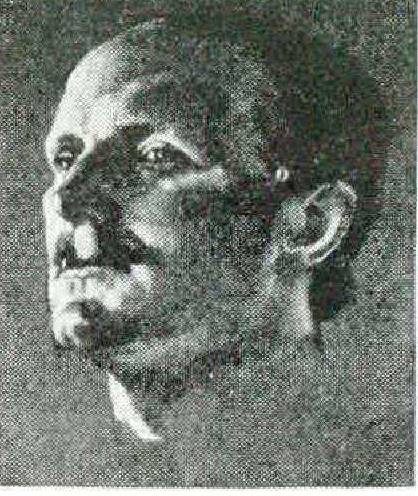
- Photo by Eric Kennington↩