Are the Rich Growing Richer and the Poor Poorer?
THERE is a great deal of pathetic talk of unrest under our modern civilization. Yet a casual reading of history shows the existence of unrest at all times, the difference between that of our times and that of previous times being only in degree and in the conditions which cause it. But everywhere and at all times the causes of unrest have been ethical and economical in their character, its essential factors being more ethical, because whatever economic relations may be established primarily between men as individuals, or between men and the community in which they live, the lasting relations are ethical. Ethics defines the equitable relations between individuals who limit one another’s spheres of action and who achieve their ends by coöperation ; and, beyond justice between man and man. justice between each man and the aggregate of men has to he dealt with by ethics.1 Thus the examination of wages, the standard of living, working time, the cost of living, education, interest in religion, in literature, in art, and in all things concerning common man, leads to the conclusion that the industrial situation has more to do with social conditions than any other factor. The industrial power contains in itself the moral, intellectual, and physiological elements which are the three essential factors of human life, and so the most essential factors in ethics and in social organization. To them logically, then, we must look for the chief elements which result in social unrest. The alleged causes taken together make a kaleidoscopic mass, ever shifting with every turn of industrial status. When a man asserts, therefore, that this or that is the prime source of the prevailing unrest at any period, he is simply ignoring the relationship of one cause to another, and probably of cause to effect.
Among all the varied causes which are specifically assigned for the unrest of our times, the assertion that the rich are growing richer and the poor poorer has for some reason taken more complete possession of the popular mind than any other single one. The doctrine contained in it is a false one, false in its premises and misleading in its influence, for it has so deceived the people during the last few years as to develop a sharp and a growing antagonism between those who do not prosper to the extent of their ambition and those who have carried wealth far beyond the reasonable ambition of any man. No one, pessimist or optimist, would for a moment suppose that the chief cause of popular discontent, if there be a paramount one, lies in any lack of the production of useful and necessary things. It may be held, however, that there is an inequality in the distribution of the products of industry, and upon an analysis of the various discussions which have been put forth, it is easily seen that it is this question of distribution which affects the popular mind. It is legitimate, from any point of view, to question the justice of the distribution of wealth. But when we reflect that by the use of the telegraph credits can now be placed in any part of the world, and thus affect prices of commodities and of exchange and influence the whole machinery of commerce ; that a given quantity of production is secured in much less time today than of old ; and that transportation has been so perfected as to bring to the doors of the poor man, as well as of the rich, the results of the industry of far-away people, the quarrel over distribution resolves itself simply into an incident of modern development. This development has resulted in the sharp juxtaposition of the very fortunate and the very poor in city life. When the rich man’s wealth consisted in lands which were cultivated by his poorer neighbors, the demarcation of conditions was not so sharp, and the sources of unrest had to be sought in other directions than those which now come under consideration. The very rich, with their fine mansions, their private cars, and sometimes with their obtrusive and almost impertinent display of wealth, cause the ordinary man to feel that he has in some way been robbed to make possible the wealth-shows which irritate him. And unfortunately for the truth, this irritation has been intensified by the constant use of this epigrammatic assertion that the rich are growing richer and the poor poorer. We need not attempt to trace its origin; it is a wandering phrase, without paternity or date. De Laveleye, the Belgian economist, attributes it to Gladstone; others credit it to La Salle. Its origin does not matter; its familiarity has given it weight. To very many persons, who consider only one side of a proposition, it expresses the whole truth ; to others, who examine superficially ethical and economical questions, it has some truth ; to the investigator, who cares only for the truth itself, it is as a whole untrue, while one half is true. To the investigator the real statement should be, The rich are growing richer, many more people than formerly are growing rich, and the poor are growing better off. In combating the familiar assertion as not representing the whole truth, I shall endeavor to establish the real truth of the expression as I have formulated it; but in so doing it is my purpose to limit my statements to conditions in this country.
It is to be regretted that statistics do not establish clearly the relations of personal to aggregate wealth. The government has never seen fit as yet to ask individuals about their property holdings, except for purposes of taxation, and these reports rarely give the value of individual estates. The State of Massachusetts and some other States ask for returns as to incomes that are taxable, and during the civil war the United States government taxed incomes, but the statistics drawn from these returns are not of sufficiently good quality to constitute a basis for conclusions relating to property ; nor would they be serviceable if entirely trustworthy, for many men who have little or no property have taxable incomes. So the classification of fortunes is almost entirely a matter of assumption, usually being varied according to the attitude of its compiler. Nevertheless, common observation and such facts as are obtainable lead directly to the assumption that there are more large fortunes at the present time than at any other period of our history, and that there are more people having independent fortunes than at any other time. Let this be admitted, then, at the outset.
This admission, however, does not prove that the poor are becoming poorer. It does not follow that because there is a larger number of great fortunes and a larger number of men having independent fortunes, the poor are growing poorer. It is not enough to establish the fact beyond a reasonable controversy that less than half the families in America are propertyless; or, that seven eighths of the families hold but one eighth of the wealth, while one per cent of the families hold more than the remaining ninety-nine per cent; or, if figures be used, that 1,500,000 families own $56,000,000,000, while the other 11,000,000 families own $9,000,000,000 of the nation’s wealth ; or, that twelve per cent of the families own eighty-six per cent of the wealth, and the other eighty-eight per cent of the families own only fourteen per cent.2
Granting all these conclusions to be fairly correct, it must still be demonstrated that the poor are growing poorer, that is to say, are not as well off now as at some previous time a generation or two ago. If wealth were stationary, it would be true that the poor are in poorer circumstances. Under such a condition, the absorption of vast fortunes into the hands of a few could not take place without a corresponding drainage from the many. But wealth is not stationary. Taking the true valuation of the real and personal estate of this country for each decade beginning with 1850, we find that the total wealth was: in 1850, $7,135,780,228, or $308 per capita; in 1860, $16,159,616,068, or $514 per capita; in 1870, $30,068,518,507, or $780 per capita; in 1880, $43,642,000,000, or $870 per capita; and in 1890, $65,037,091,197, or $1036 per capita.
It is conceded that these figures are far more accurate during the later years than in the earlier; nevertheless, the indication is absolute that wealth increases rapidly, and that the wealth per capita now is at least three times what it was in the fifties. There is, then, a very large margin in the increased aggregate wealth from which the rich can grow richer, and more men may grow wealthy without draining from the poor. It is not proposed here to discuss whether the poor get their relative proportion of the increased aggregate wealth. Emphatically they do not. The purpose is to show whether their condition is degenerating, or whether they are growing poorer in the presence of this great increase of aggregate wealth; and for our conclusions we must depend upon such facts as are obtainable, regretting, as in the case stated above, that as yet statistics do not present the full conditions of the people. Statistical science, however, is becoming more exact, and as time goes on all such questions as that involved in the dictum that the rich are growing richer and the poor poorer can be solved, and solved to the satisfaction of all who care to study them.3
Society may be compared to a pyramid, the base representing its lower stratum, and the apex the few in whose hands are to be found the vast fortunes, the cleavage between being horizontal. This has been and probably is to-day a fairly true figure by which to represent society at large, only the form of the pyramid is changing, the apex broadening and the base becoming restricted.
In 1870 there were 12,505,923 persons engaged in supporting themselves and the remainder of the people ; that is to say, 32.43 per cent of the total population were so engaged. In 1880 the number of breadwinners was 17,392,099, or 34.67 per cent of the total population. In 1890 this number had risen to 22,735,661, or 36.31 per cent of the total population. By “ breadwinners ” is meant all who were engaged either as wage-earners, or salary receivers, or proprietors, of whatever grade or description, and all professional persons, — in fact, every one who was in any way employed in any gainful pursuit. The figures quoted show that the proportion of the total population thus employed is constantly increasing. Analyzing the statistics, we find some remarkable results : and in general, that the number engaged in the lowest walks of business, laborers and the like, is decreasing in proportion, while those employed in the higher walks are increasing in number relatively to the whole population. For purposes of demonstration, the population may be classified in four groups.
Making one group of farmers and planters who are proprietors, bankers, brokers, manufacturers, merchants and dealers, and those engaged in professional pursuits, we find that they constituted 10.17 per cent of the whole population in 1870, 11.22 per cent in 1880, and 11.97 per cent in 1890, showing a steady gain in the proportion of this high class of breadwinners to the whole population.
Making another group, composed of agents, collectors, commercial travelers, bookkeepers, clerks, salesmen, and others in kindred occupations, we find that in 1870 they constituted 0.91 per cent of the whole population ; that in 1880 the percentage rose to 1.25, and that in 1890 it reached 2.15, showing that in this class of persons there was also a constant increase in relative proportion.
Making still another group, including the skilled workers of the community, such as clothing-makers, engineers and firemen, food preparers, leather workers, those engaged in the mechanical trades, metal workers, printers, engravers and bookbinders, steam railroad employees, textile workers, tobacco and cigar factory operatives, woodworkers, and those in similar mechanical pursuits, we find that of the whole population they constituted 6.59 per cent in 1870, 7.18 per cent in 1880, and 8.75 per cent in 1890, showing, again, in the skilled trades a constantly increasing relative proportion.
Making, now, a fourth group, including agricultural laborers, boatmen, fishermen, sailors, draymen, hostlers, ordinary laborers, miners and quarrymen, messengers, packers, porters, servants, and all other pursuits of like grade, we find the reverse to be true. That is, although in 1870 this class of workers constituted 14.76 per cent of the total population, in 1890 it reached but 13.44 per cent, thus demonstrating what I have stated — that the base of the pyramid, so far as this country is concerned, is being gradually restricted, while the apex is gradually broadening. As a result, society, which has been represented like Figure 1, is gradually approaching the form shown in Figure 2.
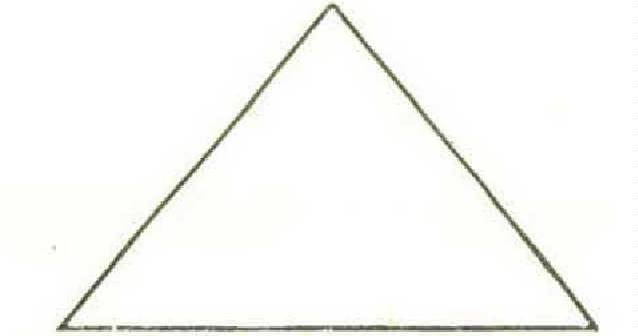
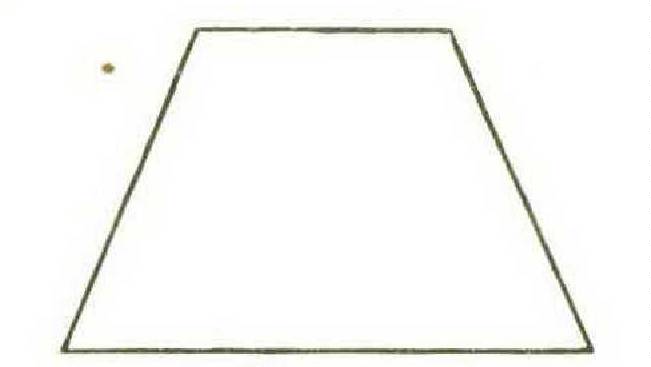
So, while it is admitted that there are more rich than formerly, it must be conceded that the proportion of the skilled workers of the community and of those engaged in the higher classes of employments is also increasing.
But it may be argued that while this is true, the earnings of the people are not what they were. My own contention has always been that the popular assertions relative to the unemployed are not really representative of industrial conditions. There is always a very large percentage of unemployed, whether in “ good ” or in “ bad ” times. The argument may be made that even with an increased proportion of the people employed as breadwinners, their breadwinning is not of the value of breadwinning in the past. For this purpose it is well to examine the course of rates of wages and also of earnings and prices. Fortunately, there are facts at hand which can be used in this examination, and statements that cannot be controverted.
The report by Senator Aldrich, of the Senate Committee on Finance, submitted in March, 1893, gives the course of wholesale prices and of wages from 1840 to 1891, inclusive, a period of fifty-two years. The report deals with seventeen great branches of industry, and they are the principal ones in the country. By it we find that, taking 1860 as the standard at 100, rates of wages rose from 87.7 in 1840 to 160.7 in 1891; that is, an increase of 60.7 per cent from 1860, and of seventy-three per cent from 1840. Taking an average according to the importance of the industries, that is to say, of each industry relative to all industries, it is found that the gain from 1840 to 1891 was eighty-six per cent. On the other hand, the hours of labor have been reduced 1.4 hours in the same period in the daily average. In some industries the reduction of hours has been much greater, while in others it has been less.
An increase in rates of wages means more or less according to the increase or decrease in prices. If prices decrease or remain stationary, the increase in the rates of wages is a positive gain. According to the same report, taking all articles on a wholesale basis and as compared with the standard of the year 1860, the prices of 223 articles were 7.8 per cent lower in 1891 than in 1860 ; and taking 1840 as the standard, with eighty-five articles the difference was 3.7 per cent. Examining prices of articles on the basis of consumption, leaving rent out of consideration, the cost of living is shown to have been between four and five per cent less than in 1860; and taking all prices, rents and everything, into consideration, it must be concluded that living was not much, if any, higher in 1891 than in 1840, while the rates of wages had increased as stated. Very much might be said on this point with specific illustrations, but the statement of the general tendency and trend is sufficient for the present consideration.
It should be clearly understood that the quotations of wages for the computations from which the foregoing results were reached were from actual pay-rolls, while the price-quotations were of wholesale prices rather than of retail prices, as being more truly indicative of the course of prices generally, and were taken from actual quotations for the years named.
It is often contended that the increase in rates of wages does not indicate the true social conditions of the wage-earner, that rates of wages belong to economics, and that earnings themselves are the surest indication of social progress. This is quite true. Nevertheless, it must be conceded that rates of wages are indicative of industrial conditions. Rates cannot be increased if industrial conditions are degenerating, nor can they be increased or sustained in the presence of a very large body of unemployed really seeking employment. If, therefore, rates constantly increase, — and they have increased steadily in the economic history of this country, — the conclusion is inevitable that conditions themselves have improved. The falling back owing to a brief period of industrial depression here and there can have nothing whatever to do with the general tendency, and the general tendency of wages is upward, while that of prices is downward.
But, fortunately, we are not obliged to depend upon the increase of rates of wages to show that the ordinary man is better off than at any former period in our history, because our censuses report aggregate earnings and also the number of persons among whom the earnings are divided. Looking to this side of the problem, we find that in 1850 the average annual earnings of each employee engaged in manufacturing and mechanical pursuits, including men, women, and children, in round numbers were $247 ; in 1860, $289 ; in 1870, $302 ; in 1880, $347 ; and in 1890, $445.4 Here is a steady, positive increase in the average annual earnings of the employees in our great industrial pursuits. The statement is not mathematically accurate, because the divisor used is not always a sure one. The total amount of wages paid at each of the periods named is a fixed quantity, and is one of the most certain elements of the industrial censuses, but the average is obtained by dividing the total wages paid by the average number of employees during the year. Some writers contend that the divisor should be the greatest number of employees instead of the average number, but the greatest number would secure a more erroneous quotient than that derived from the average number, because the total number involves each individual who has been employed during the year in a single establishment; and one man may work three months, another three months, and another six months, thus making three individuals where only one position has been filled. The average number represents more clearly the number of positions filled in the establishments, and thus is the safer divisor. Accordingly, it seems to me that the averages given above are more clearly indicative of the social and economic condition of the wage-earners in manufacturing and mechanical industries than any other statement that can be made. With rates of wages increasing constantly, barring, of course, depressions, with constantly increasing average earnings, and with prices, on the whole, remaining stationary, or fairly so, the conclusion cannot be avoided that the economic condition of wage-earners has improved vastly during the last fifty or sixty years. The few years when there have been variations or a falling off do not affect the general results.
It would be wearisome to take up individual industries, callings, and conditions, especially when the results so far as I know them, would lead to the same conclusion which is reached from the general statements that have been made. The results all show that the base of the pyramid is being contracted ; that the number of people in the higher and more skilled walks in life is increasing faster relatively than the population; that the hours of labor of wage-receivers are being shortened ; that rates of wages and earnings are constantly increasing, and that the prices of commodities either remain quite stationary or fall. The prices of some things, like rent and meats, have increased in our Eastern States, but clothing and the general articles which enter into family consumption are being constantly lowered in price. These things are taught us by statistics. Observation teaches us much more, but since statistics are chiefly useful in verifying observation, they must be looked to for the most convincing evidence.
A generation or more ago men were employed under the so-called iron law of wages. That is, wages were paid on the basis of preserving the efficiency of the working human machine, and they could not, under that so-called law, exceed the needs for the preservation of efficiency. Food, shelter, and clothing in sufficient quantities to keep the man in good working order were considered a fair gauge of the rate of wage which should be paid him. This was Ricardo’s announcement of the iron law. Today the demand of the working man is not alone for the things which shall preserve his working efficiency under such a law. His demand is for something beyond that, and it has been met to the extent of a margin of from ten to fifteen per cent surplus, which surplus goes to the support of his spiritual nature; that is to say, he requires and he demands a wage sufficient to meet not only the conditions under the iron law, but the conditions under the higher spiritual law ; one which shall give him amusement, recreation, music, something of art, and the better elements of life itself. He desires to surround himself with comforts, conveniences, and a fair proportion of even the luxuries of life. This is his contention to-day, and every rightminded person must admit that it is a proper contention. He has now secured, as stated, a margin above the iron law sufficient to enable him to gratify his tastes and ambitions to some extent. His demand will grow, and will become more emphatic in these directions. He contends that he has a right to something more than subsistence; that he has been taught to consider himself as one of the social and political elements of the community, and must therefore have some of the things that belong to such conditions. He is educated in the schools ; he seeks legislative experience ; he takes part in the politics of the country, and the whole basis of a democratic government requires that he shall be intelligent enough to take an intelligent part. All this means better conditions, and he is gradually securing them. He is not growing poorer, but better off, as time progresses and he overcomes more and more the exactions of the iron law of wages. The economic man of Ricardo is gradually developing into the social man. The number of those engaged in the upper grades or callings and the skilled trades is constantly recruited from the lowest ranks.
Looking back still farther, we find that this country was settled more to secure employment for England’s unemployed than for any other one reason. Never mind the religious enthusiasm which first brought our forefathers here ; never mind the persecutions which drove them out of their home country ; never mind the misfortunes of men in the motherland who came here of their own accord, — there was, nevertheless, on the part of the government of the mother country an earnest and energetic desire to rid itself of the presence of great bodies of unemployed people. This story is so completely told by the historian that it need only be referred to. Hakluyt, in his Discourse concerning Western Planting, and Sir William Petty, in his famous Political Arithmetic, have shown such conditions just prior to the settlement of this country that one wonders that there could have been any peace, or any prosperity, or any happiness at that time. It is all summed up in one paragraph by John Winthrop, the first governor of Massachusetts, who in 1629 stated the following among other reasons for leading emigrants out of overburdened England: —
“ This land grows weary of her inhabitants, so as man, who is the most precious of all creatures, is here more vile and base than the earth we tread upon, and of less price among us than a horse or a sheep. Many of our people perish for want of sustenance and employment ; many others live miserably and not to the honor of so bountiful a housekeeper as the Lord of heaven and earth is, through the scarcity of the fruits of the earth. All of our towns complain of the burden of poor people, and strive by all means to rid any such as they have, and to keep off such as would come to them. I must tell you that our dear mother finds her family so overcharged as she hath been forced to deny harbor to her own children, —witness the statutes against cottages and inmates. And thus it is come to pass that children, servants, and neighbors, especially if they be poor, are counted the greatest burthens, which, if things were right, would be the chiefest earthly blessings.”
What a contrast compared with the present! The poor of the present day should be thankful that they have escaped the conditions of the past. Poor as they are, the poverty of the present is not the poverty of the past. Pauperism, even, is not as abject. In the language of Ira Steward, by " poverty ” is meant something more than pauperism. Pauperism is a condition of entire dependence upon charity or upon the public purse, while poverty is a condition of want, of lack, of being without, though not necessarily a condition of complete dependence. It is in this sense that it is declared that the poverty of to-day is not the poverty of the past. The condition of want, of lack, of being without, is a condition of less want, of less lack than of old. Bad enough always, stigma enough always upon any civilization, it has improved, and the public has but little sympathy with the sentiment, that the poor we have with us always. We do have the poor with us always, but we should not rest upon the idea that they must always be with us. Their conditions must be bettered, and are being bettered. The statistics prove that their number is decreasing, for in 1850 the paupers in almshouses were 2171 to each million of the population, while in 1890 they were 1166 to each million.
The organization of man proves that he is a social animal, designed by nature to live in society. In this state of society there are no rights without duties, no duties without rights. The right of self-preservation implies the right to property ; but the faculties of man are by nature unequal, which gives rise to a natural inequality of conditions. It is these unequal faculties which give us unequal fortunes, and so long as they exist the inequality of conditions resulting must lead to unequal surroundings.
Property is desirable, is a positive good in the world; That some are rich shows that others may become rich, and hence is encouragement to industry and enterprise. Let no man who is homeless pull down the house of another, but let him work diligently and build one for himself.
When wealth is used productively there can be little difference in the result to the community, whether it be contributed by thousands to the common stock, or manipulated by a small association of men owning the bulk of it. If a man he worth ten million dollars and if he use this as productive capital, the community practically owns it, for capital itself, no matter whether the title of it be in one man or in a thousand, cannot be sacrificed ; only the usufruct is ever secured by the community at large. Productive capital, or capital productively employed, can never, then, in any sense, be the cause of any prevailing unrest. It is what may be called the criminal use of wealth, that is, its unproductive employment, that irritates the public mind. And here, in discussing the question as to whether the rich are growing richer and the poor poorer, we should make an important and a clear discrimination. The use of wealth for display is often justified, because it gives employment to a great number of people; but such employment is spasmodic, is not productive, does not give stability of condition, or increase the standard of living of those engaged in it; and it must be contended, from a moral point of view, that even the continuous giving of great balls, for instance, or any other ostentatious employment of wealth, would in the long run demoralize the recipients of the wages paid in such display, because of the enervating luxury into which all would ultimately fall. But wise, fair, and continuous employment of the greatest number of persons in the production of things which enter into legitimate consumption for the actual use of the people — for cheapening the cost of living, and for the elevation of the standard of living itself, through making possible the attainment of some of the higher things in life, like the productions of art, education, music, everything that beautifies and helps and stimulates — has no demoralizing influence, and does not affect in an unhealthy way the public conscience, nor tend to irritate that of the individual.
A poor man may make a criminal use of wealth as well as the rich. He may use it in the purchase of those things that perish with the use, and result in no good to himself or to his family. He may spend it in some form of riotous living, or in the insane attempt to keep up appearances which are not legitimate.
The poor do not object to the wealth of the rich ; they object to its misuse. They do not like the display of enervating luxury. They know well that the world is better off with some rich than it would be with all poor. There can be no contention on this point. Progress would cease, industry stop, civilization itself be retarded, were it not for the rich. There never was a time, moreover, when the rich did so much for society and for the poor as they are doing at the present time. God speed the day when the wealthy will fully comprehend that their wealth is held in trust; that they are but the means of helping the world, and that riches have been given them for this purpose. The world is recognizing this. Millionaires are understanding it more and more, and so those of low estate are securing the benefit.
The competition of our age is intellectual more than physical, but with the unequipped man the attempt is made to bring muscle into competition with brain. As a result brain succeeds, and the man who has attempted to compete with it on a physical basis suffers. The mental competition of to-day means a large class of left-over men and women who cannot keep up to the present requirements. These help to keep the body of the poor unhappily large, although it is being restricted from generation to generation in its breadth, and the pyramid is rising into a different form. Miserable conditions are found everywhere. The effort of the rich is to remove them. The activity of governments in improving slum districts in cities, the moral effects of rapid transit in taking the population out of the congested parts of great cities into suburban homes, where they meet the incoming thousands from the country homes, constitute great factors in alleviating present conditions. This suburban population itself is solving many problems, both of city and of farm.
As wealthy men understand these things, as they join hands in disseminating knowledge, in founding institutions, thus securing the very elements of a democratic government to the people at large, there is less and less quarrel about wealth ; but there is an increased quarrel about some classes of wealth and some classes of wealthy people. It is this which gives emphasis to the assertion that the rich are growing richer and the poor poorer. If it be true, religion is a failure, education a snare, industry an enemy of man, and civilization a delusion. The statement, I reiterate, is not true, as a whole, but it is true that the rich are growing richer, and the poor are growing better off; and with increased understanding of the true uses of wealth, the proportion in which the rich are growing richer and the poor better off will assume more just and equitable relations.
Carroll D. Wright.
- Herbert Spencer, in Data of Ethics.↩
- Popular estimates and statements.↩
- The returns of the savings banks of the country sustain this view. In 1840 the amount due each depositor was $178; in 1850, $172; in 1860, $215; in 1870, $337; in 1880, $350; in 1890, $358; in 1893, $369, and in 1896, $376. These figures convince us that during the recent depression, notwithstanding the influences of the change of investments, the average deposits in the savings banks have constantly increased. The total deposits at the present time in the savings banks of the country are about two billion dollars, one half of which, as has been demonstrated, belongs to wage-earners. See the reports of the Massachusetts Bureau of Statistics of Labor for 1873 and 1874.↩
- These statements for the United States can be supplemented by the figures for the State of Massachusetts. By the report of the Massachusetts Bureau of Statistics of Labor on the annual statistics of manufactures (1895), it is found that for 2427 establishments in 1885 and 1895, wages were reported which, divided among their employees, amounted to $361.62 in the former year and $418.99 in the latter year. These figures compare very well wit h the United States figures. It is true that, according to the census of Massachusetts for 1885, the average wages paid in all industries in 1875 were $392.82 (in gold), and in 1885, $351.02, showing a decrease of 10.64 per cent, but this was a temporary reaction from the inflated conditions subsequent to the war.↩