Nuremberg
“ Quaint old town of toil and traffic, quaint old town of art and song.”
NO picture could be more perfect than that which the poet has so fondly painted of “ Nuremberg the ancient.” It stands in his verse, all aglow with the mellow light of the olden time, and through its streets walk the stately figures which are the glory of its traditions. Idle were the endeavor of less skilful hands to embody the spirit that haunts the place, but a timid pencil may venture to fill out the delicate outlines of spire or gable or oriel ; or may hint at wonder and beauty, half hidden in shadow; so that the poet’s matchless canvas may shape for the stranger a distincter vision, and waken for the traveller a tenderer memory, of the old town.
All the long, bright summer day we sped across the country, from Heidelberg and the Neckar, out of the beautiful Odenwald, by ripening wheatfields and green hop-yards and vineclad hills ; past Wurzburg, —
Of its blessed wine of the Holy Ghost,” —
out of Baden, and through Wurtemberg, to Bavaria, till, with the waning afternoon, we descried afar the manytowered outline of Nuremberg, In the short drive from the railroad station to the King’s Gate, we left the modern world behind us. Across the little bridge that spans the moat, through the darkness, under the great round tower, we passed into the sunlight that shone upon the MasterSingers, upon Maximilian, and upon Albrecht Dürer.
We turn a curious page when we read of the rise of the Free Cities. Almost in spite of the feudal barons, the merchants and artisans gained the power they coveted. Often, under the very walls of castles that were but the strongholds of tyranny was fostered a spirit of independence that one day might dare to defy both Pope and Emperor. Not only on the one side were they grasping at political power, but, on the other, were falling into their hands all the treasures of art and letters which the monks of the West had been six centuries in accumulating. How wisely they wielded the one, and how zealously they guarded and developed the other, are two questions that might serve as a guide through a large part of the history of Europe, from the Crusades to the Reformation. Among them all, none shows a nobler record of effort for liberty or for art than Nuremberg.
That was a grand history which linked itself with Karl the Great, with Henry the Saint, and Cunigunde the Fair; with the Conrads, with Barbarossa, and with Maximilian. For six centuries a Free City, Nuremberg was often no mean auxiliary to the emperors. In the older time, when the cities owed to the Empire much the same fealty as the feudal barons, six thousand sturdy men-at-arms were ready to march at the summons of the chief.
In the train of the merchants who flocked hither came, not only the products and inventions of every nation, but also the culture of every land. The rough grandeur of the Northern Saga, the beauty and grace of the Romance literature, the rising art of Italy, the far-off echoes of Eastern legends, united their influences upon her artists and poets. Nor was this effect limited to a few chosen spirits who might win for themselves lasting fame, but the love of beauty seemed to waken in every soul. Rude, stiff, material, nay, even gross, its expression may sometimes have been, but its presence is ever manifest as an exalting impulse. Wealth was not gained for selfish enjoyment, but each strove so earnestly for the good of all, — whether in the ornaments of home, in the consecration of the church, or the public adornment of the town, — that they have left not one, two, or three monuments of art, but a whole city of rich, quaint beauty.
By a most singular and happy immunity, from rebels within and foes without, their legacy has escaped the destruction which has overwhelmed so many precious relics of the Middle Ages. While Worms, spite of all the heroic memories of Kriemhild and the Niebelungen, has shrunk to a dingy little town ; while Aix-la-Chapelle treasures only one relic of imperial greatness, the lofty dome over the tomb of Charlemagne ; while to Regensburg (Ratisbon), for all the splendor of the Diets, is left but one glowing gem, the Cathedral ; while the Rhine castles are crumbling, and Heidelberg is but a magnificent ruin ; — Nuremberg presents to us a perfect picture of the old castle-crowned, walled, and moated city of the fourteenth century.
The moat, fifty feet deep and one hundred feet wide, still entirely surrounds the old city. Its bottom is now covered with peaceful market-gardens. Peas, beans, beets, and even tobacco grow luxuriantly, and here and there stand tall trees. A double wall rises inside the moat, guarded originally by upwards of four hundred towers. Scarcely a third remain, but their steep, red-tiled roofs form a most picturesque element in the different views of the town. A part of them date from its earliest existence, but the whole system of fortifications was strengthened and improved for the necessities of modern warfare, according to the plans of Albrecht Dürer, which were also adoped by many other towns in Germany.
The four great watch towers which flank the principal gates, and also the chief tower of the castle, are entirely his work. They are perfectly sound, and built of huge blocks of stone, with only one small square window, scarcely more than a loophole, in each story, on the side towards the city. The roof is almost flat, with broad eaves, and gives an aspect of grim solidity and strength to the whole.
The broad “ King’s Highway ” leads from the “ King’s Gate,” under one of these towers, to the “ King’s Bridge,” over the river. We lodged at the sign of “The Red Cock,” a little inn, half-way down the street, so odd and old that the merchants from the Levant might have tarried there. Winding staircases and dark passages led us to a long, narrow room, with low-browed windows, that looked out along the neighboring roofs to the spires of St. Lawrence. It was a busy thoroughfare, and the rattle of wheels over the stony pavements and the chattering voices at the fountain were often wearisome. One day, as I sat writing, a pleasant stillness came on all the street. Looking out I found a sudden shower was falling softly in great drops, that had driven every one in-doors.
This street was once the centre of Nuremberg’s greatness. Not far from the gate are the immense warehouses, three stories of ponderous stone, then seven or eight more in the high-pitched roof. Their vast chambers, long since consigned to silence and to dust, were once crowded with the commerce of a world. For her early pre-eminence among the Free Cities, Nuremberg was indebted to the singular natural advantages of her position. In the centre of a broad and fertile plain, midway between the navigable waters of the Rhine and the Danube, she opened her gates upon the great highway of traffic between the North and the South. Perhaps the great fairs at Nijni Novogorod, where East and West meet to exchange their varied wares, is the closest parallel that modern times offer to the commerce of Nuremberg in the fourteenth and fifteenth centuries. Not only were Genoa velvet and Venetian glass exchanged across her counters for Flanders lace, but the trade of the Levant, and, until the discovery of the Cape of Good Hope, that of the fardistant East Indies, thronged her gates. She was foremost, too, in all useful inventions, and in the improvement of manufactures as well as in the patronage of the arts. All nations came to seek her armor, guns, paper, printing-presses, clocks, and watches. The stiff outlines and bright colors upon our playing cards are souvenirs of the original designs by the Nuremberg engravers. One may see the like now in the old stained glass of the fourteenth century. The best translation of the Bible before Luther’s day was printed in Nuremberg, and it is still regarded with respect as a fair specimen of the German prose of the day.
As I have already said, the whole city is a monument of art. Nowhere are to be found richer specimens of Gothic domestic architecture. Street after street is adorned with carved balconies, pointed oriels, and picturesque dormer-windows. The roofs are a special wonder. Scarcely two are alike. Of eleven, opposite our window, each had an outline and a character of its own. The oldest and simplest style, which in some sort is repeated on all kinds of buildings, is a steep red-tiled roof, with two, three, or more rows of little windows, of not more than two panes of glass. They look as if a piece of the roof had been pushed up a few inches to let them in. The larger windows have pointed roofs, sometimes octagonal, and supporting a sharp little pinnacle with a little pennon like that of a lance. Other windows, more elaborate, are double or treble, with slender columns on each side, fretted arches over them, and open-work balconies in front. Many houses have octagonal windows, or pointed turrets at the four angles of the roof, with light arcades, sometimes double, running along under the eaves, and slender pillars and arches mounting above each other, along the edges of the gables. One would say that the narrow spaces of a walled town, where many of the streets are but lanes, had driven the people to expand their exuberant fancy in the wider range of the roofs.
Only the pencil or the photograph can do justice to the elaborate beauty of the grander mansions. One of them, in Venetian style, is worthy a place by the Ca’ Doro itself. Others are built with galleries and balconies, rich in all wealth of flamboyant tracery, with windows over panels carved in deep relief, and the gables veiled with fretted arches edged with crockets and finials, and surmounted by statues. Even in humbler dwellings the balconies and window-sills are trailed about with ivy or woodbine, and overhung with flowers, scarlet and purple, — the bright colors in brilliant contrast to the sombre tint of the stone.
The home of Albrecht Dürer is, for his sake, still sacred to art-life as the studio of Nuremberg artists.
It stands near the western wall of the city. It is plain and square, built of stone, cross-barred with timber, and dark with age. The high roof projects far over the walls, and the top of the front gable is cut sharply off. High up, at the corner of the opposite house, on a bracket, stands a statue of a knight in full armor with lance and shield.
No calling was too practical, no place too humble, not to be reached in some way by their love of art. Over the City Scales is a bas-relief, by Adam Krafft, with the motto, —
Over the archway leading to the shambles is a boldly sculptured ox in stone, with the fantastic motto, —
Qvem cernis nvnqvam bos fvit hic vitvlvs.”
hold, this ox which you see was never a calf.”
In the goose-market presides a little smiling man, a special favorite of the peasants, with a goose under each arm from whose bills flow streams of pure water.
There are several other fountains adorned with statues, of which the most famous is “ The Beautiful Fountain.” It has been likened to the Queen Eleanor crosses in England, which are of the same age, but it has the advantage of the superior lightness of the bronze in which it is cast. Like the castle fronts of Heidelberg, the design is a curious union of pagan and Christian devices. Nine heroes out of all history — Charlemagne, Clovis, Godfrey, Judas Maccabeus, Joshua, David, Cæsar, Alexander, and Hector — are grouped together with the seven electors who represent the lords spiritual and temporal of that day. The secret of its fame is in the perfect harmony into which, with the utmost grace and skill, are blended an almost infinite variety of detail.
One of the most picturesque scenes in the whole city is the view from the King’s Bridge. The houses on both sides have carved wooden balconies, brown with age, which overhang the river. Our first walk led us thither, just as the sunset light reflected the quaint outlines in rosy shadows, and the music in the Museum Garden close by heightened the magical effect.
The Pegnitz, like many a famous river, is but a narrow and sluggish stream. Its waters once served to fill the moat in time of siege, but its chief use now is for a feeder to the Ludwig’s Canal, which unites the Danube with the Rhine by way of the Main. A thousand years ago, the clear, far-seeing eye that made the genius of Charlemangne an omnipresence in Germany for all time, planned this canal ; but it was completed only twenty-five years ago by Ludwig, " The Art-King of Bavaria.”Three centuries too late for Nuremberg’s prime, it has, nevertheless, been an important help in the revival of trade which is restoring her to somewhat of her old prestige.
The City Hall, literally “the Council House,”was rebuilt at a late date, in the Renaissance rather than the Gothic style. One large picture by Albrecht Dürer, “ The Triumph of Maximilian,” decorates the great hall, all that remains of the earlier structure.
This hall was the scene of a famous banquet, given by the city, for joy at the signing of the Treaty of Westphalia. The splendor of that banquet shines forth from those gloomy days with a lustre that reaches even to our time. Over tables wreathed with flowers hung silver chandeliers, between pendant garlands and boughs laden with thirty kinds of fruit. The Count Palatine and General Piccolomini, who had negotiated the treaty, with their suites and other gentlemen and officers, sat down to four courses of one hundred and fifty dishes each. The dessert was brought in covered with flowers, and the fruit placed on the tables on trees, so contrived as to imitate the life. Out of doors the people feasted in the streets, and the wine ran like a river. At midnight, when the mirth was loudest, all the company organized themselves into a regiment, with the Count for a colonel, field-marshals for captains, and colonels, majors, and the like for privates, and marched impromptu to the castle, fired a grand feu de joie, and returned to the banqueting-hall to lay down their arms and pledge themselves to support peace.
Well might the burghers rejoice at the close of the Thirty Years’ War. For the first and only time they had seen an enemy at their gates, when Gustavus Adolphus entrenched his army close beside the city, while Wallenstein encamped hard by, on the heights near Furth. Too strong for either to be sure of victory, they watched each other, face to face, through weary months, while starvation and sickness wasted their troops. The Nurembergers strained every nerve to lend aid to the army of Gustavus, and to ward famine from their doors, The ample provisions for a siege were, at last, exhausted, the fertile country ravished, and sheer hunger compelled Gustavus to attempt storming the enemy’s lines. Totally defeated, he fled, though, for the salvation of Nuremberg, leaving his foe too crippled for aught but a speedy retreat to regions of plenty.
The fortunes of Nuremberg, already waning, never recovered from the prostration which all Germany suffered at the close of the Thirty Years’ War. Trade had, before that, begun to seek other channels. With the same intolerance that banished the Jews in the fifteenth century, but with less justification, the burghers had closed their gates against the exiled Huguenots. Jealous of the skill of the silk-weavers of France and the Low Countries, they refused them asylum, and reaped the fruits of their amazing and pitiful short-sightedness in seeing rival cities outstrip them in manufactures.
The name and government of a Free City were, however, retained until 1806, when Nuremberg was handed over to Bavaria by Napoleon.
To the king of Bavaria now belongs the castle, which stands on a slight elevation on the northwest side of the city. Our way thither led us past the most interesting points in the city : past the west front of the church of St. Lawrence, over the King’s Bridge, by the church of Our Lady ; through the market-place, gay and busy, in the sunshine of a June morning; past the Beautiful Fountain and the choir of St. Sebald’s church, the City Hall, and the statue of Dürer. The castle is grim and massive, built, not for beauty, but use, in days when a baron could pull up the drawbridge, and from the top of his towers within his thick walls, defy all besiegers.
The place seemed deserted, and our footsteps re-echoed, as we paced the court-yard, where Queen Cunigunde’s linden was strewing its fragrant blossoms. Presently, as we turned again towards the entrance, a voice came from far above our heads. Looking up, we saw a little old man leaning from the uppermost window of the round tower. “Would the Herr and the gracious lady wish to look over the city and away to the mountains ? Would the gracious lady climb so high ? Then, will the Herr open the little door and find the stairway ? ” Built of rough-hewn timber, it led up through black darkness to a low chamber under the roof, where the little old man awaited us, shouting down the trapdoor once in a while to encourage us. He flung wide the clumsy shutters on all sides to show us the smiling meadows, dotted with villages, the blue Franconian mountains in the north, and the Moritzberg in the southeast. Right below us lay the city, with all its marvel of odd roofs and quaint towers. On each window-sill was an indicator, showing the direction of each village. The old man was stationed there as watchman, and with his glass could at once make out the precise locality of a fire, so that help might be sent from the city without delay. His whole life was centred in his tower, which he would fain have us think the most wonderful of all the scores of them about the city. It was “der dickste, und der dünnste, der oberste, und der unterste,'’ — a paradoxical description, which requires a double explanation. Literally, “the thickest and the thinnest, the highest and the lowest ” ; it has, of all the towers, the thickest wall at the base, and the thinnest at the top. Its foundations go deepest, but, as it is built on the higher level of the castle, its top surmounts all the others. Beside it is a smaller tower, so ancient that no legend attaches to it. It is called only the Heathen Tower,—a curious epithet which one often meets in Germany, applied to many different objects. It is a whisper from out a remote and shadowy past, a dim suggestion of a people and a power far anterior to Kaiser or to Roman legions.
The guide-book suggests dungeons and torture-chambers and other dreadful things, but we had had enough of darkness in the winding stairway, and were glad to stand in the sunlight in the old well-house. A wonderful well it is, three hundred feet deep, they say; but we had more vivid proof of its vast depth than any figures could give. The woman who keeps the place took a tumbler of water and let fall a little, slowly, once — twice — thrice — four — five —six; then, as the last bright drops disappeared, a musical splash answered back from the black depths below, once — twice — to the sixth successive time. Then she lowered, in a glass case, four lighted candles, down, down, what seemed an endless length, and then bade us look. Far below, the light glittered like a star, and beneath shone the water, all rippled over by the constant bubbling of the living spring that feeds the well. The watchman by this time had come down from his tower, and began to tell how precious was the well to all the city, how deep and winding were the passages that led to it from the City Hall and the Arsenal, and so on, with all the earnestness of the old man garrulous, till the coming noon warned us to depart.
On the south side of the Pegnitz stands the church of St. Lawrence. Less interesting, perhaps, to the student of architecture, than the older church of St. Sebald, it is, nevertheless, without superior among the edifices of its age. It was commenced in 1275, and the building continued through two hundred years, so that it dates from the best era of the pointed style, and is to Germany what the Abbey church of St. Ouen is to France. Externally it is cumbered by the heavy roof, for which the Germans always showed such a fancy, but the west front is very beautiful. The porch is crowded with figures in stone, representing scene after scene in the life of Christ. On the pillar dividing the doorway stands the Virgin with the Holy Child. In the small arches is represented the childhood of Christ. Above are the incidents of the passion and the resurrection. The upper part of the great archway is filled by the Last Judgment, with all the train of angels and devils which the Middle Ages conceived to accompany it. In sculptured niches on the mouldings stand the twelve Prophets of the Old Testament and the twelve Apostles of the New. Above a balcony of stone is the rose-window, bordered by a screen of stone so elaborately and daintily carved as to suggest, not only the oft-repeated simile of delicate lace, but, more aptly, the fairy-work of the frost. Higher still the pediment is ornamented as it were, with a veil of stone, arch and quatrefoil rising each above the other to the slender pinnacle that crowns the whole. The spires are so well proportioned as to give an effect of greater height than they really have, and the barred windows of the belfries symbolize the martyrdom of St. Lawrence.
The height and grandeur of the interior are more like that of a cathedral than of a parish church. Eight lofty columns on either side support the roof of the nave. The choir is of great depth, and even wider than the body of the church. Its three aisles are carried up to the same height, giving an impression of vastness almost without parallel. Many of the windows of the nave seem never to have received the stained glass intended for them, but the solemn gray light which fills it gives a deeper glow to the rich tints of the choir. The stranger marvels to find no restorations or innovations. No ruthless hands of foreign soldiery have ever pillaged its treasures; no iconoclastic zeal has ever desecrated its shrines. So unanimously did the people of Nuremberg embrace the Protestant cause, that no partisan bitterness avenged itself upon the relics of the forsaken faith. Nay, more, they had learned from their great masters that all beauty is born of God, and they were glad to offer in new consecration the wealth and glory of their churches, not in the letter which killeth, but in the spirit that giveth life. The altars remain in the chapels. The pictures of miracle and martyrdom hang over them. Above the high altar, the patient Christ looks down from the lofty cross. By the pillars, beneath carved canopies, bend the Apostles in grandly sweeping robes. The dust lies in the fonts for holy water. The confessional stands with closed wicket and open door, as the last priest and penitent left it, three hundred years ago. All round the walls and even on the pillars hang memorial tablets, some the rich escutcheons of knightly houses, and many the simpler badges of burgher families, grown grand by long descent, generation after generation recording itself here.
On the north side of the choir is the wonderful “ House of the Sacrament.” Like the screen of stone round the rosewindow, it is more like the work of magic than of human fingers. Indeed, at one time it was gravely questioned whether Adam Krafft, instead of carving it, had not moulded it by a secret process from some plastic material. It is, however, only the most remarkable of a style of work of which the German artists were ever fond. Whether they introduced it as an imitation of the elaborate architectural details used by the glass-painters, or only as a proof of their own consummate skill, it remains the marvel and the envy of our day. Cologne Cathedral itself is but a sublime example of the same power.
The central thought of the design is the little chamber for the safe-keeping of the vessels of the Sacrament, a place to the Roman Catholic mind a Holy of Holies. It stands upon a richly carved base, beneath which kneel the effigies of Adam Krafft and his two assistants. The canopied roof raises itself to a height of sixty-four feet against the pillar, bending at the top to conform itself to the turn of the vaulting. Its graceful curve might have been copied from the infolded leaves of the young fern, or the stalk of the lily of the valley. On its sides and in its storied niches are represented the scenes of the passion. Lowest, is the earthly suffering, the last supper, the agony, the scourging, the parting from the mother, the crown of thorns. Above is the supreme sacrifice of the cross; and, higher still, the glory of the resurrection and the peace of heaven. The faces are simple, the draperies severe, but their solemn beauty is the reflection of the artist’s earnest soul. The designs are entwined and interlinked with garlands and fretted borders of stone, and in the many nooks about it stand saints and angels to protect it.
As I entered the church for the first time, at the hour of service on Sunday morning, the contrast to the plainness, nay, even ugliness, of other Protestant churches which I had seen in Germany, made me think that I had found my way, by mistake, into a Roman Catholic one. A moment’s observation, however, showed me the absence of all the ornaments with which Catholic priests are wont to bedizen themselves and their churches. The altar was covered only “ with the fair white cloth,” and the lighted candles, never discarded by the Lutheran Church, stood upon it. The pulpit, of white stone and beautifully carved, was half-way up the south side of the nave, so that the pews were arranged to face one half each way. This made one half of the people sit with their backs to the altar, showing that they do not attach to it any sentiment of special sanctity, such as is common in the Roman and Anglican churches. The choir was empty, though it is, I believe, the custom to fill it with seats at the celebration of the Lord’s Supper. The day was cloudy and the “ House of the Sacrament ” rose in the choir like a slender, pointed, white flame, but now and then a flitting gleam of sunlight shone through the stained windows and streamed over it, impurpling the brow of the dying Saviour and crowning the rapture of the Resurrection with a golden aureole.
The large congregation was assembling with grave quietness. The silent prayer was said by each person standing in his own place. At the appointed hour, without any apparent notice, the service commenced by singing a hymn, the number of which was written on little blackboards so hung that all could see. It was very long, and divided into three parts, so that the one hymn answered for the whole service. The organ, away up in the sky as it seemed, led off, and the whole congregation, without rising, joined the choir. The choral might have seemed loud within narrower walls, but the swelling tones rose grandly to the vaulted heights above us, and died away in a soft refrain of tender sweetness. Then the minister in his black robe rose in the pulpit, and all the people stood while he prayed. Then he read the gospel, Luke XV., the people still standing. The second part of the hymn was sung ; and the sermon followed from the text, “ There is joy in the presence of the angels of God over one sinner that repenteth.” The minister was a slender, gray man, with calm, thoughtful face, and low, sweet voice, so skilfully modulated as to be heard distinctly by all the large congregation. He spoke with a gentle dignity and earnestness that made true eloquence. At the close, he read requests for prayer from mourners. Such prayers, by a singular and impressive custom, are offered in silence. Then the hymn with its sweet refrain again ; and last, the minister intoned, from in front of the altar, portions of a Psalm, the choir and organ responding. The concluding prayer and the benediction were also said from the steps of the altar, the minister standing and facing the congregation.
I have described the service thus minutely as a subject not often dwelt upon by travellers. The splendor of the Catholic ritual very naturally blinds the eye to the power and charm of the simpler service, I have heard celestial music in cathedral naves. The hush of the kneeling crowd at the supreme moment of the elevation of the host, wakens sentiments of almost breathless awe ; but I have never seen or felt more solemn devotion than in that once Catholic, but now oldest of Protestant churches, where minister and people worshipped together in a faith at once as intelligent, as reverent, and as simple as that consecrated by childhood’s memories in New England sanctuaries.
The church of St. Sebald, on the other side of the Pegnitz, was built at different and far-distant periods. For that reason and for the curious monuments it contains, it is an object of great interest, though it nowhere presents such grand height and perspective as St. Lawrence. The west end, or St. Peter’s chapel, dates from the tenth century. The arches are low and round, the columns short and heavy, with massive though deeply cut capitals. The nave shows the transition style of the next century. The east choir is in the strongest possible contrast to the rest, with its slender clustered pillars. It shows, like St. Lawrence, the fully developed, pointed style of the fourteenth century. The lofty windows (the mullions are full forty feet high) are filled with stained glass designed by the famous Hirschvogel. One of them was the gift of Maximilian I. ; another is the Episcopal window of Bamberg; another is a memorial to one of the house of Brandenburg. The altars remain here as in St. Lawrence, decorated with curious carvings in wood or stone. About them are the commemorative escutcheons of the families who founded them, on which are perpetuated the generations of six hundred years. In 1326 the Baron Tucher consecrated to the Virgin a lamp to burn perpetually before the shrine. The worship of the Virgin has ceased for three hundred years ; the shrine is empty; but the brazen lamp is faithfully fed, and its steady flame is a constant witness to Nuremberg’s devotion to her ancient traditions.
“The tomb of sainted Sebald” stands in the centre of the choir. Three canopies of bronze are upheld by delicate pillars above the coffer which contains the relics. The sides of the coffer are covered with reliefs, representing the charities and the miracles of the saint. The twelve Apostles stand upon brackets against the upper half of the columns, and around the top are twelve smaller figures, representing the Fathers of the Church. The central canopy is surmounted by the infant Christ, holding a globe in his hand which is contrived as the key to the whole, from which it can be all laid apart. In the fretted borders and interlacings of the design are scores of tiny figures drawn from all the realms of earth, sea, air, and fancy. The effigy of Peter Vischer himself may be seen on the east end, with the inscription, “ For the praise of God Almighty alone, and for the honor of Saint Sebald, Prince of Heaven.” The whole rests upon twelve snails and four dolphins, which supply the fantastic element seldom wanting in German art.
Peter Vischer and his five sons worked at the moulding of the bronze for fifteen years in the golden days of Nuremberg art. Like the Beautiful Fountain and the House of the Sacrament, the shrine is an exquisite symbol of Gothic architecture. Perfect harmony from an infinite variety of detail is everywhere the law.
“ On the square, the oriel window ” belongs to the parsonage of St. Sebald, of which church the poet Melchior was a canon. It is like the many others in the city which I have already described, only more beautiful, with its mullions and trefoils under fretted arches. The panels below the windows are carved with sacred scenes, the legends of the birth of Christ, if I remember rightly. As we passed it, bright scarlet geraniums hung over the sill, and through the open casement we caught a glimpse of a ceiling of blue pricked out with gold. I could fancy a lovely picture of the beautiful life within, “in the antique shell of an age gone by,” as I remembered the studious mien and winning voice of the minister of St. Lawrence. Semler, the great Halle professor, sometimes quoted as “ the father of German rationalism,” wrote, a hundred years ago, to his wife to be, “ Such noble affability and active regard as were shown by the gentlemen of Nuremberg to their men of learning, I have seldom met with elsewhere.”
In all the churches are pictures attributed wholly or in part to Albrecht Dürer. No one of them is quite worthy of his fame. Except one or two portraits, his masterpieces must be sought in other cities. His portrait of himself was stolen by the ingenious fraud of a copyist, and is now in the Munich Gallery. It represents him as a young man with long blond curls. The full lips are gracefully curved, and their expression is gentle and tender ; but the brow is firm, as if already strained to steady endeavor; the eyelids droop as if heavy with the burden of unaccomplished dreams. To tell the story of his life is to repeat the ofttold tale of patient, obscure labor, working slowly towards the light, till crowned at last with the proudest laurels. The son of a humble jeweller, the scorn and derision of his jealous companions, he struggled painfully through years of trial, till he won for himself, not only imperial regard, but still prouder honor, as the great master of art in Germany.
The whole city of Nuremberg is a grand monument to his genius. The quaint beauty that crowns her to-day is an enduring witness, not only to his skill as an architect, but to the enthusiastic love of art which he inspired.
As Dürer was the greatest of the Franconian school, so was he the last. Such a master should have left worthier followers, we are fain to think, as we study the few pictures remaining in Nuremberg. But they had fallen on evil times, when art and poetry were alike declining in Germany.
Only the Master-Singers were left of all the tuneful race that had sung the heroic strains of the Niebelungen Lied or the graceful measures of the Minnepoetry. Somewhere in that dark time for letters which succeeded the fall of the house of Hohenstaufen arose these guilds. It was once the fashion to laugh at them, to call them professional rhymers, poets by rule ; but wiser critics have recognized them as the preservers of German poetry, till better days should dawn. The student finds them an important element in the history of manners and civilization. In their influence upon taste may be traced the source of much of that love of music and letters, that moral and intellectual culture, which still to-day characterizes the German artisans.
A mythical story connects their origin with Frauenlob at Mainz. Be that as it may, the associations (for they were not formally guilds) soon spread, through South Germany, and were especially strong in the great Free Cities, like Augsburg, Ulm, and Nuremberg, where the wealth and enterprise of the burghers were constantly increasing. Early in the fifteenth century they were regarded as ancient institutions.
Their poetry is little known, and could never have had great value. Even Hans Sachs, the greatest of them all, excluded every one of his own “ Master Songs ” from his printed works. But their history is a quaint picture of the simple life of that age. While the highest and lowest classes, were alike ignorant and sensual, the one from wanton luxury, the other from abject poverty, the craftsmen and worthier burghers were devoting themselves to poetry and song as their congenial recreations. In some cities the associations included only one trade, as the weavers at Ulm, but in Nuremberg the Master-Singers were of all classes. Like the painters and other artists of their age, they regarded their art as sacred, and chose chiefly religious subjects. Their meetings were held in the town-halls or, on occasions of great interest, in the churches. Judges and critics were appointed to decide upon the merits of the compositions, which were recited or sung in the presence of the burghers and their families, who sat by in reverential silence. The victor then received a reward or decoration from the Kronmeister. Some of the companies possessed many jewels, often of great value, so that many masters, already decorated, might appear with their ornaments to add brilliancy to their meetings. The chief jewel, at Nuremberg, was a heavy gold chain, to which was suspended an image of King David with his harp.
Success was no easy task, for the judges adopted rules more and more elaborate, and fettered the rhyme and rhythm with unnumbered conditions. We may laugh at the absurd distinctions in their “two hundred and twenty different kinds of tunes or singstrophes " ; the yellow-violet mode, the red nut-blossom mode, the striped saffron-flower mode, the short ape mode, and the fat badger mode; still an artistic skill was displayed through all these intricacies which helped to mould to greater exactness and finish the yet imperfect language of the nation.
The Master-Singing lasted for centuries. It survived in Nuremberg, which had been its second home after Mainz, till 1770. Twelve old Sing-Masters still lived in Ulm in 1830. In 1839, the four aged men remaining solemnly bequeathed their property and their fame to the Lieder-Kranz of Ulm.
The stranger in Nuremberg dwells first and longest on the associations of the past, but gradually the life of the present moment attracts the eye by its picturesqueness and simplicity. Beautiful suburbs, with handsome houses and shady gardens, have grown up outside the wall on both sides of the city. Pleasant signs of home comforts appear about the old towers. Baby faces peep out of the narrow windows. The cats creep along the ramparts, and the children sit at the open doors. The exuberant life of the market-place ebbs and flows round the Beautiful Fountain and streams over on to the neighboring bridge. The stout, brown-cheeked women, in bonnets like helmets of black satin, chatter over their wares ; and the peasants from the villages outside nod their scarlet head-kerchiefs over their broad baskets of fruit and vegetables.
There are signs of renewed energy in the old town. Manufactures and trade are springing again. A countless variety of small articles for use or ornament are sent hence all over the world. It is the great centre for the sale of the thousands of toys made by the peasants in the forests of Thuringia. Millions of lead-pencils are exported every year. The house of Faber alone now carries again “ Nuremberg’s hand into every land.” But the busy stir of modern life must have always an alien air in the shadows of the Middle Ages. There is a quaint, old-time aspect about the people, whether at work or play, that loses none of its charms in longer acquaintance.
We went one night to a little garden-theatre, much frequented by the working people. The seats were arranged on the smooth gravel, under trees planted so thickly as to be a perfect shield from sun or dew. A supper of bread, cold meats, and Bavarian beer, was provided at a cheap rate. Some of the men were smoking, and comely matrons sat by with their knitting. The play was a burlesque upon L'Africaine, and though broad enough to start uproarious laughter, its propriety in dress and demeanor was a striking proof of the good sense and good taste of the audience. Like all burlesques, it was full of local hits, quite lost upon strangers, but one point was too obvious for any one to miss. Just as all the heroes and heroines of the play are about to be shipwrecked, (a catastrophe contrived by raising in front of them a great white sheet!) down upon them, from the overhanging cliffs, rush a horde of wild barbarians to the tune of the Prussian National Hymn (“ God save the Queen ”), played with might and main by the orchestra, amid the vociferous applause of the audience.
Two years ago the anti-Prussian party was strong in Catholic Bavaria, and popular prejudice does not always depend upon the facts of history ; but Nuremberg has good reason to ally the house of Hohenzollern with barbarians. Long, long ago the ancestors of that house were Burgraves of Nuremberg, cruel and rapacious beyond even the measure of those dark ages. The last Burgrave of the name, eager in the dawning ambition of his race to purchase the Mark of Brandenburg, sold his castle and manorial rights to the city. The magistrates summoned the inhabitants, men, women, and children, and speedily demolished the castle, leaving not one stone upon another, in their joy to be freed from the hateful oppression.
Another place of amusement is the little island park of Rosenau. It is a short distance outside the walls, on the west side of the city. Some of the finest houses of the suburb overlook it. It is the property of the “Museumgesellschaft,” which also owns a large building in the city for resort on winter evenings. A foreigner will be admitted, on any occasion, by presentation of his consul. At Rosenau there is good music from an orchestra on fine evenings, beer of course, and an old woman used to go about with a basket of the most delicate sweet wafers or crumpets. The children play about, while the fathers and mothers pace leisurely the shaded walks, or sit in that quiet passive enjoyment which sometimes seems the characteristic distinction of the European from the American. Little boats are at hand wherein to enjoy that most delightful of all sweet-do-nothing, floating away, under sunset light to soft dreamy music. The willows that fringe the island overhang the narrow pond, and the gardens slope down to it on the other side. The stately swans come and go under the shadows as we glide by. Reflected in the depths below are the oriels and balconies of the beautiful houses of the suburb. The shining façade of white marble is transformed beneath the gleaming water into the enchanted palace we all of us knew in our childhood. We hear the sweep of the dance and the witching refrain of the music. The fairy princesses look out at the windows, and wave their snowy arms. One more stroke of the swift oar and we shall reach the golden stairway and enter the magic portal ; when, lo! it trembles, it fades ! till, beneath the ripples, like the gentle memory of the lost illusions of childhood, only a white radiance tells of the glory that has been.
Our last afternoon was spent in the old churchyard of St. John, far out on the northwest side of the city. The modern graves lie upon the south side of an open grass-plat, shaded by large lindens of great age. It is the frequent custom in Germany to celebrate the funeral rites, which consist of prayers and hymns, and often even a sermon, either in the church or chapel at the cemetery or beside the open grave. Three groups of mourners were in the churchyard as we entered. We could hear the solemn voice of the minister at one grave in the cadences of the hymn they were singing beside another. Not far from the cloisters, on the west side, was a new-made grave, round which were standing, under the charge of a very old man, a party of school-children with their little hymnbooks in their hands. As we passed, the church-bell began to toll and the funeral procession approached. In front walked several young ladies dressed in black, and carrying large bouquets of flowers veiled in black lace. The children began a plaintive hymn, as the bearers laid down the coffin, shrouded in a white pall, and strewn with flowers. A long train of mourners gathered round it, as we turned towards the ancient part of the churchyard.
For six centuries a burial-place, it is rich in quaint sculptures and curious epitaphs in German and Latin. The gravestones lie very close together, and for the most part belong to a forgotten race. Here and there fresh flowers betoken the remembrance of kindred. One wreath lay upon a stone, the date of which was fifteen hundred and something. A few bits of ivy or a rambling wild rose here and there creep over the dull gray stone. Some of them have carved upon them the signs of a trade,— the weaver’s, the smith’s, or the mason’s. On one in high relief was a knight in full armor, Alexis Munser, and Katharina his wife. The dates were 1537 and 1562.
It required no little search to find the grave of Albrecht Dürer, for it is almost as simple as the rest. I could find but one date later than 1575, and that, oddly enough, was of the death of the wife and child of an American naval officer. The stone over Dürer’s grave is a flat slab upon a moulded plinth. In the panels on the two sides are cut the words PICTVRA and SCVLPTVRA. At the head, ARCHITEC. At the foot RENO. A.D. 1681. On the stone lay a heavy wreath of withered oak-leaves. A raised tablet at the head, facing the east, bears above the well-known monogram the famous inscription : —
ME. AL. DV.
QVICQVID ALBERTI DVRERI MORTALE FVIT SVB HOC CONDITVR TVMVLO EMIGRAVIT, VIII, XVDS APRILIS.
M, D. XXVIII.
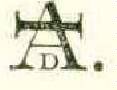
Whatever of Albrecht Dürer was mortal is buried in this grave. He “ departed ” the 6th of April, 1528.
It was near sunset as we sat down to sketch, and earth and sky lent all gentle influence to the charm of that last hour in Nuremberg. Behind us glowed the towers and spires of the city. The summer light was soft on the rich meadows that roll away westward. A group of peasant-women drew near, and stood with their bright scarlet kerchiefs relieved against the clear blue sky, as they listened to the children’s hymn which now rose again upon the evening wind,—
He goes to seek a deeper rest.
Good night ! the day was sultry here
In toil and fear.
Good night! the night is cool and clear.”
Clara Barnes Martin.