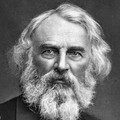
A Handful of Translations
Longfellow’s translations of foreign verse
Consolation.
To M. Du Perrier, Gentleman of Aix in Provence, on the death of his daughter.
Will then, Du Perrier, thy sorrow be eternal?
And shall the sad discourse
Whispered within thy heart, by tenderness paternal,
Only augment its force?
Thy daughter’s mournful fate, into the tomb descending
By death’s frequented ways,
Has it become to thee a labyrinth never ending,
Where thy lost reason strays?
I know the charms that made her youth a benediction:
Nor should I be content,
As a censorious friend, to solace thine affliction,
By her disparagement.
But she was of the world, which fairest things exposes
To fates the most forlorn;
A rose,s he too hath lived as long as live the roses,
The space of one brief morn.
* * *
Death has his rigorous laws, unparalleled, unfeeling;
All prayers to him are vain;
Cruel, he stops his ears, and, deaf to our appealing,
He leaves us to complain.
The poor man in his hut, with only thatch for cover,
Unto these laws must bend;
The sentinel that guards the barriers of the Louvre
Cannot our Kings defend.
To murmur against death, in petulant defiance,
Is never for the best;
To will what God doth will, that is the only science,
That vies us any rest.
The Angel and the Child.
An angel with a radiant face,
Above a cradle bent to look,
Seemed his own image there to trace,
As in the waters of a brook.
“Dear child! Who me resemblest so,”
It whispered, “come, O come with me!
Happy together let us go,
The earth unworthy is of thee!
“Here none to perfect bliss attain;
The soul in pleasure suffering lies:
Joy hath an undertone of pain,
And even the happiest hours their sighs.
“Fear doth at every portal knock;
Never a day serene and pure
From the o’ershadowing tempest’s shock
Hath made the morrow’s dawn secure.
“What, then, shall sorrows and shall fears
Come to disturb so pure a brow?
And with the bitterness of tears
These eyes of azure troubled grow?
“Ah no! into the fields of space,
Away shalt thou escape with me;
And Providence will grant thee grace
Of all the days that were to be.
“Let no one in thy dwelling cower
In sombre vestments draped and veiled;
But let them welcome thy last hour,
As thy first moments once they hailed.
“Without a cloud be there each brow;
There let the grave no shadow cast;
When one is pure as thou art now,
The fairest day is still the last.”
And waving wide his wings of white,
The angel, at these words, had sped
Towards the eternal realms of light!—
Poor mother! see, thy son is dead.
My Secret
My soul its secret hath, my life too hath its mystery,
A love eternal in a moment’s space conceived;
Hopeless the evil is, I have not told its history,
And she who was the cause nor knew it nor believed.
Alas! I shall have passed close by her unperceived,
Forever at her side, and yet forever lonely,
I shall unto the end have made life’s journey, only
Daring to ask for naught, and having naught received.
For her, though God hath made her gentle and endearing,
She will go on her way distraught and without hearing
These murmurings of love that round her steps ascend,
Piously faithful still unto her austere duty,
Will say, when she shall read these lines full of her beauty,
“Who can this woman be?” and will not comprehend.
Remorse
How I started up in the night, in the night,
Drawn on without rest or reprieval!
The streets, with their watchmen, were lost to my sight,
As I wandered so light
In the night, in the night,
Through the gate with the arch mediæval.
The mill-brook rushed through the rocky height,
I leaned o’er the bridge in my yearning;
Deep under me watched I the waves in their flight,
As they glided so light
In the night, in the night,
Yet backward not one was returning.
O’erhead were revolving, so countless and bright,
The stars in melodious existence;
And with them the moon, more serenely bedight; —
They sparkled so light
In the night, in the night,
Through the magical, measureless distance.
And upward I gazed, in the night, in the night,
And again on the waves in their fleeting;
Ah woe! thou hast wasted thy days in delight,
Now silence thou light,
In the night, in the night,
The Remorse in thy heard that is beating.
Wanderer’s Night-Songs
I.
Thou that from the heavens art,
Every pain and sorrow stillest,
And the doubly wretched heart
Doubly with refreshment fillest,
I am weary with contending!
Why this rapture and unrest?
Peace descending
Come, ah, come into my breast!
II.
O’er all the hill-tops
Is quiet now,
In all the tree-tops
Hearest thou
Hardly a breath;
The birds are asleep in the trees:
Wait; soon like these
Thou too shalt rest.