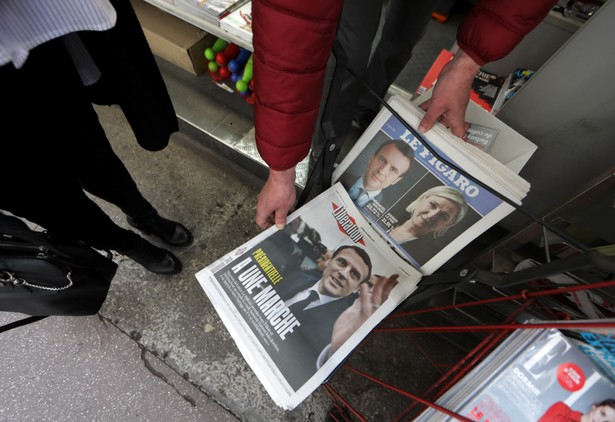
—European leaders are warning against a victory for Marine Le Pen, the French far-right candidate who finished second in yesterday’s presidential election. She faces Emmanuel Macron, an independent centrist, on May 7.
—Government funding runs out Friday unless Republicans, who control the U.S. Congress and the White House, can strike a bipartisan deal with Democrats by April 28.
—We’re tracking the news stories of the day below. All updates are in Eastern Daylight Time (GMT -4).
Le Pen Resigns as Head of Far-Right National Front to Focus on Presidential Bid
(Charles Platiau / Reuters)
Updated at 3:46 p.m. ET
Marine Le Pen announced Monday she was stepping down as head of the far-right National Front to focus her attention on the presidential runoff on May 7. “Tonight, I am no longer the president of the National Front,” she said. “I am the presidential candidate.” It is unclear if the decision is permanent. The move comes a day after Le Pen finished second in the first round presidential election. She faces Emmanuel Macron, the independent centrist, in the runoff. Macron received 23.9 percent of the vote to Le Pen’s 21.4 percent. Most polls show Macron, who has the backing of the French political establishment, winning by a wide margin. Le Pen has spent the past several years trying to clean up the image of her party as an anti-Semitic, racist organization.
U.S. Sanctions 271 Syrians Over Chemical-Weapons Attack
Syrian President Bashar al-Assad (SANA / Reuters)
The Trump administration imposed sanctions on more than 200 Syrian government employees Monday in response to Syrian President Bashar al-Assad’s use of sarin gas this month on the rebel-held city of Khan Shaykhun, which resulted in the deaths of dozens of civilians. The move, said to be the largest sanctions action in the history of the U.S. Treasury Department’s Office of Foreign Assets Control, targets 271 employees of Syria’s Scientific Studies and Research Center and freezes any property held by them within U.S. jurisdiction. It also prohibits any transactions between them and Americans. Steve Mnuchin, the Treasury secretary, said the move sends a “strong message” that the U.S. “will relentlessly pursue and shut down the financial networks of all individuals involved with the production of chemical weapons used to commit these atrocities.” The sanctions mark the second response to the chemical-weapons attack by the Trump administration. The first took place two days after the attack, in which President Trump ordered missile strikes on a Syrian airfield from which the chemical-weapons launch took place. Despite evidence to the contrary, Assad has denied his government having any chemical weapons, calling the allegations “100 percent fabrication.”
Saudi Arabia Elected to UN Women's Rights Commission
Abdallah Al-Mouallimi, the Saudi envoy to the UN, speaks during a news conference in New York on March 1. (Eduardo Munoz / Reuters)
Saudi Arabia and 12 other countries were elected last week to the UN Commission on the Status of Women, prompting criticism by some human-rights groups the Gulf monarchy shouldn’t be included on the panel because of its poor standing on women’s rights. The 45-member commission, which elects its members for four-year terms, had a total of 13 openings to be filled, including five seats for the Asia and Pacific region, five for the African region, and three for the Latin American and Caribbean region. According to UN Women, the Asia region nominated five candidates to fill the available slots: Iraq, the Republic of (South) Korea, Japan, Turkmenistan, and Saudi Arabia. While the nomination of five countries for five seats made the Gulf monarchy’s inclusion on the commission all but certain, the move sparked controversy. UN Watch, the Geneva-based human rights NGO, called Saudi Arabia’s inclusion “morally reprehensible” and antithetical to the panel’s aim of “promoting women’s rights, documenting the reality of women’s lives throughout the world, and shaping global standards on gender equality and the empowerment of women.” Indeed, Saudi Arabia was ranked 141 out of 144 countries by the World Economic Forum’s 2016 Global Gender Gap, and Human Rights Watch noted the country still maintains its restrictive male guardianship program—which mandates that women obtain permission from a male guardian to travel, marry, or exit prison—despite pledges to abolish it.
Top Afghan Officials Step Down After Taliban Attack
Jonathan Ernst / Reuters
Afghan Defense Minister Abdullah Habibi and Qadam Shah Shahim, the army chief of staff, both stepped down on Monday after a Taliban attack last week at a base in the country’s north left more than 100 people dead. The news comes as U.S. Defense Secretary James Mattis travels to the country to reassess the strategy in the fight against the Taliban, which controls 40 percent of Afghanistan. His visit will now likely be overshadowed by an investigation into the attack on the base in Mazar-i-Sharif, the capital of Afghanistan’s Balkh Province. The region has been the epicenter of the fight against the Taliban, and the attack Friday was a major blow, partly because the militants were waved into the base. They drove a military truck and dressed in military uniforms, and unleashed an assault as soldiers gathered for afternoon prayers. The ease of the attack, along with the recent arrest of eight army personnel, has led to suspicions the Taliban may have had inside help. Mattis is expected to meet with Afghan officials and top U.S. military leaders, both of whom are expected to request more troops. At present there are 9,000 U.S. soldiers in Afghanistan.
The Trump administration could face a government shutdown this week if Congress is unable to strike a bipartisan spending deal to keep the federal government running through the end of the fiscal year. The stop-gap spending bill that lawmakers passed in December to avoid a government shutdown and continue funding of federal agencies is set to expire Friday, which also marks the eve of President Trump’s first 100 days in office. Though the White House has signaled it wants the spending bill to be framed around Trump’s chief campaign promises—such as the $1.4 billion needed to begin construction of a U.S.-Mexico border wall and the $18 billion in cuts to domestic programs—there’s no indication Democrats, who wield the eight votes Republicans need to avoid a filibuster, will support it. While both Republican and Democratic lawmakers have reaffirmed their desire to avoid a shutdown, as my colleague Russell Berman notes, “there’s good reason to be skeptical about the prospects for a deal.”
The Republican Congress has had a sputtering start to the year, falling short on a health-care bill for which they needed no help from Democrats. Schumer and Trump have spent more time insulting each other than bargaining, and the Democratic leader has little to gain politically from sparing the new president a nightmare on his 100th day in office.
New Orleans Begins Removal of Confederate-Era Memorials
Workers dismantle the monument to the Battle of Liberty Place Monday that commemorates whites who tried to topple a biracial post-Civil War government in New Orleans. (Gerald Herbert / AP)
Workers in New Orleans removed Monday the monument to the Battle of Liberty Place, the first step in the city’s move to take down Confederate-era monuments in the Crescent City. Mayor Mitch Landrieu, in a statement, said: “The removal of these statues sends a clear and unequivocal message to the people of New Orleans and the nation: New Orleans celebrates our diversity, inclusion and tolerance.” Critics of the memorials view them as racist; their supporters call them a historic part of the South’s legacy. The monument to the Battle of Liberty Place marks the battle in 1874 when the all-white Crescent City White League attacked the mixed-race Municipal Police in an attempt to topple city’s government. The monument was removed Monday before sunrise because of reported death threats against the crews who are dismantling them. Workers wore masks to protect their identities. Many places in the South have removed Confederate-era memorials following the killing in South Carolina of nine parishioners in a historically black church in June 2015. Confederate symbols have also been taken down in South Carolina and Mississippi amid controversy and protests.
European Leaders Welcome Macron's Election Performance in France
(Eric Gaillard / Reuters)
The European establishment is cheering Emmanuel Macron’s performance in Sunday’s French presidential election. Macron, an independent centrist, will face Marine Le Pen of the far-right National Front, who finished second, in the runoff on May 7. Steffan Seibert, German Chancellor Angela Merkel's spokesman, said on Twitter: “It’s good that Emmanuel Macron was successful with his course for a strong EU and social market economy. All the best for the next two weeks.” Peter Altmaier, Merkel’s chief of staff, tweeted: “The result for Emmanuel Macron shows: France AND Europe can win together! The middle is stronger than the populists believe!” Jean-Claude Juncker, the European Commission president, “wished him all the best for the next round,” Juncker’s spokesman Margaritis Schinas said on Twitter. Federica Mogherini, the EU foreign-policy chief, said: “The result is the hope and future of our generation.” Most polls show Macron comfortably ahead of Le Pen, but the National Front candidate has seized on the anti-establishment wave that has rocked the West and could still pull off an upset on May 7.
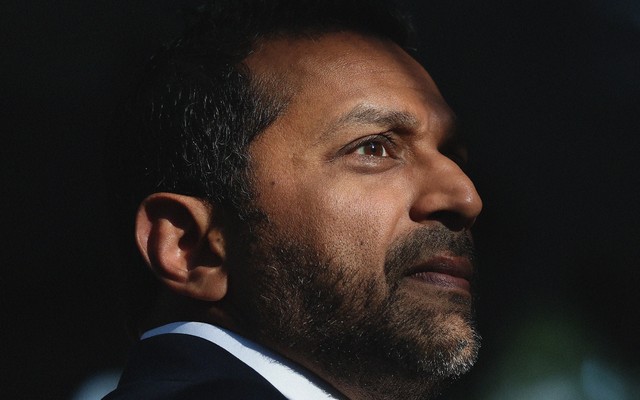
Kash Patel has alarmed colleagues with episodes of excessive drinking and unexplained absences.
On Friday, April 10, as FBI Director Kash Patel was preparing to leave work for the weekend, he struggled to log into an internal computer system. He quickly became convinced that he had been locked out, and he panicked, frantically calling aides and allies to announce that he had been fired by the White House, according to nine people familiar with his outreach. Two of these people described his behavior as a “freak-out.”
Patel oversees an agency that employs roughly 38,000 people, including many who are trained to investigate and verify information that can be presented under oath in a court of law. News of his emotional outburst ricocheted through the bureau, prompting chatter among officials and, in some corners of the building, expressions of relief. The White House fielded calls from the bureau and from members of Congress asking who was now in charge of the FBI.
I spent 10 months working at the institution because I thought I could help protect it. What I observed there is far worse than the public knows.
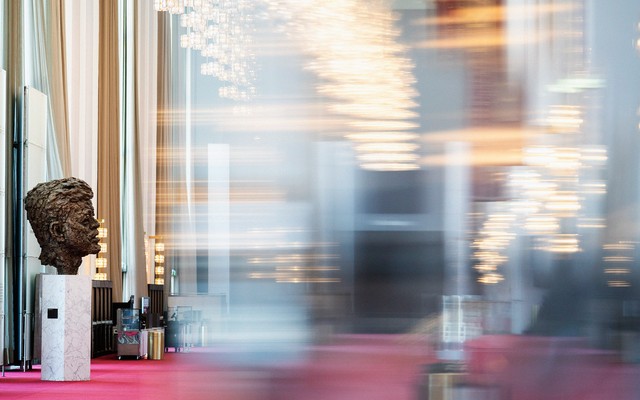
On the day I was laid off from the Kennedy Center, I felt a little like Dolley Madison saving the Stuart portrait of Washington before the British sacked the capital. I was the staffer in charge of the artworks in the building. A crucial difference is that my institution, unlike the White House in 1814, had been on fire for months.
About a year elapsed between the moment President Trump took over the Kennedy Center in early 2025 and his declaration this past February that he’d decided to shut down the nation’s cultural center for two years. In between, we had seen artist cancellations, shrinking audiences, firings of old staffers and influxes of new ones—a lot of drama, just not onstage. The date Trump announced for the closure was July 4, the country’s 250th birthday, an event that I had been hired to help commemorate as the institution’s first curator of visual arts and special programming.
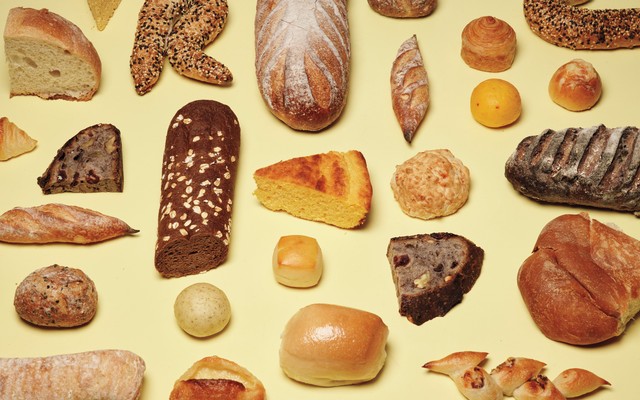
Thirteen thousand miles. Infinite contenders. One beautiful loaf.
This article was featured in the One Story to Read Today newsletter. Sign up for it here.
Here is the promise you and I must cling to across the thousands of words that follow: At some point within this text, I will reveal to you what—after 555 responses, 13,000 miles of travel, and months of monomaniacal research—I have determined to be the best free restaurant bread in America. I will not attempt to slither to the moral high ground, arguing that best is a meaningless measure, or insisting that all bread is dear in its own way. Even if you attempt to betray me—for instance, by merely scanning the text that follows for the phrase Here it is: the best free restaurant bread in America—I will uphold my end of the bargain.
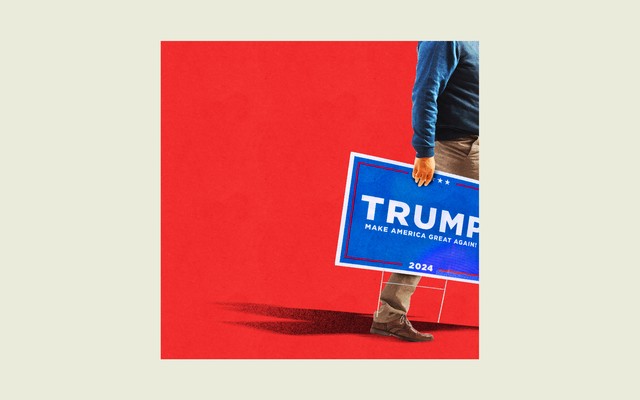
A shocking number of the president’s supporters have turned against him.
Tomas Montoya has sold festival foods—funnel cakes, burgers, hot dogs—across the American Southwest for years. But lately, business has been rough. Costs are up, so he’s increased his prices. Employees are begging for hours he can’t give them. In Arizona, where he lives, Montoya pays $6 a gallon to fill up his food trucks with diesel. This summer, he may have to skip the California leg of his festival route because fuel is even more expensive there.
“It’s Trump,” Montoya told us outside a popular Hispanic grocery store in Casa Grande, Arizona, much of which sits in one of the most evenly divided House districts in the country. Montoya voted for President Trump in 2024, but now, well, frustrated doesn’t begin to cover how he’s feeling. The president is bragging about the economy, even though everyone Montoya knows is hurting; he promised to stop wars, but started one in Iran. “When Trump opens his mouth, three-quarters of what he says is stories, lies,” Montoya said. He’s planning to vote in the midterm elections this fall. But he may not choose a Republican.
Trump has developed a reputation for backing down from his most over-the-top threats, but dismissing his words is a mistake.
Twelve hours after Donald Trump warned that a “whole civilization will die tonight, never to be brought back again”—after he’d previously threatened to bomb Iran “back to the Stone Ages”—the president agreed to a temporary cease-fire. Since then, initial peace negotiations failed and Trump responded with a naval blockade of the Strait of Hormuz; a new round of talks may begin soon.
But what to do with his everyone in Iran is going to die comments last week? Because they were designed to pressure Iran to come to the table, and because the promised carnage did not materialize, many observers simply moved on, explaining away Trump’s threats as a ham-fisted negotiation tactic, some kind of 5-D chess, or another example of the president’s propensity to “TACO” (Trump Always Chickens Out).
This article was featured in the One Story to Read Today newsletter. Sign up for it here.
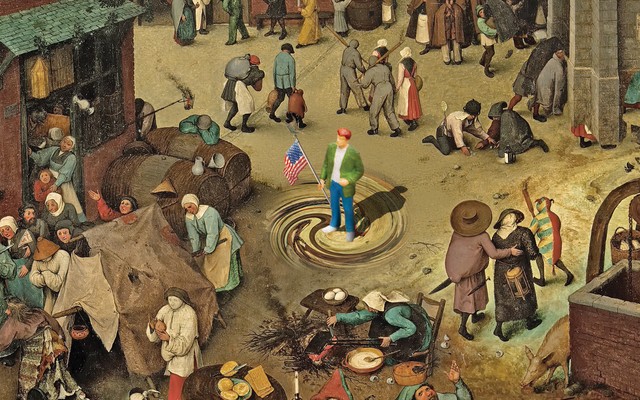
Maybe you’ve seen photos of Tehran in the 1970s, just before the Islamic Revolution: images of young women going to work in miniskirts, of couples making out in parks while wearing bell-bottoms, of people at pools in bikinis. It looks like Paris or Milan or Los Angeles. But in 1979 the revolution happened, and now Tehran looks like something from an earlier century.
Sometimes I think that our whole world has become kind of like that—going backwards in time. The religious movements thriving in today’s secularized age are the traditionalist ones that dissent from large parts of contemporary culture—not only the Shiite Islam of post-revolution Iran, but Orthodox Judaism and conservative Catholicism. Young Americans are flooding into Eastern Orthodox churches.
The vice president has decided he’s a more accomplished theologian than Leo XIV.
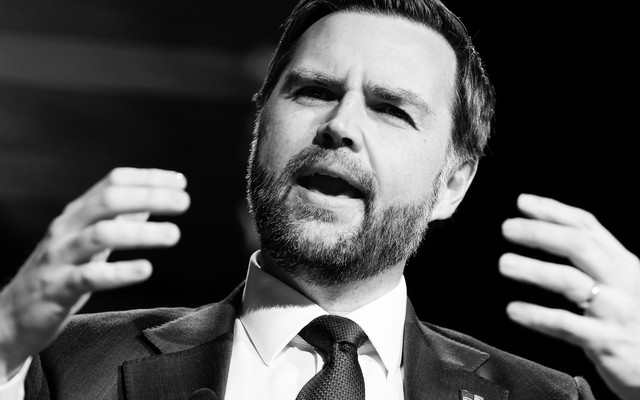
The Trump administration doesn’t seem to have many rules, but one of them is that once the president picks a fight, his posse must show up to support him, no matter how ill-advised the conflict. And few senior officials are more eager to back up the boss in every embarrassing beef than Vice President Vance, who recently seems to have decided that he, and not Pope Leo XIV, is the true arbiter of Catholic doctrine.
President Trump is personally angry with Leo because the pontiff has been deeply critical of America’s war of choice in Iran. Accordingly, Trump lashed out at His Holiness twice over the past few days. Vance might have seen this as a valuable opportunity to say nothing and let the storm pass; Leo, naturally, doesn’t seem to care all that much what Trump thinks. (As my colleague Liz Bruenig wrote, Leo answers to a higher authority.) Had the vice president remained silent, Trump might have moved on, and Vance, a relatively recent convert to Catholicism, would have been able to stay out of a dustup between his president and his spiritual leader.
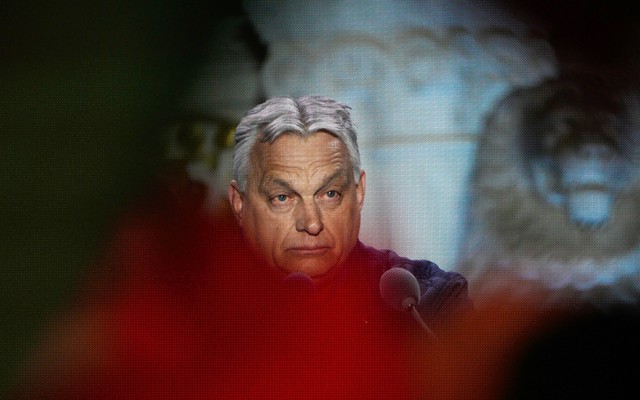
The Hungarian strongman Viktor Orbán, who lost his election in a landslide on Sunday after 16 years in power, presented himself as a defender of Western civilization. But at best, his lofty rhetoric was a code for bigotry and a justification for the persecution of minorities; at worst, it was a scam to fleece Hungarians by persuading them to blame everyone but those responsible for their problems. Maybe both.
Eventually Hungarians decided that a major source of their problems was Orbán himself. Maybe someday Americans will come to a similar realization about Orbán’s great admirer, Donald Trump, who praised the former Hungarian leader before the election as a “fantastic man” who had done a “fantastic job.”
Control of a vital waterway gives Tehran the deterrence power it’s always wanted.
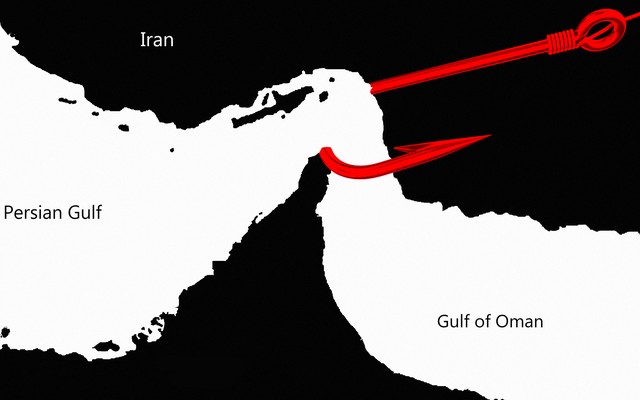
President Trump has said that he went to war to stop Iran from ever having a nuclear bomb. Unfortunately, the war he launched led Iran to discover that it already had an extremely effective doomsday weapon—one that promised the economic equivalent of mutual assured destruction. The Strait of Hormuz has always been vulnerable; the United States has always known that Iran might try to close it if attacked. But neither Washington nor Tehran imagined how easy it would be for Iran to do so, how hard it would be for the U.S. to reopen it, or how widely and rapidly the economic effects of a closed strait would fan out.
Fossil fuels are to modern industrial civilization what air is to the lungs: About 80 percent of the global economy is powered by oil, coal, and natural gas. Much of this comes from the states along the Persian Gulf: Saudi Arabia, Iraq, Iran, the United Arab Emirates, Kuwait, Qatar, Oman, and Bahrain. About 25 percent of global seaborne oil trade and 20 percent of global liquified natural gas transits the Strait of Hormuz, between the Persian Gulf and the Gulf of Oman.
This article contains spoilers through the Season 2 finale of The Pitt.
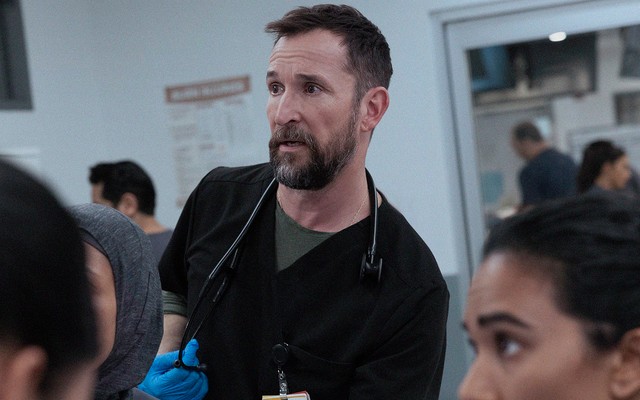
The first season of The Pitt presented an emergency room brought to the absolute limits of its capabilities, unfolding as 15 hours of real-time drama at the fictional Pittsburgh Trauma Medical Center that culminated in a deluge of patients after a mass shooting. It was exceptional stuff, a throwback to classic medical TV dramas with just enough of a modern, high-octane twist, and was ladened with awards. But it also set the second season up with a sophomore-slump dilemma—how do you top that?
The answer: You don’t try. The Pitt’s excellent Season 2 didn’t attempt to match or outdo the crisis of last year’s PittFest calamity. Instead, it managed to wring equally compelling drama out of all of its characters just having a really, really crappy day.