Police arrest a man they believe drove the truck in the Stockholm attack, Basque separatists hand over their weapons, and more from the United States and around the world.
—Swedish police arrested a man they say drove the truck into a crowd of people in downtown Stockholm, killing four.
—The Basque separatist group ETA is handing over its weapons to French authorities, ending decades of violent struggle and the last insurgency in Europe.
—We’re tracking the news stories of the day below. All updates are in Eastern Daylight Time (GMT -4).
Norwegian Police Find a 'Bomb-Like' Device in the Capital
Reuters
Police in Norway set off a controlled explosion in the capital, Oslo, after they found a “bomb-like” device. A suspect is in custody. “The noise from the blast was louder than our explosives themselves would cause,” a police spokesman told Reuters. The device was found in the Groenland neighborhood, a popular spot with bars and restaurants near the city’s main police station. Police would not release further information about the suspect, or details of the device they found. The country was on high alert after an attack in Sweden the day before, in which a man stole a beer truck and drove it into a crowd of people, killing four and injuring many others. Nordic countries are not used to regular acts of terrorism, as has been increasingly the case in much of Europe.
Vi har kontroll på stedet, og avventer nå til vi har fått foretatt nødvendige undersøkelser.Vi har kontroll på en person med status mistenkt
— Politiet i Oslo OPS (@oslopolitiops) April 8, 2017
Warplanes Return to the Syrian Town Hit by Chemical Attack
Ammar Abdullah / Reuters
Warplanes returned on Saturday to bomb the rebel-held Syrian town of Khan Sheikhoun, the site targeted by the Bashar al-Assad regime earlier this week in a chemical attack. The latest bombing killed one woman and wounded several others, according to the Syrian Observatory for Human Rights, a group based in Britain. It’s not known who deployed the warplanes. Khan Sheikhoun is practically a ghost town now, ever since Tuesday when Assad killed more than 80 people in the chemical attack. This prompted the U.S. to retaliate Friday with 60 Tomahawk missiles fired at the Shayrat air base, the site where the chemical attack was launched. It was the first time U.S. took direct military action against Assad since the civil war began in 2011. Elsewhere in the country on Friday, the U.S. targeted ISIS-held city of Raqqa, killing at least 15 people, including a woman and her six children on a boat in the Euphrates River.
Venezuela Bans Opposition Leader From Holding Office
Carlos Garcia Rawlins / Reuters
Venezuelan authorities banned opposition leader Henrique Capriles from holding office for 15 years, removing President Nicolás Maduro’s toughest challenger in next year’s election. The move is the latest in a series of attempts to assert Maduro’s control in a country that has already pushed back democratic elections. Venezuela’s comptroller general accused Capriles, a state governor, of misusing public funds and "administrative irregularities." Capriles has run for president twice, and is seen as the opposition’s best chance at beating Maduro. Capriles has led a series of protests recently, accusing the government of stifling dissent. Maduro is deeply unpopular in the country since oil prices plummeted and threw Venezuela into an economic nosedive. The government has tried to consolidate power, and in March the Supreme Court stripped Congress of authority. The court rescinded that decision a week ago after massive protests and criticism even from within the ruling party.
The militant Basque separatist group ETA handed over its weapons to French authorities Saturday, ending a decades-old conflict and the last insurgency in Europe. At a ceremony in southern French city of Bayonne, militants handed authorities an inventory of weapons and their locations. ETA, which is an acronym for Basque Homeland and Freedom, was founded in 1959 to fight cultural and political repression under Spanish dictator General Francisco Franco. The Basque region lies on the border of France and Spain, and the ETA has sought to carve out an independent state. More than 850 people were killed in their fight, including Franco’s heir, Luis Carrero Blanco. ETA members dug a tunnel under the road Blanco drove to mass each week and packed it with bombs, blowing up his car and killing him. The group also attacked areas crowded with civilians. In 1987 it targeted a Barcelona supermarket and killed 21 people, including children. In 2011, the ETA declared a ceasefire, but held onto its weapons. At the supply caches, authorities were expected to find more than 120 firearms and more than three tons of explosives. Neither the ceasefire or disarmament include impunity, so investigators could use some of the weapons to tie suspects to past crimes.
Swedish police arrested a man they accused of stealing a beer truck in Stockholm and crashing it into a crowd of people in a busy shopping area, killing four. The suspect is a 39-year-old man from Uzbekistan who had been known to the country’s security services, although investigators found no ties to extremism. His name was not released. He is the same man pictured in a still image taken from a surveillance video that police released on Friday, the day of the attack. Officers initially said they were unsure what role the man might have played, but by Saturday said they were confident he had driven the truck. Swedish media also reported that investigators found a suspicious device in the truck, but it has not been identified.
For the richest men on Earth, everything is free and nothing matters.
At the end of Paul Thomas Anderson’s 2007 movie, There Will Be Blood, Daniel Day-Lewis’s oil-baron character, old now and richer than Croesus, beats Paul Dano’s preacher to death with a bowling pin. Dano’s Eli Sunday, a nemesis of Day-Lewis’s Daniel Plainview during his seminal, wealth-building years, has come to sell Plainview the oil-rich land that he once coveted. But Plainview doesn’t need the land anymore, because—as he explains in one of the most famous monologues in modern cinema—he has sucked out all the oil hidden beneath it from an adjoining property, like a milkshake.
Desperate for money, Eli begs for a loan. Instead, Plainview chases him around a bowling alley and murders him with great enthusiasm. Once it’s over, a butler comes to see what all the noise was about. “I’m finished,” Plainview yells.
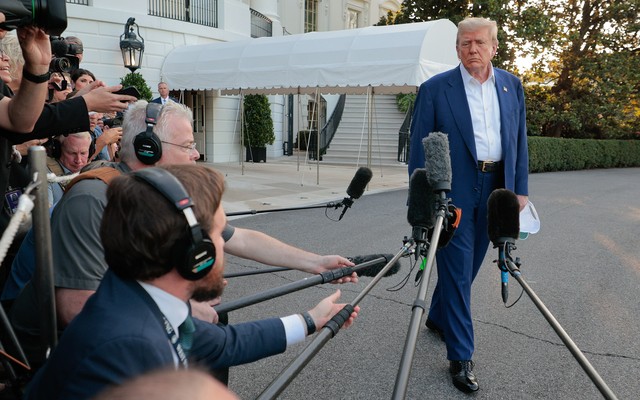
Why is Donald Trump breaking bread with the “enemy of the people”?
Even in the best of times, the annual White House Correspondents’ Dinner is an awkward and ethically fraught affair. Journalists spend the evening partying with the president and administration officials whom they’re supposed to cover rigorously and skeptically. I’ve been to the dinner several times over the years. It’s typically crowded and a little chaotic, and the ratio of non-journalists to journalists is about 10 to 1. The evening is promoted as a celebration of journalism and the First Amendment, but it has always been a bit of an embarrassment.
These aren’t the best of times for White House correspondents or, for that matter, the First Amendment. And this year’s gala figures to be even more awkward and embarrassing than usual.
Kash Patel has alarmed colleagues with episodes of excessive drinking and unexplained absences.
This article was featured in the One Story to Read Today newsletter. Sign up for it here.
On Friday, April 10, as FBI Director Kash Patel was preparing to leave work for the weekend, he struggled to log on to an internal computer system. He quickly became convinced that he had been locked out, and he panicked, frantically calling aides and allies to announce that he had been fired by the White House, according to nine people familiar with his outreach. Two of these people described his behavior as a “freak-out.”
Patel oversees an agency that employs roughly 38,000 people, including many who are trained to investigate and verify information that can be presented under oath in a court of law. News of his emotional outburst ricocheted through the bureau, prompting chatter among officials and, in some corners of the building, expressions of relief. The White House fielded calls from the bureau and from members of Congress asking who was now in charge of the FBI.
The world’s richest man is accruing more power than ever before.
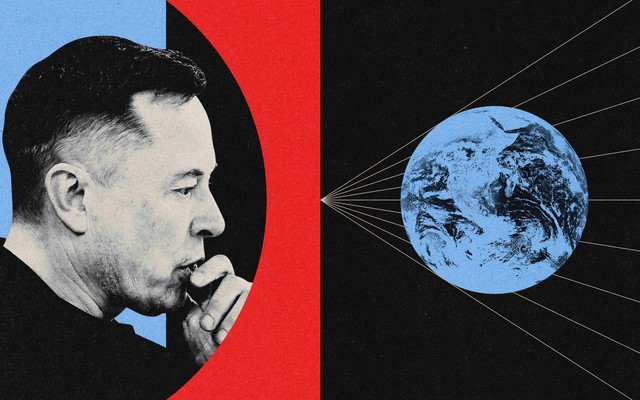
If Elon Musk gets his way, space will soon look very different. Through his ownership of SpaceX, the world’s richest man already operates most of the roughly 14,000 active satellites that are orbiting Earth. Now his rocket company is asking the government for permission to launch up to 1 million more. It’s part of Musk’s plan to build data centers in space that can harness the power of the sun for AI. “You’re power-constrained on Earth,” Musk said last month. “Space has the advantage that it’s always sunny.”
Musk has a lot riding on these orbital data centers. To help finance them, he is set to take SpaceX public as early as June, at a reported valuation of $2 trillion. Musk has claimed that data centers in space can “enable self-growing bases on the moon, an entire civilization on Mars, and ultimately expansion to the universe.” It’s all classic Musk, who has a habit of making big promises that he can’t always keep. Data centers in space are an untested technology, and it’s not clear if they’d actually work. (Neither Musk nor SpaceX responded to a request for comment.)
The people we were died at the exact moment our child did.
This article was featured in the One Story to Read Today newsletter. Sign up for it here.
My husband, David, hates Valentine’s Day. He once called it “New Year’s Eve with nuclear weapons.” I pretend not to care. Still, when the day passes entirely unremarked on, a woman can’t help but feel overlooked.
On Valentine’s Day 2024, David found a way out. He booked a speech on February 14 that required traveling from our home in Washington, D.C., to Toronto. I couldn’t object—he was getting paid. Anyway, I had my own plans: an “anti–Valentine’s Day” dinner hosted by one of the foreign embassies.
As I got ready, I called our oldest daughter, Miranda. She answered from her Brooklyn bathroom, getting ready for her own party. She propped her phone up beside her sink and laughed when I told her about her father’s strategic Valentine’s Day escape.
More families who can afford it are hiring a house manager, a kind of “chief of staff for the home.”
Here is the promise of a house manager. Hire one, and soon someone else could be doing your laundry, washing your dishes, prepping your meals, and completing those Amazon returns you’ve been meaning to make. They could reorganize the utensil drawer, notice if your kid is outgrowing their shoes and order more, take your car to the repair shop, and be at home to meet the plumber. If your child needs food for a class party, a house manager could make the dish and drop it off; if that child also has a pet lizard, a house manager could buy the crickets to feed it.
House managers are not a nanny or a house cleaner. They’re a “chief of staff for the home,” a “personal assistant for Mom,” and “a clone of myself,” according to the more than a dozen people I spoke with who have either hired one or work as one. They are, in effect, what might have once been called a housekeeper—a person who helps oversee a household’s basic functioning. Middle- and upper-class families used to more commonly employ this kind of position (the title “house manager” dates back to at least the 1830s), but it has become rare enough that a couple of people I spoke with thought they may have come up with the term.
The “disappearing scientists” story is, in its way, a remarkable achievement.
The mystery of the missing scientists began with a Silver Alert. In late February, a retired Air Force major general named Neil McCasland left his house in New Mexico for a walk and never returned. Rumors spread on social media that the elderly former astronautical engineer had been abducted or killed. Forget Nancy Guthrie, they said. Here was a guy who used to run a “UFO-linked” lab. Here was a guy with knowledge of “America’s deepest, darkest secrets.” So where was this guy?
McCasland’s wife did her best with a post on Facebook to address what she called the “misinformation circulating about Neil and his disappearance,” but wild notions only multiplied. Dots were added, then connected: Another scientist—an advanced-materials researcher at NASA’s Jet Propulsion Laboratory (JPL) named Monica Reza—had disappeared while hiking near Los Angeles in June 2025. A physicist at MIT had been murdered in December. “What is going on seems to be an enemy action,” Walter Kirn, the novelist and podcast contrarian, said last month.
Montana Democrats thought they found a novel way to win control of the U.S. Senate—until the party faithful started fighting back.
Jason Boeshore, a grain-elevator manager on the eastern plains of Montana, fired off a rocket this month to the private Signal chat he shares with the 23 other members of the state Democratic Party executive board. He demanded that leaders make clear in newspapers across the state that the Democratic Party would support only Democratic candidates in the fall elections. The response was swift and not to his liking. Shannon O’Brien, the chair of the party, wrote that her staff, not the board, would set the messaging strategy. Then she addressed the unspoken concerns at the heart of Boeshore’s request. “Listen if ANY of you EVER find yourselves questioning my intentions, please call me,” O’Brien wrote. “I will continue to move forward to get Democrats elected. There’s no hidden agenda.”
With the rise of screen culture, all the world has stage fright.
The beta-blocker propranolol has been a mainstay of American medicine since the 1960s, when it was regularly prescribed as a first-line defense against hypertension, arrhythmia, and other cardiovascular problems. Recent years, though, have seen a boom in the medication’s prescription rates—in part because as the drug regulates the heart, it also settles the nerves. Off-label, propranolol is used to calm the assorted storms of stage fright: the sweaty palms, the belly churn, the racing heart. Even professional performers have publicly alluded to using it. Robert Downey Jr., accepting an award at the 2024 Golden Globes, said casually, “I took a beta-blocker, so this is going to be a breeze.” Last fall, a People magazine headline asked, “Why Is Everyone Suddenly Taking the Decades-Old Chill Pill Propranolol?”
The phrase is even more complicated than it appears.
Earlier this month, a staff writer for The Free Press, Olivia Reingold, asked the Democratic Senate candidate Abdul El-Sayed from Michigan a question: “Does Israel have a right to exist as a Jewish state?”
El-Sayed replied with his own question: “What do you mean by a ‘Jewish state’?” When Reingold went silent, before beginning to stutter out a response, El-Sayed continued, “If you can’t define the question, I’m not going to answer your question.”
A lot of labels and terms get thrown around in arguments over the Israeli-Palestinian conflict, words such as Zionist or anti-Zionist and one state or two states. These terms are not always well defined, and they mean different things to different factions—so it’s important, when discussing such matters, to know what people actually mean.