Political leaders across the world voice their disapproval of Trump’s travel ban, U.S. soldiers killed in Yemen, Myanmar's ruling party lawyer is shot and killed at an airport, and the Philippines bombs suspected terrorists.
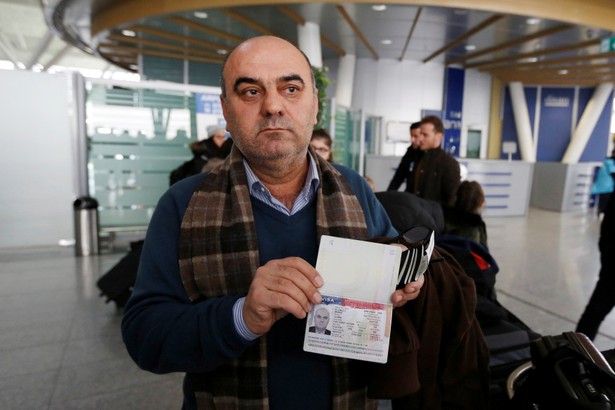
Fuad Sharef Suleman shows his USA visa to the media after returning to Iraq from Egypt.
Ahmed Saad / Reuters
—Some U.S. politicians on both sides of the aisle and world leaders voice their disapproval of Trump’s travel ban that targets seven majority-Muslim countries.
—U.S. soldiers targeting al-Qaeda militants in Yemen died in an operation, the first casualties of Trump’s administration.
—The legal adviser to Myanmar's ruling National League for Democracy was shot and killed by a gunman at the airport.
—The Philippines killed 15 Muslim militants in the country’s south with targeted airstrikes.
—We’re tracking the news stories of the day below. All updates are in Eastern Standard Time (GMT -5).
Gunmen killed at least five people at a mosque in Quebec City who had come for a Sunday evening prayer service, according to the mosques’ president. About 40 people were inside the Quebec City Islamic Cultural Center, located in the Sainte-Foy neighborhood, and two suspects have been arrested. Police have set up a perimeter surrounding the area. Quebec has seen increased incidence of Islamophobia in recent years, particularly after a 2015 political debate over whether the city should ban the niqab, a Muslim face covering; The majority of the city was in favor of the ban. This same mosque was the focus of an investigation in June, after a severed pig’s head was dropped at its doorstep, wrapped and left with the message, “Bon appétit."
The negative reaction to President Donald Trump’s ban on travelers from seven majority-Muslim countries came in the form of protest in cities across the country, at airports, and in the form of donations to The American Civil Liberties Union (ACLU), whose lawyers have filed suits against the ban.
Throughout the weekend lawyers with the human rights organization met banned travelers at airports all over the country, and in several cities they filed injunctions against Trump’s executive order, winning stays from federal judges.
From Saturday to late Sunday more than 290,000 donors had sent the ACLU $19 million—the organizations typical annual average is $3 million. That figure, as well as the growth in membership, was “unprecedented,” according to Anthony Romero, the ACLU’s executive director.
The donations were supported in part through social media, where celebrities like the singer Sia, and actor Rosie O’Donnell offered to match donations to the ACLU of up to $100,000. Tech companies like Lyft pledged to donate $1million to the ACLU, and tech investors like Chris Sacca, an early backer of Uber and Instagram, matched up to $150,000.
The French Left Chooses Benoit Hamon as the Socialist Presidential Candidate
Christian Hartmann / Reuters
In France’s primary vote to determine who will run for president under the Socialist Party’s banner, voters handed the election to the traditional leftist Benoit Hamon. His win is a rebuke of the more-centrist policies of his rival, Manuel Valls, a former prime minister. Polls give Hamon little chance of winning the two-stage presidential election, with votes in both April and and May. Analysts believe his victory will likely turn more moderate leftists to vote for Emmanuel Macron, a 39-year-old independent centrist and former economy minister who wants to bridge the Left and the Right. Macron, however, is polled behind both Conservative Francois Fillon, and the far-right leader Marine Le Pen, who are both seen as most likely to face off in May. The Socialist Party has suffered massive unpopularity after the presidency of Francois Hollande, who was criticised for U-turns on major policies, and because of several high-profile terrorist attacks, was perceived as unable to keep the country safe
Protests Against Trump's Executive Order Spread Nationwide
Trish Badger / Reuters
Late into the night on Saturday, protesters flooded airports around the country to condemn President Trump’s executive order on immigrants and refugees.
On Sunday, they flooded American cities.
Protesters seemed to have multiple goals as they carted banners and signs to various metropolitan downtowns: to tell the brand-new president that his executive order restricting immigration and refugees was un-American; to decry Trump and his top advisers personally; and to demonstrate to the world that U.S. citizens are actively rejecting the new policy.
The protesters came by the thousands, and by Sunday mid-afternoon showed little sign of dispersing. For some cities, this was the second straight weekend they’d seen massive protests: Last Saturday, women’s marches were held in the United States and internationally to protest Trump and his new administration.
In Washington, D.C., demonstrators on Sunday took their chants to Trump’s new Pennsylvania Avenue hotel—and down the street to Lafayette Square, just outside his White House. Here are scenes from some of the protests:
An estimated 1,200 people at Turner Park protest today against Trump's executive order on immigration, W-H reporter says. Full story later. pic.twitter.com/iMAik7YSUp
Protest happening along Avenida De Las Americas in front of the GRB Convention Center. It is a peaceful protest with security everywhere. pic.twitter.com/S5KF64uYGU
Philippine Airstrike Gravely Injures the Top ISIS Leader in Southeast Asia
Bullit Marquez / AP
Philippine military leaders confirmed Sunday that an airstrike in the country’s south killed 15 Muslim militants with ties to ISIS, and seriously injured an Indonesian leader considered one of Southeast Asia’s top terror suspects. Isnilon Hapilon, who is also known as Mohisen, is the leader of Abu Sayyaf, a group of militants notorious in the region for kidnapping tourists and holding them for ransom. Last year the group beheaded two captured Canadian tourists, and the U.S. has placed a $5 million bounty on Hapilon’s head. Philippine military Chief of Staff General Eduardo Ano said Hapilon was believed to be seriously injured, and is somewhere on the outskirts of Butig, a town in the country’s mountainous south, which has long been a haven for extremists. Jet fighters carried out the strikes, dropping six 500-pound bombs Wednesday night and Thursday on the group’s encampment. Officials said that while Hapilon has not yet been captured, their intelligence says he is being moved around on a stretcher by his followers, who are surrounded by Filipino troops.
Protesters Outside the White House Chant Against Trump's Immigration Order
(Elaine Godfrey / The Atlantic)
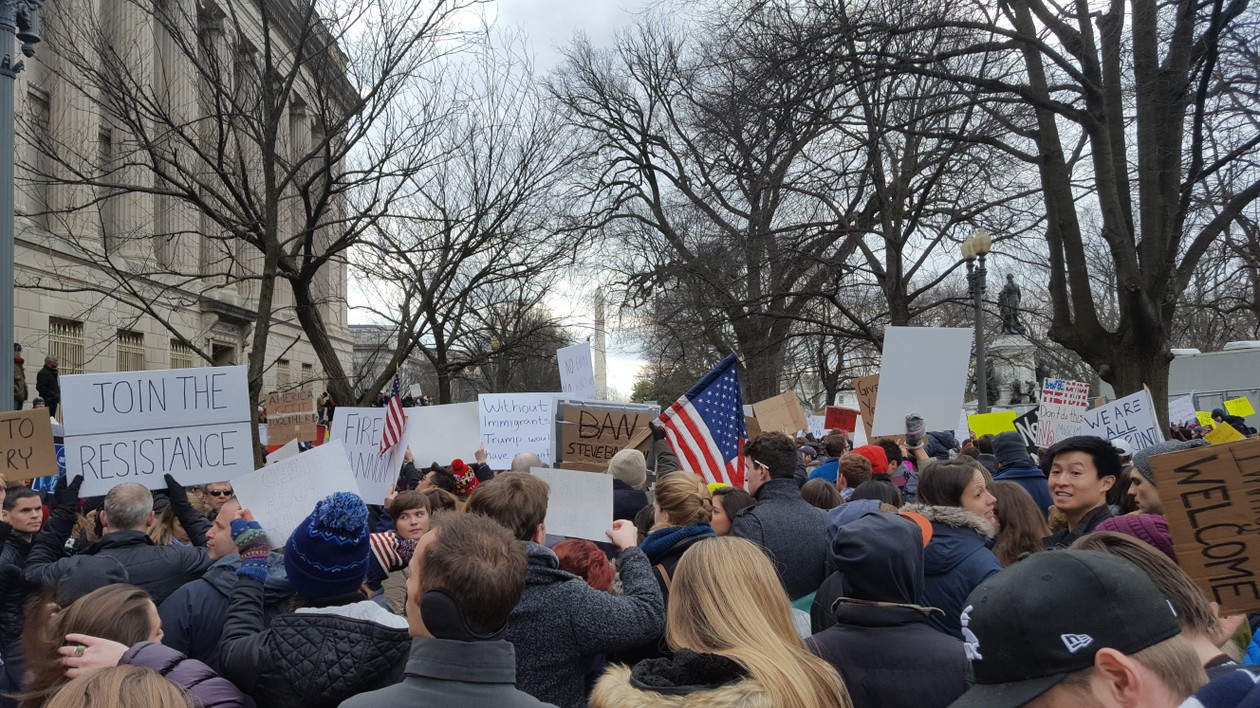
Protesters have filled Lafayette Square outside the White House in Washington, D.C., in response to the executive order on immigration that President Trump signed Friday that severely restricts immigration from seven Muslim countries, suspends all refugee admission for 120 days, and bars all Syrian refugees indefinitely. Since they can’t get close to the White House, protesters are lining Madison Place, and climbing the steps of the nearby U.S. Court of Federal Claims. They’re chanting “Let them in” and “No hate no fear, refugees are welcome here.” A few are shouting “Fire Bannon,” a reference to Steve Bannon, the president’s chief strategist and senior counselor. After every round of chants, the crowd breaks out into cheers. On the perimeter of the square, I caught a young man named Tom, wrapped in the American flag, sprinting to the protest. The immigration order is, “just disgusting,” he said, and kept running. Four Iranians who said they had green cards told me they were afraid their family members won’t be able to visit them—and they won’t be able to see their relatives. One woman, who said her name was Mehnoosh, brought her two daughters to the protest. She cried telling me she isn’t sure her sister, who was supposed to be visiting soon, will be able to get in. “I’m very sad ... I’ve been crying the past few days.”
The First Combat Casualty of the Trump Administration
Fawaz Salman / Reuters
A U.S. soldier was killed Sunday in a raid in Yemen that targeted local al-Qaeda militants, making it the first casualty of President Donald Trump’s administration. The soldier was a member of a Navy Seal unit, and three others U.S. soldiers were injured during the crash-landing of their aircraft, which was later intentionally destroyed. The operation’s goal was to collect intelligence, including computer equipment, that was believed to be linked to possible future attacks. The local wing of al-Qaeda in Yemen, which is in the midst of a civil war, has proved a powerful threat. The U.S. has mostly relied upon drone strikes to fight militants in the area, and this operation had reportedly been planned for months. It received authorization by Trump, The Washington Postreported. Fourteen militants died in a firefight with U.S. soldiers, and there are reports of more than a dozen dead civilians.
U.K. Citizens Start a Petition Against Trump, and Other Reactions to the Travel Ban
Kate Munsch / Reuters
President Donald Trump and his administration stood defiant Sunday, despite growing, global criticism over his travel ban. Some world leaders have weighed in on the executive order, including German Chancellor Angela Merkel. She said on Sunday that she is “convinced that the necessary, decisive battle against terrorism does not justify a general suspicion against people of a certain origin or a certain religion.” Similarly, U.K. Prime Minister Theresa May said Britain does not support Trump’s ban, and citizens there started an online government petition titled "Prevent Donald Trump from making a State Visit to the United Kingdom." Its text reads, in part, that Trump’s "well-documented misogyny and vulgarity disqualifies him from being received" by Queen Elizabeth or Prince Charles. By Sunday at 1 p.m., nearly a half-million people had signed the petition, well beyond the 100,000 signatures needed for parliament to consider it. Among members of the U.S. Congress, the ban is also getting pushback. Ohio Republican Senator Rob Portman said: "I think we should slow down.” Arizona Republican Senator John McCain said “it’s been a very confusing process,” and that it would likely “give ISIS some more propaganda." Meanwhile, Trump’s team seems unfazed. A top adviser and former campaign manager, Kellyanne Conway, said Sunday on Fox News that the order was about "preventing, not detaining," and said not many people had been impacted by the travel ban. The day before, she’d tweeted this:
Get used to it. @POTUS is a man of action and impact.
Promises made, promises kept.
Shock to the system.
And he's just getting started https://t.co/AoUsZWClXt
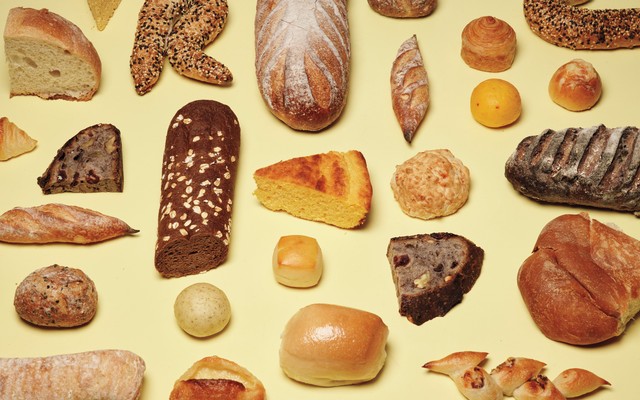
Thirteen thousand miles. Infinite contenders. One beautiful loaf.
This article was featured in the One Story to Read Today newsletter. Sign up for it here.
Here is the promise you and I must cling to across the thousands of words that follow: At some point within this text, I will reveal to you what—after 555 responses, 13,000 miles of travel, and months of monomaniacal research—I have determined to be the best free restaurant bread in America. I will not attempt to slither to the moral high ground, arguing that best is a meaningless measure, or insisting that all bread is dear in its own way. Even if you attempt to betray me—for instance, by merely scanning the text that follows for the phrase Here it is: the best free restaurant bread in America—I will uphold my end of the bargain.
The president is on a losing streak, and even some of his aides are dismayed by his choices.
This article was featured in the One Story to Read Today newsletter. Sign up for it here.
You’ve heard the joke: The White House is going to start talking about the Epstein files to distract from how badly the Iran war is going.
Except that this reverse “Wag the dog” is based on bizarre truth: First Lady Melania Trump did bring the disgraced financier up, unprompted, late last week in an effort to distance herself from the scandal (in a move that, predictably, only shifted it back into the spotlight once again). Meanwhile, as negotiations with Iran stumble forward, the Strait of Hormuz is still in Tehran’s hands and now President Trump has authorized a risky naval blockade that will likely send prices soaring further. Moreover, Trump’s poll numbers have continued to fall, Republicans worry that both houses of Congress could be lost in November, and the president threw away a remarkable amount of geopolitical capital trying to support his now-defeated illiberal buddy Viktor Orbán of Hungary. Oh, and Trump deeply offended adherents of the world’s two largest religions in one week’s time.
The car industry says it has an answer for drivers wary of going electric.
Two hours into a road trip in my Tesla, I start to get twitchy. By that point, the battery in my 2019 Model 3 has dipped to an uncomfortably low percentage. If I can’t reach the next plug, I’m in trouble. This is the kind of problem that Ram’s electric pickup truck—the first of a new breed of EV to arrive in the United States—is intended to solve. When the range starts to dwindle, the truck automatically fires up a hidden gas engine that refills the giant battery. The “electric” vehicle keeps on chugging down the highway, hour after hour; pit stops are once again decided by the need for bathroom breaks rather than battery range.
The Ram 1500 REV, set to debut later this year, is what’s called an “extended-range electric vehicle,” or EREV. In essence, it is an electric vehicle that burns gas. There’s nothing revolutionary about a half-gas, half-electric car, of course. Hybrids have been a mainstay in the United States since the Toyota Prius broke through two decades ago, and automakers have released more efficient plug-in hybrids—allowing drivers to charge up for about 30 miles of electric driving, just enough to accomplish daily errands without fossil fuels. An extended-range EV is a different kind of beast. The engine burns gasoline for the sole purpose of replenishing the battery—it never actually pushes the wheels. In the Ram, the battery can run for about 150 miles of electric driving, and the whole setup delivers enough range to travel nearly 700 miles between stops.
A minimally speaking autistic man just wrote a best-selling book. Or did he?
On a recent morning at Rockefeller Center, NBC employees strolled through the crowd with copies of Upward Bound, the latest book-club pick from the Today show co-host Jenna Bush Hager. “It’s deeply heartfelt and moving,” Hager said, after holding up the debut novel from the 28-year-old Woody Brown, “and the reason it’s so authentic is that the author understands autism firsthand.”
That understanding is indeed profound. Brown’s autism is such that he can barely speak, and he communicates mostly by pointing to letters, one by one, on a laminated board. This is also how his novel, which is already a New York Times best seller, came to be. In the recorded interview that followed Hager’s introduction, Brown’s mother, Mary, sat beside him, holding the letter board and reading his tapped-out messages.
Maybe you’ve seen photos of Tehran in the 1970s, just before the Islamic Revolution: images of young women going to work in miniskirts, of couples making out in parks while wearing bell-bottoms, of people at pools in bikinis. It looks like Paris or Milan or Los Angeles. But in 1979 the revolution happened, and now Tehran looks like something from an earlier century.
Sometimes I think that our whole world has become kind of like that—going backwards in time. The religious movements thriving in today’s secularized age are the traditionalist ones that dissent from large parts of contemporary culture—not only the Shiite Islam of post-revolution Iran, but Orthodox Judaism and conservative Catholicism. Young Americans are flooding into Eastern Orthodox churches.
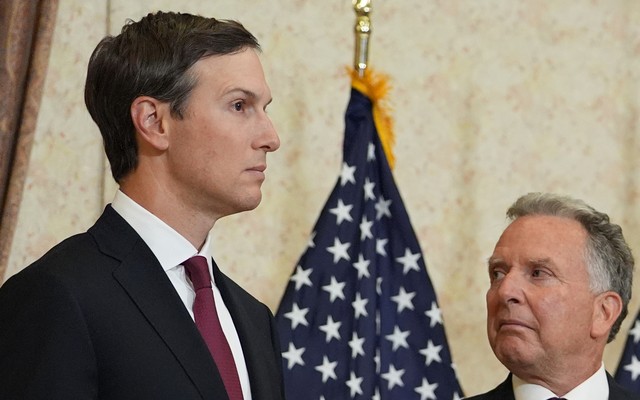
Is the president’s son-in-law carrying out the public’s business or pursuing his own private interests?
In 2021, shortly after he left his role as a senior White House adviser, Jared Kushner let it be known that he had loved his job but disliked the scrutiny and disclosure that came with being a top U.S. government official. He set up a private-equity firm and took a $2 billion investment from a Saudi fund led by Crown Prince Mohammed bin Salman. He proclaimed that he was embracing private life. “I’m an investor now,” Kushner said in a 2024 interview. If President Trump “calls you on November whatever and says, ‘I’d like you to come back to D.C.,’ you say, ‘Thanks, but I’m good’?” the interviewer, Dan Primack of Axios, pressed. “Yes,” Kushner responded.
But Kushner did come back. Two days before the United States and Israel attacked Iran this past February, he was in Geneva in a negotiation of the highest possible stakes. Over the weekend, he traveled with Vice President Vance to Islamabad to participate in failed peace talks with Iran. Without title or remit or any kind of official designation—only “presidential son-in-law”—Kushner has in the first 14 months of the second Trump administration sat down with world leaders including Vladimir Putin, Benjamin Netanyahu, and Volodymyr Zelensky, along with Saudis and multiple other actors from the Middle East.
The president’s attempts to interfere with the midterms demand vigilance, but a recent flimsy gambit is an argument against despair.
This is an edition of The Atlantic Daily, a newsletter that guides you through the biggest stories of the day, helps you discover new ideas, and recommends the best in culture. Sign up for it here.
Anxiety among election officials and experts had been building for months before Donald Trump issued his latest executive order purporting to ensure election integrity late last month. When the actual text emerged, the reaction wasn’t relief exactly—but a definite sense that things could have been much worse.
Americans have many reasons to be worried about whether the midterm elections will be free and fair. As I laid out in a cover story last fall, the president’s plan to subvert the 2026 election is multifaceted and already in swing. But last month’s order and the dismissive reaction it’s received from experts—along with this weekend’s decisive defeat of Hungarian Prime Minister Viktor Orbán, which shows how the competitive-authoritarian playbook that Trump has imitated can be beaten—also point to the reasons to resist doomerism.
A phonics-based curriculum is only one part of how Mississippi went from worst to first in education. The other part is much harder to pull off.
Updated at 8:52 p.m. ET on April 9, 2026
This article was featured in the One Story to Read Today newsletter. Sign up for it here.
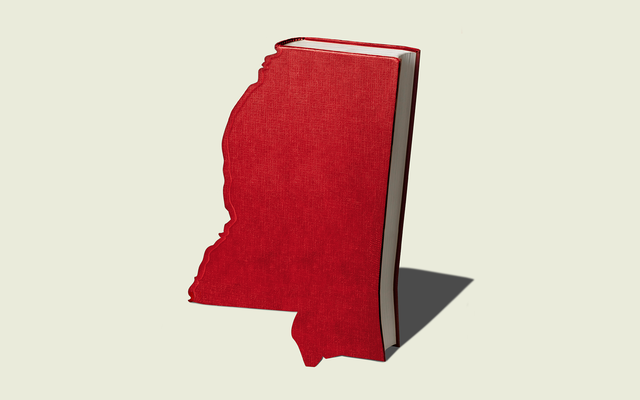
No story has caught the imagination of education reformers this decade quite like the “Mississippi miracle.” From 1998 to 2024, fourth-grade reading and math scores in my home state—the nation’s poorest—rose from among the worst in the country to among the best. When adjusting for demographic factors such as poverty, we’re in first place.
Other states are now trying to emulate what Mississippi did. Those efforts largely revolve around adopting what’s known as the “science of reading”— a set of principles and teaching techniques, including phonics, that are grounded in decades of empirical research. Last fall, for example, the Wall Street Journal editorial board marveled that “even California is now following Mississippi’s lead by returning to phonics” as Governor Gavin Newsom prepared to sign a major new reading bill into law. But what many outsiders fail to understand is that Mississippi changed far more than just how reading is taught. They therefore miss why and how our literacy approach succeeded.
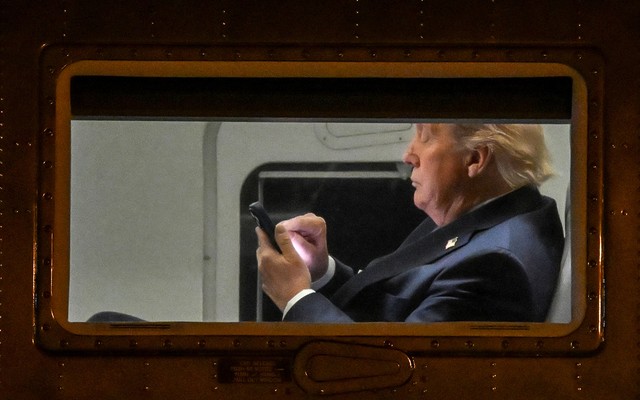
On many recent nights, Donald Trump has been posting obsessively on his Truth Social site into the wee hours. The president, of course, has never been one for a solid night’s sleep—or restrained and temperate commentary on social media—but his emotional state seems to be fraying: This weekend, he attacked Pope Leo XIV, presented himself as Jesus Christ, and then jabbed at his phone until dawn.
Judging from those posts, the commander in chief is in distress. No one can say for sure what is causing the president’s bizarre behavior. Perhaps Trump’s narcissistic insistence that he is always successful in everything he undertakes is feeling the sting and strain of multiple public failures, including the collapse of his campaign to dislodge the Iranian regime, plummeting approval ratings, the decline of the U.S. economy, and, on Sunday, the crushing defeat of one of his favorite fellow authoritarians, Hungary’s Viktor Orbán.
Hungary offers lessons in defeating right-wing populists.
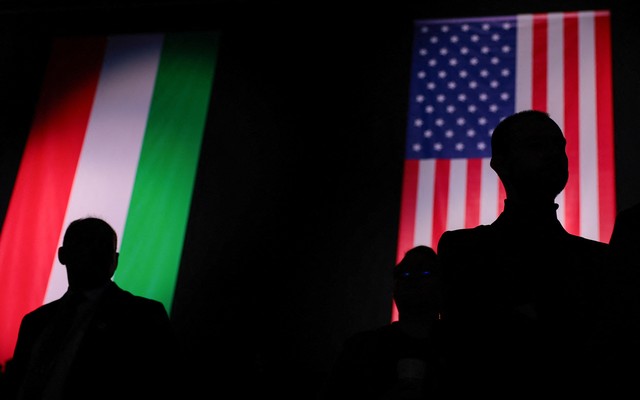
To the outside world, Hungarian Prime Minister Viktor Orbán began his rule as a pariah—an obstreperous, often lone dissenter from European Union policies, especially over migration. Then he became a prophet to new-style “national conservatives”—the anti-immigration, anti-elite right-wing movement that has reshaped the politics of the West. After resoundingly losing national elections held on April 12, Orbán has become a parable for how populism can be defeated.
His political demise was hardly inevitable. It had to be shrewdly engineered by politicians and voters who put aside their ideological differences to defeat him. In politics, there is no natural law of self-correction.
From 2010 until now, Orbán and his Fidesz party transformed Hungary into a new kind of state, which he proudly proclaimed as an “illiberal democracy.” He and his allies rewrote the constitution to entrench his power, centralizing control over civil society and countervailing institutions such as courts and universities. Péter Magyar, the presumptive next prime minister, triumphed against a tilted electoral system—gerrymandered districts, government influence over traditional media and even over the country’s billboards—designed to keep Fidesz in power. Magyar understood that such a regime does not simply collapse under the weight of its own contradictions and mismanagement.