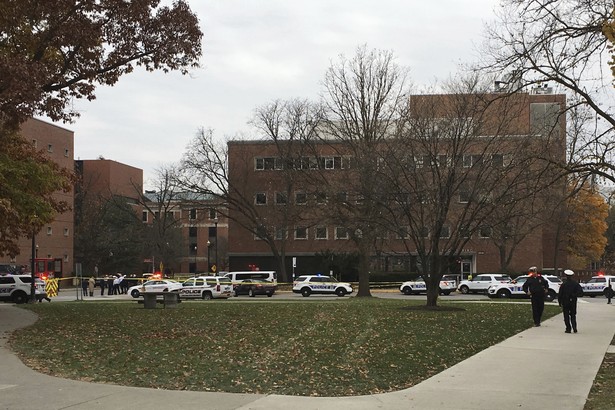
Police respond to reports of an active shooter on the Ohio State University campus in Columbus, Ohio on November 28, 2016.
Andrew Welsh-Huggins / AP
At least 11 people were injured in an attack at the Ohio State University Monday morning.
Shortly before 10 a.m. local time, a suspect drove a vehicle into pedestrians, and then emerged from the car and started attacking them with a butcher knife. He was shot and killed by police. Eleven people sustained stab wounds, and at least one person is in critical condition.
Officials have identified the suspect as Abdul Razak Ali Artan, a student at the university. The police officer who shot him is 28-year-old Alan Horujko.
The university initially reported there was an active shooter on campus, according to a tweet by school officials. Students were advised to shelter in place or “Run Hide Fight.” The lockdown was lifted about two hours later.
Classes were canceled for the rest of the day. Aerial footage broadcast on cable news showed multiple police cars and ambulance on campus. Many students had recently returned to campus after Thanksgiving break.
We’re live-blogging the news below. All updates are in Eastern Standard Time (GMT -5).
Police Identify Suspect in Attack, Officer Who Shot Him
Authorities identified the suspect in the attack Monday as Abdul Razak Ali Artan, a student at Ohio State University. No additional details about the suspect or his motive were given. Authorities also identified the officer who shot and killed Artan as 28-year-old Alan Horujko, who has served with the university’s police department since January 2015.
"We all owe a debt of gratitude," Monica Moll, the university's department of public safety director, said of Horujko during a news conference Monday. "He did a fabulous job today."
The Violent Attack at OSU, From a Student's Perspective
Though many Ohio State students first heard the reports of an attack through the university’s campus alert system, some students who were already on campus were close enough to see the events unfold.
Michael Cloonan, a second-year student, said he was in class when he heard gunshots.
“We were going over an example problem and we heard four gunshots,” Cloonan told The Lantern, the university’s student newspaper. “People at the window saw [a] man laying on the ground. We went upstairs to lab upstairs and locked the door. Police responded very quickly. Immediately. Twenty seconds. Maybe less. Really quick.”
Martin Schneider, a student, told the BBC he heard a car engine revving.
“I thought it was an accident initially until I saw the guy come out with a knife,” Schneider said of the vehicle’s driver.
Nicholas Flores, a third-year student, said he was in class when he heard the reports of an active shooter on campus. While the rest of his classmates went to the fourth floor of the building to barricade themselves, he went to the courtyard to help.
“Most of these people here are kids on campus,” Flores, a 27-year-old former marine, toldThe Columbus Dispatch. “Their parents send them here to be safe and be educated. It's sad.”
OSU Police Chief Says Suspect Used Butcher Knife in Attack
Students leave buildings surrounding Ohio State University’s Watts Hall, where police were called to respond to reports of a shooting on campus. (John Minchillo / AP)
Ohio State Police Chief Craig Stone said at a press conference Monday afternoon that the suspect in the attack used a butcher knife to attack pedestrians.
At about 9:52 a.m. local time, the suspect drove a vehicle into pedestrians on campus. “He exited the vehicle and used a butcher knife to start cutting pedestrians,” Stone said. “Our officer was on scene in less than a minute and ended the situation in less than a minute.”
That officer, Craig said, shot and killed the suspect. The officer was not injured.
Michael Drake, Ohio State’s president, said he will visit the injured victims at hospitals later this afternoon.
“We prepare for situations like this and always hope never to have one,” Drake told reporters at the press conference.
The AP and local media report that nine people were transported to hospitals with stab wounds and gunshot wounds. Eight people have non-life-threatening injuries, and one is in critical condition, according to local hospitals.
Local media reports the attack began when a car drove into Watts Hall, located on the school’s North Campus. Two people emerged from the vehicle, one with a knife and the other with a gun, according to witnesses.
The Columbus Dispatchreports one suspect has been killed by police.
Police are continuing to search campus for potential suspects. Police have surrounded a parking garage at West Lane Avenue and Tuttle Park Place on campus.
Heavy police presence at the Lane Avenue Garage. Officer on scene said the remaining shooter is believed to be inside. pic.twitter.com/YN9m2mFYUV
Molly Clarke, a student in the university’s MBA program, told CNN over the phone that she and her classmates are locked inside one of the buildings on campus. “It’s slightly terrifying,” Clarke said. She said several of her classmates who previously served in the military are guarding the door of their classroom.
At least seven people have been taken to the hospital, CNN reports. WBNS-TV, a network in Columbus, Ohio, reports the number of injured is at least eight, citing local fire officials.
Staffers from The Lantern, the school’s student newspaper, are tweeting photos from the scene. They report that ambulances, SWAT vans, and a bomb squad is on campus.
Ambulances line Woodruff Avenue, street is blocked off between High and College pic.twitter.com/oQD7rhjP7y
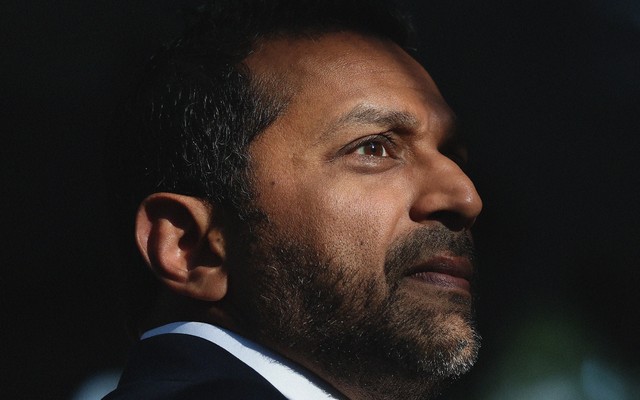
Kash Patel has alarmed colleagues with episodes of excessive drinking and unexplained absences.
On Friday, April 10, as FBI Director Kash Patel was preparing to leave work for the weekend, he struggled to log into an internal computer system. He quickly became convinced that he had been locked out, and he panicked, frantically calling aides and allies to announce that he had been fired by the White House, according to nine people familiar with his outreach. Two of these people described his behavior as a “freak-out.”
Patel oversees an agency that employs roughly 38,000 people, including many who are trained to investigate and verify information that can be presented under oath in a court of law. News of his emotional outburst ricocheted through the bureau, prompting chatter among officials and, in some corners of the building, expressions of relief. The White House fielded calls from the bureau and from members of Congress asking who was now in charge of the FBI.
I spent 10 months working at the institution because I thought I could help protect it. What I observed there is far worse than the public knows.
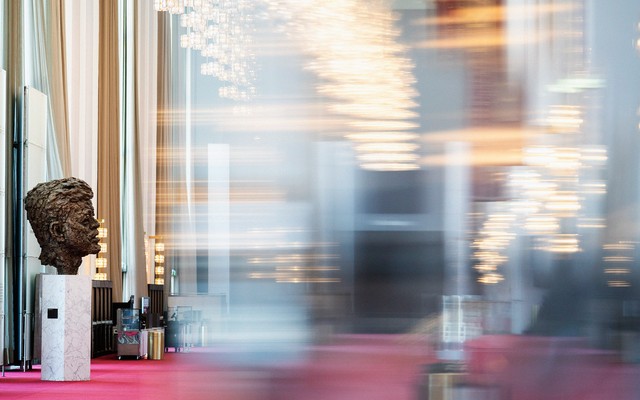
On the day I was laid off from the Kennedy Center, I felt a little like Dolley Madison saving the Stuart portrait of Washington before the British sacked the capital. I was the staffer in charge of the artworks in the building. A crucial difference is that my institution, unlike the White House in 1814, had been on fire for months.
About a year elapsed between the moment President Trump took over the Kennedy Center in early 2025 and his declaration this past February that he’d decided to shut down the nation’s cultural center for two years. In between, we had seen artist cancellations, shrinking audiences, firings of old staffers and influxes of new ones—a lot of drama, just not onstage. The date Trump announced for the closure was July 4, the country’s 250th birthday, an event that I had been hired to help commemorate as the institution’s first curator of visual arts and special programming.
Trump has developed a reputation for backing down from his most over-the-top threats, but dismissing his words is a mistake.
Twelve hours after Donald Trump warned that a “whole civilization will die tonight, never to be brought back again”—after he’d previously threatened to bomb Iran “back to the Stone Ages”—the president agreed to a temporary cease-fire. Since then, initial peace negotiations failed and Trump responded with a naval blockade of the Strait of Hormuz; a new round of talks may begin soon.
But what to do with his everyone in Iran is going to die comments last week? Because they were designed to pressure Iran to come to the table, and because the promised carnage did not materialize, many observers simply moved on, explaining away Trump’s threats as a ham-fisted negotiation tactic, some kind of 5-D chess, or another example of the president’s propensity to “TACO” (Trump Always Chickens Out).
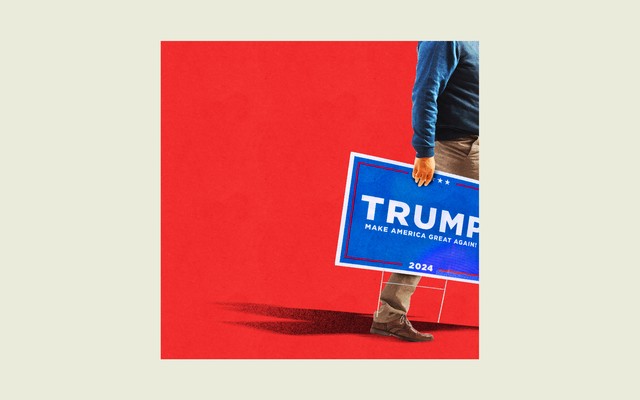
A shocking number of the president’s supporters have turned against him.
Tomas Montoya has sold festival foods—funnel cakes, burgers, hot dogs—across the American Southwest for years. But lately, business has been rough. Costs are up, so he’s increased his prices. Employees are begging for hours he can’t give them. In Arizona, where he lives, Montoya pays $6 a gallon to fill up his food trucks with diesel. This summer, he may have to skip the California leg of his festival route because fuel is even more expensive there.
“It’s Trump,” Montoya told us outside a popular Hispanic grocery store in Casa Grande, Arizona, much of which sits in one of the most evenly divided House districts in the country. Montoya voted for President Trump in 2024, but now, well, frustrated doesn’t begin to cover how he’s feeling. The president is bragging about the economy, even though everyone Montoya knows is hurting; he promised to stop wars, but started one in Iran. “When Trump opens his mouth, three-quarters of what he says is stories, lies,” Montoya said. He’s planning to vote in the midterm elections this fall. But he may not choose a Republican.
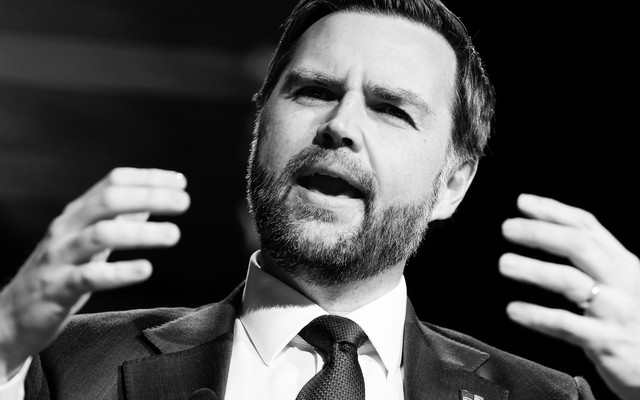
The vice president has decided he’s a more accomplished theologian than Leo XIV.
The Trump administration doesn’t seem to have many rules, but one of them is that once the president picks a fight, his posse must show up to support him, no matter how ill-advised the conflict. And few senior officials are more eager to back up the boss in every embarrassing beef than Vice President Vance, who recently seems to have decided that he, and not Pope Leo XIV, is the true arbiter of Catholic doctrine.
President Trump is personally angry with Leo because the pontiff has been deeply critical of America’s war of choice in Iran. Accordingly, Trump lashed out at His Holiness twice over the past few days. Vance might have seen this as a valuable opportunity to say nothing and let the storm pass; Leo, naturally, doesn’t seem to care all that much what Trump thinks. (As my colleague Liz Bruenig wrote, Leo answers to a higher authority.) Had the vice president remained silent, Trump might have moved on, and Vance, a relatively recent convert to Catholicism, would have been able to stay out of a dustup between his president and his spiritual leader.
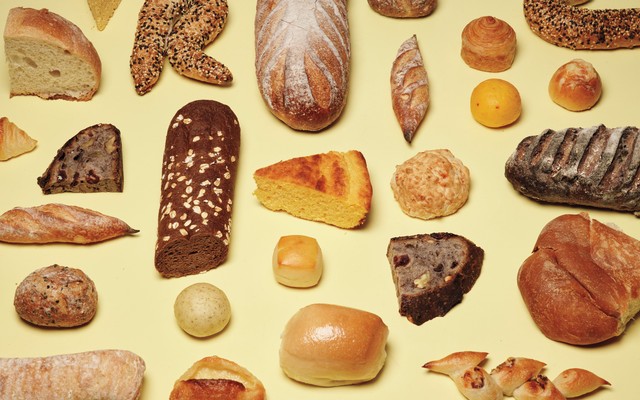
Thirteen thousand miles. Infinite contenders. One beautiful loaf.
This article was featured in the One Story to Read Today newsletter. Sign up for it here.
Here is the promise you and I must cling to across the thousands of words that follow: At some point within this text, I will reveal to you what—after 555 responses, 13,000 miles of travel, and months of monomaniacal research—I have determined to be the best free restaurant bread in America. I will not attempt to slither to the moral high ground, arguing that best is a meaningless measure, or insisting that all bread is dear in its own way. Even if you attempt to betray me—for instance, by merely scanning the text that follows for the phrase Here it is: the best free restaurant bread in America—I will uphold my end of the bargain.
This article was featured in the One Story to Read Today newsletter. Sign up for it here.
Maybe you’ve seen photos of Tehran in the 1970s, just before the Islamic Revolution: images of young women going to work in miniskirts, of couples making out in parks while wearing bell-bottoms, of people at pools in bikinis. It looks like Paris or Milan or Los Angeles. But in 1979 the revolution happened, and now Tehran looks like something from an earlier century.
Sometimes I think that our whole world has become kind of like that—going backwards in time. The religious movements thriving in today’s secularized age are the traditionalist ones that dissent from large parts of contemporary culture—not only the Shiite Islam of post-revolution Iran, but Orthodox Judaism and conservative Catholicism. Young Americans are flooding into Eastern Orthodox churches.
In this episode of Galaxy Brain, Charlie Warzel speaks with Josh Owens, a videographer and the author of a memoir about his years working for Infowars, the media company of the conspiracy theorist Alex Jones. Owens traces his journey from a film-school student who stumbled onto Jones’s radio show to an insider who spent four years filming, editing, and traveling for the organization. Owens describes how Jones’s conspiracy machine works, as well as how his own moral compass was scrambled by Jones’s manipulative management. The conversation explores radicalization, the conspiratorial media ecosystem Jones helped create, and how Owens was able to pull himself out.
Their position has become untenable. But liberal Zionists can adapt.
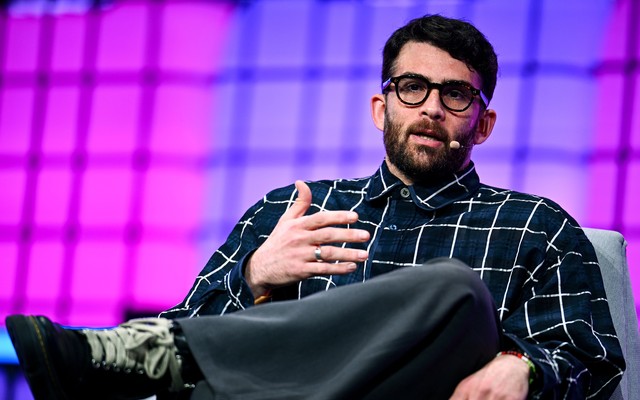
Hasan Piker has attracted millions of followers across multiple social-media platforms, making him one of the most popular left-wing streamers. He has been the subject of several flattering magazine profiles that have lingered over what they describe as his handsome looks and bodybuilder physique. Some progressives see him as their long-sought entry point into alternative media that can reach a young, mainly male, audience.
But he is most important as a stand-in for a fight over whether the Democratic Party should be open to, or even dominated by, militant anti-Zionism. Although he allowed, after October 7, 2023, that “the Palestinian resistance is not perfect”—who hasn’t raped, kidnapped and massacred 1,200 civilians from time to time?—he defends Hamas as “a thousand times better than the fascist settler-colonial apartheid state.” He has likened the leaders of Hezbollah, a terrorist arm of the Islamic Revolutionary Guard Corps, to Nelson Mandela.
Control of a vital waterway gives Tehran the deterrence power it’s always wanted.
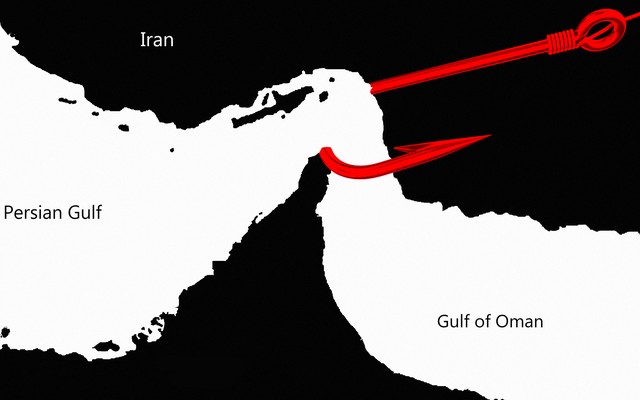
President Trump has said that he went to war to stop Iran from ever having a nuclear bomb. Unfortunately, the war he launched led Iran to discover that it already had an extremely effective doomsday weapon—one that promised the economic equivalent of mutual assured destruction. The Strait of Hormuz has always been vulnerable; the United States has always known that Iran might try to close it if attacked. But neither Washington nor Tehran imagined how easy it would be for Iran to do so, how hard it would be for the U.S. to reopen it, or how widely and rapidly the economic effects of a closed strait would fan out.
Fossil fuels are to modern industrial civilization what air is to the lungs: About 80 percent of the global economy is powered by oil, coal, and natural gas. Much of this comes from the states along the Persian Gulf: Saudi Arabia, Iraq, Iran, the United Arab Emirates, Kuwait, Qatar, Oman, and Bahrain. About 25 percent of global seaborne oil trade and 20 percent of global liquified natural gas transits the Strait of Hormuz, between the Persian Gulf and the Gulf of Oman.