—A Southwest airline employee was shot and killed in a shooting Tuesday at the Will Rogers World Airport in Oklahoma City.
—Russia detained Alexei Ulyukayev, its economy minister, Tuesday after he was caught in a sting taking a $2 million bribe in exchange for approving the sale of a state-run oil producer.
—We’re live-blogging the news stories of the day below. All updates are in Eastern Standard Time (GMT -5).
Winchester, 52, was shot in an airport parking lot and was transported to a nearby hospital, where he was pronounced dead, said Oklahoma City Police Captain Paco Balderrama at a press conference Tuesday afternoon.
Police previously said there were reports of a second victim, but Balderrama did not mention this person during the latest press conference. The suspect was later found dead from an apparent self-inflicted gunshot wound. The motive is still unclear.
Police evacuated everyone from the airport, where all arriving and departing flights were suspended. Several hours later, operations resumed. Around 30 flights were canceled because of the shooting.
A group of international swimmers swam across the Dead Sea for seven hours Tuesday to raise awareness about the hyper-saline lake’s shrinking water levels.
The swimmers made the 16-kilometer (10-mile) trip from Jordan to Israel in masks and snorkels to protect them from the water's high salt concentration. The swim was the first of its kind in the lake, which, at 423 meters (1,388 feet) below sea level, is the lowest point on Earth. The swim’s organizers say the Dead Sea’s water level has dropped by more than 25 meters (82 feet) in the past 30 years.
“Oh, it's absolutely crazy,” Jackie Cobell, an English long-distance swimmer, told the AP Tuesday about the crossing. But “this is really important, because it's disappearing fast.”
The swim was open only to open-water marathon swimmers. Participants—from Israel, South Africa, New Zealand Denmark, the Palestinian territories, among other places—were followed by boats carrying medical supplies and food. They were instructed to take water breaks every 30 minutes and apply Vaseline to skin to protect against the chafing caused by the salty water. The water is painful if it gets into the eyes, and can be deadly if swallowed. All but three of the swimmers finished the crossing.
The lake depends on a steady flow of freshwater to replenish the water that evaporates. In the 1960s, Israel built a pumping station on the shores of the Sea of Galilee, diverting the lake’s main source of freshwater into a pipeline system for the country, Joshua Hammer explained in Smithsonian magazine in 2005. A decade later, Jordan and Syria diverted another important inlet. The extraction of minerals from the lake has also contributed to its decline. Environmentalists have lobbied Jordan, Israel, and the Palestinian Authority for years to nominate the Dead Sea as a United Nations World Heritage site, which would provide certain protections.
U.K. Signs Off on Extradition of Alleged FBI Hacker Lauri Love
Lauri Love leaves his extradition hearing at Westminster Magistrates' Court in London on September 16, 2016. (Peter Nicholls / Reuters)
U.K. Home Secretary Amber Rudd approved Monday the extradition of Lauri Love to the United States, where he faces nearly a century in prison for allegedly hacking into federal government computers.
Rudd said she “carefully considered all relevant matters” before signing off on Love’s extradition, noting the serious charges the 32-year-old Suffolk native was facing, The Guardian reports. In September, a British court approved Love’s extradition for his alleged involvement in a series of Anonymous-affiliated hacks into several U.S. government agencies including the FBI, the U.S. Army, the Missile Defense Agency, and the Federal Reserve—hacks the U.S. said resulted in the release of confidential information and caused millions of dollars in damage. Love faces charges in three different jurisdictions and up to 99 years in prison if convicted.
Love, who has Asperger’s syndrome, told the court being sent to a U.S. prison would endanger his mental health and pose a high risk of him committing suicide. He argued that his extradition should be blocked on the grounds it would violate his human rights. Such a move is not without precedent— that very exception was made by then-Home Secretary Theresa May in 2012 for Gary McKinnon, an alleged hacker with Asperger’s syndrome who was accused of hacking U.S. military computers.
Rudd acknowledged Love’s “physical and mental health issues,” but said she believed the U.S. facilities were adequate enough to address them.
Love’s father, Alexander, told the BBC they would appeal the decision.
South Korean Opposition Vows National Campaign to Oust President Park
Protesters in Seoul, South Korea, call for President Park Geun-hye to quit on November 12. (Kim Hong-Ji / Reuters)
South Korea’s opposition leaders vowed to launch a national campaign to oust Park Geun-hye, whose recent scandal involving a political confidante has gripped the country and embroiled her presidency, Yonhap News Agency reports.
Moon Jae-in, a former Democratic Party leader and a potential contender for the South Korean presidency in next year’s election, pledged to spearhead a “a nationwide campaign” pushing for Park’s resignation. Other opposition leaders, including Seoul’s mayor, echoed Moon’s calls for Park to step down. Here’s a photo of Moon joining protesters calling for Park’s resignation:
Yoo Yeong-ha, Park’s attorney, requested Tuesday that Park be given more time to prepare for the investigation into Park’s relationship with Choi Soon-sil, a long-time friend of the president who has been charged with attempted fraud and abuse of authority. Yoo said the investigation should be conducted in a way that minimizes any impact on Park’s presidential duties, noting “the investigation or trial of the president, while he or she is still in office, could paralyze state affairs and divide public opinion.”
The scandal has indeed proved to be the worst crisis of Park’s political career, sending her approval rating to 5 percent—the lowest for any leader of the country in nearly 70 years.
What Do the Corruption Charges Against a Top Russian Official Mean?
Reuters
Russia detained Alexei Ulyukayev, its economy minister, Tuesday after he was caught in a sting taking a $2 million bribe in exchange for approving the sale of a state-run oil producer. It is the highest-profile corruption case in Vladimir Putin’s 16-year rule in a country where government corruption is common, and it likely represents tension in the Russian president’s inner circle.
Investigators wiretapped Ulyukayev’s phone for months after learning he threatened operators of Rosneft that he’d “create impediments” in their bid to buy Bashneft, a smaller state-run oil producer. He is the first economy minister since the Stalin era to be arrested while in office. Some politicians pointed to it as evidence of Russia’s desire to rid the government of corruption.
“Everyone is equal before the law,” said the speaker of the lower house of parliament, Vyacheslav Volodin.
Inside the Kremlin, however, the story seems different. Igor Sechin, Rosneft’s top official, a friend to Putin and one of the most powerful men in the country, wanted to purchase Bashneft, while Russia’s prime minister thought it should go to a private company. Ulyukayev is in charge of selling state-owned companies, and he had originally sided with the prime minister. He eventually came around to the idea of selling to Rosneft at market price—$5 billion. The storyline has raised several questions, like why Ulyukayev would try to bribe one of the country’s most powerful men, someone so close to Putin? And why he would even seek a bribe for the market-price transfer of a state-owned company to another state-owned company?
Some experts believe it’s the beginning of an internal purge against liberals in the government, or score-settling.
Hong Kong Bars Pro-Independence Lawmakers From Office
Yau Wai-ching and Sixtus Leung address journalists Tuesday outside Hong Kong’s High Court after being disqualified from taking office as lawmakers. (Bobby Yip / Reuters)
A Hong Kong court ruled Tuesday that two pro-independence lawmakers are disqualified from taking their seats in the city’s legislature after a controversy erupted following their refusal to pledge allegiance to China.
Judge Thomas Au Hing-cheung said in his judgement that Yau Wai-ching, 25, and Sixtus Leung, 30, did not “faithfully and truthfully” perform the legislative oath required of them to serve in Hong Kong as required by the Chinese territory’s Basic Law. He also ruled they could not be given a chance to retake their oaths.
The judge was referring to a swearing-in ceremony last month, during which the politicians—both of whom advocate for independence from China—altered the words of their oaths to pledge allegiance to the “Hong Kong nation” instead of China, which they referred to instead using a derogatory term and other vulgar language. Beijing last week prevented them from taking office, a decision that prompted street protests.
Leung told the South China Morning Post he intends to appeal the decision—one Yau said was made due to Beijing’s influence.
Under the one-country-two-systems formula that has governed relations between Beijing and Hong Kong since the 1997 handover, the territory enjoys wide-ranging autonomy, but Beijing still has final say over how the Basic Law, Hong Kong’s mini constitution, is interpreted.
Twitter says it has taken action to combat the increased “abuse, bullying, and harassment we've seen across the Internet … over the past few years.”
The company said it is expanding its “mute” function to include “keywords, phrases, and even entire conversations you don't want to see notifications about.” It’s also giving users a more direct way to report “hateful conduct” against people “on the basis of race, ethnicity, national origin, sexual orientation, gender, gender identity, religious affiliation, age, disability, or disease.” And, it said, it has “retrained all of our support teams on our policies … in order to deal more effectively with this conduct when it's reported to us.”
The announcement Tuesday comes after months of criticism against the type of speech for which Twitter has become infamous. BuzzFeed Newsadds: “The company’s failure to curb abuse has turned the platform into a primary destination for trolls and hate groups — a reputation that reportedly drove away potential buyers, including Salesforce and Disney this summer.”
Russia Resumes Aleppo Offensive Hours After Putin and Trump Talk
Reuters
Russia resumed its offensive on Tuesday in rebel-held Aleppo after a weeks-long pause, dropping barrel bombs from helicopters and firing missiles at targets. The strikes were paused three weeks ago to allow for civilians to leave the area, but Russian President Vladimir Putin resumed bombing just hours after speaking with U.S. President-elect Donald Trump.
The Kremlin said Tuesday the two leaders shared the view it was necessary to work together in Syria to fight “the common enemy number one: international terrorism and extremism.” Putin’s spokesman did not say if the two discussed Aleppo specifically, only that they shared a “phenomenally similar” outlook on foreign policy.
Russia’s missiles struck targets in the north of the city, where rebels, some of whom receive U.S. aid, have dug in to fight Syrian President Bashar al-Assad. Russia backs the Syrian government, and Tuesday’s assault had nothing to do with fighting ISIS, which is not present in Aleppo. Some of the missiles were directed from Admiral Kuznetsov, the Russian aircraft carrier stationed last month on the shores of Syria. The bombs struck rebel weapons depots and training camps in the Idlib province, as well as three neighborhoods in Aleppo. Casualties were not reported yet.
Egyptian Court Overturns Mohammed Morsi's Death Sentence
(Asmaa Waguih / Reuters)
Egypt’s Court of Cassation, the country’s highest court, overturned Tuesday the death sentence against Mohammed Morsi, the Islamist president who was ousted by the military in 2013, and ordered a retrial in the prison-break case for which he received the sentence.
Morsi faces charges in three other cases: One related to espionage for which he was sentenced to life in prison (25 years), plus 15 years. A hearing on his appeal is set for November 27. He and other Muslim Brotherhood leaders were also sentenced to life in prison in a separate espionage case; Mosri is appealing that ruling. He and others are also being tried on charges of insulting the judiciary. A hearing is set for December 10.
The court, in its ruling Tuesday, overturned the death penalties against Mohamed Badie, the Muslim Brotherhood leader, and other members of the group.
Morsi was elected president in 2012 after massive protests during the Arab Spring saw the ouster of Hosni Mubarak, the longtime Egyptian leader. But public sentiment, and the military, quickly turned against Morsi, and mass protests against his rule resulted in his ouster in 2013.
Germany Bans Muslim Group; Raids Mosques, Apartments in 10 Cities
(Pawel Kopczynski / Reuters)
German authorities banned True Religion, a Muslim group perhaps best known for distributing translated Qurans, for its alleged recruitment of militants to fight for ISIS in Iraq and Syria, and police conducted raids on mosques, apartments, and offices in several states.
Deutsche Welleadds: “Some 65 raids were carried out in the state of Hesse, 15 of them in the city of Frankfurt alone. Every one of the searches took place in Berlin or the former West.”
Thomas de Maizière, the German interior minister, said True Religion was a Salafist group and its translations of the Quran was used to “spread messages of hate and anti-constitutional ideologies.” He said more than 140 youths had read the group’s translations and traveled to Syria. Deutsche Welle quoted a tweet purportedly sent by True Religion that said: The Quran has been banned in Germany. … We have delivered Allah’s message.”
Germany has intensified its crackdown on ISIS and Islamist sympathizers following several terrorist attacks over the summer. Last week, it arrested five alleged ISIS members, including one described as a senior recruiter for the group. True Religion is the sixth Islamist group to be outlawed in Germany since 2012.
Thirteen thousand miles. Infinite contenders. One beautiful loaf.
This article was featured in the One Story to Read Today newsletter. Sign up for it here.
Here is the promise you and I must cling to across the thousands of words that follow: At some point within this text, I will reveal to you what—after 555 responses, 13,000 miles of travel, and months of monomaniacal research—I have determined to be the best free restaurant bread in America. I will not attempt to slither to the moral high ground, arguing that best is a meaningless measure, or insisting that all bread is dear in its own way. Even if you attempt to betray me—for instance, by merely scanning the text that follows for the phrase Here it is: the best free restaurant bread in America—I will uphold my end of the bargain.
The president is on a losing streak, and even some of his aides are dismayed by his choices.
This article was featured in the One Story to Read Today newsletter. Sign up for it here.
You’ve heard the joke: The White House is going to start talking about the Epstein files to distract from how badly the Iran war is going.
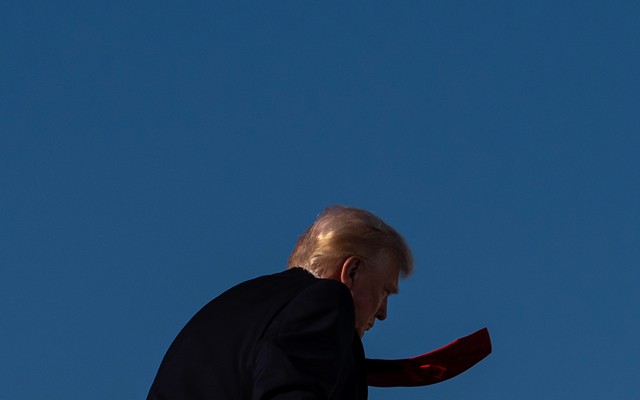
Except that this reverse “Wag the dog” is based on bizarre truth: First Lady Melania Trump did bring the disgraced financier up, unprompted, late last week in an effort to distance herself from the scandal (in a move that, predictably, only shifted it back into the spotlight once again). Meanwhile, as negotiations with Iran stumble forward, the Strait of Hormuz is still in Tehran’s hands and now President Trump has authorized a risky naval blockade that will likely send prices soaring further. Moreover, Trump’s poll numbers have continued to fall, Republicans worry that both houses of Congress could be lost in November, and the president threw away a remarkable amount of geopolitical capital trying to support his now-defeated illiberal buddy Viktor Orbán of Hungary. Oh, and Trump deeply offended adherents of the world’s two largest religions in one week’s time.
The car industry says it has an answer for drivers wary of going electric.
Two hours into a road trip in my Tesla, I start to get twitchy. By that point, the battery in my 2019 Model 3 has dipped to an uncomfortably low percentage. If I can’t reach the next plug, I’m in trouble. This is the kind of problem that Ram’s electric pickup truck—the first of a new breed of EV to arrive in the United States—is intended to solve. When the range starts to dwindle, the truck automatically fires up a hidden gas engine that refills the giant battery. The “electric” vehicle keeps on chugging down the highway, hour after hour; pit stops are once again decided by the need for bathroom breaks rather than battery range.
The Ram 1500 REV, set to debut later this year, is what’s called an “extended-range electric vehicle,” or EREV. In essence, it is an electric vehicle that burns gas. There’s nothing revolutionary about a half-gas, half-electric car, of course. Hybrids have been a mainstay in the United States since the Toyota Prius broke through two decades ago, and automakers have released more efficient plug-in hybrids—allowing drivers to charge up for about 30 miles of electric driving, just enough to accomplish daily errands without fossil fuels. An extended-range EV is a different kind of beast. The engine burns gasoline for the sole purpose of replenishing the battery—it never actually pushes the wheels. In the Ram, the battery can run for about 150 miles of electric driving, and the whole setup delivers enough range to travel nearly 700 miles between stops.
A minimally speaking autistic man just wrote a best-selling book. Or did he?
On a recent morning at Rockefeller Center, NBC employees strolled through the crowd with copies of Upward Bound, the latest book-club pick from the Today show co-host Jenna Bush Hager. “It’s deeply heartfelt and moving,” Hager said, after holding up the debut novel from the 28-year-old Woody Brown, “and the reason it’s so authentic is that the author understands autism firsthand.”
That understanding is indeed profound. Brown’s autism is such that he can barely speak, and he communicates mostly by pointing to letters, one by one, on a laminated board. This is also how his novel, which is already a New York Times best seller, came to be. In the recorded interview that followed Hager’s introduction, Brown’s mother, Mary, sat beside him, holding the letter board and reading his tapped-out messages.
Is the president’s son-in-law carrying out the public’s business or pursuing his own private interests?
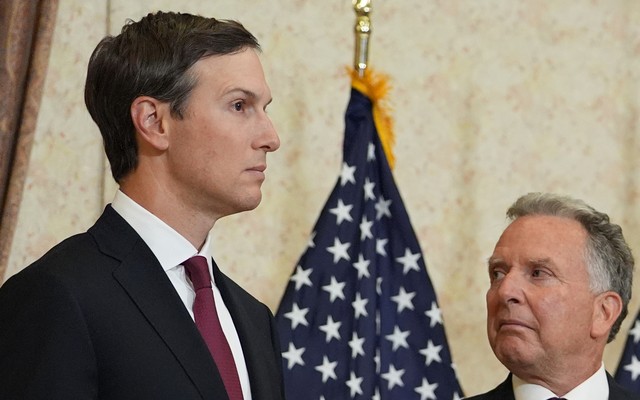
In 2021, shortly after he left his role as a senior White House adviser, Jared Kushner let it be known that he had loved his job but disliked the scrutiny and disclosure that came with being a top U.S. government official. He set up a private-equity firm and took a $2 billion investment from a Saudi fund led by Crown Prince Mohammed bin Salman. He proclaimed that he was embracing private life. “I’m an investor now,” Kushner said in a 2024 interview. If President Trump “calls you on November whatever and says, ‘I’d like you to come back to D.C.,’ you say, ‘Thanks, but I’m good’?” the interviewer, Dan Primack of Axios, pressed. “Yes,” Kushner responded.
But Kushner did come back. Two days before the United States and Israel attacked Iran this past February, he was in Geneva in a negotiation of the highest possible stakes. Over the weekend, he traveled with Vice President Vance to Islamabad to participate in failed peace talks with Iran. Without title or remit or any kind of official designation—only “presidential son-in-law”—Kushner has in the first 14 months of the second Trump administration sat down with world leaders including Vladimir Putin, Benjamin Netanyahu, and Volodymyr Zelensky, along with Saudis and multiple other actors from the Middle East.
The president’s attempts to interfere with the midterms demand vigilance, but a recent flimsy gambit is an argument against despair.
This is an edition of The Atlantic Daily, a newsletter that guides you through the biggest stories of the day, helps you discover new ideas, and recommends the best in culture. Sign up for it here.
Anxiety among election officials and experts had been building for months before Donald Trump issued his latest executive order purporting to ensure election integrity late last month. When the actual text emerged, the reaction wasn’t relief exactly—but a definite sense that things could have been much worse.
Americans have many reasons to be worried about whether the midterm elections will be free and fair. As I laid out in a cover story last fall, the president’s plan to subvert the 2026 election is multifaceted and already in swing. But last month’s order and the dismissive reaction it’s received from experts—along with this weekend’s decisive defeat of Hungarian Prime Minister Viktor Orbán, which shows how the competitive-authoritarian playbook that Trump has imitated can be beaten—also point to the reasons to resist doomerism.
Testing has become so advanced that doctors now miss important elements of diagnosis.
In her first year of medical school, Diana Cejas discovered a lump in her neck. She went to the student medical center to have it evaluated and was told that it was likely benign. But the lump kept growing, and she returned to her doctors, who reassured her that it was just a large lymph node. One night, following a 36-hour shift in her residency, the lump hurt so much she couldn’t sleep. The next day, after she begged for help, a doctor finally ordered a CT scan. She looked up her results on the hospital computer system. There, on the screen, was a large mass in her neck. It turned out to be cancerous. Even as she had been learning how to correctly diagnose others, she had not been able to get an accurate diagnosis herself.
A phonics-based curriculum is only one part of how Mississippi went from worst to first in education. The other part is much harder to pull off.
Updated at 8:52 p.m. ET on April 9, 2026
This article was featured in the One Story to Read Today newsletter. Sign up for it here.
No story has caught the imagination of education reformers this decade quite like the “Mississippi miracle.” From 1998 to 2024, fourth-grade reading and math scores in my home state—the nation’s poorest—rose from among the worst in the country to among the best. When adjusting for demographic factors such as poverty, we’re in first place.
Other states are now trying to emulate what Mississippi did. Those efforts largely revolve around adopting what’s known as the “science of reading”— a set of principles and teaching techniques, including phonics, that are grounded in decades of empirical research. Last fall, for example, the Wall Street Journal editorial board marveled that “even California is now following Mississippi’s lead by returning to phonics” as Governor Gavin Newsom prepared to sign a major new reading bill into law. But what many outsiders fail to understand is that Mississippi changed far more than just how reading is taught. They therefore miss why and how our literacy approach succeeded.
Hungary offers lessons in defeating right-wing populists.
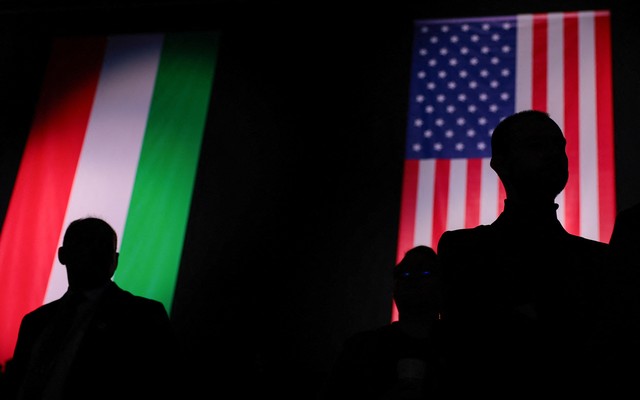
To the outside world, Hungarian Prime Minister Viktor Orbán began his rule as a pariah—an obstreperous, often lone dissenter from European Union policies, especially over migration. Then he became a prophet to new-style “national conservatives”—the anti-immigration, anti-elite right-wing movement that has reshaped the politics of the West. After resoundingly losing national elections held on April 12, Orbán has become a parable for how populism can be defeated.
His political demise was hardly inevitable. It had to be shrewdly engineered by politicians and voters who put aside their ideological differences to defeat him. In politics, there is no natural law of self-correction.
From 2010 until now, Orbán and his Fidesz party transformed Hungary into a new kind of state, which he proudly proclaimed as an “illiberal democracy.” He and his allies rewrote the constitution to entrench his power, centralizing control over civil society and countervailing institutions such as courts and universities. Péter Magyar, the presumptive next prime minister, triumphed against a tilted electoral system—gerrymandered districts, government influence over traditional media and even over the country’s billboards—designed to keep Fidesz in power. Magyar understood that such a regime does not simply collapse under the weight of its own contradictions and mismanagement.
Former U.S. Deputy National Security Adviser Matt Pottinger on the U.S.-Iran cease-fire, Trump’s Hormuz blockade, and China’s reaction to the Iran war. Plus: A seismic election in Hungary, and Labyrinths, by Jorge Luis Borges.
In this week’s episode of The David Frum Show, The Atlantic’s David Frum opens with his reaction to the recent election in Hungary and the defeat of Viktor Orbán. David counters Orbán defenders who claim that this loss proves Orbán was never a threat. Antidemocratic leaders often face institutional constraints, and it was those institutional constraints that compelled Orbán to accept a defeat after years of abuse of power.
Then, David is joined by former U.S. Deputy National Security Adviser Matt Pottinger to discuss the current state of President Trump’s war in Iran. David and Pottinger talk about the recent failed negotiations between the two sides in Pakistan, the blockade of the Strait of Hormuz, and what could happen next. They also discuss how the Iran war is viewed in China and how it has been a financial gain for Russia.