—Hate crimes against Muslims in the United States rose by 67 percent in 2015, according to an FBI crime report released Monday.
—Gwen Ifill, the American journalist who worked for PBS since 1999, died Monday of cancer. She was 61.
—President Obama kicks off his final major foreign-policy trip tonight, leaving Washington for Athens. He will visit Berlin and Lima later this week, where he’s expected to try to reassure leaders surprised by the unexpected election of Donald Trump.
—We’re live-blogging the news stories of the day below. All updates are in Eastern Standard Time (GMT -5).
A federal judge has ordered Brendan Dassey, one of the two imprisoned Wisconsin men featured in the Netflix documentary “Making a Murderer,” be released from prison.
The judge, William E. Duffin, previously overturned Dassey’s conviction in the 2005 murder and sexual assault of a photographer. Duffin argued Dassey “was mentally unfit, that he had been coerced into a confession he later recanted and that his court-appointed lawyer had been content to cut a deal,” The New York Timesreports.
Dassey’s uncle, Steven Avery, is also serving a life sentence for murder and sexual assault.
Wisconsin Attorney General Brad Shimel has appealed the judge’s ruling. He is also temporarily blocking Dassey’s release from prison.
Dassey’s lawyers said Monday they hoped to get Dassey home by Thanksgiving, adding:
Dassey's family is concentrated in northeastern Wisconsin. There is no indication that he has the inclination much less the means to flee or will otherwise fail to appear as may be legally required.
Dassey has been in prison since he was convicted in 2007.
U.S. Forces Accused of Possible War Crimes in Afghanistan
Lucas Jackson / Reuters
There is “reasonable basis to believe” that U.S. forces and the CIA may have committed war crimes in Afghanistan, the International Criminal Court said Monday.
Fatou Bensouda, the ICC chief prosecutor, signaled in an annual report that the court would open investigations into “war crimes of torture and related ill-treatment” by U.S. forces deployed in Afghanistan in CIA-operated detention facilities between 2003 and 2004. The probe will include investigating the possible use of “torture, cruel treatment, outrages upon personal dignity, and rape.”
Here’s more from the report:
These alleged crimes were not the abuses of a few isolated individuals. Rather, they appear to have been committed as part of approved interrogation techniques in an attempt to extract ‘actionable intelligence’ from detainees. According to information available, the resort to such interrogation techniques was ultimately put to an end by the authorities concerned, hence the limited time-period during which the crimes allegedly occurred.
Though the final decision to launch the investigation has not been announced, Bensouda said she would decide whether to ask the court’s judges for permission “imminently.” If the investigation goes forward, it would mark the first time U.S. forces have been exposed to an ICC probe.
Anti-Muslim Hate Crimes in the U.S. Rose by 67 Percent in 2015
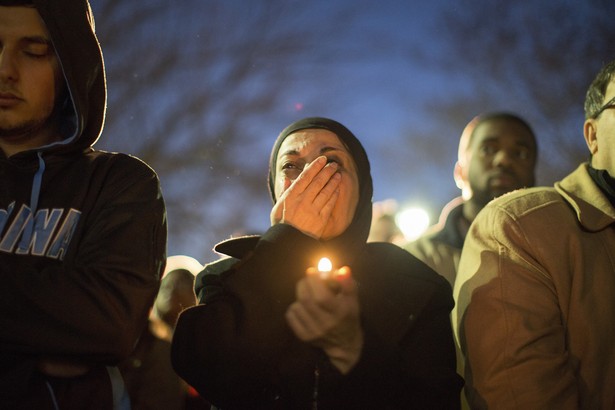
A woman cries at a vigil for three Muslim students killed in Chapel Hill, North Carolina on February 11, 2015. (Chris Keane / Reuters)
Hate crimes against Muslims in the United States rose by 67 percent in 2015, according to an FBI crime report released Monday.
The bureau’s Uniform Crime Report documented a total of 5,850 hate-crime incidents reported in 2015 overall—a 6 percent increase from the 5,479 incidents reported the previous year. Of these incidents, 257 of them were classified as anti-Muslim hate crimes, a significant increase from the 154 incidents reported in 2014. This latest report marks one of the largest increases in anti-Muslim hate crimes in more than a decade, second only to the 481 anti-Muslim hate crimes reported in 2001, according to the Southern Poverty Law Center.
Overall, religion-based incidents made up 21 percent of the hate crimes documented, with more than 50 percent targeting Jews and 22 percent targeting Muslims. Anti-Semitic hate crimes, which remain the largest religious-based hate crimes reported, rose by 9 percent.
Other hate crimes reported were based on sexual orientation, disability, gender, and gender identity.
The FBI’s latest report comes amid an increase in reported hate crimes following last week’s presidential election, including racist, anti-Semitic, and anti-Muslim incidents.
Gwen Ifill, the American journalist who worked for PBS since 1999, died Monday of cancer. She was 61.
“I am very sad to tell you that our dear friend and beloved colleague Gwen Ifill passed away today in hospice care in Washington,” Sharon Percy Rockefeller, the CEO of WETA, Washington D.C.’s public TV and radio stations, wrote in an email to staff on Monday, Politico reports. “I spent an hour with her this morning and she was resting comfortably, surrounded by loving family and friends.”
Ifill went on leave from PBS from early April to mid-May this year to address ongoing health issues, which she did not make public. She took a leave again last week before Election Day.
Ifill served as a co-anchor on PBS “NewsHour” and as moderator of “Washington Week,” the longest-running primetime news program on television. Before joining PBS, Ifill was the chief congressional and political corresponded for NBC News, a White House correspondent for The New York Times, and reporter for The Washington Post.
Ifill and her “NewsHour” co-host Judy Woodruff became the first all-female team to anchor the show in 2013. Ifill acknowledged the significance of her role in particular, tellingThe New York Times:
“When I was a little girl watching programs like this — because that’s the kind of nerdy family we were — I would look up and not see anyone who looked like me in any way. No women. No people of color,” she said.
“I’m very keen about the fact that a little girl now, watching the news, when they see me and Judy sitting side by side, it will occur to them that that’s perfectly normal — that it won’t seem like any big breakthrough at all,” she added.
Ifill covered seven presidential campaigns during her long career in Washington. She moderated the 2004 vice-presidential debate between Dick Cheney and John Edwards, the 2008 vice-presidential debate between John Biden and Sarah Palin, and the final Democratic primary debate last year.
President Obama praised Ifill’s work at the start of a press conference Monday afternoon, and described the veteran journalist as “an especially powerful role model for young women and girls.”
“I always appreciated Gwen's reporting, even when I was at the receiving end of one of her tough and thorough interviews,” Obama said. “Whether she reported from a convention floor or from the field, whether she sat at the debate moderator’s table or at the anchor’s deck, she not only informed today’s citizens but she also inspired tomorrow’s journalists.”
Ifill was named in August as the recipient of the 2016 John Chancellor Award for excellence in journalism and was scheduled to receive the award this week in New York.
Archaeologists in Egypt have discovered an ancient mummy bound in linen inside a colorful sarcophagus that has remained in very good condition, according to Egypt's antiquities ministry.
Spanish archeologists announced their discovery Sunday, saying they believed the mummy is that of a nobleman named Amenrenef, a servant to the royal household of King Thutmose II. The burial site is located near a temple for the king on the west bank of the Nile, 435 miles south of Cairo near Luxor, a city of about 500,000 people and the site of many ancient tombs.
The mummy was adorned with religious symbols and gods, like Isis, Nephtys, and the sons of Horus, and he sarcophagus was brightly colored. The practice of mummification dates back to 4500 BC, although this tomb is believed to be more recent; archaeologists put it somewhere between 1075 BC and 664 BC.
Qienabh Tappii, center, wins the Miss Transgender Indonesia pageant in Jakarta on November 11, 2016. (Dita Alangkara / AP)
Hundreds of transgender activists crowned the winner of a transgender beauty pageant in Indonesia over the weekend in an event that was kept almost entirely secret, the Associated Press reports.
Qienabh Tappii, a 28-year-old representing the Indonesian capital, defeated more than 30 other contestants Friday for the title of Miss Waria, the Indonesian word for transgender. Tappii, who will represent Indonesia at the Miss International Queen pageant in Thailand next year, told the AP, “I want waria to be accepted, appreciated, and understood in our society, and to be equal with other Indonesians. I will work really hard to achieve it.”
The pageant’s organizers said they kept the event in Jakarta secret because they feared the country’s Islamic hardliners would try to shut it down. Organizers told only a few journalists about when and where the event would be held.
“If the public knew in advance that there will be such an event, those who use religion as their mask could attack us,” Nancy Iskandar, one of the pageant’s organizers, said. “That's why we kept it secret until the last minute.”
Indonesia’s religious culture is considered more moderate compared to other Muslim-majority countries. But the nation has increasingly drawn criticism from human-rights organizations for its treatment of its LGBT community. This year, some Indonesian lawmakers have called for measures banning LGBT students from university campuses and instituting “healing programs” to cure sexual orientation.
The United States and Australia reached a deal Sunday to resettle asylum seekers held in detention centers in Papua New Guinea and Nauru that were stopped while trying to reach Australia by boat.
Under a one-time deal, the U.S. has agreed to accept individuals who have already received refugee status from the United Nations. Officials have not said how many refugees will be transported, or exactly when and where. Australian Prime Minister Malcolm Turnbull said the deal will prioritize “women, children, and families.” He said the transfer would likely begin after President-elect Donald Trump took office in January.
The detention camps hold about 1,200 men, women, and children who are mostly from Iran, Afghanistan, Vietnam, and Malaysia.
The deal, which has been in the works for months, comes after Papua New Guinea’s supreme court ruled this spring that it was unconstitutional for the island to host Australia’s migrants.
The facilities have attracted controversy since they opened about 15 years ago, in part because many migrants wait about three years for the government to process their applications while living in mostly poor conditions. In the early 2000s, Australia began a policy of detaining migrants in offshore processing centers, essentially renting out some of its migration processing duties to Nauru and Papua New Guinea. The centers are favored among Australian conservatives, but were closed briefly in 2008 after the progressive Labor Party took power.
Iraqi soldiers fighting to reclaim Mosul from the Islamic State have nearly surrounded the city and will begin a collective push toward downtown in the coming days. The operation is nearing the end of its fourth week, and over the weekend the fighting mostly slowed to allow forces to regroup and to minimize civilian deaths.
So far only the elite Iraqi special forces entering from the east have breached ISIS’s front lines in Mosul, the country’s second-largest city and a key stronghold for ISIS in Iraq. But Kurdish peshmerga and Iraqi forces in the north, as well as the Shia Popular Mobilization Force in the southwest, have advanced slowly toward the city center as they recapture towns along the outskirts. On Sunday, to the north of Mosul, Iraqi forces nearly reached the Habda neighborhood. Their arrival would mark the first time security forces reached the city limits from this direction.
“The enemy is collapsing and losing control, and we are now taking only two days to seize a neighborhood where we planned to be fighting for four days,” Maan al Saadi, a commander with Iraqi special forces, told The Wall Street Journal.
More than 1 million people live in Mosul and about 54,000 people have been displaced as fighting intensified. ISIS has moved residents to the city’s center and used them as human shields against bombing attacks. The Telegraphreported Monday that injured children have overwhelmed hospitals in the area, seeking treatment for gunshots, burns, and shrapnel from bombs, which militants have placed in roadways to slow the advance of Iraqi forces.
About 1,000 Tourists Stranded After New Zealand Earthquake
Landslides block a highway near Kaikoura on the upper east coast of New Zealand's South Island on November 14, 2016. (Sam Shepherd / Royal New Zealand Defence Force/ Reuters)
Tsunami warnings have been canceled in New Zealand a day after a 7.8-magnitude earthquake struck the country, triggering dangerous waves and dozens of aftershocks that were felt for hours.
Two people were killed in the quake, Radio New Zealand reported Monday night local time. One person died in a house in Mount Lyford, a ski resort located north of Christchurch, and another died in a collapsed house in Kaikoura, a coastal town to the country’s east.
The quake caused major landslides in Kaikoura, blocking roads and stranding about 1,000 tourists and hundreds of residents. New Zealand officials say they will send in helicopters, which could each pick up about 18 people at a time, the AP reports. A ship from Auckland is also on its way. But the rescue operation could take several days.
"From all directions, Kaikoura has essentially been isolated," Air Commodore Darryn Webb, the head of New Zealand's Joint Forces, told the AP.
Prime Minister John Key estimated the damage of the quake to be in the billions of dollars, according to the AP. “It’s just utter devastation,” said Key, who flew over Kaikoura by helicopter to survey the landslides.
Small aftershocks were still being recorded as recently as Tuesday morning, according to GeoNet, which monitors seismic activity in the country.
The city of Christchurch is still recovering from a 2011 earthquake that killed 185 people and destroyed scores of buildings.
Thirteen thousand miles. Infinite contenders. One beautiful loaf.
This article was featured in the One Story to Read Today newsletter. Sign up for it here.
Here is the promise you and I must cling to across the thousands of words that follow: At some point within this text, I will reveal to you what—after 555 responses, 13,000 miles of travel, and months of monomaniacal research—I have determined to be the best free restaurant bread in America. I will not attempt to slither to the moral high ground, arguing that best is a meaningless measure, or insisting that all bread is dear in its own way. Even if you attempt to betray me—for instance, by merely scanning the text that follows for the phrase Here it is: the best free restaurant bread in America—I will uphold my end of the bargain.
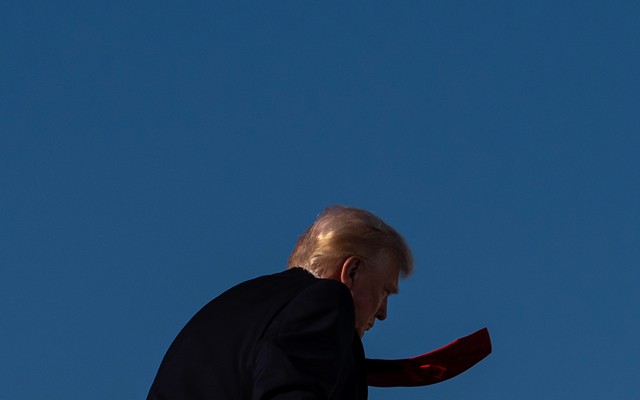
The president is on a losing streak, and even some of his aides are dismayed by his choices.
This article was featured in the One Story to Read Today newsletter. Sign up for it here.
You’ve heard the joke: The White House is going to start talking about the Epstein files to distract from how badly the Iran war is going.
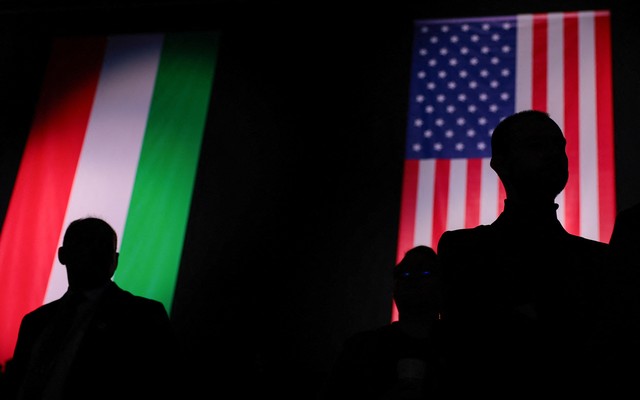
Except that this reverse “Wag the dog” is based on bizarre truth: First Lady Melania Trump did bring the disgraced financier up, unprompted, late last week in an effort to distance herself from the scandal (in a move that, predictably, only shifted it back into the spotlight once again). Meanwhile, as negotiations with Iran stumble forward, the Strait of Hormuz is still in Tehran’s hands and now President Trump has authorized a risky naval blockade that will likely send prices soaring further. Moreover, Trump’s poll numbers have continued to fall, Republicans worry that both houses of Congress could be lost in November, and the president threw away a remarkable amount of geopolitical capital trying to support his now-defeated illiberal buddy Viktor Orbán of Hungary. Oh, and Trump deeply offended adherents of the world’s two largest religions in one week’s time.
The car industry says it has an answer for drivers wary of going electric.
Two hours into a road trip in my Tesla, I start to get twitchy. By that point, the battery in my 2019 Model 3 has dipped to an uncomfortably low percentage. If I can’t reach the next plug, I’m in trouble. This is the kind of problem that Ram’s electric pickup truck—the first of a new breed of EV to arrive in the United States—is intended to solve. When the range starts to dwindle, the truck automatically fires up a hidden gas engine that refills the giant battery. The “electric” vehicle keeps on chugging down the highway, hour after hour; pit stops are once again decided by the need for bathroom breaks rather than battery range.
The Ram 1500 REV, set to debut later this year, is what’s called an “extended-range electric vehicle,” or EREV. In essence, it is an electric vehicle that burns gas. There’s nothing revolutionary about a half-gas, half-electric car, of course. Hybrids have been a mainstay in the United States since the Toyota Prius broke through two decades ago, and automakers have released more efficient plug-in hybrids—allowing drivers to charge up for about 30 miles of electric driving, just enough to accomplish daily errands without fossil fuels. An extended-range EV is a different kind of beast. The engine burns gasoline for the sole purpose of replenishing the battery—it never actually pushes the wheels. In the Ram, the battery can run for about 150 miles of electric driving, and the whole setup delivers enough range to travel nearly 700 miles between stops.
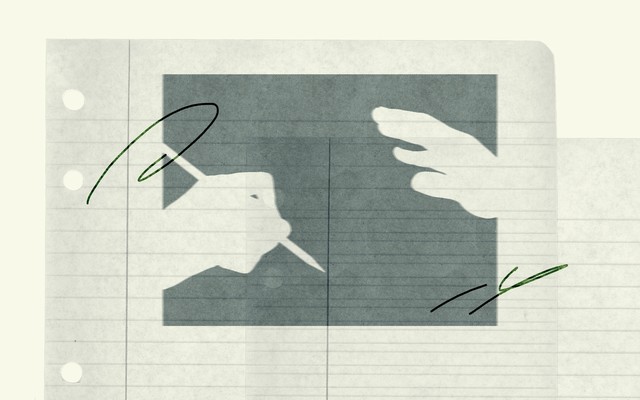
A minimally speaking autistic man just wrote a best-selling book. Or did he?
On a recent morning at Rockefeller Center, NBC employees strolled through the crowd with copies of Upward Bound, the latest book-club pick from the Today show co-host Jenna Bush Hager. “It’s deeply heartfelt and moving,” Hager said, after holding up the debut novel from the 28-year-old Woody Brown, “and the reason it’s so authentic is that the author understands autism firsthand.”
That understanding is indeed profound. Brown’s autism is such that he can barely speak, and he communicates mostly by pointing to letters, one by one, on a laminated board. This is also how his novel, which is already a New York Times best seller, came to be. In the recorded interview that followed Hager’s introduction, Brown’s mother, Mary, sat beside him, holding the letter board and reading his tapped-out messages.
Is the president’s son-in-law carrying out the public’s business or pursuing his own private interests?
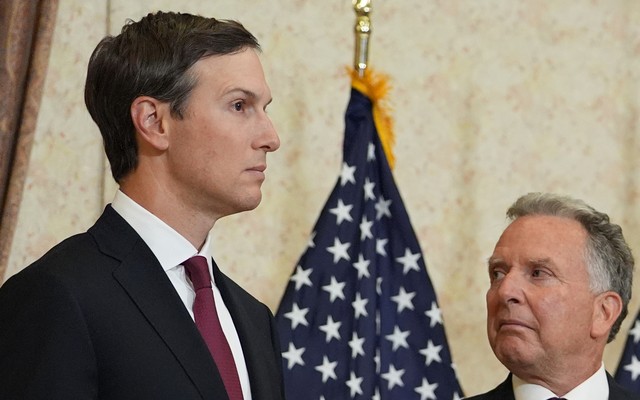
In 2021, shortly after he left his role as a senior White House adviser, Jared Kushner let it be known that he had loved his job but disliked the scrutiny and disclosure that came with being a top U.S. government official. He set up a private-equity firm and took a $2 billion investment from a Saudi fund led by Crown Prince Mohammed bin Salman. He proclaimed that he was embracing private life. “I’m an investor now,” Kushner said in a 2024 interview. If President Trump “calls you on November whatever and says, ‘I’d like you to come back to D.C.,’ you say, ‘Thanks, but I’m good’?” the interviewer, Dan Primack of Axios, pressed. “Yes,” Kushner responded.
But Kushner did come back. Two days before the United States and Israel attacked Iran this past February, he was in Geneva in a negotiation of the highest possible stakes. Over the weekend, he traveled with Vice President Vance to Islamabad to participate in failed peace talks with Iran. Without title or remit or any kind of official designation—only “presidential son-in-law”—Kushner has in the first 14 months of the second Trump administration sat down with world leaders including Vladimir Putin, Benjamin Netanyahu, and Volodymyr Zelensky, along with Saudis and multiple other actors from the Middle East.
The president’s attempts to interfere with the midterms demand vigilance, but a recent flimsy gambit is an argument against despair.
This is an edition of The Atlantic Daily, a newsletter that guides you through the biggest stories of the day, helps you discover new ideas, and recommends the best in culture. Sign up for it here.
Anxiety among election officials and experts had been building for months before Donald Trump issued his latest executive order purporting to ensure election integrity late last month. When the actual text emerged, the reaction wasn’t relief exactly—but a definite sense that things could have been much worse.
Americans have many reasons to be worried about whether the midterm elections will be free and fair. As I laid out in a cover story last fall, the president’s plan to subvert the 2026 election is multifaceted and already in swing. But last month’s order and the dismissive reaction it’s received from experts—along with this weekend’s decisive defeat of Hungarian Prime Minister Viktor Orbán, which shows how the competitive-authoritarian playbook that Trump has imitated can be beaten—also point to the reasons to resist doomerism.
Hungary offers lessons in defeating right-wing populists.
To the outside world, Hungarian Prime Minister Viktor Orbán began his rule as a pariah—an obstreperous, often lone dissenter from European Union policies, especially over migration. Then he became a prophet to new-style “national conservatives”—the anti-immigration, anti-elite right-wing movement that has reshaped the politics of the West. After resoundingly losing national elections held on April 12, Orbán has become a parable for how populism can be defeated.
His political demise was hardly inevitable. It had to be shrewdly engineered by politicians and voters who put aside their ideological differences to defeat him. In politics, there is no natural law of self-correction.
From 2010 until now, Orbán and his Fidesz party transformed Hungary into a new kind of state, which he proudly proclaimed as an “illiberal democracy.” He and his allies rewrote the constitution to entrench his power, centralizing control over civil society and countervailing institutions such as courts and universities. Péter Magyar, the presumptive next prime minister, triumphed against a tilted electoral system—gerrymandered districts, government influence over traditional media and even over the country’s billboards—designed to keep Fidesz in power. Magyar understood that such a regime does not simply collapse under the weight of its own contradictions and mismanagement.
If you are anything like me, you have spent a lot of time over the past few weeks opening letters, finding receipts, requesting PDFs, scanning documents, and going through your credit-card statements line by line. It’s tax season. And in the United States, taxes are a DIY affair.
This is the case even though Washington could probably do your taxes for you. If you earn a salary or an hourly wage, the Internal Revenue Service already knows how much money you make. It likely knows how much you owe or how big your refund should be too. Nine in 10 households take the standard deduction, making their liability easy to glean from payroll and banking data.
Yet Uncle Sam demands that Americans fire up TurboTax, head to a storefront preparer, hire an accountant, or sit down with a sharp pencil and a strong cup of coffee to get their taxes done each spring. The average filer spends 13 hours on their 1040—a time tax that many of our wealthy peer countries have reduced to a couple of minutes, if that. Prepopulated documents and return-free systems are common everywhere but here. Sweden lets residents file by text. Canada prefills paperwork. Japan sends households a document summarizing their tax contributions. If everything looks copacetic, many workers get to do a blissful nothing. Denmark, Estonia, Spain, and Norway have similarly simple processes.
A phonics-based curriculum is only one part of how Mississippi went from worst to first in education. The other part is much harder to pull off.
Updated at 8:52 p.m. ET on April 9, 2026
This article was featured in the One Story to Read Today newsletter. Sign up for it here.
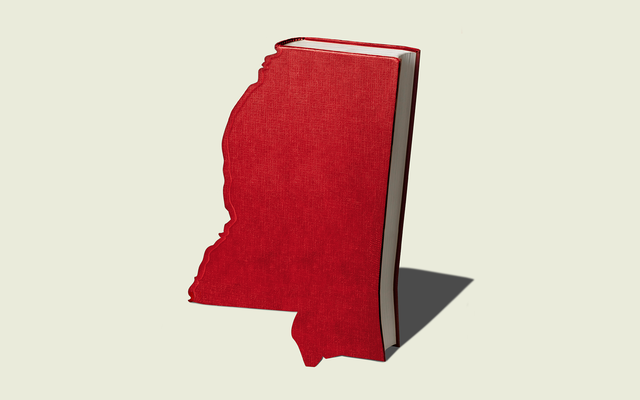
No story has caught the imagination of education reformers this decade quite like the “Mississippi miracle.” From 1998 to 2024, fourth-grade reading and math scores in my home state—the nation’s poorest—rose from among the worst in the country to among the best. When adjusting for demographic factors such as poverty, we’re in first place.
Other states are now trying to emulate what Mississippi did. Those efforts largely revolve around adopting what’s known as the “science of reading”— a set of principles and teaching techniques, including phonics, that are grounded in decades of empirical research. Last fall, for example, the Wall Street Journal editorial board marveled that “even California is now following Mississippi’s lead by returning to phonics” as Governor Gavin Newsom prepared to sign a major new reading bill into law. But what many outsiders fail to understand is that Mississippi changed far more than just how reading is taught. They therefore miss why and how our literacy approach succeeded.
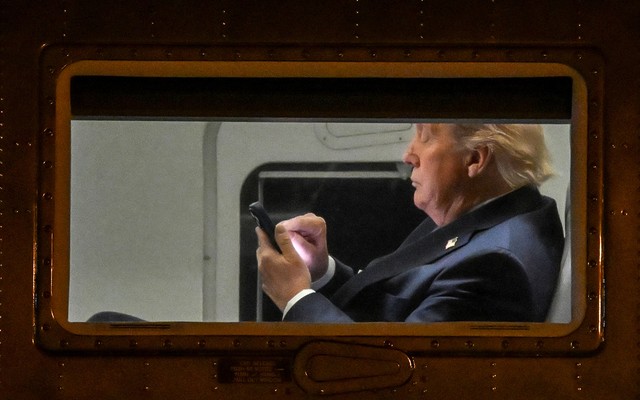
On many recent nights, Donald Trump has been posting obsessively on his Truth Social site into the wee hours. The president, of course, has never been one for a solid night’s sleep—or restrained and temperate commentary on social media—but his emotional state seems to be fraying: This weekend, he attacked Pope Leo XIV, presented himself as Jesus Christ, and then jabbed at his phone until dawn.
Judging from those posts, the commander in chief is in distress. No one can say for sure what is causing the president’s bizarre behavior. Perhaps Trump’s narcissistic insistence that he is always successful in everything he undertakes is feeling the sting and strain of multiple public failures, including the collapse of his campaign to dislodge the Iranian regime, plummeting approval ratings, the decline of the U.S. economy, and, on Sunday, the crushing defeat of one of his favorite fellow authoritarians, Hungary’s Viktor Orbán.