A powerful earthquake in New Zealand, France marked the anniversary of the Paris terrorist attacks, and more from the United States and around the world.
—A 7.5-magnitude earthquake struck New Zealand early Monday morning, triggering a tsunami that threatens the country’s eastern coast.
—France marked the anniversary of the terrorist attacks that killed 130 people in Paris last year. President Francois Hollande and Paris Mayor Anne Hidalgo visited the sites targeted in the attacks, where the names of the victims were read aloud.
—We’re live-blogging the news stories of the day below. All updates are in Eastern Standard Time (GMT -5).
Europe's Foreign Ministers Call Emergency Meeting to Talk About Trump
European Council President Donald Tusk (Vincent Kessler / Reuters)
The head of the European Council has called an emergency meeting of the continent's foreign ministers to discuss the unexpected election of Donald Trump as the president of the United States, which has rattled European leaders.
Donald Tusk, the president of the council, scheduled the gathering in Brussels at the suggestion of Germany, The Guardian reported Sunday. The foreign ministers will meet Sunday night, with the exception of Boris Johnson, the British foreign secretary and one of the leaders of the campaign for Brexit, who is boycotting the meeting.
The ministers will "exchange notes on how far they believe Trump will follow through on his dramatic but sometimes inconsistent pledges to turn U.S. foreign policy upside down, including over Russia, Syria, Iran and NATO," The Guardian wrote. The ministers will also convene Monday for a regular meeting, so it’s unclear why Tusk called for another one the night before.
President Obama will try to reassure Europe about the next administration when he travels to Berlin this week to meet with the leaders of the United Kingdom, Germany, France, Italy, and Spain.
New Zealand Downgrades Tsunami Threat After Earthquake
New Zealand has downgraded the tsunami warning issued after a 7.8-magnitude earthquake struck the country’s South Island shortly after midnight Monday.
New Zealand’s ministry of civil defense and emergency management said Monday fewer parts of the east coast are now at risk of dangerous waves. Here’s an earlier map, released at about 3 a.m. local time, showing the areas at most risk of a tsunami impact. The darker blue indicates areas that are most vulnerable:
Highest waves are expected between Marlborough and Banks Peninsula. There is a threat for all NZ coast. Stay off beaches. #eqnzpic.twitter.com/bkEbyKkCsd
And here’s the latest map, released at about 6 a.m. The country’s west coast has been cleared of tsunami threat:
Tsunami threat has been downgraded. People in green and white areas on the map can return home. Land threat remains for blue areas. #eqnzpic.twitter.com/xUcnJPQBe9
Paris Marks Anniversary of Deadly Terrorist Attacks
Candles burn at the Place de la Republique in Paris, France, on November 13, 2016, after ceremonies held for the victims of last year's terrorist attacks. (Philippe Wojazer / Reuters)
France marked the anniversary of last year’s Paris terrorist attacks, which left 130 people dead at a concert hall, stadium, and several bars and restaurants.
Residents paid tribute to the victims on Sunday by placing flowers, candles, and notes at the sites that were targeted in the ISIS-directed attacks. French President Francois Hollande and Paris Mayor Anne Hidalgo visited each of the six sites, where they unveiled commemorative plaques and the victims’ names were read aloud, according to the BBC. They released colorful balloons into the air outside the Bataclan, where assailants attacked during a concert, spraying the crowd with bullets. The music venue reopened Saturday night with a show by the singer Sting.
France has been under a state of emergency since the attacks. The state of emergency was extended in Juy after a man drove a truck into a crowd in Nice on Bastille Day, killing 84 people. French Prime Minister Manuel Valls said Saturday it would remain in place because of the risk of “attacks of the kind we saw in Nice.”
New Zealanders Seek High Ground After Powerful Earthquake
A large fissure runs along Kaikoura Road about two hours north of Christchurch after a powerful earthquake struck New Zealand on November 14, 2016. (Joe Morgan / AP)
Tsunami warning sirens are ringing along New Zealand’s east coast after a powerful earthquake struck the country early Monday morning, sending residents into the streets and damaging some roads.
The 7.8-magnitude struck shortly after midnight on New Zealand’s South Island, 15 kilometers (nine miles) northeast of Culverden. About 45 aftershocks followed, the largest recorded at 6.2 magnitude, according to GeoNet, which monitors seismic activity in New Zealand. Strong quakes were felt in Wellington, the country’s capital.
No injuries have been reported, but power outages have hampered communication.
New Zealand’s ministry of civil defense and emergency management has issued a tsunami warning to the country’s entire east coast and urged residents to seek higher ground and avoid beaches. Waves between three and five meters (10 to 16 feet) are expected near the quake’s epicenter.
The ministry released a map showing the areas at most risk of a tsunami impact. The darker blue indicates areas that are most vulnerable:
Highest waves are expected between Marlborough and Banks Peninsula. There is a threat for all NZ coast. Stay off beaches. #eqnzpic.twitter.com/bkEbyKkCsd
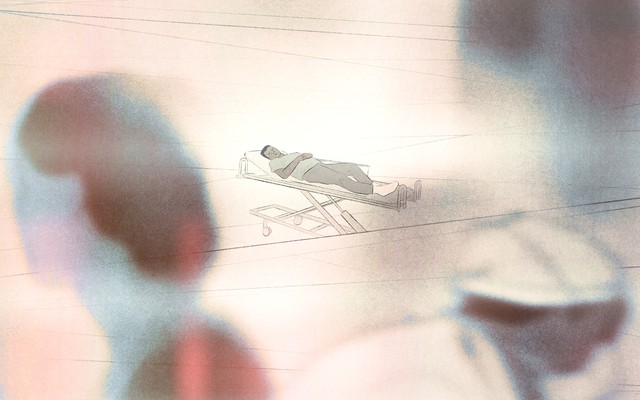
Patients are getting stuck in the emergency department for days while waiting for a spot in an inpatient ward.
In the last months, weeks, and days of his life, “I will not go to the emergency room” became my husband’s mantra. Andrej had esophageal cancer that had spread throughout his body (but not to his ever-willful brain), and, having trained as a doctor, I had jury-rigged a hospital at home, aided by specialists who got me pills to boost blood pressure; to dampen the effects of liver failure; to stem his cough; to help him swallow, wake up, fall asleep.
“I will not go to the emergency room”—emphasis on not—were his first words after passing out, having a seizure, or regurgitating the protein smoothies I made to pass his narrowed esophagus. He said it again and again, even as fluid built up in his lungs, rendering him short of breath and prone to agonizing coughing spells. He had been a big, athletic guy, but now, in the ugly process of dying, he was looking gaunt. Ours was a precarious existence, but I understood his adamant rejection of the emergency department. Most prior visits had morphed into extended trips into a terrifying medical underworld—to a purgatory known as emergency-department boarding.
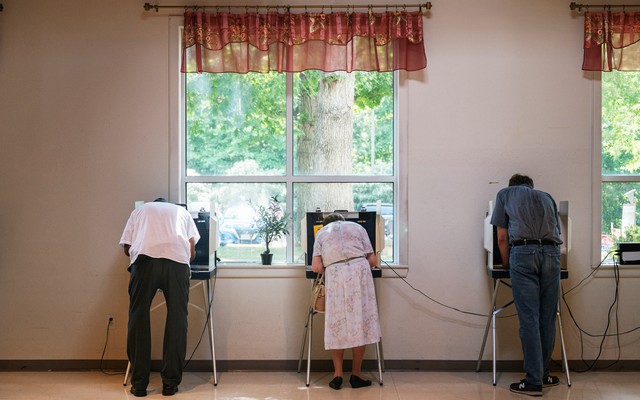
When President Trump last summer implored Republicans to launch a nationwide gerrymandering blitz to pad their narrow House majority, the fight he started did not seem fair. GOP lawmakers had both the will and the power to draw their party new seats, while Democrats were hamstrung by limits of their own making. The question was not whether Republicans could expand their edge in Congress, but by how much.
This morning the landscape looks a lot different, after Virginia voters yesterday approved a lopsided new House map that could hand Democrats an additional four seats that Republicans currently hold. The Democratic redistricting victory is the party’s second in a statewide referendum. When combined with new lines that California voters endorsed in November, Democrats have now succeeded in drawing districts that will likely yield them nine more seats this fall, at least matching what Republicans have been able to achieve in states that they control. By some measures, Democrats have jumped into the redistricting lead, bolstering their chances of winning back the House majority in the midterm elections.
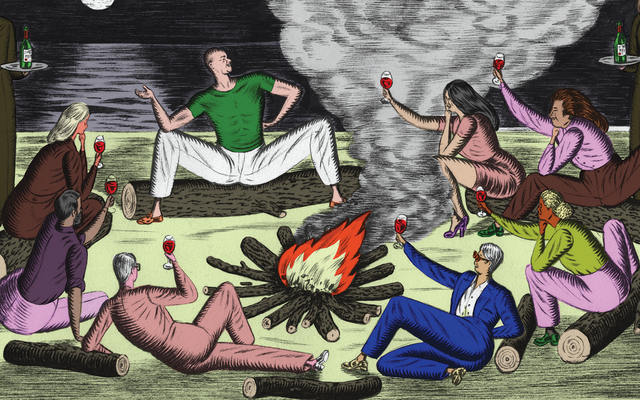
For the richest men on Earth, everything is free and nothing matters.
At the end of Paul Thomas Anderson’s 2007 movie, There Will Be Blood, Daniel Day-Lewis’s oil-baron character, old now and richer than Croesus, beats Paul Dano’s preacher to death with a bowling pin. Dano’s Eli Sunday, a nemesis of Day-Lewis’s Daniel Plainview during his seminal, wealth-building years, has come to sell Plainview the oil-rich land that he once coveted. But Plainview doesn’t need the land anymore, because—as he explains in one of the most famous monologues in modern cinema—he has sucked out all the oil hidden beneath it from an adjoining property, like a milkshake.
Desperate for money, Eli begs for a loan. Instead, Plainview chases him around a bowling alley and murders him with great enthusiasm. Once it’s over, a butler comes to see what all the noise was about. “I’m finished,” Plainview yells.
The economist Adam Posen on the effect of the war in Iran on the world’s economy and the darkening economic outlook for the United States. Plus: A shifting partisan balance of power and Ask Not: The Kennedys and the Women They Destroyed, by Maureen Callahan.
In this episode of The David Frum Show, The Atlantic’s David Frum opens with a discussion of the likelihood that the partisan balance of power will shift from Republicans to Democrats at state-government level.
Then, David is joined by the president of the Peterson Institute for International Economics, Adam Posen, for a conversation about the state of the world’s economy. Frum and Posen discuss the economic effect of the war in Iran, the United States’ reputational hit caused by Trump’s tariffs, and the chance of global recession.
Finally, David ends the episode with a discussion of Ask Not: The Kennedys and the Women They Destroyed, by Maureen Callahan, and reflects on why reactions to the abuse of women by men in power seem to have become a partisan issue.
This article was featured in the One Story to Read Today newsletter. Sign up for it here.
The mystery of the missing scientists began with a Silver Alert. In late February, a retired Air Force major general named Neil McCasland left his house in New Mexico for a walk and never returned. Rumors spread on social media that the elderly former astronautical engineer had been abducted or killed. Forget Nancy Guthrie, they said. Here was a guy who used to run a “UFO-linked” lab. Here was a guy with knowledge of “America’s deepest, darkest secrets.” So where was this guy?
McCasland’s wife did her best with a post on Facebook to address what she called the “misinformation circulating about Neil and his disappearance,” but wild notions only multiplied. Dots were added, then connected: Another scientist—an advanced-materials researcher at NASA’s Jet Propulsion Laboratory (JPL) named Monica Reza—had disappeared while hiking near Los Angeles in June 2025. A physicist at MIT had been murdered in December. “What is going on seems to be an enemy action,” Walter Kirn, the novelist and podcast contrarian, said last month.
Kash Patel has alarmed colleagues with episodes of excessive drinking and unexplained absences.
This article was featured in the One Story to Read Today newsletter. Sign up for it here.
On Friday, April 10, as FBI Director Kash Patel was preparing to leave work for the weekend, he struggled to log on to an internal computer system. He quickly became convinced that he had been locked out, and he panicked, frantically calling aides and allies to announce that he had been fired by the White House, according to nine people familiar with his outreach. Two of these people described his behavior as a “freak-out.”
Patel oversees an agency that employs roughly 38,000 people, including many who are trained to investigate and verify information that can be presented under oath in a court of law. News of his emotional outburst ricocheted through the bureau, prompting chatter among officials and, in some corners of the building, expressions of relief. The White House fielded calls from the bureau and from members of Congress asking who was now in charge of the FBI.
The people we were died at the exact moment our child did.
This article was featured in the One Story to Read Today newsletter. Sign up for it here.
My husband, David, hates Valentine’s Day. He once called it “New Year’s Eve with nuclear weapons.” I pretend not to care. Still, when the day passes entirely unremarked on, a woman can’t help but feel overlooked.
On Valentine’s Day 2024, David found a way out. He booked a speech on February 14 that required traveling from our home in Washington, D.C., to Toronto. I couldn’t object—he was getting paid. Anyway, I had my own plans: an “anti–Valentine’s Day” dinner hosted by one of the foreign embassies.
As I got ready, I called our oldest daughter, Miranda. She answered from her Brooklyn bathroom, getting ready for her own party. She propped her phone up beside her sink and laughed when I told her about her father’s strategic Valentine’s Day escape.
Republicans seem to have expected that Democrats would continue to follow rules they had long since enthusiastically abandoned.
Voters in Virginia approved a lopsided congressional map on Tuesday, reducing the expected number of Republican-leaning districts in the Democratic-controlled state from five to one. Republicans have reacted by complaining that conservative-leaning voters in the state have been disenfranchised by gerrymandered maps that reduce the influence of their vote.
And they’re right. That is exactly what the new Virginia map does.
Gerrymandering is an attempt to thwart the will of the voters. It circumvents the vital process of democratic feedback by insulating politicians from political backlash. It should not happen, and yet this latest chapter of the redistricting wars did not begin in Virginia. It did not even begin last year, when Donald Trump openly urged red states to gerrymander their congressional maps so Republicans might retain possession of the House during the midterms. He did so despite the fact that the maps had been drawn after the 2020 census and would normally be expected to last until 2030.
Each is animated by the author’s love—for their subject, for language, and for pushing the boundaries of what the genre can do.
Literary biography is a cruel genre. The authors of these books—by which I mean not just biographies about literary figures but also those that aspire to writerly excellence—have been described by the writer Janet Malcolm as “professional burglars.” After rifling through a person’s affairs, they must conjure inside their pages a living, breathing human being—and then, inevitably, they’ll have to close the coffin on their resurrected subject. But I like to think the “literary” element can temper the sting of these dastardly deeds, insofar as the author is tasked with perpetrating them in the most humane way possible: with the appropriate amount of reverence, style, and, yes, love. This is, at least, what I tried to do in my own literary biography, Baldwin: A Love Story, about James Baldwin’s life and relationships.
Politicians who think health-conscious women could swing the midterms are fooling themselves.
Earlier this month, MAHA moms went to the White House. Several key figures in the “Make America Healthy Again” movement gathered around a table in the Roosevelt Room to speak with Health Secretary Robert F. Kennedy Jr. and other top administration officials. The invitees—who included the health activist Kelly Ryerson, the wellness podcaster Alex Clark, and the nutritionist Courtney Swan—were all women. They’re influential among the loose coalition of Kennedy supporters known as MAHA moms, many of whom are worried about their children’s health. This was a chance for them to air their grievances with the Trump administration—which have grown in recent months. Afterward, they were ushered into the Oval Office to see President Trump, who, according to Ryerson, welcomed them as “my MAHA leaders.”