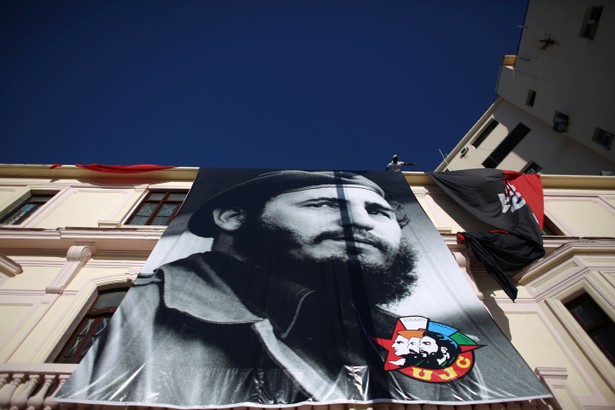
Former Cuban President Fidel Castro is dead, Raul Castro, his brother and the country’s current president, announced early this morning on state television. Fidel Castro was 90.
Castro and his band of rebels toppled Fulgencio Batista, the dictator, in 1959, soon declared the revolution was communist, and spent the next several decades as a thorn on the side of the United States—just 90 miles from Florida. In the process, Castro, who stepped down from the presidency in 2006, outlasted 10 American presidents and almost outlasted an eleventh.
A hero to his supporters and to leftist movements around the world, Castro was nonetheless sharply criticized for his country’s dismal human-rights record. He was, as my colleague Jeffrey Goldberg wrote this morning, the last Cold Warrior. Jeff interviewed Castro in 2010 and his reporting of those conversations resulted in several revelations of Castro’s worldview—and his regrets. You can read those conversations here, here, here, and here—and a collection of Atlantic writings assessing Castro and his legacy here.
Donald Trump Says He Will 'Terminate' Cuba Deal Unless Revisions Are Made
(Joe Skipper / Reuters)
President-elect Donald Trump said Monday that he will “terminate” the deal with Cuba unless the Cuban government makes it “a better deal for the Cuban people, the Cuban/American people and the U.S. as a whole.” Trump had previously not said if he would revisit the historic 2015 agreement that normalized relations between the two Cold War-era rivals. It’s unclear what Trump deems a “better deal” or whether the American companies flocking to Cuba in the aftermath of the normalization will support such a move.
If Cuba is unwilling to make a better deal for the Cuban people, the Cuban/American people and the U.S. as a whole, I will terminate deal.
Fidel Castro’s long life spanned more than half of The Atlantic’s existence to date. Our first reference to the former Cuban president is unclear, but by 1969, contributor Emma Rothschild had journeyed to Havana to witness the revolution Castro had brought into being.
What she found was a city transformed under his rule. “The city streets are as clean as any in the world: ten minutes after Fidel spoke, the Plaza was filled with garbage men, sweeping and scrubbing the stones,” she wrote. “There are no police patrols: only the traffic cops, young girls in khaki miniskirts with sheriff's stars and cowboy boots.”
Of Castro and Cuba more broadly, Rothschild focused on the Caribbean nation’s efforts to be economically self-sufficient—an elusive goal for a nation that survived on large Soviet subsidies. But Rothschild was optimistic, impressed by the island’s revolutionary spirit and the fervor of its self-proclaimed liberator.
In the first decade of the Cuban Revolution, the old Cuba died; in the second, it is to be born again, to grow again like sugar in a field. The unspoken dialectic of Fidel's speech places nationalism and revolution side by side, and synthesizes them, through agricultural development, in the Cuban earth. Castro's language is heavy with an accretion of detail and anecdote, sounding at times like the Georgics of Virgil. "Once droughts have been overcome," he began, "once hurricanes have been coped with through the proper protection of crops; once plagues are eliminated and undergrowth cleared . . ." After ten years of stumbling progress, the country has experienced bitter deprivation. In Havana, strict rationing is now in effect; even the hours to be spent waiting in line for food are rationed. Yet the path of revolutionary development now seems determined. Cuba is to be an agricultural community, the garden of the world.
Those lofty goals did not come to pass. When contributor Stephen Kinzer visited the island in 1977, Cuba’s agricultural revolution had faltered. International prices for sugarcane, one of the country’s most important crops, had plunged. Economic malaise followed. What struck Kinzer was Castro’s ability to bring about large-scale structural changes in the Cuban command economy without dampening his revolutionary rhetoric.
The achievements of the Cuban revolution are familiar. No country in Latin America can yet match Cuba's accomplishments in housing, education, literacy, or health care. But less visible are the sacrifices the Cuban people have made for what they have built. In preparing for austerity, Cubans are not facing something unknown, but continuing a cycle of enforced sacrifice which has existed since the first days of the Castro era. Among his other talents, Castro is a master propagandist, and he has managed a feat that eludes most leaders: he has convinced his people that personal sacrifice is a patriotic duty.
In 1988, The Atlantic published “Havana’s Military Machine,” a dense survey of Cuba’s bloated military structure. By deploying battalions of Cuban doctors, soldiers, and advisors to Cold War hotspots throughout the Third World, Castro had carved out for himself an outsized role in international affairs. But, as John Hoyt Williams noted, those deployments did not come without social, political, and economic ramifications.
Castro's regiments saw only sporadic combat from 1977 to 1983, but their number continued to grow, stabilizing at 30,000-35,000 men and then swelling to 45,000, the level maintained today. In 1983 the majority of the Cuban combat units were encamped around Luanda, the capital; those in the field, however, were handled roughly by Savimbi, and in 1984 several thousand men died in large-scale clashes with the rebels. Since those bloody encounters, and owing in part to falling morale among MPLA conscripts, reportedly the Cuban military is beginning to replace Angolan military units in the battlefields of the south. Unfortunately for Cuba's minuscule (and declining) hard-currency reserves, the war-ravaged economy of Angola is drying up as a source of income. Some 3,000 East Germans and 1,500 Russians are also in Angola, but these men run the railroads, manage the economic infrastructure, and advise the Angolan Army and security forces. The Cubans do the fighting and the dying.
A number of elements have recently led to disillusionment within Cuba regarding the Angolan venture. One of these is race. Roughly 50 percent of the Cubans serving in Angola are blacks. Is this because almost all Angolans are black? Some Cubans wonder. So do some outsiders. The former Black Panther leader Eldridge Cleaver, who spent time in Cuba as a fugitive, wrote despairingly as far back as 1976 that Castro had long displayed a habit of "shipping out to foreign wars the militant young black officers as a safety valve on the domestic scene," asserting that "as Africa runs out of wars of liberation, Fidel Castro runs out of dumping grounds" for his nation's large black minority. Even Cleaver, however, did not foresee that Castro would find a continuing, counterrevolutionary employment for his legions.
Even after the Cold War ended a few years later, Castro’s reputation as a staunch anti-imperialist endured. A central feature of the mythos surrounding him was his escape from countless assassination plots hatched by U.S. intelligence officials. In 2004, Max Holland explored how President Lyndon B. Johnson learned about the truth behind the CIA’s attempts, and how they shaped both his presidency and his views on JFK’s assassination.
Spurred on by the column, [Attorney General] Ramsey Clark finally did what Johnson had suggested during their conversation on February 20: he asked the FBI what it knew about the matter. On March 6 the FBI prepared what is surely one of the most astonishing memoranda in its history. The heading alone was enough to set hearts palpitating at the CIA: "Central Intelligence Agency's Intentions to Send Hoodlums to Cuba to Assassinate Castro." The FBI knew far less than it thought it did about the covert operation, but its information was reliable on three vital points: the CIA did try to have Castro assassinated during the early 1960s; it employed members of the Cosa Nostra in this effort; and Attorney General Robert Kennedy knew about both the plots and the mob's involvement. Before receiving this memo, Johnson had dismissed the rumor as no more credible than the idea that his wife was on drugs. Now he had to grapple with the implications of the revelation and what he should do about it, if anything.”
Castro had his own theories about the JFK assassination. In 2010, he read national correspondent Jeffrey Goldberg’s cover story about Iran, Israel, and the dangers of a nuclear war with the U.S. in the Middle East and invited Goldberg to visit him in Havana. There, they discussed a multitude of issues—including Castro’s suspicion that Lee Harvey Oswald had not killed the American president.
Fidel told us at lunch—as he would—that none of his associates or officials had anything to do with the assassination, and that the Cuban embassy in Mexico City, which Oswald had visited, denied him permission to visit Cuba, fearing that he was a provocateur.
I asked Fidel why he thought Oswald could not have acted alone. He proceeded to tell the table a long and discursive story about an experiment he staged, after the assassination, to see if it were possible for a sniper to shoot Kennedy in the manner the assassination was alleged to have happened. “We had trained our people in the mountains during the war”—the Cuban revolution—“on these kind of telescopic sights. So we knew about this kind of shooting. We tried to recreate the circumstances of this shooting, but it wasn’t possible for one man to do. The news I had received is that one man killed Kennedy in his car with a rifle, but I deducted that this story was manufactured to fool people.”
He said his suspicions grew especially pronounced after Oswald was killed. “There was the story of Jack Ruby, who was said to be so moved by the death of Kennedy that he decided to shoot Oswald on his own. That was just unbelievable to us.”
That was only part of a much larger conversation—the only one Castro ever granted to an Atlantic correspondent—about world affairs. During his discussion with Goldberg, the aging former dictator said he regretted asking Soviet premier Nikita Khrushchev to attack the United States during the Cuban Missile Crisis. He denounced anti-Semitism and its frequent expression by Iran’s then-President Mahmoud Ahmadinejad. And then he made a surprising remark about the viability of Cuba’s economic system.
I initially was mainly interested in watching Fidel eat - it was a combination of digestive problems that conspired to nearly kill him, and so I thought I would do a bit of gastrointestinal Kremlinology and keep a careful eye on what he took in (for the record, he ingested small amounts of fish and salad, and quite a bit of bread dipped in olive oil, as well as a glass of red wine). But during the generally lighthearted conversation (we had just spent three hours talking about Iran and the Middle East), I asked him if he believed the Cuban model was still something worth exporting.
"The Cuban model doesn't even work for us anymore," he said.
This struck me as the mother of all Emily Litella moments. Did the leader of the Revolution just say, in essence, "Never mind"?
I asked Julia to interpret this stunning statement for me. She said, "He wasn't rejecting the ideas of the Revolution. I took it to be an acknowledgment that under 'the Cuban model' the state has much too big a role in the economic life of the country."
A few days after Goldberg published the comment, Castro claimed the correspondent had misunderstood him and argued he instead meant “exactly the opposite,” which doesn’t make sense. In his obituary for Castro on Saturday, Goldberg argued Castro had likely wrestled with this fundamental question for most of his adult life.
But the point that he has tried to make for more than half-a-century—that the Cuban people are in better shape than the American people—always struck me as a reach. Assessed a certain way, Cuba’s achievements in health, in particular, can look impressive. But his state never stopped oppressing its own people. It still does, under his brother’s rule. But the Cuban model will not last forever, and this is what Fidel, in his final years, worried about the most.
Former Cuban President Fidel Castro’s death Saturday evoked a broad range of emotions from political leaders around the world. Here’s a general breakdown of their reactions.
Laudatory
Mexican President Enrique Pena Nieto: “I lament the passing of Fidel Castro Ruz, leader of the Cuban revolution and emblem of the 20th century.
Lamento el fallecimiento de Fidel Castro Ruz, líder de la Revolución cubana y referente emblemático del siglo XX.
Venezuelan President Nicolas Maduro: “To all the revolutionaries of the world, we muar continue his legacy and his flag of independence, socialism, and homeland.”
A tod@s l@s Revolucionari@s del Mundo nos toca seguir con su Legado y su Bandera de Independencia,de Socialismo,de Patria Humana...
The death of #Fidel signals the end of an era. Our comrade is no more but his revolutionary legacy will remain with Namibia forever. pic.twitter.com/VX6v4AjQbw
It is with deep sorrow that I learned today of the death of Cuba’s longest serving President.
Fidel Castro was a larger than life leader who served his people for almost half a century. A legendary revolutionary and orator, Mr. Castro made significant improvements to the education and healthcare of his island nation.
While a controversial figure, both Mr. Castro’s supporters and detractors recognized his tremendous dedication and love for the Cuban people who had a deep and lasting affection for “el Comandante”.
I know my father was very proud to call him a friend and I had the opportunity to meet Fidel when my father passed away. It was also a real honour to meet his three sons and his brother President Raúl Castro during my recent visit to Cuba.
On behalf of all Canadians, Sophie and I offer our deepest condolences to the family, friends and many, many supporters of Mr. Castro. We join the people of Cuba today in mourning the loss of this remarkable leader.
Russian President Vladimir Putin: “The name of this distinguished statesman is rightly considered the symbol of an era in modern world history. Fidel Castro was a sincere and reliable friend of Russia.”
Northern Ireland Deputy First Minister Martin McGuinness:
At this time of Fidel Castro’s passing, we extend a hand of friendship to the Cuban people. We know that this moment fills Cubans - in Cuba and in the United States - with powerful emotions, recalling the countless ways in which Fidel Castro altered the course of individual lives, families, and of the Cuban nation. History will record and judge the enormous impact of this singular figure on the people and world around him.
For nearly six decades, the relationship between the United States and Cuba was marked by discord and profound political disagreements. During my presidency, we have worked hard to put the past behind us, pursuing a future in which the relationship between our two countries is defined not by our differences but by the many things that we share as neighbors and friends - bonds of family, culture, commerce, and common humanity. This engagement includes the contributions of Cuban Americans, who have done so much for our country and who care deeply about their loved ones in Cuba.
Today, we offer condolences to Fidel Castro’s family, and our thoughts and prayers are with the Cuban people. In the days ahead, they will recall the past and also look to the future. As they do, the Cuban people must know that they have a friend and partner in the United States of America.
British Foreign Secretary Boris Johnson:
Fidel #Castro's death marks the end of an era for #Cuba & the start of a new one for Cuba's people
President Fidel Castro will be remembered for his leadership of the Cuban revolution and for advances in Cuba in the fields of education, literacy and health. His revolutionary ideals left few indifferent. He was a strong voice for social justice in global discussions at the UN General Assembly and international and regional forums.
Condemnatory
Vice President-elect Mike Pence:
The tyrant #Castro is dead. New hope dawns. We will stand with the oppressed Cuban people for a free and democratic Cuba. Viva Cuba Libre!
Trump: 'Fidel Castro's Legacy Is One of Firing Squads'
Mike Segar / Reuters
Following his brief remark on Twitter this morning, President-elect Donald Trump released a lengthier statement Saturday afternoon in which he sharply condemned Castro’s human-rights record and said he looks forward to helping Cubans “begin their journey toward prosperity and liberty.”
Today, the world marks the passing of a brutal dictator who oppressed his own people for nearly six decades. Fidel Castro’s legacy is one of firing squads, theft, unimaginable suffering, poverty and the denial of fundamental human rights.
While Cuba remains a totalitarian island, it is my hope that today marks a move away from the horrors endured for too long, and toward a future in which the wonderful Cuban people finally live in the freedom they so richly deserve.
Though the tragedies, deaths and pain caused by Fidel Castro cannot be erased, our administration will do all it can to ensure the Cuban people can finally begin their journey toward prosperity and liberty. I join the many Cuban Americans who supported me so greatly in the presidential campaign, including the Brigade 2506 Veterans Association that endorsed me, with the hope of one day soon seeing a free Cuba.
Obama: 'We Extend a Hand of Friendship to the Cuban People'
President Obama and Cuban President Raul Castro attend a baseball game in Cuba in March. (Carlos Barria / Reuters)
President Obama just released a measured statement on Fidel Castro’s death, noting the former Cuban leader’s broad impact on history while also extending “a hand of friendship” to the Cuban people as a whole.
Interestingly, the statement falls short of condemning Castro outright for his human-rights record, perhaps to preserve Obama’s diplomatic gains with Fidel’s brother Raul, or perhaps to deny Fidel the posthumous pleasure of a sitting U.S. president’s outrage.
At this time of Fidel Castro’s passing, we extend a hand of friendship to the Cuban people. We know that this moment fills Cubans - in Cuba and in the United States - with powerful emotions, recalling the countless ways in which Fidel Castro altered the course of individual lives, families, and of the Cuban nation. History will record and judge the enormous impact of this singular figure on the people and world around him.
For nearly six decades, the relationship between the United States and Cuba was marked by discord and profound political disagreements. During my presidency, we have worked hard to put the past behind us, pursuing a future in which the relationship between our two countries is defined not by our differences but by the many things that we share as neighbors and friends - bonds of family, culture, commerce, and common humanity. This engagement includes the contributions of Cuban Americans, who have done so much for our country and who care deeply about their loved ones in Cuba.
Today, we offer condolences to Fidel Castro’s family, and our thoughts and prayers are with the Cuban people. In the days ahead, they will recall the past and also look to the future. As they do, the Cuban people must know that they have a friend and partner in the United States of America.
Cubans in Miami rejoiced at the news that Fidel Castro’s death. Many Cubans left the island soon after the revolution; others came during the infamous Mariel Boatlift. Their numbers have steadily risen since the 1959 revolution that brought Castro to power. Although numerous polls show younger Cubans in Miami care little for the resentments their Cuban-born parents harbor toward Castro, there were several spontaneous celebrations when news of Castro’s death emerged.
Reaction from world leaders to Fidel Castro’s death was swift. President-Elect Donald Trump said: “Fidel Castro is dead!” Canadian Prime Minister Justin Trudeau called Castro a “remarkable leader.” Chinese President Xi Jinping said China had lost “an intimate and sincere friend,” and Mexican President Enrique Peña Nieto said the Cuban leader promoted bilateral relationships based on “respect, dialogue and solidarity.” Narendra Modi, India’s prime minister, said his country “mourns the loss of a great friend.”
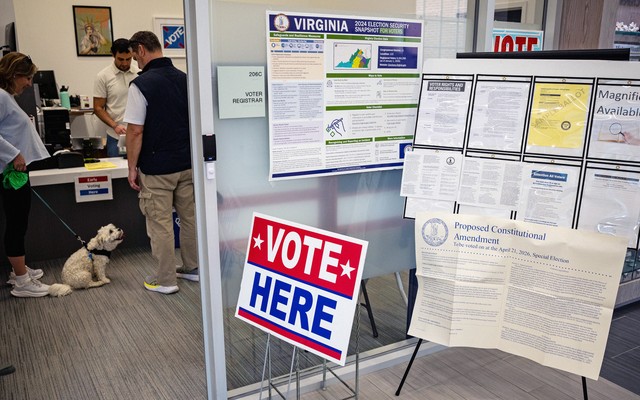
When President Trump last summer implored Republicans to launch a nationwide gerrymandering blitz to pad their narrow House majority, the fight he started did not seem fair. GOP lawmakers had both the will and the power to draw their party new seats, while Democrats were hamstrung by limits of their own making. The question was not whether Republicans could expand their edge in Congress, but by how much.
This morning the landscape looks a lot different, after Virginia voters yesterday approved a lopsided new House map that could hand Democrats an additional four seats that Republicans currently hold. The Democratic redistricting victory is the party’s second in a statewide referendum. When combined with new lines that California voters endorsed in November, Democrats have now succeeded in drawing districts that will likely yield them nine more seats this fall, at least matching what Republicans have been able to achieve in states that they control. By some measures, Democrats have jumped into the redistricting lead, bolstering their chances of winning back the House majority in the midterm elections.
Patients are getting stuck in the emergency department for days while waiting for a spot in an inpatient ward.
In the last months, weeks, and days of his life, “I will not go to the emergency room” became my husband’s mantra. Andrej had esophageal cancer that had spread throughout his body (but not to his ever-willful brain), and, having trained as a doctor, I had jury-rigged a hospital at home, aided by specialists who got me pills to boost blood pressure; to dampen the effects of liver failure; to stem his cough; to help him swallow, wake up, fall asleep.
“I will not go to the emergency room”—emphasis on not—were his first words after passing out, having a seizure, or regurgitating the protein smoothies I made to pass his narrowed esophagus. He said it again and again, even as fluid built up in his lungs, rendering him short of breath and prone to agonizing coughing spells. He had been a big, athletic guy, but now, in the ugly process of dying, he was looking gaunt. Ours was a precarious existence, but I understood his adamant rejection of the emergency department. Most prior visits had morphed into extended trips into a terrifying medical underworld—to a purgatory known as emergency-department boarding.
For the richest men on Earth, everything is free and nothing matters.
At the end of Paul Thomas Anderson’s 2007 movie, There Will Be Blood, Daniel Day-Lewis’s oil-baron character, old now and richer than Croesus, beats Paul Dano’s preacher to death with a bowling pin. Dano’s Eli Sunday, a nemesis of Day-Lewis’s Daniel Plainview during his seminal, wealth-building years, has come to sell Plainview the oil-rich land that he once coveted. But Plainview doesn’t need the land anymore, because—as he explains in one of the most famous monologues in modern cinema—he has sucked out all the oil hidden beneath it from an adjoining property, like a milkshake.
Desperate for money, Eli begs for a loan. Instead, Plainview chases him around a bowling alley and murders him with great enthusiasm. Once it’s over, a butler comes to see what all the noise was about. “I’m finished,” Plainview yells.
The economist Adam Posen on the effect of the war in Iran on the world’s economy and the darkening economic outlook for the United States. Plus: A shifting partisan balance of power and Ask Not: The Kennedys and the Women They Destroyed, by Maureen Callahan.
In this episode of The David Frum Show, The Atlantic’s David Frum opens with a discussion of the likelihood that the partisan balance of power will shift from Republicans to Democrats at state-government level.
Then, David is joined by the president of the Peterson Institute for International Economics, Adam Posen, for a conversation about the state of the world’s economy. Frum and Posen discuss the economic effect of the war in Iran, the United States’ reputational hit caused by Trump’s tariffs, and the chance of global recession.
Finally, David ends the episode with a discussion of Ask Not: The Kennedys and the Women They Destroyed, by Maureen Callahan, and reflects on why reactions to the abuse of women by men in power seem to have become a partisan issue.
This article was featured in the One Story to Read Today newsletter. Sign up for it here.
The mystery of the missing scientists began with a Silver Alert. In late February, a retired Air Force major general named Neil McCasland left his house in New Mexico for a walk and never returned. Rumors spread on social media that the elderly former astronautical engineer had been abducted or killed. Forget Nancy Guthrie, they said. Here was a guy who used to run a “UFO-linked” lab. Here was a guy with knowledge of “America’s deepest, darkest secrets.” So where was this guy?
McCasland’s wife did her best with a post on Facebook to address what she called the “misinformation circulating about Neil and his disappearance,” but wild notions only multiplied. Dots were added, then connected: Another scientist—an advanced-materials researcher at NASA’s Jet Propulsion Laboratory (JPL) named Monica Reza—had disappeared while hiking near Los Angeles in June 2025. A physicist at MIT had been murdered in December. “What is going on seems to be an enemy action,” Walter Kirn, the novelist and podcast contrarian, said last month.
Kash Patel has alarmed colleagues with episodes of excessive drinking and unexplained absences.
This article was featured in the One Story to Read Today newsletter. Sign up for it here.
On Friday, April 10, as FBI Director Kash Patel was preparing to leave work for the weekend, he struggled to log on to an internal computer system. He quickly became convinced that he had been locked out, and he panicked, frantically calling aides and allies to announce that he had been fired by the White House, according to nine people familiar with his outreach. Two of these people described his behavior as a “freak-out.”
Patel oversees an agency that employs roughly 38,000 people, including many who are trained to investigate and verify information that can be presented under oath in a court of law. News of his emotional outburst ricocheted through the bureau, prompting chatter among officials and, in some corners of the building, expressions of relief. The White House fielded calls from the bureau and from members of Congress asking who was now in charge of the FBI.
Republicans seem to have expected that Democrats would continue to follow rules they had long since enthusiastically abandoned.
Voters in Virginia approved a lopsided congressional map on Tuesday, reducing the expected number of Republican-leaning districts in the Democratic-controlled state from five to one. Republicans have reacted by complaining that conservative-leaning voters in the state have been disenfranchised by gerrymandered maps that reduce the influence of their vote.
And they’re right. That is exactly what the new Virginia map does.
Gerrymandering is an attempt to thwart the will of the voters. It circumvents the vital process of democratic feedback by insulating politicians from political backlash. It should not happen, and yet this latest chapter of the redistricting wars did not begin in Virginia. It did not even begin last year, when Donald Trump openly urged red states to gerrymander their congressional maps so Republicans might retain possession of the House during the midterms. He did so despite the fact that the maps had been drawn after the 2020 census and would normally be expected to last until 2030.
Each is animated by the author’s love—for their subject, for language, and for pushing the boundaries of what the genre can do.
Literary biography is a cruel genre. The authors of these books—by which I mean not just biographies about literary figures but also those that aspire to writerly excellence—have been described by the writer Janet Malcolm as “professional burglars.” After rifling through a person’s affairs, they must conjure inside their pages a living, breathing human being—and then, inevitably, they’ll have to close the coffin on their resurrected subject. But I like to think the “literary” element can temper the sting of these dastardly deeds, insofar as the author is tasked with perpetrating them in the most humane way possible: with the appropriate amount of reverence, style, and, yes, love. This is, at least, what I tried to do in my own literary biography, Baldwin: A Love Story, about James Baldwin’s life and relationships.
The people we were died at the exact moment our child did.
This article was featured in the One Story to Read Today newsletter. Sign up for it here.
My husband, David, hates Valentine’s Day. He once called it “New Year’s Eve with nuclear weapons.” I pretend not to care. Still, when the day passes entirely unremarked on, a woman can’t help but feel overlooked.
On Valentine’s Day 2024, David found a way out. He booked a speech on February 14 that required traveling from our home in Washington, D.C., to Toronto. I couldn’t object—he was getting paid. Anyway, I had my own plans: an “anti–Valentine’s Day” dinner hosted by one of the foreign embassies.
As I got ready, I called our oldest daughter, Miranda. She answered from her Brooklyn bathroom, getting ready for her own party. She propped her phone up beside her sink and laughed when I told her about her father’s strategic Valentine’s Day escape.
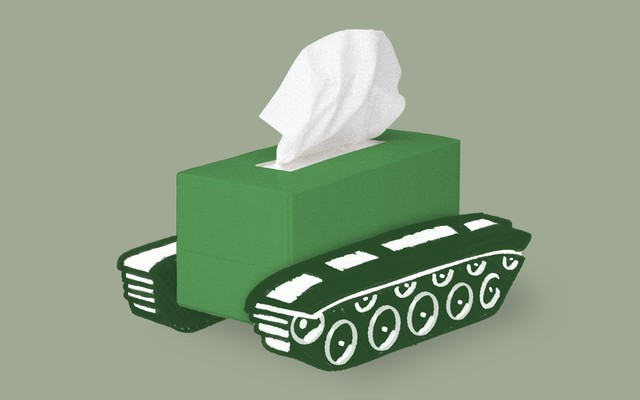
WAR-FIGHTERS! As a step to making sure we are ready for warfare at all times, we have decided to ELIMINATE THE MANDATORY FLU SHOT! Nothing says “we are ready for war” like “we all have the flu.”
Get your hot-water bottles! Get your ibuprofen! Not Tylenol, though! It knows what it did. Because we are bringing FLU to the war-fighters! Are you ready to have a RUNNY NOSE and an ITCHY THROAT? Are you ready to get REALLY SERIOUSLY DEHYDRATED AND NEED MEDICAL ATTENTION? Hoo-RAH!
We will terrify the enemy by coming in hot! And when I say hot I mean our temperatures! We will need COUGH DROPS, and we will knock those back, CRUNCH CRUNCH CRUNCH, with a sound more frightening than gunfire. This will strike fear into the hearts of the enemy. They will say things like “Do you need a tissue?” and “Are you okay?,” and when they are offering us that tissue, we will strike. And then we will go back to bed and lie under a tactical pile of war-fighting blankets. Peak performance is when you have a terrible headache and want to be asleep, and whenever you open your mouth you sound like someone took lawn shears to your vocal cords. YEAH!