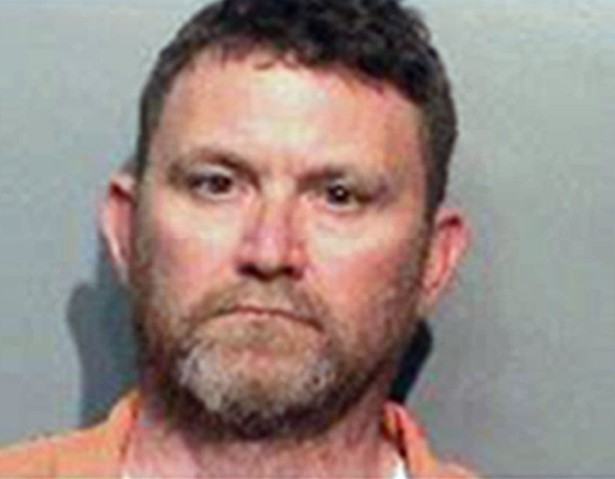
Scott Michael Greene, the suspect in the shootings
Des Moines Police Department / AP
What we know:
—Police arrested Scott Michael Greene, a 46-year-old white man, in connection with the fatal shootings on Wednesday of two Des Moines-area officers. He was detained west of Des Moines without incident and charged Thursday.
—The officers—one from Urbandale, Iowa, and the other from Des Moines—were shot 20 minutes apart early Wednesday. Both were in their patrol cars. Police said they were killed in an “ambush-style attack.” They were identified as Anthony “Tony” Beminio and Justin Martin.
The Des Moines Register and other news organizations are reporting that Scott Michael Greene was charged Thursday with two counts of first-degree murder in the killings of Urbandale, Iowa, Police Officer Justin Martin and Des Moines Police Sergeant Anthony Beminio.
“The investigation has produced probable cause to support these charges,” according to a news release quoted by the Register.
Greene, who is being held at the Polk County Jail, could face life in prison if convicted of the charges.
President Obama paid tribute to the two Iowa police officers who were killed early Wednesday, saying they “represented our best, most decent instincts as human beings—to serve our neighbors, to put ourselves in harm’s way for someone else.”
The president praised officers across the country for their service to communities and risking their lives in the line of duty. He said in part:
All across the country, our police officers go to work each day not knowing whether they’ll come home at night. Their families live each day with the same fears. So as Americans, we owe them our respect and gratitude for their efforts to safeguard our families and our communities. And so as we once again mourn American police officers lost in the line of duty, we must also renew the call to match that same sense of service, that same devotion within our own lives and our own communities.
Obama, who has spent a good deal of time in Iowa in the last eight years on the campaign trail, also praised the community with how they handled the tragedy Wednesday, saying residents of Des Moines and Urbandale are “good, big-hearted people who look out for each other and are willing to come together across our differences.”
It is unclear whether the president will visit Des Moines in the wake of the shooting.
The Des Moines officer killed was Sergeant Anthony “Tony” Beminio, Sergeant Paul Parizek, the spokesman for the Des Moines Police Department, said at a news conference. He was “a great guy,” Parizek said. “It’s real hard” to lose him. Deminio had been with the department since 2005, he said. He was promoted last year.
The Urbandale officer was identified as Justin Martin, who joined the department in 2015. Both officers are white, as was the suspected shooter.
Parizek added that authorities did not know whether the videos posted on YouTube are a “relevant piece to our investigation.” He said he couldn’t confirm whether the man in the video was Scott Michael Greene.
Greene flagged down officers, presented his ID, and asked police to call 911, Parizek said. Greene was arrested without incident, he said.
In a statement, the attorney general said “the Department of Justice has offered any and all assistance to our state and local counterparts as they investigate these appalling attacks.”
She added:
I know that this is a time of particular tension and mistrust between law enforcement and many communities. I know that while we do not yet know what led the perpetrator to commit these awful crimes, many will be nevertheless be tempted to read a message or motive into this assault. But let me be clear: there is no message in murder. Violence creates nothing; it only destroys. And the path to the more just and peaceful society that we desire for ourselves and for our children is paved not with hatred and malice, but with compassion, and understanding, and the hard work of cooperation. Let those be our watchwords in the days to come.
The suspected shooter was first arrested for a misdemeanor in 2014 that came from an incident where he resisted arrest by two officers trying to pat him down for weapons at an apartment complex in Urbandale, The Des Moines Registerreported. Officers called Greene, who is 46 years old, noncompliant, hostile, and combative in that instance. He would later plead guilty.
Two days after that arrest, officers responded to a call saying Greene had threatened to kill a man in the parking lot of the same complex and he was charged with first-degree harassment. The Register reported Greene was accused of shining a flashlight in the man’s eyes, calling him a racist epithet, and then saying, “I will kill you.” Greene pleaded guilty to a lesser charge, and received a sentence of one year of probation.
A YouTube video posted two weeks ago to an account named “Scott Greene,” and titled “Police Abuse, Civil Rights Violation at Urbandale High School 10/14/16” shows an unpictured man arguing with several officers. The police ask the man to leave the property, saying he was “causing disturbance in the stands.” The video has not been confirmed, but is being investigated by Urbandale police. In another video on the same account, this one posted last week, a man resembling Greene holds a Confederate flag in front of people seated on bleachers. Urbandale High School's football stadium is located near the intersection where one officer was found dead Wednesday, the Register reported. Law-enforcement have not said if the videos were posted by the man arrested for the fatal shootings on Wednesday.
Police arrested Scott Michael Greene in connection with the fatal shootings of the two officers, the Des Moines Registerquoted Sergeant Chad Underwood, a spokesman for the Urbandale Police Department, as saying.
Other news organizations are also reporting the arrest.
The New York Timesquoted Sergeant Paul Parizek, the spokesman for the Des Moines Police Department, as saying Greene was on foot when he was taken into custody in Dallas County, Iowa. He offered no resistance, Parizek said.
Wednesday’s killings in Des Moines comes just months after Micah X. Jones, an Army veteran angry at the police’s treatment of African Americans, killed five police officers on July 7 in Dallas.
Then on July 17, Gavin Long, a self-described black separatist, killed three officers in Baton Rouge, Louisiana.
The National Law Enforcement Officers Memorial Fund noted that 14 officers were killed in ambushes in the first six months of 2016. Three officers were killed in that manner in the same period in 2015. The percentage increase: 300 percent.
The suspect has been identified as Scott Michael Greene, a 46-year-old white man. He has not been apprehended.
Greene is 46 years old, 5 feet 11 inches tall, and weighs about 180 pounds, police said. He has brown hair and green eyes.
Greene was last known to be driving a blue 2011 Ford F-150 with Iowa license plate 780 YFR. Police said that the truck has a silver-colored topper with a ladder rack.
The Urbandale officer was killed at the intersection of 70th Street and Aurora Avenue at about 1:06 a.m. CT, police said. About 20 minutes later, a Des Moines police officer, responding to the scene where the first officer was shot, was killed near the intersection of Merle Hay Road and Sheridan Avenue.
Both officers were killed in their patrol cars.
“The shootings appear to have been ambush-style attacks,” the Urbandale police said in a statement.
A statement from Des Moines Public Schools said the Urbandale school district has cancelled classes Wednesday because the shootings occurred near Urbandale High School.
Classes in Des Moines are not being cancelled, but the city’s public schools “will be in close contact with the Des Moines Police Department throughout the day, and will take any additional precautions if needed.”
Urbandale, a community of about 40,000 people, is part of the Des Moines area. It’s police department confirmed that one of its officers was killed overnight:
UPD is saddened to report that an Urbandale Officer was killed in the line of duty overnight. Updates will be posted as available. pic.twitter.com/oGTvaAfjxZ
For Des Moines, this is the first police officer shot and killed in the line of duty since two officers were gunned down in separate incidents in 1977.
Two Des Moines officers, Susan Farrell and Carlos Puente-Morales, also died earlier this year when their vehicle was struck head-on by a wrong-way drunken driver.
This is likely the first Urbandale officer shot in the line of duty, Urbandale Police spokesman Sgt. Chad Underwood said at the press conference.
Ben Hammes, a spokesman for for Governor Terry Branstad and Lieutenant Governor Kim Reynolds, said:
The governor and lt. governor have been alerted to the attacks on law enforcement this morning. Shortly after the shootings, our office was briefed by the Department of Public Safety (DPS) on the shootings. DPS is working hand in hand with local law enforcement in the investigation. We will continue monitoring and working with law enforcement in the interest of public safety.
An attack on public safety officers is an attack on the public safety of all Iowans. We call on Iowans to support our law enforcement officials in bringing this suspect to justice. Our thoughts and prayers go out to the families of the police officers who were tragically killed in the line of duty as well as the officers who continue to put themselves in harm’s way.
Kash Patel has alarmed colleagues with episodes of excessive drinking and unexplained absences.
On Friday, April 10, as FBI Director Kash Patel was preparing to leave work for the weekend, he struggled to log into an internal computer system. He quickly became convinced that he had been locked out, and he panicked, frantically calling aides and allies to announce that he had been fired by the White House, according to nine people familiar with his outreach. Two of these people described his behavior as a “freak-out.”
Patel oversees an agency that employs roughly 38,000 people, including many who are trained to investigate and verify information that can be presented under oath in a court of law. News of his emotional outburst ricocheted through the bureau, prompting chatter among officials and, in some corners of the building, expressions of relief. The White House fielded calls from the bureau and from members of Congress asking who was now in charge of the FBI.
I spent 10 months working at the institution because I thought I could help protect it. What I observed there is far worse than the public knows.
On the day I was laid off from the Kennedy Center, I felt a little like Dolley Madison saving the Stuart portrait of Washington before the British sacked the capital. I was the staffer in charge of the artworks in the building. A crucial difference is that my institution, unlike the White House in 1814, had been on fire for months.
About a year elapsed between the moment President Trump took over the Kennedy Center in early 2025 and his declaration this past February that he’d decided to shut down the nation’s cultural center for two years. In between, we had seen artist cancellations, shrinking audiences, firings of old staffers and influxes of new ones—a lot of drama, just not onstage. The date Trump announced for the closure was July 4, the country’s 250th birthday, an event that I had been hired to help commemorate as the institution’s first curator of visual arts and special programming.
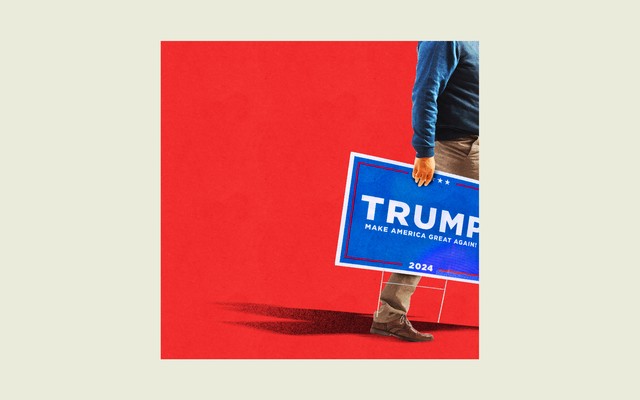
A shocking number of the president’s supporters have turned against him.
Tomas Montoya has sold festival foods—funnel cakes, burgers, hot dogs—across the American Southwest for years. But lately, business has been rough. Costs are up, so he’s increased his prices. Employees are begging for hours he can’t give them. In Arizona, where he lives, Montoya pays $6 a gallon to fill up his food trucks with diesel. This summer, he may have to skip the California leg of his festival route because fuel is even more expensive there.
“It’s Trump,” Montoya told us outside a popular Hispanic grocery store in Casa Grande, Arizona, much of which sits in one of the most evenly divided House districts in the country. Montoya voted for President Trump in 2024, but now, well, frustrated doesn’t begin to cover how he’s feeling. The president is bragging about the economy, even though everyone Montoya knows is hurting; he promised to stop wars, but started one in Iran. “When Trump opens his mouth, three-quarters of what he says is stories, lies,” Montoya said. He’s planning to vote in the midterm elections this fall. But he may not choose a Republican.
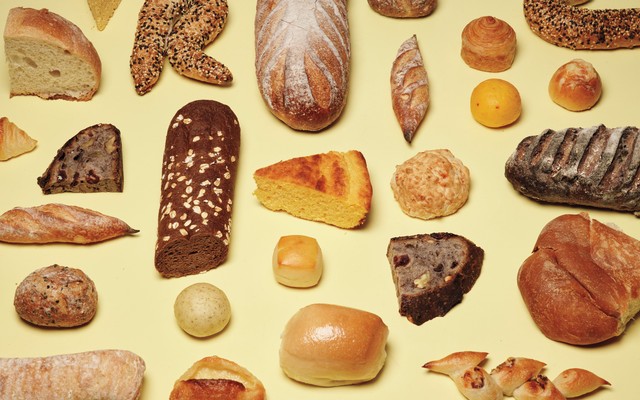
Thirteen thousand miles. Infinite contenders. One beautiful loaf.
This article was featured in the One Story to Read Today newsletter. Sign up for it here.
Here is the promise you and I must cling to across the thousands of words that follow: At some point within this text, I will reveal to you what—after 555 responses, 13,000 miles of travel, and months of monomaniacal research—I have determined to be the best free restaurant bread in America. I will not attempt to slither to the moral high ground, arguing that best is a meaningless measure, or insisting that all bread is dear in its own way. Even if you attempt to betray me—for instance, by merely scanning the text that follows for the phrase Here it is: the best free restaurant bread in America—I will uphold my end of the bargain.
Trump has developed a reputation for backing down from his most over-the-top threats, but dismissing his words is a mistake.
Twelve hours after Donald Trump warned that a “whole civilization will die tonight, never to be brought back again”—after he’d previously threatened to bomb Iran “back to the Stone Ages”—the president agreed to a temporary cease-fire. Since then, initial peace negotiations failed and Trump responded with a naval blockade of the Strait of Hormuz; a new round of talks may begin soon.
But what to do with his everyone in Iran is going to die comments last week? Because they were designed to pressure Iran to come to the table, and because the promised carnage did not materialize, many observers simply moved on, explaining away Trump’s threats as a ham-fisted negotiation tactic, some kind of 5-D chess, or another example of the president’s propensity to “TACO” (Trump Always Chickens Out).
This article was featured in the One Story to Read Today newsletter. Sign up for it here.
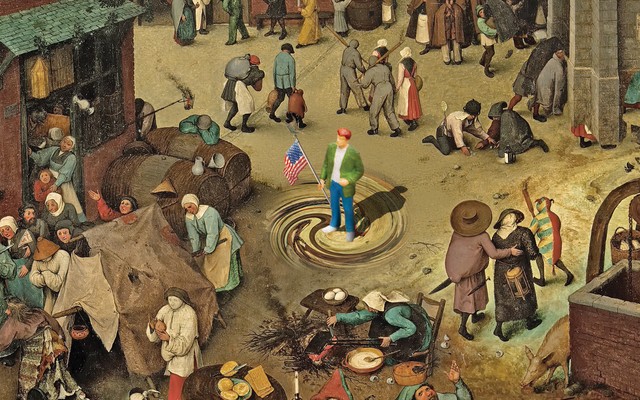
Maybe you’ve seen photos of Tehran in the 1970s, just before the Islamic Revolution: images of young women going to work in miniskirts, of couples making out in parks while wearing bell-bottoms, of people at pools in bikinis. It looks like Paris or Milan or Los Angeles. But in 1979 the revolution happened, and now Tehran looks like something from an earlier century.
Sometimes I think that our whole world has become kind of like that—going backwards in time. The religious movements thriving in today’s secularized age are the traditionalist ones that dissent from large parts of contemporary culture—not only the Shiite Islam of post-revolution Iran, but Orthodox Judaism and conservative Catholicism. Young Americans are flooding into Eastern Orthodox churches.
The vice president has decided he’s a more accomplished theologian than Leo XIV.
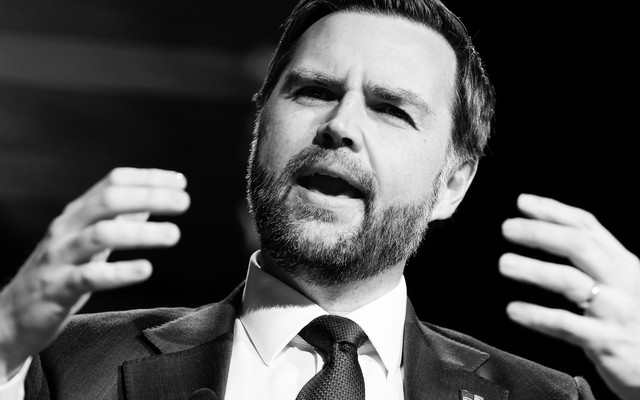
The Trump administration doesn’t seem to have many rules, but one of them is that once the president picks a fight, his posse must show up to support him, no matter how ill-advised the conflict. And few senior officials are more eager to back up the boss in every embarrassing beef than Vice President Vance, who recently seems to have decided that he, and not Pope Leo XIV, is the true arbiter of Catholic doctrine.
President Trump is personally angry with Leo because the pontiff has been deeply critical of America’s war of choice in Iran. Accordingly, Trump lashed out at His Holiness twice over the past few days. Vance might have seen this as a valuable opportunity to say nothing and let the storm pass; Leo, naturally, doesn’t seem to care all that much what Trump thinks. (As my colleague Liz Bruenig wrote, Leo answers to a higher authority.) Had the vice president remained silent, Trump might have moved on, and Vance, a relatively recent convert to Catholicism, would have been able to stay out of a dustup between his president and his spiritual leader.
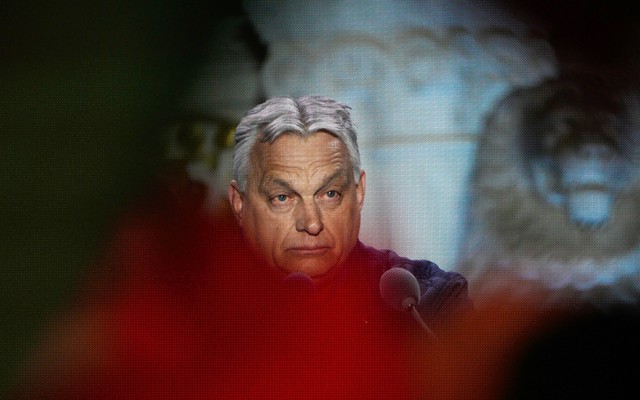
The Hungarian strongman Viktor Orbán, who lost his election in a landslide on Sunday after 16 years in power, presented himself as a defender of Western civilization. But at best, his lofty rhetoric was a code for bigotry and a justification for the persecution of minorities; at worst, it was a scam to fleece Hungarians by persuading them to blame everyone but those responsible for their problems. Maybe both.
Eventually Hungarians decided that a major source of their problems was Orbán himself. Maybe someday Americans will come to a similar realization about Orbán’s great admirer, Donald Trump, who praised the former Hungarian leader before the election as a “fantastic man” who had done a “fantastic job.”
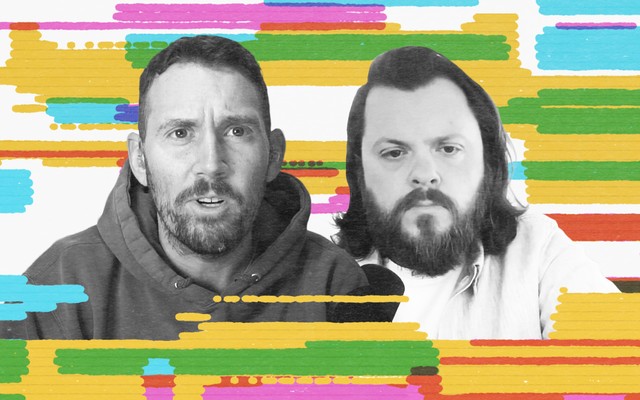
In this episode of Galaxy Brain, Charlie Warzel speaks with Josh Owens, a videographer and the author of a memoir about his years working for Infowars, the media company of the conspiracy theorist Alex Jones. Owens traces his journey from a film-school student who stumbled onto Jones’s radio show to an insider who spent four years filming, editing, and traveling for the organization. Owens describes how Jones’s conspiracy machine works, as well as how his own moral compass was scrambled by Jones’s manipulative management. The conversation explores radicalization, the conspiratorial media ecosystem Jones helped create, and how Owens was able to pull himself out.
Control of a vital waterway gives Tehran the deterrence power it’s always wanted.
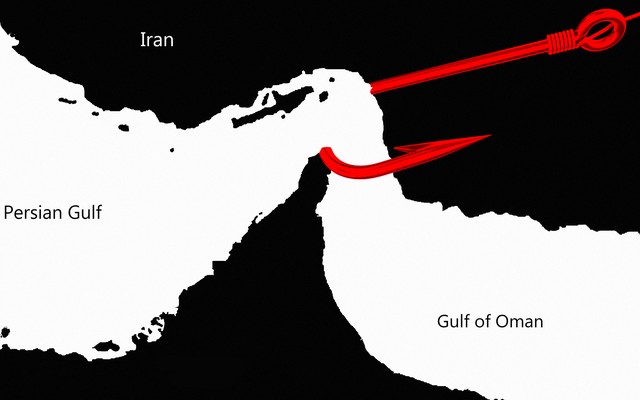
President Trump has said that he went to war to stop Iran from ever having a nuclear bomb. Unfortunately, the war he launched led Iran to discover that it already had an extremely effective doomsday weapon—one that promised the economic equivalent of mutual assured destruction. The Strait of Hormuz has always been vulnerable; the United States has always known that Iran might try to close it if attacked. But neither Washington nor Tehran imagined how easy it would be for Iran to do so, how hard it would be for the U.S. to reopen it, or how widely and rapidly the economic effects of a closed strait would fan out.
Fossil fuels are to modern industrial civilization what air is to the lungs: About 80 percent of the global economy is powered by oil, coal, and natural gas. Much of this comes from the states along the Persian Gulf: Saudi Arabia, Iraq, Iran, the United Arab Emirates, Kuwait, Qatar, Oman, and Bahrain. About 25 percent of global seaborne oil trade and 20 percent of global liquified natural gas transits the Strait of Hormuz, between the Persian Gulf and the Gulf of Oman.