Nigerian officials may have sexually abused displaced women and girls, activists are using a Facebook tool to protest a North Dakota pipeline, and more from the United States and around the world.
Women at a camp for internally displaced people in Borno State, Nigeria, on August 31, 2016.
Afolabi Sotunde / Reuters
—Dozens of women and girls living in camps for those displaced by the conflict with Boko Haram have faced rape and sexual exploitation by Nigerian officials. More here
—Thousands of people are using a Facebook “check in” feature to show solidarity to protestors opposed to a North Dakota pipeline, which they say threatens the Standing Rock Sioux Tribe’s sacred sites, as well as the tribe’s only water source. More here
—Iraqi forces entered Mosul for the first time since ISIS took the city in 2014. Capturing the city is expected to take months. More here
Audio of Police Exchanges With Orlando Shooter Released
Carlo Allegri / Reuters
The recordings of conversations between Omar Mateen, the man who killed 49 people in an Orlando gay nightclub in June, and police negotiators were released Monday.
While the transcripts of the conversations have been available for the last month, this is the first time the public can hear the recordings. The city of Orland released the recordings of Mateen and other 911 calls of the shooting after a court order from Margaret Schreiber, a judge in Florida’s Ninth Judicial Circuit.
In the 30 minutes of recordings, Mateen rants, sometimes with profanity, about U.S. airstrikes in Syria and Iraq. As USA Todaydescribes, “Mateen’s demeanor fluctuated from emotionless to frenzied and indignant,” hanging up with police negotiators several times and rejecting requests to resolve the situation peacefully. In one exchange, Mateen tells a negotiator:
You have to tell America to stop bombing Syria and Iraq. They are killing a lot of innocent people. What am I to do here when my people are getting killed over there. You get what I’m saying?
Later, he refers to Boston Marathon bomber Tamerlan Tsarnaev as his “homeboy,” and says, “now it’s my turn.”
Mateen, who in the recordings is heard demanding to be called an “Islamic Soldier,” was killed in a shootout with police at the Pulse nightclub. Dozens of others were injured.
Nigerian Officials Accused of Sexually Abusing Displaced Women and Girls
Women at a camp for internally displaced people in Borno State, Nigeria, on August 31, 2016. (Afolabi Sotunde / Reuters)
Dozens of women and girls living in camps for those displaced by the conflict with Boko Haram have faced rape and sexual exploitation by Nigerian officials, according to a report released Monday by Human Rights Watch.
The report documented 43 cases of sexual abuse since July in seven camps designated for internally displaced persons (IDP) throughout Maiduguri, the capital of the Borno state in northwest Nigeria. Of the documented cases, four of the women reported being drugged and raped by security forces or members of vigilante groups working with the Nigerian government. Thirty-seven women said they were coerced into sex with promises of marriage or money. And according to a July study by NOIPolls, a Nigerian research organization, a vast majority of these women lack proper access to food, clean water, and health care.
“It is bad enough that these women and girls are not getting much-needed support for the horrific trauma they suffered at the hands of Boko Haram,” Mausi Segun, the organization’s senior Nigeria researcher, said. “It is disgraceful and outrageous that people who should protect these women and girls are attacking and abusing them.”
Muhammadu Buhari, the Nigerian president, called the report’s findings “deeply worrying” and vowed to launch an immediate investigation.
We will protect the lives and wellbeing of these most vulnerable of Nigeria's citizens. And we will ensure they return safely to their homes
The women, ranging between the ages of 16 to 43, are among the more than 2.5 million people displaced as a result of the conflict between the Nigerian government and the Islamist militant group. The seven-year battle has resulted in the deaths of more than 10,000 civilians, as well as the kidnappings of thousands of others.
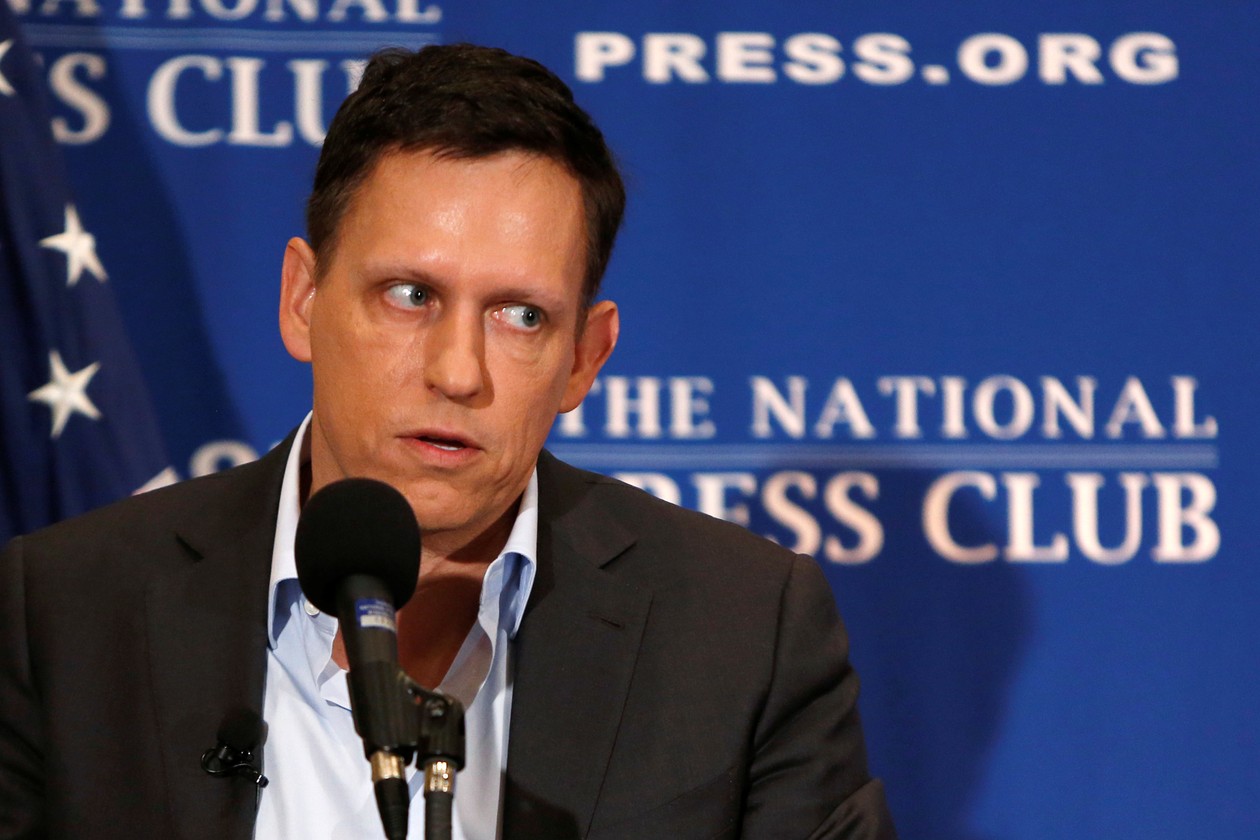
What Peter Thiel Said About the Gawker Case, Hulk Hogan, and 'Single-Digit Millionaires'
(Gary Cameron / Reuters)
Peter Thiel, the billionaire investor who financed Hulk Hogan’s lethal lawsuit against Gawker, called the now-shuttered gossip-news website “a singularly sociopathic bully.”
Here are some of his remarks at an appearance Monday at the National Press Club in Washington, D.C.:
On why he financed Hulk Hogan’s case against Gawker: “If you’re a single-digit millionaire like Hulk Hogan, you have no effective access to our legal system. It costs too much.”
On Gawker: “Gawker was a pretty flimsy business. It was bad business. It didn’t make that much money. But they could have withstood all the lawsuits. They lost because of an enormous verdict that came in against them.”
On whether his actions set a dangerous precedent: “This is not about the First Amendment. It’s about the most egregious violation of of privacy imaginable, publishing a sex tape surreptitiously filmed in the privacy of someone’s bedroom and to hide behind the First Amendment, behind journalism. That is an insult to journalists. That’s why Gawker lost so catastrophically at the court in Tampa, Florida.”
On what the case was about: “I was very careful in the Hulk Hogan litigation, picking a lawsuit where the fight was over privacy. We did not even bring a libel action because that was sort of the way I wanted to make clear in the Hogan case that it was not about the media.”
On the internet’s “flash mobs”: “I’m generally in favor of the Internet. I generally think it’s been a good thing, but I think there are some parts of it where things have gone wrong: And one kind of phenomenon that’s very new that can take place on the internet is … we have these flash mobs that get directed at specific individuals. That’s a very new phenomenon and Gawker in some ways perfected it where you’d pick on people and destroy their lives.”
Thiel, Silicon Valley’s most public supporter of Donald Trump, also defended his backing of the GOP presidential nominee. You can read our coverage of his comments on Trump here.
Watch Thiel’s complete remarks here (the Gawker comments start at around the 35:00 mark):
For the First Time Since ISIS Captured Mosul, Iraqi Security Forces Have Entered the City
Reuters
Iraqi troops entered Mosul on Monday, the first time since the battle for the Islamic State’s stronghold began more than two weeks ago.
Since October 17, troops have cleared the surrounding suburbs of insurgents and forced ISIS militants into a smaller territory in the city. On Monday a force commander told Reuterssoldiers had broken an ISIS defense line in an eastern suburb of Mosul, called the Karama district, which makes it the first time troops, backed by U.S. airstrikes, have entered the city since militants captured it in 2014.
The fight for Mosul was expected to be particularly intense. If ISIS loses, it would represent the militant group's most critical loss in Iraq. About 1.5 million people still live in Mosul, and minimizing the humanitarian cost of the battle has weighed heavily on the operation.
In its retreat, ISIS has lit oil fields on fire to create cover; used snipers, and detonated car bombs to take out advancing Iraqi security forces, as well as Kurdish Peshmerga fighters. There are also reports that ISIS insurgents have executed hundreds of civilians, even using them as human shields. The fighting has claimed on unknown amount of Iraqi and ISIS fighters, and at least one U.S. soldier. So far the battle has displaced more than 17,500 civilians—a figure that could top 1 million before fighting ends.
Why Are People Checking In at Standing Rock, North Dakota?
Protesters at the Dakota Access Pipeline, near the Standing Rock Reservation in North Dakota (Reuters)
Facebook users may have noticed Monday that some of their friends, seemingly all at once, said they were at the Standing Rock Indian Reservation in Cannon Ball, North Dakota.
But they weren’t actually there.
Thousands of Facebook users used the website’s “check-in” feature to say they are at the Indian reservation where the Dakota Access Pipeline is set to be built—an area that has been the site of recent clashes between protesters who oppose the pipeline and police who say the protesters are standing on private land. Those checking in at the reservation followed the instructions of a viral Facebook message, which called on the pipeline’s opponents to check in on Facebook in order to “overwhelm and confuse” the Morton County Sheriff’s Department, which allegedly uses social media to track the protesters.
Here’s one variation of the post, which users are encouraged to copy and paste on their own timelines:
Though it is unclear if the claim that law enforcement uses social media to track protesters’ movements is true, the post has prompted thousands of users to check-in in solidarity—as of Monday, more than 4,500 people were checked-in at the Standing Rock Indian Reservation on Facebook. Last week, authorities arrested 141 protesters at the pipeline’s construction site, which opponents say threatens the Standing Rock Sioux Tribe’s sacred sites, as well as the tribe’s only water source.
The clowns started showing up months before Halloween this year.
In August, some residents of Green Bay, Wisconsin, called police after spotting someone in clown makeup carrying balloons and wandering around town. A few weeks later, residents of an apartment complex in South Carolina told police that people wearing clown makeup had waved to them in the street or beckoned their children into the woods. In the months since, clown sightings have been reported in more than 20 states, prompting panic among parents, concern from law enforcement, and goosebumps.
Now that Halloween has arrived, some parents are worried for the safety of young trick-or-treaters. Kimberly Kersey, a resident of Palm Bay, Florida, told CBS News she will be carrying a gun Monday night when she takes her sons out.
“I’ll be carrying for sure,” Kersey said. “I’m terrified of clowns already and if one messes with me or my kids it’ll be to the hospital or morgue they go.”
Palm Bay police urged people against dressing up as clowns. “The problem is that someone dressed like a clown could scare someone and there’s a possibility—a possibility—you could end up with someone getting shot,” Palm Bay Police Lieutenant Mike Bandish told CBS News.
Police departments in cities across the United States have issued similar warnings, citing the recent creepy clown sightings. A school district in New Jersey banned clown costumes on school grounds on Halloween. A Mississippi city council made it illegal for clowns to appear in public until the day after Halloween, imposing a $150 fine for violators. Earlier this month, Target removed some clown masks from its stores nationwide.
Raoul Wallenberg Is Declared Dead By Swedish Tax Agency
Raoul Wallenberg’s actions during World War II have been commemorated in several countries. (Reuters)
Raoul Wallenberg, the Swedish diplomat who saved thousands of Hungarian Jews during World War II and whose fate at the hands of the Soviet Union became an enduring Cold War mystery, has officially been declared dead by Sweden’s tax authority.
A spokeswoman for Skatteverket, the Swedish Tax Agency, confirmed that Wallenberg was declared dead on October 26. His date of death, the agency said, was July 31, 1952—five years after Soviet authorities said he died of a heart attack in a Russian prison. Under Swedish law, a person can be declared dead only five years after his or her disappearance. SVT Nyheter reported that Wallenberg’s trustees requested the declaration.
Wallenberg, a Swedish diplomat in Budapest, gave Hungary’s Jews Swedish travel papers or moved them to safe houses, almost certainly saving them from death. He was arrested by the Soviet Red Army in 1945, in the war’s final days. The Soviets denied until 1957 that Wallenberg was in their custody. That year, they said he died in prison July 17, 1947, of a heart attack.
In 2000, Russian officials acknowledged that Wallenberg was killed in Lubyanka prison upon the orders of Joseph Stalin, the Soviet leader. That year, Moscow also said Wallenberg was wrongfully persecuted and rehabilitated him as a victim of political repression.
Geert Wilders, the Far-Right Dutch Politician, Boycotts His Hate-Speech Trial
(Laszlo Balogh / Reuters)
Geert Wilders, the far-right Dutch politician, has refused to attend his trial, which began Monday, on charges of racial discrimination and inciting hatred.
In 2014, Wilders, head of the Dutch Freedom Party (PVV),told supporters he would reduce the number of Moroccans, who make up 2 percent of the country’s population. Wilders denounced Monday’s trial as a “kangaroo court,” reaffirming his right “to speak about the problems in our country.”
NL has huge problem with Moroccans.
To be silent about it is cowardly.
43% of Dutch want fewer Moroccans.
Wilders’ criticized the charges against him as a “double standard,” noting similar remarks made byother Dutch politicians, including Dutch Prime Minster Mark Rutte, who said a group of Dutch-Turkish protesters should “go back to Turkey,” and Labour Party leader Diederik Samsom, who declared “Moroccans have an ethnic monopoly on street crime.”
Wilders’s anti-Moroccan rhetoric has not slowed since his indictment in March. He has campaigned on an anti-immigration platform, promising to close refugee centers, shutter mosques and Islamic schools, and institute a ban on the Quran. A September poll shows Wilders’s PVV to be losing popularity, dropping from 26 percent at the beginning of the year to between 16 and 19 percent—on par with the ruling People’s Party for Freedom and Democracy (VVD).
If convicted, Wilders faces up to two years in prison and a fine of up to 7,400 euros ($8,100).
Venezuela's President Meets With the Opposition in Vatican-Mediated Talks
Reuters
Venezuelan President Nicolas Maduro, met on Sunday for the first timein two years with opposition leaders who want him removed from power. The Vatican convened the talks after violent nationwide protests.
Members of the Democratic Unity coalition met with Maduro at a Caracas Museum; on hand to mediate the talks was Archbishop Claudio Maria Celli, the papal envoy.
The situation in Venezuela is bleak. As my colleague Siddhartha Mahanta pointed out this weekend, global oil prices collapsed shortly after Hugo Chavez, Venezuela’s leader, died in 2013. It was a ruinous turn for Venezuela, because by 2014 the country relied on oil for 95 percent of its export earnings. This resulted in hyperinflation, an almost worthless currency, and shortages of basic goods. Maduro has taken much of the blame. He is highly unpopular—about 80 percent of Venezuelans would like to see him removed, and the opposition organized a recall referendum that looked like it would pass. Then last week, a court blocked the referendum process, leading to violent protests, which grew so bad Pope Francis asked Maduro and opposition leaders start a dialogue.
Both sides have dug in deeply, and it’s unclear what arrangement they’d be willing to come to. Maduro has called the recall vote part of an international coup to have him removed. The opposition has said the court’s rejection of their recall referendum is proof of Maduro’s meddling, and that he’s a dictator.
After Fireworks to Mark Festival of Lights, New Delhi Wakes to Smog
Hindus across India celebrated Diwali, the festival of lights, over the weekend. Fireworks are big feature of the holiday, and though they might have seemed like a good idea at the time, the smoke did not help the city Monday morning.
Here’s what it looked like:
(Adnan Abidi / Reuters)
India's Central Pollution Control Board said the levels of pollutants that can cause severe respiratory ailments were at 750 micrograms per cubic meters in the worst-affected parts of the capital—a number that is 30 times the level set by the World Health Organization. Indian officials said about 65-70 percent of that came from fireworks, which are set off on Diwali to make the triumph of good over evil. The U.S. Embassy in New Delhi said the levels of pollutants had exceeded what it regards as “hazardous.”
New Delhi, home to 16 million people, is already one of the world’s most polluted cities. The government’s attempts to reduce pollutions have had mixed results.
NASA's Asteroid-Spotting Software Predicted a Close Call
Reuters
A massive asteroid flew past Earth late Sunday. It was first spotted last week, and because of Scout, NASA’s new asteroid-monitoring system, astronomers could carefully predict its size and flight path, part of a program to give the world more advanced warning in case an asteroid were headed directly for Earth.
A telescope in Hawaii first picked up the asteroid, named 2016 UR36, and the data was quickly loaded into NASA’s projection software. The program, which is still in testing, determined the asteroid was about 16 to 80 feet across (5 to 25 meters), and would fly within 310,000 miles of Earth. That’s a relatively safe distance—about 1.3 times the distance of the moon—but in terms of proximity in space, it’s pretty close. By predicting early on the flight path and size of Near Earth Objects, scientists hope to avoid a large-scale asteroid impact on the level that wiped out the dinosaurs.
NASA already has a flight-path prediction program called Sentry for asteroids at a size that could cause mass extinction. In the future, astronomers say they believe they can use these two programs to spot asteroids years, even decades off. Ed Lu, the CEO of an asteroid-threat organization called B612, told NPR that if scientists can predict an asteroid’s flight path 10, 20, or even 30 years before it strikes, “then you can divert such an asteroid by just giving it a tiny nudge when it's many billions of miles from hitting the Earth."
Asteroid 2016 UR36 discovered. Flyby Oct 31 at 03:13 UT. Dist: 1.30 LD. Size: 5-19 m. https://t.co/mDrJsvYVIV
Lebanon Has a New President After More Than 2 Years
(Mohamed Azakir / Reuters)
Michel Aoun, the Maronite Christian leader and former army chief, was elected Lebanon’s president Monday, ending more than two years of political deadlock in the country.
Aoun, 81, who is backed by Hezbollah, the Shia militia group that is a major political party in Lebanon, struck a deal earlier this month with the Future Movement, the Sunni-dominated party that was his biggest rival. Al-Jazeeraadds Aoun’s ascendancy is a victory for Iran and a blow to Saudi Arabia. He may have also been helped by the declining business fortunes of Saad Hariri, the former prime minister, who heads Future Movement.
Daily Star, the Lebanese newspaper, reported Aoun was elected Monday with a simple majority in the second round of voting. The BBCadds it was lawmakers’ 46th attempt to elect a president. Lebanon has not had a head of state since Michel Suleiman stepped down in May 2014 at the end of his single six-year term. In that time, the country of 4 million people has taken in more than 1 million refugees fleeing the civil war in neighboring Syria, the former power broker in Lebanon.
Aoun is perhaps previously best known for his role in Lebanon’s bloody 1975-1990 civil war. He led the Lebanese army against Syrian and rival Christian troops, but when his forces were defeated, Aoun fled to Paris. He returned to Lebanon in 2005, allied himself with political figures close to Damascus, as well as Hezbollah.
Under Lebanon’s power-sharing structure, the presidency is reserved for a Maronite Christian, the prime minister for a Sunni Muslim, and the speakership for a Shia Muslim.
Cumhuriyet’s supporters hold copies at a protest Monday in front of its headquarters in Istanbul. (Murad Sezer / Reuters)
Authorities arrested Monday the editor and several writers of Cumhuriyet, the oldest secular Turkish newspaper, for their alleged links to the Gulenist movementand the Kurdistan Workers Party (PKK), the latest such action following last July’s failed coup against President Recep Tayyip Erdogan.
Anadolu, the Turkish news agency, reported that police arrested Murat Sabuncu, the newspaper’s editor in chief, as well as 10 other staffers who work for the paper. They include: Hikmet Cetinkaya, the author of a book critical of Fethullah Gulen, who heads the Gulenist movement; Aydin Engin and Guray Oz, the columnists; Hakan Kara; Mustafa Kemal Gungor; Bulent Utku, the lawyer; Musa Kart, the cartoonist; Mustafa Kemal Gungor, Onder Celik, and Bulent Yener, members of the Cumhuriyet Foundation's managing board; and Turhan Gunay, who edits the daily books supplement. A warrant was also issued, Anadolu reported, for Akin Atalay, Cumhuriyet’s executive board chairman, and Can Dundar, the newspaper’s former editor in chief, who fled overseas earlier this year after he appealed a five-year prison sentence for revealing state secrets in the newspaper of Turkey’s operations in Syria.
Tens of thousands of people have been arrested or have lost their jobs since the July 15 coup attempt against Erdogan. Over the weekend, 15 media organizations were closed and 10,000 government officials fired for their alleged links to the coup plotters. Turkey’s government, which imposed a state of emergency after the failed coup, blames Gulen, a U.S.-based cleric, of masterminding the coup attempt and of creating a parallel state within the country. They also want the U.S. to extradite the cleric, who denies the charges against him.
Erdogan’s critics say he is using the coup attempt to silence the opposition to him and end dissent in Turkey.
Eric Holder Criticizes James Comey's Email Decision
(Gary Cameron / Reuters)
Eric Holder, the former attorney general, has called FBI Director James Comey’s announcement Friday of possible new emails related to Hillary Clinton, the Democratic presidential nominee, a “stunning breach of protocol.”
Writing in the The Washington Post, Holder, who was President Obama’s attorney general from 2009 to 2015, said Comey’s “decision was incorrect. It violated long-standing Justice Department policies and tradition. And it ran counter to guidance that I put in place four years ago laying out the proper way to conduct investigations during an election season.”
Director Comey broke with these fundamental principles. I fear he has unintentionally and negatively affected public trust in both the Justice Department and the FBI. And he has allowed — again without improper motive — misinformation to be spread by partisans with less pure intentions.
Comey’s Friday-afternoon bombshell, just days before the presidential election, has come under scrutiny—celebrated by supporters of Donald Trump, the GOP presidential nominee, and excoriated by Democrats, including Clinton. Indeed, Harry Reid, the Democratic leader in the Senate, said that Comey, by his actions, may have violated the Hatch Act, which prohibits government officials from using their positions to influence elections.
Our Politics team will have more on this story, and we’ll provide a link to their reporting later in the day.
The president is on a losing streak, and even some of his aides are dismayed by his choices.
This article was featured in the One Story to Read Today newsletter. Sign up for it here.
You’ve heard the joke: The White House is going to start talking about the Epstein files to distract from how badly the Iran war is going.
Except that this reverse “Wag the dog” is based on bizarre truth: First Lady Melania Trump did bring the disgraced financier up, unprompted, late last week in an effort to distance herself from the scandal (in a move that, predictably, only shifted it back into the spotlight once again). Meanwhile, as negotiations with Iran stumble forward, the Strait of Hormuz is still in Tehran’s hands and now President Trump has authorized a risky naval blockade that will likely send prices soaring further. Moreover, Trump’s poll numbers have continued to fall, Republicans worry that both houses of Congress could be lost in November, and the president threw away a remarkable amount of geopolitical capital trying to support his now-defeated illiberal buddy Viktor Orbán of Hungary. Oh, and Trump deeply offended adherents of the world’s two largest religions in one week’s time.
The car industry says it has an answer for drivers wary of going electric.
Two hours into a road trip in my Tesla, I start to get twitchy. By that point, the battery in my 2019 Model 3 has dipped to an uncomfortably low percentage. If I can’t reach the next plug, I’m in trouble. This is the kind of problem that Ram’s electric pickup truck—the first of a new breed of EV to arrive in the United States—is intended to solve. When the range starts to dwindle, the truck automatically fires up a hidden gas engine that refills the giant battery. The “electric” vehicle keeps on chugging down the highway, hour after hour; pit stops are once again decided by the need for bathroom breaks rather than battery range.
The Ram 1500 REV, set to debut later this year, is what’s called an “extended-range electric vehicle,” or EREV. In essence, it is an electric vehicle that burns gas. There’s nothing revolutionary about a half-gas, half-electric car, of course. Hybrids have been a mainstay in the United States since the Toyota Prius broke through two decades ago, and automakers have released more efficient plug-in hybrids—allowing drivers to charge up for about 30 miles of electric driving, just enough to accomplish daily errands without fossil fuels. An extended-range EV is a different kind of beast. The engine burns gasoline for the sole purpose of replenishing the battery—it never actually pushes the wheels. In the Ram, the battery can run for about 150 miles of electric driving, and the whole setup delivers enough range to travel nearly 700 miles between stops.
Thirteen thousand miles. Infinite contenders. One beautiful loaf.
This article was featured in the One Story to Read Today newsletter. Sign up for it here.
Here is the promise you and I must cling to across the thousands of words that follow: At some point within this text, I will reveal to you what—after 555 responses, 13,000 miles of travel, and months of monomaniacal research—I have determined to be the best free restaurant bread in America. I will not attempt to slither to the moral high ground, arguing that best is a meaningless measure, or insisting that all bread is dear in its own way. Even if you attempt to betray me—for instance, by merely scanning the text that follows for the phrase Here it is: the best free restaurant bread in America—I will uphold my end of the bargain.
A minimally speaking autistic man just wrote a best-selling book. Or did he?
On a recent morning at Rockefeller Center, NBC employees strolled through the crowd with copies of Upward Bound, the latest book-club pick from the Today show co-host Jenna Bush Hager. “It’s deeply heartfelt and moving,” Hager said, after holding up the debut novel from the 28-year-old Woody Brown, “and the reason it’s so authentic is that the author understands autism firsthand.”
That understanding is indeed profound. Brown’s autism is such that he can barely speak, and he communicates mostly by pointing to letters, one by one, on a laminated board. This is also how his novel, which is already a New York Times best seller, came to be. In the recorded interview that followed Hager’s introduction, Brown’s mother, Mary, sat beside him, holding the letter board and reading his tapped-out messages.
Is the president’s son-in-law carrying out the public’s business or pursuing his own private interests?
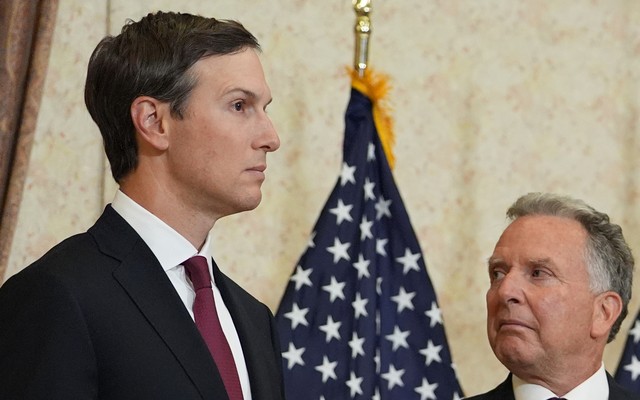
In 2021, shortly after he left his role as a senior White House adviser, Jared Kushner let it be known that he had loved his job but disliked the scrutiny and disclosure that came with being a top U.S. government official. He set up a private-equity firm and took a $2 billion investment from a Saudi fund led by Crown Prince Mohammed bin Salman. He proclaimed that he was embracing private life. “I’m an investor now,” Kushner said in a 2024 interview. If President Trump “calls you on November whatever and says, ‘I’d like you to come back to D.C.,’ you say, ‘Thanks, but I’m good’?” the interviewer, Dan Primack of Axios, pressed. “Yes,” Kushner responded.
But Kushner did come back. Two days before the United States and Israel attacked Iran this past February, he was in Geneva in a negotiation of the highest possible stakes. Over the weekend, he traveled with Vice President Vance to Islamabad to participate in failed peace talks with Iran. Without title or remit or any kind of official designation—only “presidential son-in-law”—Kushner has in the first 14 months of the second Trump administration sat down with world leaders including Vladimir Putin, Benjamin Netanyahu, and Volodymyr Zelensky, along with Saudis and multiple other actors from the Middle East.
The president’s attempts to interfere with the midterms demand vigilance, but a recent flimsy gambit is an argument against despair.
This is an edition of The Atlantic Daily, a newsletter that guides you through the biggest stories of the day, helps you discover new ideas, and recommends the best in culture. Sign up for it here.
Anxiety among election officials and experts had been building for months before Donald Trump issued his latest executive order purporting to ensure election integrity late last month. When the actual text emerged, the reaction wasn’t relief exactly—but a definite sense that things could have been much worse.
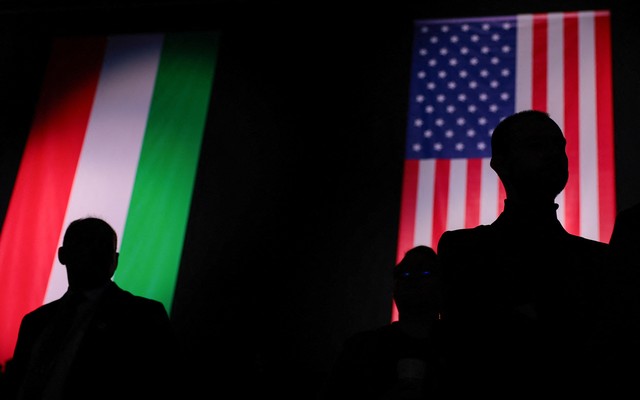
Americans have many reasons to be worried about whether the midterm elections will be free and fair. As I laid out in a cover story last fall, the president’s plan to subvert the 2026 election is multifaceted and already in swing. But last month’s order and the dismissive reaction it’s received from experts—along with this weekend’s decisive defeat of Hungarian Prime Minister Viktor Orbán, which shows how the competitive-authoritarian playbook that Trump has imitated can be beaten—also point to the reasons to resist doomerism.
Former U.S. Deputy National Security Adviser Matt Pottinger on the U.S.-Iran cease-fire, Trump’s Hormuz blockade, and China’s reaction to the Iran war. Plus: A seismic election in Hungary, and Labyrinths, by Jorge Luis Borges.
In this week’s episode of The David Frum Show, The Atlantic’s David Frum opens with his reaction to the recent election in Hungary and the defeat of Viktor Orbán. David counters Orbán defenders who claim that this loss proves Orbán was never a threat. Antidemocratic leaders often face institutional constraints, and it was those institutional constraints that compelled Orbán to accept a defeat after years of abuse of power.
Then, David is joined by former U.S. Deputy National Security Adviser Matt Pottinger to discuss the current state of President Trump’s war in Iran. David and Pottinger talk about the recent failed negotiations between the two sides in Pakistan, the blockade of the Strait of Hormuz, and what could happen next. They also discuss how the Iran war is viewed in China and how it has been a financial gain for Russia.
If you are anything like me, you have spent a lot of time over the past few weeks opening letters, finding receipts, requesting PDFs, scanning documents, and going through your credit-card statements line by line. It’s tax season. And in the United States, taxes are a DIY affair.
This is the case even though Washington could probably do your taxes for you. If you earn a salary or an hourly wage, the Internal Revenue Service already knows how much money you make. It likely knows how much you owe or how big your refund should be too. Nine in 10 households take the standard deduction, making their liability easy to glean from payroll and banking data.
Yet Uncle Sam demands that Americans fire up TurboTax, head to a storefront preparer, hire an accountant, or sit down with a sharp pencil and a strong cup of coffee to get their taxes done each spring. The average filer spends 13 hours on their 1040—a time tax that many of our wealthy peer countries have reduced to a couple of minutes, if that. Prepopulated documents and return-free systems are common everywhere but here. Sweden lets residents file by text. Canada prefills paperwork. Japan sends households a document summarizing their tax contributions. If everything looks copacetic, many workers get to do a blissful nothing. Denmark, Estonia, Spain, and Norway have similarly simple processes.
Hungary offers lessons in defeating right-wing populists.
To the outside world, Hungarian Prime Minister Viktor Orbán began his rule as a pariah—an obstreperous, often lone dissenter from European Union policies, especially over migration. Then he became a prophet to new-style “national conservatives”—the anti-immigration, anti-elite right-wing movement that has reshaped the politics of the West. After resoundingly losing national elections held on April 12, Orbán has become a parable for how populism can be defeated.
His political demise was hardly inevitable. It had to be shrewdly engineered by politicians and voters who put aside their ideological differences to defeat him. In politics, there is no natural law of self-correction.
From 2010 until now, Orbán and his Fidesz party transformed Hungary into a new kind of state, which he proudly proclaimed as an “illiberal democracy.” He and his allies rewrote the constitution to entrench his power, centralizing control over civil society and countervailing institutions such as courts and universities. Péter Magyar, the presumptive next prime minister, triumphed against a tilted electoral system—gerrymandered districts, government influence over traditional media and even over the country’s billboards—designed to keep Fidesz in power. Magyar understood that such a regime does not simply collapse under the weight of its own contradictions and mismanagement.
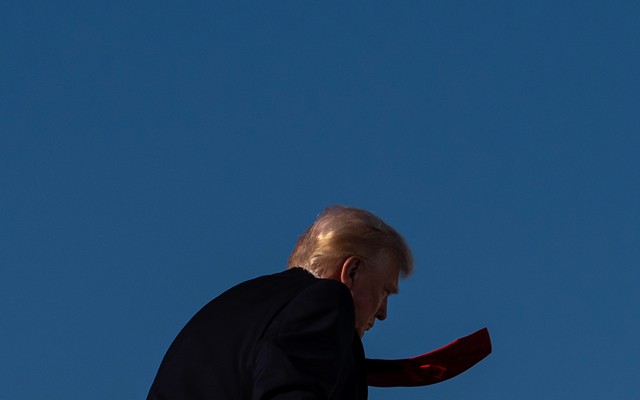
On many recent nights, Donald Trump has been posting obsessively on his Truth Social site into the wee hours. The president, of course, has never been one for a solid night’s sleep—or restrained and temperate commentary on social media—but his emotional state seems to be fraying: This weekend, he attacked Pope Leo XIV, presented himself as Jesus Christ, and then jabbed at his phone until dawn.
Judging from those posts, the commander in chief is in distress. No one can say for sure what is causing the president’s bizarre behavior. Perhaps Trump’s narcissistic insistence that he is always successful in everything he undertakes is feeling the sting and strain of multiple public failures, including the collapse of his campaign to dislodge the Iranian regime, plummeting approval ratings, the decline of the U.S. economy, and, on Sunday, the crushing defeat of one of his favorite fellow authoritarians, Hungary’s Viktor Orbán.