The two victims suffering from critical and serious injuries from the shooting are expected to make full recoveries, Houston officials said Monday evening.
The Houston Police Department would not confirm the identity of the suspect, citing the on-going investigation. Several news organizations, though, have identified the shooter as Nathan DeSai.
Officials did confirm the suspect had two weapons in his possession during the shooting, both of which were purchased legally: a .45 semi-automatic handgun and a Thompson submachine gun, commonly known as a “Tommy Gun.” They added that the suspect had several other weapons at his residence.
Police said the suspect wore “military-style apparel,” but could not confirm if the uniform had a particular affiliation, as previous unconfirmed reports stated he wore a Nazi-style uniform. Police, though, did confirm that Nazi emblems were found on his person and at his residence.
The suspect’s motive has not yet been determined. He is believed to have acted alone.
Multiple news organizations identified the alleged shooter as Nathan DeSai. The Houston Chronicle reports that a .45 pistol was used in the shooting. Investigators, the newspaper added, also found a long gun and ammunition in the shooter’s car.
DeSai’s father, in an interview with the local ABC affiliate, said his son had been having business troubles.
KPRC, the local TV station, cited two unnamed law-enforcement sources as saying the shooter wore a Nazi uniform during this morning’s shooting. That claim has not been independently verified.
Some witnesses have described the gunman firing dozens of shots at cars passing through a condo complex, which is near the affluent West University Place community. Several cars with bullet holes and shattered windows were at a parking lot near the condo complex.
Eduardo Andrade, 42, was driving his Audi A3 this morning on his way to LA Fitness when he found himself thrust into the middle of an active shooter scene.
"As I was driving by Law Street I suddenly hard a big explosion," said Andrade. "I covered myself, accelerated and tried to get out of there. I did not know if someone was following me or trying to shoot me."
Two bullets struck his vehicle, one came through the windshield and the other the front-passenger window.
"One bullet hit here and the other here," he said, while pointing at the holes. "I felt the hot air."
The father of two who works in the oil and gas industry was on his way to exercise at his gym at about 6:25 a.m. when the shooting happened.
"It's so random, think of it, if I was driving a little faster or a little slower, the bullet would have had a different trajectory," he said.
At a news conference Monday, Martha Montalvo, the Houston police chief, said, in all, nine people were injured: Three of them were treated on the scene and released; six were taken to area hospitals. One person suffered critical injuries, Montalvo said; another had serious injuries. The identities of those shot have not been released.
Montalvo said the suspect was a lawyer, “and there were some issues concerning his law firm.” He lived in the neighborhood, she said, but did not provide further details. The suspect was shot and killed by police, Montalvo said.
The Houston Police Department says the suspect who opened fire near a shopping center early Monday is dead . The location of the shooting is active, but contained, it added.
The motive for the shooting isn’t clear. More information on the shooting will be provided at a news conference later Monday.
Richard Mann, the executive assistant chief of the Houston Fire Department’s Emergency Response Command, told reporters the suspect had been “neutralized.” He did not elaborate whether that meant the suspect was injured or killed by officers responding to the shooting.
Mann also said six people were taken to hospital after the shooting. Their status is not known.
On Monday morning, CNN reported that the United States and Iran had been on the verge of striking a deal to end the war when Donald Trump made a series of comments to reporters and on social media that undermined the talks. Sources told CNN that the president’s boasts angered the Iranians. “The Iranians didn’t appreciate POTUS negotiating through social media and making it appear as if they had signed off on issues they hadn’t yet agreed to, and ones that aren’t popular with their people back home,” complained one source, who apparently pleaded with his boss to stop undermining their work.
This was Trump’s signal to begin binge-posting about the Iran negotiations. The Iranians may not have appreciated Trump’s stream-of-consciousness messaging, and apparently their American counterparts did not either. But one very important person did.
For the richest men on Earth, everything is free and nothing matters.
At the end of Paul Thomas Anderson’s 2007 movie, There Will Be Blood, Daniel Day-Lewis’s oil-baron character, old now and richer than Croesus, beats Paul Dano’s preacher to death with a bowling pin. Dano’s Eli Sunday, a nemesis of Day-Lewis’s Daniel Plainview during his seminal, wealth-building years, has come to sell Plainview the oil-rich land that he once coveted. But Plainview doesn’t need the land anymore, because—as he explains in one of the most famous monologues in modern cinema—he has sucked out all the oil hidden beneath it from an adjoining property, like a milkshake.
Desperate for money, Eli begs for a loan. Instead, Plainview chases him around a bowling alley and murders him with great enthusiasm. Once it’s over, a butler comes to see what all the noise was about. “I’m finished,” Plainview yells.
This article was featured in the One Story to Read Today newsletter. Sign up for it here.
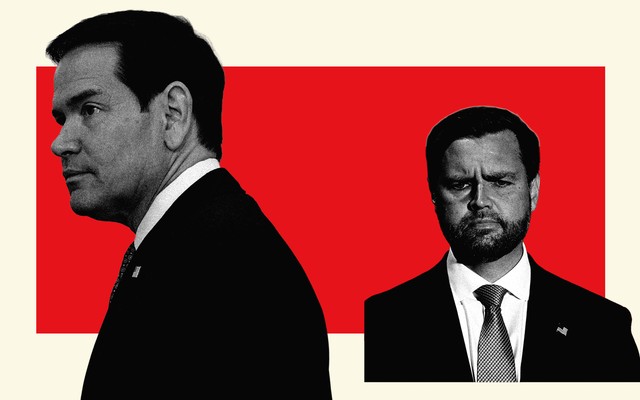
President Trump reportedly likes to go around asking aides about who his successor should be: J. D. Vance or Marco Rubio. If Trump were to ask his own voters the same question, he would, at least based on my recent experience, come away with a pretty clear answer.
I run weekly focus groups, and the moderators regularly ask Trump voters whom they would like to see inherit the party in 2028 and beyond. More and more, what we’re hearing in response is a strange new respect for Rubio. Although Vance might seem like a more natural MAGA heir, many Trump voters see Rubio as a stabilizing force who comes off a lot better than many of his peers inside the administration, including the vice president.
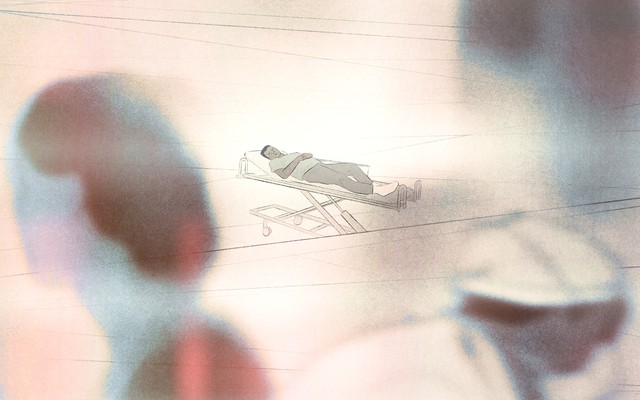
Patients are getting stuck in the emergency department for days while waiting for a spot in an inpatient ward.
In the last months, weeks, and days of his life, “I will not go to the emergency room” became my husband’s mantra. Andrej had esophageal cancer that had spread throughout his body (but not to his ever-willful brain), and, having trained as a doctor, I had jury-rigged a hospital at home, aided by specialists who got me pills to boost blood pressure; to dampen the effects of liver failure; to stem his cough; to help him swallow, wake up, fall asleep.
“I will not go to the emergency room”—emphasis on not—were his first words after passing out, having a seizure, or regurgitating the protein smoothies I made to pass his narrowed esophagus. He said it again and again, even as fluid built up in his lungs, rendering him short of breath and prone to agonizing coughing spells. He had been a big, athletic guy, but now, in the ugly process of dying, he was looking gaunt. Ours was a precarious existence, but I understood his adamant rejection of the emergency department. Most prior visits had morphed into extended trips into a terrifying medical underworld—to a purgatory known as emergency-department boarding.
TV is finally considering the relentless, creative work of making a living online.
On-screen, the actor Elle Fanning has the cherubic, moon-eyed guilelessness of a storybook princess or an animated woodland creature, the kind that belies a character much more tenacious than she first appears. In the new Apple TV series Margo’s Got Money Troubles, based on the 2024 novel by Rufi Thorpe, Fanning plays an imaginative and naive college student named Margo, and it doesn’t take long for a predator to come sniffing around. In this case, it’s a sad-sack, married literature professor named Mark (played by Michael Angarano), who locks in on Margo and—correctly—identifies her writing potential. “I’m meeting him for coffee,” Margo tells her best friend over FaceTime. “He thinks my writing is brilliant.” (If your eyes roll at this point, they’re supposed to.)
The economist Adam Posen on the effect of the war in Iran on the world’s economy and the darkening economic outlook for the United States. Plus: A shifting partisan balance of power and Ask Not: The Kennedys and the Women They Destroyed, by Maureen Callahan.
In this episode of The David Frum Show, The Atlantic’s David Frum opens with a discussion of the likelihood that the partisan balance of power will shift from Republicans to Democrats at state-government level.
Then, David is joined by the president of the Peterson Institute for International Economics, Adam Posen, for a conversation about the state of the world’s economy. Frum and Posen discuss the economic effect of the war in Iran, the United States’ reputational hit caused by Trump’s tariffs, and the chance of global recession.
Finally, David ends the episode with a discussion of Ask Not: The Kennedys and the Women They Destroyed, by Maureen Callahan, and reflects on why reactions to the abuse of women by men in power seem to have become a partisan issue.
I remember screaming, though I don’t know what words I screamed. And I remember resisting, though there was little I could do in heels against two military-trained men intent on shoving me into the back seat of their vehicle.
Video surveillance captured the moment I was taken. In it, you can see two burly men walk past, watching nonchalantly as I struggle. Inside the vehicle, the men zip-tied my wrists and ankles, and blindfolded me. I kept asking them: Why?
I had been working in Iraq as a journalist for more than a decade. I had documented Iraq’s fight against the Islamic State from the front lines as a freelancer—at my own expense and at great risk. I had covered social, political, economic, and environmental issues, and had been welcomed into the homes of many Iraqi families whose stories I tried to tell with sensitivity and fairness. Why, I asked these men in Arabic, had they taken me? Why were they hurting me? What purpose did this serve?
Kash Patel has alarmed colleagues with episodes of excessive drinking and unexplained absences.
This article was featured in the One Story to Read Today newsletter. Sign up for it here.
On Friday, April 10, as FBI Director Kash Patel was preparing to leave work for the weekend, he struggled to log on to an internal computer system. He quickly became convinced that he had been locked out, and he panicked, frantically calling aides and allies to announce that he had been fired by the White House, according to nine people familiar with his outreach. Two of these people described his behavior as a “freak-out.”
Patel oversees an agency that employs roughly 38,000 people, including many who are trained to investigate and verify information that can be presented under oath in a court of law. News of his emotional outburst ricocheted through the bureau, prompting chatter among officials and, in some corners of the building, expressions of relief. The White House fielded calls from the bureau and from members of Congress asking who was now in charge of the FBI.
This article was featured in the One Story to Read Today newsletter. Sign up for it here.
The mystery of the missing scientists began with a Silver Alert. In late February, a retired Air Force major general named Neil McCasland left his house in New Mexico for a walk and never returned. Rumors spread on social media that the elderly former astronautical engineer had been abducted or killed. Forget Nancy Guthrie, they said. Here was a guy who used to run a “UFO-linked” lab. Here was a guy with knowledge of “America’s deepest, darkest secrets.” So where was this guy?
McCasland’s wife did her best with a post on Facebook to address what she called the “misinformation circulating about Neil and his disappearance,” but wild notions only multiplied. Dots were added, then connected: Another scientist—an advanced-materials researcher at NASA’s Jet Propulsion Laboratory (JPL) named Monica Reza—had disappeared while hiking near Los Angeles in June 2025. A physicist at MIT had been murdered in December. “What is going on seems to be an enemy action,” Walter Kirn, the novelist and podcast contrarian, said last month.
When President Trump last summer implored Republicans to launch a nationwide gerrymandering blitz to pad their narrow House majority, the fight he started did not seem fair. GOP lawmakers had both the will and the power to draw their party new seats, while Democrats were hamstrung by limits of their own making. The question was not whether Republicans could expand their edge in Congress, but by how much.
This morning the landscape looks a lot different, after Virginia voters yesterday approved a lopsided new House map that could hand Democrats an additional four seats that Republicans currently hold. The Democratic redistricting victory is the party’s second in a statewide referendum. When combined with new lines that California voters endorsed in November, Democrats have now succeeded in drawing districts that will likely yield them nine more seats this fall, at least matching what Republicans have been able to achieve in states that they control. By some measures, Democrats have jumped into the redistricting lead, bolstering their chances of winning back the House majority in the midterm elections.